Pedro Miret Prieto, Member Of Cuba’s “Historic Generation,” Dies / 14ymedio

Pedro Miret Prieto, member of Cuba’s "historic generation", died Friday in Havana
Pedro Miret Prieto, member of Cuba’s “historic generation”, died Friday in Havana

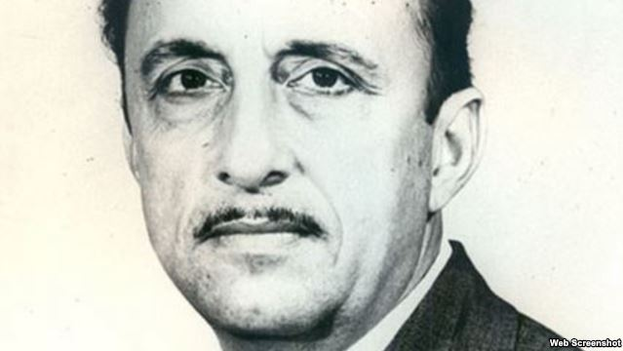
14ymedio biggerPedro Miret Prieto, 88, who reached the rank of commander in the rebel army from its incorporation in the fight in the Sierra Maestra, has died of a heart attack. He died early Friday morning in Havana and his ashes will be exhibited in Colon Cemetery’s Pantheon of Veterans this Saturday, according to information from the official media.

Considered one of Fidel Castro’s stalwart, Miret was born in 1927 in Santiago de Cuba and was among the assailants of the Moncada Cuartel in his native city. Taken prisoner for his actions, he was sentenced and sent to prison on the Isle of Pines. continue reading

A civil engineer, Miret Prieto benefited from the amnesty under which Fidel Castro and Raul Castro were also released. He then left for Mexico, where he participated in the preparations for the expedition of the yacht Granma, bringing the revolutionaries back to Cuba, but did not travel on the ship because we was arrested by Mexican authorities.

A man of few words and diminished charisma, Miret served Raul Castro’s number two in the Revolutionary Armed Forces (FAR) during the turbulent year of 1959. He also served as Minister of Agriculture and later of Mining, Metallurgy and Fuel.

At the first Congress of the Communist Party of Cuba he was a member the Secretariat of the Central Committee, and in 1983 he also held a seat on the Politburo, where he remained until 1991.

With his departure in 2009 from the position of vice president of the Council of State and Council of Ministers, which he had held since 1976, rumors soared of problems with his health or of a fall from grace. His removal from office coincided with the restructuring of the executive implemented when Raul Castro came to power.

Miret was one of the few members of the so-called historical generation who was still alive. For decades he was considered by many analysts as a representative of the most hard line and resistant to change among the ruling party.

Price Control Experiment Starts In Cuba’s Artemisa Province / 14ymedio

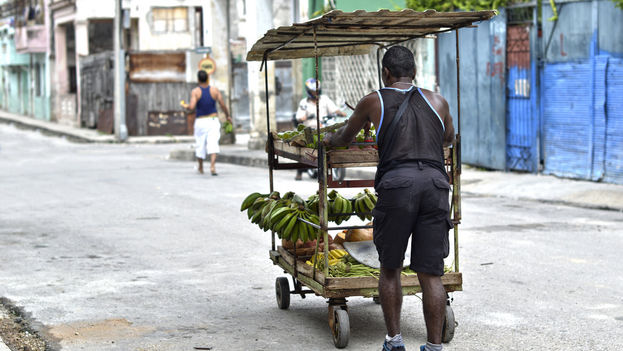
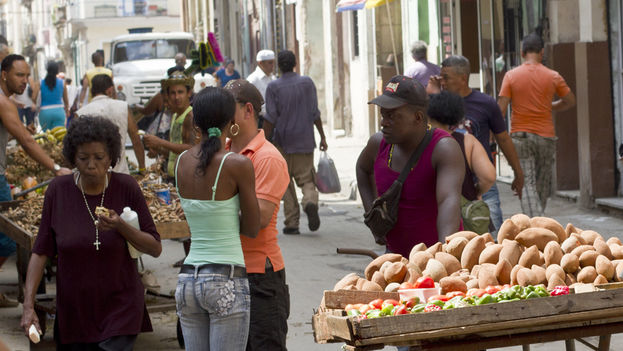
Street vendor in Havana. (DC)

14ymedio bigger14ymedio, Havana, 16 January 2016 – A price control experiment began at the start of this year in Cuba’s Artemisa province, with the sale of agricultural products “at maximum fixed prices” in 13 new markets and bodegas. The amounts of merchandise are regulated by the Provincial Administrative Council, according to Teresa Martinez Mendaro, its chief.

Under the euphemism “variable pricing” the official press announced the start of this pilot project in a market in every municipality in the province, with two such markets in Bauta, San Antonio and Artemisa. Although the points of sale belong to the Basic Unit of Commerce, they are now supplied by agricultural enterprises through Acopio, Cuba’s State Procurement and Distribution Agency. continue reading

This week the stands at the designated establishments offered taro, sweet potatos and carrots at a price not to exceed one Cuban peso per pound (CUP, about 4¢ US), a price below that in the markets operating according to supply and demand. Peppers and tomatoes have a regulated price not to exceed 5 CUP per pound, while elsewhere these foods can reach prices of 10 CUP and 25 CUP respectively.

Some of new markets opened their doors in the first week of January, as was the case with the La Vizcaina market in Alquizar. Residents of the area expressed relief, this Friday, at the low prices for food and vegetables, but were also cautious about the measure.

“The idea is good, but I worry that the quality of the products will fall greatly with these prices,” said Gabriela, a young woman who lives near the Alquizar market. A market employee didn’t hide his reservations, “We get little merchandise and we run out early,” he commented to this newspaper.

The measure has not been welcomed by private and street vendors. For the 1,167 self-employed fruit and vegetable cart sellers of the province, these new markets represent fierce competition.

“It will be a question of waiting for them to fall out of favor,” predicts William walking his cart through nearby streets hawking bananas and other fruits. The man added, “The state can not maintain something like that because there is not enough production.”

The controlled prices are officially called “variable,” as they vary according to the season of the year, production costs, harvest volume and the value of the inputs used by the farmers.

The provincial authorities plan to strengthen the inspector corp to monitor the prices established in these markets.

The experiment began a few days after the last meeting of the National Assembly, where the issue of food prices was prominent in numerous discussions. In response to a complaint from several deputies, Raul Castro said that measures would be taken to bring prices in line with wages. The announcement put producers and intermediaries an alert.

First of Cubans Who Were Stranded in Costa Rica Arrive in US / 14ymedio

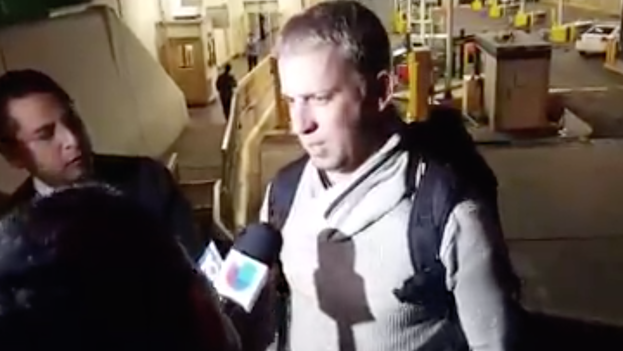
Randy Cuevas, the first Cuban who entered the United States after being stranded two months in Costa Rica. (Libertad Cuban / screenshot)

14ymedio bigger14ymedio (with information from agencies), Havana, 15 January 2016 – The first group of Cuban migrants coming from Costa Rica, of the almost 8,000 stranded in that Central American Country since November, are now in the United States.

On Thursday, 12 Cubans arrived in the Mexican city of Nuevo Laredo and, hours later, at night, crossed the international bridge that leads to Laredo, on the other side of the border in Texas, putting an end to their long journey by land that began in Ecuador. continue reading

“We are content because we reached our objective,” said Randy Cuevas, the first to cross the frontier, in a video loaded to the Facebook page of the civic organization Cubans in Freedom, which is helping the Cubans who are arriving in Texas. “It was a hard war, since October we have been going through this, but hey, I made it, thanks to God and everyone,” said Cuevas.

The same organization showed several recordings of the testimony of Cubans exultant on reaching US soil. “It is the greatest happiness,” confessed Liliande Gonzalez.

Another of the first to cross on Thursday night, Daniel Caballero, said, “I am a Cuban who has just achieved the American dream.”

On Friday morning another 47 arrived, part of the group of 180 that formed the first contingent sent by plane from Costa Rica to El Salvador and from there by land to Mexico crossing Guatemala, according to Alejandro Ruiz, founder of Cubans in Freedom. “Especially for those who have no family, we offer them a refugee program in Texas,” said Ruiz in an interview with Univision.

“We manage all the documentation, Medicare, the check they get from the government, a Social Security number [that identifies all individuals in the United States], and we do it all absolutely free,” he said.

“I’m happy, I feel brand new,” Julio Cesar Arcia Medina told AFP. Arcia Medina is a 37-year-old leatherworker who arrived on Friday by bus at the international bridge of Nuevo Laredo, which daily records an intense activity and great numbers of vehicles, being the main commercial crossing to the United States.

The Associated Press picked up the testimony of Alexei Oliva at the airport in Mexico City, about to board the plane that would take him straight to Matamoros, also on the border with Texas. “I am anxious to arrive,” he said. “It’s exciting.”

Oliva left Cuba by plane on 27 October 2015 bound for Ecuador, where he got “a little computer work” that helped to pay for the trip. “I’ve had the best treatment in the world here in Mexico,” commented Oliva passing through the capital, a treatment very different from many migrants crossing the country, who are extorted, robbed, kidnapped and sometimes disappeared by the organized criminal gangs that generally operate with the complicity of some authorities.

If successful, this pilot program could be extended to the islanders who remain stranded in Costa Rican territory because, as of 15 November, the neighboring country, Nicaragua,has refused to allow them to pass. Those who want to be part of this solution, will have to pay the $555 it costs to travel to Mexico.

The countries involved in the transit of Cubans will meet next week to decide the next steps for the transfer of those who remain, said Katia Rodriguez, Costa Rica’s Director of Immigration.

Rodriguez estimated that another 28 flights may be needed to remove the almost 8,000 Cubans in Costa Rican shelters. In addition, about 2,000 are in Panama.

The official also explained that to date Cubans who entered the country illegally after 18 December have been deported and there are 40 applications for refugee status. At least 600 migrants tried to cross into Nicaragua on their own and were returned to Costa Rica in the past two months, since the Nicaraguan authorities decided to close its borders.

The flow of Cubans to the United States has soared since Washington and Havana announced the restoration of diplomatic relations in December 2014, for fear that migration and employment benefits enjoyed by Cubans when entering the United States via land will be eliminated.

In Venezuela Chavismo-Fidelismo Failed, Not 21st Century Socialism / 14ymedio, Pedro Campos

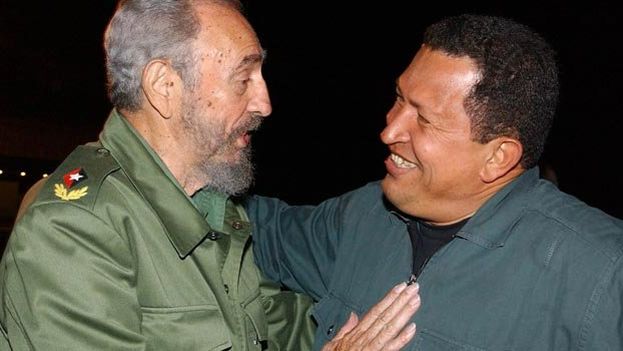
Fidel Castro and Hugo Chavez together in 2002 (EFE)

14ymedio bigger14ymedio, Pedro Campos, Havana, 15 January 2016 – Venezuelan president Hugo Chavez was the result of a political and economic crisis of capitalism, driven by opportunists and embezzlers. His first speech about 21st Century Socialism sustained by a model of economic development beyond oil, in a participative and progressive democracy with production through self-management and cooperatives, was very encouraging for Venezuelans and for the people of the region.

However, during Hugo Chavez’s government, these project cores were abandoned, intensifying the actions of the paternalistic state, the growth of the bureaucracy, movements, leftist institutions and mobilizations, cronyism and corruption, along with medical and education missions, organized by Cuban professionals in order to finance, with the Venezuelan oil received in exchange, the obsolete monopolistic capitalism of the Cuban state, in crisis since the fall of the USSR and the “socialist camp.” continue reading

With the oil boom, the ability to purchase from abroad all kinds of food and supplies to counter private national capitalism and to use these riches to promote regional solidarity with the political processes of Venezuela and Cuba, “under siege from imperialism,” was concentrated in the actions of Chavez and his government.

The abundant money coming from Venezuela’s oil and the tightening of ties with Havana led the Chavista leadership to believe it could forget the economic and social foundations of the 21st Century Socialism it was promulgating. Chavez kept talking about 21st Century Socialism, but assumed the bureaucratic and interventionist practices of Fidelismo.

The ability to expand the “new socialist model” with the support of the then powerful Venezuelan economy, based on rising oil prices, was designed by the Bolivarian Alliance (ALBA) founded in response to the Free Trade Area of the Americas (FTAA), the United States based alliance to create a free trade area in the Americas that would support the economic development and integration of the continent.

The fear of imperialism from the powerful north, fomented especially since the Triumph of the Revolution in Cuba in 1959, the traditional influence of Western Europe in the Caribbean and in much of South America, and a regional lack of self-esteem prevented the idea of a continental trade integration taking shape. And ALBA, initiated by Fidel Castro and Chavez, was the catalyst for the rejection.

The Bolivarian Alliance could have been a project of revolutionary integration if it had considered involvement from below, from the social and economic bases of the countries involved, unification of the currency, free movement of people and capital, and the expansion of ideas to finance the development of a solidarity economy led by equal exchanges, on the basis of cooperatives and self-management. The issue, with all its implications, was addressed in February 2007 in “Some Tactical and Strategic Issues of the Bolivarian Integration” (Kaosenlared.net).

That opportunity was lost, as the original Chavista project was lost, because state development and relations between states prevailed, and “socialism from above” prevailed over real socialism from below.

Heinz Dieterich, the leading international promoter of the ideas of 21st Century Socialism who initially advised Chavez, on January 4 told the newspaper El Nacional:

“I was disappointed when my friend Hugo Chavez did not impose, for many reasons, this combination of possible Latin American developmentalism and the scientific-political paradigm of 21st Century Socialism, which would have put Venezuela in the vanguard of the global society. However, he only used the term 21st Century Socialism, not the respective institutions. Therefore, no sane person can say that there is 21st Century Socialism in the country. What failed in Venezuela was a poorly executed Latin American developmentalism. My disappointment, however, was continental. I spoke to almost all the progressive presidents of Latin America and the Caribbean and none of them had a serious intention to transcend the capitalist system with a new civilization.”

The death of Chavez left Chavismo without its leader’s charisma and without having developed the original program. Chavismo fell into irreversible crisis and the pro-Cuban policies of President Nicolas Maduro ended up sinking it. The situation created in Venezuela with the triumphant arrival of the opposition in the National Assembly can be considered the failure of Chavismo influenced by Fidelismo; but not the failure of 21st Century Socialism, which never managed to develop, not even during the life of Chavez himself.

With the failure of Chavismo-Fidelismo in Venezuela, ALBA, which never developed the 21st Century Socialism alternative, could also quickly succumb as a political alliance. The states that benefited from this project will soon begin to suffer its effects because of their own inability to develop an integration from below, which would have meant the consistent application of 21st Century Socialism, ideas abandoned by Chavez and rejected by Fidel Castro.

The governments of Nicaragua, Ecuador and Bolivia took part in some of the original ideas of 21st Century Socialism and were careful not to embark on the previous statism of Chavismo, essentially maintaining their traditional capitalist development projects, with a State deliverer in the social-democrat style. So they would be less affected by this situation.

What happened in Venezuela was not the failure of 21st Century Socialism, but rather of a development model of state monopoly capitalism, inspired by the obsolete neo-Stalinist Cuban experience, which also failed. It was Chavismo-Fidelismo that failed there.

Fighting Dog / 14ymedio

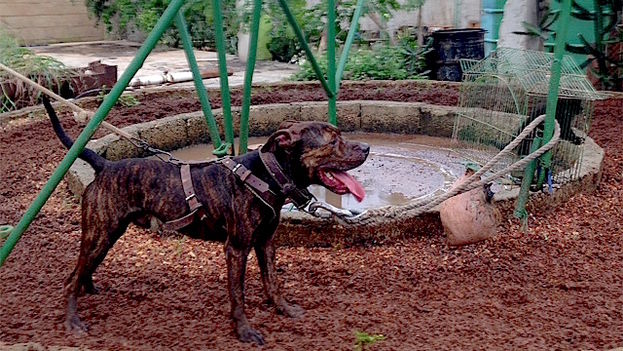
Fighting dog in Cuba. (14ymedio)

14ymedio bigger14ymedio, Havana, 14 January 2016 — Trained to kill his adversary, this dog has received intense training from birth designed to make him into an effective killing machine. What looks like a treadmill or other device, is just a machine built to strengthen his muscles and obsessions.

Dog fighting is a growing phenomenon in Cuban society, which lacks an animal protection law and where economic problems and bring out all kinds of businesses.

The Tomato of Discord / 14ymedio

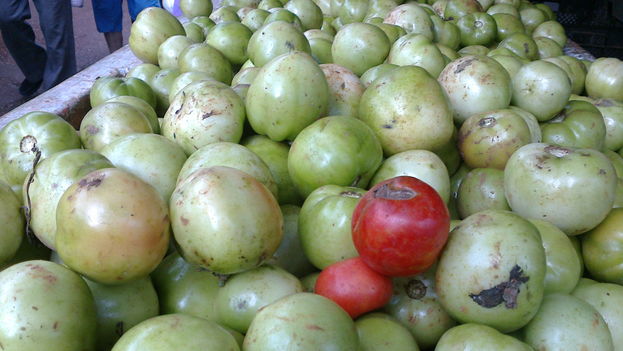
The year began with a marked shortage. (14ymedio)

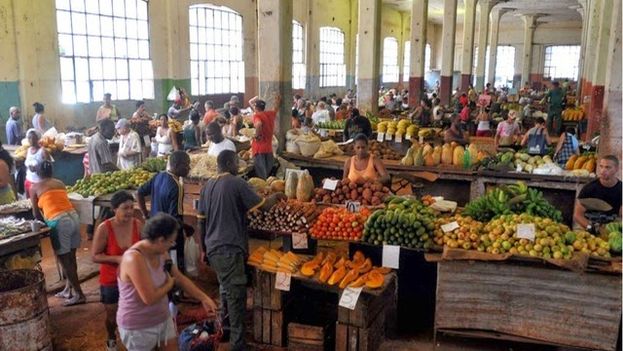
14ymedio bigger14ymedio, Havana, 8 January 2016 – On the Youth Labor Army’s half-empty market stands at 17th and K Street in Havana, this morning, there were only green tomatoes and some very low quality food. The year has begun with a marked shortage that some attribute to the year-end festivities, while others point to a possible introduction of price controls as the cause of the food shortages.

Melia Hotels In Seeks Staff For Its Cuban Hotels In Spain / 14ymedio

Melia Cayo Coco.
Melia Cayo Coco.

14ymedio bigger14ymedio, Havana, 12 January 2016 – The Cuban division of Melia Hotels International opened a recruitment process in Spain this Tuesday, that will run until 5 February. The Spanish company is looking for some twenty professionals in cuisine and hospitality for its facilities in Cuba.

Candidates with at least two years experience can apply for the positions through the website Turijobs.com, or participate in recruitment days being arranged in Gran Canaria, Tenerife, Madrid and Malaga.

The company is looking for food and beverage managers, executive chefs, sous chefs, pastry chefs and room managers, and will cover the cost of flights from Spain to Cuba and offer free full service housing, according to the listings on the web.

Salaries are not specified, but they are guaranteeing “a competitive salary commensurate to the position” and are offering “real opportunities for professional development and promotion.”

Somos+ (We Are More) Holds Convention Despite Police Operation / 14ymedio

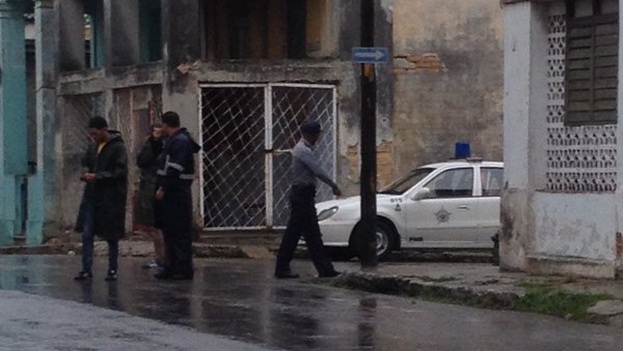
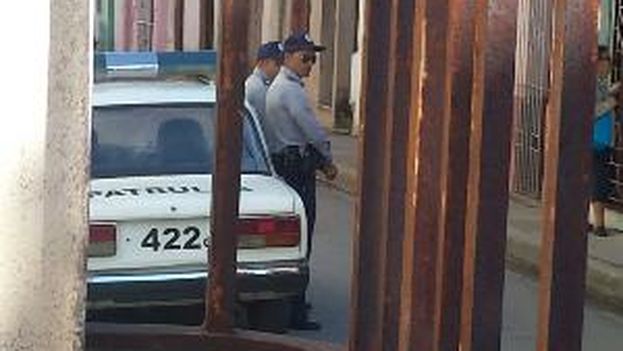
A police patrol at the corner by Eliecer Avila’s to prevent the arrival of guests. (14ymedio)

14ymedio bigger14ymedio, Havana, 14 January 2016 – The Somos+ (We Are More) opposition movement held its national convention Thursday, despite the arrest of several participants and a strong police operation around its site in Havana. The home of Eliecer Avila, leader of the organization, was surrounded by several police patrols at dawn, and only those who entered the home several hours or days earlier were able to attend.

Despite the obstacles, Somos+ issued a statement announcing,”We are holding the convention!” The activists were referring to a meeting held on 14 January to decide on the program ahead of time. The speeches, lectures and presentations were digitized to be able to project them in case their protagonists were not able to arrive at the site.

Groups of government sympathizers, dressed in plain clothes, threateningly warned off any curious person who wanted to take pictures around the site, or access the house on Esperanza Street in the Cerro district, where the event took place. continue reading

According to Pedro Acosta, who was prevented from reaching Avila’s house, the police deployment included several patrol cars and motorcycles. “I was surprised by this display of police force, because I hadn’t noticed any abnormal situation in the neighborhood.” A motorcycle with a sidecar stopped next to Acosta to ask for his identify card. When he said he wasn’t carrying it, the police ordered him, “Get in, citizen!” In the vehicle, they drove along several streets in Havana and let him out on 26th Avenue. “And this?” Acosta asked them, continuing his story, “They started up and the one driving addressed me for the first time telling me that next time I wouldn’t forget my ID card.”

At seven in the evening the siege on Avila’s house continues, according to what he himself told Acosta by phone.

The police also intercepted Angel Santiesteban and prevented him from reaching the house, said Avila.

In the text released this Thursday, the leadership of Somos+ explains that they tried to rent a space for their most important annual meeting. However, those in charge of the locales – both state and private – were intimidated by State Security and so would not rent to them.

Several members of the movement who live outside the capital were threatened and, in several cases, arrested to prevent them from traveling to Havana. Among these was Johana Columbie, who lives in Camaguey and who, with police stationed outside her house, sent a letter to the convention ensuring them that the recent events, rather than frightening her, had given her “strength to continue.”

Other activists such as Alexey Games and Franky Rojas received police summonses received this morning, while the movement coordinator in the province of Las Tunas, Pedro Escalona, ​​was arrested and released just a few hours ago.

Eliecer Avila and Manuel Diaz Mons, general coordinator of Somos+ were arbitrarily detained and warned not to hold the convention.

On its digital page, the movement thanked Amnesty International – in particular Louise Tillotson, investigator for Cuba and the Caribbean – for having contacted their members and for showing concern in the face of the latest developments.

The convention had as its central theme “how to live with the internet in Cuba so as not to have to emigrate, not to have to jump into the sea, or cross so many borders, without having the power within Cuba to run businesses, labor cooperatives, produce resources,” according to Avila.

Cuban Migrants Embark From Mexico On The Last Leg Of Their Odyssey To The US / 14ymedio, EFE

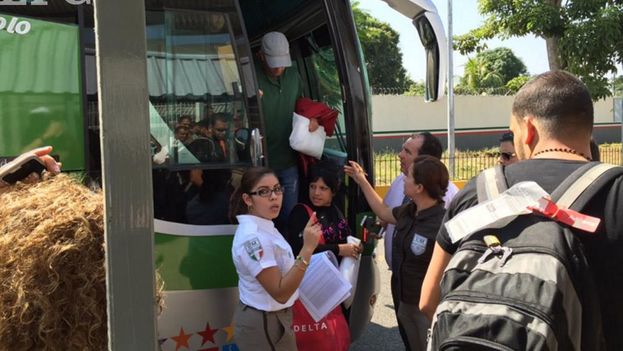
The Mexican National Institute of Immigration receives Cuban migrants on arrival in Tapachula. (INM)

14ymedio bigger14ymedio/EFE, Tapachula (Mexico), 14 January 2016 — The first 180 Cuban migrants covered by an agreement to help them reach the United States, set off on the final stage of their odyssey after entering Mexican territory from Guatemala this Wednesday.

The 139 men and 41 women reached the southeastern Mexican state of Chiapas aboard four buses, guarded by the National Civil Police and the Guatemalan Office of Human Rights.

The Human Rights Ombudsman in the municipality of Coatepeque, Jose Maldonado, said that “the accompaniment and verification for twelve hours” through Guatemalan territory was carried out in the framework of a pilot program following the agreement with Costa Rica, El Salvador and Mexico to help Cubans on their way to the US. continue reading

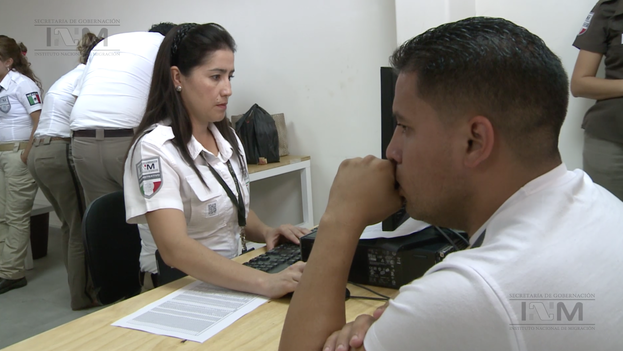
The migrants were received on the premises of the National Institute of Migration (INM) located in Ciudad Hidalgo, a few yards from the border. In these offices, staff conducted the process by which the Cubans received a pass allowing them to travel through Mexico for 20 days by which time they should have made it to the United States. The measure is covered in Article 42 of the Immigration Law that permits foreigners to be authorized to enter the country for “humanitarian reasons.”

Also participating in the process were personnel from the National Commission of Human Rights (CNDH), the Red Cross and several non-government organizations that defend migrants.

On their arrival at the federal facility at the Rodolfo Robles border crossing at Ciudad Hidalgo, Chiapas, the travelers expressed their goal of reaching the United States to reunite with their families, as in the case of Olanis Diaz, a native of Havana, who will see her father in Miami, Florida, after a hard journey.

The Mexican press, which is covering the journey of the Cubans, printed several testimonies from the migrants who expressed their gratefulness to the country.

“What we want is to be on our way as soon as possible. We don’t want to stay in Mexico, not because we don’t like it, but because in Miami part of my family is waiting for me, my sister, my nephew, whom I haven’t seen for a long time,” one migrant told the newspaper Milenio.

The newspaper also reflected the desperation suffered by the Cubans when they saw their path cut off in Costa Rica last November, when the migration crisis began. “I tell my compatriots left behind, don’t forget your dreams, and keep going,” said one of the newcomers to North America.

Images released by the Mexican Ministry of the Interior of the moment when Cubans arriving from Costa Rica via El Salvador and Guatemala are helped by the National Migration Institute in Chiapas. (INM / screenshot)

“We are grateful to the town of La Cruz and the Government of Costa Rica; thanks to them this dream has become possible,” another of the migrants, a young man of 27 who hopes to join his mother in Miami, told the Mexican newspaper El Universal.

After the two hours required by the immigration process, Cubans left the offices and boarded four other buses, contracted for by the INM to take them the 27 miles from Ciudad Hidalgo to Tapachula, where they can buy plane or bus tickets to continue their journey to the north.

After being stranded for two months on Costa Rica’s border with Nicaragua amid a diplomatic dispute between the countries, the Cubans considered it “an achievement to arrive at Mexico’s southern border.”

Although they still do not know the steps they will have to take to continue their journey, they expect the rest of the journey to be organized by themselves and, on reaching the United States, expect benefits under the Cuban Adjustment Act.

Leonel Chirino, a 30-year-old baseball player, who arrived on the first bus, sent a message of “peace” to the more than 7,000 if their compatriots who are still in Costa Rica, from where the first group left Tuesday night by air to El Salvador, and from there by land through Guatemala and then Mexico.

I assure you “that you will all be able to leave, everything is well planned, everything is well coordinated, we are first in line for visa and we are all going to reach the United States.”

The journey from Costa Rica to Mexican territory was coordinated by the International Organization for Migration (IOM).

The Costa Rican Foreign Minister congratulated El Salvador, Guatemala and Mexico for the flexibility they showed and added that they will continue working “very hard on behalf of all Cuban migrants who remain in the country.”

“Our opinion, which will have to be taken into account by other countries, is that this process has met all expectations. People have arrived safely, healthy, happy and on time. Everything has gone very well and we hope that the region will say the same,” he said at a news conference.

This coming 18 January a technical meeting is scheduled in Guatemala which will be attended by representatives of Central American governments, to assess the first transfer of migrants.

An “Inexplicable” Problem / 14ymedio, Reinaldo Escobar

Everything seems to indicate that it is not possible to achieve a "peaceful coexistence" between the socialist system of production and a form of production and trade that responds to the rules of supply and demand. (EFE)
Everything seems to indicate that it is not possible to achieve a “peaceful coexistence” between the socialist system of production and a form of production and trade that responds to the rules of supply and demand. (EFE)

14ymedio bigger14ymedio, Reinaldo Escobar, Havana, 14 January 2016 — In recent days, after the “threat” suggested by General President Raul Castro that there would be price controls on agricultural products, the official media have been generous with reports and analysis about the rising prices and sudden shortages. We collected opinions from the protagonists – producers, vendors and consumers – to shine a light on the absence of a compelling elucidation, supported by arguments that would explain a phenomenon like this occurring in a “scientific” economic system.

Everything seems to indicate that it is not possible to achieve a “peaceful coexistence” between the socialist system of production and a form of production and trade that responds to the rules of supply and demand. continue reading

As far as is known, no tomato grower has been forced to throw his harvest to the pigs because he can’t sell it at the price demanded. In the markets in Havana and in many of the provincial capitals, there are always enough customers with the necessary purchasing power to acquire, literally by the sack, everything that is on display in the stalls.

Playing with numbers difficult to confirm but easy to imagine, it is calculated that 10% of the economically active population enjoys 80% of the products and services sold. This means that the remaining 90% will have to settle for 20% of what appears in the markets. This, obviously, generates shortages and rising prices.

What is produced and sold under the rules of the market will be absorbed, for the most part, by those who produce and sell within that system, without their feeling compelled to refuse the crumbs from the ration market or any of the subsidized public services.

The rest, sometimes call the working class or other names – the “people” or “ordinary Cubans” – are obliged to acquire their most basic necessities, those not supplied in the ‘basic market basket’ from the ration system, from the TRDs – initials that, literally, stand for “Hard Currency Collection Stores” – and the agricultural markets. Every peso rise in prices in either place means an irreparable loss to the family table, unless you have recourse to “the diversion of resources” (i.e. taking things home from your workplace, for your own use or to sell to others), “the struggle” (more or less the same thing), or “invention” (also the same thing), or any other euphemism that masks the commission of a minor crime.

Farmers know that if they produce double they would have to market their products at half the price, which means working harder to earn the same. Barbers who can’t keep up charging one convertible peso for each haircut, or snack shop owners who sell soft drinks in front of their establishments, can only raise their prices. That six-Cuban-peso cheese pizza that solved the problem of lunch in early 2007 is now only a memory. A closed circuit of prosperity has taken shape, where those excluded are state employees who are not stealing, retired people without family abroad, unsuccessful entrepreneurs, and those who depend on social security.

The emerging Cuban middle class has a particular vision on how to replenish “the expenditures of socially necessary labor” in their hectic work, far from the state’s criteria, cemented in the belief that the rationed and subsidized basic market basket allows it to reproduce the salaried workforce under its control.

The promised solution to the problem, announced outside the program in the last session of the National Assembly, so far has been represented only by a couple of “calls” to produce more, launched by the National Association of Small Farmers (ANAP) and the agricultural workers union. Faced with the empty food stalls and the little signs with their inflated prices, many wonder why, if this was the solution, they didn’t call for it much earlier.

In the Labyrinth of Taxes / 14ymedio, Zunilda Mata

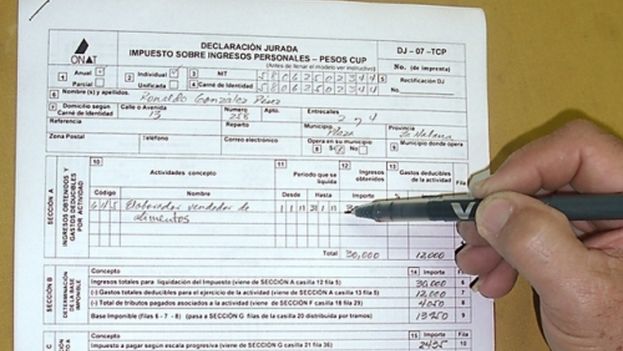
This year the Cuban Tax Office has added the ability for taxpayers to send their statements by email.

14ymedio bigger14ymedio, Zunilda Mata, Havana, 13 January 2016 – Several scribbled papers and a severe headache is what Claribel got this Monday, when the self-employed dressmaker started to fill out her tax form. With the recent start of the tax campaign for the 2015 tax year, doubts are arising about how best to comply with the duties to the Treasury.

Officials of the National Tax Administration Office (ONAT) call on people not to delay and to pay their taxes before the 30 April, deadline. The chief of the state entity, Yamile Perez Diaz, criticized those delinquent during a press conference last week, although she added that “greater discipline and a tax-paying culture” is evident in the country. continue reading

This year ONAT has added the ability for taxpayers to send the main form, known as DJ-08, by email. The move could speed up receipt of the document and guarantee that it reaches the right hands, instead of getting lost in the inefficient Cuban postal service.

However, the improvements announced are not enough for people like Claribel, who for most of her life only heard about taxes as an evil of the capitalist past. For her, filling out the declaration presents obstacles almost impossible to overcome. “Next year I’ll hire someone to help me even though I will have to give them give part of my earnings,” she says.

Mairell Naranjo offers financial advice to small private businesses and also handles all of the license holder’s ONAT paperwork. Her specialty is the payment of monthly and quarterly taxes, plus the preparation of the tax return.

Services like those offered by Naranjo are well received among the the country’s 496,400 self-employed. Computerized tools that help keep track of a business and accurately calculate profits and taxes have also begun to be available.

Under the name Cuentapro, a tax program sold on the informal market that allows “efficient management of accounts,” according to Alexander, the young man who created it. It keeps a thorough record of payments to employees, costs for buying goods, and un-taxed earnings, letting the self-employed person know “what goes into our pocket and what we have to give ONAT,” says one of the sellers of the software.

Like every year, those who meet their tax obligations before 28 February will be entitled to a discount of 5%. Last year, only 67% of taxpayers filed for this benefit.

In 2015, the gross income declared by the self-employed totaled 3.825 billion Cuban pesos. This represented an increase of one billion over the previous year. However, 68,000 taxpayers were called to account by ONAT for declaring incomes below those estimated by the tax administration itself.

Number of Self-employed in Cuba is Dropping / 14ymedio, Zunilda Mata

Sale and preparation of food is the sector with the highest number of self-employment licenses. (14ymedio)

14ymedio bigger14ymedio Zunilda Mata, Havana, 11 January 2016 – The number of self-employed workers in Cuba decreased throughout 2015, as confirmed by the official press on Monday. In the middle of last year there were 504,600 people working for themselves, while at the end of December the number was 496,400.

Of those working in the private sector, 65% are in the provinces of Havana, Matanzas, Villa Clara, Camaguey, Holguin and Santiago de Cuba, as detailed in a report by the Ministry of Labor and Social Security. continue reading

Among the activities with the greatest weight in the private sector are preaparing and selling food, with 56,270 licenses granted; the transport of freight and passengers with 50,482 self-employed workers; and the leasing of houses, rooms and spaces with a total of 28,634 self-employed people.

These occupations are followed by telecommunication agents, which total 24,195 across the island, while contract workers total 114,000, 22% of self-employed Cubans.

In its report, the ministry states that of the total number of people authorized to be self-employed, at least 17% are paid by the state sector. Youth and women account for 30% of all self-employed in the country and retirees represent 12%.

At present, there are just over 200 activities approved for this type of non-state labor. The high taxes, the absence of a wholesale market, the excessive controls and the inability to import commercial goods, hinder the performance of the sector.

The decrease in the number of self-employed could be interpreted as hitting the “natural limit” in self-employment since the flexibilities initiated in 2010. However, specialists at the Ministry of Labor and Social Security expect the number to grow “gradually,” and that added to this form of management will be “a set of dining establishments and services to the population” that will remain under state ownership.

“They See Us as a Threat” / 14ymedio, Reinaldo Escobar

Police operation outside the house of Pastpr Yiorvis Bravo on Friday so that he cannot support his fellow pastor whose church was demolished. (14ymedio)

14ymedio bigger14ymedio, Reinaldo Escobar, 11 January 2016 – The sun wasn’t even up when they heard the pounding on the door and the house became a chaos of police and demolition brigades. Amid the screams of the family’s children and the alarm of the faithful, the temple of the Fire and Dynamics evangelical movement in Camaguey was torn down, and its pastor, Bernado Quesada, was detained at the police station for hours.

On Monday, 14ymedio spoke by phone with the pastor about what happened last Friday and the current situation at his place of worship. continue reading

Escobar. Have you received a call from the Cuban Council of Churches to investigate what happened?

Quesada. To our knowledge, we have not received any calls. Furthermore, the Cuban Council of Churches has been completely divorced from our church.

Escobar. What is the situation now at the temple?

Quesada. It doesn’t exist, it was completely demolished. However, yesterday, we came to worship at the place where it had been. The turnout was massive, even people who hadn’t come to our church for days, came to show their support. The support has been widespread.

I stood under an almond tree and below its branches we held the services, we worship… however we can.

Escobar. Who flocks to the temple?

Quesada. People come from everywhere. We’ve only been here three years, since October 2012 and we have a congregation of over 500 people. Before coming here, I was pastor of the Fire and Dynamics Church in Macareño, Santa Cruz del Sur. I am also the founder of the apostolic reform in Cuba since 2013, when a group of pastors tired of hypocrisy and a form of “doing church” that was a little bogged down, too passive and attached to the existing system in Cuba.

So we began the apostolic reform on the island, which today has about 50 churches nationwide.

Escobar. What do you think prompted the authorities to demolish the temple?

Quesada. Everything that is independent or has nothing to do with the officialdom, they really hate it, they do not like it. We’ve spent years holding events at the national level, and they see this as a threat, because it is our churches – right now – that are growing the most, adding the greatest number of people.

Escobar. Is your church legally recognized?

Quesada. We want them to enroll us within the Law on Associations and Worship. We have asked repeatedly to be allowed to complete the process for legalizing our church, but even if there wasn’t a law of association, it is not possible. We have addressed the institutions orally and in writing, at all levels from national to municipal, we have also made ​​claims, sent letters signed by dozens of people to demand we be recognized but they do not respond.

Escobar. But why did they deny you recognition?

Quesada. They said we were independent, we had nothing to do with the government. They accused us of being “a church paid by the CIA” and a few years ago they told us we were part of the “Bush plan” and we wanted to do a church in parallel to the existing one. All that, because we have not stopped stomping our feet and raising our voice.

Escobar. And is what they are saying true?

Quesada. It is a slander. So we’ve been punished. For example, we spent almost ten years unable to leave Cuba because they did not give us permission to travel. Since we founded our church until the so-called immigration and travel reform of 2013, several of us were not allowed to travel abroad.

Escobar. How are the relations of the church with the Office of Religious Affairs of the Central Committee of the Communist Party?

Quesada. Mrs. Caridad Diego, who heads the office, wants no part of us. For more than ten years we have not been invited to any activity or event.

Escobar. How do you plan to continue your work as a pastor now that you no longer have a temple?

Quesada. The temple is not a building. The temple is not a ceiling. The temple is its people.

Escobar. What do you think the authorities will do now?

Quesada. After they committed this madness, they are scared. There are still police patrols in some of the main streets leading to our temple. They are worried because they have very few arguments to explain why they did something like this.

Escobar. What were the reasons the Institute of Physical Planning gave to explain the demolition?

Quesada. They said it was built from materials that had been purchased illegally, but it is clear – knowing the monster – that were we were not going to make a mistake like that. Those were the rumors they put out there, for the fools. They also started to put out that “the pastor works for the CIA and has a car full of toys.” Nonsense, not arguments.

Escobar. Will you make a claim?

Quesada. No, we will not. We will not spend ink on that. It is fruitless. We have too much of God for such a little devil.
Organóponicos: Growing Fresh Food in Cuban Cities / 14ymedio

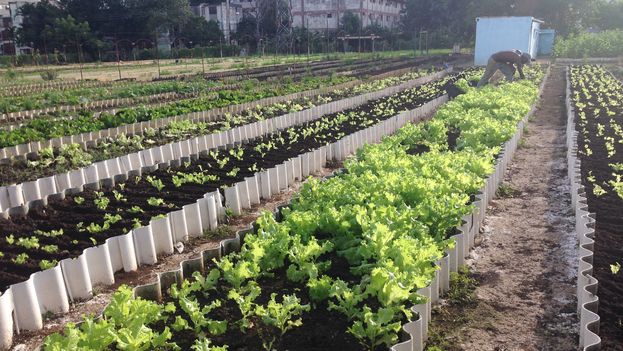
Organoponico_CYMIMA20160112_0004_1314ymedio bigger14ymedio, Havana, 12 January 2016 — Nestled in urban areas, organopónicos — urban farm plots — are committed to bringing root crops and other vegetables to the tables of those living farther from farmland. If the initiative initially offered cheaper prices than other agricultural markets, currently their directors call for “selling at prices that support the population, without affecting the need to make it worthwhile for the producers,” a goal that still hasn’t stopped working.

Police Warn Eliecer Avila That Somos+ Convention Will Not be Allowed / 14ymedio

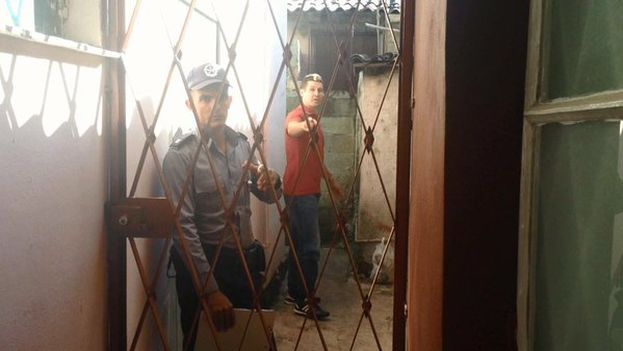
The police enter the home of Eliecer Avila to arrest him.

14ymedio bigger14ymedio, Havana, 11 January 2016 – The repressive actions against the Cuban opposition were repeated this Sunday across the country. It is estimated that more than 200 activists were arrested, according to independent reports. The police also arrested Eliecer Avila, the leader of the Somos+ (We Are More) Movement, and warned him that they would not allow the annual convention of his organization, planned for 14 January, to be held.

In Havana, the Ladies in White marched as they do every Sunday on Fifth Avenue, in the west of the capital city, accompanied on this occasion by two dozen activists. At the end of the pilgrimage they were violently arrested, according to testimony from witnesses at the scene. continue reading

In the east of the country, the Patriotic Union of Cuba (UNPACU) reported dozens of arrests of its members when they tried to reach the sanctuary of the Virgin of Charity of Cobre, in Santiago de Cuba. The general coordinator of the organization, Jose Daniel Ferrer, had warned that they would be “protesting the assaults by the repressive forces to stop activities for children.”

Several dissident groups suffered searches of their homes and confiscations associated with 6 January, the Day of the Three Kings – a day before the Revolution when Cuban children received gifts for Christmas. Toys, treats and audio equipment were seized by the police in different areas of the country to avoid the celebrations organized by activists for children in their neighborhoods.