Bacardi Says Granting Cuba Rights To ‘Havana Club’ Name Is Illegal / 14ymedio

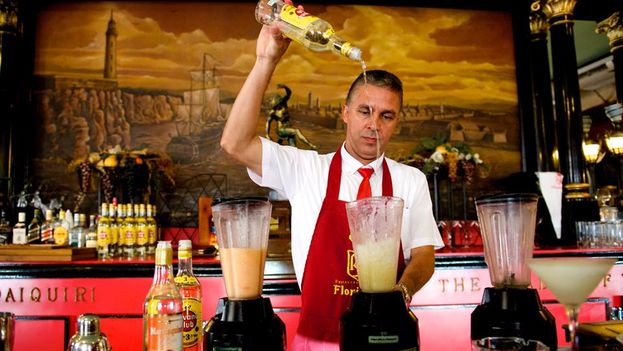
The legal battle over the rights to market Havana Club rum ended last month, in Cuba's favor, after two decades of dispute. (Havana Club)
The legal battle over the rights to market Havana Club rum ended last month, in Cuba’s favor, after two decades of dispute. (Havana Club)

14ymedio bigger14ymedio (with information from agencies), Havana, 1 February 2016 — The Bacardi company has asked for explanations from the United States government regarding the authorization to sell Havana Club rum in the country once the embargo is lifted, claiming that this January’s granting of the trademark rights to the Cuban government is “illegal.”

The company, based in Bermuda, directed a request with regards to the renewal of the trademark to the Treasury Department, and in a statement on Monday, accused it of violating “the language and spirit of US law.”

Eduardo Sanchez, Bacardi’s legal advisor, said “Americans deserve to know the truth of this sudden and unprecedented decision taken by Washington that reversed an international policy that protects against the acceptance of confiscations by foreign governments.”

The legal battle over the rights to market Havana Club rum came to an end last month after two decades of disputes, when the Patent and Trademark Office ruled that the Cuban state company Cubaexport is the lawful distributor of the iconic rum.

In 2006, Cubaexport tried to obtain a license from the Treasury Department’s Office of Control of Foreign Assets (OFAC) to pay $500 to renew the Havana Club trademark, but it failed to do so and its registration was declared invalid. The Cuban company had not given up and re-initiated its request earlier this year and was successful.

Prisons in Guantanamo / 14ymedio, Reinaldo Escobar

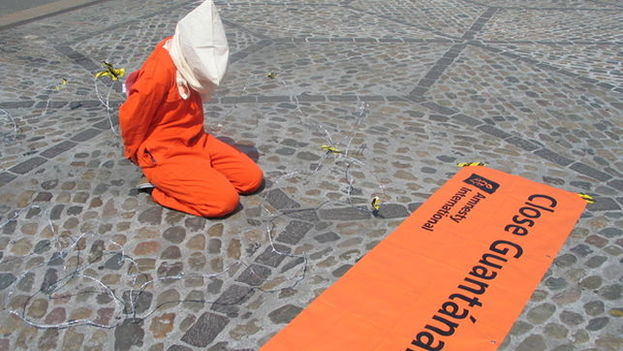
Protest action to demand the closure of the U.S. prison on the Guantanamo Bay Naval Base. (Amnesty International)

14ymedio bigger14ymedio, Reinaldo Escobar, Havana, 4 February 2016 – To the shame of the United States justice system, the prison at the Guantanamo Naval Base is 14 years old today. Since 2003, 680 detainees have arrived there, though today there are fewer than one hundred. Several of them are on hunger strike and are force fed through tubes. Prestigious media such as The New York Times have published letters from the inmates denouncing abuses; international human rights organizations have exposed the use of torture at this prison compound where the laws of no country in the world apply. President Barack Obama has promised to end this atrocity. He has not succeeded.

Not far away, on the road that runs from the provincial capital to the town of Jamaica, is Cuba’s Guantanamo Provincial Prison. It has the reputation of being the prison with the worst food in all of Cuba. continue reading

Prisoners of conscience who have passed through this facility say that what works best there are the prisoners’ councils, made up of common criminals, organized to beat and attack the “politicals” when ordered. Cubans who have tried to leave the country through the Naval Base are held there. It doesn’t matter what province they come from, with rare exceptions they end up there with a two to five year sentence for violating the border perimeter.

Another singularity of the place are the numerous incidents of self-harm that occur there. Some inmates who can’t stand the prison regime buy blood from fellow inmates with HIV to infect themselves. There is also every kind of self-mutilation.

In June 2007, a young man named Yosvani Correa Lafernal injected himself with excrement and died a week later of a widespread infection, without medical attention. Another Guantanamo inmate, known as Hannibal had to have both of his arms amputated after he injectd oil into his veins.

Many other cases have never been properly documented, nor have the hunger strikes, the beatings, the lack of medical care. No government authority has ever spoken about it, no official press has never mentioned this.

To the shame of all Cubans, that is Cuba’s Guantanamo prison.

People In Need Award Goes To Former Cuban Prisoners Of The Black Spring / 14ymedio

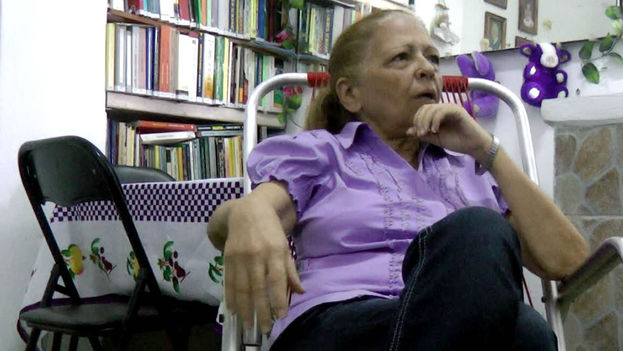
Martha Beatriz Roque believes that work to defend human rights "is becoming more difficult for the internal opposition," in Cuba. (14ymedio)
Martha Beatriz Roque believes that work to defend human rights “is becoming more difficult for the internal opposition,” in Cuba. (14ymedio)

14ymedio, Havana, 3 February 2016 — The Czech organization People in Need has given its Homo Homini Award for this year to the 11 former prisoners of the 2003 Black Spring who continue to live in Cuba, as confirmed to this newspaper by several of the laureates. The entity, focused on the defense of human rights, has recognized the work of those who have continued to exercise their peaceful activist for decades, despite the rigors of prison and political repression.

Last year the award celebrated two decades since its founding. The award is intended to honor individuals for their “dedication to the promotion of human rights, democracy and non-violent solutions to political conflicts.” continue reading

Among the honorees with distinction, is Cuban opposition member Felix Navarro who told 14ymedio that he was “very pleasantly surprised with the news” and dedicated the honor to all those who struggle “peacefully inside Cuba to produce the changes that will make Cubans free.” The activist went on to ask whether the Cuban government will allow the winners to travel to receive the award, given the travel restrictions they have endured since their release from prison.

The only woman in the so-called Group of 75, Martha Beatriz Roque, welcomed the recognition for her work “within the country to defend the cause of human rights.” The activist points out that this task “is becoming ever more difficult for the internal opposition” and agrees that it is likely that none of the 11 will be allowed to leave the country, so that “there will be an empty chair, with everything that’s going to mean.”

“Moral and political backing and support,” is how the dissident Angel Moya described the Homo Homini Award, adding that this is a recognition that extends “to all those within Cuba struggling to establish the rule of law”.

For the leader of the Patriotic Union of Cuba, Jose Daniel Ferrer, this is a good time to remember that “the first Cuban to receive it was Oswaldo Paya Sardinas in 1999.” At the time, Ferrer was an activist in the Christian Liberation Movement, who spread ” the news throughout the eastern part of the country.” He added, referring to Payá’s death, “It is now up to us and this award makes us very happy.”

Among the winners from previous years, as well as Oswaldo Paya, are Sapiyat Magomedova (Russia, 2013), Intigam Aliyev (Azerbaijan, 2012), Azimžan Askarov (Kyrgyzstan, 2010), Liu Xiaobo (China, 2008), Su Su Nway, Phyu Phyu Thin and Nilar Thein (Myanmar, 2007), Ales Bialiatski (Belarus, 2005) and Sergej Kovaljov (Russia, 1994), among others.

The NGO People in Need was founded in 1992 and is defined as a non-profit organization ” based on the ideas of humanism, freedom, equality and solidarity.” It has employees and volunteers both in the Czech Republic and in a dozen countries seeking to “provide assistance in regions of conflict and support the commitment to human rights throughout the world.”

Realism In The Future Of US-Cuba Relations / 14ymedio, Pedro Campos

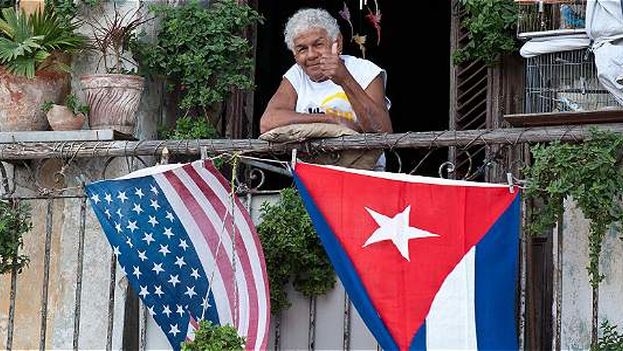
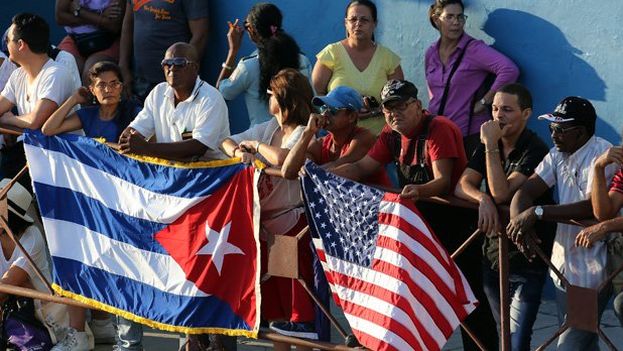
The flags of Cuba and the United States waving as a lady on her balcony gives the “thumbs up.” (EFE)

14ymedio bigger14ymedio, Pedro Campos, Havana, 3 February 2016 – Last week President Barack Obama’s administration approved new measures to loosen the strings of the blockade-embargo on the way to normalization of relations between his country and Cuba. Presumably this will be the norm during what remains of his administration. Should the Democratic candidate win in the upcoming presidential elections, we can assume that this policy will continue.

But the same cannot be expected if any of the current Republican candidates wins, according to statements made by themselves and the opinions of prestigious international analysts. continue reading

The person in change of the matter in the Cuban Foreign Ministry, Josefina Vidal, has said that in no case would the new president of the United States break off relations with Cuba. This is a sign of Cuba’s willingness to maintain its current course with any new administration in the US.

Diplomatic relations between the two countries have been restored and now there is an effort to expand cooperation in a number of fields, some of them blocked by the policy of the embargo supported by both Republicans and Cuban-Americans in the US Congress.

However, we must not lose sight of the fact that, “it’s one thing with a guitar and something else with a violin”; that is, it is not the same to be in the opposition as it is to be in the government.

No one could rule out that behind the Republican resistance in Congress to lift the blockade-embargo, the most important factor could be avoiding that Obama and the Democrats get credit for delivering the coup de grace to communism in Cuba, which could mean reserving the lifting of the whole mess for themselves, once they are in the White House.

It was Republican Richard Nixon who began the thaw with China. The policy of rapprochement with the USSR, which many consider the beginning of the end of communism in Europe, was the work of another Republican administration, that of Ronald Reagan. Nixon visited Beijing, Reagan, Moscow. Perhaps they want to reserve the visit to Havana for another Republican and therefore are working to hamstring the current president.

Previous Republican administrations tried to approach Cuba. It was the administration of George W. Bush that was the first to lift some restrictions of the embargo-blockade related to the sale of food.

The United States establishment as a whole, for some time, has been becoming aware that the politics of the blockade-embargo should be changed for different reasons, and Republican governors, senators and representatives from states with potential investment interests in Cuba have been behind all of the moves to lift some of the prohibitions.

The current maneuvers in the American Congress to try to modify the Cuban Adjustment Act have served to encourage emigration and stimulated the open confrontation of sectors of the opposition, knowing that government reprisals will complicate progress in relations between the two governments and hinder Obama’s announced trip to Cuba.

No one knows better than the Republicans that there is a close relationship between the Cuban Adjustment Act and the lifting of the blockade-embargo.

On the other hand, the imperialist image of the United States trying to impose itself on Latin American has been broken with its approach to Cuba and it is no secret that this was one of the objectives of the new policy.

The setback for the anti-imperialist populist-statist forces in the region is not a direct consequence of this change in the image of the United States, but it is related to it to the extent that these forces find it more difficult to blame imperialist interference for their internal failures. Meanwhile the Cuban-American rapprochement strengthens the defenders of the United States on the continent.

Whoever becomes president after Obama, regardless of their party, could also benefit from this new image in the region to make U.S. policies aimed at strengthening its interests in the hemisphere more effective

Diplomatic relations are one thing and good political relations and collaboration are another. The administrations that follow Obama’s could take advantage of the opportunities that rapprochement brings to the U.S. as a nation to continue advances in areas of security, drug trafficking, human trafficking and the environment.

Those who continue to condition the relations between the two countries on democratic changes in Cuba are not taking into account that it could be reversed. This does not negate that there are fundamental obstacles to Cuba’s economic and social development derived from the persistence of the model of a centralized political economy imposed in the name of a non-existent socialism, and not as a result of imperialist policies as the Cuban government charges in an attempt to justify itself.

As opening spaces for the export of capital and goods is one of the objectives of any United States administration, and fostering conditions to achieve this with Cuba is what is now in play in the relations between both countries, any new administration would leave this path open.

A general assessment of this whole equation suggests that the predictions of some international analysts about the uncertain future of relations between both countries is a matter about which it is better to wait for events to develop, to be able to make a more accurate prognosis.

The End of the ‘CD Era’ / 14ymedio

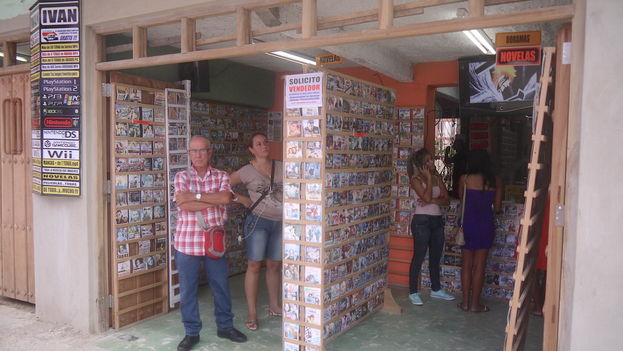
Disc store with music, movies and TV shows, in the city of Camagüey. (14ymedio)

14ymedio bigger14ymedio, Havana, 3 February 2016 – the lifespans of technology are getting shorter. Less than five years ago the entire country was flooded with sales outlets for CDs with music, TV shows and movies, but now that moment has passed. Many sells of audiovisual materials have broadened their offerings to sell not only CDs and DVDs, but also copy material onto hard discs or flash memories.

The advantages are many: it lowers the costs for the self-employed sellers and for the users. The selection can be produced on demand, instead of opting for the so-called “combos” which are not offered on discs. For the price of two Convertible pesos (~$2 U.S.) you can get up to one terabyte of audiovisuals tailored to your own tastes.

It will not be unexpected, therefore, to see that with the same speed that the shelves were filled with discs with their flashy covers, smaller outlets will flourish where there will be just a computer and a catalog.

The School for Others / 14ymedio, Luz Escobar

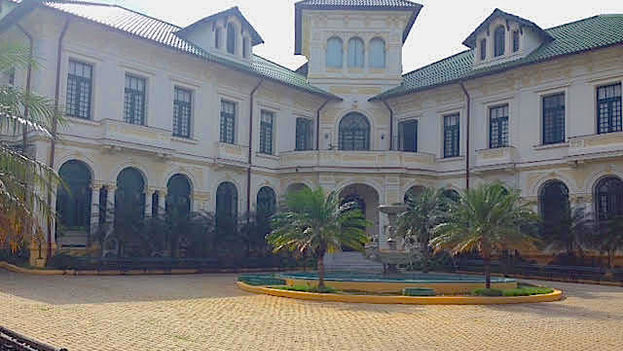
Havana International School on 18th Street in Miramar

14ymedio bigger14ymedio, Luz Escobar, Havana, 2 February 2016 — She is not wearing a uniform, she is not carrying a bag with snacks, nor does she have a kerchief tied around her neck. However, at nine years of age, Malena is on her way to school, a learning center for the children of diplomats where she has been able to register with her parents’ economic means and a Spanish passport – a legacy from her grandmother.

Cuban education is no longer the same for everyone. There are classrooms where students enjoy unlimited internet connection, air conditioning and new furniture. In the dining halls, the menu is varied, vegetables are plenty and it is common to hear a child talk about how he or she spent the weekend at the exclusive Cayo Coco resort or that his or her dad got a new truck.

Founded more than forty years ago, the Havana International School was originally designed for the children of ambassadors and consular personnel. In the 1990s, the children of foreigners working for joint venture firms arrived, but as of a few years back Cubans who can afford the high tuition fees and show a foreign passport have appeared. continue reading

As opposed to public schools where material resources are scarce and the deficit of teachers increases, the International School on 18th Street in Havana’s exclusive Miramar neighborhood, has a library, a multimedia center and a playground. The waiting list of those interested in working at this attractive place would be enough to fill all the empty positions in primary and secondary classrooms throughout the country.

To register a child in the International School or the Spanish Education Center of Havana, near the Aquarium in Miramar and founded in 1986, you must show documents that confirm you are a foreigner. A condition that up to a few years ago was exclusive to the children of diplomats, but that now is shared by the offspring of returned émigrés and those naturalized as Spaniards through the Spain’s Grandchildren Law, like Malena.

Registration requires showing the student’s previous test results and a willingness to pay the tuition. A year in the first few grades of elementary education can cost between $4,000 and $10,450, from kindergarten to fifth grade.

Despite the high fees, there are Cubans who can afford this amount to avoid sending their kids to public school. Among them are those who, after living long years abroad, refuse to accept the ideologized Cuban education. “Our girl was born in Madrid and is not used to any of those things you see in schools here,” the mother of a teenager who attends secondary school at the so-called “Spanish little school” told this newspaper. Married to a renowned artist, and after a more than a decade living in Salamanca, they now juggle to pay the school’s tuition.

“But, we make the sacrifice because there they teach her to be creative and to think for herself,” added the proud woman. “I don’t want to even imagine what it would be like to have to register her in a one those other schools,“ she says from her house in Central Havana. The girl shares a classroom with the children of foreign reporters, managers of joint venture companies, and the new rich.

The teachers at these schools, as well as the administrative and maintenance personnel, are hired directly through recommendations. In this case, there is no involvement of the agencies controlled by the State, and this is common in the majority of positions paid in freely convertible currency or tied to foreigners.

Lina, a young graduate of San Alejandro Fine Arts Academy, taught for several years at one of these learning centers thanks to her good English language skills. Now, she says that the salary was “magnificent,” but that the most important thing was the “airs of freedom that could be felt upon entering.” On its web page, the International School describes itself as a “progressive institution.”

More than a third of the teachers at the school come from Canada, United Kingdom, Holland, Germany and Portugal. The rest are Cuban hires that had to show that they are “versed in modern pedagogical methods.” At the end of their studies, the pupils obtain valid diplomas that are recognized by the European Union or other nations.

The curriculum is not very different from that of the public education, although the way it is taught is. Among the subjects that they must learn in elementary school are Math, English, Spanish, Arts Education and Music, together with Physical Education, Computer Science and Civics. This last one without an iota of ideology.

With the just obtained Spanish passport, Ivette, owner of a paladar (private restaurant) in Old Havana decided to save her daughter from the “dirty bathrooms, the greasy metal [lunch] tray, the female teacher that smokes and yells,” states the prosperous entrepreneur, talking about her own childhood school experiences. “This is the best money I spent in my life,” says the woman about the “little school for yumas*” that her daughter attends every morning.

*Cuban slang for foreigners.

Translated by Ernesto Ariel Suarez

Marking the Time Cards / 14ymedio

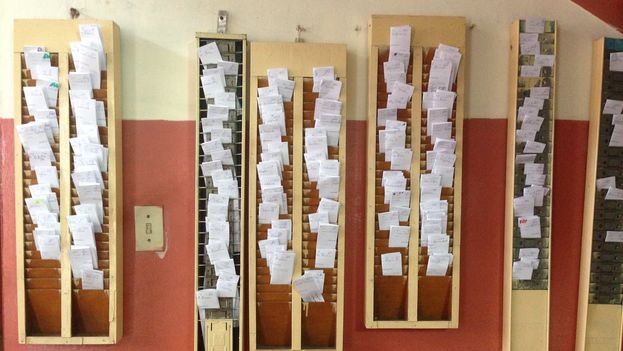
Workers’ time cards in a Havana polyclinic. (14ymedio)

14ymedio bigger14ymedio, Havana, 1 February 2016 — In many workplaces, throughout Cuba, the old time clocks that were used to record when employees arrived and left, have been breaking with age and lack of maintenance. The “clack” that used to be heard in the first hours of the mornings as workers punched in with their time cards is, in most of these places today, an echo of the past.

Punctuality has evolved into a somewhat elastic concept in Cuba and workers blame their frequent tardiness on buses that are slow or don’t arrive at all, the rain, electrical outages in their neighborhoods or a drop in the temperature to below 68 degrees Fahrenheit. Any justification seems to serve, especially if one considers that the average salary doesn’t exceed the equivalent of $25 a month.

Lacking accurate mechanisms to register if someone arrived on time for their workday, there are improvised systems where the employee must put their cards when they arrive and when they finish their work. This photo shows a polyclinic in Havana, where it is common for nurses and doctors to help out by ‘marking’ the cards of the stragglers.

Produce Vendors in Pinar del Rio Worried After Police Raids in Havana and Artemis / 14ymedio

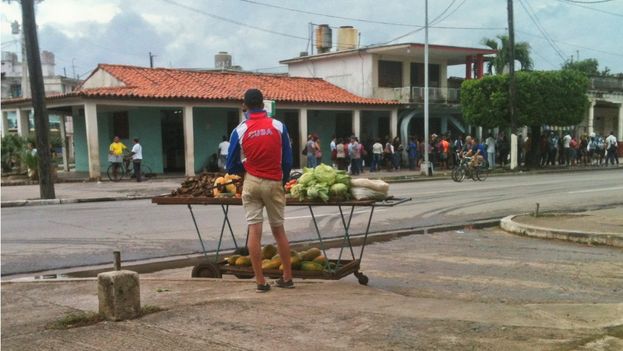
Yosvel, a self-employed produce vendor on Rafael Ferro Avenue in Pinar del Río. (14ymedio)

14ymedio bigger14ymedio, Juan Carlos Fernandez, Pinar del Rio, 1 February 2016 – The fragile commercial network in the city of Pinar del Rio is living in fearful times. The news of the police raids on vendors who sell fruits and vegetables from mobile carts in Havana and Artemisa has been enough to keep many of Pinar del Rio’s vendors from going out, for fear of being the next on the list for confiscations and fines.

Earlier this year an experiment was launched in the province of Artemisa to impose price controls. The measure has also been implemented in dozens of markets in the Cuban capital and threatens to be implemented nationwide, and although some are relieved, others are suspicious. continue reading

The greatest fear among the Pinar del Rio produce vendors is that along with the fixed prices on products, there will be roadblocks on the highways against the delivery trucks, operations to limit the role of intermediaries, and excessive controls on the cart vendors who play an important role in distributing products in neighborhoods and villages.

In the city of Pinar del Rio, the State Agricultural Markets (MAE) do not currently compete with the private vendors because they have very little for sale and quality problems with what they do have. In statements to the local press, Jose Barrios Rodriguez, director of the Linea state market, commented that so far this year his market had received only 50,000 pounds of food.”

Yunier, a 22-year-old cart vendor, says that the markets are not going to be filled with food just because they implement greater controls against private sellers. “There is no production and it’s not our fault,” says the self-employed young man, who considers those like himself, who travel from street to street hawking their wares, “the weakest link in the chain.”

Of the 20,633 self-employed people in the province today, the most common activities are food sellers, landlords and cart vendors, followed by taxi drivers and construction workers.

Five years ago it was common to see these vendors with produce and grains providing house-to-house service with carts or tricycles.

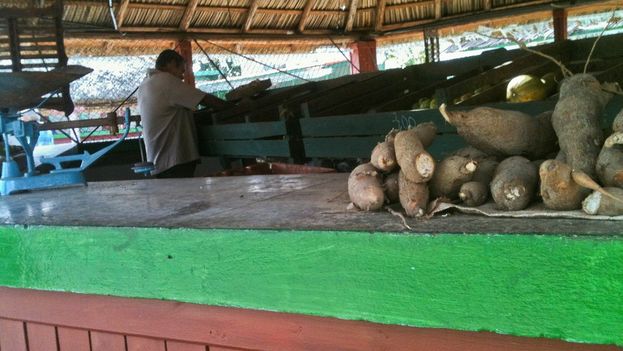
Few product offerings in the State Agricultural Market (MAE) Line in the city of Pinar del Río. (14ymedio)

Yosvel, 19, is one of them and gets up at dawn to collect his products brought in from the countryside and sell them on the centrally located Rafael Ferro Avenue, one of the many places where these kinds of vendors can be seen from the early hours. He is proud to have steady customers and doesn’t mince words when he says his products are “better than in the state markets.” The secret of his success? “My merchandise is good quality and I am honest with the weights.”

“The farmer sells me his pound of black beans at 12 Cuban pesos (CUP) and to earn something I have to sell it for at least 15 CUP,” Yosvel says, defending himself when asked about his high prices. The young man believes that “until the farmers own their own land and can grow and sell as they please, anything the government does is nothing more than a patch.”

In the afternoon of this same day, when the nimble vendor is still successfully selling his fruits and vegetables, the stands in the Linea state market are displaying just a few small onions, yucca and bananas, all very poor quality, and the employees are chatting with each other waiting for closing time.

“To find something here you have to come in the morning,” explains a market employee, adding that the supply trucks only bring “a little bit of everything and we run out before the rooster crows.”

The worker mouths off against Jose Ramon Machado Ventura, second secretary of the Communist Party and the most visible face behind the price controls.

“Why don’t they talk about prices in the shopping?” he protests, referring to the elevated prices in the state stores. He complains that he has never seen anything about that “in any newspaper or on the Roundtable TV show. They don’t talk about that,” he concludes.

Our Everyday War / 14ymedio, Carlos Alberto Montaner

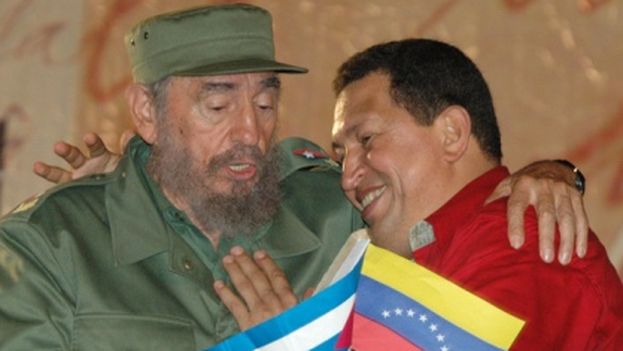
The Cuban president Fidel Castro and the late Venezuelan President Hugo Chavez. (DC)

14ymedio, Carlos Alberto Montaner, 31 January 2016 – Let’s get right down to it. The current conflict that divides half the planet, and especially Latin Americans, is between neo-populism and authoritarian democracy, against liberal democracy. I just developed a short course on the subject at the Francisco Marroquín University in Guatemala. I do not know any other institution so committed to economic and political freedom. Impressive.

In the neo-populist corner of the ring appear, to the left, Father Marx, statism, cronyism, Liberation Theology, the Dependency Theory, Eduardo Galeano, Che Guevara, Ernesto Laclau, Hugo Chavez, Evo Morales, Fidel Castro, all mixed up, plus the other issues: long-lasting caudillos, excessive public spending, ALBA, 21st Century Socialism, the Sao Paulo Forum and a tense et cetera with a closed fist and a street slogan on its lips. continue reading

In the liberal corner we find Father Adam Smith, Ludwig von Mises, Hayek and the Austrians, Milton Friedman and the market, James Buchanan and the School of Public Choice, Douglas North and the institutionalists, individual responsibility, private enterprise, the Rule of Law, FTAA, free global trade, the Asian Tigers, the successful Chilean reform, Ronald Reagan, Margaret Thatcher, Mario Vargas Llosa, and the small and efficient state.

This axis of confrontation is relatively new.

The 19th century was about old-fashioned liberals against conservative, also old-fashioned. The 20th saw, first, the battle between the supposed virtues of Hispanic identity against the defects of the Anglo-Saxons (José Enrique Rodó’s Ariel and the incendiary lectures of Manuel Ugarte). The 1910 Mexican Revolution simmered in the anti-imperialist sauce.

Following this was the appearance of Marxism and fascism, cousins who ended up looking very much alike. The Twenties were those of the Argentine psychiatrist José Ingenieros, with his soul and umbrellas both red, and those of José Carlos Mariátegui and his Seven Interpretive Essays on the Peruvian Reality.

Soon after, in Mussolini’s Italy, a young Argentinean soldier observed the fascist experience with admiration. His name was Juan Domingo Perón and on his return to Buenos Aires he launched his “Third Way.” Neither communism nor capitalism: Justicialism. That is, Peronism, pure and simple. It was the Creole expression of fascism.

The Cold War followed immediately on World War II. Before and after Latin American was filled with sword-bearers sanctified by Washington. The axis of confrontation then passed through the barracks against the communist, or everything that smelled of them.

In the Forties another force broke through: the democratic left. They began to triumph in Guatemala (Juan José Arévalo), Costa Rica (José Figueres), Cuba (Carlos Prío), Venezuela (Rómulo Betancourt) and Puerto Rico (Luis Muñoz Marín). They were democratic anti-communists who came from the left. They fought against militarism from anti-communist positions.

They also constituted a soft vegetarian variant of populism. They believed in the paternalistic welfare state and did not reject statist measures. Reigning in the economic field was his majesty Lord Maynard Keynes and politicians who were using the national budget and public spending to boost the economy. Wonderful. They were intellectually entitled to squander fortunes. Simultaneously, they distributed profits and executed land reforms that almost never achieved their objectives.

In 1959 the badge of the struggle changed again. Fidel and Raúl Castro, along with Che Guevara and with the innocent help of other democratic groups, overthrew the “soft” military dictatorship of Batista, with the objective of establishing a communist dictatorship copied from the Soviet model. They proposed, essentially, to destroy the governments of the democratic left, defining the adversary by its relations with the United States and with property.

If you were pro-American and pro-market, even if you were leftist and respected freedoms, you were the enemy. Cuba attacked Uruguay, Venezuela, Peru, Panama, everything that moved and breathed. Also, of course, the old military dictators like Somoza, Trujillo and Stroessner, but not for being tyrants, but for being pro-American and pro-capitalist. The island was “a nest of machine guns in motion.” The United States joined the war in 1965; in the midst of a civil war Marines landed in the Dominican Republic in order, they said, “to avoid another Cuba.”

With Allende in 1970 the dangerous game of authoritarian democracy began and it ended three years later in a hail of bullets. Pinochet, who was Allende’s man, or so Mr. Allende believed, ended up bombing him. However, as the general didn’t know a single thing about economics, he handed off these mysterious activities to some young Chileans who had graduated from the University of Chicago and Harvard. Soon they began to turn the situation around.

It was the first time Latin America heard of Friedrich Hayek (Nobel Prize in 1974), or Milton Friedman (1976). In the mid-eighties it was clear that populism had plunged Latin America into a pool of corruption, unbridled inflation and unrestrained public spending. The region had failed. They spoke then of the “lost decade.”

Thus arose the first liberal cycle in Latin America. Its main protagonists came from another ideological quarry, but they were flexible and intelligent people. Among others, included the Bolivian Victor Paz Estenssoro, who returned to power in 1985 to fix the mess of 1952, the Costa Rican Oscar Arias, the Argentine Carlos Menem, Mexico’s Carlos Salinas de Gortari, the Colombian Cesar Gaviria and the Uruguayan Luis Alberto Lacalle.

More than liberal convictions propelled the certainty of populist failure. Unfortunately, accusations of corruption against Salinas and Menem, plus the excessive increase in public spending in Argentina, discredited that liberal reform and its enemies began to effectively attack “the long neo-liberal night.”

In 1999, finally, Hugo Chávez began to govern and he initiated another phase of authoritarian democracy. This has now come to its end, sunk in poverty, with shortages and corruption, giving way to the new cycle of liberal democracy, that perhaps started with the Mauricio Macri’s victory in Argentina. Let’s hope it lasts.

French Press Describes Cuba as “The New El Dorado” / 14ymedio

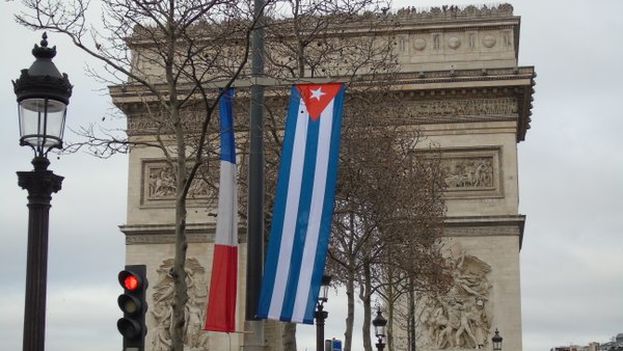
The Arc de Triomphe adorned with French and Cuban flags for an act of remembrance by Raul Castro at the tomb of the unknown soldier. (EmbacubaFrancia)

14ymedio bigger14ymedio, Havana, 1 February 2016 – Raul Castro’s current visit to Paris is receiving widespread coverage in the French press, focused on the possibilities offered by Cuba’s appearance in the international market. The island is considered the new El Dorado by many of the publications that trumpet the advantages of investing in a place with a privileged geographical position and where almost everything remains to be done.

Jean-Christophe Dauphin, from the private equity company AGSM, was enthusiastic about a recent trip to Cuba during an interview on radio Europe 1. “I was there in July for ten days, and it is evolving very very quickly. The last day I was in Havana I ran into Brazilians, Austrians… the whole world is in the race. One will have to have sharp elbows not to drown in the middle of the mass,” he said. continue reading

Appearing on the same radio station was former Secretary of Foreign Trade Pierre Lellouche, now a deputy for the Union for a Popular Movement party (UMP), who praised Raul Castro’s visit to France and the leadership he has taken in his country in this regard. However, he stressed that to date trade with Cuba is negligible, “It is about 200 million euros a year, that is, nothing.” Lellouche added that France must support the island in moving forward “toward democracy and human rights.”

L’Express published a comprehensive report in its employment section on French investments in Cuba and again called it the Island of El Dorado. “Cuban labor is highly skilled,” according to Didier-Pier Florentin, of Havana Development, who is quoted in the article. The sectors with the least presence and, therefore, greatest opportunities, are energy, tourism, transportation and the internet, according to the French publication. Stéphane Witkowski, president of the Institute of Latin American Studies, emphasizes the importance of the geographical position of the island: “Cuba occupies a strategic position, especially for companies who want to get into other Latin American markets.”

The international prestige of Cuban medicine, which the government has exported for decades, has led France to be particularly attracted to that sector. The DMS Group, which specializes in high technology for diagnostic medicine, is particularly interested in investing in this area, the second highest source of exports from the island, after nickel.

“We are about to finalize an agreement with a Cuban company for the distribution of our products,” revealed Samuel Sancerni, Deputy CEO of DMS. “Our goal is to position ourselves in the market before the United States reaches Cuba,” he adds.

Another French company, Abivax, born from the merger of three laboratories, was a pioneer in proposing an alliance with Havana in 2014 in biotechnology, with the goal of becoming the world leader in vaccines.

In an interview published Monday in the Catholic daily La Croix, the Cuban writer Jacobo Machover says that despite the enthusiasm displayed by the international press, the human rights situation in Cuba has worsened since the restoration of diplomatic relations with the United States. And, he added, “there is no will to change on the part of the regime.”

The writer, who lives in France, points out that there are strong limits on freedom of expression and on access to the internet, and that visits by heads of state such as Hollande or Italy’s Matteo Renzi, “consolidate and legitimate the Castro dictatorship.”

Machover believes life for the Cuban people has changed very little since US President Barack Obama’s announcement in December 2014. “There is a wave of emigration that has gone unnoticed in the media, but that is of very large proportions,” he explains. “This is the largest exodus since the Rafter Crisis in 1994.”

At 5:00 pm, Paris local time, there will be a demonstration at Champs-Elysées-Clemenceau Metro Station, called by a group of intellectuals through a manifesto entitled “Against Raul Castro’s visit to France.” The manifesto is signed by Machover, Laurent Muller, president of the European Association for a Free Cuba, Jesús Zúñiga, a refugee Cuban independent journalist, the writer Zoe Valdes, and journalist Bernard de la Villardière, all of whom live in the French capital.

Hollande And Castro: Plenty of Wine But No Democracy / 14ymedio, Yoani Sanchez

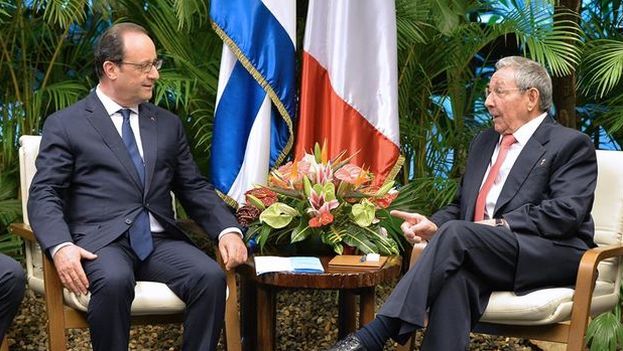
François Hollande and Raul Castro at the Palace of the Revolution in Havana, during the visit of French President to Cuba in May 2015. (EFE)

14ymedio bigger14ymedio, Yoani Sanchez, Washington, 1 February 2015 — Iranian President Hassan Rouhani cancelled his lunch with François Hollande because the latter didn’t want to take the wine off the table. Tonight, however, the French leader will not ask Raul Castro about the issue of human rights violations in Cuba, to avoid annoying his visitor. A gesture that will affect the image of France much more than having dispensed with a glass of red.

Facing the leader of a powerful nation with a controversial nuclear program, the authorities did not want to deprive themselves of one of the symbols of their identity. But facing the General who permits no opposition nor independent press in his country, the hosts lower the tone of democratic requirements, similar to Rome’s covering the nakedness of his its statues to please Rouhani. continue reading

In the homeland of “Liberty, Equality, Fraternity,” failing to take advantage of Raul Castro’s official visit to demand a democratic opening would be a huge disappointment. The reasoning from a French government source, declaring that the question of human rights “is always present,” is unconvincing. This is the time to push the octogenarian caudillo for a commitment to a democratic opening on the Island in the near term.

France loses nothing if it takes a stronger stance on the lack of freedom under which 11 million Cubans live. Unlike Rouhani, Raul Castro will not purchase more than 100 modern Airbuses, not will he offer a contract for the extraction of thousands of barrels of oil. The Plaza of the Revolution is only going to offer losses and disrepute.

It will fall to the French executive to silence the complaints of the creditors of the Paris Club – which last December forgave 8.5 billion dollars in Cuban debt –when they never see one cent of the remaining 2.6 billion that Havana committed to pay over a span of 18 years. Which it is highly unlikely to do, because the Cuban system is an expert in wasting other people’s money and in swindling those who help them.

The same thing will happen with the 360 million euros of the bilateral accord reached this Monday to finance development projects. Money that Cuban officialdom will use at its convenience, but not to empower citizens to prosper nor to develop an autonomous business network. Over time, these resources end up feeding corruption, the illegal market, and the pockets of the olive-green clad rulers.

Raul Castro will promise Hollande tonight that his piece of cake is safe. As he has said to so many, undoubtedly, he will confirm to “friends of Cuba, the Revolution will always remember you.” The “friendship” in this case is inextricably linked to complicity in and silent acceptance of the authoritarianism imposed on the Cuban citizenry.

It is just another maneuver to gain time. Hollande will leave office and a new administration will have to deal with those who have spent nearly six decades in power in Cuba, and the story will start again at the beginning: commitments, pats on the shoulder, ceremonial photos and a dinner where the wine flows freely, but where the indecent presence of democracy is well hidden.

Cuba Will Test Home Internet Service In Old Havana / EFE, 14ymedio

In wifi connection areas such as this on La Rampa, the flood of users decreases the connection speed.(14ymedio)

EFE (14ymedio), Havana, 31 January 2016 – A pilot project will test internet service in private homes in Havana, where 30 new public wifi zones will be established, as part of the 2016 projects announced by the State-owned Telecommunications Company of Cuba (ETECSA).

The director of the company, Odalys Rodriguez del Toro, said that test would be carried out in two of the People’s Council areas in the Old Havana district, the oldest part of Havana, “in hopes that in the future we can start bringing Internet to homes,” according to a Cuban News Agency (ACN) report. continue reading

These connections, a new service, will be through fiber optics, under an agreement with the Chinese company Huawei, with rates for the service to be announced later, according to the director.

Rodriguez del Toro also there will be an expansion of 30 new wifi areas in Havana, two for each of its 15 municipalities, to provide access to this service which is already available in 17 public spaces in the city; there is currently no service in the Cerro and Cotorro districts but they will get it in the coming days.

“The goal for this year is to have three city parks with wifi in each district and to reach other areas with large crowds such as El Castillito, the Cuba Pavilion, the Plaza of the Revolution, Balneario University in the Playa district, and in the future, cafes, bars and restaurants that request it,” the official added.

At the close of 2015, more than 150,000 Cubans on average accessed the internet every day, after the opening of 58 public wifi access points across the island, according to data from ETECSA.

The creation of the popular wifi areas was one of the alternatives implemented since July of last year by Cuba’s state telecommunications monopoly in order to expand internet connections, which continue to be unavailable in private homes.

The island is currently one of the countries with the lowest rates of connectivity in the world, with only 5 percent of the population having internet access, a percentage that drops to 1 percent in the case of broadband.

Internet access from private homes is not allowed except for Cubans in some professions as medical professionals, journalists, academics and intellectuals, who require special government permission to have connections.

Cuban Musicians Are Freeing Themselves / 14ymedio, Lilianne Ruiz

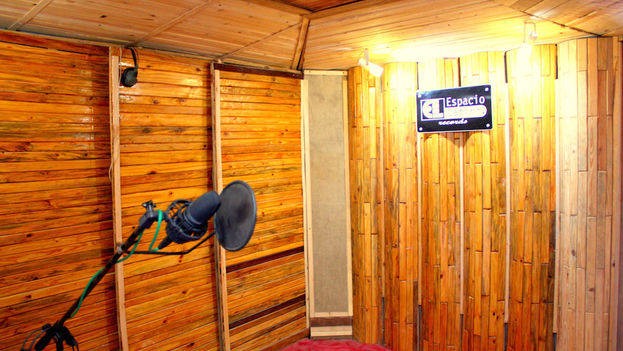
JouMP’s alternative recording studio, “Espacio Latino Records.” (14y medio)

14ymedio, Lilianne Ruiz, Havana, 12 January 2016 – In an apartment located in a dingy, rundown concrete building of Havana’s Plaza district, dozens of musicians have made the dream of recording their songs come true. Here we find one of those “home studios” that are becoming essential for the Cuban music scene, and especially for the online market.

A couple of years ago, nineteen year-old Claudia Pérez chose a new more “intriguing” name befitting a “grand diva,” Nina. However, her vocal and performance talents will not get her very far without the backing of a musical expert and an independent producer.

JouMP, a music producer and editor, owns the studio where Nina recorded her first singles. It is composed of a single room with wood paneling, pompously advertising itself as “Espacio Latino Records.” JouMP spends hours in his studio, insulated from street noise, mixing musical effects and composing songs. continue reading

“The only thing I need to do is find the right musical thread, and then the right instrument that defines the piece’s esthetic,” remarked JouMP. He added, “Right from the start I know how to identify songs that are sure to be hits.” This is why he is so respected, and why so many entrust him with recording their albums, songs, or creating background melodies for them.

JouMP has been involved in the world of independent creativity for more than a decade, and considers himself “a sound artisan.” His most prized possession is an external hard drive storing more than four thousand musical pieces encompassing several genres, all created by him.

Stored together with his compositions are sound editing programs such as Fruity Loops, Wavelab, and Logic Pro, as well as dozens of recording tools. The majority of these programs are pirated versions, purchased on the black market.

The apple of JouMP’s eyes is his digital console, which along with his monitors, his computer with a powerful soundcard, and his microphones, gives the studio a professional look. This equipment was also acquired outside of official State channels, purchased second-hand, or from those travelling abroad who are asked to bring it back to Cuba with them.

The lack of copyright laws and official authorization give a clandestine feeling to these ventures. Still, this does not discourage those who jump at the opportunity of turning their bedrooms into “sound factories.” For the most part, the reggaetón played in shared taxis and on teenagers’ earphones are recorded in these types of alternative studios. The most common way of promoting this music on the Cuban market is by way of the “weekly packet.”

JouMP bragged about creating an arrangement for rapper Wilder 01 by mixing cha-cha with an electric guitar, thus giving it a “crunch” sound. He called the piece “Estar contigo” (“Being With You”), and offered it to EGREM. This State-run music label hailed the song’s originality, and recognized that it did contain “some traces of Cuban music.” Nonetheless, it was “too foreign.”

Those times when membership in a (government-run/official/State) organization was a prerequisite for recording an album are now in the past. “Privately owned studios give you more freedom,” commented Dj Xon, an eighteen year-old who performs at parties, and who also dreams of compiling all his work and uploading it to iTunes.

Until now, the only option available for the majority of Cuban musicians who wanted to post their music online was Bis Musica, a label owned by the State-owned corporation Artex. Bis Musica is in charge of uploading music to platforms such as Spotify, iTunes, and Amazon. It often also acts as an agent, retaining up to fifty percent of a song’s royalties.

Some artists manage to upload their songs onto the Internet thanks to a friend or relative abroad who also helps them secure their royalties. Despite the difficulty of accessing the Internet or collecting royalties in Cuba, iTunes offers a wide variety of music produced by Cubans living on the island.

In their short years, JouMP, Nina, and Wilder 01 have witnessed a giant technological and social leap forward. They have seen the industry go from old vinyl records, whose production was under total State control, to the new wave of independent studios where songs are not even burned to CD’s anymore, but instead are being produced for online streaming.

“They’ll be able to hear me anywhere in the world, because I’ll be up there,” commented Nina. While singing in that narrow studio with wood paneling, she daydreams about “the cloud,” and the enormous potential her voice could have online.

Translated by José Badué

National Identity As A Pretext / 14ymedio, Regina Coyula

Flags of the United States and Cuba in the streets of Havana. (14ymedio)

14ymedio bigger14ymedio, Regina Coyula, Havana, 30 January 2016 — The view that the change in United States policy toward Cuba carries the danger of a loss of independence and of the values of national identity makes me smile wryly. Contrary to those who are worried, I would say that we Cubans are immune to the loss of identity, an idea that has some losing sleep.

It did not happen during the Republic, when we had mediated governments, nor did it happen when the Soviet influence was such that it “created” traditions, things that almost no one remembers now, like laying a bride’s flowers at the bust of a martyr, or substituting “Hurrah!” for “Viva!” among others I won’t even try to list. Instead, traditional festivities around Christmas, New Years and Easter were cancelled, along with others I also won’t try to list. continue reading

We have become accustomed to hearing military terms used to define the bilateral Cuba-United States relationship: cultural penetration, ideological battle, domination, hegemony. The national life throughout all these years revolved around the conflict with “the lurking enemy to the north.”

From the White House, nearly a dozen presidents eased and tightened the measures against its provocative neighbor. Conditions have changed with the passing of time and, with the disappearance of the socialist camp, other priorities left our country as an ember of the Cold War.

For the Government “governed” by a small group of octogenarians who come from the struggle against Batista in the Sierra Maestra, the situation has barely changed. They came to power very young, dynamited its structures, encouraged the bourgeoisie and with them the “lively classes” (the civil society of that time) to leave the country, and created their own way of doing things.

Because of this they never renounced the language of the barricade, nor have they stopped talking about the Cuban Revolution as a seminal and living event, when at least institutionally one can fix its end in 1976. Although the institutional character of the de facto Government of 1959 formally established a certain “informality” – with military uniforms giving way to civilian dress – the indisputable leadership of Fidel Castro sidestepped that inconvenience and he ruled as he saw fit.

Over the years, the anti-imperialist discourse has lost traction among the people, because as they have seen, the “empire” is not as fierce as it has been painted: half the family lives there, sends remittances, pays for our visits, or comes back loaded with gifts for everyone. Right now, the United States Government eases and eases and the Cuban Government interprets it as a well-deserved victory, not a quid pro quo, and still nobody understands what the crisis in farm products has to do with the “blockade.”

In the media and in academic texts (under State control), the consumer society and its values (or lack of them) have been anathematized; this has not kept cultural patterns from being a Frankenstein with the worst of each system. The taste for trash music, trash movies, trash literature and trash fashion is not only not avoided, but marks the canon of the popularly accepted. In a cruel paradox, culture has been what is most accessible to citizens in their spare time.

I don’t know how patriotism is measured. Flags haven’t been sold for many years, much less in Cuban pesos. The Cuban flag flies – though not always – on public buildings and in an ever declining number of neighborhoods and homes for the anniversary of the Revolution or the assault on the Moncada Barracks. It is also seen on the outfits made by the multinational company Adidas for our athletes, which many who are not athletes also wear, among them foreigners who assume solidarity, strolling through Havana with a beret, Che T-shirt and shoulder adorned with our national emblem.

In contrast with this quasi-institutional display, I see American flags in the old American cars that function as shared taxis, in the cartoonish bubble car taxis, in the pedicabs, and on caps, T-shirts, scarfs, and even in lycra versions that have flooded the streets with cellulite-filled stars and bars. La Yuma (the USA) and los Yumas (its inhabitants) are now the paradigm of a society that doesn’t substitute McDonald’s for roast pork and is considered anti-imperialist at heart. Weird, but true.

You don’t have to be an economist or a sociologist to see the exhaustion in individual perspectives, let alone the collective. If decades ago seeing one’s children emigrate was a tragedy, today it has become a hope. The State has no solution for the discrepancy between wages and prices, for the burden of transport and housing, and has now abandoned the role of father protector with which Fidel Castro felt so comfortable. Today, everyone must address the solution to their own needs, that for not being morally correct resolves the situation of two generations brought up under the idea of the State as the cradle-to-grave provider of everything.

The true and unconfessed fear of the champions of national identity is not a fear of the cultural influence that existed long before 17 December 2014, and which will not change the essence of Cubans, but of the free flow of information that lets any citizen peer into a looking glass that gives access to complete and contrasting information.

Audit Detects Millions Missing In Havana / 14ymedio

Comptroller General of the Republic of Cuba, on 23rd Street in Vedado, Havana. (14ymedio)

14ymedio bigger14ymedio, 28 January 2016 – The results of the “national internal control check” undertaken by the Office of the Comptroller General of the Republic between January and September 2015 in Havana has set off alarms. In 366 audits conducted on 63 entities, it was found that more than 267 million pesos had gone missing (a combined figure for Cuban Pesos and Cuban Convertible Pesos), according to the government newspaper Granma, reporting on Thursday.

This is the tenth internal control check of this kind and the findings of the inspection were announced Wednesday at the Ministry of Energy and Mines, through statements by Miriam Marban, head comptroller for the Cuban capital. continue reading

The official stressed the need for greater “preparation, responsibility, demand and organization in management” to avoid losses of this magnitude, and she also stated that there had been no progress in the control of resources as had been expected.

Corruption and diversion of resources was on the agenda of the 2015 parliamentary sessions, where Comptroller General Gladys Bejerano Portela, emphasized that the greatest effects were concentrated in inventories, contracts, billing, fuel, the leasing and use of land, and standards of consumption and waste.

During the meeting this Wednesday, the issues of preparing institutions for the aging population was analyzed, and current mistakes in the supervision of the old age homes that were audited were detailed. In surveys, respondent complaints focused on the hygienic and structural conditions of these institutions.

The awarding of subsidies for the purchase of building materials was also a target of criticism. The Comptroller General revealed a lack of monitoring of the progress of the subsequent work undertaken, along with obstacles and delays in delivering the aid, as was the case in Central Havana, in which only 5% of the total beneficiaries of subsidies had actually received building materials.

The secretary of the Communist Party in the capital, Mercedes Lopez Acea, said the plan “has to prioritize those most in need.” Lopez, who is also a member of the Politburo, said managers have “an obligation” to control “the proper use of available resources.”