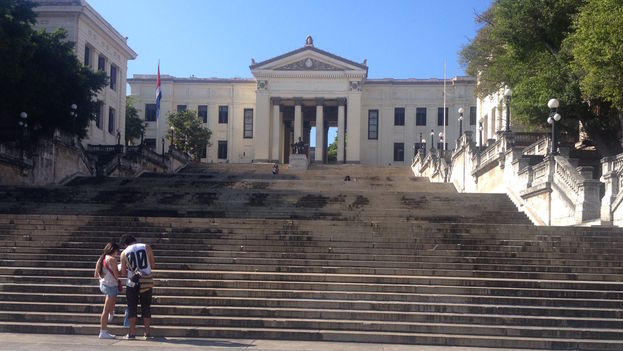
University of Havana Ranked 59th in Latin America / 14ymedio

University of Havana. (14ymedio)

14ymedio, Havana, 17 June 2016 — The University of Havana has been ranked 59th on the list of the 300 Best Research Centers in Latin America by QS Top Universities published this Tuesday. Despite an improvement in its positions compared to last year, when it was ranked 83rd, the academic institution falls below the standards of excellence defended by the authorities on the island.

Only two Cuban universities made it into the ranking, the other being that of Santiago de Cuba, ranked 145th, a drop from 2015 when it ranked 141st. Left off the list were two universities which ranked between 250th and 300th last year: Cienfuegos Carlos Rafael Rodriguez and Jose Antonio Echeverria, known as CUJAE. continue reading

Among the biggest problems faced by students at the University of Havana is poor access to the internet. Each student receives a monthly quota of hours for websurfing, depending on their year of study, but the low connection speed and the age of computers in the digital information room hinder the experience.

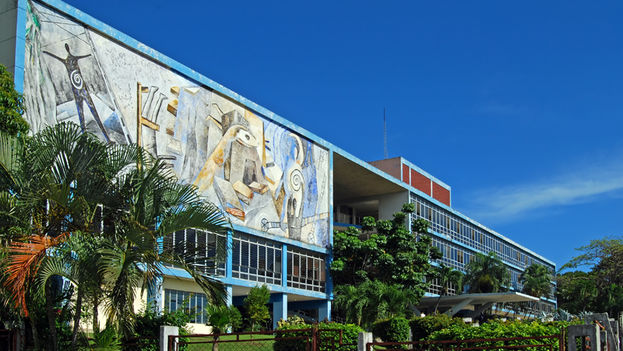
Cuba’s University of the East. (Wikicommons)

The list, published for the sixth consecutive year, considers five main criteria: the impact of research and productivity, the commitment of the teachers, the ability of graduates to get jobs, the impact on the internet and, for the first time this year, internationalization.

Other determining factors are, according to the authors, the academic reputation of the study center and the ratio of students to faculty. Although the QS University Rankings for Latin America are part of the global initiative QS World University Rankings, evaluation methods differ according to different areas of the world, adapted to the regional context.

Leading the classification is the University of Sao Paulo, followed by another Brazilian center, the University of Campinas, and the Pontifical Catholic University of Chile.

Angel Santiesteban Released “For Now” / 14ymedio

The writer, blogger and activist Angel Santiesteban. (Lilianne Ruiz)

14ymedio bigger14ymedio, Havana, 15 June 2016 — The writer Angel Santiesteban was released on Tuesday night after 30 hours of detention and having been taken to three police stations where he received all sorts of warnings and threats.

Santiesteban told 14ymedio by phone that he was arrested around one in the afternoon on Monday, and released at eight at night on Tuesday. The writer was taken first to the police station at 21st and C Streets in Vedado, then to the one at Zapata and C, and finally to Vivac de Calabazar.

As he explained, the political police were very upset by the recent post in his blog titled “Assassins, Accomplices and Victims,” in which he called the president of Casa de las Americas, Roberto Fernandez Retamar, an assassin. The police said the blogger showed a serious lack of respect in speaking of the elderly poet in this way.

“As a member of what was then the Council of State,” Santiesteban explained, “Retamar signed the application for the death penalty of the three young men who had simply tried to take a boat to Florida. Now, when an anniversary of that horrible event came up, I recalled it publicly.”

According to Angel Santiesteban, the reason given for his arrest was a link to the crime of fraud on the Isle of Youth. “That could not be sustained because this happened in the year 2015 when I was in prison,” the writer said, almost laughing. In his view this was just an excuse for the police to pick him up and detain him.

During the interrogations, the writer says, an official told him, “You pretend you’ve called it quits but we know you’re up to no good.” Santiesteban said that he replied, “Yes, I am up to two novels and you’re not going to like anything about them.”

Ramadan Cuban Style / 14ymedio, Reinaldo Escobar

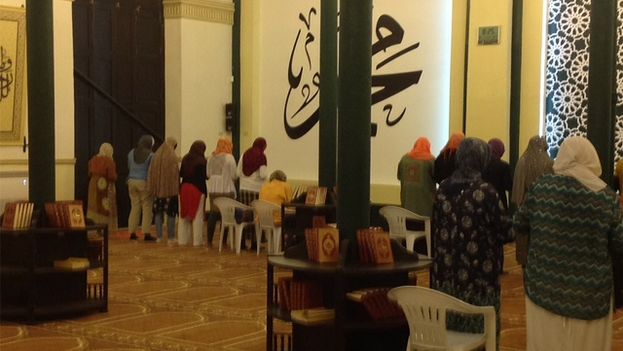
Women have a space separate from men. (14ymedio)

14ymedio bigger14ymedio, Reinaldo Escobar, Havana, 14 June 2016 – Mohamed turned to Islam while serving on a military mission in the Congo; Abdul when he realized that in 15 years of Christianity he had never really read the Bible; and Lazaro, who also adopted the name Abdul, when he served a prison sentence as a dissident. All are converts and celebrate Ramadan by fasting and praying in Arabic.

Ahmed says he as been a Muslim since he was 17 and it started in his native city of Camagüey where he was the only one; now there is a place of prayer there with 140 faithful on San Isidro Street. He is responsible for seeing to the visitors at the mosque located at 11 Oficios Street in Old Havana. He did not allow his interview to be recorded, but responded cheerfully to all questions. continue reading

Ahmed explains that it is not obligatory to wear clothing typical of Arab countries, but prophets dressed in this way and so many do. The same applies to the beard and the custom of wearing a head covering. “Because we are Muslims, our religion accepts that we can have more than one wife, as long as the husband can support them and the first wife agrees.” But he clarifies that, respecting Cuban customs, they do not permit marriages involving minors.

Among the customs, in addition to the clothes and the beard, some carry a kind of toothbrush called a “siwak,” made from the branch of a tree that grows on the Arabian Peninsula. Besides having therapeutic qualities, its use is recommended during the days of Ramadan.

This year, 1437 of the Hegira, the month of Ramadan began on 6 June and starting at dawn Muslims fast every day. They do not ingest solids or liquids, nor do they smoke or have sexual relations. Contrasted to what might be defined as a stereotype of the ordinary Cuban, it seems difficult to adopt this religion. However, every day more people do so. Women have a space for themselves separated from that of the men, and children scamper on the carpet of the spacious lounge, where it is an understandable requirement to remove your shoes.

“This is like a hospital,” says Abdul Karim, a young man who earns a living as a self-employed bricklayer. “We all have something that we must heal and Allah only asks for our submission to offer us spiritual peace.” His affirmation is evident when a young man whom everyone indulges appears in the mosque. They call him “the Russian” and he says he was a prince in Great Britain, that he speaks 25 languages and that Islam “came to Cuba with Christopher Columbus who was Muslim.”

The Muslims gathering here identify as Sunnis. In the Lawton neighborhood there is another place where the Shias go. The differences don’t generate conflicts, although those in Old Havana don’t recognize as Muslims those in Lawton, and vice versa, but “the blood doesn’t reach the river.”

Staring at 7 in the evening, just before dark, the flow of the faithful becomes more intense. At one point the loudspeakers are heard reciting the Koran in Arabic. Everyone approaches the wall at the side of the building facing Mecca, and gathers in front of a picture where the name of Allah is inscribed. They sit there, alternately leaning over and standing as the ritual demands.

When the sun outside has hidden itself, some sit at the tables, other on the floor, and they begin to share a dinner. Rice with beans, salad, sweet potatoes and lamb meat. In addition there are bread, dates and canned soda. According to what this newspaper was told, the costs of this ceremony are borne by the Saudi Arabian embassy in Cuba, which also made the largest initial investment to convert what was once an old car museum into an air-conditioned and well-lit mosque, with carpets and tapestries.

Like everything that happens in Cuba, Islamic activities are observed with a mixture of respect and suspicion. Lazaro Fresneda, a opponent of the government who turned to Islam several years ago and who answers to the name Abdul Radman, feels that there are always men snooping around who have “a tint of being people associated with the apparatus.” He says that during President Obama’s visit to Havana the mosque was closed and adds that recently Rene Gonzalez appeared there, he is one of the five Cuban intelligence agents who were released from the sentences they were serving in the United States. “He said he prayed with the Muslims in prison, but I did not shake his hand.”

The graying beard of Mohamed Alzain gives the impression of having been with him a long time, but he says it has only been a year since he last shaved. In response to the observation that he keeps his mustache, he smiles and says, “sometimes I forget to cut it.” He recalls that he was an official in the Armed Forces when he started to feel a religious inclination. “At that time,” he recalls, “being in the military was not consistent with believing in God, but in the Congo, where I served an internationalist mission, the Muslims believe in Islam from birth, as did their most remote ancestors. I had never seen any part of such a pure religion.”

Shortly before ten at night the faithful begin to retire. Tuesday they will continue the fast, unless they are ill; pregnant women, children and those who are traveling for more than three days are also exempted. They are counting the days until 6 July, when Ramadan will conclude “Cuban-style” and then they will celebrate with a big party.
We Were All At Pulse / 14ymedio, Yoani Sanchez

Christopher Sanfeliz and Alejandro Barrios, show to death by Omar Mateen at the gay nightclub Pulse. (Facebook)

14ymedio bigger14ymedio, Yoani Sanchez, Generation Y, 15 June 2016 – The news mourned on Sunday, a week that ripped apart and will forever mark the lives of the victims’ families. The Pulse nightclub in Orlando, Florida, became a death trap for dozens of people at the mercy of a madman. The motivations that led Omar Seddique Mateen to kill 49 human beings and injure another 53 are still being investigated, but solidarity does not need to wait for FBI reports or summations, it should be immediate and unhesitating.

The official Cuban press has treated the fact that the event took place in a gay establishment with omissions and squeamishness. The prudery on television and in the national periodicals, with this silence, only promotes homophobia and belies their own discourse of changes. This absence is also noted in the condolence message sent by Raul Castro to Barack Obama, where he called the locale of the tragedy “a nightclub.” continue reading

The omissions don’t end there. The press in the hands of the Communist Party delayed until Wednesday the news that two Cubans were among the dead, when it was already vox populi on the streets. Why the delay? Because they were gay or because they were emigrants? This double condition must be upsetting to some in the government and thus in their periodicals, which operate by way of ventriloquists.

Also surprising is that the National Center for Sexual Education (Cenesex) has limited itself to a formal statement of condemnation and has not called for a vigil, for flowers to be left at the doors of the mothers who lost their sons, or at least a symbolic action that reflects the pains of the Cuban LGBTI community.

None of that has happened, and not for lack of indignation or sadness, but from the same lack of freedom of expression that prevents a dissident from making a public demand, or any person from carrying, spontaneously, a banner that recognizes: “We were all at Pulse.”

Unknowns In An Illusory Debate / 14ymedio, Reinaldo Escobar

14ymedio bigger14ymedio, Reinaldo Escobar, Havana, 14 June 2016 — Under the signature of Dario Machado Rodriguez and with the title “An Environment of Discussion and Creativity is Essential,” the official Government-Party newspaper Granma published an article on its second page this Monday that, in some way, questions the narrow framework initially proposed for the discussion of the documents from the 7th Cuban Communist Party Congress.

What is curious is, on the flip side of the printed sheet, that is on the newspaper’s front page, there is a fragment of the Central Report, read by Raul Castro at that august partisan event, where it is established that both the Conceptualization, as well as the bases of the National Plan of Development, will be “democratically debated by the membership of the Party and the Young Communist Union (UJC), representatives of the mass organizations and broad sectors of society. continue reading

Darío Machado’s article introduces a variant: “It behooves the entire country to create an atmosphere of discussion and to stimulate wide social participation in the broadest democracy.” In support of this he evokes the debate of the “Call to the 6th Party Congress” and other similar processes whose results, he argues, “were decisive in the strengthening of the political consensus of the socialist revolution.”

It may not be idle to recall that the author of this article, the son of Jose Ramon Machado Ventura, was the person designated as the auditor of the American Studies Center (CEA) where, 20 years ago, Raul Castro, in the 5th Plenary Session of the Central Committee of the Cuban Communist Party, lambasted the intellectuals who worked there, calling them nothing less than fifth columnists.

Given the credentials of the writer – completely above suspicion – it is appropriate to highlight some of his assertions. The most striking is his thesis that the text of the conceptualization of the Cuban economic and social model “should not be understood as something finished, but as ‘the theory’ [the commas are the author’s] of the construction of socialism in Cuba.” He then clarifies that these ideas are enriched by the debate and “putting them into practice” will continue “the process of theorizing about the construction of a socialist-oriented society in Cuban conditions.”

Fifty-five years after the socialist character of the Revolution was proclaimed, Dario Machado is trying to convince Cubans that it is still not time to have a theory of socialism based on their own experiences to clarify how socialism should be defined in Cuba.

Now that this intellectual has explained that Conceptualization is not trying to be ‘the theory,’ one can understand why in this document there is nothing about the first conquest of the socialist system, which is eliminating the exploitation of man by man, nor does it tell us that this is one stage of the transition to a communist society and it doesn’t even say, in a transparent and comprehensible way, if the country is still in or has already emerged from the “Special Period in times of peace.”

Opening the debate to anyone who wants to participate could be risky for those who want to restrict the discussion to points related to “how to construct socialism in Cuba.” Outside of the Party nucleus or its base committees or the UJC, someone could appear to question, from Marxist positions, the proposed models and others, from the opposite poles, might question whether it makes sense to continue the attempt.

Finally, Dario Marchado establishes a doubtful dilemma, placing on one side “the pretensions of reinstalling in Cuba dependent capitalism,” and on the other “the salvation of the Revolution, of our independence and sovereignty.” The enunciation of a dilemma doesn’t mean it exists.

It is not an abuse of the imagination to elaborate this other. One on side are the pretensions of a group of people to remain in power forever, and on the other the desire of an entire people to conquer the civil, political and economic rights that the current system represses. The discussion of which is the real dilemma would be a useful debate.

Cuban Writer Angel Santiesteban Arrested / 14ymedio

Cuban writer Angel Santiesteban. (14ymedio)

14ymedio bigger14ymedio, Havana, 14 June 2016 – The writer Angel Santiesteban was arrested on Monday afternoon shortly after he left his home. The blogger is in a cell at the police station located at the corner of Zapata and C in the Plaza municipality, according to the information from the police offered by telephone.

Recently, Santiesteban received the Reinaldo Arenas Narrative Prize, awarded by the Club of Independent Writers of Cuba and he is now in what he called “a creative phase” that consumes all his time. continue reading

According to telephone calls made by family and friends to police authorities, Santiesteban was arrested because “they had tracked him” from the Isle of Youth.

The winner, also, of the Casa de las Américas Prize (2006) was on parole awaiting the outcome of an appeal for review of his case by the Ministry of Justice; he recently served several years in prison for “violation of domicile and injuries.” In the trial in that case, which was denounced as a process full of irregularities, he had been sentenced to five years’ imprisonment.

Since the appeal was filed for review of his case, Santiesteban has been arrested on several occasions, including for participating in the Sunday marches of the Ladies in White.

Related:

They forced me not to dream

From Villa Marista They Threaten to Delay Angel Santiesteban’s Release

Angel Santiesteban in Prison

The Dictatorship’s Annoying Writer

Cubans Hold a Vigil at the Mexican Embassy in Ecuador to Ask for Humanitarian Visas / 14ymedio

Organizers estimated that about 700 people participated in the vigil. (14ymedio)

14ymedio bigger14ymedio, Mario Penton, Miami, 13 June 2016 –Hundreds of Cubans held a vigil Sunday night outside the Mexican embassy in Ecuador to ask Mexico to grant them humanitarian visas that would allow them to continue their journey to the United States.

The event, attended by Cuban migrants from various parts of the country, had been called a week earlier by the former deputy to Cuba’s National Assembly of People’s Power, Peter Borges. Organizers estimated that some 700 people participated in the vigil, despite the fact that, according to Borges, early morning temperatures dropped to 50 degrees in Quito. continue reading

In the morning, they delivered letters address to Mexican president Enrique Peña Nieto requesting an airlift similar to those established by Costa Rica and Panama. The airlift would evacuate thousands of undocumented Cubans in Ecuador which, according to them, total about 5,000 people.

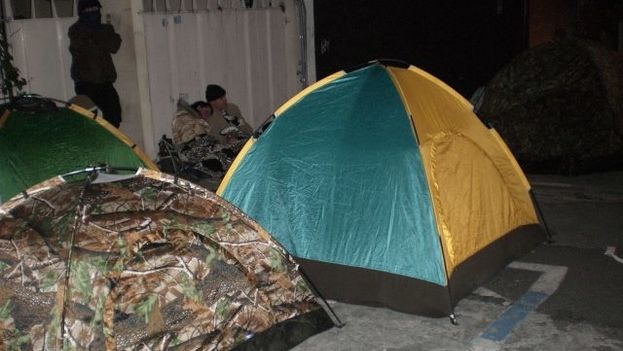
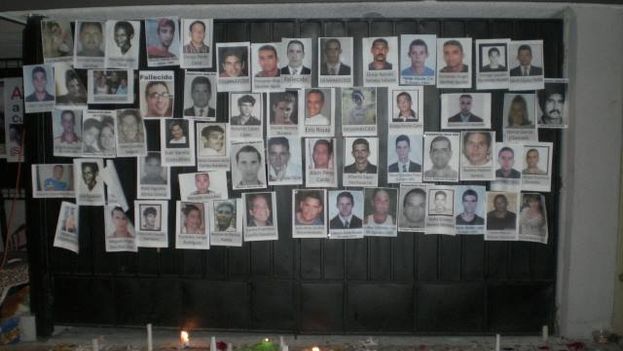
Cubans camped in tents outside the embassy and hung murals with photos of those presumed missing in illegal crossings to reach the United States through the Colombian and Central American jungles.

The migrants hung murals with photos of those believed to be missing in illegal crossings to reach the US. (14ymedio)

At the vigil there was also a collection of humanitarian aid for Cubans who are in distress or poverty, which will be distributed through recently structured mechanisms.

The migrants also wanted to show their solidarity with their more than 300 compatriots stranded in Turbo, Colombia. The mayor of that town, Alejandro Abuchar, said, “As of now, there is nothing new to report on the status of the Cubans. They should leave the country and continue their journey and no exceptions will be made.”

Several of those stranded in Turbo report that they have fevers and the flu but, according to ombudsman William Gonzalez, health authorities of the municipality maintain that it is a common flu and that their lives are not in danger.

Another Sunday Of Repression For The Ladies In White / 14ymedio

A group of Ladies in White march down Fifth Avenue in Havana. (Archive)

14ymedio bigger14ymedio, Havana, 12 June 2016 – This Sunday there was, again, a operation around the Ladies in White headquarters in the Lawton area of Havana, organized by the National Revolutionary Police (PNR), State Security agents and civilians called up for Rapid Response Brigades.

Lady in White Luisa Ramona Tuscany told 14ymedio via phone that “as they left the house” at 2:00 pm all of them were harassed by “mobs” and that they were arrested “while shouting slogans and carrying their banners.” continue reading

Ramona detailed that, in total, 18 people, “seven [other] activists and eleven Ladies [in White]” who left [for Santa Rita Church] from the Lawton site this Sunday. Among those arrested were some from other provinces “who had been here from a day or two earlier” said the same source, who reported that Berta Soler [leader of the group] “was also detained” as was the former prisoner of the Black Spring case of the 75, Angel Moya.

Among those arrested on leaving the Lawton headquarters site were members of a delegation from Santiago de Cuba, including Bizmaira Amelo Jardines and Santa Fernandez Diaz. Also arrested was Maribel Hernandez Garcia who, according to Luisa Ramona, “already reported in” by phone to say “that she was released at the stroke of 9:30 pm in the detention area of Tarara, where they were taken.”

According to Luisa Ramona, approximately seven Ladies in White and independent journalist Yuri Valle Roca reached Santa Rita Church. She said that the journalist is being held at the Santiago de las Vegas station, along with Ladies in White María Cristina Labrada, Lismery Quintana, Daysi Artiles and Suarmi who were able to reach Santa Rita.

Several Sundays ago many members of this group were prevented from reaching the Mass and later meeting up with other activists who support them at the end of their march. These representatives of different opposition organizations have joined this initiative for more than 55 Sundays.

Lack of Water is Triggering Unrest Among the People of San Antonio de Cabezas / 14ymedio

Residents in the town of San Antonio de Cabezas, in Matanzas. (Internet)

14ymedio bigger14ymedio, San Antonio de Cabezas, Matanzas, 12 June 2016 — A few hours after celebrating 194 years since the founding of the town of San Antonio de Cabezas, its inhabitants marked two weeks without a water supply. The turbine that caters to this community, located in the Matanza town of Union de Reyes, suffered a break in late May and has not yet been repaired. The Institute of Hydraulic Resources in the province installed new pumping equipment but it was damaged by the ineptitude of the operators, local people complained.

The lack of water continues in the region where it is estimated that about 7,000 people live. The manifestations of popular discontent have risen in he town, before the local authorities’ prohibition on the residents organizing themselves to pay for water trucks. The price of truck ranges from 180 to 250 Cuban pesos. continue reading

Last week a command post began operating, led by the secretary of the Municipal Party and staffed by officers of the National Revolutionary Police (PNR). The group is focused on monitoring popular unrest and tackling the “social indiscipline” associated with the search for and the transport of the precious liquid.

The nearest source of supply, located near the La Lima sugar workers town, about two and a half miles from the town center, has benefited from the rains of recent days that have nurtured the rich groundwater that characterizes the area, close to the Santa Barbara and Garabato rivers. However, the transfer of water is complicated by the problems of acquiring fuel for the vehicles.

The town also has a large elevated water tank and a turbine that runs on oil, dedicated to exceptional situations such as hurricanes, storms or electrical outages. However, local authorities still have not received the order from the central government to interpret the current crisis as an emergency.

Several people have told this newspaper that they feel deceived and that their complaints “fall on deaf ears.” A citizen said she made a call to the offices of the municipal Party demanding an explanation and the official who took the call exhorted her to go and “bathe in the river.”

This Monday, 13 June, to mark the anniversary of the founding of the town, the Catholic Church will carry am image of its patron saint, San Antonio, through the town. The town’s elders say that in previous years there have frequently been downpours during the popular procession, an opportunity the residents are awaiting to get the water that for weeks hasn’t come through the pipes.

In the middle of last year it was unveiled at the sessions of the National Assembly of People’s Power that currently leaks and failures are resulting in the loss of close to 50% of the water pumped nationwide. A situation exacerbated because Cuba is experiencing its most severe drought in 115 years.

Distribution Of Cars And Laptops To Doctors Begins / 14ymedio, Yosmany Mayeta Labrada

A rental car like those to be allocated to doctors. (Cubarentacarros)

14ymedio bigger14ymedio, Yosmany Mayeta Labrada, Havana, 13 June 2016 – After months of waiting and amid growing expectations, a few weeks ago the distribution of cars and computers at subsidized prices to Public Health workers began. The distribution, which for now is limited to Havana, has raised passions due to the small number of vehicles allocated to each hospital. At Calixto Garcia University Hospital, only three cars have been received so far, to be given out among dozens of employees.

Doctors at the Pedro Kouri Topical Medicine Institute (IPK) have already received “laptops and the designation of some vehicles,” according to a source at the Provincial Health Department in the Cuban capital who spoke to this newspaper but preferred to remain anonymous. The official explained that the distribution began in the institutes and hospitals in the capital as a pilot project to be extended, later, across the entire country. continue reading

The plan includes enabling internet accounts for doctors and specialist in the healthcare sector. That initiative began last September when the Ministry of Public Health (MINSAP) opened internet access to its professionals through accounts on the network of the Medical Science Information Network (Infomed).

The cost of each vehicle will range between 3,000 and 7,000 Cuban pesos (CUP), the equivalent of 150 to 300 Cuban convertible pesos (CUC) [and the same in dollars], although the first 200 are being delivered free to prominent doctors. After this first stage, the beneficiaries will be able to get bank loans to finance the purchase. The computers are being sold for about 600 Cuban pesos each.

The National Institute of Oncology and Radiobiology (INOR) received four vehicles to allocate, like the rental cars for the tourism sector. Other facilities have had better luck, such as the Hermanos Ameijeiras Hospital, which received 12 vehicles, according to an employee linked to the union leadership.

Health personnel have criticized the small number of cars being distributed and the ways in which they are being handed out. The authorities have not made public the rules for allocating the cars, leading to disgust and even small conspiracies.

At Calixto Garcia, one of the cars was assigned to Dr. Martha Larrea, professor and chair of the center’s Scientific Committee, who a few years ago returned from a mission in South Africa. “She has a car,” says an employee unhappy with the decision. “She served on mission in a country where all the doctors want to go because they pay well, and to top it off, they assign her car without seeing that she already has one,” he protests.

In other hospitals in the capital, where the distribution has already begun, the first deliveries have prioritized managers and staff linked directly to the Ministry of Public Health.

Outside the capital expectations are growing. The young doctor Yanelis, who manages a medical practice in the community of Veguita Galo in Santiago de Cuba, considers the measure a “very good” thing, focused on reducing the “leakage” of doctors who leave during missions in other countries.

Doctors Gertrudis and Carlos, a married couple who travel every day from the town of Il Frente to Juan Bruno Zayas Hospital, are excited about possible access to Internet connections, but are skeptical given the poor coverage in the area where they live. “Given how bad the cellphone service is here, imagine the internet,” they warn.

In June 2014, the Cuban government raised salaries for health professionals on the island. The increases ranged from 275 CUP to 973 CUP, the latter for grade two medical specialists.

Bribes In Exchange For Electricity / 14ymedio, Ricardo Fernandez

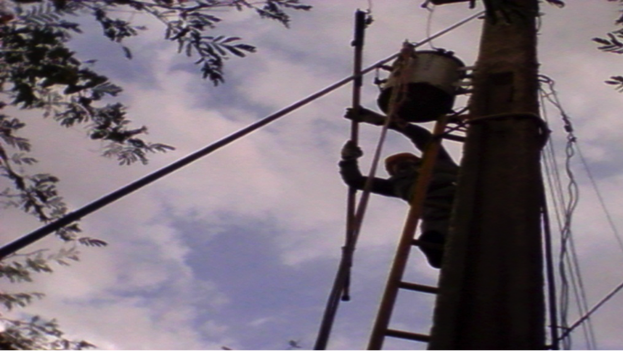
The 4,000-volt line is obsolete, and thus its transformers are not manufactured. (Ricardo Fernandez)

14ymedio bigger14ymedio, Ricardo Fernandez, Camagüey, 13 June 2016 – Passing by my parents’ farm south of Camagüey, I have experienced the local storms that cause the heat of the day. Although these rains are beneficial to the crops, many times they are accompanied by thunderstorms that cause overloads in the miles of “clotheslines” (the illegal connections made with all kinds of wires) that bring the current – with deficient voltage and poor strength – to the farmers’ houses. Last Wednesday afternoon’s storm left us in the dark all night, but also permanently damaged the old transformer that powered thirty farms. continue reading

A couple of days later the electric company’s linemen came out because, as they said, “the line failed.” We neighbors helped them to navigate the swampy roads on horseback to find the problem. When we realized the transformer needed to be replaced our blood ran cold. The last time it happened it took a week to find a replacement, since the 4,000 volt line is obsolete and the transformers are no longer manufactured. We neighbors quickly agreed among ourselves and, with great tact, offered a juicy gift to “expedite” the work. The amount collected between us seemed small, faced with the prospect of having to milk the cows in the dark and withstand the intense heat of the nights.

After many efforts, the linemen found the parts in a warehouse in Camagüey and returned to make the repair. We all got together to help, eyes as bright as kids seeing so many tools for which our minds had already conceived alternate uses. When we took the transformer down, the equipment had a hole in the grounding terminal. With little shame, we asked them to let us take a little bit of the oil coming out of the hole, because it is most effective for waterproofing harnesses and saddles, as well as for making them shine.

After the excitement of the reestablishment of the flow of electricity it’s time to reflect, and some questions come to mind. Why isn’t the Electric Company responsible for expediting repairs in rural areas? Why isn’t safe and secure electricity provided to farmers to improve their living conditions and the performance of their land? Why aren’t farmworkers paid a salary commensurate with the risk and complexity of their work? How long will we have to offer bribes to receive what it ours by right?

Speaking with the linemen we know that in Latin American countries their work pays approximately 60 dollars an hour. If they earned a living wage here in Cuba there would be no need for bribes-gifts to expedite their efforts. If the government propaganda that says they want people to return to the countryside is true, they should, at least, electrify the farms to be able to use irrigation systems instead of primitive dry land planting, as well as to improve living conditions in the countryside. We know that this implies huge investments, but it would also produce huge gains for the electric company because the farmers pay for electricity at a rate of 5 pesos per kilowatt consumed over the first 5,000.

To put it more simply, a house with an electric stove, a refrigerator and a fan, can expect to pay 400 Cuban pesos a month; but a farmer who uses electricity to irrigate his land will pay 13,459 Cuban pesos for 5,000 kilowatts. These high rates would bring in millions of pesos, which nullifies any excuse with respect to the claim of lack of budget.

Rain Causes 17 Building Collapses in the “Wonder City” / 14ymedio, Luz Escobar

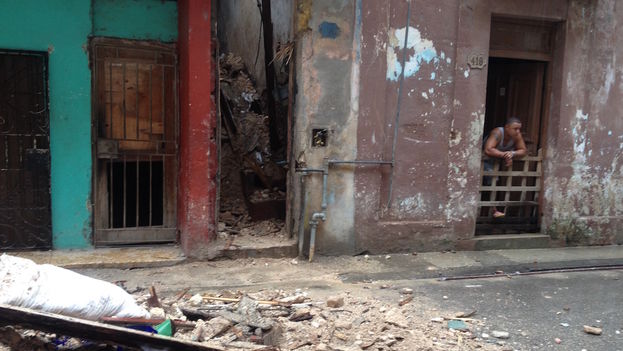
The facade of No. 418, where you can see the stairway filled with rubble. (14ymedio)

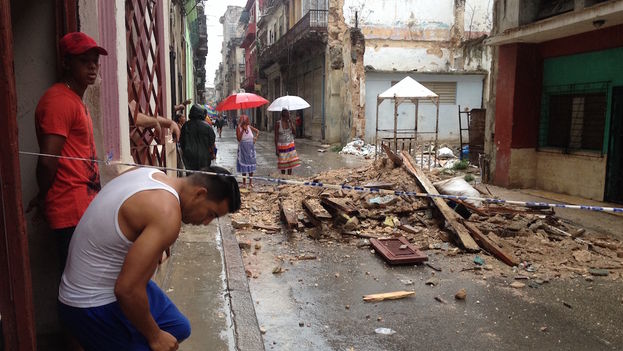
14ymedio bigger14ymedio, Luz Escobar, Havana, 8 June 2016 – The residents of 418 Villegas Street, in Old Havana, were unhurt after a building collapse at nine o’clock Wednesday morning. The collapse of the roof of the house on the first floor was one of the 17 partial and total building collapses that occurred in the Cuban capital, four of them in the historical district, as a result of the heavy rains of recent days.

With very few belongings salvaged from the rubble, residents of the place waited Wednesday afternoon for the authorities to address their situation. “We’ll sleep outside here, even though it’s raining, so that no one steals anything,” said a young resident of the property, who maintained the illusion that “some police officers to guard things” would arrive. continue reading

Leticia Ramirez, seven months pregnant and also a resident of the collapsed building, said that if something had happened “at six o’clock, when everyone was in the house, it would have ended in a tragedy.” She explained that the collapse “could have been avoided” because the three families affected by the collapse of part of the building had started “years ago” the process to obtain a bank loan to undertake repairs.

However, Ramirez says that the bureaucratic process to obtain permits to undertake the work in the Havana historical center took too long. “And in the end look what happened.” The woman enumerated all the problems, pointing to a pile of rubble that on Wednesday blocked the passage of cars and pedestrians.

The plight of the residents of the Villegas Street began long before the June rains. Banking authorities took three years to approve a subsidy request to allow them to purchase materials for the reconstruction of the building. Money was only allocated last December.

From that moment there began a series of impediments from the inspectors and specialists from the Office of the City Historian, in particular with regards to the authorization to place scaffolding around the façade of the building to undertake the repairs. The signature of Eusebio Leal Spengler’s office didn’t arrive in time.

Ramirez’s mother went back and forth for months, “from one office to another,” says the young woman, but “without resolving anything.” The pregnant woman stresses that she will not accept shelter near the well-known Casa del Pedagogo “with a mattress thrown on the floor,” a place that frequently shelters neighbors who have lost their homes in building collapses.

We are owners and nobody here wants to go into the shelter,” insists the woman, who noted sarcastically that a few hours before the building collapse Havana had been declared a “Wonder City.”

Some onlookers come for a first hand look.

Older residents were clearly desperate over the loss of their roof and a good part of their furniture and personal possessions. Adelaida said that they had been awarded a subsidy but that there were so many obstacles to “purchasing materials” that the work hadn’t begun.

As night fell, they still remained at the site waiting for the fire department to finish evacuating the contents of the building. As of noon on Thursday, none of the affected residents had received a visit from any representative of the People’s Power.

Some 1.7 million households, representing 39% of the housing stock in Cuba, is in fair or poor condition or worse, according to a report from the Housing authorities. During 2015, only 23,003 new houses were built throughout the country, of which 10,417 were built by people’s own efforts, a good part of them financed by loans awarded by state banks.

Between 2012, when the granting of credits to “natural persons” began, to the end of 2015, they had awarded 5.1 billion pesos (212 million dollars), of which 60% was earmarked for home repairs, according to the official press.

“You Have To Have Eyes To See The Wonder” / 14ymedio, Reinaldo Escobar

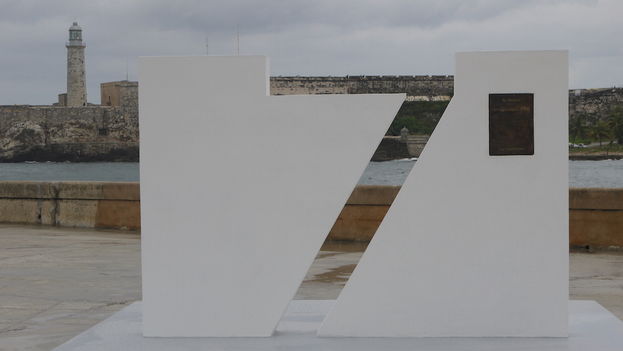
Plaque commemorating of Havana’s declaration as one of the New 7wonder Cities of the modern world. (14ymedio)
Plaque commemorating of Havana’s declaration as one of the New7Wonder Cities of the modern world. (14ymedio)

14ymedio bigger14ymedio, Reinaldo Escobar, Havana, 8 June 2016 — As if it were a Michelin star, tour operators, hotel managers and those who rent private rooms will exhibit, starting Tuesday, Havana’s status as one of the “New7Wonder Cities” of the modern world. Although the rain intruded on the unveiling of the plaque a few yards from the Malecon that confirms the new title, popular humor has not ignored the designation.

This week, there has been an increase in jokes making the rounds about the “wonder” of traveling in deteriorating urban buses, the marvel of buying food in a city in the grip of a dual currency system, or the miracle of the many buildings that remain standing despite their advanced stage of deterioration. Regardless of their disbelief, however, Havanans try to make the best of the new categorization, as symbolic as it is promising. continue reading

The Cuban capital figures on the list of 1,200 aspirants from 220 countries that competed for the grandiloquent epithet. Online voting put the city among the 77 finalists, which were reduced to 28 official candidates by a commission of experts.

Successive selections ended to the pleasure of a cabal of seven cities, like musical notes, the principal colors, the seas and the sins. Along with Havana the cities are Beirut (Lebanon), Doha (Qatar), Durban (South Africa), Kuala Lumpur (Malaysia), La Paz (Bolivia) and Vigan (Philippines).

The big winners are the tour guides who, from air-conditioned buses, tell foreign visitors the history of the taking of Havana by the English and describe to them in epic tones El Morro lighthouse guarded by the fortress of La Cabana. In these stories, Havana’s “wonder” status blocks the view of everyday problems and improves the tips that end up in their pockets.

These chroniclers of a city that lives only in the pages of Lonely Planet consider it an impertinence to note that on the day the designation was made official rainfall occasioned a building collapse in Central Havana while in the ration stores in the Cerro and Marianao neighborhoods people were buying 11 ounces of “chicken for fish*” and there was an extended power failure in Vedado.

None of the guides will tie the unexpected award to the celebration this year of the Seventh Congress of the Communist Party, nor to the presence of the country’s president on the list of the seven oldest presidents in the world.

José María, a young hustler who knows a few phrases in several languages and specializes in dating tourists, was on the Malecón on Tuesday at the time appointed to unveil the plaque. He hoped to engage in some “business” with foreigners passing along the esplanade, but only found a small group of officials headed by Havana City Historian Eusebio Leal Spengler.

Under a piece of cardboard in lieu of an umbrella, José María heard the phrase of the city historian: “You have to have eyes to see the wonder.” Then the committee left in official cars and the young man “captured” a couple of tourists to whom he described the wonderful cigars, for a wonderful price, which he kept at home “very near here,” so that they could smoke them in this wonderful city the official guides don’t talk about.

Cienfuegos People’s Power Vice President Assaulted By a Citizen / 14ymedio

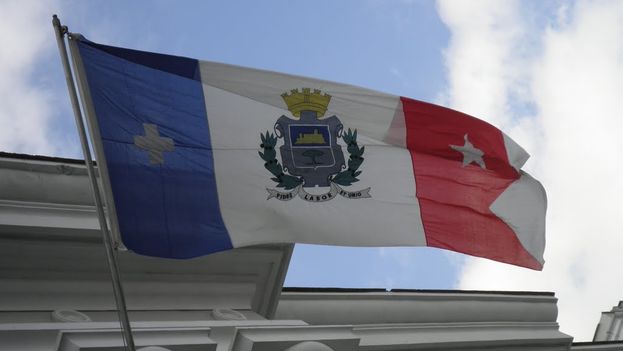
Cienfuegos’ flag flutters in the headquarters of the Provincial People's Power (Courtesy)
Cienfuegos’ flag flutters in the headquarters of the Provincial People’s Power (Courtesy)

14ymedio bigger14ymedio, Havana, 11 June 2016 — Last Monday Asneida Muñoz Villa, vice president of the People’s Power in the city of Cienfuegos, was assaulted physically and verbally after asking for explanations from several citizens who broke a sidewalk while repairing the water system, according to the local newspaper 5 de Septiembre.

The official told the local media that he had asked to see the permit issued by the municipal government to carry out the work. However, one of the citizens who was engaged in the repair reacted angrily. continue reading

Muñoz Villa tried to call the police, but the man grabbed his cellphone and threw it to the ground. He then continued mouthing obscenities, according to the official, who was pushed and the attacker even tried to hit him with a shovel.

During the attack, the man shouted that the repair that was being done meant “food” for his children and didn’t accept the official’s reasons for admonishing him. The People’s Power vice president lamented that dozens of people were present at the time, but none came to his aid.

Following Muñoz’s complaint to the police, the man was arrested and charged with assault on authority. According to Article 142 of the Cuban Penal Code, “Whoever employs violence or intimidation against an authority, a public official, or his agents or assistants, to keep them from performing an act of their duties, or to demand that they do it, shall be punished by one to three years of imprisonment.”

Violence against officials of the People’s Power and the Communist Party have occurred in the past in the province, but usually the official press is silent about these incidents.

Rain, A Justification for So Many Things / 14ymedio, Yoani Sanchez

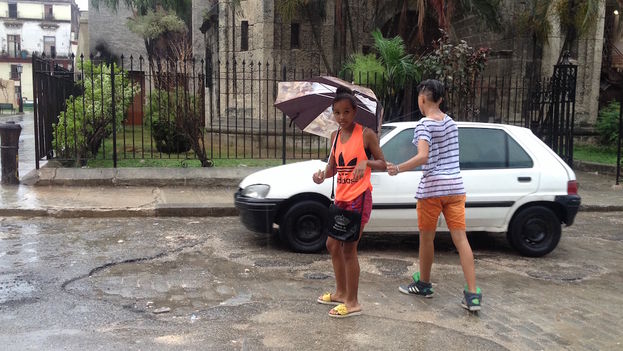
Two teenagers in the rain (14ymedio)

14ymedio bigger14ymedio, Yoani Sanchez, Generation Y, 10 June 2016 –“Why did you bring the girl if it is raining?” my friend’s daughter’s second grade teacher asked when she brought her child to school on Wednesday. Although the school year should continue, many elementary school teachers took advantage of the precipitation this week to hasten its end. The bureaucrats used the excuse of the bad weather to delay paperwork, while countless medical clinics opened late due to the weather. continue reading

Many state employees behave as if they are sugar cubes, or watercolors about to dissolve, or allergic to water when the rain comes. This reaction is laughable given that we live in a tropical country, but there is also a lot of drama involved in the serious damage the rains cause to millions of people. Over and over again, public services behave as if each rainy season was the island’s first.

The banking system, dysfunctional throughout the year, collapses almost entirely when two drops of rain fall from the sky. The Nauta email service – operated by the state phone company – is thrown into crisis, and urban transport outdoes itself in terms of problems. A drizzle and schools suspend classes, retail markets barely open, and even the emergency rooms in public health centers work at half speed.

All this without a hurricane, or 60-mile-an-hour-plus winds, or one of those heavy snows that keep nations further north on edge. The paralyzation of life here caused by the rains is more than a justification, it is an alibi, one that allows many, during these days, to do what they most desire: Nothing.