Remittances To Cuba A Record $3.3+ Billion in 2015 / EFE, 14ymedio

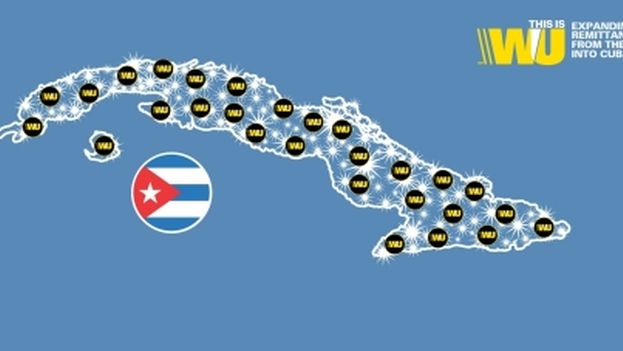
As of this spring, Western Union is sending remittances from the US to Cuba (Business Wire)

EFE (via 14ymedio), 23 June 2016 – The sending of remittances – money primarily from family and friends to Cubans on the island – has experienced the “most dynamic growth” in Latin America, with a record 3.354 billion dollars sent in 2015, according to the Havana Consulting Group.

Between 2008 and 2015, remittances to Cuba grew by 1.907 billion dollars, an annual average increase of 238 million dollars, “an event without precedent in the Cuban market where remittances to the island officially began in 1993,” according to Emilio Morales, the president of the group based in Miami.

Morales attributed much of the growth to the easing of “restrictions and limitations” on the sending of remittances, especially that stemming from the “rapprochement” between Cuba and the United States, under the leadership of US President Barack Obama.

Another factor in the change has been the “huge increase” in travel between the US and Cuba; in 2015 a total of 538,433 Cubans and Cuban-Americans made round trips between the United States and Island, or vice versa, an increase of 328% over 2007.

Cubans And Foreigners Competing For Hotel Rooms / 14ymedio, Zunilda Mata

It is estimated that domestic tourism will grow by 13.8% this year compared to 2015. (14ymedio)

14ymedio bigger14ymedio, Zunilda Mata, Havana, 20 June 2016 — With the arrival of summer on Monday, Cubans are obsessed with getting an “all-inclusive” package tour to enjoy the school holidays. However, domestic demand is affected by the simultaneous growth of foreign tourism — up 11.9% since January — and the insufficient number of hotel rooms.

Since 2008, when Cubans were granted the previously denied permission to book rooms in hotels, domestic tourism has seen a sharp increase and is estimated to grow by 13.8% this year compared to 2015. The island currently has about 61,200 rooms in about 300 hotels. The Ministry of Tourism plans to add some 3,790 new rooms and repair 5,677 others, by December. continue reading

The tension between the capacity dedicated to international tourism and those marketed to Cubans is considered the main cause of rising prices in options for Cubans living on the island, especially the all-inclusive packages.

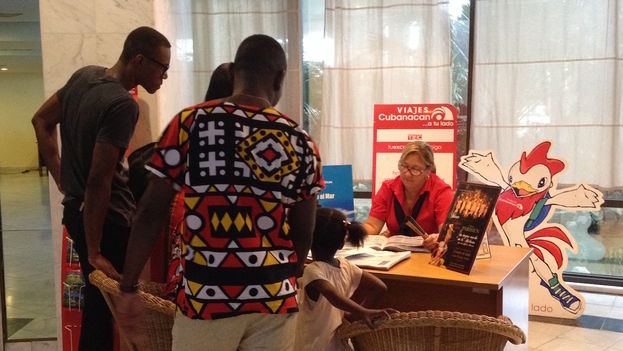
“We have been saving for a year and in the end had to borrow money because the prices have gone up,” complained one customer in the Cubatur offices at the Habana Libre hotel. “They’ve told us that all the facilities on the northern keys are reserved and there is no room,” said the buyer.

A tour of several agencies in Havana confirmed that the prices of many tourist packages have risen between 8% and 15% in one year. The Islazul agency, one of the busiest among nationals due to its economic rates, also increased some prices, especially those of multi-room houses on the beach.

“It’s nothing new, every summer prices go up as demand increases,” an employee of the chain justified by phone from her office in Cienfuegos. She said that there has not been a significant increases in prices, but that now there is less availability and the cheaper deals sell out early.

The employee said that “the most sought after options by domestic clients are accommodations along the coasts and keys, although there is also high demand for those that include a nature trail or historic points of interest.”

Sources in the tourism sector warned this newspaper that as of the 1st of July package deals in Cuba will be even more expensive, with costs increasing up to 50% in some cases.

The deficit in rooms, which has become more acute since the beginning of this year, benefits private facilities in tourist areas, as is the case with the Yeli Boom guesthouse at Guanabo beach to the east of Havana. With a swimming pool and two minutes from the sea, the place initially focused on foreign tourists, but has gradually included domestic clients.

“I reserved a place for 70 Cuban convertible pesos [about the same in dollars] a night, because my son is coming from Barcelona to spend some days with the family and I couldn’t’ find another place that is that close to the sea and decent,” commented Maria Josefa, a retired teacher. She ruled out houses at Playas del Este that are state-managed because “they have very bad conditions, when the sink isn’t broken the mattress is bad.”

“My only regret is that in these private homes it’s not all-inclusive, because it’s really convenient not to have deal with the food,” added the lady. “It’s a matter of time before these places that already have such good conditions get a handle on this, when they allow you an open bar.”

Latin America in the Mirror of ‘Brexit’ / 14ymedio, Yoani Sanchez

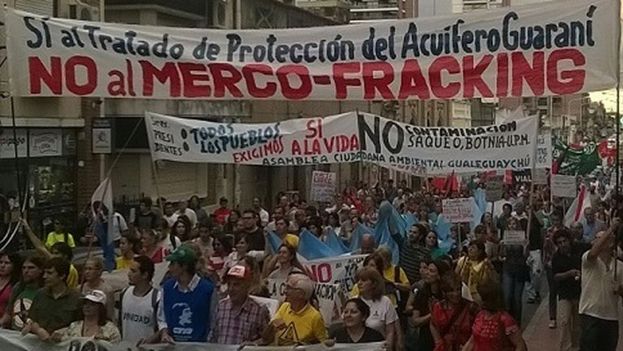
A demonstration against the costs of the Mercosur Summit in 2014. (Digital Analysis)

14ymedio bigger14ymedio, Yoani Sanchez, Havana, 22 June 2016 — Rupture can only be possible if there was once an agreement, a relationship or love. In the eyes of Latin America, Brexit seems like the story of a mature friend embroiled in the bitter litigation of a divorce, provoking a certain envy in those who have never managed to mate. In this world, while some arrange their departure from an alliance, others yearn for the marriage of an agreement.

When the British vote this Thursday on a referendum to decide whether the United Kingdom will remain in or leave the European Union, the major impact of in Latin America should be a reflection on unitary structures, their reason for being and their fragility. On a continent where, in recent years, there have been innumerable groups, alliances and regional councils, each one more ineffective than the last, comparisons are inevitable. continue reading

The dozens of entities and coalitions, whose initials, logos and premises surround us everywhere in Latin America, pompously hold inaugural summits with family photos filled with heads of state, but in practice and in real life they are of very little use. Latin America has not even achieved full freedom of movement for its citizens within its own borders, a theme that takes on a seriousness in the face of the strict requirements Cubans need to meet to visit neighboring countries.

The history of the political community called the European Union, even if one of its parties chooses to leave this week, is that of the hard road of conciliation, the journey of dialog with all its obstacles and its search for points in common. Why haven’t Latin Americans extended an embrace in our area to create a legal framework that facilitates easier migration, investment and exchanges for our inhabitants?

Few areas on this planet show so many linguistic, cultural and historical similarities as that found between the Rio Grande and Patagonia. These similarities make the fragmentation exhibited in so many regulations increasingly incomprehensible, in an area where many governments have chosen to join in their “little groups” based more on ideological affinities than on their responsibilities to their peoples.

The reason for so much disunity – contrary to the common points of our identity that work to bind us together – are a sign of the egotism of the executives and the shortsightedness of the foreign ministries.

The Community of Latin American and Caribbean States (CELAC), created to emulate the Organization of American States (OAS) while leaving out the “uncomfortable” United States and Canada, does not advance beyond symbolic statements. At its last meeting in Ecuador, held in January, its most “concrete” achievement was to express support for the states participating in the Colombia peace process and to congratulate the government of Juan Manuel Santos. After long organization and with the concurrence of the delegates from the 33 member countries, the intergovernmental organization didn’t move beyond paraphernalia to results and was incapable of taking on and proposing solutions to the great challenges of the continent.

Even worse has been the outcome of the Bolivarian Alternative for the Americas (ALBA), inflated by the temperament of a populist politician who thought he could redesign his country and go on to define the contours of the map of Latin America. With the death of former Venezuelan president Hugo Chavez, this regional entity, defined by ideological exclusion and political commitment in exchange for oil, is like a pricked balloon: it has deflated.

Even the Central American Integration System (SICA) demonstrated its ineffectiveness during the Cuban migrant crisis which, in late 2015, raised the political temperature on the border between Costa Rica and Nicaragua. Tension over the unilateral decision of Daniel Ortega to close his border to Cubans caused Costa Rican President Luis Guillermo Solis to declare that “Costa Rica can not participate in these conditions in an Integration System that ignores solidarity.”

Mercosur, the alliance the has come closest to achieving the free movement of goods and services between its member states, is also faltering because it became too incestuous and too dependent on Brazil’s Planalto Palace, from which President Dilma Rousseff, one of its principal supporters, has departed as of a few weeks ago, in the midst of process in which she is accused of trying to disguise the country’s budget deficit.

Amid the rubble of so many failed organisms and so many acronyms condemned to the dustbin of history, the Pacific Alliance, comprising Chile, Mexico, Peru and Colombia, has chosen to “make it on their own” in a region where agreements are here today and gone tomorrow and organized groups bear more resemblance to gangs than to functional entities.

This Thursday, when the British decide to leave or remain in the European Union, at least they will have known the taste of coexistence, the bittersweet contrast that defines every marriage. We in Latin America remain chronically single, looking enviously toward the altar.

The Goytisolo Palace, A Jewel Of Cienfuegos About To Disappear / 14ymedio, Caridad Cruz

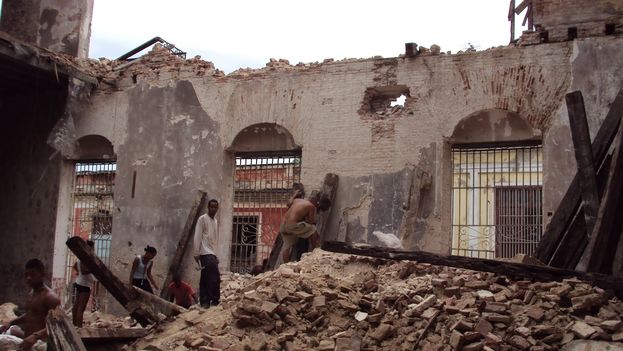
The Goytisolo Palace, also known as La Catalana, in Ciefuegos

14ymedio bigger14ymedio, Caridad Cruz, Cienfuegos, 19 June 2016 — One of the greatest treasures of Cienfuegos, the Goytisolo Palace, lies in ruins amid official apathy to the rescue of this emblematic building in a city declared a World Heritage Site by UNESCO in 2005.

Declared a local monument, the Goytisolo Palace, or La Catalana as it is also known, was built by Agustín Goytisolo Lezazarburu, a Biscayan born in 1812 who came to Cuba in search of opportunities in the 1830s. continue reading

Known for his reputation as a skilled tradesman, by 1870 he had become a wealthy businessman with hundreds of slaves, the owner of sugar plantations in Hacienda Simpatía as well as the sugar mills of Lequeito and St. Augustine.

By 1847, just 28 years after the founding of Fernandina village of Jagua, now known as Cienfuegos, the Goytisolo family acquired a site on Santa Elena Street at the corner of D’Clouet, for the construction of the building, which it was concluded in 1858.

It was considered an example of the Baroque style and one of the most important house-warehouse buildings of the nineteenth century. At 68 by 123 feet, it had a basement and central courtyard. Among the architectural elements that could be found in the building was an exquisite gate facing Santa Elena Street which appears to have been the coach entrance.

It had stained glass windows on the first floor and in the back, apparently for the warehouse. It also had richly decorated beams, and on the second floor Malaga tiles and Bremen mosaics, bricks and ornate marble intarsia.

Nothing remains of the former splendor. The palace has become an empty shell languishing since it was declared uninhabitable in 2005. The Revolution converted it into multifamily housing. One of these “rooming houses,” in which a house “abandoned” by its owner, fleeing the new economic system, was partitioned into small apartments where dozens of people cohabited.

After the indiscriminate theft of what was an exquisite nineteenth-century building, only ruins remain. Neighbors took the marble floors, and cut and resold the railings. Even the bricks, extracted at the tip of a sacrilegious chisel, were sold. Carpentry was supplied by the beams of the mezzanine.

Local authorities have argued for the demolition of the building, but the Office of the Curator of the City opposed it. In 2012, a part of the wall and the windows of the building collapsed. Since then, the countdown to its total destruction has begun.

Declaring the site a Local Monument is worthless. La Catalana has become a constant concern of scholars of local history who know that not undertaking any restoration sends a dangerous message to the preservation of the heritage of the nation. Nothing can withstand the indiscriminate passage of time and the apathy of the rulers.

Cooling Off / 14ymedio, Luzbely Escobar

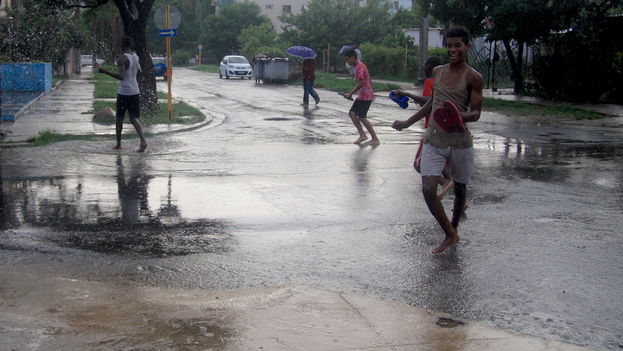
Boys bathing in the rain in Havana. (14ymedio)

14ymedio bigger14ymedio, Luzbely Escobar, Havana, 21 June 2016 — With the coming of summer the evening downpours are back. Almost daily, in the evening, the sky is loaded with black clouds about to burst. Sometimes we get the “deluge” and sometimes not. When it happens, invariably the boys in the neighborhood come out together to have fun in the rain.

Most of the students in the country are on vacation in these weeks, and don’t miss an opportunity to play soccer or baseball on any corner. When the downpour comes, instead of trying to find shelter under a roof, they walk the streets looking for puddles to splash in and enjoying everything falling from the sky. continue reading

The heat of recent weeks has been very intense, a bath in the cool rain in the afternoon fits these young people like a soft glove. However, for those coming from work it becomes a headache to return home after the workday.

This year is competing with 2015, which was classified as the warmest of the last six decades. In different localities, the thermometers have reached figures greater than 99F, as was the case in the village of Velazco, where the temperature reached almost 102F.

This historical average, which was 77.9 degrees Fahrenheit, according to the Climate Center of the Meteorology Institute, was surpassed last year at 1.8 degrees. The phenomenon is related to El Niño, along with the process of global warming.

These late afternoon rains do not occur only in the capital. Yesterday’s rainfall record occurred in Manzanillo, a municipality in the east. This area has been affected in recent months by a severe drought, so any rain is very well received, by both residents and reservoirs.

While the more conservative remain indoors, looking to mitigate the effects of the dog days of summer with the air of a fan or a refreshing drink, the more daring take advantage of the downpours to counter the high temperatures.

Nespresso Will Be The First Company To Export Cuban Coffee To The US / 14ymedio

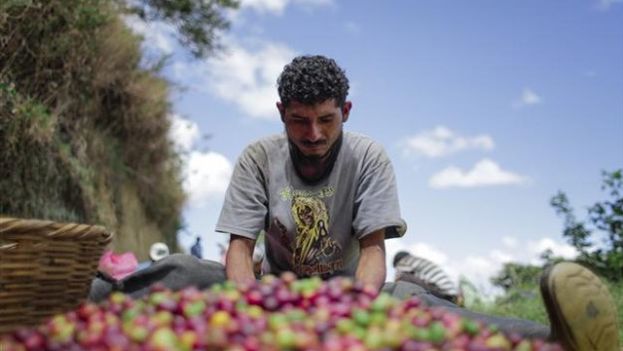
A farmer selects ripe coffee. (EFE)

14ymedio bigger14ymedio (With agency information), Havana, 20 June 2016 — The Cuban coffee will again be exported to the US after more than 50 years. Nespresso, of the Nestlé group, will be the first company to do so, as reported Monday by the Reuters agency.

Cuban coffee is one of the island’s non-state products that the US State Department authorized for import this April. Cuba’s National Bureau of the National Association of Small Farmers (ANAP) rejected the measure and charged that it was an attempt to influence Cuban peasants and separate them from the state, saying that it “cannot be permitted, because it would destroy a Revolutionary process that has provided participatory democracy, freedom, sovereignty and independence.” continue reading

Nespresso said Monday that the US market launch of Cuban Cafecito will occur in the fall of this year, although initially the product will be available in limited quantities.

The president of Nepresso USA, Guillaume Le Cunff, explained the firm will work with the nonprofit organization TechnoServe to support independent coffee growers on the island.

“We want consumers in the US try this amazing coffee and enjoy it now and in the coming years,” he added.

Starbucks Corp, one of Nespresso’s main competitors in the US market, told Reuters that at present it has no plans to import coffee from Cuba.

The Crisis Hits Cuban Doctors In Venezuela / 14ymedio, Mario Penton

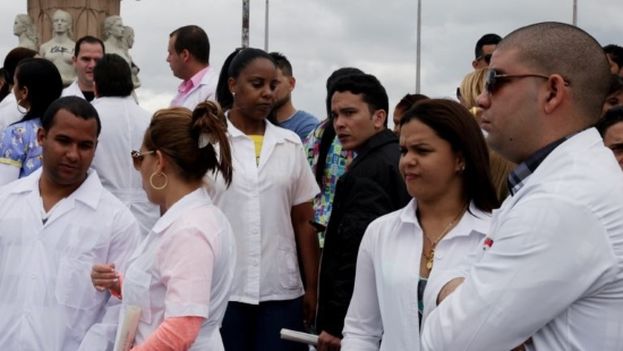
The island earns more than 8.2 billion dollars from the "export of health services." (EFE)
The island earns more than 8.2 billion dollars from the “export of health services.” (EFE)

14ymedio bigger14ymedio, Miami, Mario Penton, 21 June 2016 — Tania Tamara Rodríguez never thought of fleeing the Cuban medical mission in Venezuela and become a “defector” who is prohibited from entering her own country for eight years. The plight of the island’s health professionals in Venezuela has led an increasing number to seek refuge in neighboring countries or to take alternative work to meet their needs in the midst of the economic crisis in that “Bolivarian” nation.

“The situation of doctors and aid workers Cubans is terrible. The whole time you are living under the threat that they send you back to Cuba and you lose your mission. You’re afraid they’ll take away all the money – which is in official accounts in Cuba – and if they take some disciplinary measure they will revoke the mission,” says Rodriguez. While working in a clinic lab in the “Barrio Adentro” mission, her salary of 700 Cuban pesos (about $26 US) is deposited in Cuba and she has the right to an account of 280 dollars a month and a card giving her 25% off on purchases at Foreign Exchange Collection Stores (TDRs) in Cuba. continue reading

In 2014, recognizing that the island earned more than 8.2 billion dollars from the “export of health services, the Cuban government agreed to increase the wages of workers in the sector (to $61 US per month). However, this increase, which came after the dismissal of 109,000 workers, has not raised the pay of Cuban doctors to the average pay for doctors internationally.

In 2014, recognizing that the island earned more than 8.2 billion dollars from the “export of health services, the Cuban government agreed to increase the wages of workers in the sector

Rodriguez arrived in Venezuela from her hometown of Holguin, where she worked in the Máximo Gómez Báez polyclinic after earning a degree in Clinical Laboratory. The desire to economically improve the lives of her 13-year-old daughter led her to choose to travel outside the country in one of the coveted medical missions abroad.

Cuba maintains a “contingent” in Venezuela composed of 28,811 health collaborators, a priority for the government which, since the late Hugo Chavez came to power in 1999, has invested over 250 billion in the industry, according to statements by President Nicolas Maduro .

The scheme of paying for medical services with oil has been denounced on numerous occasions by analysts critical of the Caracas government, who accuse it of being a cover for subsidies to Havana, which eventually resells some of the oil on the international market.

Rodriguez has no family in the United States, where she has lived since filing for a visa through the Cuban Medical Professional Parole Program, offered by the US embassy, and has combined several jobs to raise the money and buy a plane ticket for her daughter. However, when the family took the child to the offices of Cuba’s Interior Ministry to request a passport, she was denied that right, based on the claim that her mother “is serving a mission in Venezuela.”

“I can not understand how in Cuba I can be considered as a doctor on mission, if for more than one year I have been in the United States. Someone has to be collecting the money that the Venezuelan government is paying for me,” says Rodriguez.

According the US Citizenship and Immigration Service, in the last fiscal year it received 2,552 petitions for the Cuban Medical Professional Parole Program

According the US Citizenship and Immigration Service, in the last fiscal year it received 2,552 petitions for the Cuban Medical Professional Parole Program, an initiative established under Republican president George W. Bush, which allows a “medical professional currently conscripted to study or work in a third country under the direction of the Government of Cuba” to enter the United States with a visa. Since taking effect in 2006, more than 8,000 professionals have benefited from the program.

Solidarity Without Borders, an non-profit located in the United States, told 14ymedio that in recent years there has been an increase in doctors and healthcare workers taking advantage of the US government program, although not all are accepted, as demonstrated by the 367 applications denied in the last year.

Rodriguez said that upon reaching Venezuela she was assigned to the state of Falcon, along with other Cubans. “Everything in Venezuela is a lie. They forced us to throw out the reagent CKMB, a product in short supply in the nation, but we had to throw it out for the record in the statistics used so we can import more. This was the case with alcohol, bandages, medicines… Everything was produced in Cuba and the Venezuelan government paid,” she denounces.

“We made up lists of people treated and they forced us to live with the minimum, while Cuba took all the money,” she explained. In the time Rodriguez worked as a specialist, Havana allocated to each staffer around 3,000 Bolivars (about $300 US), a figure that has escalated substantially since the beginning of the inflationary crisis in Venezuela and the relentless devaluation of the currency. “Sometimes, I had to have my little ‘under the counter’ job to support myself. Thanks to God, many Venezuelans sympathize with the Cubans and help us,” she explains.

“Perhaps what happened with me is when I decided to escape, I went to the mayor and told him about the whole disaster created by the CDI (Integral Diagnostic Center) and now they want revenge because I denounced it,” she says.

Reinaldo is a Cuban doctor who worked in Anzoategui state, but does not want to give his last name for fear of being punished. “We started out earning 3,000 Bolivars and now we’re at 15,000 Bolivars (about 15 dollars on the black market). The odd things is that it doesn’t mean anything to multiply the wages if they aren’t worth anything in real life,” he laments.

“We started out earning 3,000 Bolivars and now we’re at 15,000 Bolivars (about 15 dollars on the black market)… which isn’t worth anything in real life”

“The conditions we work in are the worst, we are the wage slaves of Cuba. They keep us in groups. Since I arrived, I’ve lived with three doctors from different regions of the island, I have to share my room with someone I don’t know and at six in the evening every day I have check in, like I’m at home.”

The authorities of the Cuban medical mission in Venezuela justify the daily check on aid workers and maintain that it is to protect them due to the high levels of violence in the neighborhoods they serve. The doctors, for their part, consider that it is a practice to keep them under surveillance.

“There are a lot of Cuban State Security agents. The role of these people is to ensure we don’t escape from the mission. On arriving in Venezuela they ask us if we have family abroad, especially in the United States. We all say no, even if we do, because otherwise the surveillance is worse,” says the physician.

The economic situation in the country has become so precarious, he says, that in his last vacation on the island he had to buy cleaning and bath soaps and toothpaste to bring the Venezuela. “When we got here, it was a paradise, they had everything we didn’t have in Cuba. Today it’s the exact opposite. We come thinking about helping our families and it turns out that they are the one who are helping us. If it weren’t for my brother who lives in Miami and sends me remittances, I don’t know what I would do.”

“When we got here, it was a paradise, they had everything we didn’t have in Cuba. Today it’s the exact opposite.”

According to several doctors consulted by this newspaper, cases of violence in which Cuban healthcare workers have been involved are kept secret, even if the person dies.

“It is impossible that we wouldn’t be assaulted here, because here everyone is assaulted. A stray bullet, a thug who doesn’t like you, we’re exposed to all this,” says a Cuban doctor who prefers not to give her name. “One day two children assaulted me, they couldn’t have been more than 12. I had to give them all the money I had, because the guns they were playing with were real,” she says.

The relations of the Cuban medical personnel are also regulated. “They warn you that things can go badly for you if you deal with the squalid (a word used in Venezuela for regime opponents similar to the use of “scum” and “worm” in Cuba).” The doctor says that the intimacy between Venezuelans and Cubans is formally forbidden, “although people manage.”

In the 13 years that Cuban medical missions have been operating in Venezuela, more than 124,000 specialists have passed through that nation. Thousands have fled to the United States and other countries in search of better living conditions. In 2015, Cuba assured “health professionals who have left the country that under the current immigration policy,” if they returned to the island, they would be guaranteed “a work location similar to what they had previously.” However, they put a limitation on it: the returnees will again be under the obligation to request special permission to travel outside the country.
No Diploma Certifies Us As Parents / 14ymedio, Reinaldo Escobar

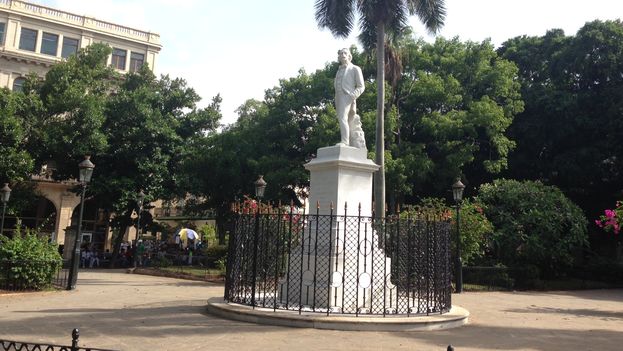
The statue of Carlos Manuel de Céspedes in Old Havana, on Father’s Day Sunday without a single flower. (14ymedio)

14ymedio bigger14ymedio, Reinaldo Escobar, Havana, 19 June 2016 – Those of us who have had the joy of being parents spend our lives asking ourselves whether we have done well, if in the strict judgment our children will make about our work will we earn a good score, a mediocre grade or, instead, a resounding disapproval.

The Venezuelan singer Franco de Vita says it is “not enough” to feed our offspring, surround them with comforts and conveniences, or guarantee that they receive an education, we must also respond to their questions. But our answers, which we have to improvise in a second, will be the most momentous memories our children have of us. continue reading

“Ah! From my father I learned” reads a very popular H. Upmann cigar commercial from the Republican era. Today we are proud to have children who don’t smoke, either because they saw us with a cigarette in our mouth, or because they witnessed our efforts to give up the vice, while they hid our cigarettes from us or dunked our packs in a bucket of water.

However, there are days when being a father is more difficult. Like on one of those afternoons when they come home full of ingenuity and recite a poem dedicated to Ernesto Guevara in which they assert that, “Two droplets of water fell on my feet and the mountains were crying because they killed Che.” The first reaction of any responsible father is to shout “No!” That they should not be like that Argentine with his stereotypical ideas and trigger-happiness, but every word spoken only sinks them into the abyss of ideological problems and social stigma.

Others will be more forgotten, Like Carlos Manuel Cespedes whom we call “the father of the nation” because when the Spanish proposed that he lay down his arms in exchange for the life of his son, whom they had taken prisoner, he made the dramatic decision to continue the struggle and his son was executed. This Sunday, Father’s Day, none of those who usurp the name of the “fatherland” have brought flowers to his statue in the Plaza de Armas in Old Havana.

Being a father in Cuba is very difficult. Because among all the dramatic dilemmas involved in paternity is placing them in a fragile boat to leave the country, or deciding that it is better to try to save the country for them and to involve them in the task. But while something like this is being decided, it happens that they are growing up and becoming parents, to begin to experience first hand how this hazardous and gratifying is the road that is having children.

No university offers a degree to improve parenting, no diploma certifies that we are good at achieving it.

Necessity Doesn’t Understand Slogans / 14ymedio

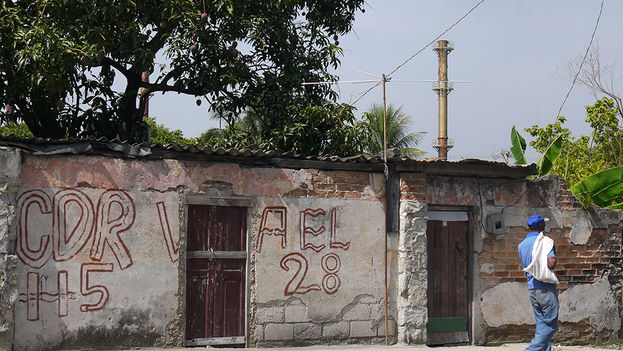
On this wall in the town Regla, Havana, life has overtaken the revolutionary slogans. (14ymedio)

14ymedio bigger14ymedio, Havana, 20 June – The city walls emulate the political billboards with regards to signs and slogans. However, the propaganda painted on the facades is frequent interrupted by a doorway, a window or a vent. Behind these changes to the exterior there is always the story of a divorce, or the birth of a child, or even a relative who comes to live with the family.

In these cases, respect for the slogan written on the wall means less than necessity in most cases, as is shown in this photo in the town of Regla , a few yards from the pier served by the ferries that link this capital municipality to the historic heart of Havana.

The phrase on the wall marks the anniversary of the founding of the Committees for the Defense of the Revolution (CDR) is now just a series of letters with little sense. The phrase “long live” has been replaced by a doorway leading to a new dwelling, where “life” has imposed its own slogans.

Cuban Phone Company’s Technical Problems Interrupt Service on the Island / 14ymedio

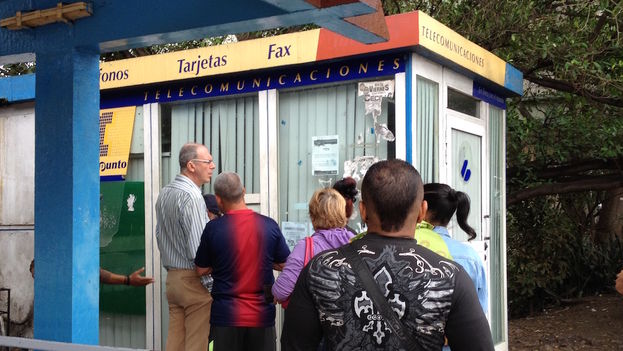
 ETECSA Telepoint in Havana. (14ymedio)
ETECSA Telepoint in Havana. (14ymedio)

14ymedio bigger14ymedio, Havana, 16 June 2016 – Customers of Cuba’s Telecommunications Company SA (ETECSA) have seen their cellphone service affected since early Thursday morning. The messaging service (SMS) does not work correctly due to instabilities in cellular coverage.

The company has not sent any SMS information to its customers nor has it made a statement to the official Cuban media. Yes it has distributed a press release through its Twitter and Facebook accunts explaining that the failure from “the early hours of today,” is due to “voltage fluctuations in the network supplying the equipment of the mobile service infrastructure. ”

The state company claims that this is the reason why service was affected in the province of “Mayabeque, the special municipality Isla de la Juventud (Isle of Youth), and municipalities in Havana including: Plaza of the Revolution, Centro Habana, Cerro, Habana Vieja, Diez de Octubre, Arroyo Naranjo, Boyeros and San Miguel del Padron.”

Some users trying to communicate at the stroke of noon said that despite their phones indicating they had coverage, they received an error message when trying to send an SMS.

Internet services at the public wireless points are also unstable. “The signal comes and goes,” says a young woman trying to connect in the park at Linea and L Street in Havana’s Vedado area. A telecommunications agent in the Plaza municipality told 14ymedio that several clients had been to ask him if he was aware of the problem.

According to the press release, signed by the ETECSA Communications Department, “specialists have worked continuously on the solution to the failure and steb-by-step service had been restored.” As usual in these cases, the company also “apologizes for any inconvenience this may have caused.”

Ten Undocumented Cubans Found Off The Coast Of Puerto Rico / 14ymedio

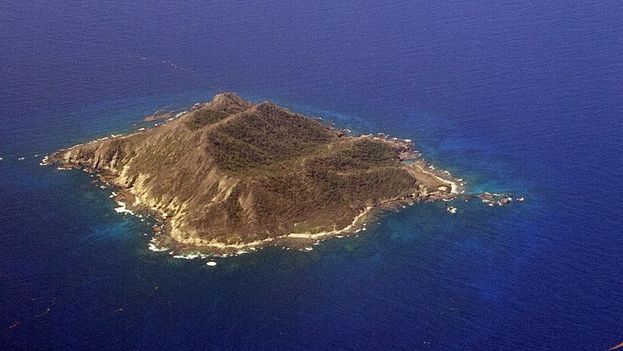
Mona Island off the coast of Puerto Rico is considered US territory in the Caribbean. (DC)

14ymedio bigger14ymedio, Havana, 18 June 2016 — Puerto Rican authorities detained 10 Cuban migrants on the island of Mona, considered US territory in the Caribbean. Apparently the Cubans had landed there and so far all are in good health.

The Puerto Rican police said in a statement that seven women and three men were found on Saturday morning on Mona, west of Puerto Rico.

The Cubans will be taken to the port of Aguadilla where the immigration authorities can analyze their status and consider whether they qualify to benefit from the wet foot/dry foot policy under which all Cuban nationals are automatically given refuge after stepping on American soil.

So far this fiscal year, which began in October, more than 3,600 rafters have been intercepted at sea, according to the United States Coast Guard.

Six Rafters Arrive in Florida on a Rustic Boat Named ‘Barack Obama’ / 14ymedio

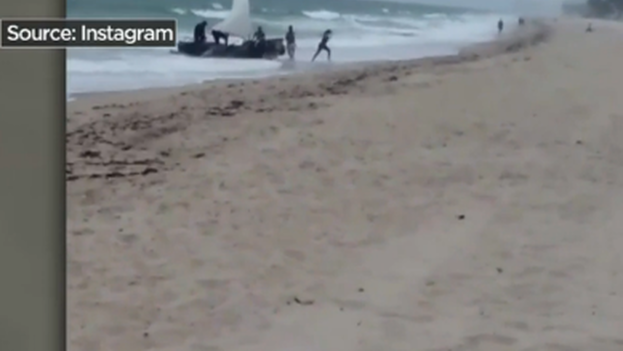
The arrival of the rafters.

14ymedio bigger14ymedio, Havana, 7 June 2016 — A group of six Cuban migrants arrived on Monday night along the coast of Lauderdale By-the-Sea, Florida, in a precarious craft, according to the local media. Among them was a pregnant woman who was treated by medical services as a precautionary measure.

The rafters crossed the Florida Straits aboard a rustic boat covered with metal plates that they had baptized Barack Obama, which could be read on the side.

The Cubans, who are in good health despite spending nine days adrift, came from Nuevitas, Camagüey.

A witness quoted by the Sun Sentinel newspaper saw the arrival of the migrants from the beach. “We thought it was someone surfing, but then we saw several people. They were paddling like crazy,” she said.

5,000 Tons Of Vietnamese Rice Arrive In Cuba / 14ymedio

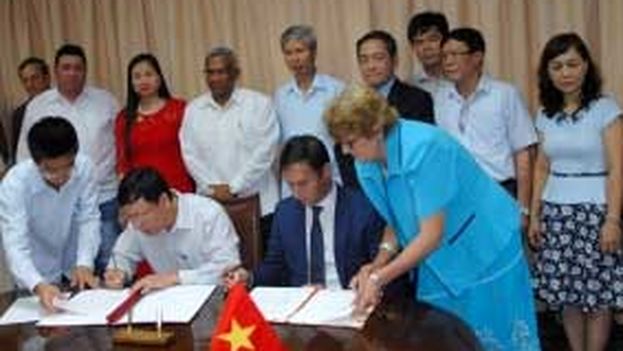
Signing the record of delivery and receipt of the 5,000 tons of rice. (Twitter)

14ymedio bigger14ymedio, Havana, 16 June 2016 – Rice is again a symbol of friendship between Cuba and Vietnam. The signing, this Thursday, of the record of delivery and receipt of 5,000 tons of rice donated by the Vietnamese Communist party – the State – is added to the joint agricultural programs carried out by both countries tat have allowed Cuba to reduce from 450,000 to 300,000 tons the import of this grain.

The ceremony this Thursday, which represents a gesture to underscore the friendship between Vietnam and Cuba, was attended by Rigoberto Enoa, director of Trade Policy with Asia and Oceania of the Ministry of Foreign Trade and Foreign Investment, and Pham Phan Dung, chief of of Vietnam’s National Reserve. continue reading

Phan Dung, who signed the document in front of the Vietnamese ambassador in Havana, Doung Minh stressed that this donation will allow a further strengthening of the relations of solidarity and cooperation and recalled the “eternal gratitude” of the Vietnamese people towards Cuba in its “struggle for “national liberation,” peace and building the country.

Rigoberto Enoa, after expressing appreciation for the gesture and highlighting the excellent ties of friendship between the two countries, said the rice will is for consumption by the population.

In addition, the Cuban official recalled that many Vietnamese companies are interested in investing on the island and there are already several advanced proposals. Vietnam is also has a project for the production of diapers in the Mariel Special Development Zone.

Other areas where trade relations are advancing are the development of drugs and vaccines.

Last September, President Truong Tan Sang paid a visit to Cuba to participate in a business forum. On that trip, the president said that the economic reforms undertaken to update the socialist model of the island guarantee “stable and sustained development” and allow “bilateral trade relations at the same level as the policies.”

Crime Lurks Around ATMs / 14ymedio, Yosmany Mayeta Labrada

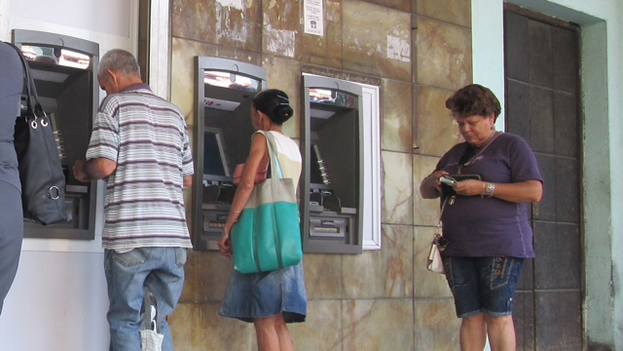
The little security in the areas where around many ATMs contributes to the assaults. (14ymedio)
The little security in the areas around many ATMs contributes to the assaults. (14ymedio)

14ymedio bigger14ymedio, Yosmany Mayeta Labrada, Havana, 16 June 2016 — “It was about six in the evening and I had taken money from an ATM, when I saw the knife.” So says Carmen, 71, about the time when she was attacked by two young men who stole her entire pension for the month on 10 de Octubre Avenue. The little security in the areas where many of the ATMs are located contributes to the assaults, a topic discussed last week at a meeting between members of the National Revolutionary Police (PNR) and government representatives in the capital.

In addition to losing 243 Cuban pesos, Carmen has inherited from that traumatic moment the fear of reliving a similar situation. “From that day I hardly go out into the street alone and when I’m going to collect [my pension] at least two of my children accompany me,” she explains. continue reading

During the meeting with the PNR, a representative of the Provincial Administration Council (CAP) of the People’s Power of the capital confirmed the increase in robberies around ATMs. Police major Manuel Alejandro Godinez warned that “security measures” will be taken to address “the increase in assaults” at the cash machines, whose victims are mostly elderly people.

In Havana there are 398 ATMs of the 700 in the country, although the years and wear have taken more than a dozen of them out of service. Vandalism has also contributed to the reduction in the number of cash machines, like that suffered last May be three ATMs in Branch 295 of the Metropolitan Bank in the Luyano neighborhood in the Diez de Octubre district.

However, the biggest concern for the police authorities focuses on the increase in the first half of this year of robberies, as was noted at the meeting. The most affected municipality is still Centro Habana followed by Arroyo Naranjo, Diez de Octubre, San Miguel del Padron, Marianao, La Lisa, Boyeros, Guanabacoa and Habana del Este.

“These are events that occur primarily in outlying neighborhoods and where there is a higher crime rate,” a government specialist in Central Havana who works in crime prevention explained to this newspaper, declining to give his name. “The most common victims are elderly, because they are easier to frighten and because the country has more than one million magnetic cards issued to retirees.”

Major Godinez said during the meeting that the neighbors should be alerted to “avoid older people from frequenting these places alone.” He also stressed that the police have arrested several youths, suspected perpetrators of this type of theft, who are “under investigation” and “some are minors, so their parents will be sanctioned for not having them under control and monitoring their children.”

One solution for reducing theft is to better illuminate the areas around cash machines, says a customer who frequently uses the ATM on the main street of Villa Panamericana. “Sometimes I come here and it is pitch black, you can’t see your hands in front of your face,” she says.

However, Cubans have no choice: they need cash to pay for purchases, since magnetic card payment in shops is often hampered by poor communication between point-of-sale terminals and the bank.

Alejandro Barrios, A Son Of Candelaria Who Died In Pulse / 14ymedio, Reinaldo Escobar

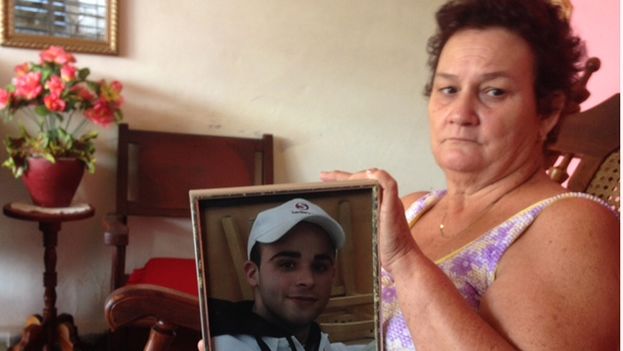
María Magdalena Puente, Alejandro’s grandmother, shows a picture of her grandson. (14ymedio)

14ymedio bigger14ymedio, Reinaldo Escobar, Candelaria, Cuba, 17 June 2016 — At two in the morning last Sunday the villagers of Candelaria in the province of Artemisa slept peacefully. At the same time, in the city of Orlando in Florida a fierce firefight broke out in the gay nightclub Pulse, amid an evening of Latin music.

Alejandro Barrios Martínez, born in Candelaria 21 years ago, had settled in the city of Orlando where his father Saul Barrios had called for him. There, in 2014, he found a job, a partner, and also came to believe that there he would spend the rest of his life. That night he was at Pulse to celebrate a new job, but stumbled onto death.

On Monday regulars of the wireless network in Cuba learned the news of the shooting on the Facebook pages of some friends. TV channels that are prohibited through satellite dishes began to give details of the terrible event. That same night the whole town of Candelaria learned they had lost a son in the tragedy. continue reading

Jorge Guillen, a resident of the village, said that Saul, Alejandro’s father, was living in the Bayate neighborhood in Candelaria until a little more than seven years ago when he settled in the United States. As for the son, “people remember him as a peaceful teenager. Some say that if he had not gone this tragedy would not have happened to him, but if he had stayed here he would have died of sadness.”

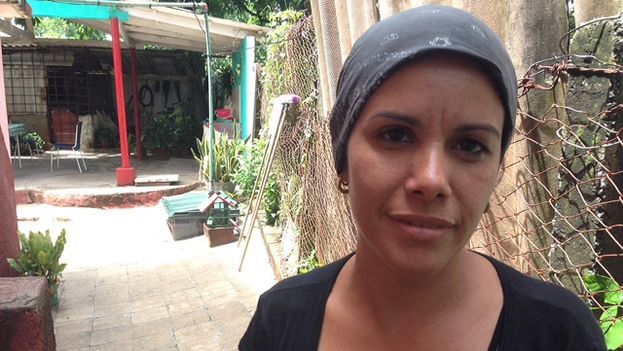
Yusleni Alonso, Alejandro Barrios’ teacher. (14ymedio)

Yusleni Alonso has another memory of Alejandro. “I gave him lessons when he was in José Martí elementary school, here in Candelaria. Every day he was holding the hand of his grandmother Cusa. He was a boy who looked fragile, but everyone liked him. When I heard the news at first I did not realize who it was, only on seeing his face in the photos online did all the memories hit me.”

Alonso looked at that face on the screen and “saw the child who was my student. When Orquidea, his mother, who worked here in the Military Committee moved to Pinar del Rio, he was left in the care of his maternal grandmother. Then when it was time for him to go to high school his mother fetched him and we didn’t seem him any more.”

Yusleni continues, “The news arrived here because, being in the place where the events occurred, a message was sent to his partner in Orlando and this boy was the one who advised the family. No one understood anything, there was a lot of confusion. Suddenly here in Candelaria the whole world was hanging on the news of friends’ Facebook pages. It created a very rare phenomenon, everyone on the village wanted to know the details and the newspapers didn’t say anything.”

Yusleni’s neighbor, who lends his phone to people in the neighborhood who receive important calls, said that “Orquidea had been in the military but retired when her son left. The papers on the Cuban side came through instantly, a passport with permission from the Armed Forces to travel, the documents to reclaim the body and bring his remains. Everything. The American embassy also acted quickly, but we knew that his mom had been denied a visa before and now they gave her one in for five years… those are the things that happen. She is already in Miami.”

Everyone calls María Magdalena Puente, Cusa. The door to her house in Candelaria remains open all day.

She says she has received more visits this week than in her whole life. She shows a recent photo of her grandson. Alejandro is wearing the white uniform of a butcher, which was the first job he had. He has a cap and is smiling, with a shadow of a beard covering his chin. “This was the photo we put here in the living room on Saturday when we held the wake. His classmates came, his teachers, many people he didn’t even know.”

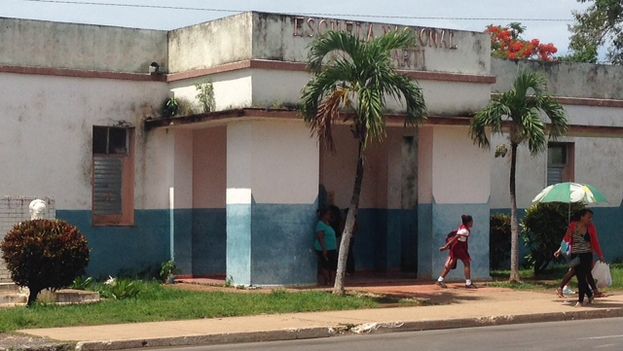
Candelaria Elementary School where Alejandro Barrios studied. (14ymedio)

Magdalena retired a year and three months ago. She always worked as a teaching assistant at the same school where her grandson studied. Now she makes small crafts thanks to her skills with her hands. When Alexander could, he sent her some materials for her work. “But they were silly things,” she clarifies, “because he hadn’t even been in the United States two years. He had to leave that first job in the butchers because the temperature in the refrigerators was affecting his throat.”

She said he hadn’t passed his military service because he had health problems, “He was sleepwalking and had some epilepsy-like attacks.”

Magdalena does not yet seem convinced that she will never see Alejandro again. “On Friday we talked with him, he was happy because he got a new job in a china shop. He told us that that weekend he was going to celebrate at the disco. I told him not to go, you never know what could happen in those places. And he laughed. He said something that I can’t remember, but it meant he was going to go anyway.”