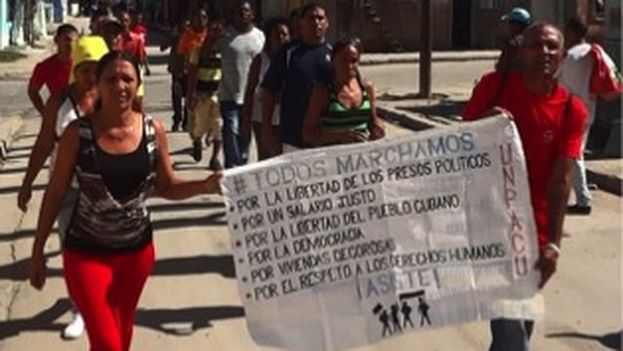
Patriotic Union of Cuba activists carry out marches in spite of frequent arrests (UNPACU)
14ymedio, Havana – Dozens of activists from the Patriotic Union of Cuba (UNPACU) in Santiago de Cuba were arrested this Tuesday and on Wednesday morning when they tried to go to the funeral of one of their members. The detentions coincided with the burial of Maximilliano Sanchez Pereda, 72 years of age, who died Tuesday morning at the Juan Ambrosio Grillo Hospital.
“They set up several police cordons in order to prevent brothers from arriving to show their sympathy to the family of the deceased,” said opponent Ovidio Martin to 14ymedio via telephone. The visitation was held on Tuesday night at Sanchez’s house, “because that was his will,” he added. continue reading
Martin explained that during the day in the area of Palma Soriano “they arrested about 30 activists” and “more than 20 in the area of Santiago de Cuba.” They were all set free that same night, and the police warned them that they could not attend the funeral.
At dawn on Wednesday, near Palmarito de Cauto, another 35 members of the organization were arrested and “kept in an enclosed truck for hours in sub-human conditions, completely closed and without a bathroom,” said Martin. The same source says that on Wednesday afternoon, “they were all set free” although “they suffered arbitrary and in some cases violent arrests.”
The burial of the deceased took place Wednesday morning, and the activist says that at the moment of the burial there arrived at the cemetery “a truck full of paramilitary forces dressed as civilians pretending that they were community services.”
Martin thinks that the purpose was to prevent a cross from being left at the grave on behalf of the family members and activists on which appeared the deceased’s day of birth, the burial date, and the acronym UNPACU. “Right there a dispute broke out because the paramilitary forces pulled the cross from the grave saying that the abbreviation could not go there.”
Eventually the opponents returned “to put the cross in place.”
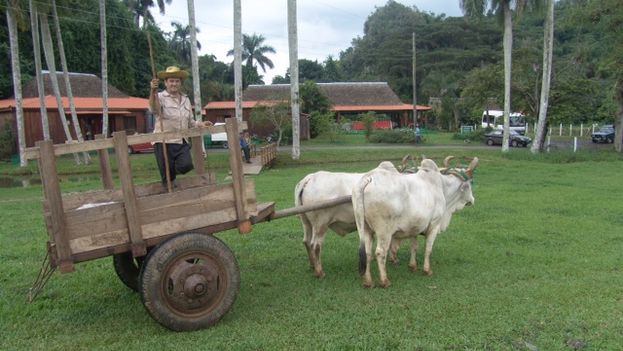
When Raul Castro promoted the leasing of idle land to the farmers, he invited them to make it productive with oxen. (14ymedio)
14ymedio, Ricardo Fernandez, Pinar del Rio — The Cuban farmer has only two problems in being productive: the invasive marabou weed and everything else.
When Raul Castro promoted a plan to lease idle land to the farmers and invited them to make it productive using oxen, he overlooked the fact that these parcels, in many case, has been infested with marabou weed for over 20 years. It is an invasive species that is very difficult to eradicate because to spreads through long rooms and creates numerous shoots that rise to the surface and multiply in the subsoil when the plants are cut or burned. continue reading
This means that it is impossible for any farmer to manually clear his 66 acres of marabou. It is when using technology that the odyssey begins. Typically, a crawler-type tractor—operating on tracks instead of wheels—with front blades is used to cordon off the marabou and burn it. But the farmer has no right to directly contract for this service with state entities, which are the ones who own the heavy equipment. Thus, the application has to go through the board of the cooperative, but it turns out that the tractors are broken or belong to companies that they cannot contract with. The solution: wait for a miracle to happen while “doing something” with the land for fear of having it taken away.
It is likely that, given the delays, then end up resorting to private individuals with their exorbitant rates. So the farmer has to go to the bank for a loan and on asking for the promised credit, the producer discovers that they won’t give you more than 20,000 Cuban pesos (about $800 dollars), if you don’t have anything to put down as collateral. With that money you might be able to pay to clean up about half your allotted land, so you make an inventory of the few things you can pawn: The house? An engine? The old tractor?
If you managed to burn the marabou, the government guarantees you at least five years of suffering chasing after herbicides and tools to control the persistent shoots. Every time you prepare your land you will have to turn to the black market in fuel because what the state has assigned you is barely a symbolic amount.
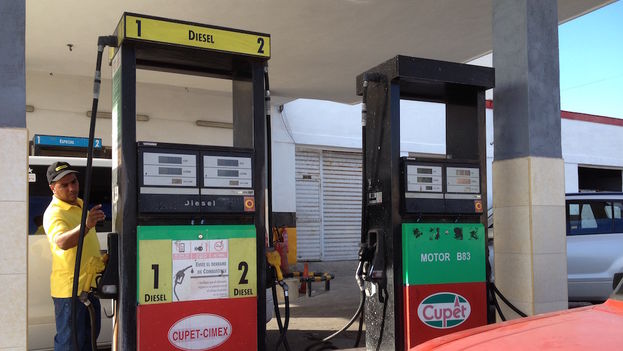
The legal alternative would be to buy the gas sold in hard currency on the highways by Cupet, but this could cost you 3,000 Cuban pesos for a day’s work, because a tractor with the plowing attachment can consume 120 liters of diesel a day. That is if the farmer owns an old tractor, because if not, it again becomes the story of an impossibility, that of contracting with a state enterprise. Then you have to add the expense of the contract with the private owner and the fuel.
When the farmer, finally, manages to have cleaned his land for production, you can see that a new chain of obstacles and problems opens before his eyes. He will have to sow on dry land, because pumping water is a privilege with too many conditions attached: availability of surface or well water, electricity or fossil fuel, a turbine with capacity and an irrigation system.
Opting for the state “technology package”—which includes seed, fertilizer and pest controls—implies selling the production to the state company Acopio at extremely low prices (in comparison to what private buyers will pay). In addition, they don’t deliver all the components of the package at the same time.
When the time comes to market the products, the farmer will find that if the buyers are individuals they cannot buy the entire crop, and the State Collection System of Agricultural Products will leave many of the fruits to rot in the field while the population in the city lacks them.
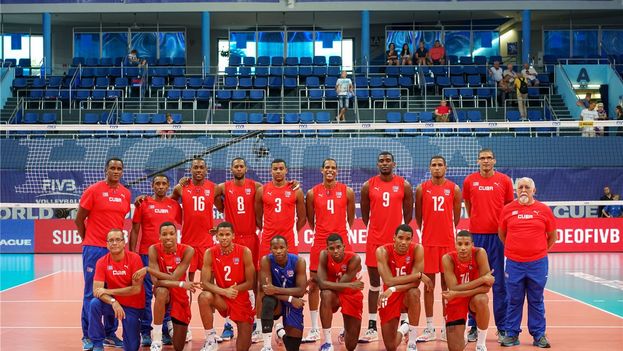
Six members of the Cuban volleyball team have been detained in Finland without the press explaining what crime they are accused of. (Volleyball World League)
14ymedio, Generation Y, Yoani Sanchez, Havana, 7 July 2016 — My father came home with his head spinning. “What is the crime that several Cuban athletes in Finland are accused of?” He had only heard the official statement signed by the Cuban Volleyball Federation read on primetime news on Monday and published in the written press. The text did not clarify the imputed misdeed, so my father speculated: “Illegal sale of tobacco? Theft? Public scandal?”
The rape of a woman, for which the athletes are presumed responsible, was not mentioned in the statement, which constitutes an act of secrecy, concealment of the truth and disrespect for the audience. The official press acts as if we are small children with delicate ears to whom they cannot mention any gory details. Or worse still, as if we don’t deserve to know the seriousness of the accusations. continue reading
What happened, again makes clear the straitjacket that prevents information professionals from doing their jobs within the Communist Party-controlled media. This is something that many of them bear with pain and frustrations, while others—the most opportunistic—take advantage of the censorship to do work that is mediocre or convenient for the powers-that-be.
Why has no prominent Prensa Latina correspondent in Europe gone to Finland to report minute-by-minute on what is happening with the athletes from the island?
We suffer omissions of this type every day in the national media. These absences, now chronic, belie the winks that accompany Cuban first vice-president Miguel Diaz-Canel’s call for a journalism more attached to reality and without self-censorship. Where, now, is that official to urge the reporters to investigate and publish the details regarding the fate of the volleyball players?
It is very convenient to urge the journalists to be more daring and to take the time to guide them to be cautious or to remain silent. Such duplicity has been repeated so many times over the last five decades that it has inculcated in the collective imagination the idea that the press is synonymous with propaganda and with being an informer, a representative of the government.
The damage inflicted on Cuban journalism is profound and systematic. Repairing it will take time, a framework of respect for such an honorable profession and even the emergence of a generation of informers who are not marked by the “vices” of the current academy of Cuban journalism. These young people, without compromises with power, are the only hope left to us.
14ymedio, Havana, 6 July 2016 – In the early morning hours of Wednesday the Ecuadorian police intervened to evict Cubans from an encampment in Arbolito Park in Quito, and about one hundred migrants without proper documents were loaded into four buses to take them to trial.
Lazaro Ramos, one of the spokesmen for the Cuban National Alliance in Ecuador, told 14ymedio that the Cubans were arrested for being undocumented, although all of them were released later on Wednesday morning, with the exception of Efrain Sanchez Mateos, accused of assaulting a police officer. continue reading
Ramos added that lawyers from Quito and Pichincha in solidarity with the Cuban cause will represent the migrants during a hearing to be held this Wednesday.
According to the testimonies of Cubans and their relatives, police violently broke up the encampment, destroying the tents and belongings of some of those staying there, amid shouts and protests from the foreigners.
After a week of camping in front of the Mexican Embassy in Quito to demand humanitarian visas that would allow them to travel to the United States, the migrants were evacuated in late June by the Ecuadorian security forces. The Cubans argue that they then obtained a permit from the Municipality of Quito to install their encampment in Arbolito Park.
On Monday, hundreds of people demonstrated outside the Cuban embassy in Quito to “repudiate” President Raul Castro and the recent statements issued by the embassy in which they were accused of “seeking points” to reach the United States.
14ymedio, Mario Penton, Miami, 6 July 2016 — Hundreds of people went to the Cuban embassy in Quito in Monday with the purpose of “repudiating” President Raul Castro and recent statements issued by the embassy in which they were accused of “seeking points” to reach the United States.
“This is not about seeking points, but defending the truth. We fled a dictatorship, the longest this continent has ever had, so we condemn the Castros and we do so at in their own embassy. We have lost the fear,” Enrique Santana, one of the protesters, told 14ymedio. continue reading
“We stopped the traffic. The police guarded our way to the embassy. We wanted to deliver a statement of repudiation. There were about 500 people,” said another of the Cubans.
According to witnesses, the diplomatic representatives of the island accepted the document with the words of migrants who are spending the night at El Arbolito Park in Quito, after they were evicted by the police from a demonstration in front of the Mexican Embassy when they asked for humanitarian visas to enable them to reach the United States.
“They did it through a crack, but they accepted our demand,” said Jorge Sanchez, another of the protesters, who also says that “it was the first time” something happened.
“Yes, we are counterrevolutionaries. At the embassy it doesn’t matter that they mistreat us and even beat our children, so now we respond that we are not afraid,” said Efrain Sanchez Mateo, coordinator of the group. According to what Sanchez Mateo explained to this newspaper, his family on the island has been threatened by State Security because of his demonstrations in Ecuador. “They told me they’re going to deport me to Cuba. They are afraid of me,” he said.
In the document delivered to the embassy, Cubans say they have had to leave their country “because of the police corruption” there. They also reject the Cuban interference in Ecuador, manifested in the refusal of Ecuador to welcome more professionals from the island.
“The press release from the Cuban embassy in Ecuador demonstrated once again their intent to continue hiding the truth of a people who have been deceived for more than 50 years,” the document added. It also says that the Cuban people “starve while corrupt leaders engage in politics” and reminds that there is no democracy in Cuba, but rather a regime in that imposes orders that are not discussed.
Last week, hundreds of Cubans who were in La Carolina Park in Quito received permission from the municipality to move to El Arbolito Park, which since then is known as “the mambí encampment” or “the freedom encampment.”
Members of the X Cuba Movement participated in the demonstration Monday in solidarity with migrants and others in the Cuban community in Ecuador.
In 2008 when Ecuador ended the visa requirement for Cubans, the country became the largest springboard to cross the United States and hosted one of the largest communities of Cuban nationals abroad Island. The economic crisis facing the country, together with measures to discourage emigration, has led thousands of Cubans to remain undocumented in the country, so that they can go to the United States in order to benefit from the Wet Foot/Dry Foot policy that allows them to legally enter the country and facilitates their obtaining the residence.
In previous initiatives, more than 5,000 Cubans have delivered lists with their names to the embassies of Mexico and Canada to allow them to travel to their countries in order to follow the US border, but so far both countries have denied this request.
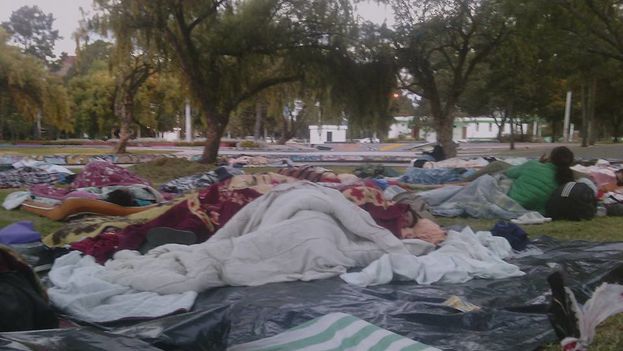
Cubans in El Arbolito Park, where they were moved by Quito authorities. (14ymedio)
14ymedio, Mario Penton, Miami, 2 July 2016 — With the language of the Cold War, the Embassy of Cuba in Ecuador has responded through an official statement to the situation of thousands of migrants from the island who are undocumented in Ecuador and are asking for a humanitarian bridge that allows them to reach the United States.
The answer comes after dissimilar attempts to obtain information from the embassy that kept a veil of silence over the protests carried out by migrants which included a demonstration in front of the Mexican Embassy and requests to the United Nations High Commissioner for Refugees and the embassy of the United States in the Ecuadorian capital for assistance. continue reading
“The embassy of Cuba wishes to clarify to public opinion that these people left our country, overwhelmingly in a legal way, and none of them is persecuted for their political ideas,” says the document, which also accuses the undocumented “seeking points” from the US government.
The document, which was published unsigned on the embassy’s social network site, directly accused the Wet Foot/Dry Foot policy of being responsible for the current wave of migration affecting Central and South American countries. “Once again it is demonstrated that the current immigration policy of the US government towards Cuba is inconsistent with the current bilateral context.”
Reactions to the embassy statement by the Cubans in Ecuador were not long in coming. The social networks are filled with messages of both repudiation and support of the statement.
A migrant living in Ecuador, Carlos Ramirez Durades, explains that “it such is the disappointment that, even being in situations unfavorable for their lives, no one decides to return to Cuba.” That is a sign, he says, that “the sheep are not as tame as they want to paint them.”
A political organization established in Ecuador to support freedom in Cuba, the X Cuba Movement, issued a statement in solidarity with the undocumented migrants and asked the Cuban embassy to stop being “an instrument of the regime and put yourself on the correct side of history.”
Ephraim Mateo Sanchez, leader of the Cubans who installed themselves in front of the embassy of Mexico in Quito, said meanwhile that they are preparing “a clear and strong response” to the statement issued by the Cuban embassy.
Several Cubans living in Ecuador, such as Lucía Camacho Ríos and Karel Gómez Velázquez, have expressed agreement with the statement issued by the embassy. Some have also come out against the actions of the protesters. “They want to be put on plane, shouting ‘down with Fidel’ in the streets of Quito, but they didn’t do that in Havana. All my friends who went to the United States, took the ‘little road,’ it is best that they do the same,” Maritza Suarez, a Cuban who has lived in Ecuador for 26 years, told 14ymedio.
“With or without the Cuban Adjustment Act Cubans will continue leaving Cuba. When one goes sometimes we don’t know if they do it for political reasons, because on the island we don’t even know what freedom is. Finally, whether for economic reasons or not, when the essence goes, the people leave Cuba because the system doesn’t allow them to be what they want to be. In the end, everything has to do with politics,” said Lazaro Ramos, a Cuban who is a member of the Cuban National Alliance of Ecuador (ANCE) who emigrated to Ecuador less than a year ago.
Recently, Cuban migrants who have been evicted from outside the Mexican Embassy in Quito, received authorization to move to El Arbolito Park in the Ecuadorian capital. There they have established what they call “The Cuban Encampment,” or “The Mambí Encampment.” Several hundred people live in tents in precarious conditions in hopes that some country will serve as a trampoline to enter the United States, where legislation allows natural persons from the island to be admitted.
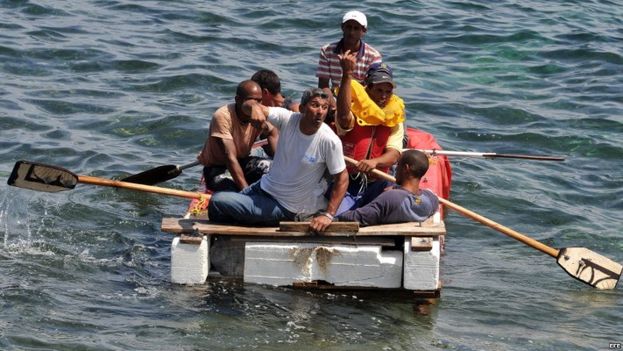
The failed rafter Walter Marrero Velazquez arrived in Las Tunas Monday. (Courtesy)
14ymedio, Yoani Sanchez, Havana, 6 July 2016 — Bearded, hungry and full of frustration, Walter Marrero Velazquez returned to the same island that saw him leave on a flimsy craft. On 20 May the group, consisting of 24 rafters, was intercepted by the US Coast Guard while clinging to the American Shoal lighthouse, eight miles off Sugarloaf Key in the Florida Keys. The case ended up with four of them deported to Cuba and the other 20 taken to the US Naval Base at Guantanamo, to await further action.
Marrero Velaquez arrived in Puerto Padre, Las Tunas on Monday and only now is seeing the information about “the lighthouse rafters” published in the international press and by independent reporters. A few hours ago he learned about the emergency appeal presented by five attorneys from the Democracy Movement and its rejection by Judge Darrin P. Gayles, whose decision opened the way for them to be deported. continue reading
The rafter remembers each one of the 42 days he spent in the custody of American authorities. “At first we were in a smaller boat, but then they put us in at least three larger ships, known as ‘cutters’ or ‘mother ships,” he told 14ymedio by phone.
The repatriation occurred on 30 June, with the first stop in Havana, and on the 4th of July, American Independence Day, the rafter was taken to Las Tunas, where lack of fuel meant that the police could only transfer him to Puerto Padre hours later. Others of those repatriated were returned to the same province, while two of them reside in Havana.
In the Cuban capital, immigration authorities and the police asked them some questions about the origin of the fragile craft’s engine. “They wanted to get information out of us,” said the rafter, who had to sign his statement but didn’t receive a “warning letter.” In the interrogations they never suggested to him not to repeat the illegal departure from the country.
While on the “mother ship,” Marrero Velaquez came to count 160 Cubans intercepted at sea who were returned to the island. “The amount of food they gave us was very small, like enough for a six-month-old baby,” he complained. “I lost 15 pounds during the days I spent there,” he said.
The young man, 20, said that when they protested the meager ration they were pushed and handcuffed. The hullabaloo raised by the group was not expected in such cases, but it did little good, he recalls. Situations like that led them to write a collective letter which they threw into the sea in a bottle, like desperate castaways.
“We have spent 37 days sleeping on the floor, the food is for dogs, they mistreat us to the point of violence and we have companions who are sick in the head, it is hell,” explained the two-page missive written by hand. The bottle was fund by a fisherman who didn’t even speak Spanish and who gave it to the authorities. Held incommunicado, without the ability to contact attorneys, that letter was the only chance the rafters had to tell about what they were experiencing.
The SOS message managed to get the case re-heard, and gave them the chance to travel to the Guantanamo Naval Base, an area administered by the United States in eastern Cuba. But the young man from Las Tunas preferred not to take advantage of that opportunity.
“In the interview we had with the consul, one by one, the paper they made us sign said that, if we went to Guantanamo as refugees, then we would end up in a third country.” The rafter said that they made it clear that with this option they would lose the right to enter the United States. “I decided to come to Cuba because it is very possible to try again,” he says with determination.
Juan Manuel Cao during the interview. (Ivan Canas)
14ymedio, Reinaldo Escobar, Miami, 4 July 2016 — For more than two years, the Mirror program, broadcast by America TeVé, has counted on the drive of Cuban journalist Juan Manuel Cao. The channel abounds in information, opinions, debates and especially interviews where, with great frequency, the issue of Cuba emerges.
Cao, born in 1961, is a Cuban educated under the current system: he was a young “pioneer” in primary school, he attended one of the “schools in the countryside,” he was awarded a scholarship, he lived on the ration card, stood in endless lines and knows what it is to travel hanging out the door of a packed bus. To complete his Cuban experience he spent two years in prison accused of enemy propaganda, and finally emigrated. His book “The Impertinent” (2015) is filled with amazing stories of his professional life.
On 21 July 20016, while covering the 30th Mercosur Summit being held in Cordoba, Argentine, he had a close encounter with Fidel Castro and took the opportunity to demand the release of a noted Cuban scientist, Dr. Hilda Molina, whom the government was not allowing to leave the island.
Escobar. A few days after your encounter with Fidel Castro he issued his “Proclamation from the commander to the people of Cuba” where he renounced all his posts for health reasons. Some see the disgust that you caused him as the direct cause of that situation. Ten years later, how do you assess that episode?
Cao. The Cuban people, to which we belong, go back and forth between seriousness and mockery. This statement is an exaggeration. On 30 July 2006, shortly after Fidel Castro made his announcement, I was on 8th Street and I found myself among graffiti that said “Cao gave him a KO” and others that were similar, between seriousness and a joke. Over the years people have continued to repeat this legend and it still amazes me.
Escobar. But the fact is that when he announced his illness he mentioned “the enormous effort made to visit the Argentina city of Cordoba” among the reasons that his health “has resisted all medical analysis, it was subjected to extreme stress, and it was broken.”
Cao. Yes, I remember that’s what he said, but I think he was referring to an incident with President Kirchner and his wife Cristina who was then the first lady. I remember that Fidel Castro had no intention of participating in that Mercosur Summer, but he went because Hugo Chavez invited him. Today we know that in midair he received a message signed by the Argentine president where (on the initiative of Cristina) he was asked to let Dr. Hilda Molina travel to Argentina to see her family.
They say he was so upset that he gave the order for the plane to turn around and go back to Havana. He didn’t do it because Chavez himself persuaded him that he should participate in the event.
Escobar. But the disagreement was limited to that message, was not it?
Cao. Not exactly. At the first official dinner hosted in honor of the presidents, Fidel Castro did not attend, and not only that, but he asked Chavez, Lula and Evo Morales not to go. As a result of this sabotage they had to fill those spaces with figures from the second line of the governments so the absences wouldn’t be noticed so much. Cristina was furious and threatened to go to Havana to meet with the Ladies in White. The situation was very tense.
Escobar. Can you relate the details of that encounter?
Cao. As is known, Cuban journalists are not allowed to get close to senior government leaders. Not even officials. An interview like the one Castro granted to Barbara Walters in 1977 has not been given to any Cuban journalist, not even to the official press. So when an opportunity arises all you can do is ask questions from the barricade, like throwing stones at the top of your lungs.
That day they were scheduled to take the traditional “family photo” with all the leaders and suddenly it was a big mess which led to not only photographers entering the room but several reporters. Shortly before I’d asked Carlos Lage the question and tried to ask Foreign Minister Felipe Perez Roque, but without results.
Escobar. Why were you so interested in Dr. Hilda Molina? Perhaps there were more “journalistic” questions?
Cao. The right question, from the information point of view, would have been what was Cuba doing in Mercosur and surely there were others more interesting. On my return almost no one mentioned the matter in Miami.
Escobar. Do you remember how you formulated that question and why it was considered an attack?
Cao. Long ago, among journalists in exile there was debate over how to address Fidel Castro. One looks like a fool screaming like the rest “Fidel, Fidel” or like a subordinate soldier saying “comandante.” I chose to omit any nickname and said directly, “Dr. Hilda Molina, why not release her, why not let her see her grandchildren?” At that time I did not know the history of the Kirchners having asked, it was just the question that came to mind in the midst of a battle with other journalists for mine to be listened to.
Escobar. How would you describe Fidel Castro’s reaction?
Cao. Initially he just asked my name and I said, “My name is Juan Manuel Cao, I am Cuban.” And then, as I saw he was listening to me, I repeated the question about Dr. Molina, to which he replied: “Who pays you for coming to ask questions like that?” I just managed to tell him that that was my job, that nobody paid me for asking that question. Almost immediately they took me out of the place.
Later I learned that he justified his absence at another meeting arguing that my friends could be preparing an attack. Also something very nice happened. Another journalist, I think he was an Argentine, asked if he had already prepared his transition to leave power and Castro gets confused and thinks that journalist is me and explodes into a real crisis of anger that motivates his assistants to take him out, almost dragging him away from the press. Everything is recorded and is on YouTube.
Escobar. Who were you working for at that time?
Cao. Starting in 1992 I worked at Telemundo and then I began at America Tevé. I did not want to go to the summit, actually I was tired of hearing the same lies, the same justifications. Miguel Cosio, who was the news director, was the one who insisted I go to Mercosur.
Escobar. If you had the opportunity to meet with Raul Castro now what would you ask?
Cao. Why, if you are so confident of popular support have you not held competitive elections? One could also ask him why he hasn’t simply declared as a hereditary monarchy already…
Escobar. After almost 28 years of absence, would you like to go back to Cuba?
Cao. It wouldn’t make sense to let me in if my books aren’t allowed in, my opinions, my TV reports. I want to enter as a whole being, I’m not interested in being in Cuba physically if I can’t be there spiritually.
Escobar. You don’t feel nostalgic?
Cao. I have no nostalgia. I just heard a new song from the group Orishas. It gives the impression that the Malecon, the sea, the color of the sky, palms are more important than the right to speak, the right to meet with others to discuss. Maybe it looks very cool on my part, but it seems to me a cheap, silly, frivolous nostalgia. I have seen in other latitudes skies bluer than Cuba’s and even so I don’t stop being Cuban. Almost 30 years after having left the island today I know the history and reality of Cuba better than what I would have known if I wasn’t far away. Outside, here, I have learned information that makes me feel more Cuban.
Escobar. What if the necessary changes happen in Cuba, then would you go back?
Cao. Then I would have to ask Cuban society if they are interested in someone like me reinserting himself into it.
Cuban boat people arrive in Florida / Archive. (EFE)
14ymedio, Pedro Campos, Havana, 4 July 2016 — The Colombian government labels the Cuban Adjustment Act “perverse” and calls on other Latin American governments affected by the flow of migrants from the island to pressure Washington to repeal it.
Without a doubt, the countries closest to Cuba are recipients and “victims” of the vast wave of Cuban emigrants trying to get to the United States, and have been forced to confront complex situations in which thousands of people’s lives have been in danger. They have had to offer them shelter, medical care and other services, and all this without the slightest help from the Cuban government, always quick to display its solidarity with humanitarian crises anywhere else in the world. continue reading
However, the Cuban Adjustment Act is not the main cause of this wave. The main culprit is the populist-authoritarian system, the Statist-wage model, which has exhausted all its possibilities and is advancing irretrievably to its final phase, impoverishing its population more and more and shutting down every prospect of development and prosperity for the majority, given its refusal to democratize the political system and the economy.
The Cuban Adjustment Act, although it does provide a certain stimulus to the exodus, is designed to provide assistance to Cubans who leave, fleeing the regime, and even if it is true that many of those who come to the United States, didn’t dare utter a peep when they were in Cuba, it is not false that everyone leaves in search of the freedom and possibilities that they cannot find in Cuba.
The Cuban people are tired of dealing with so many absurd regulations over their lives and their way of organizing their subsistence and reproduction, always mediated by an all-powerful state, one that makes all decisions, abrogating all the rights of citizens, expropriating all their businesses and factories, large, medium and small, and paying them nothing for the value of their labor, curtailing all their chances for development and imposing on them who they must work for and what their income will be.
The repression against the opposition movement is abusive, because they systematically violate all the freedoms and civil and political rights of citizens. The people cannot choose other leaders. As democratic socialists we have taken a position of not seeking confrontation but rather seeking understanding, and also have been repressed in various ways.
Certainly the Cuban Adjustment Act gives some privileges to Cubans who reach the United States, but if it were repealed, if such privileges did not exist, most likely Cubans would continue coming to the coasts and borders of the United States and would be willing to live there illegally, as hundreds of thousands of other Latinos do, until they can legalize their situation, as long as in Cuba nothing is fixed and we cannot achieve a democratic system of government and a prosperous economic model.
The privileges currently enjoyed by Cubans, through the Cuban Adjustment Act, are given precisely because of the kind of government that exists on the island, which, despite the rapprochement and changes in US policy, continues to have its blinkers on and shows no willingness to change its authoritarian model.
Latin American governments concerned and affected by this situation, willing to pressure the US to change its laws, should also show the same willingness to pressure the Cuban government to change its laws, which prevent the democratization of the system and hinder the economic development of the country.
If the established government in Cuba decided, for the sake of its people and its own history, to initiate a process of democratization of the politics of the country and to take real steps to begin denationalizing the economy, turning it over to society, workers, employers and entrepreneurs, surely most Cubans who are planning to go, would remain, and many of those who have left would be willing to return and invest in their country, directly or indirectly, the capital they have accumulated outside the country.
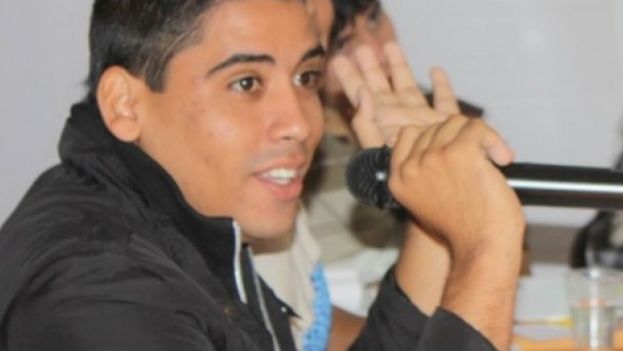
Amel Carlos Oliva, youth leader for UNPACU. (Somos +)
14ymedio, Havana, 3 July 2016 – This Sunday several independent organizations are holding the first Cuban Youth Congress in the city of Santiago de Cuba, under heavy police pressure and after dozens of arrests. Among those arrested is the activist from the Patriotic Union of Cuba (UNPACU) Amel Carlos Oliva, who was arrested last Thursday, according to sources from UNPACU.
Oliva’s family and friends told 14ymedio that they lost telephone contact with the dissident hours after he met in Havana with Eliecer Avila, president of the Movement Somos+ (We Are More), an organization also participating in the youth event. continue reading
Oliva returned from Washington the same day he was detained and, according to the leader of the UNPACU, Jose Daniel Ferrer, was “kidnapped by the repressive forces” as he traveled from the Cuban capital to the east.
Since Saturday some members of both organizations were also victims of arbitrary detention, while others were subject to strong police operations around their homes. However, a few managed to reach the Santiago headquarters of UNPACU, where the Congress is now taking place.
Joanna Columbié, a member of Somos+, was arrested on the outskirts of the meeting. She managed to report her arrest by telephone, seconds before being put in the police car. According to reports from the organizations involved in the Congress, more than a hundred activists have been arrested.
The wave of arrests on Sunday is the continuation of the dozens of arrests from the day before, when several members of UNPACU were violently arrested while protesting to demand the immediate release of Carlos Amel Oliva.
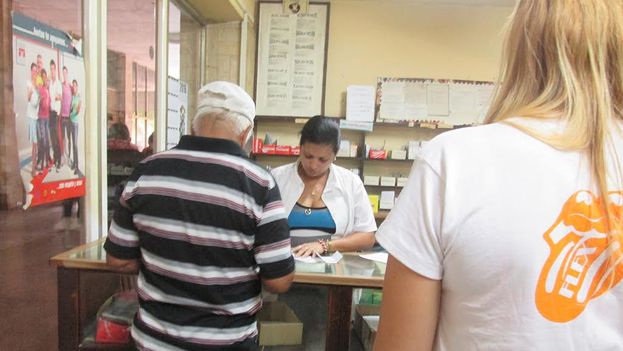
14ymedio, Regina Coyula, 28 June 2016 – Unless it’s for a purchase of contraceptives, the pharmacy generally comes through when someone nearby is ill or is being treated for a chronic illness. The pharmacies themselves do not raise one’s spirits. Many are poorly lit or poorly ventilated or in need of paint or all of the above. The workers’ initiative is “embellished” with decorative garlands of various kinds and informative murals with indecipherable writing. The medications are arranged according to use, with each group in a little cardboard box in which the inventory is carried.
If you decide to put together a home first aid kid, be patient and visit the pharmacy assiduously to gather the basics. For the most part, medications are subsidized by the state. This does not prevent an aging couple with chronic conditions (don’t forget the aging of the Cuban population) from spending on medications the full retirement pension of at least one of them. continue reading
There are medications that do not require a prescription, among which are the “artisanal” and “green” medications for a cough or such like, but they are not always there when you need them. Others are dispensed by prescription and controlled by the “Tarjetón” – your ration card for medications.
The Tarjetón is a piece of cardboard that each patient receives, where medications and other health supplements whose monthly sales are regulated are recorded. The doctor gives you a certificate valid for one year, stamped with her seal with her name and both surnames and her practice registration number. Despite these unique data for each physician, there is still one unavoidable step missing, the seal of the healthcare institution. After standing in line (there is almost always a line), the “stamp issuer,” who is not a doctors nor has a list, nor writes on a computer, nor makes notes on paper, stamps the seal and continues to the next. With this paper, in the pharmacy nearest to your home among the 2,141 in the country, you get in line, deliver the certificate, show your identity card, register, and receive the Tarjetón.
Despite such rigor, it may be at the time of purchase, that the medications have run out, have arrived incomplete, or are “missing.” For insulin-dependent diabetics the Tarjetón controls disposable syringes. It says right on the packaging “sterile insulin syringe for single use,” but the patient only receives between two and five syringes a month. If you complain, the clerk peevishly tells you that this disposable “isn’t really” and you can reuse it and even boil it and nothing will happen.
When the medication on your Tarjetón is “missing,” which is not uncommon (data in the press from last year shows that this is the case, on average, for 40 medications a week), you have to see a doctor for a substitute. If the medication only needs a prescription it is simpler; if it needs the Tarjetón the process starts again, even if it’s a temporary certificate.
But there are items that have no substitute, such as colostomy bags. In that case, the pharmacy employee shakes his head sorrowfully, and advises you to solve the problem immediately by talking with the doctor at your hospital, but to look for a safe way, while accompanying the counsel with a wave of the hand in the air which alludes to very far distances, because the supply of the bags is usually very unstable.
Regardless if the difficulties are their own or others, if they have it or not, the purchase cannot be made retroactively and experience dictates that one should not leave it to the last days of the month because things run out. This largely explains the existence of an active black market.
To locate a drug that is not in your pharmacy assures hatred of the line. The employee is obliged to locate it, and the phone used for this is delayed because it is busy on the other end, or they don’t answer, or they don’t have it either. If the search is crowned with success, they will give you a paper (yes, it’s the Tarjetón), which reserves the medication for you, but not for 8 hours, nor for 16 or 24 hours, but only up to midnight of the same day.
If a lifelong treatment combines medications on the Tarjetón with other prescriptions, the patient is required to regularly go to their neighborhood doctor to wait for the prescription that completes their treatment. The staff shrug their shoulders and raise their eyebrows when asked why these drugs are not included on the Tarjetón.
I have left for dessert the issue of the sanitary pads received by women between ages 14 and 55. Outside this range women must document early menarche or late menopause. Fertile women must bring, in addition to their ID card, the ration book for food where their receipt of these items is marked; the book will show an item called a “torpedo,” a form that registers the monthly packet of ten sanitary pads, responsible for one of the most painful events that must be coped with.
Do not despair. There is always the appeal in extremis to spending Cuban convertible pesos [known as CUCs, each one worth about a dollar or one-twentieth of the average monthly wage] in clean, bright and air-conditioned hard currency-pharmacies, where there is no queuing or prescription required.
A gasoline station in Havana between 23rd and Infanta in Vedado. (14ymedio)
14ymedio, Zunilda Mata, Havana, 4 July 2016 – Along with high temperatures, summer has begun in Cuba with cuts in electricity consumption in state facilities, a gasoline shortage in the capital’s gas stations, and a fear of the return of the Special Period. According to sources consulted by 14ymedio, authorities have informed Communist Party militants and some unions of a possible return of the hardships of the nineties if the president of Venezuela, Nicolas Maduro, is forced to leave power.
According to a source who has requested anonymity, a document circulating in collective law firms since last month recommends preparing for an increase in crime due to “economic problems and the arrival of more travelers to the country.” continue reading
This Sunday, the signs of an economic slowdown were already felt with the shortage of regular gasoline in most of the service stations managed by the Fuel Marketing Company (Cupet) in the capital. At least 17 of 20 gas stations visited by this daily demonstrated a deficit of fuels.
A Cupet employee said by telephone that there is a “shortage crisis,” although the official press has not made any reference to the matter. The worker denied that the lack of gasoline was due to an imminent price reduction, as rumored days before among the populace. “How are they going to lower the price if there is none?” she admitted.
Cuba receives subsidies from Venezuela valued at approximately 10 billion dollars a year, including 66% of the petroleum that is consumed on the Island.
With the drastic reduction that oil prices experienced in the international market, Cuban consumers have waited months for a reduction of gas prices in the retail market. Currently a liter of regular gasoline sells for 1 CUC, while the same amount of special grade hovers at 1.2 CUC.
The shortage of regular gasoline was repeated this Sunday at the Cupet in Ciudad Deportiva on Via Blanca and Pizarro streets, and at the gas station known as El Principal in the Boyeros district, and also at the establishment on Ayestaran Street. At others, like El Forestal at Independence Avenue and Santa Catalina, only special gasoline is sold at the moment, the same as at the El Nuevo business on Porvenir Avenue in Lawton.
“All morning from one place to another looking for regular gasoline, and it’s lacking,” protested Omar Suarez, 58 years of age and driver of a Russian-make Moskovich auto. The driver pointed out that such a thing “has not been seen since the years of the deep Special Period” and complained about having to buy special gasoline, which is more expensive and not “of the quality that they advertise.”
The fuel scarcity has come with cuts in the working hours of state facilities as a savings measure, together with stricter rules against entities that exceed their electricity consumption quota. The meat market in the Plaza Carlos III center was closed several days last week with only a counter at the door for the sale of yogurt, chicken and sausages.
“We can’t keep the place open and all the refrigerators running because we would be spending more than we earn from sales,” says one employee. “The warehouse is almost empty, and it doesn’t pay if we don’t have merchandise to put on the shelves.”
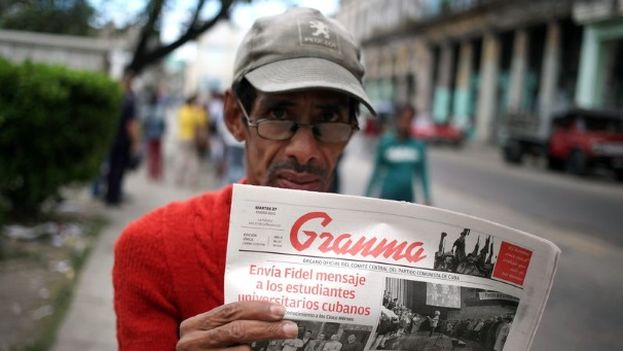
A man holds up an edition of the official daily Granma, from 2015. Headline: “Fidel sends a message to Cuban university students.” (EFE)
14ymedio, Reinaldo Escobar, Miami, 2 July 2016 — In October of 1988, students of the School of Journalism at the University of Havana, formulated 28 awkward questions posed to Fidel Castro at a meeting held in the theater of the Central Committee of the Communist Party in Havana. One question touched on the thorny issue of a personality cult in the media. The then all-powerful Carlos Aldana, head of the Department of Revolutionary Orientation, assured his boss that an incident of this nature would never be repeated.
Nearly three decades later the militants of the Young Communist League (UJC) of the Vanguardia newspaper in Santa Clara province, bursting with bravery (or innocence) sent a letter to the Union of Cuban Journalists in which they denounced the limitations on freedom of expression experienced by information professionals, limitations that come, according to them, from “the extra-journalistic forces that investigate us in our workplaces and in the CDRs (Committee for the Defense of the Revolution); that follow our every step and call us to account for the publication of comments or controversial works.” continue reading
In addition to complaining about the censorship of the media where they are paid by the state, they exposed the declining wages of the sector and asked why it is looked on so badly if they collaborate with alternative media, which is not controlled by the political apparatus of the Communist Party.
All these militants of the UJC received, in their time, excellent grades to be able to choose the career they studied and all of them passed through an ideological filter at the time they were hired. Is it perhaps that they have been infiltrated by the counterrevolution which is trying to form a fifth column? Of course not.
What is at issue is that the “gag-love” that endures and that hardens the affection and militant discipline, focused on democratic centralism, has as its limit the individual conscience, which serves mainly to determine what is right and what is wrong and to act accordingly.
The thermometer does not decide the temperature of a body, because it is an instrument that only serves to measure it. Equally, the mechanisms of control fail to faithfully determine the level of unconditional loyalty of the troops they target, because loyalty can be focused more on ideas than on individuals and can be conditioned more by a sense of duty than by fear.
It is likely that some of these young people reproached their parents one day for their complicit silence before the mistakes made, and perhaps in their days as students they mocked the triumphalist headlines of the official press, and perhaps, in small confabs or to themselves, they promised that they would not reproduce the mold of the mask, and that when they themselves were in the newspaper newsrooms, or in the TV studios or in the booths at the radio stations, they would use what they’d learned to tell the truth, at least their truth.
It is not necessary to believe that they will join the opposition, or even that they are willing to break all ties. But what they have done is more than enough to show the cracks, the fragility of a discourse that boasts of a monolithic invincibility.
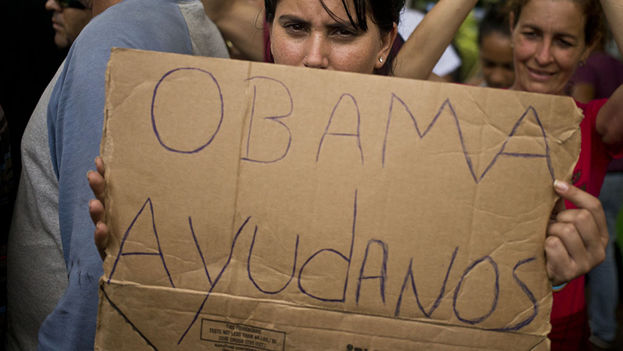
“Obama Help Us.” Cuban migrants stranded in Central America. (File sputniknews)
14ymedio, Eliecer Avila, Havana, 3 July 2016 – A great deal has been written in recent months about the permanent crisis of Cubans stranded in different Latin American countries. Those living outside the island and the few “connected” (i.e. on-line) within it, are certain to have read some of the news and have access to the emotional videos circulating which include ones of families with little children desperately asking for a way out that will allow them to reach the United States.
The truth is that the governments of the countries involved seem to be determined not to cooperate in any way to address the current wave of immigrants. Cuban’s own foreign minister took on the task of persuading them in a tour of the affected countries and managed to get a unanimous commitment for the sake of the “security and stability” of the region. continue reading
What is really worrying, incredible as it may seem, is that the vast majority of the Cubans who live on the island have not been aware of the seriousness of the situation their families and friends confront in those countries. This is the direct consequence of the censorship of information in the official media, where references to the subject are scarce and vague.
As a result, I’m amazed and frightened to hear about the number of people who at this very moment are packing their bags. Today, two friends I am very close to came by to say goodbye, and to ask for some details about airports and about “what we need to say” when immigration asks them hard questions.
One of them who is nearly 50 and works in the hotel industry told me, “I’m going to Guyana, a buddy left and is already there, and it connects to Mexico and there are cab drivers…” Right then I interrupted and said, “Compadre, have you looked at a map? Do you know where Guyana is? I go to the map and show him. It was something to see the look of amazement on his face on seeing that Guyana is on the far side of Venezuela and Columbia.
I asked the two of them if there were aware of the crisis and the dangers and they told me, “Well… yeah, it’s always hard but I know someone who already went and told me you can do it.” I looked at them and saw the faces of two people whose desire to leave is greater than any warning, and who had already sold even their pregnant dog to get the money.
The eldest, who was a doubtful after realizing his geographical error, told me, “All things considered compay, I think I’m going to go via Russia. Show me where Russian is.” I showed him and looking from right to left and seeing that at Russia is at one edge of the map and the United States is at the other he mutters, “Wow, but this is a lot longer, this is a boat at least…” I explain patiently, reminding him that the earth is round and that the extreme right of Russia is almost next to Alaska, separated by the Bering Strait. I also tell him, however, that there are direct flights from Cuba to Moscow, which is next to Europe, and that it would take a lot to get to the other end, less populated and at best difficult to access.
My friend looks at his friend and reaffirms, “Look, at least this is just one country and I even remember some Russian phrases. Let’s go that way,” he concludes.
The whole time my mind is filled with the idea of talking about political parties, human rights, market economies, civic resistance and Somos+, but the truth is that when someone is under the influence of a frenzy like this, it is as if rational thought is annulled by the obsession that is driving him.
The most complicated task is to stand in front of a human stampede and try to change the direction of its steps for good of everyone, the nation, the future, when the majority of these sacred things sound like blah-blah-blah.
So I decided to abandon the role of weighty protective father and give them a strong embrace. I said goodbye to them recognizing at least that in this season of the year, the Russian landscape should be gorgeous.
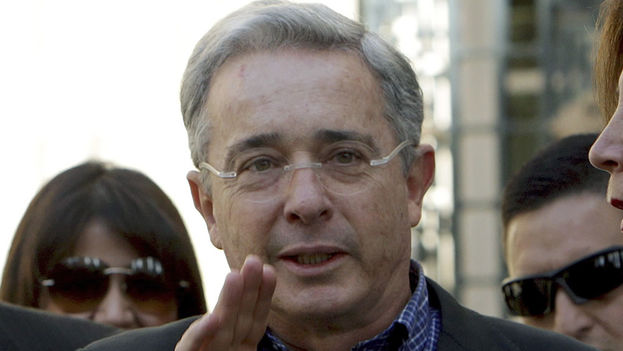
14ymedio, Carlos A. Montaner, Miami, 2 July 2016 – Cesar Nombela is the chancellor of the Menendez and Pelayo International University located in Santander, Spain. He is a renowned researcher in the world of microbiology. It occurred to Dr. Nombela and the Governing Council to award former Colombian president Alvaro Uribe the institution’s Medal of Honor, as they had done previously with other politicians from the democratic West, and immediately the totalitarian left, which has it in for Uribe, launched a protest.
In the face of the orchestrated scandal, the institution’s authorities, startled, decided to delay the award ceremony and to “widen the inquiries.” Uribe, who had exerted no effort to receive the unexpected honor, asked that it be revoked and urged the Chancellor to promote a good debate about the topic of Colombia. A person whose enemies have tried to assassinate him 15 times is more interested in substance than vanity. continue reading
This is a perfect example of the growing climate of intolerance cultivated in Spain by the totalitarian left. In 2010, then-professor Pablo Iglesias organized an escrache at Madrid’s Complutense University in order to prevent Representative Rosa Diez, an open and tolerant social democrat, from being able to express her ideas. Escrache is a sinister lexicographic contribution from Argentina, apparently of Langue d’Oc origin, which describes violent acts undertaken to silence an ideological adversary.
 14ymedio, Havana – Dozens of activists from the Patriotic Union of Cuba (UNPACU) in Santiago de Cuba were arrested this Tuesday and on Wednesday morning when they tried to go to the funeral of one of their members. The detentions coincided with the burial of Maximilliano Sanchez Pereda, 72 years of age, who died Tuesday morning at the Juan Ambrosio Grillo Hospital.