
Cuba Survives Fidel Castro / 14ymedio, Yoani Sanchez

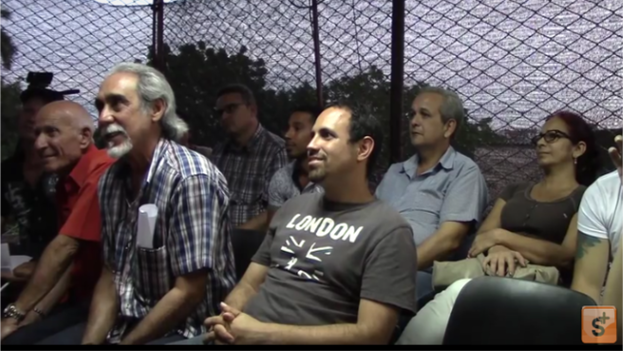
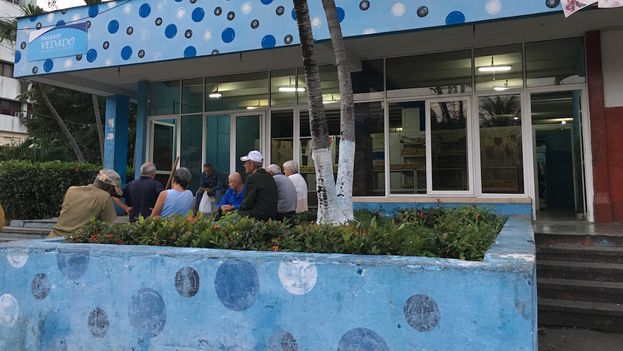
A group of older people waiting for bread talk about the death of Fidel. (14ymedio)

14ymedio bigger14ymedio, Yoani Sanchez, Havana 27 November 2016 – Few people were watching official television at that hour. The news of Fidel Castro’s death began to spread through the night on Friday by phone, as information that was vague and imprecise. “Again?” my mother asked when I called her. Born in 1957, this Havanan of nearly six decades does not remember life before the Commander in Chief took power in Cuba.

Three generations, we Cubans have put the final period on an era this Friday. Each person will define it in their own way. There are those who claim that with the departure of the leader a piece of the nation has also left and that now the island seems incomplete. They will be those who will shape the creed of Fidelism that, as a replacement of imported Marxism-Leninism, will fill the manuals, the slogans and the burning commitments to continuity.
continue reading

The propagandists of the myth will put his five-letter name in the pantheon of national history. They will dedicate a revolutionary prayer every time reality seems to belie “the teachings” he left in his hours of interminable speeches. For his followers, everything bad that happens from now on will be because he is no longer here.

In Miami, the exile so vilified in his harangues celebrates that the dictator has embarked on his last journey. On the island, within the privacy of many homes, some uncorked a bottle of rum. “I kept it so long I thought I would never be able to taste it,” an early rising neighbor told me. There are those who have woken up this Saturday with one less weight on their shoulders, a sensation of lightness they are not yet accustomed to.

These are also the days to remember those who didn’t make it this far. Those who were killed during the Castro regime, shipwrecked at sea, victims of the censorship that the Maximum Leader imposed, or who lost their sanity as a consequence of the delusions he promoted. An immense chorus of victims is expressed today in the sighs of the survivors, the euphoria in the streets of Florida, or in a simple “Amen.”

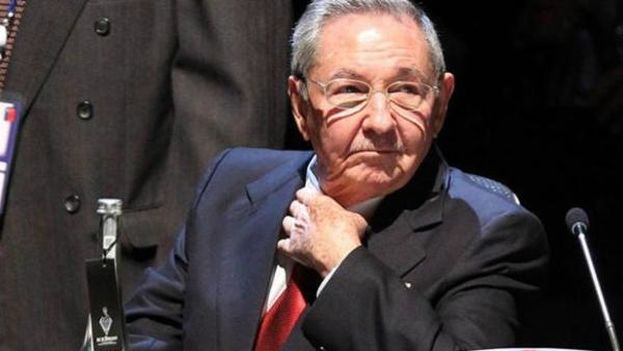
Most, however, after learning the details of the great funeral, turn down the TV and express their disgust with a simple shrug. This indifference contrasts with the messages of condolence from international leaders, both the ideologically aligned as well as the others. On the wall of Havana’s Malecon, a couple of hours after Raul Castro announced the death of his brother, some groups continued to behave as on any other late night: sweat, sensuality, boredom and nothingness surrounding them.

Cubans who were under 15 in July of 2006 when the then-president’s illness was announced, barely remember the timbre of his voice. They only know him from the photos in which he would appear lately when some foreign guest visited, of through his increasingly absurd Reflections, published in the national press. It is the generation that never vibrated to his oratory and never seconded the dreaded cry of “Paredon!” – To the Firing Squad! – that he bellowed from the Plaza of the Revolution.

These young people have now been charged with reducing his historical dimension, in inverse proportion to the hubris he exhibited in governing this nation. They won’t stop listening to a single lyric of their preferred reggaeton songs to intone the slogan “Viva Fidel.” They will not give birth to a wave of infants who will carry the name of the deceased, nor will they beat their breasts and tear their clothes during the funeral.
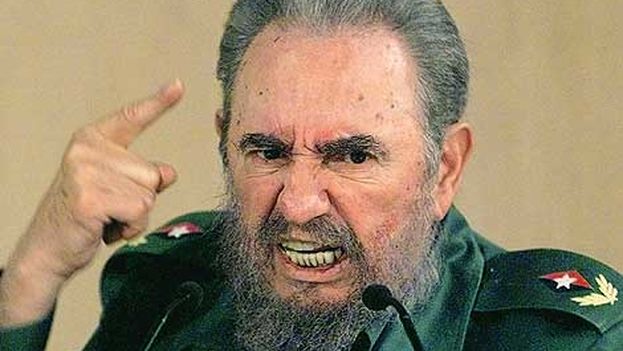
Fidel Castro in Rome in 1996

Never have we heard less about the Commander in Chief than at the moment of his death. Never had oblivion loomed like a more threatening shadow than when his end was announced. The man who filled every minute of Cuba for more than 50 years receded, faded, was lost to spectators’ sight in this extremely long film, like the character who walks off down a path until he is barely a blip on our retina.

He leaves behind the great lesson of contemporary Cuban History: tying the national destiny to the will of one man ends up passing on to a country the imperfect traits of his personality and inflates one human being with the arrogance of speaking for everyone. His olive green cap and his Greek profile, for decades, have encouraged the nightmares of some and the poetic residues of others, along with the populists promises of many leaders on the planet.

His “anti-imperialism,” as he stubbornly called it, was his most constant attitude, the only slogan that he managed to take to the ultimate consequences. No wonder the United States was the second great protagonist of the documentaries national television began to broadcast as soon as the news was announced. Castro’s obsession with our neighbor to the north ran through every moment of his political life.

The eternal question that so many foreign journalists asked, now has an answer. “What will happen when Fidel Castro dies?” Today we know that he will be cremated, his ashes will be carried across the island and placed in the Santa Ifigenia Cemeterey, a few yards from the tomb of José Martí. There will be tears and nostalgia, but his legacy will fade.

The Council of State has decreed nine days of national mourning, but the official elegy will last for months, time enough to cover with so much hullabaloo the flat reality of post-Fidelism. A system that the current president is trying to keep afloat, adding patches of market economy and calls for the foreign capital that his brother abominated.

A representation of the “good cop, bad cop” that both brothers unfurled before our eyes, is now missing one of its parts. It will be difficult for the defenders of Raul Castro’s regime to argue that the reforms are not faster or deeper because, in a mansion at Point Zero on the outskirts of Havana, a nonagenarian has applied the brakes.

Raul Castro has been orphaned. He knows no life without his brother, no political action without asking what his brother will think about his decisions. He has never taken a step without this gaze over his shoulder, judging him, pushing him and underestimating him.

Fidel Castro has died. He is survived by a nation that has lived through too much mourning to dress in the color of widowhood.

————————–

Editor ‘s note: This text was published on Sunday 27 November, 2016 in the newspaper El País.
Live from Havana / 14ymedio

14ymedio bigger14ymedio, Havana, 26 November 2016 – The Council of State has decreed nine days of national mourning, until 4 December. During this time, public activities and spectacles and the flag will fly at half mast on public buildings and military establishments.

The Organizing Committee of the Cuban Communist Party Central Committee, the State and the Government said that on the 28th and 29th November, between 9:00 AM and 10 PM, Fidel Castro’s funeral will be held. On 29 November, at 7:00 PM, there will be a ceremony at the Plaza of the Revolution.

The situation recalls the movie “De Eso No Se Habla” (I Don’t Want to Talk About It), one of the last films Marcello Mastrioianni starred in, about a woman dwarf from a wealthy family, and no one was allowed to say she was “small.” People cross the street and don’t say a single word about the “elephant” in the of the room. continue reading

Employees of several cafes and bars visited in Havana’s Plaza of the Revolution district fear that they will soon be informed to stop selling alcoholic beverages… and I still haven’t had my sip of rum…

Placido Domingo’s planned concert at the Alicia Alonso Theater, for which some 500 foreign guests with reserved seats have already arrived in Havana, has been cancelled, according to what his son and manager told CNN.

This is a strangely quiet Saturday morning. The non-tourist neighborhoods are oddly empty. There are no elderly people re-selling cigarettes, no one standing in line for a newspaper, no gossips talking on the corner, no kids scampering down the sidewalk. It is as if there was a tacit agreement to stay inside until we see what is happening.

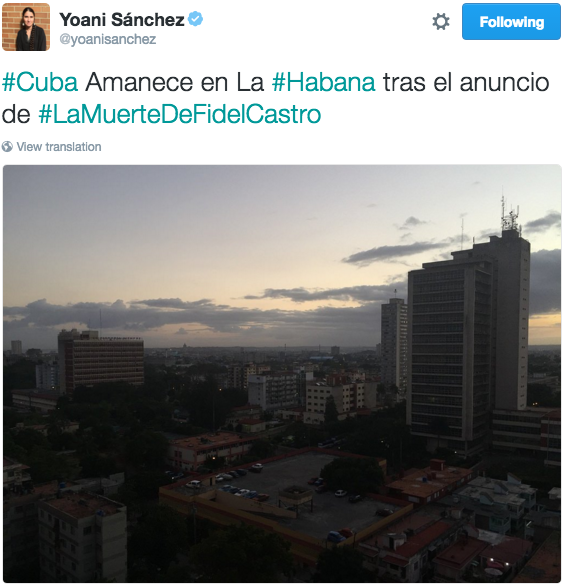
Dawn in Havana after the death of Fidel Castro

The flow of traffic on Rancho Boyeros Avenue is greatly diminished for a weekend, not least because today they announced the run-through of the military parade and drivers had already taken other routes.

The situation is reminiscent of what happened the day after the announcement on 31 July 2006 of Fidel Castro’s illness. At that time there were fewer people on the street than normal, and it now appears that caution is being repeated.

Sun, heat, some clouds. Havana the day after looks like a city in mid-summer, if it weren’t for the calendars showing November.

A personal comment, the news has caught many opposition leaders traveling abroad. Among them Berta Soler, Antonio Rodiles, Manuel Cuesta, and even Pedro Campos who is living in Miami…

Several private businesses have not opened their doors. Perhaps out of fear.

Among the comments most often heard are those about a prolonged and bigger dose of ideology on official TV, which in recent weeks has already been increased several degrees.

TV is broadcasting some statements, previews, from Miguel Barnet who assures us that “Fidel is like poetry, ageless. Fidel is not a man, he is an idea.”

National television is beginning to broadcast interviews with young people, their voices breaking, on the verge of tears, when they speak of the death of Fidel Castro. There are students of international relations that right now are “supporting” a tribute to the fallen leader on social networks.

At the entrance to the President Hotel, a taxi driver showed his phone to an unbelieving colleague, “No, son, it’s a lie.” A man turns on state radio, where the news is being broadcast, to settle it.

Waiting for the decisions and report due in a few hours from the Commission in charge of the posthumous tribute, it is expected that the ashes of the commander in chief may be displayed at the base of the Monument to Jose Marti in the Plaza of the Revolution, as was done on the death of commander Juan Almeida. It raises the question of whether the 60th anniversary of the landing of the yacht Granma, with a military parade and a March Of The Combative People, will be held as planned on 2 December.

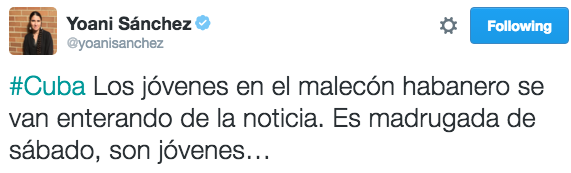
Young people on Havana’s Malecon are hearing the news. It’s Saturday morning, they are young…

A driver on Bus Route 174 listens to several passengers commenting on the matter and says: “Gentlemen, don’t make me angry, but here on my bus we don’t play around with that.”

Friday at midnight, Havana seems oblivious to the news. Those leaving restaurants and nightclubs hear about it from their cell phones.

They are putting a documentary with less laudable moments … talks about people the regime calls “the worms” who “don’t get it on with señoritas, they play with other men.”

Documentaries broadcast on official television for the occasion repeat the starring role played by the United States: the obsession with Fidel Castro.

“Is it true this time?” The most repeated phrase on the phone along with the news of the death. “Nah, it must be a rumor,” the first response.

Raul Castro’s message is rebroadcast. On national television, the announcer is dressed in black and looks lost. Nervous and erratic, she starts to read the reactions of Latin American presidents on hearing the news.

Widespread commentary that “The Bastión (war games) was a dress rehearsal for the funeral.”

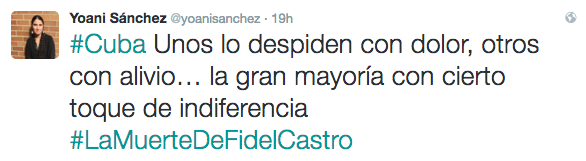
Some are overcome with pain, others with relief… the vast majority with a touch of indifference.

Many Cuban immigrants have advised their relatives in Cuba, because the news was broadcast at a time when few were watching television.

In the most populous neighborhoods of Havana, many people are glued to the screens of their TVs to watch the programming that comes by illegal satellite dishes.

The phones start ringing … an echo of “ring ring” is heard everywhere.

Havana’s dawn seems never ending: it is long, silent, on edge…

The only thing Heard in central Havana is the sound of the truck that just went by to pick up the trash.

‘El Sexto’ Says Goodbye to Fidel Castro / 14ymedio

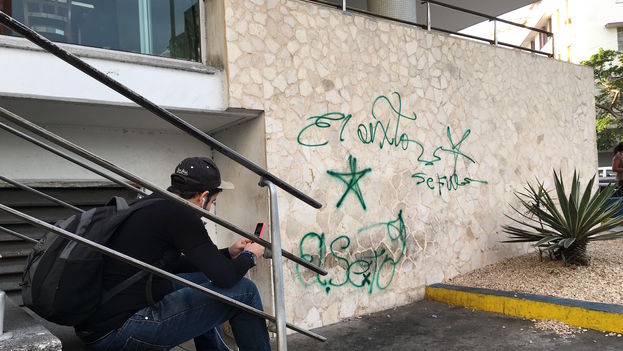
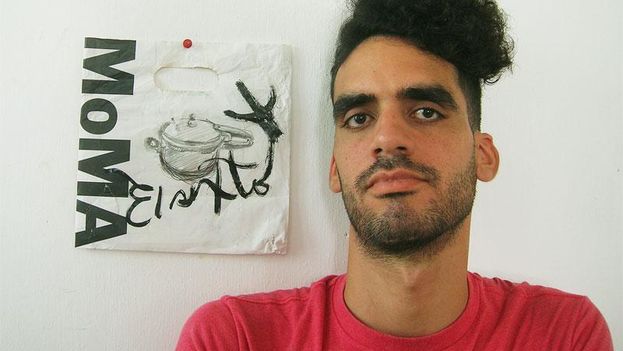
El Sexto’s graffiti after the death of Fidel Castro. (14ymedio)

14ymedio bigger14ymedio, Havana, 26 November 2016 — The artist and graffiti artist Danilo Maldonado, known as ‘El Sexto’ (The Sixth), heard the news of Fidel Castro’s death while he was on Havana’s Malecon. “People kept doing what they were doing, talking, partying, when the police started to show up,” he says, of those first hours after the news. The artist irreverently took advantage of the situation to leave a brief message on a wall: “Se fue” (He’s gone).

As the sun rose, the graffiti remained defiant and accurate in the eyes of the silent passers-by. “The exterior dictator has died, but the interior dictator still remains inside many Cubans,” Maldonado said in a telephone conversation with 14ymedio.

El Sexto’s graffiti is the first demonstration outside the expressions of mourning organized by officialdom. Calm, caution and silence have spread as more Cubans have heard about the death of the former president.

The Last Death of Fidel Castro / 14ymedio, Reinaldo Escobar

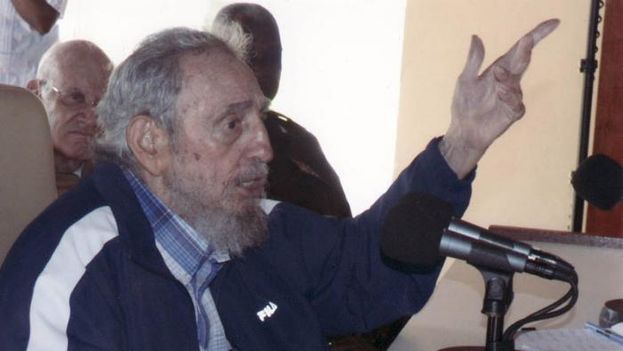
Fidel Castro at a meeting with civilian workers of the Ministry of Interior and the Revolutionary Armed Forces. (Revolution Studio)

14ymedio bigger14ymedio, Reinaldo Escobar, Havana, 26 November 2016 — As expected, the news of the death of Fidel Castro was announced by his brother Raul, in a brief official statement to the people of Cuba and friends around the world.

While his biographers are careful to detail that he survived hundreds of alleged attacks, no one can keep count of the innumerable times that his death circulated as a rumor or even as a headline, starting with those left him for dead after the attack on the Moncada barracks, or after landing of the yacht Granma on the coast of eastern Cuba. continue reading

Sixty years to the day after the morning of 25 November 1956, when the historic yacht sailed from Tuxpan, Mexico, events have changed the significance of that anniversary to inscribe the date, as of today, as the moment when the hisotiral leader undertook his “ultimate journey.”

The question so often formulated, of what would happen after the physical disappearance of Fidel Castro, will soon have its inexorable answer. Obviously, it will not have the dramatic effect it would have had, had it happened when he was in command of the rudders of the country, as was on the point of happening in June of 2006 when he had to “provisionally” delegate all his responsibilities to his brother Raul.

Although the impact has been ameliorated by a decade of relative absence, in one way or another his real death marks a before and after. Especially for the decisions that his heir must take in his last year in office. From this point, the argument that this or that cannot be done because “the boss” would not agree, ceases to have any meaning. No one will now have any doubt about who rules Cuba

Now begins the prolonged stage of competing panegyrics and diatribes. Adulators and detractors will bring to light their long sharp conclusions, will once again relate the anecdotes that earned him glory and blame; they will recall the legends and jokes, epithets and nicknames.

Cuban television will have already prepared a selection of his historic moments, the best pens of the national Parnassus will publish poems and compose songs, and then will come the anniversaries, and sooner or later the generation of those who never knew him will exceed that who saw him triumphantly enter Havana, deliver his interminable speeches, make his unappealable decisions.

The contemporaries of Elian Gonzalez will perhaps remember that 17 years ago, a day like this 25 November, that child rafter was rescued almost miraculously in the Straits of Florida. This coincidence obliges us to think of Charon, the mythical boatman who leads souls to their final destination. This ship will not sink. Fidel Castro is dead. Sadly for some and joyfully for others, this time it’s true.

Activist In Exile: It Is Sad That a “Tyrant” Dies and Freedom Doesn’t Come

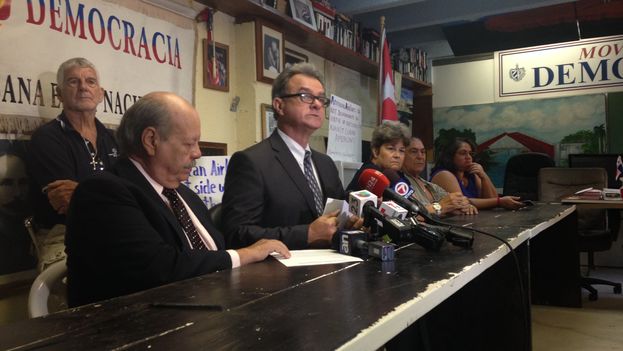
Ramon Saul Sanchez, president of the Democracy Movement. (14ymedio)

14ymedio biggerEFE/via 14ymedio, 26 November 2016 — Ramon Saul Sanchez, leader of the Cuban exile organization Democracy Movement, lamented today that the death of a “tyrant,” as he defines Fidel Castro, will not mean “freedom for the people of Cuba”.

“It is the greatest sadness that I have in my heart,” the activist told EFE; like many others in Miami the news of Castro’s death got him out of bed. continue reading

“I wish I could tell you that the tyrant’s death is people’s freedom,” but in the case of Cuba is not so “because they (the Castros) managed the succession very well.”

According to Sanchez, if Castro had died while in the exercise of power, it could have sparked a revolt in Cuba to demand freedom, but as his brother Raul is in office, the impact will not be the same.

For the leader of the Democracy Movement, Fidel Castro is a symbol of terror that Cuba has suffered for almost 60 years and his legacy is “fear, prisons, pain, rafters, etc…”

Food Prices Rise Despite Price Caps / 14ymedio, Zunilda Mata

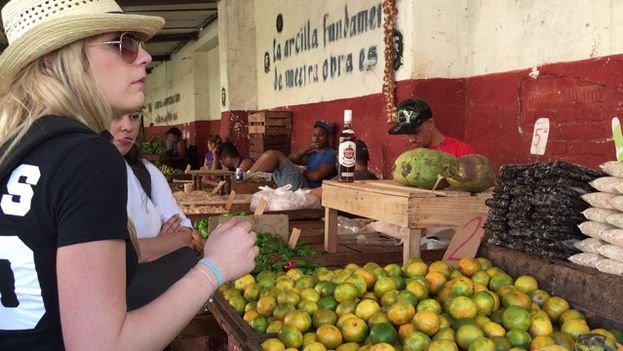
The Egido Street market still displays prices based on supply and demand. (14ymedio)

14ymedio bigger14ymedio, Zunilda Mata, Havana, 24 November 2016 — The seller doesn’t even need to advertise his wares. He just stands at a corner with several strings of onions and buyers crowd around him. Six months after the imposition of price caps for more than twenty farm products, shortages and the high cost of food continue to mark Cubans’ daily lives.

The measure, approved in May of this year, for state markets and those managed by cooperatives, regulates the prices of 23 products, to avoid “the enrichment of intermediaries.” In practice, however, this government decision had not managed to curb rising prices, which are expected to reach historic highs by the end of the year. continue reading

At the intersection of 19th and B Streets, in the Vedado neighborhood, one market has earned the epithet of “the rich people’s market.” Some also call it “the museum,” because it’s “look but don’t touch,” due to its high prices. The place has a variety of products far beyond the average offered by markets across the island.

The capped process still have not yet reached these kinds of markets, where private producers sell their merchandise. A pound of boneless pork has varied between 40 and 50 Cuban pesos for months, two days’ salary for an engineer. “We sell the meat here depending on how it comes to us,” explains Yulian Sanchez, the market’s administrator.

Opinions among customers are divided on the government’s measure. “There’s no one here who eats beef or even cracklings,” an old woman complained this Tuesday at 19th and B, while looking for oregano to cook some beans. “These prices are unthinkable for people,” she said, expressing her support for price caps on all the markets of this type.

Other customers fear a possible extension of price regulations. “What will happen is that the best things will disappear,” says Roberto, a self-employed workers who regularly buys fruit at 19th and B. “The minute they capped prices, onion disappeared,” he said.

Among the foods with regular prices are also beans, taro, cassava, bananas, yucca, sweet potatoes, lettuce and pumpkin. In markets where price controls are already in place, products cannot be sold for more than the prices established in a resolution of the Ministry of Finance and Prices.

An army of inspectors verifies that the stands display the regulated prices and apply fines to offenders that can range from 100 to 700 Cuban pesos.

A few yards from Havana’s Capitol building, the Egido street market still displays prices based on supply and demand. Four tomatoes can cost 50 Cuban pesos, a third of the monthly pension of Oscar Villanueva, a retired construction worker looking over the market stalls on Tuesday.

“With Christmas and New Years it is normal to raise prices, but since these are already quite high, we have to prepare for the worst,” he says.

Anxiety in anticipation of these holidays is apparent among the stands of the central market. The government has informed the sellers that as of this coming January there will be a system of price regulation for several products.

“This is the only place where you can find a variety of fruit. If they cap the prices it will be like the others,” says Villanueva.

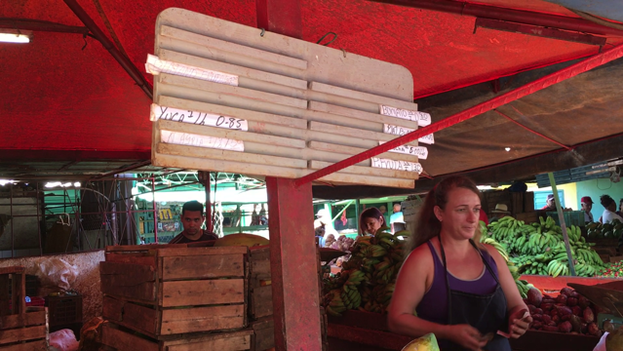
Board with prices for the day's offerings in the EJT Market at 17th Street and K, in Havana. (14ymedio)
Board with prices for the day’s offerings in the EJT Market at 17th Street and K, in Havana. (14ymedio)

The quality of the products at the Youth Labor Army (EJT) market at 17th and K, run by the Armed Forces, is very different from “the rich people’s market,” a distant relative of the Egido Street market.

Many consumers agree that price caps are often at odds with the quality of products. “The fruits they sell are always green and the root vegetables are covered with dirt,” says a regular customer of the market in Vedado. The woman recognizes, however, that the prices in other markets “can’t go on like this, because soon we’ll need a wheelbarrow full of money to buy food for a week.”

“Now they have one-thousand peso notes to fix that problem,” a nearby vendor jokes with the woman.

The hopes of many are pinned on the reopening of El Trigal market in January, the only agricultural wholesale market in al of Havana, which in the middle of this year was closed for “irregularities” in its operation. But it is still unknown if the government will maintain the price caps, sustain supplies in the market stalls, and improve the quality of the offerings.

Cuban State Security Prohibits Third Meeting Of Coexistence Studies Center / 14ymedio

The director of the Center for Coexistence Studies, Dagoberto Valdes. (Facebook)

14ymedio bigger14ymedio, Havana, 25 November 2016 — The meeting of the Center for Coexistence Studies (CEC) scheduled for Saturday in Pinar del Rio has been prohibited by State Security, as reported two officers to the organization’s director, Dagoberto Valdes. The men visited the house of the Catholic layman and they assured him that “high command” would not allow holding the event, the intellectual told 14ymedio.

The meeting, the third of its kind, had as its theme Culture and Education in the Future of Cuba: vision and proposal. The organizers expected the participation of about 20 people, most of them from other provinces.

One of the officials said he was Major Joaquin, who was also present at the last interrogation to which Valdes was summoned. Among the arguments presented for the prohibition of the meeting was that it had been scheduled to take place 72 hours before the anniversary of the landing of the yacht Granma, which brought Fidel and Raul Castro and other revolutionaries from Mexico.

The major also said that those invited to the meeting were “prominent counterrevolutionary ringleaders,” but without giving details. Valdes, who is also director of the magazine Convivencia (Coexistence), questioned the reasons why the Government to considers dangerous a meeting to talk about education.

Last September the CEC had to cancel a meeting on community issues, when two participants from Cienfuegos were intercepted and forced to return to their province.

The Coexistence Studies Center organizes training courses for the citizenry and civil society in Cuba. The organization operates independently of the State, the Church and any political group.

Dagoberto Valdes Recounts His Conversation With Cuban State Security / 14ymedio, Dagoberto Valdes

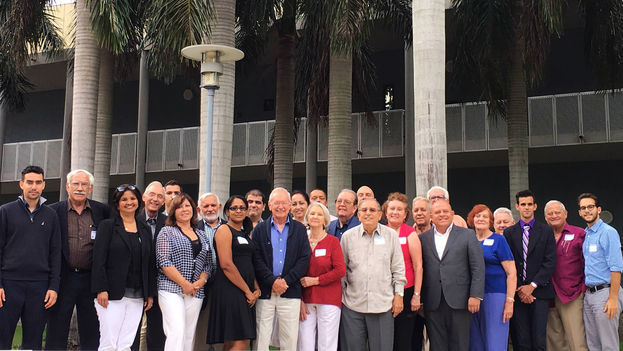
Cuban intellectuals and artists from both sides of the Florida Straits in a meeting organized by the Center for Coexistence Studies. (File 14ymedio)

14ymedio bigger14ymedio, Dagoberto Valdes, 25 November 2016 — At the stroke of noon today, 25 November 2016, two officials from State Security came to my house, Major Joaquin, who participated in my interrogation on 27 October, and another official.

Major Joaquin said that they came to inform me that I would not be permitted to hold the meeting planned by the Center for Coexistence Studies for this weekend, the 26th and 27th of November, because this is considered a provocative activity, because those invited are “ringleaders of the counterrevolution” because of doing so barely hours from the 60th anniversary of the landing of the [yacht] Granma [that brought Fidel and Raul Castro and other revolutionaries from Mexico]. continue reading

I asked them what they meant by a provocative activity and being “counterrevolutionary ringleaders,” because Coexistence is a project of study and thinking for the good of Cuba, and does not engage in provocations nor consider people to be “ringleaders.” These meetings are to think about solutions and proposals for the progress of our Nation and, in this specific meeting, it is to study the theme “Culture and Education in the future of Cuba.” He responded that it was an order from the high command of the Country and they would follow what is established, when and how they considered appropriate.

I asked if they were closing Coexistence, they told me no, but they would evaluate each activity we organized and would act as appropriate. I stated that I considered they were already carrying out the threat received at the interrogation summons from less than a month ago and which they assured me that “starting from today your life is going to be very difficult.”

Thus, continues the harassment of the Coexistence Studies Center that the Cuban authorities began as of 1 September 2016.

Dagoberto Valdes Hernandez

Director, Center for Coexistence Studies

Police Confirm To ‘El Sexto’ He Can Not Leave The Country / 14ymedio

Danilo Maldonado, known as El Sexto (The Sixth). (Artist File)

14ymedio bigger14ymedio, Havana, 24 November 2016 — Police informed the graffiti artist Danilo Maldonado – known as ‘El Sexto’, (The Sixth) – that he can not leave the country because he is “regulated,” having been accused in a legal process due to a complaint by his ex-wife. He received the information within a few minutes of an official at the Zapata and C Police Station, in El Vedado, telling him the exact opposite.

The artist has attempted, this Tuesday, to travel to the United States after receiving a police summons, but was not able to board the plane. continue reading

El Sexto detailed to 14ymedi that earlier this week he received at the home of his mother, Maria Victoria Machado, a summons for 22 November for an “interview.” The uniformed officer who delivered the citation told the family that it was related to “a complaint for harassment” made by his ex-wife.

However, when he presented himself on Tuesday morning in response to the citation, police officials were not able to give him any more details about the presumed accusation. Maldonado tried to travel that same day, but at the airport an immigration official confirmed that he was “regulated” by the National Revolutionary Police (PNR).

On Thursday the artist went to the Vedado police station to demand an explanation of his case. There they told him he could not travel, but a few minutes later he received contrary information.

El Sexto was arrested in Havana on Christmas Eve of 2014, when he proposed to stage a performance with two pigs he had painted with the names of Fidel of Raul. On that occasion he spent ten months in Valle Grande prison without trial.

Political Arrests Increase / 14ymedio, Pedro Armando Junco

Reporter Sol Garcia Basulto was arrested on the night of November 3 when she was preparing to travel to Havana. (14ymedio)

14ymedio bigger14ymedio, Pedro Armando Junco, Havana, 23 November 2016 — I learned via the internet that 14ymedio’s Camaguey correspondent, Sol Garcia Basulto, was illegally and arbitrarily arrested on the night of November 3 when she was travelling to Havana to get a visa for her passport.

As she herself relates, she had won a trip abroad for a journalism course. She would not qualify for enrollment in a Cuban university journalism school because her political ‘wood’ is not suitable for the construction of that ‘national informational edifice.’ Her case is not isolated. There are many young students of this profession whose careers are interrupted for the least ideological slip-up or who, when they manage to graduate, have doors to jobs closed on them. They are innumerable, the names of the recent graduates who have crossed the Strait or who are marginalized within the country and take on any self-employment that is often as distant from their abilities and aspirations as they ever imagined. continue reading

Sol’s case is in keeping with a repressive wave that is playing out across the Island against opponents and independent journalists in order to put a stop to that avalanche of popular dissatisfaction that is growing among the citizenry because that handful determined to complain is the only representation of the people’s discontent. The system is not content with excluding them from the official media – the only media accessible to the population – but intends to eliminate them because of new technologies that one way or another allow what’s happening within Cuba to be known.

The most significant thing about Garcia Basulto’s detention, if the objective was to prevent her trip abroad, is that they could have visited her at her home and withdrawn her passport; taken her off the bus at the Camaguey terminal before it took off; or even summoned her to the police station. However, they waited for the bus to leave the city, and then they stopped it in the middle of the road, boarded it and handcuffed her like a common criminal. This is one more kind of mistreatment that so many of the Cuban population suffers.

I know Solecito – as I call her – and I know that she is a young woman of character. She raises her daughter alone because the father is a prisoner. I am not unfamiliar with that journalistic aspiration that has not been able to develop, as I said before, because of its dissident tenets. I have seen her often and read her work in the independent magazine Cuba’s Time which, by the way, is not at all “counter-revolutionary” except when its collaborators touch a sore spot of some public official – I even think that the State could take the articles that are written there as a reference to discover the administrative deficiencies of many revolutionaries who bleed public assets for their own benefit, as is well known.

I am at once saddened and indignant that the changes of openness promised to the people are the object of a double standard – to use this phrase that they like so much – and that now that the president general assures that there are no political prisoners, they stop and humiliate those who don’t submit to the system. It is possible that there are no political prisoners in Cuba; but political arrests increase daily.

The bad time that they gave to Solecito will not change her way of thinking but will increase her condemnation of those who oppress her. Maybe a friendly and convincing attitude together with facilitating her trip would have made her change her view and respond empathetically when the time came to practice non-professional journalism. But instead, the sad and regrettable event has brought to international light a new name that will have to be taken into account from now on.

Translated by Mary Lou Keel

Animals Loose On The Road / 14ymedio

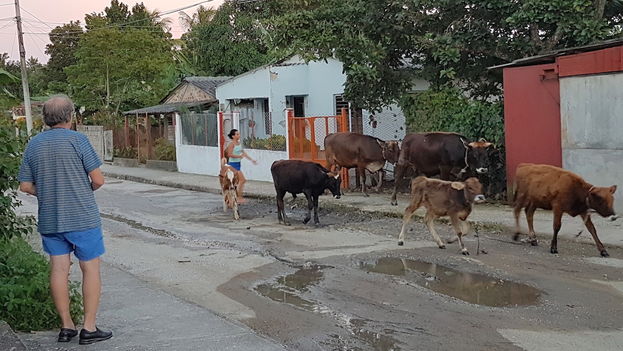
In a small street of Santa Clara a family leads their cattle to graze in broad daylight.(14ymedio)

14ymedio bigger14ymedio, Havana, 23 November 2016 — Cows, goats and calves are a constant presence on the streets of Cuban roads. The lack of stables that can be properly closed, problems in buying wire to fence off land, along with the negligence of the owners, have made the sight of animals on the road commonplace.

In a small street of Santa Clara a family leads their cattle graze in broad daylight. To the poor condition of the pavement we add the potential danger that the ruminants run along the way. A risk that often ends in a fatal outcome.

In the first four months of this year 3,702 traffic accidents occurred on Cuban roads, with a total of 244 deaths. Among the most frequent reasons were the poor state of roads, speeding, consumption of alcohol, improper signaling, lack of attention on the part of drivers to controlling their vehicle and, unfailingly, animals roaming the roads unchecked.

A Second Day Of Police Harassment For Somos+ Academy / 14ymedio

Participants in the courses of Somos+’s Academy 1010. (Somos +)

14ymedio bigger14ymedio, 23 November 2016 — Academy 1010, an initiative of the Somos+ (We Are More) Movement, experienced a second day of police harassment with a strong State Security operation around the homes of several activists, including arrests and deportations to home provinces. Today, no participants were able to reach the Havana site where courses on civil society, technology and human rights were to be held, according to information from the president of this opposition organization, Eliecer Avila, speaking to 14ymedio.

Joanna Columbié, director of the Academy initiative, said that since Monday “a cordon of patrol cars” has surrounded Avila’s home, the intended site of the conferences and classes.

“I am surprised and indignant because we never imagined that an eminently academic activity would bring a wave of arrests and arbitrary acts as if we were doing something terrible, against the law,” said Avila. continue reading

During the first day of activities, five students who managed to get close to the site were arrested, while others have been unable to leave their home provinces, said Columbié. On the opening day only “seven students were able to come” and “they received their classes normally,” she added.

Those arrested so far are Yoan Valdivieso, Pedro Acosta, Georlis Olazabal, Norberto Leyva and Alexei Gamez. From the latter the police confiscated the laptop he travels with, and threatened to prosecute him under the crime of “receiving stolen goods.”

From their home provinces, the political police will not allow Agny Almanza, Javier Rojas and Pedro Escalona to travel to the capital. Georlis Olazabal is being deported right now to the province of Camagüey.

Starting Sunday, Columbié and Avila were warned by State Security agents that they would prevent participants from getting to the conference and accused them of trying to “subvert the political order of the country.”

Through Academy 1010, Somos+ is proposing to provide “the necessary knowledge to empower hundreds of young Cubans to serve as political candidates.”

Clean Sweep and Old Promises / 14ymedio, Reinaldo Escobar

The unconcluded debts of Raul Castro’s mandate are exactly those that would directly impact citizens’ lives

14ymedio bigger14ymedio, Reinaldo Escobar, Havana, 22 November 2016 – In the next 40 days, before the end of the year, the Cuban Communist Party must hold its second Central Committee Plenum and approve the final version of the documents issued by their most recent congress. It is expected that there will also be a meeting of the Council of Ministers and a third session of the 2016 National Assembly of People’s Power. These three events will mark the beginning of the last year of Raul Castro’s government, and the deadline for the fulfillment of his pending promises.

Not included in this list are details such as the glass of milk he promised every Cuban in July of 2007, or the eradication of the invasive marabou weed from the Cuban countryside, the unresolved problems of his administration which include ending the dual currency system, eliminating the rationing system, ratifying the United Nations human rights covenants – signed by Cuba but never ratified – and achieving efficiency in the state socialist enterprise. continue reading

The list of outstanding promises also includes producing food that is affordable to Cuban wallets, achieving the necessary volume of foreign investment, promulgating a new electoral law, and ensuring that wages become the main source of income, as well as leaving behind the conceptualization of and a viable program for, an economic, political and social model for future generations.

In this regard, only the theoretical commitments appear to be on track to be completed, while the unconcluded debts of Raul Castro’s mandate are exactly those that would directly impact citizens’ lives. Although the conceptualization never moved beyond an intellectual exercise, the program to 2030 rests on conjectures and promises for which Castro will have no opportunity to respond.

In the coming months, there would have to be a surge in the average private enterprise and the opening of the wholesale market so necessary to satisfy the demands of workers in the private sector. The countdown for the ending of unearned freebies and inflated payrolls is entering its final minutes.

Before the conclusion of his time in the presidential chair, Raul Castro has the responsibility to adopt measures that will lessen the emigration hemorrhage, structure an effective plan to address the demographic problem, and finally bring before parliament a law to regularize same sex relationships.

Before handing over power, Fidel Castro’s younger brother should decriminalize political dissent and propose a dialog so that the different viewpoints gaining force in the country can seek consensus to avoid more dramatic confrontations.

Will the general president bring such a demanding agenda to a conclusion, or does he intend to leave such tasks to his successors?

In the more than 400 days left to him as president of the Councils of State and of Ministers, Raul Castro will be forced to pick up the pace. Time, implacable, is running out. In the final stretch that remains of his mandate he will no longer have space for experiments or leisurely actions. There will be no pause, but much haste.*

*Translator’s note: Raul Castro promised to update the country’s economic, social and political model “without haste, but without pause,” and the phrase has become a centerpiece of his tenure.

Police Confiscate Activist Henry Constantín’s Phone And Computer / 14ymedio

Cuban activist Henry Constantín. (Twitter)

14ymedio biggerOn Sunday night, the activist Henry Constantín was detained at Customs at the Ignacio Agramonte International Airport of Camaguey, on his arrival from Miami. The dissident was taken to a police station where they confiscated his cellphone and laptop, according to what he told 14ymedio. The independent journalist was released around ten at night and says he will begin the legal process to recover his belongings.

Constantín arrived in Cuba around four in the afternoon on a American Airlines direct flight and was held at the airport until after eight o’clock at night. The officers of the General Customs of the Republic insisted on seizing their belongings to “review their content,” but the activist emphatically refused. continue reading

Constantín, who is the director of the literary magazine Time for Cuba, told them they could search the devices in his presence, but not out of sight. After four hours of waiting, Constantín was taken to a police station in the Montecarlo neighborhood.

At the National Revolutionary Police (PNR) unti, the soldiers took his “prints of all kinds,” he explained to this newspaper. The reporter refused to sign the record of the seizure of objects when the police told him that they would not give him a copy of the document.

After the Immigration Reform implemented by the Government in 2013, it has become a common practice to confiscate computers, video cameras and cellphones from activists arriving in the country.

Enough With the War Games / 14ymedio, Yoani Sanchez

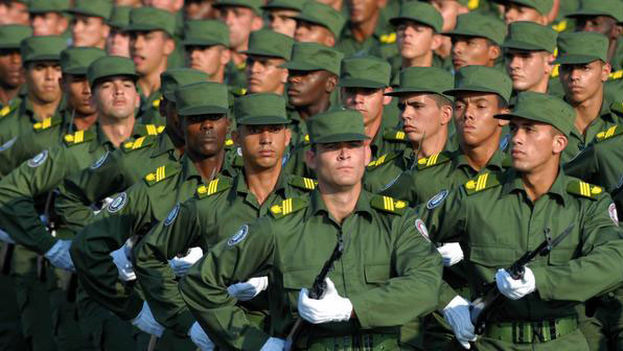
Regular troops of the Revolutionary Armed Forces parade in military exercise. (Archive)

14ymedio bigger14ymedio, Yoani Sanchez, Generation Y, Havana, 20 November 2016 — Tiredness, in the voice of the friend who calls and asks when they are going to mute the sirens that have been going off since morning. Exhaustion, in the neighbor who couldn’t get home in time after work because traffic was diverted due to military maneuvers. Annoyance in the young reservist who was ordered to participate in military exercise on the exact days he was planning a getaway with his girlfriend.

The three days devoted to “Bastión 2016” have left many Cubans feeling extremely saturated. Especially because after 72 hours of aggressive confrontation, and just when it seemed that the nightmare of machine guns was over, the government decreed this Saturday and Sunday to be National Days of Defense. For those who don’t want to fight… three bullets. continue reading

Exhausted from so much “trench warfare” and too many allusions to the enemy, we wonder if it wouldn’t be more coherent to use all those resources to alleviate daily problems. To reverse the chronic difficulties of urban transport, the quality of the bread in the ration market, or the shortages of medicines in the island’s pharmacies, would be better destinations for the little money contained in the national coffers.

Why waste money on fuel for war tanks that could be used to improve elementary school lunches?

The threat of battle is part of the mechanisms of control. The trench is the hole where we are immobilized and reduced; the platoon erases our individuality; and the canteen filled with water that tastes of metal and fear exorcises our demons of prosperity.

The war games have reminded us that we are only soldiers. As the bugle’s roar pulls the uniformed from their beds, these days of military exercises have awakened the country from any dreams of citizenship.