Ricardo González killed a police officer during a bank robbery in North Miami in 1992, for which two Cubans are also on death row
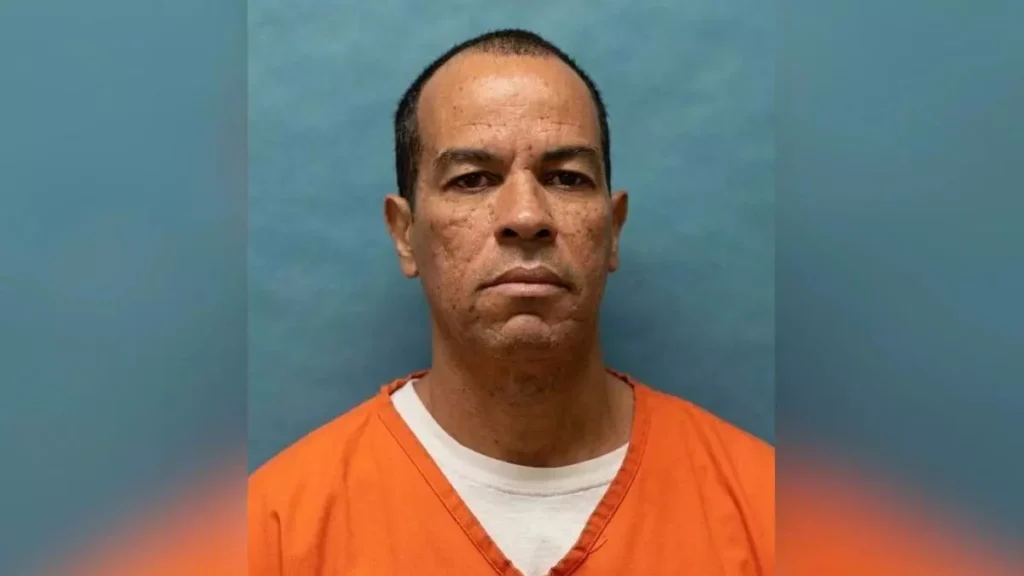
 14ymedio, Havana, 26 November 2026 / Ricardo González, the 56-year-old prisoner whose execution is scheduled for next Tuesday in Florida, is Puerto Rican and not Cuban, as several media outlets have reported since Governor Ron DeSantis signed his death warrant on October 30. However, at least three of his four accomplices in the murder of police officer Steven Bauer in North Miami in 1992 came from Cuba.
In September 2023, the Puerto Rico Center for Investigative Journalism published the report The Number of Puerto Ricans in US Prisons Is a Mystery, written by Joel Cintrón Arbasetti and based, in the case of Florida, on data obtained from that state’s Department of Corrections. Of the 1,189 prisoners born in Puerto Rican territory who were serving sentences in state prisons in February of that year, five were sentenced to death, including González.
As early as September 2020, the Caribbean organization The Greater Caribbean for Life had identified González as one of the 20 Puerto Ricans sentenced to death in the United States
As early as September 2020, the Caribbean organization The Greater Caribbean for Life had identified González as one of the 20 Puerto Ricans sentenced to death in the United States. The article, written by Carmelo Campos Cruz and devoted to the application of capital punishment among the Caribbean diaspora, also listed two of his accomplices, Leonardo Franqui and Pablo San Martín, among the Cubans sentenced to death at that time.
A ruling by the Florida Supreme Court, dated May 10, 2001, records the testimony of neuropsychologist Hyman Eisenstein, who interviewed Ricardo González about his family history and reviewed his school records. According to the specialist, he grew up between Puerto Rico and the continental United States.
Last Tuesday, while the Florida Supreme Court was rejecting new appeals from the condemned man’s defense, Pastor Jeff Hood, the prisoner’s spiritual adviser, asked the Puerto Rican government to intercede on his behalf.
González does not appear in the register of foreign nationals sentenced to death compiled by the Death Penalty Information Center, which excludes US citizens – a status that, as a general rule, people born in Puerto Rico hold from birth. On the other hand, two of his accomplices do appear in it, the Cubans Leonardo Franqui and Pablo San Martín, who were also convicted of another murder committed in Hialeah in December 1991.
Franqui, 56, was born in Cuba and arrived in the United States at about ten years of age in 1979 or 1980, accompanied by his adoptive father, his grandmother and his younger brother, with whom he had been raised on the island, as he told psychologist Enrique M. Suárez, according to a 2019 defense brief. Franqui, who had attended special education classes in Cuba, dropped out of school in the United States.
In the case of San Martín, 59, a 2008 court ruling states that he emigrated with his family in 1980. His paternal aunt, Estella García, had left Cuba in 1962 and took in her brother Luis, his wife and their children at her home in Miami for four months. San Martín’s father had been a political prisoner on the island, according to the testimony of his relatives at the trial.
Another of those involved, Fernando Fernández, also emigrated from Cuba as a child. His sister Mayling recounted that he left the island with his parents, his brother and his great-grandmother when she was about three years old, according to a document from the Florida Attorney General’s Office..
The emigration dates of the three coincide with or are close to the Mariel exodus, during which some 125,000 Cubans left Cuba in 1980
The emigration dates of the three coincide with or are close to the Mariel exodus, during which some 125,000 Cubans left Cuba in 1980, although the documents consulted do not make it possible to establish with certainty that they took that route.
The eldest of the group, Pablo Abreu, 72, is San Martín’s cousin, as he himself stated during the trial, according to another document from the Attorney General’s Office. His place of birth and the date of his arrival in the United States could not be confirmed.
Bauer was working as a security guard at the Kislak National Bank when he was killed during a robbery on January 3, 1992. He was 39 years old, had three children and had been on the police force for 12 years.
Franqui remains on death row, as does San Martín for the Hialeah crime, while Abreu is serving a life sentence. Fernández, whose death sentence was commuted to life imprisonment, is listed as deceased in prison records, according to The Miami Herald..
The execution of the Puerto Rican would be Florida’s twenty-first so far this year, a record for the state, and would take place just 12 days after that of the Cuban Reinaldo Dennes in Texas, who was sentenced to death for the murder of a diamond dealer during a robbery in Houston in 1996 and whose spiritual adviser was also Pastor Hood.
In addition to Franqui and San Martín, four other Cubans remain on Florida’s death row: Omar Blanco, Marbel Mendoza, Manolo Rodríguez and Rafael Andrés. They could be joined by Alberto Sierra, for whom a jury recommended the death penalty in October for the murder of his wife and his two stepdaughters in 2012. Also once sentenced to death in that state was Pablo Ibar,, a Spaniard with a Cuban mother, who since 2019 has been serving a life sentence for a triple murder committed in 1994.
Translated by GH.
____________________
COLLABORATE WITH OUR WORK: The 14ymedio team is committed to practicing serious journalism that reflects Cuba’s reality in all its depth. Thank you for joining us on this long journey. We invite you to continue supporting us by becoming a member of 14ymedio now. Together we can continue transforming journalism in Cuba.