Amid overcrowding and the disappearance of the old posadas, clandestine rooms are proliferating, offering anything from a bed with a fan to air conditioning
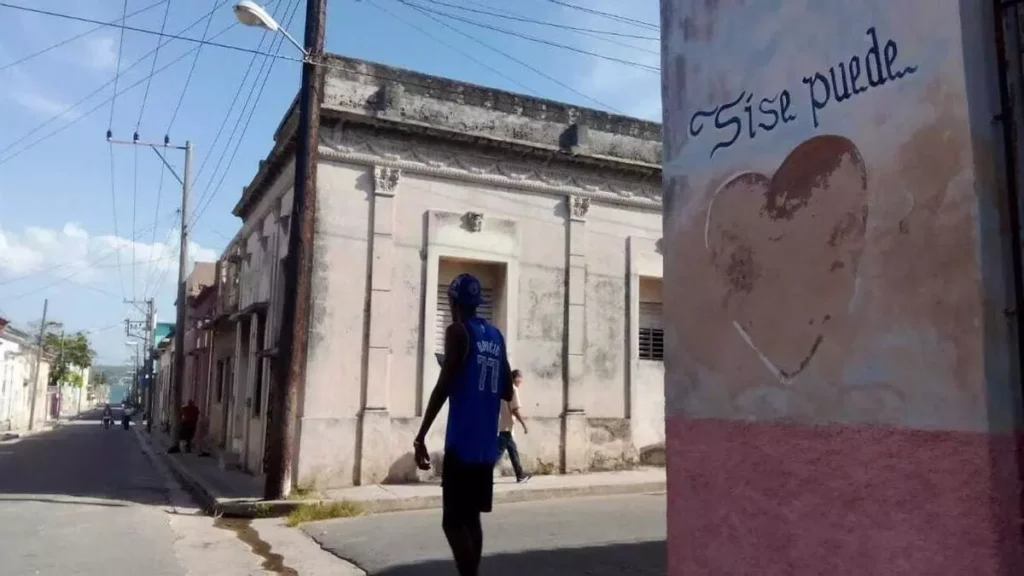
 14ymedio, Julio César Contreras, Matanzas, November 7, 2026 / In the El Naranjal neighborhood, a couple stops in front of a window protected by iron bars. Behind it, chains, earrings and watches are on display, but Héctor has other merchandise to offer them. The former Chemistry teacher, who spent 21 years in front of the classroom at a pre-university high school, offers to rent them a room at the back of his house. “The room has everything, with a good bed, a split [air conditioner], beer in the minibar in case you want a drink, and even a mirror on the ceiling,” he lists, with the confidence of someone who knows the virtues of his product.
Privacy has become yet another luxury item in Matanzas. Amid overcrowded homes, families where three generations live together, and couples who still sleep separated from the rest of the house by a curtain, finding four walls in which to be alone can be as complicated as getting hold of the cement to build them.
The old state-run posadas, which offered rooms by the hour, have disappeared from the Cuban landscape. A discreet network of private rooms has flourished in that vacuum
The old state-run posadas, which offered rooms by the hour, have disappeared from the Cuban landscape. Some closed for good and others ended up as collective shelters for hurricane victims. Conventional hotels, with rates prohibitive for a worker, don’t solve the problem either. A discreet network of private rooms has flourished in that vacuum.
Héctor does not have a landlord’s license. He had one for other activities, but says that legalizing the lodging would leave him little profit after paying taxes and expenses. “This isn’t about getting rich, it’s about making a daily living,” he tells 14ymedio. He and his wife run the business personally to avoid prying eyes on those who come and go.
An hour costs 5,000 pesos, an unattainable sum for many couples. The price includes a private bathroom, air conditioning and electricity backed up by a generator and solar panels. In a city where blackouts can interrupt even the most intimate moments, guaranteeing power has become a commercial advantage.
When customers are scarce, Héctor advertises the room in Facebook groups. However, he prefers personal recommendations. Discretion works like a second lock: it protects the visitor from gossip and the owner from an inspection that could ruin his livelihood.
On Compostela Street, Abel has found another way to make use of the available square meters. He sells meat products and rents out his mother-in-law’s old room by the hour. From the porch, where the merchandise is displayed, you step into a narrow living room with a refrigerator and a table turned into a counter. The house retains that typical Matanzas mix of commerce, home and everyday patching-up.
“The room is nothing special,” he admits. It has a rechargeable fan, it is kept clean, and its walls don’t always manage to block out the neighbors’ conversations. His hours end at three in the afternoon, before his daughter comes home from school. He doesn’t want the girl to hear certain noises.
The rules vary from one house to another. Some admit only two people, ban alcoholic drinks or demand absolute silence. Others offer a minibar and amenities that make the stay more expensive
The rules vary from one house to another. Some admit only two people, ban alcoholic drinks or demand absolute silence. Others offer a minibar and amenities that make the stay more expensive. Signs advertising the service almost never appear. A barred window, a half-open door or a recommendation from the bodeguero [the clerk at the state ration store] is enough to find it.
Abel also takes in people who need to spend the night near the Pediatric Hospital and can’t return to their municipalities. For 1,000 pesos, he lets them sleep from ten at night until six in the morning. “I don’t like taking advantage of other people’s need either,” he says as he weighs out two pounds of ground meat.
The business has two equally vulnerable sides. Whoever rents needs money to survive; whoever pays is looking for a privacy they don’t have at home. The informality leaves both without clear guarantees and turns any disagreement into a problem that is hard to seek redress for.
Translated by GH
____________________
COLLABORATE WITH OUR WORK: The 14ymedio team is committed to practicing serious journalism that reflects Cuba’s reality in all its depth. Thank you for joining us on this long journey. We invite you to continue supporting us by becoming a member of 14ymedio now. Together we can continue transforming journalism in Cuba.