Despite the authorization granted by the U.S. to import fuel to resume its operations in Cuba, the company has run out of nickel and cobalt.
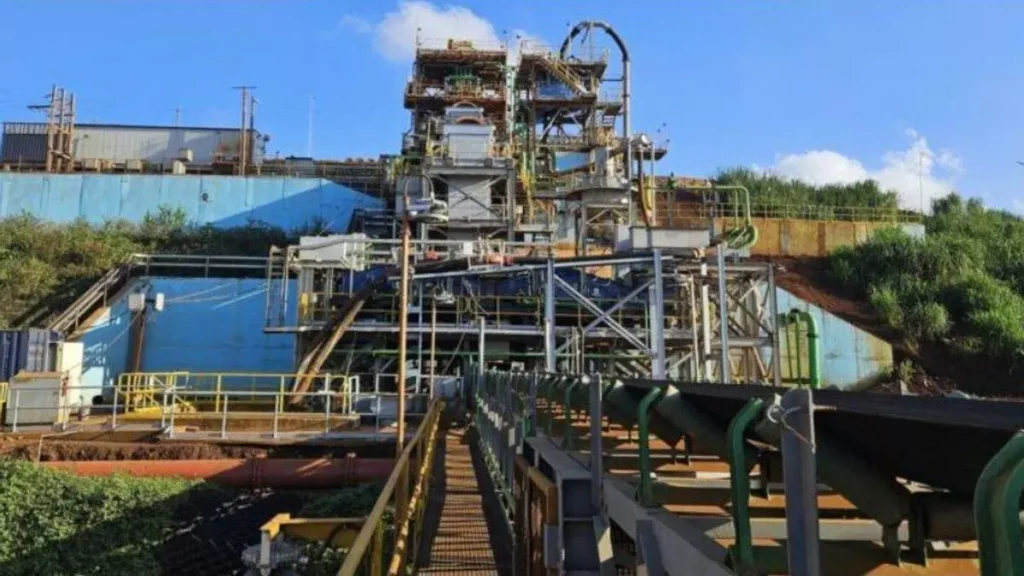
 14ymedio, Madrid, November 5, 2026 – Nearly half of the Canadian workforce of mining company Sherritt International will be laid off over the next three months as a result of the suspension of operations in Cuba, according to an announcement by the company itself. The number of employees affected totals 280, or 47% of the company’s entire workforce.
The Fort Saskatchewan refinery in Alberta had to halt operations in June after running out of nickel and cobalt from the Island, following the suspension of activities at the Cuban mines as well. That decision was announced on May 7, following the entry into force of an executive order signed by U.S. President Trump just three days earlier, warning of sanctions against any entity or individual conducting business with the Cuban regime.
“Sherritt has not been formally designated under the executive order. However, such a designation could occur at any time. In any case, its mere issuance creates conditions that materially alter the Corporation’s ability to operate in the ordinary course of business, including activities related to the operations of the Cuban joint venture,” the company said at the time in a statement. The decision was accompanied by two other measures: the resignation of the entire board of directors and the return to the Island of the Cuban employees working at the Canadian plant.
The decision was accompanied by two other measures: the resignation of the entire board of directors and the return to the Island of the Cuban employees working at the Canadian plant
The mining company has spent months since then trying to find a way out of the situation, which has seriously jeopardized its financial position, while also exposing an “unusual vulnerability in North America’s critical minerals supply chain,” Bloomberg reports. According to the company, the Alberta facility is the region’s only significant cobalt refinery and one of just three nickel refineries, but it depends on supplies from Cuba. Cobalt is used in the technology industry, alloy manufacturing, medicine, and biology.
On Wednesday, the company’s interim president and chief executive officer, Peter Hancock, said that Sherritt remains focused on restoring operations, which depend on approvals from the U.S. government.
On October 19, it was announced that the Treasury Department had granted a specific license to purchase and deliver fuel, fuel oil, and sulfur to the Moa Nickel plant in Holguín, which Sherritt operates jointly with the Cuban state. This was the first in a series of emergency licenses from the Office of Foreign Assets Control (OFAC) that the company is pursuing together with U.S.-based Gillon Capital to restore the business, both in extraction and processing, which depend on the Island, and in refining in Alberta.
Everything points to Gillon Capital, which is linked to Ray Washburne, a former Trump administration official, taking control of the mining company. In May, it emerged that the U.S. company had signed a preliminary, nonbinding offer to acquire 55% of the Canadian company’s shares. In August, it became known that another proposal was on the table, from a consortium led by Swiss giant Glencore, with a U.S. “anchor” investor, oil businessman Albert Huddleston.
However, the October statement announcing the granting of the license suggests that Gillon Capital has prevailed, since both companies asked the U.S. Treasury Department to consider a broader transaction in which a U.S.-based investment fund would acquire a majority stake. According to Sherritt, this license is the first of those Gillon would need to complete the acquisition.
The authorization issued by OFAC to Sherritt covers the sale, transportation, export, delivery, and payment of fuel, and includes the supplier, banks, vessel operators, and insurers involved
The authorization issued by OFAC to Sherritt covers the sale, transportation, export, delivery, and payment of fuel, and includes the supplier, banks, vessel operators, and insurers involved. The company expects the first shipment to depart during the current quarter and says it is already “in the process of finalizing the initial fuel shipment.”
For its part, the Cuban government has reportedly given the green light to these operations, which involve the entry of U.S. capital into the Island, according to a source familiar with the negotiations who spoke to the Miami Herald. Cuba’s Minister of Energy and Mines, Vicente de la O Levy, partially confirmed the information last month in an interview with Reuters, in which he said he saw no objection to a transaction of this kind.
“We have always made it clear that what the U.S. company would purchase are shares in Sherritt, not in the joint venture. The Canadian company is publicly traded, and any investor has the right to buy its shares,” he argued.
“But any restart would require discussions about how to supply fuel and spare parts, and also how to handle payments for exports and production inputs,” he said, referring to Washington’s sanctions. “If the intention is to resume nickel production, all those issues would have to be resolved.”
Translated by Regina Anavy
______________________
COLLABORATE WITH OUR WORK: The 14ymedio team is committed to practicing serious journalism that reflects Cuba’s reality in all its depth. Thank you for joining us on this long journey. We invite you to continue supporting us by becoming a member of 14ymedio now. Together we can continue transforming journalism in Cuba.