Imported brands dominate the shelves in Matanzas, Cuba, and pass on to the consumer every shock of the informal currency market.
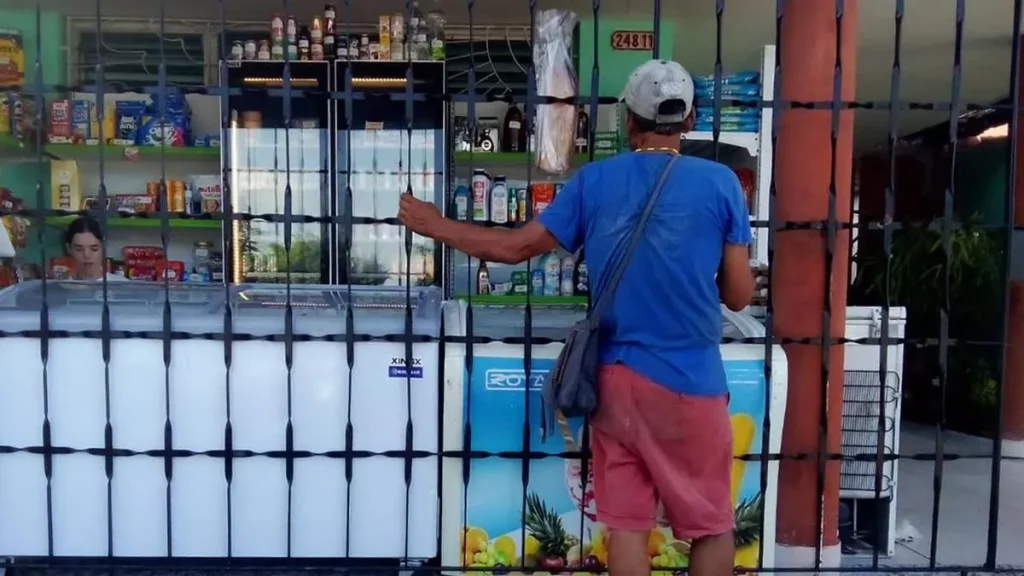
 14ymedio, Julio César Contreras, Matanzas, October 4, 2026 / Inside the freezer, behind the bars protecting a small business in Matanzas, cans of beer appear to Eduardo as the most immediate solution to the dryness that gnaws at his throat. Before arriving home in El Naranjal and plunging into the daily blackout, the surgeon wants to drink something cold. In his refrigerator, the bottles of water have long since become indistinguishable from the ambient temperature.
“My preferred is Bucanero, but you can’t even find that in spiritual centers anymore. Right now, to quench my thirst, anything will do,” he jokes, holding three 200-peso bills in his hand. Behind the bars, foreign brands dominate the shelves, a scene repeated in numerous stores throughout the city: imported beer has taken over the space left by Cristal, Bucanero, and other increasingly difficult-to-find national brands.
Eduardo thought that with his 600 pesos he could also buy his son two or three chocolates. But he looks at the prices and discovers they’ve changed since last week. “It can’t be that Hollandia costs 500 pesos when I just bought it here last Saturday for 450,” he protests. The clerk blames the suppliers and inflation. The doctor then looks at Frank País’s face on the bills and starts doing the math.
Beer serves as a particularly sensitive economic barometer in Cuba. This Sunday, with the informal rate of 785 pesos to the dollar, a 600-peso can is less than a dollar—a price that would seem like a bargain in Madrid or Miami. For a Cuban earning the minimum wage, however, it represents a fifth of a month’s salary.
And the temperature rises in tandem with the currency. A large portion of the beers that fill private refrigerators is purchased abroad with hard currency, so every jump in the dollar’s value ends up affecting the price at the counter. Adding to this dependence in March was a special tax of $0.30 per liter on beer and other imported alcoholic beverages, a cost that inevitably ends up being passed on to the consumer.
“We still have it at 520 in Mayabe, but in other places it’s around 580,” explains the saleswoman, a former hotel waitress, who is now getting used to her new job. The owner, she says, has decided to cut back on buying alcoholic beverages because “there’s no electricity to keep them cold, and it’s getting harder and harder to buy them from the supplier.”
Even Parranda, the cheaper, domestically produced alternative, reflects the market distortions. Produced in Mariel by a joint venture and packaged in plastic bottles, the brand has been promoted as a substitute for more domestic options more preferred by the comsumers. Its quality provokes frequent criticism, and in Matanzas, it was even mandated in some hotels to boost sales.
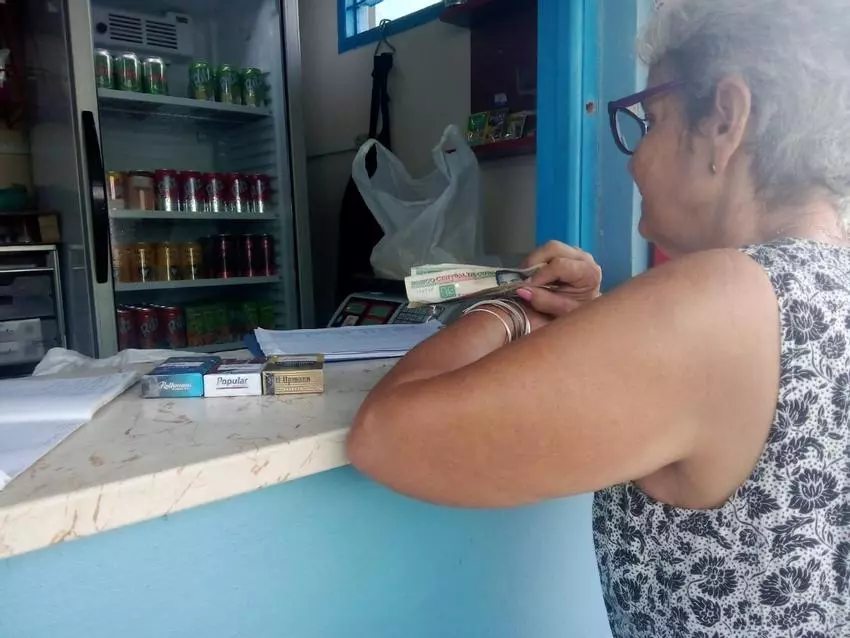
Where it is opened also affects the price. A bottle of Parranda that costs 1,500 pesos at the Hotel Velasco can be found for 1,400 at a café on Calzada de Tirry. “A cold beer would be nice in this heat, but in this country even that’s a luxury,” Migdalia laments. Her cigarette addiction doesn’t leave her much choice either: “I’m forced to choose between a can of Cristal or a pack of Popular Rojo.”
The retiree, who receives 3,200 pesos a month and some help from her grandson, has really gone out to buy a pound of mortadella. Even so, she asks about prices at the Los Chamas micro-business. “It says here that Lobo costs 460 and you’re telling me 480. What’s the deal?” The clerk apologizes: the numbers change so fast that the price stickers become outdated before the merchandise.
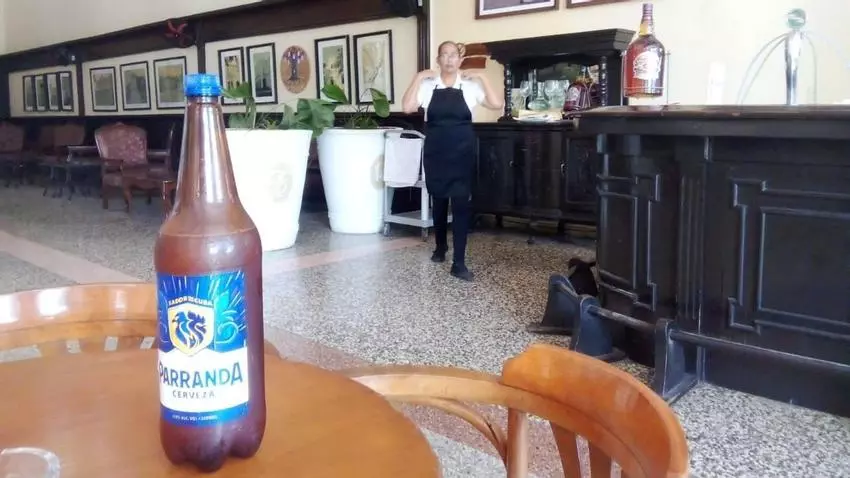
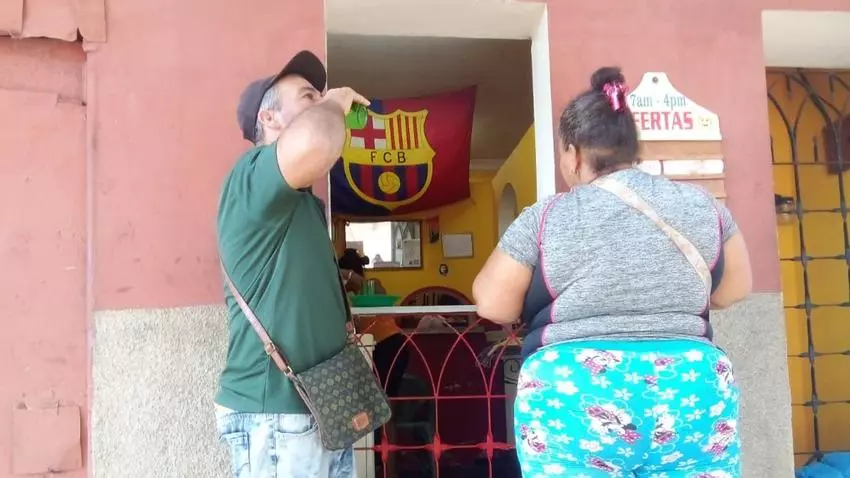
In another establishment, a man stands by a window, cooling off while a Barcelona flag hangs in the background. In a nearly empty bar, a plastic bottle of Parranda beer takes center stage on a table. The images encapsulate a time when enjoying a cold one requires calculation, comparison, and, for many, sacrifice.
Migdalia looks at the cans behind the glass as if they were museum pieces. “Those of us who live on a salary or a pension, if we want something cold, will have to settle for those sugary sodas that make us even thirstier.”
In Matanzas, you no longer need to check the dollar to know where the economy is headed: just ask how much beer costs.
______________________
COLLABORATE WITH OUR WORK: The 14ymedio team is committed to practicing serious journalism that reflects Cuba’s reality in all its depth. Thank you for joining us on this long journey. We invite you to continue supporting us by becoming a member of 14ymedio now. Together we can continue transforming journalism in Cuba.