The first multi-destination package will launch in August, integrating flights between Cancún and Havana
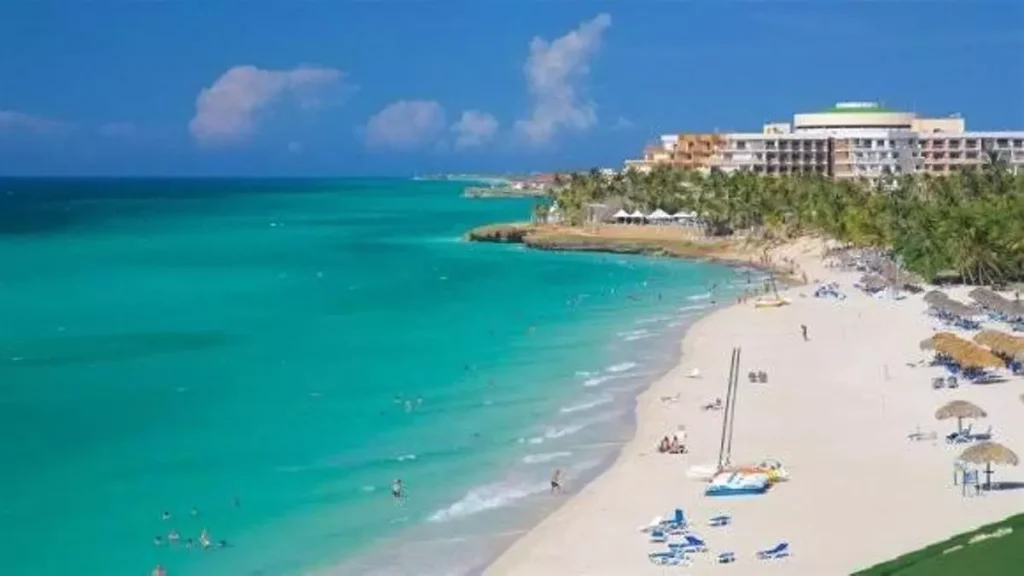
 14ymedio, Havana, 13 July 2026/ Tourism agencies from Mexico and Havana signed a cooperation agreement that includes extending the Mayan World tourism program to the island. The initiative will combine historical, beach, and nature destinations with the goal of attracting more Mexican visitors and diversifying Cuba’s tourism offerings, at a time when the sector is going through its worst period since the Covid-19 pandemic.
“We’re going to link the Mayan World – which in Mexico includes Campeche, Chiapas, Quintana Roo, Tabasco, and Yucatán, as well as Guatemala, Belize, Honduras, and El Salvador – with our beach at Varadero, but we’re also going to do it with the capital, with Havana, and bring in nature-based products. In other words, we’re going to keep expanding this experience with all the riches Cuba has to offer as a tourist destination,” said the tourism counselor at the island’s embassy in Mexico, Aleinor Zerquera, in comments to Prensa Latina.
To this end, the Taíno Tours agency, the trade name under which Havanatur operates in Mexico, reached an agreement with the local tour operators Turismo Popular and Prelasa Tours to “boost multi-destination tourism” between the two countries.
On this point, the director of the Cuban agency, Erick Gómez, said that “alliances like this one create good opportunities for all three companies.”
It will draw on the appeal of the Varadero Festival as a cultural hook to complement the Mayan World experience
The first multi-destination package will launch in August, integrating flights between Cancún and Havana, and will draw on the appeal of the Varadero Festival as a cultural hook to complement the Mayan World experience.
According to Mexico’s Ministry of Economy, the Mayan World region is visited by around 20 million international tourists a year, 70% of whom visit destinations within Mexico. It is also the country’s leading tourism hub, receiving 45% of domestic tourism and 55% of foreign tourism. Its offerings include sun-and-beach destinations, culture and history, cruises, ecotourism and adventure travel, and, more recently, medical tourism in Yucatán.
For the island, by contrast, this move comes at a particularly difficult time for the tourism industry. May’s figures reveal the extent of the collapse the sector has dragged through in recent months. In the fifth month of the year, only 30,883 visitors arrived on the island, a very marginal increase compared with April, which saw 332 more tourists. So far this year, Cuba has received 359,491 international travelers, 58.4% fewer than during the same period in 2025. However, breaking down the numbers, the vast majority arrived in January — 184,833 — a dismal figure for a month that traditionally used to bring in as many as half a million tourists. With the announcement of the end of refueling for international flights, most airlines began evacuating their nationals and ended up canceling routes that had become unsustainable, so the following months saw only minimal numbers of travelers arrive.
Most airlines began evacuating their nationals and ended up canceling routes that had become unsustainable
The energy blockade, which has paralyzed most flights, combined with the sanctions on Gaesa, has ended up dealing the final blow to one of the few sources of hard currency not only for the state but for hundreds of thousands of people who make their living from the sector through private businesses, from restaurants to craft shops and retail, or simple street vending.
According to a report by the National Statistics and Information Office (Onei) covering the first quarter of the year, only 1.3 out of every 10 hotel rooms in Cuba were filled at the start of the year, visitor numbers fell 48% — 298,057 compared with 573,363 the previous year — overnight stays also dropped by half — 1.8 million compared with 3.6 million — and gross revenue fell from close to 35 billion pesos (52 million dollars, at the informal exchange rate of 670 to 1) to around 20 billion. And all of this even though January was still considered a “normal” month.
The losses are not confined to hotels. The Onei report, which quarterly adds up revenue from other sectors, shows steep declines across the board. The overall figure fell from 48.4 billion to 27.9 billion pesos, but broken down, the hardest-hit sector is food service, which lost nearly half – dropping from 19 billion to just 10 billion. Next comes lodging, which fell from 14 billion to 8 billion, transportation – from 5.7 billion to 3.9 billion – and retail trade – from 2.1 billion to 1.5 billion.
Translated by GH.
______________________
COLLABORATE WITH OUR WORK: The 14ymedio team is committed to practicing serious journalism that reflects Cuba’s reality in all its depth. Thank you for joining us on this long journey. We invite you to continue supporting us by becoming a member of 14ymedio now. Together we can continue transforming journalism in Cuba.