Cubalex reports a record 319 repressive incidents and 253 protests in June, the highest figure since it began monitoring in 2022.
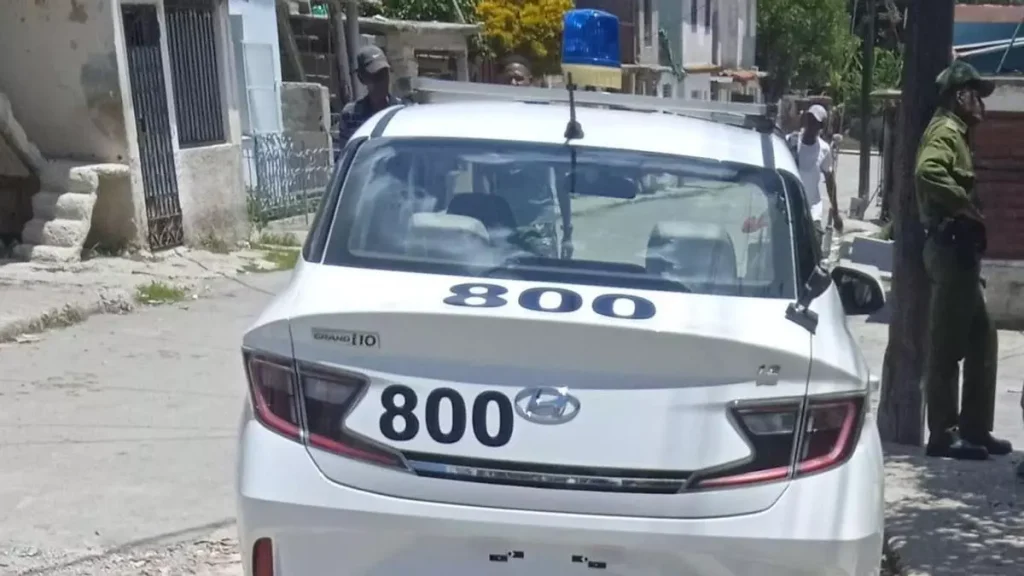
 14ymedio, Madrid, July 11, 2026 – Five years after the massive protests of July 11, 2021, the Cuban State has responded with repressive measures and increased surveillance and militarization. The 14ymedio newsroom awoke this Saturday surrounded by a police patrol preventing its director, Yoani Sánchez, from leaving her home.
Surveillance has also been extended to other independent journalists, opposition figures, and relatives of political prisoners. This Saturday, journalist Camila Acosta, opposition leader Manuel Cuesta Morúa, and intellectual Roberto Veiga reported police operations. The Cuban Observatory for Human Rights also reported another operation outside the home of Wilber Aguilar, father of political prisoner Walnier Luis Aguilar. Although State Security repeats these control measures every year on this date, they now coincide with the worsening economic and political crisis affecting the Island and growing public discontent.
The 2021 protests erupted because of deteriorating living conditions during the pandemic, but from the outset they expressed political demands with slogans such as Patria y Vida, “Homeland and Life”, and Libertad, “Freedom.” The repression was brutal: at least one person was killed by gunfire during the demonstrations; more than 1,300 people were detained or prosecuted in connection with those events, according to various independent organizations, and seven political prisoners have died in custody, according to the NGO Cuba Archive.
Against this backdrop, the regime has intensified its surveillance and control measures in anticipation of the possibility of another social uprising.
Five years later, living conditions have deteriorated even further. The energy crisis has reached the point where people no longer speak of blackouts but of alumbrones, “light-ups”: brief intervals of electricity between more than 30 hours without power in Havana and up to 90 hours in some provincial areas. This is compounded by a water supply crisis that, according to the authorities themselves, affects more than 500,000 residents of Havana. Against this backdrop, the regime has tightened surveillance and control measures in anticipation of another social uprising.
This Friday, the Government intensified its security preparations ahead of the anniversary. President Miguel Díaz-Canel chaired a meeting with military commanders in Havana’s Cerro municipality as part of National Defense Day activities. According to the State newspaper Granma, the meeting reviewed measures to preserve “internal order” in communities and protect strategic economic targets.
This newspaper confirmed that, beginning Friday night, police patrols and “cage trucks”—vehicles used to detain and transport so-called “agitators of public order”—were already circulating through the streets of Havana. During the July 11, 2021 protests, police even used garbage trucks for that purpose.
Cubalex documented a record 319 repressive incidents and a historic high of 253 protests during June, the highest figure since it began this monitoring in 2022
That atmosphere of tension was also reflected in Cubalex’s latest monthly report. The independent organization documented a record 319 repressive incidents and a historic high of 253 protests during June, the highest figure since it began monitoring in 2022. The report notes that “the days with the highest number of arbitrary detention incidents generally coincided with special operations and peaks in protests during the month.” At least 254 people were victims of repression. Nearly half were neither activists nor well-known opposition figures, but ordinary citizens who took part in demonstrations prompted by blackouts and worsening living conditions.
Havana accounted for 176 of those protests, followed by Santiago de Cuba with 35 and Villa Clara with seventeen. The cacerolazos, pot-banging protests, were increasingly frequent during the daytime as well as the main form of demonstration. The organization also documented the burning of garbage and tires, road blockades, stone-throwing at police stations and bank branches, as well as graffiti against the Government and Raúl Castro.
Cubalex also warns about the “deployment of undercover agents in Havana neighborhoods with the aim of identifying those who protested in previous days.”
Among the most frequent violations are police deployments for surveillance and control, arbitrary arrests, forced transfers, threats, and the denial of medical care to people deprived of their liberty. The report also notes an increase in harassment operations against independent journalists. Documented cases include the constant surveillance of Yoani Sánchez and Camila Acosta.
Cubalex also warns of the “deployment of undercover agents in Havana neighborhoods with the objective of identifying those who protested in previous days.”
In the organization’s view, “the deterioration of material living conditions and the increase in social discontent coincided with a State response focused on control, ‘state of war’ propaganda, and containing protests.”
The national electrical system suffered another total collapse this Friday, the second in a week, and more than 24 hours later authorities had still not fully restored service. The new collapse points to another day of prolonged blackouts across much of the country on this already tense date.
Despite police operations aimed at maintaining control, protests again broke out Friday night in several provinces. Videos shared on social media show dozens of residents in Mariel, Artemisa, burning piles of garbage while chanting “Freedom.” In San Miguel del Padrón, Havana, residents blocked Vía Blanca highway to protest the prolonged power outages.
This Friday, Cuban sociologist Ramón García Guerra also warned about tensions in his Santa Fe neighborhood. “After three days of protests against the Government’s neglect, the conflict in my neighborhood has escalated, and today a more violent confrontation between the police and the dissatisfied residents is expected,” he wrote on social media.
Translated by Regina Anavy
______________________
COLLABORATE WITH OUR WORK: The 14ymedio team is committed to practicing serious journalism that reflects Cuba’s reality in all its depth. Thank you for joining us on this long journey. We invite you to continue supporting us by becoming a member of 14ymedio now. Together we can continue transforming journalism in Cuba.