It is Supermix, a joint venture between Cimex and Spain’s Ipsa, which opened a branch on the ground floor of the Focsa building a year ago.
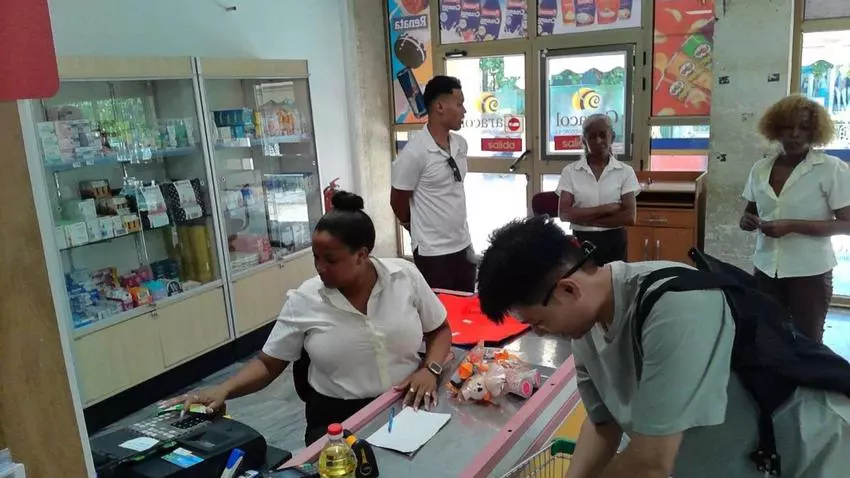
 14ymedio, Juan Diego Rodríguez, Havana, July 7, 2026 — With malfunctioning checkout systems and no possibility of paying by card, the new Caracol dollar store in the shopping gallery of Havana’s Comodoro Hotel, announced with great fanfare over the weekend, got off to a poor start. On Monday, an employee at the entrance warned customers about the difficulties they were experiencing. “The IT technicians are working to solve the problem,” she assured them.
At the meat counter, the employee serving customers reported another problem related to the cash-only payment requirement: they had no change. “Do you happen to have a single dollar? I’d really appreciate it,” he said.
Although Caracol did not mention the store’s brand in its social media announcement, it was clearly visible in the photos: Supermix. The supermarket is jointly operated by Cimex, part of the military conglomerate Gaesa, and Inversiones Pucara S.A. (Ipsa), a company established in Panama by Spanish shareholders.
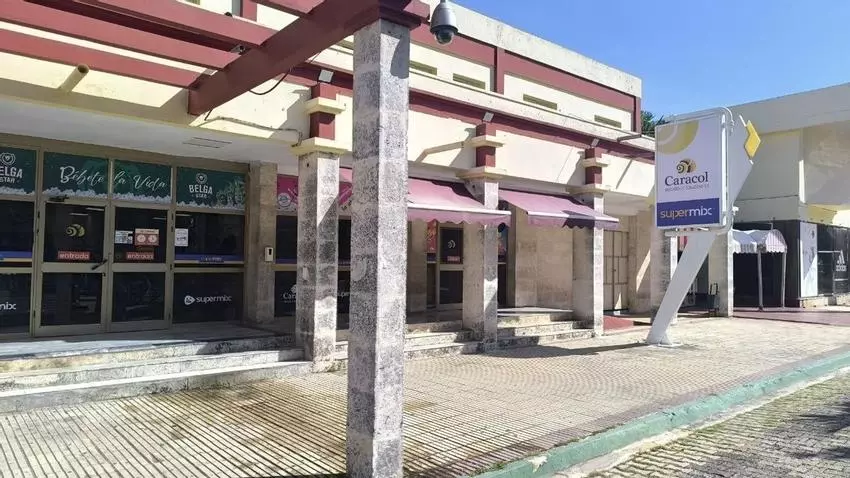
Just a year ago, it opened a branch on the ground floor of the Focsa building. Present in Cuba since 1997, Ipsa has boasted on its social media profiles of having “positioned itself as one of the Island’s most respected and prominent importers of quality food and beverages.” As a quick look at the shelves confirms, it imports all kinds of food and consumer goods to Cuba, offering higher-quality products than other hard-currency stores. “The meat is premium quality, none of that ground meat or hot dogs, and they even have seafood. I didn’t see any Vima products either,” said one customer who also visited the store on Monday, referring to the poor reputation among Cubans of that brand, owned by Galician businessman Víctor Moro Suárez. He summed it up: “This store is designed for a different kind of customer, a more VIP clientele.”
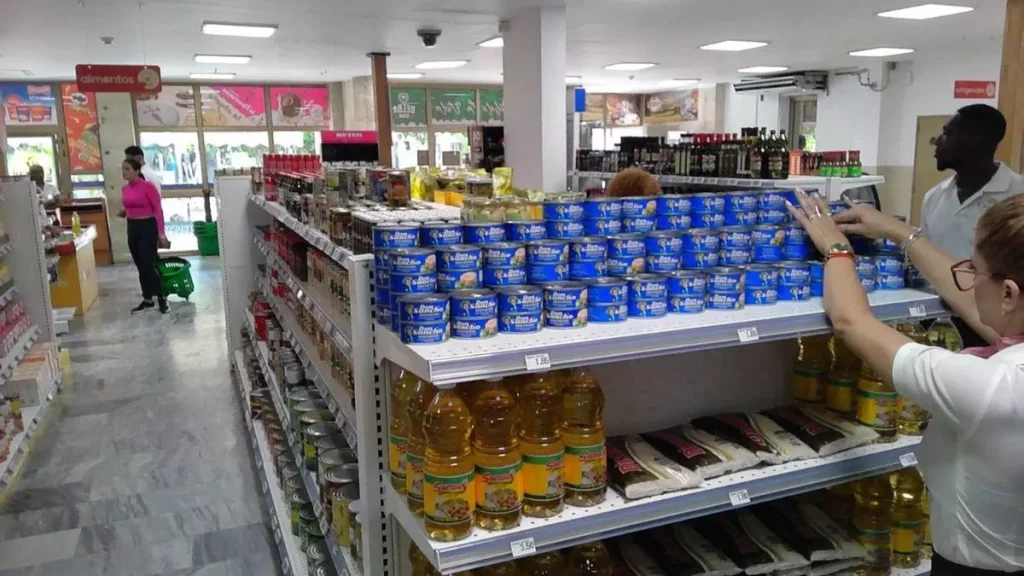
The prices reflect that. Individual cuts of pork chops cost nearly $130; beef cheeks, $100; and veal rib steaks, $65. Slices of smoked Norwegian salmon sell for more than $100 for a 1.5-kilogram package, while peeled and deveined king prawn tails cost $18 for 400 grams. Chicken breast imported from Brazil sells for $8 per kilogram. “Powdered milk is more expensive here than in other stores. It costs more than $10 a kilo,” complained a retiree from Central Havana whose daughter lives in Spain. The usual price for the same product is about $8.
A liter of cooking oil is also more expensive than elsewhere: $3.50 compared to the usual $2.35 to $2.50. The same applies to the personal hygiene products on offer. A deodorant that costs just over one dollar in other stores sells here for $4.
Under heavy security, employees at the entrance place customers’ bags into black cloth sacks, which they lock with a padlock until they leave the store. They do not provide free shopping bags, but they do sell them for $3 each.
“These are the cards that can be used for payment once we resolve the technical issue with the malfunctioning checkout systems,” another employee explained, pointing to a sign at the entrance. Naturally, neither Visa nor Mastercard appeared on the list, as both left the Island last month. However, Russia’s Mir, China’s UnionPay, the prepaid Clásica card, and Cuban bank cards were accepted.
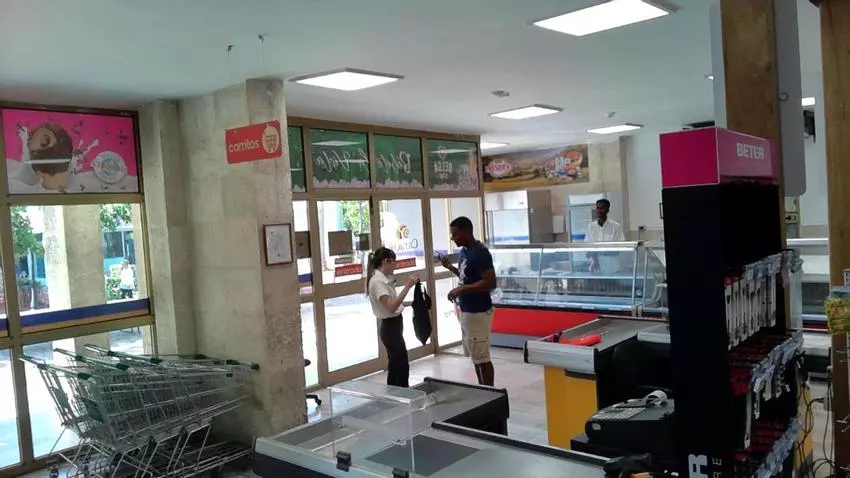
On opening day, only four customers were seen in the store during the morning, one of them a foreigner.
Far removed are the crowds the establishment attracted in the 1990s, when the Caracol chain, affiliated with the Ministry of Tourism, opened stores aimed primarily at foreign visitors. It quickly became popular despite its location away from the city center, at Third Avenue and 84th Street in the Playa municipality. Its history mirrors that of the Focsa shopping gallery: it pioneered the use of the U.S. dollar after it was legalized, later switched to the convertible peso (CUC), and then, following the Monetary Ordering Task, to freely convertible currency (MLC). “It has a different name, but it’s all the same thing,” an elderly man at the entrance remarked. “Most of us simply can’t afford it.”
Translated by Regina Anavy
______________________
COLLABORATE WITH OUR WORK: The 14ymedio team is committed to practicing serious journalism that reflects Cuba’s reality in all its depth. Thank you for joining us on this long journey. We invite you to continue supporting us by becoming a member of 14ymedio now. Together we can continue transforming journalism in Cuba.