Jorge Piñón, a researcher at the University of Texas, discusses the challenges and opportunities in a future island in terms of electricity and fuel.
 14ymedio, Yaiza Santos, Madrid, June 12, 2026 / With a degree in Economics and Latin American Studies, Jorge Piñón (b. Cárdenas, Matanzas, 1947) worked for three decades in the oil sector—at companies like Shell, Amoco, and BP—traveling the world. This experience, coupled with his natural interest in the country of his birth—which he left as a young child—ultimately led him to head, at an age when others are already enjoying retirement, a specialized working group at the Energy Institute of the University of Texas at Austin. From there, in recent years, he has become the essential voice for understanding everything related to the energy crisis in Cuba.
The conversation, by phone, took place before Vanguard Energy’s agreement to export fuel to private companies was made public. This agreement, if ultimately confirmed, includes the use of Unión Cuba-Petróleo (Cupet) tanks for storage. It was also before Cupet, the state-owned oil company, was sanctioned by Washington , so it was necessary to follow up with them on the matter. “I see it as a future roadmap for supplying Cuba with fuel during an economic and political transition without Cupet’s monopoly,” he stated. He added an objection: “The challenge of this agreement doesn’t lie with Vanguard, but with the small businesses it will supply. Who will monitor and ensure that these micro, small, and medium-sized enterprises (MSMEs) don’t sell or supply Vanguard’s barrels to state-owned companies?”
This is something he’s been warning about ever since the US allowed oil exports to the island’s MSMEs – Cuba also granted import permits, albeit in a more opaque manner with no way to verify the true destination of that fuel, and it could end up in state hands, as 14ymedio, in fact, documented. The interview began with this issue.
14ymedio: Are you aware whether the United States has this information about the fuel diversion and if they have commented on it, even unofficially?
Jorge Piñón: The problem with sanctions is that we can write all sorts of sanctions on a piece of paper, but then how do we verify them? And how do we enforce them? The United States doesn’t have hundreds of FBI agents in every small town and street in Cuba; it’s impossible to ensure that this fuel doesn’t pass through the hands of state-owned assets and companies. From the moment the exported tanker arrives in Mariel, Mariel is a government entity. This is the first step in establishing a connection between the state and the small business importing that fuel. Then, the best place to store the contents of the truck or trailer transporting the tanker is at gas stations, which are empty anyway. In other words, the future of Cuba’s fuel sector is in the hands of Cupet’s assets.
One of the points we advocate is the privatization of logistics, distribution, and marketing of the fuels.
One of the points we advocate is the privatization of logistics, distribution, and marketing of the fuels. The port of Nuevitas, for example, should be made available so that its two or three tanks of diesel and gasoline can be purchased by a distributor or a private logistics company. Trucks or tankers would then come to collect this fuel and transport it to Camagüey, from where it would be distributed to a small gas station, which should also be privately owned. In Cuba, the State should never be involved in the purchase, supply, logistics, or marketing of fuels, just as in Spain and other countries.
14ymedio: Rather, I was asking the question to find out if the United States officials are aware of the risks.
Jorge Piñón: I know they are.
14ymedio: And what do they say?
Jorge Piñón: They’re very quiet. From the questions they ask the experts, we can get a sense of the dilemma they face, the challenge they’re under, and the answer they’re truly seeking. But the question neither you nor I have an answer to, because we don’t have a crystal ball, is how the transition will unfold. Until we have a roadmap, all we have are ideas that are difficult to clarify.
14ymedio: At the beginning of this crisis, after the US intervention in Venezuela, Kpler experts estimated that the island’s fuel would last four days. That seems to have been stretched. Aside from the relief provided by the Anatoly Kolodkin refinery —for a month, perhaps?—what allows the country to continue functioning, given that the diesel and gasoline imported by SMEs are barely enough for anything?
Jorge Piñón: Unfortunately, we’re doing that calculation almost blindfolded. What do we know? We know that Cuba was consuming around 100,000 barrels a day in the last year or year and a half. We know that Cuba produces 40,000 barrels a day of heavy crude oil, and we know—very importantly—that this crude oil is used exclusively as fuel in thermoelectric power plants. So, we have a deficit of around 60,000 barrels a day. Of those 60,000 barrels a day, 28,000 or 30,000 came from Venezuela, 20,000-22,000 from Mexico, and occasionally there was a Russian shipment. To obtain LP gas, the kind used in cooking cylinders, Cuba sometimes sent one of its small tankers to either Jamaica or the Dominican Republic to buy it with cash. Of those 60,000 missing barrels, we’re trying to estimate how much Cuba has.
It is extremely difficult to estimate how much fuel Cuba has left; its inventories are a state secret.
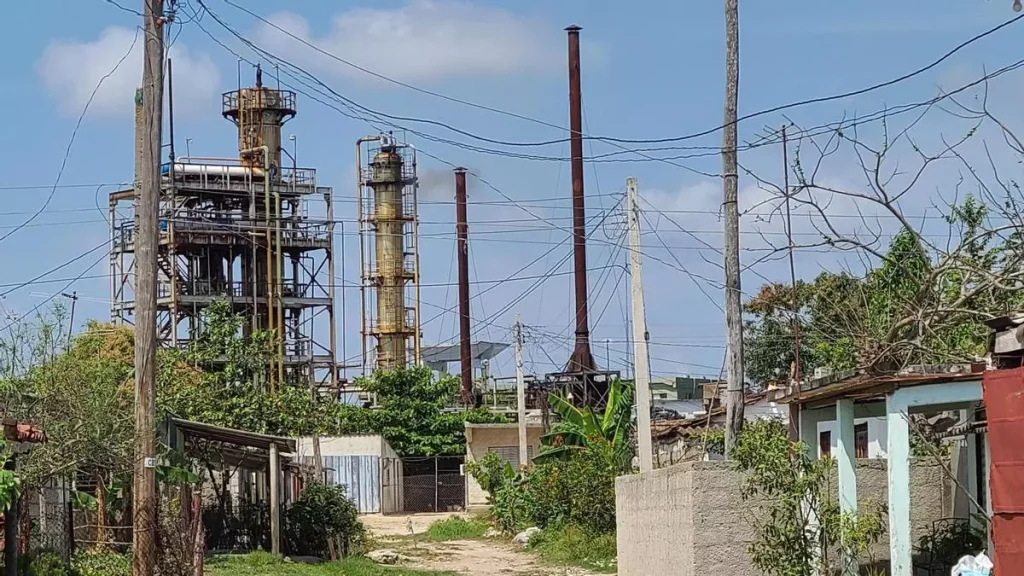
Remember that Cuba lost one million barrels of storage capacity in 2022 in the massive fire at the Matanzas Supertanker Base —for crude oil or fuel oil, not gasoline or diesel. The press reports, and we’ve seen it using satellite imagery, that at least one of the tanks is expected to be completed in the coming months. But basically, those four tanks aren’t operational. We know how many tanks there are at the refineries, again thanks to satellite imagery, but we don’t know their condition. We also don’t know if a tank contains kerosene, diesel, gasoline… So it’s extremely difficult to estimate. Cuba has never published its inventories, and I know that’s a state secret.
We calculated, when all those conversations began at the start of the year, not days, but three months. For us, the end of March to the first week of April was what we in the group called “zero hour.” By then, Cuba should already be operational, we don’t know how. They have three or four tankers that they could be using as floating storage. Regarding the Russian ship you just mentioned, which arrived in Matanzas and then Cienfuegos, we’ve been told—we haven’t been able to verify it, but I believe it’s accurate—that part of the diesel and gasoline production from that tanker was never sold, but was immediately stored away, to have it on hand in case of emergency. And that’s very smart.
14ymedio: So, the country can have strategic reserves in a considerable amount, right?
Jorge Piñón: Correct. In my opinion, those strategic reserves are in some of the tankers of the Cuban oil fleet. There’s one called the Lourdes , which we occasionally see moving from Nipe Bay to Matanzas. We always see one or two Cuban tankers engaged in coastal trade, and that tells us the same thing. We also have to remember that whenever there’s a blackout in Cuba, the thermoelectric plants aren’t operating, therefore, they aren’t consuming fuel. So, regarding domestic crude oil, we believe they have good inventories. Why? Because the thermoelectric plants aren’t running and the wells are still producing. When an oil well is producing, you can’t shut it down. If you shut down a producing oil well, you lose the well’s natural pressure, and then it’s extremely difficult to get it working again.
14ymedio: Scheduled blackouts would thus be a way of saving that crude oil.
Jorge Piñón: Indirectly and unintentionally. Now, the government and the press often say, “All the problems Cuba is having today with blackouts are due to a lack of fuel.” No: the blackouts have been happening for the last five years. The only impact is due to the lack of diesel, because that’s the fuel used by generators and for distributed power.
14ymedio: Is it possible that small tankers have also entered undetected, or are they completely under control?
Jorge Piñón: Anyone who’s lived in the countryside knows that the mouse always gets into the house somehow, when you least expect it. We don’t know. It’s possible, because there are many ghost ships that turn off their transponders, their satellite tracking system. An affirmative answer would be more plausible if Venezuela were in a different situation, but the Americans have Venezuela very well under control. So I think it’s unlikely. Look at El Universal, this Russian tanker that had to turn around. And it left! In short, yes, it’s possible, but I doubt it.
14ymedio: What are the essential changes needed to modernize the energy sector? A top list of priorities. Should all thermal power plants be replaced with new ones, for example?
Jorge Piñón: There are two energy sectors in Cuba: thermoelectric, which produces electricity, and liquid fuel; these two must always be kept separate. The baseload electricity that Cuba has today, which comes from its eight large thermoelectric plants, has no solution other than rebuilding them. For countless reasons: because they are over 40 years old, because they haven’t received operational maintenance, much less capital maintenance, because they consume Cuban crude oil, which is highly corrosive…
Converting Cuba’s thermoelectric sector into a modern system would cost between $5 billion and $8 billion, and would take at least three to five years.
It’s a vicious cycle. Look at the Guiteras plant. I feel sorry for them, because the poor people work to repair the boiler, they fix it, and then six weeks later it breaks down again, but that’s not their fault; it’s because the Cuban oil they’re using is highly corrosive. The baseload fuel, the thermoelectric sector, yes, it needs to be replaced. The technology exists. These plants consume a huge amount of fuel, when there are much more efficient plants available today.
Currently, that sector almost always uses liquefied natural gas as fuel, which is much cleaner than crude oil. Converting Cuba’s thermoelectric sector to a system that uses liquefied natural gas, using advanced technology, we estimate would cost between $5 billion and $8 billion. And it will take at least three to five years. But one of the things that many people I talk to don’t realize is that Cuba is a bankrupt country. Who is going to pay? Where is the money coming from?
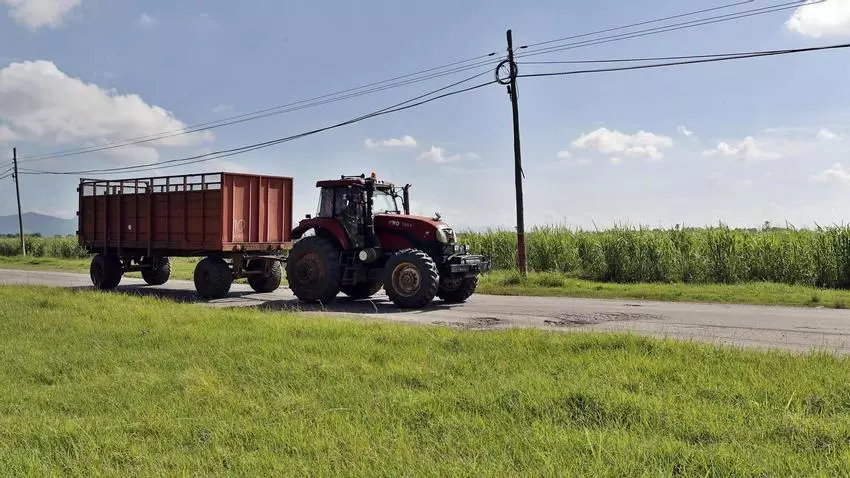
What’s important to me is sugarcane. Today, bagasse is used for electricity generation. The best example we have is Brazil, where 6% of the electricity is produced by burning bagasse in power plants. Today’s sugarcane isn’t just sugar; it’s also ethanol. In Brazil, ethanol is used as vehicle fuel. It’s a shame that Cuba abandoned the sugarcane harvest, but it represents great potential for the Cuba of tomorrow. In fact, I think the main thing for tomorrow in that transition will be to recapitalize the agricultural sector, because sugarcane isn’t just sugar; it’s energy, and Cuba can be a major producer.
Regarding renewables, they are indeed important, both solar and wind, but we must remember that these energies are intermittent, and you need to have their corresponding battery systems, like we have here in Texas, in Houston, or in Austin. Cuba, thanks to the Chinese—we applaud the Chinese—has dedicated itself to installing these small 21.8-megawatt parks, which are fantastic, but it’s a shotgun strategy. They do contribute, but only from 11:00 a.m. to 4:00 p.m., weather permitting. During the evening peak hours, which are crucial, they produce nothing.
14ymedio: I have read that the island’s energy future involves closing the refineries and converting them into what you call open-access oil terminals. What does this transformation consist of?
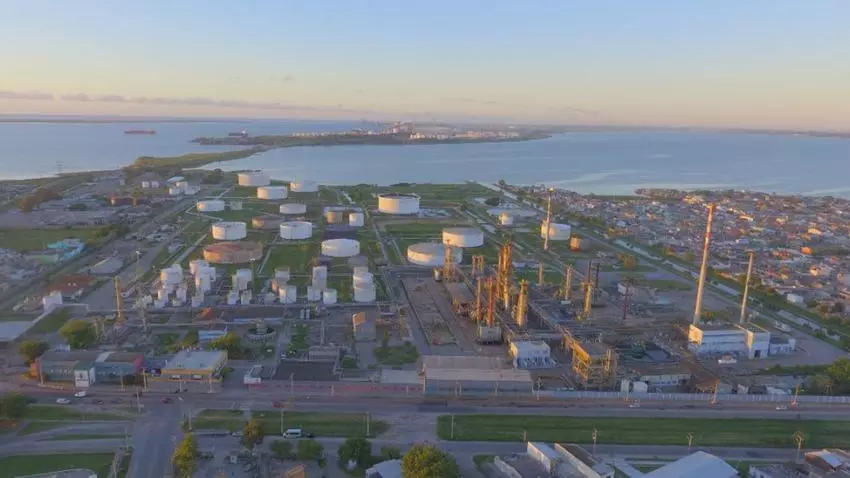
Jorge Piñón: Cuba’s refineries, like its thermoelectric plants, are old. The former Exxon refinery in Regla, on Havana Bay, was inaugurated in 1902 or 1903. These refineries can’t process heavy crude, which is why Cuban crude can’t be processed; it has to be burned. Today, there isn’t a single refinery left in the greater Caribbean basin: they’ve all closed because they’re not profitable. The profitable ones are the refineries in the United States on the Gulf Coast of Mexico because they have a high conversion rate; that is, they can process the worst crude in the world, the cheapest crude, which they practically give away.
Why would Cuba invest money it needs for hospitals, schools, roads, housing, and so on, in refineries? Besides, that’s not a state business, it’s for the private sector. The U.S. government doesn’t own refineries; Shell and Chevron do. In Spain, Repsol does, and these are private companies. Both refining and logistics should be privatized. Let the private sector decide whether or not to build a refinery. What will happen is the same as in Puerto Rico, where there were two small refineries that ended up closing. Today, Puerto Rico is 100% supplied by importing petroleum products from other markets.
The first step is to close the refineries. Furthermore, the environmental contamination of the land and subsoil where these refineries are located is terrible. I’ve spoken with former owners of these refineries, who told me they wouldn’t take them back even if they were given them for free or paid for them. The refineries must be closed, and the eight Cuban oil ports, from Mariel to Cienfuegos, must be converted into an open system, with an operator who owns the tanks. And if a Cuban-American wants to send a tanker tomorrow—not a small ISO tanker, no, a tanker—they can send it. And that tanker would unload a certain number of barrels in Matanzas and the rest in Santiago de Cuba.
14ymedio: Earlier you mentioned sugarcane as a potential resource for Cuba’s future. Could Cuba achieve energy self-sufficiency this way?
Jorge Piñón: Yes.
14ymedio: And thanks to renewables?
Jorge Piñón: No. There are very few countries that can achieve that, due to their size and their systems. Remember what happened in Spain during last year’s blackout. Many people have beautiful ideals, and we all want everything to be perfect, but we have to be realistic. It’s impossible. I support renewables. The state of Texas is the largest oil producer in the United States, and 22% of its electricity generation is wind power, for example. Wind, solar, they all have their uses and their profitability, but you can’t put all your eggs in one basket. Do you want a Cuba in the future with large-scale thermal power plants, the kind that will be running 24/7, always there? You can do it with sugarcane, which will produce electricity and also ethanol.
Don’t tell me that the Cubans who meet on weekends at Versailles can raise $5 billion among themselves and invest it in Cuba.
Where Cuba can be self-sufficient is in gasoline. It can produce enough ethanol to fuel a future fleet of “flex-fuel” cars, like Brazil has. All the cars manufactured in Brazil are 100% flex- fuel—or dual-fuel—meaning you can run on either ethanol or gasoline. On my list, sugarcane would be first. The agricultural sector—which won’t just be growing sugarcane, but will also have livestock, laying hens, plantains, beans, and more—is the engine of the future. They talk too much about micro, small, and medium-sized enterprises (MSMEs), and don’t get me wrong: I believe small businesses—the corner store owner, the hardware store, the pharmacy—are important, but they aren’t the main engine. There has to be a powerful engine to propel Cuba forward, like these rockets we want to send to the moon, to provide the energy Cuba needs, and I believe that could be the agricultural sector.
14ymedio: Return to the land.
Jorge Piñón: Return to the land again.
14ymedio: Is it possible that the United States could help change Cuba’s energy model and establish agreements similar to those it has made in Venezuela without a substantial change in Cuba’s leadership? Do you think it’s possible to change the energy model without changing the political model?
Jorge Piñón: No, I don’t think so. I think there needs to be a radical change.
14ymedio: What do you expect from the United States regarding Cuba at this time?
Jorge Piñón: I don’t know. You’d have to talk to the political scientists. The ones I talk to give me different stories, and as Cubans, we tend to make up a lot of stories. We don’t have a clear direction either; they keep changing course every day.
“As Cubans, we tend to make up a lot of stories. We don’t have a clear direction either; they keep changing course every day.”
14ymedio: The US also played that game with Venezuela, right up until the very last moment.
Jorge Piñón: But Venezuela has 300 billion barrels of oil, the largest oil reserves in the world. What do we have? A little nickel, a little sugar, a little tobacco, a little bottle of Havana Club rum to sell people… Yes, tourism. But that’s it. We heard one of these Cuban groups in Miami say that the diaspora is going to invest 5 billion dollars. Excuse me? Am I supposed to believe that those in the diaspora who have two million dollars are going to invest 100% of their wealth in a future Cuba?
14ymedio: And would you go to Cuba, to contribute your knowledge or get involved in some way?
Jorge Piñón: Yes, because we’re in a position where my children are grown and on their way, my grandchildren are doing well. If we could contribute a little something at some point, we would. But please, don’t tell me that the Cubans who meet on weekends at the Versailles can raise $5 billion among themselves and invest it in Cuba.
14ymedio: But many Cuban-American business emigrants say that a lot of money from Cuban Americans will be coming into the island…
Jorge Piñón: But you know what? It’s going to be just like the solar plants, small solar plants here and there, in Camagüey, Santa Clara, or Sancti Spíritus. In these small towns, you’ll have a Cuban from Barcelona or a Cuban from Hialeah who’s going to open a hardware store and sell hammers and nails. Perfect, we applaud them, we need those hardware stores, but I’ll ask again: where is that great industrial engine that’s going to get Cuba moving again, in the short term? Because that’s another thing. If we think Cuba is in a difficult situation today, get ready for the day of transition. If we think there’s hunger today, get ready for the day of transition. That’s why I think the Americans, very intelligently, are talking to the Cuban military. What other institution is there in Cuba with the necessary power?
14ymedio: You are referring to the problem of uncontrolled violence that could be unleashed…
Jorge Piñón: No, no, not at all. I think the Americans don’t want to rule Cuba. They want to avoid another Iraq, where they put everyone from the Ba’ath Party out on the streets and suddenly—this is a real example—there wasn’t a single traffic cop to direct traffic at Baghdad’s main intersection. Things are very difficult, very sad, and we have to be realistic.
Editor’s Note: This text was produced in collaboration with Cuba Siglo 21 as part of the project “Cuba: Stabilize and Develop.”
______________
See also:
Cuba’s Electric Grid: Challenges and Opportunities
______________________
COLLABORATE WITH OUR WORK: The 14ymedio team is committed to practicing serious journalism that reflects Cuba’s reality in all its depth. Thank you for joining us on this long journey. We invite you to continue supporting us by becoming a member of 14ymedio now. Together we can continue transforming journalism in Cuba.