The United States modernized an island devastated by war, but also placed conditions on its sovereignty: reading the Cuban present through the lens of 1899 demands more history and less rescue epic
 14ymedio, José A. Adrián Torres, Málaga, Spain, June 6, 2026 /
Rolando Gallardo published on 30 May, in 14ymedio, a thought-provoking article on North American intervention in Cuba and the possibility that history might repeat itself. His argument has a defensible core: the US occupation of 1899-1902 effectively addressed the sanitary, administrative, educational and logistical problems the island was suffering acutely in the aftermath of war. To deny this would be absurd. The Cuba that the United States encountered was wounded, impoverished, exhausted and disorganized. The war of independence, the reconcentration policy, the destruction of fields, roads and sugar mills, and the final collapse of Spanish power had left a critical situation.
But acknowledging that reality is one thing, and quite another to present the Cuba of 1899 as though it had been a wasteland of poverty, ignorance and general neglect upon which Washington had to build everything from scratch. That is where the comparison becomes too convenient. And convenient comparisons tend to have a problem: they explain a great deal all at once, but they understand very little. Complex matters are not explained by simple reasons – those only make them more digestible for the public or the voter. Turning 1899 into a template for the present distorts history and oversimplifies the future.
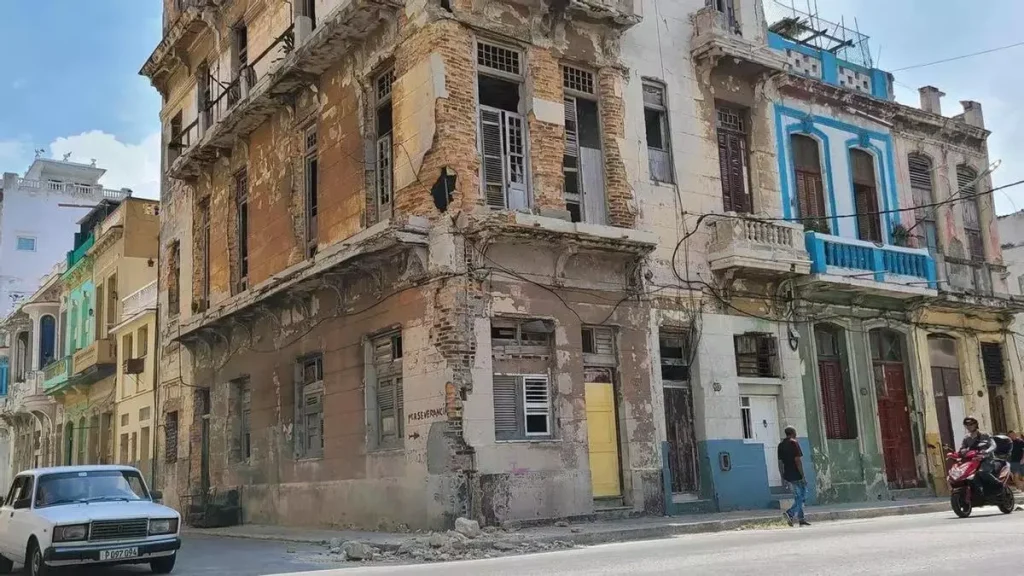
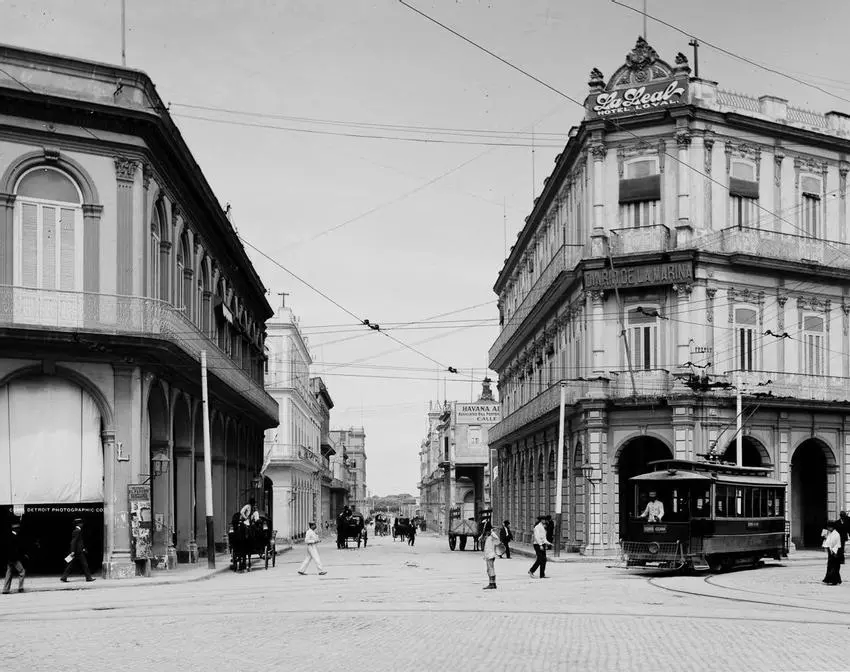
Late nineteenth-century Cuba was not a blank page. It was a society devastated by war, yes, but also an urban, port-based, sugar-producing, commercial and culturally rich society. Havana, Matanzas, Santiago, Cienfuegos, Trinidad, Camagüey and Holguín were not villages lost among palm trees, mosquitoes and tropical resignation. They were centers with history, architecture, printing presses, theatres, cultural societies, international trade, ports, economic activity and a complex social life. One must not confuse an island ravaged by war with an island that had no existence before the arrival of the North American administrator with his ledger, his sanitation brigade and his wholesome faith in efficiency.
It bears saying plainly, because otherwise one falls into a new version of the old Black Legend, now pressed into the service of a North American White Legend. Spain arrived at 1898 breathless, politically defeated and with a manifest inability to offer Cuba any acceptable way forward.
Spanish administration had been tardy, uneven, rigid and often incapable of grasping the depth of Cuban demands, trapped as it was in the tensions of the peninsular political system and in an alternation between conservatives and liberals that failed to deliver a real solution to the Cuban problem in time. Slavery was abolished late, autonomy came late, reforms came late, and war eventually blew everything apart. But from that to suggesting that under Spanish sovereignty Cuba – let alone its great cities – had known no material, cultural or economic development is a distance that history does not permit.
One thing is to acknowledge that reality and another to present the Cuba of 1899 as if it had been a wasteland of poverty, ignorance and general neglect upon which Washington had to build everything from scratch
Havana was not invented by Leonard Wood. Matanzas did not wait for the US occupation to become an economic and cultural center of the first order. Cienfuegos was not born from a North American sanitary decree. The Cuban railway did not appear by spontaneous generation between 1899 and 1902. The Albear Aqueduct did not spring up like a mushroom after an imperial shower. The Cuban sugar industry, with all its shadows – including the slavery that sustained it for far too long – was already one of the great economic realities of the Atlantic. The North American intervention rebuilt, reorganized, sanitized and modernized; but to modernize is not to create from nothing.
That nuance is not a scholarly footnote. It is the crux of the problem. Because if one starts from the idea that the United States found a Cuba without structure, without institutions, without urban culture and without economic capital, then the intervention appears as an almost providential operation: the Seventh Cavalry of the Western movies arriving, once again, to the rescue. The image may work in a film, but it should not suffice for
interpreting Cuban history.
The US occupation had genuine merits. In the sanitary field, the campaign against yellow fever was decisive, though one should not forget that the fundamental theory regarding the transmitting mosquito had been formulated by the Cuban physician Carlos J. Finlay. The United States contributed resources, organization, administrative discipline and executive capacity. In education, it promoted an ambitious reform, expanded the school network and fostered teacher training. In infrastructure, it repaired roads, bridges, railway lines and urban services damaged by war.
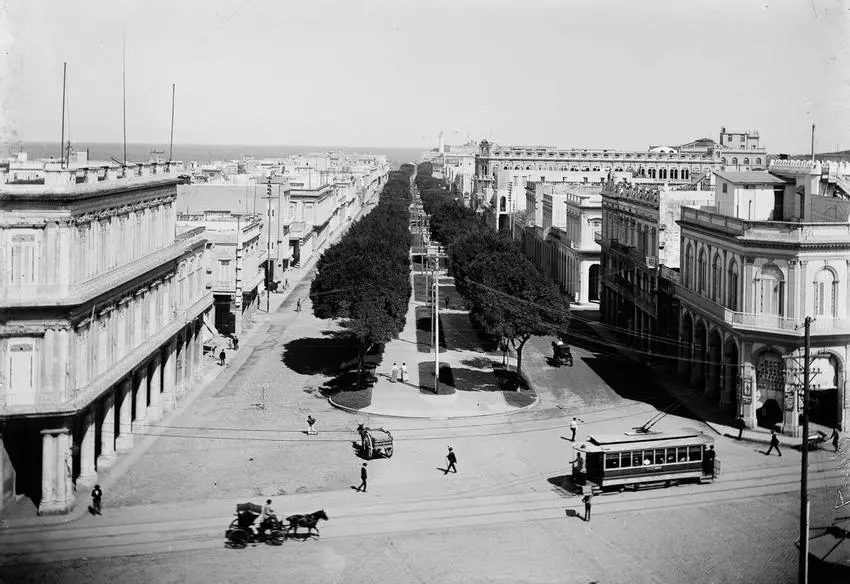
In the years that followed, the new republican era also left a vanguard, eclectic and often dazzling architecture, marked by North American and European influences, which gave Havana – and other Cuban urban centers – an essential part of its cosmopolitan splendor. In administration, it introduced more effective procedures and helped to organize a country emerging from a devastating conflict.
All of this must be acknowledged. But the reverse must also be remembered. That modernization was not an act of international charity nor an angelic mission of tropical sanitation. The United States acted with a mixture of pragmatism, economic interest, strategic vision and a will to regional influence. The Platt Amendment was the political price of that reconstruction: a formally independent republic, but one held under tutelage.
If one starts from the idea that the US found a Cuba without structure, without institutions, without urban culture and without economic capital, then the intervention appears as an almost providential operation
Cuba entered the twentieth century with its own flag, yes, but also with a sovereignty conditioned by Washington. The modernization brought sewers, schools and sanitary campaigns; it also brought naval bases and the right of intervention. That tutelary shadow fed for decades an anti-interventionist nationalism that would later be exploited, with varying intensity and no small degree of manipulation, by several generations of Cuban politicians, including the revolutionary one.
This is why the parallel with present-day Cuba must be handled with care. There are visible similarities: health crisis, infrastructure deterioration, shortages, power cuts, transport collapse, productive ruin, mass emigration and an exhausted population. But the historical causes are not the same. The Cuba of 1899 emerged from a war of independence against a retreating European metropolis. The Cuba of today emerges – if it manages to emerge at all – from more than six decades of communist rule, political monopoly, managed economy, repression, exodus, external dependence and institutional decay. One emerged from war; the other emerges from a long administration of failure and bearded messianism.
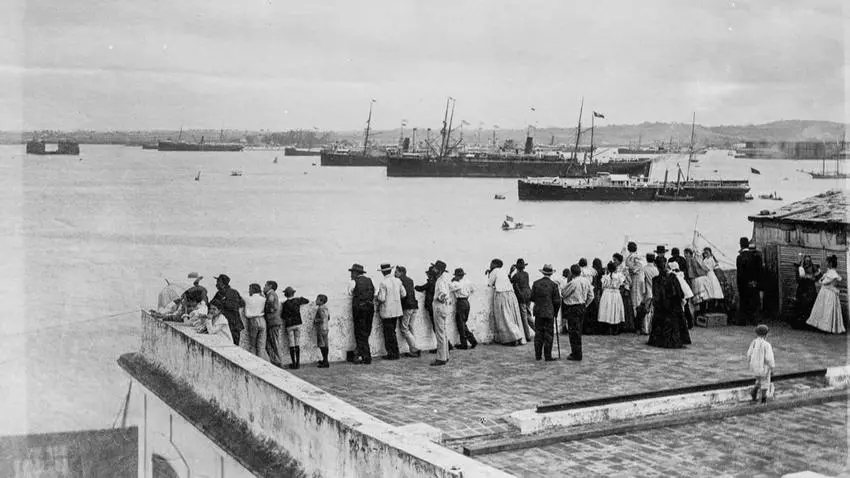
The difference is no small matter. In 1899, the United States occupied a country that had just broken violently with Spain and needed to organize its transition to a republic. Today, Cuba does not need to replace Spanish tutelage with North American tutelage, because it is not under Spain or any European colonial power. It is under a national regime that turned sovereignty into a slogan while emptying the real freedom of Cubans of all content. That regime cannot be explained as a simple legacy of 1898 or as the inevitable consequence of the colonial past. The historical alibi has its limits, even in the Caribbean, where certain alibis tend to age in admirable health with a curiously gallego pedigree – in the old Cuban sense of the word.
The Cuban present cannot be explained indefinitely with a finger pointing at 1898, at Washington, or at historical fatality
It is true that republican Cuba inherited deep-seated conditioning. It is true that the United States intervened too much in the political, economic and strategic life of the island. It is true that the Platt Amendment left a mark of dependence. But it is also true that Castroism has spent more than sixty years administering the country, controlling its institutions, monopolizing patriotic discourse, expelling talent, impoverishing the economy and turning the supposed revolutionary exceptionalism – the eternal special period – into a routine of power cuts, queues, surveillance and flight. The Cuban present cannot be explained indefinitely with a finger pointing at 1898, at Washington, or at historical fatality. At this point, the Revolution is no longer a betrayed promise: it is a result.
Hence any eventual external assistance to Cuba, necessary in many respects, must not be conceived as a repetition of 1899. Cuba will need investment, technical assistance, energy reconstruction, institutional rehabilitation, productive recovery, sanitary modernization, educational opening and economic reintegration. But that is not equivalent to calling for a new foreign administration, nor to imagining that a North American intervention would resolve, on its own, what Cubans must rebuild with their own institutions, political pluralism and genuine sovereignty.
The underlying problem is not whether the United States can help. Of course it can. The problem is whether that help is conceived as cooperation with a free nation and a future ally, or as a temporary replacement for its political capacity. The first option may be necessary. The second reopens an old temptation: the belief that Cuba only functions when someone administers it from outside.
After more than six decades of authoritarianism, many Cubans on the island have not been able to practice or develop a genuine democratic culture
That idea, however well-intentioned in its formulation, sidesteps an uncomfortable question: after more than six decades of authoritarianism, many Cubans on the island have not been able to practice or develop a genuine democratic culture. Not from any natural incapacity, but because the regime has denied them for generations the everyday practice of deliberation, responsibility for public affairs – replaced too often by the national verb resolver [to resolve, to manage, to get by] – alternation in power, institutional trust, a culture of effort and free decision-making.
A society subjected to obedience, to double standards, to surveillance and to the liturgy of collective sacrifice will also need to rebuild civic habits, a culture of work, a sense of individual responsibility and ethical values damaged by decades of real socialism. But that political maturation cannot be imported packaged from Washington or decreed by a foreign administration: it can only be learned by exercising freedom.
The history of 1899, therefore, serves as a double warning. It warns against the delusional self-sufficiency of the Cuban regime, incapable of guaranteeing basic services while boasting of sovereignty. But it also warns against the fantasy of the external savior — that hope that a power will arrive, impose order, clean up, invest, discipline and then hand over a republic ready to be unwrapped. The American experience demonstrated efficiency, but it also left dependence. The Castroite experience proclaimed independence, but has left ruin. Between these two lessons, a third way should open up: national reconstruction with external support, but without ultimate political tutelage.
Cuba must not start over as though its history could be erased and rewritten under foreign supervision
Cuba must not start over as though its history could be erased and rewritten under foreign supervision. The island needs to free itself from an exhausted regime, yes; it needs to rebuild infrastructure, healthcare, education, currency, agriculture, industry and public trust. But it needs to do so without comfortable, false mythologies: not that of a Spain that left only backwardness, nor that of a United States that brought only modernity, nor that of a revolution that continues to blame the past and the external enemy for a ruin that is, for the most part, its own work.
History does not repeat itself exactly, but neither does it absolve — nor will it ever absolve — those who destroyed Cuba. Sometimes it merely disguises itself to confuse us. And in Cuba, where the political disguises in olive green have lasted far too long, it is worth looking carefully before applauding the entrance of the next savior.
Translated by GH.
______________________
COLLABORATE WITH OUR WORK: The 14ymedio team is committed to practicing serious journalism that reflects Cuba’s reality in all its depth. Thank you for joining us on this long journey. We invite you to continue supporting us by becoming a member of 14ymedio now. Together we can continue transforming journalism in Cuba.