Investors are weighing their business interests in the United States and whether it is worth leaving the Island to preserve those interests or not
 14ymedio, Madrid, May 26, 2026 — Spanish companies with a presence in Cuba are analyzing how to remain on the Island after the United States approved new sanctions against foreign banks and companies operating in key sectors of the Cuban economy. Those that arrived recently are the ones most likely to reduce or suspend their presence, but those with decades of strong involvement in the country are simply studying the best way to continue, according to legal scholar Fátima Rodríguez, head of the criminal law division at the law firm Lupicinio International Law Firm.
In an interview with the Spanish outlet Artículo14, the specialist describes the work her firm has been carrying out in recent weeks to answer questions from clients. Lupicinio is one of the Spanish firms with the greatest experience in international sanctions and with forty years specializing in Cuba, although Rodríguez says that the main concern for business owners today is not so much the executive order itself as its lack of specificity. “That combination of extraterritoriality and regulatory ambiguity means that a decision adopted in Washington can suddenly leave contracts, investments, or financing lines that had functioned without problems for years hanging in the balance,” she explains.
“That combination of extraterritoriality and regulatory ambiguity means that a decision adopted in Washington can suddenly leave contracts, investments, or financing lines that had functioned without problems for years hanging in the balance.”
From what she has observed since the new sanctions were announced, the attorney sees three distinct groups. The first consists of those with recent or limited exposure. “They are clearly in retreat mode: freezing new investments, reducing operations, and, in parallel, designing orderly exit scenarios if the regulatory risk continues to escalate,” she explains. The next group includes those with businesses in sectors explicitly targeted by sanctions, such as energy, defense, mining, and financial services. For them, she says, “Cuba is beginning to compete in an internal ranking of ‘difficult countries’ where, at times, it is not the one that wins.”
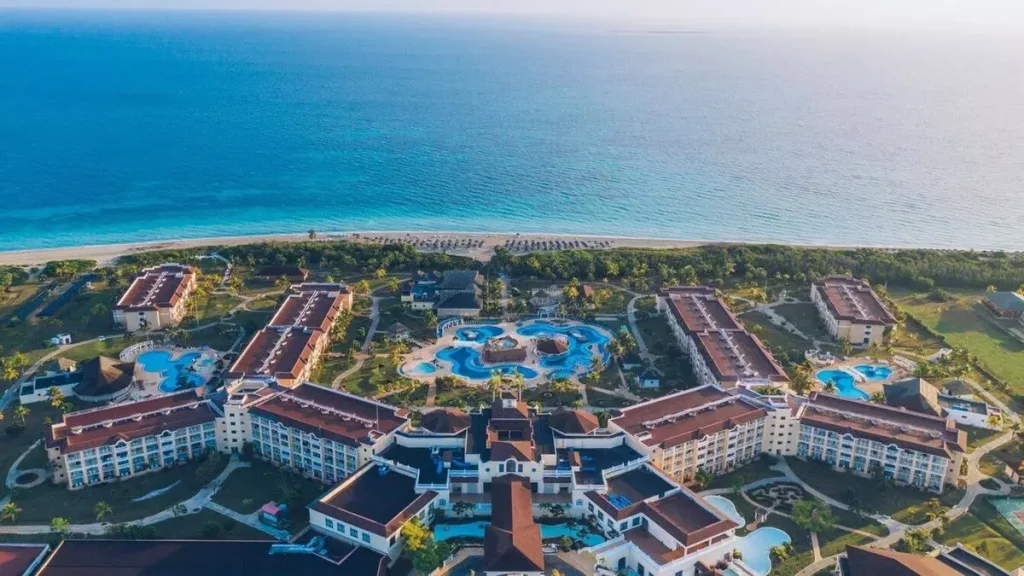
Finally come the companies that have maintained major business operations in Cuba for many years. Although she does not mention them specifically, the prime example would be Meliá and other hotel chains. “Rather than shutting down and leaving, they are asking themselves how to stay, but in a different way: reducing exposure to particularly sensitive sectors, sharing risk with local or third-country partners, or concentrating on activities clearly protected by humanitarian exceptions. Internally, conversations are no longer revolving around whether to stay or leave, but under what conditions it is responsible to continue.”
Rodríguez says some investors must also weigh their business interests in the United States and decide whether it is worthwhile to leave the Island in order to preserve those interests. She notes that Spanish business owners are coldly analyzing the risks, focusing mainly on who their partners are in Cuba, and she adds that their greatest concern is whether the sanctions will affect them financially on the international level. “The fear is no longer limited to receiving a fine, but to being internally categorized by banks and global suppliers as a ‘high-risk client linked to Cuba,’ which can translate into account closures, canceled insurance policies, restricted credit, and much more intense scrutiny of any operation, no matter how legally sound it may be,” she summarizes.
At her law firm, she says, the work being done has two dimensions. On one hand, the technical side: determining what is and is not permitted, redesigning contracts, structures, or logistics chains to comply with the new requirements. On the other hand, there is what she describes as the human side: “supporting local management and business teams in difficult decisions, where it is necessary to balance responsibility to headquarters with commitment to the country and to Cuban workers themselves.”
On the other hand, what she describes as the human side: “supporting local management and business teams in difficult decisions, where it is necessary to balance responsibility to headquarters with commitment to the country and to Cuban workers themselves.”
The focus, she says, is on ensuring as much as possible that there are no links to risky sectors or individuals. “They are implementing Cuba-specific policies, sector risk maps, reinforced approval processes, and screening systems that automatically block operations with entities or individuals connected to the sanctioned network. Added to this are deeper and periodic due diligence audits, as well as impact reports,” she explains.
That caution, she says, is the first line of defense against sanctions, because it allows companies to demonstrate that they monitored operations and reacted quickly. “It often makes the difference between an exemplary sanction and a more proportionate resolution,” she emphasizes, while also mentioning the European tools available to national companies, including the Blocking Statute, which allows foreign laws to be rendered ineffective. “They are not magic solutions, but they do remind us that companies are not completely defenseless against unilateral decisions by third countries,” she adds.
Although tourism is not among the sectors explicitly mentioned in the May executive order, Rodríguez recalls that sanctions directly affecting other sectors, particularly energy, inevitably affect tourism and others as well. “If access to fuel, financing, and certain technological inputs is strangled, not only do those sectors suffer, but all activity dependent on them suffers too: from retail commerce to food refrigeration chains and the functioning of hospitals and schools.”
There are projects, she says, that were already difficult to finance and are now impossible. “Banks that previously accepted working under certain exceptions are beginning to close their doors out of pure fear of violating the executive order. And a domino effect emerges: suppliers withdraw; insurance policies are not renewed; shipping costs rise; routes disappear; and there is a growing perception that any activity linked to those sectors can end up contaminating the rest of a company’s business,” she argues.
“The paradox is that the harsher the sanctions become, the more this logic of ‘waiting while prepared’ is reinforced, even though the official message continues to be one of maximum pressure rather than openness.”
Asked whether they observe movements by American companies preparing the ground to invest in Cuba, Rodríguez points to a paradox. “In a context like the current one, at first glance it is difficult to imagine. However, anyone familiar with the history of bilateral relations knows that strategic and economic interest in the Island has never disappeared.” The attorney recalls that active export licenses already exist from which many companies benefit, including food and vehicle companies, and that this could multiply in the future.
“More than visible movements, what is perceived today, and what business circles tell us, is very close observation: market studies, scenario analysis, discreet contacts, and the conviction that if a window for normalization ever opens, nobody will want to be left out. The paradox is that the harsher the sanctions become, the more this logic of ‘waiting while prepared’ is reinforced, even though the official message continues to be one of maximum pressure rather than openness.”
Translated by Regina Anavy
______________________
COLLABORATE WITH OUR WORK: The 14ymedio team is committed to practicing serious journalism that reflects Cuba’s reality in all its depth. Thank you for joining us on this long journey. We invite you to continue supporting us by becoming a member of 14ymedio now. Together we can continue transforming journalism in Cuba.