Russian oil barrels are giving the capital a respite that will be short-lived according to the Cuban government’s own data.
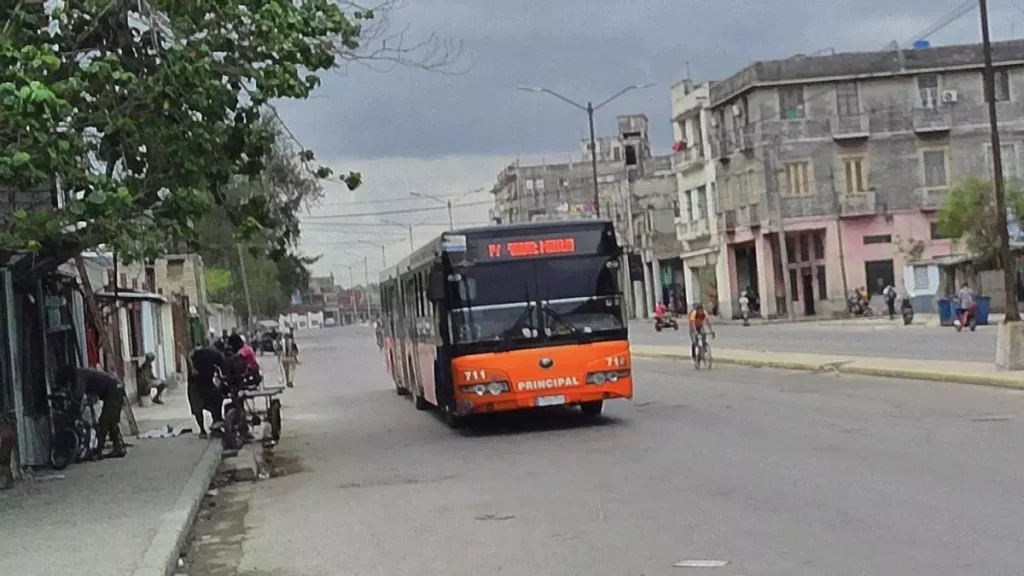
 14ymedio, Juan Diego Rodríguez, Havana, April 22, 2026 – “Today at four in the morning I went up to the rooftop and was impressed. It had been a long time since I’d seen all of Havana lit up without dark patches everywhere,” a resident of Nuevo Vedado, whose building offers a view of much of the city, told this newspaper. The image, almost absent from the capital in recent months, sums up what happened this Wednesday. For a brief stretch in the early morning, Havana was almost completely illuminated again, and at dawn, several buses reappeared on the main avenues.
The national electrical grid managed to meet demand between 4:12 and 5:07 a.m., according to a press release from the National Electric Union (UNE). This 55-minute period without outages was a brief respite in a day marked by frequent blackouts. The UNE’s daily reports, published by Cubadebate, also indicate that such a window of uninterrupted power had not occurred since February 8th.
The change was noticeable on the streets before dawn. “I’ve seen some buses on the streets today, which haven’t been seen for a long time,” said a Havana resident who left her house early in the Cerro municipality. Another woman, at a bus stop on Diez de Octubre Avenue, summed up the scene with a mixture of astonishment and sarcasm: “There are buses on the streets today, what a miracle.”
The image of the return of electricity and buses coincided with a campaign launched by several pro-government accounts on social media the previous night. The most visible example was that of Vice Foreign Minister Josefina Vidal, who shared a post with the idea that “a fuel ship arrives in Cuba and the lights come back on,” echoing a message disseminated earlier, in Portuguese, by Mídia Ninja, a Brazilian alternative media network with an activist profile. Photos of a lit-up Havana and texts about the supposed energy relief circulated as proof of a visible improvement, at least for a few hours, in the capital.
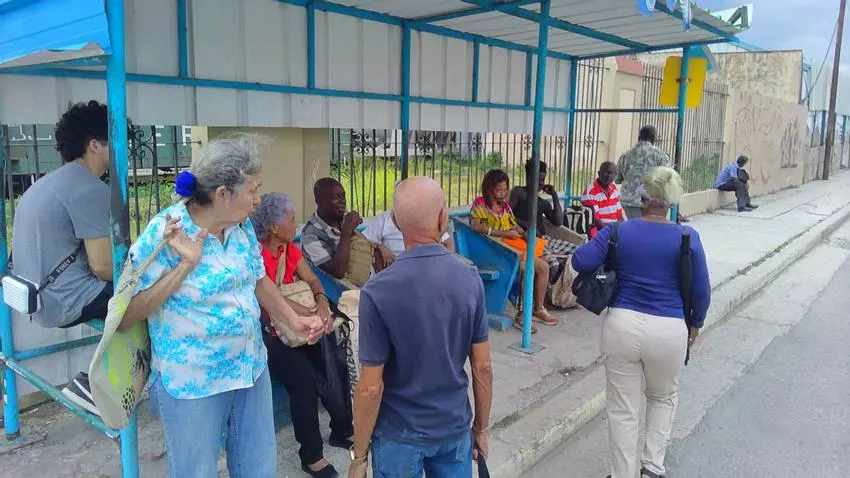
Off-screen, the perception was far less dramatic. “Looks like they’ve been given a shot of fuel,” commented one passenger upon seeing two buses pass by one after the other on a route where none had appeared in recent weeks. It wasn’t just the presence of the vehicles that was striking. “There are also people at the bus stops, which had been empty for a long time,” he added. During the worst days of the shortage, many of those corners had been practically deserted.
Since the weekend, the state press has been presenting the arrival of the Russian-donated oil shipment in Cuba as a turning point. The Russian vessel Anatoly Kolodkin arrived in Matanzas on March 31 with 100,000 tons of crude oil, equivalent to about 730,000 barrels. This fuel was processed at the Cienfuegos refinery because the Havana refinery is not operational, and according to the official version, gasoline, diesel, fuel oil, and liquefied gas are already being produced and distributed from this refined product.
The authorities maintain that processing took between 12 and 15 days and that the distribution of refined products to consumption centers is being carried out in stages. These products, the government insists, will help sustain some electricity generation, transportation, and economic activity. According to this official account, diesel and fuel oil will power generating plants, while gasoline and other fuels will help move cargo, passengers, and services.
On April 18, the State newspaper Granma reported that these fuel derivatives were already being distributed throughout the country and were beginning to reduce disruptions to the electrical service. The same article added that the available fuel, although limited, would also be used for transportation and to support the economy. This is essentially the explanation that state media have used in recent days to accompany the image of a brighter capital with more buses on the road. Outside of Havana, however, the situation is far from similar, and in much of the country, blackouts continue with the same frequency, while any relief is barely noticeable.
The total amount of derivatives obtained would cover “around a third of the national demand for a month”
However, the National Electric Union’s own report qualifies the extent of the improvement. The agency reported that on Tuesday there were outages throughout the 24-hour period, reaching a maximum of 1,384 megawatts. For the evening of April 22, the forecast still predicted a deficit exceeding 1,100 megawatts. The early morning without a blackout, therefore, did not represent a return to normalcy for the system, but rather a brief respite in the midst of a crisis that remains far from over.
Even so, the government has insisted on presenting the arrival of Russian crude as a substantial relief. According to official statements reported by Cubadebate, the total amount of refined products obtained would cover “around a third of national demand for a month.” This phrase, repeated optimistically by officials, state media, and affiliated social media accounts, has become a central tenet of the official narrative in recent days.
In Havana, that discourse found a concrete, albeit brief, translation into daily life this Wednesday. In a city where blackouts and lack of transportation have become part of the landscape, 55 minutes without shortages and a few buses returning to the avenues were enough for many to believe, for a moment, that normalcy had returned to the capital.
______________________
COLLABORATE WITH OUR WORK: The 14ymedio team is committed to practicing serious journalism that reflects Cuba’s reality in all its depth. Thank you for joining us on this long journey. We invite you to continue supporting us by becoming a member of 14ymedio now. Together we can continue transforming journalism in Cuba.