What was once a prosperous establishment in the center of San José de las Lajas is now a ruin overrun by waste and mosquitoes.

 14ymedio, San José de Las Lajas, Julio César Contreras, April 3, 2026 – At high noon, when the sun beats down on the street and only the faint sound of a distant engine can be heard, the old grocery store El Tostadero looks like a skeleton stranded in the middle of San José de las Lajas (Mayabeque). Where sacks of rice, cans of oil, and bottles of rum once lined up, piles of garbage now accumulate, growing like a second structure made of torn plastic bags, damp cardboard, and rubble. The scene has become routine for nearby residents, who no longer look at the building with nostalgia but with concern.
Amid the ruins of what was once this emblematic establishment, garbage continues to take over, turning what remains of the building into an improvised dump that no one seems willing to clean up. From the sidewalk, the store’s name can still be read on a peeling wall, as if resisting disappearance. A few meters away, a couple rides by on a scooter, slowing down to avoid potholes, while a skinny dog crosses the corner unhurriedly. The neighborhood goes on with its routine, but the decay of the old shop has become a constant reminder of decline.
“People come here with wheelbarrows, dumping everything from construction debris to toilet paper. It hasn’t been officially declared, but in practice this is a small landfill right in the center of town,” Abelardo, a local resident, tells 14ymedio, watching with resignation the steady flow of people unloading their waste there. The 54-year-old remembers when the store was a gathering point for neighbors, a place where people discussed the day’s news while waiting their turn to buy goods.
“Little by little they took everything that could be reused. What was once a prosperous private business ended up like this in government hands.”
According to him, once the building was declared at risk of collapse, its quiet dismantling began. First the roof tiles disappeared, then the wooden beams, and later the doors and windows. What the wind didn’t take, necessity did. “Little by little they took everything that could be reused. What was once a prosperous private business ended up like this in government hands,” Abelardo laments, pointing inside, where grass now grows among the remains of floor tiles still visible beneath the dirt.
From the porch of her house directly across from the store, Dignora watches the site with a mix of irritation and fatigue. At 72, she says the biggest problem is not the ruin itself, but what came afterward: mosquitoes, foul odors, and a sense of insecurity. “A swarm of mosquitoes comes out of there every night and keeps us from sitting outside. Sometimes the smell is so strong that I have to close doors and windows,” she explains, pointing to a corner where food scraps and black bags torn open by dogs are piled up.
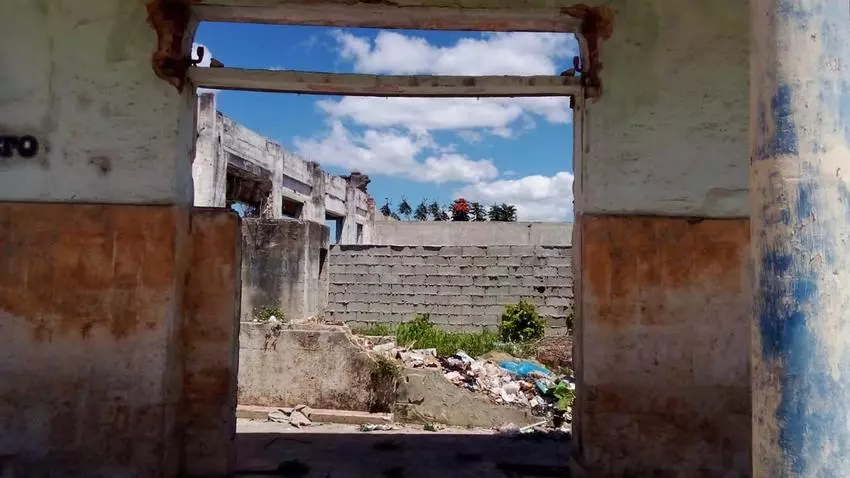
The woman admits that, reluctantly, she has also had to throw her own trash there. “I wish there were a nearby dumpster or that a sanitation truck came regularly, but they show up whenever they feel like it, maybe once or twice a month. So I have no choice but to toss my little bag in a corner. Everyone does the same, otherwise we’d be swallowed by filth inside our own homes,” she says, aware of the health risks posed by the improvised dump.
The building’s deterioration is evident from every angle. The walls are cracked, the columns expose rusted rebar, and the roof has almost completely disappeared, leaving the interior open to the sky. Through one opening, the backyard can be seen, now a vacant lot overgrown with tall weeds and strewn with construction debris. The image contrasts sharply with the memories of those who knew the place in its prime, when the aroma of freshly roasted coffee justified the store’s name.
Ernesto, a resident who lives two blocks away, says complaints to authorities have been constant but useless. “It’s been falling apart for more than ten years. My fear is that part of what’s still standing could collapse onto a neighboring house and cause a tragedy. Someone could also get hurt if a section falls while they’re dumping trash,” he warns, looking at the cracks running along one of the side walls.
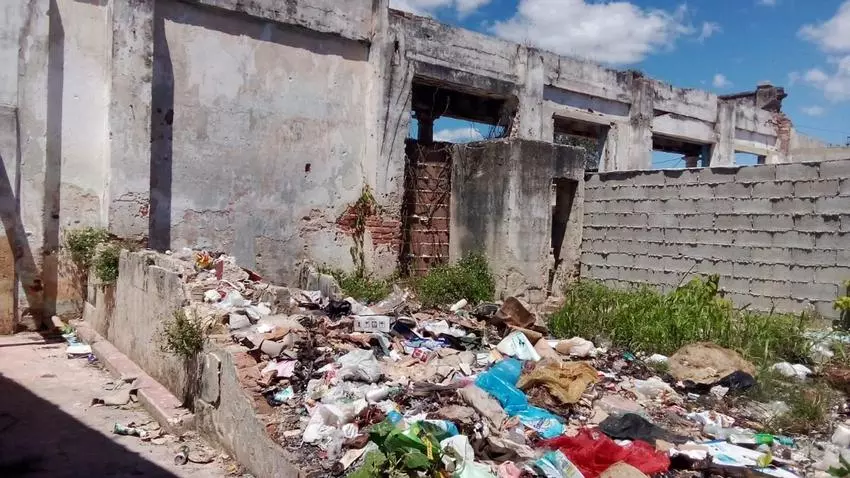
To avoid the risk, he prefers to walk several blocks to Avenida 40, where a functioning garbage container still exists. However, he admits not everyone can make that trip every day. “The People’s Power delegates elected in this neighborhood never did anything to save the store from becoming the ruin it is today,” he says, with a tone mixing frustration and resignation.
Despite the abandonment, the building still occupies an entire corner of the town, like a silent witness to the passage of time and the lack of maintenance. Its structure, though weakened, retains a certain presence, making the contrast between what it was and what it is today even more striking. For many residents, El Tostadero has become a symbol of institutional neglect and the deterioration of public services.
“This is a monument to the lack of respect for heritage, to that virus spreading across the entire country,” Ernesto concludes, watching as the wind lifts papers and dust at the corner. Meanwhile, the name of the old store remains stuck to the wall, a final mark of identity amid the ruins, reminding the people of San José de las Lajas that where there was once commerce and life, abandonment now reigns.
Translated by Regina Anavy
______________________
COLLABORATE WITH OUR WORK: The 14ymedio team is committed to practicing serious journalism that reflects Cuba’s reality in all its depth. Thank you for joining us on this long journey. We invite you to continue supporting us by becoming a member of 14ymedio now. Together we can continue transforming journalism in Cuba.