Experts estimate it will take between 15 and 20 days to process the crude oil and convert it into diesel, and another week to deliver the refined product.
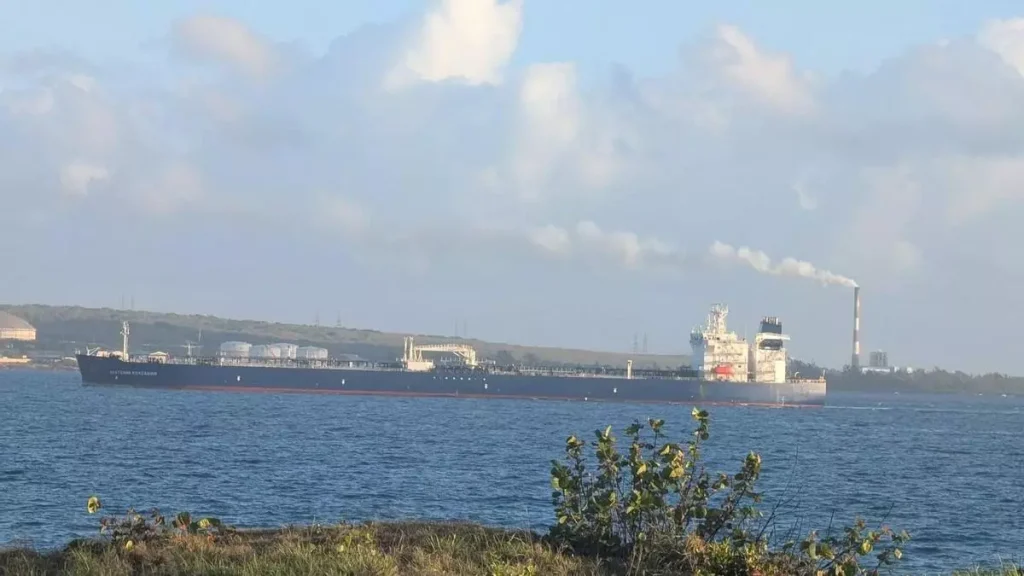
 14ymedio, Havana, March 31, 2026 / No oil tanker that has sustained Cuba’s energy system for decades had generated as much anticipation as the Anatoly Kolodkin , which finally docked in Matanzas this Tuesday. Loaded with some 730,000 barrels of Russian crude, equivalent to about 100,000 tons, it is the first tanker to arrive on the island since the Ocean Mariner arrived on January 9 with more than 80,000 barrels of fuel from Mexico .
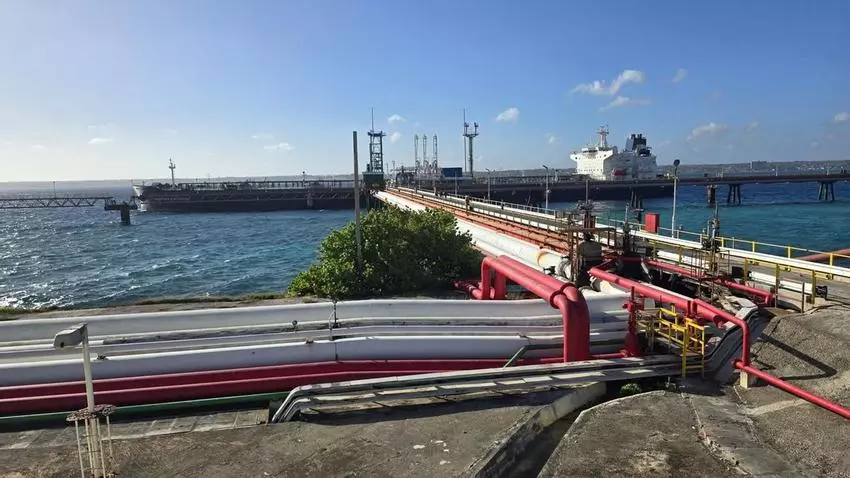
Dozens of journalists were waiting early in the morning at the port of Matanzas to broadcast the arrival of the ship, which docked at the Matanzas Supertanker Base around 8:50 a.m., as reported by Pedro Rizo Martínez of TV Yumurí. “After docking, the unloading of the crude oil begins,” the state-run reporter also said.
Oliver Zamora Oria, a contributor to the Russian state broadcaster RT from Cuba , didn’t miss the opportunity to take a selfie next to the ship, while expressing on his social media: “As someone said: the AK we need now.”
“This is like a drop of water in the desert,” Marino Gálvez, 66, a resident of Matanzas, told the British news agency.
Cubadebate also reported the news , highlighting the statements of Russian presidential spokesman Dmitry Peskov, who said that Russia “considers it its duty” to offer the necessary assistance to Cuba and assured that Moscow will continue working to supply more oil to the island.
Also present at the port were Lázaro Manuel Alonso, a broadcaster for Canal Caribe, as well as correspondents from foreign media outlets, such as the EFE and Reuters news agencies. “This is like a drop of water in the desert,” Marino Gálvez, 66, a resident of Matanzas, told the British agency, as he watched the ship’s maneuvers in the bay from the city’s waterfront.
The man lamented, referring to the oil blockade imposed on Cuba by Donald Trump after the United States’ intervention in Venezuela and the capture of Nicolás Maduro: “What they are doing to us is very unfair, and people shouldn’t have to pay for the policies of any government.”
Once the crude oil is unloaded from the newly arrived ship, it must be transported to refineries in Havana and Cienfuegos, where it could be converted into approximately 250,000 barrels of diesel, according to Jorge Piñón, an energy specialist at the University of Texas. Processing will take between 15 and 20 days, and the refined product will take another week to be delivered.
This fuel would allow for a few days’ supply of generators, transportation, and agriculture, although the expert also fears the government will keep some for itself. “Are we so naive as to think the government won’t keep a significant amount of diesel for its own reserves, instead of supplying it to those who need it most to survive?” he told 14ymedio .
The Anatoly Kolodkin belongs to the main state shipping company, the Sovkomflot corporation, sanctioned by the US since 2024, and departed from the Russian port of Primorsk on March 9.
Two days ago, the US president downplayed the arrival of the tanker . “They have to survive! I have no problem with that,” he told reporters, while also opening the door to other similar operations: “I told them, if a country wants to send oil to Cuba right now, I have no problem with that. Whether it’s Russia or not.” He asserted: “They have a bad regime, they have bad and corrupt leadership, and whether or not they get an oil tanker, that doesn’t matter.”
However, on Monday, White House spokeswoman Karoline Leavitt said that if the US allowed the Anatoly Kolodkin to reach the island, it was for “humanitarian reasons,” and that the country will analyze each case to determine whether or not to authorize the arrival of other ships.
“There has been no firm change in our sanctions policy,” Leavitt stated at a press conference. “We will continue to consider each case individually, whether for humanitarian or other reasons.”
Before this appearance yesterday, Mexican President Claudia Sheinbaum had avoided clearly answering whether she would continue sending oil to the island, in light of Trump’s statements on Sunday. The president reiterated that the Mexican government is helping the Cuban people with humanitarian aid while also maintaining trade agreements with its counterpart in Havana. “What we have always said is that Mexico has every right to send fuel, whether for humanitarian or commercial reasons, but we don’t want to harm Mexico,” she explained.
At the same time, she referred to the “tariffs, well, duties” with which Trump threatened nations that send oil to the island. “In that context,” she summarized, “we will make the decision, and it will always be reported whether or not oil is sent to Cuba.” Furthermore, as something “very important,” Sheinbaum mentioned that “there are private companies in Cuba,” such as “hotels and others,” that “require fuel,” and that “they are looking for private companies willing to supply them with fuel, not necessarily government-to-government.” She continued, without clarifying whether this is the method they have found to send oil or which companies are involved, on either side: “There are private companies that have approached us, for example, to buy fuel from Pemex and then deliver it to private companies in Cuba.”
______________________
COLLABORATE WITH OUR WORK: The 14ymedio team is committed to practicing serious journalism that reflects Cuba’s reality in all its depth. Thank you for joining us on this long journey. We invite you to continue supporting us by becoming a member of 14ymedio now. Together we can continue transforming journalism in Cuba.