The New York Times points to suspicions that the vessel may be gathering intelligence as it passes through the Caribbean.
 14ymedio, Havana, March 26, 2026 – U.S. concerns surrounding the Russian tanker Anatoly Kolodkin, which is heading toward Cuba, thus defying U.S. sanctions imposed on both Russia and Cuba, have put the U.S. Navy on alert and have reignited the debate over Russian espionage from the Island, according to The New York Times.
In a report published this Tuesday by the New York newspaper, the possibility of a hidden function of the Russian vessel is discussed, capable of supplying fuel to the Island but also being involved in espionage activities to gather strategic information in the Caribbean.
Among the reasons that Donald Trump cited in January for cutting oil imports to the Island, he pointed out that the Cuban regime allows Russia “to establish sophisticated military and intelligence capabilities there” that threaten U.S. national security. Specifically, Trump mentioned “the largest Russian signals intelligence installation abroad.”
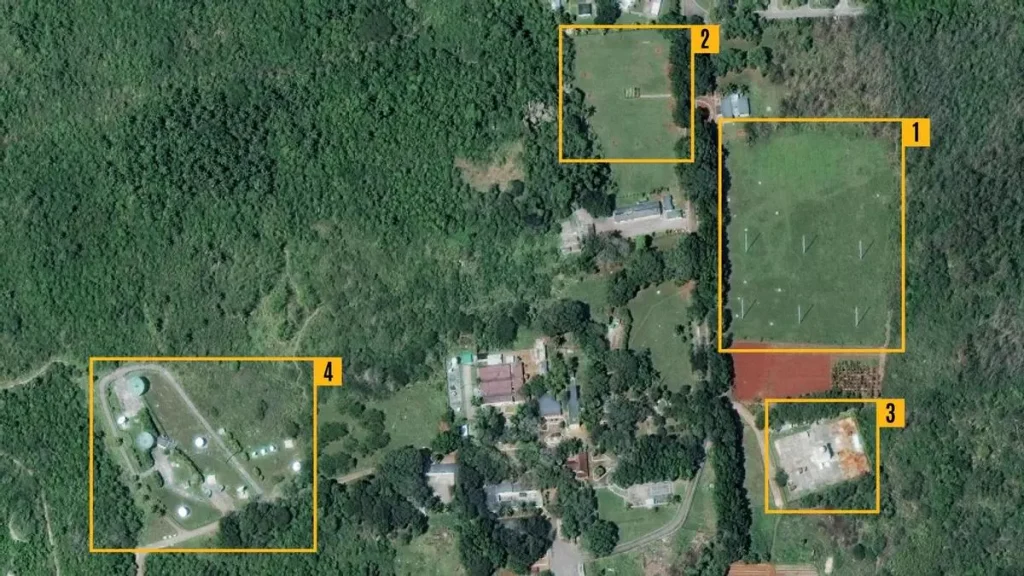
The Russian base he refers to is the so-called Lourdes, near Havana, which operated during the Cold War and was closed 25 years ago. In 2014, when tensions between Washington and Russia worsened, speculation arose that it would be reactivated, although this was denied by both Russian President Vladimir Putin and U.S. intelligence.
Although less sophisticated than the reported Chinese bases in Cuba, Lourdes has the capacity to monitor key U.S. facilities located less than 320 kilometers away, in Florida, including Central Command, the satellite launchers at Cape Canaveral, and Trump’s residence at Mar-a-Lago.
According to ‘The New York Times’, preserving this station may be one of the reasons why Putin risks defying Trump by sending oil to Cuba.
Marco Rubio has for years called foreign bases on the Island unacceptable. In a 2016 Republican primary debate, when describing a “good” U.S. deal with Cuba, he stated that it would include Havana “kicking the Russians out of Lourdes and getting rid of the Chinese listening station in Bejucal.”
The Bejucal base, one of four alleged Chinese listening posts in Cuba, was built more than ten years ago near Lourdes and recently modernized. Following revelations by The Wall Street Journal in 2023, Antony Blinken confirmed that Beijing had upgraded it in 2019 and that the Biden Administration responded with a “more direct” diplomatic approach.
Chinese listening stations in Cuba could also monitor U.S. military training areas in Florida and satellite launches from Cape Canaveral.
Even if Trump were to succeed in forcing the closure of Russian and Chinese bases, those countries would continue operating diplomatic facilities on the Island
A former career official of U.S. intelligence services told the Times that even if Trump succeeded in forcing the closure of Russian and Chinese bases, those countries would still operate diplomatic facilities on the Island, “which would most likely be packed with covert listening equipment.”
For his part, William LeoGrande, a professor at American University and very close to the regime, has criticized suspicions of espionage from Cuba. According to him, the Lourdes base is already obsolete, and the Chinese facilities are not as threatening as claimed. “It’s a pretext to say that Cuba is a threat,” he said. “It’s a perfect excuse.”
However, the former general counsel of the National Security Agency (NSA), Glenn S. Gerstell, has indicated that espionage equipment does not need to be cutting-edge to be effective. “Local antennas remain surprisingly relevant,” he said, adding that they can capture walkie-talkie and radio signals more clearly than other more advanced but more distant methods.
Although Trump officials have not said whether they are demanding that the Cuban government expel Russian and Chinese agents, Trump’s executive order declaring a “national emergency” indicates that foreign bases are a high priority.
Translated by Regina Anavy
______________________
COLLABORATE WITH OUR WORK: The 14ymedio team is committed to practicing serious journalism that reflects Cuba’s reality in all its depth. Thank you for joining us on this long journey. We invite you to continue supporting us by becoming a member of 14ymedio now. Together we can continue