Without fuel since February, rumors are circulating that this service station will soon switch to dollars, as is happening throughout the country.
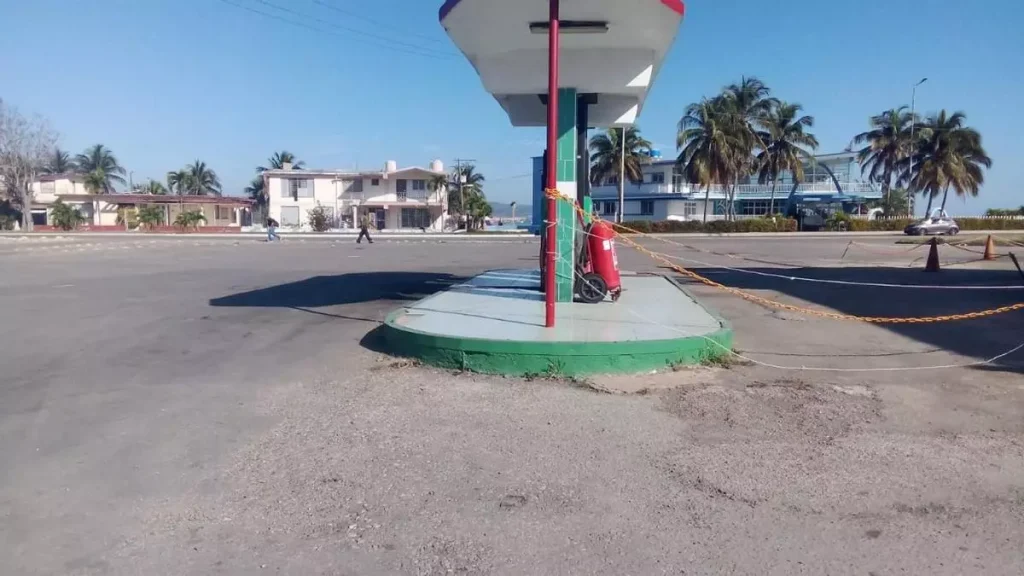
 14ymedio, Julio César Contreras, Matanzas, March 11, 2026 – Under a cloudless sky, the two fuel pumps at the Cupet station in Peñas Altas, Matanzas, look more like an abandoned facility than a functioning service station. An improvised chain surrounds the pumps and silence dominates the place. No lines, no impatient drivers, no usual smell of gasoline in the air.
The lack of fuel keeps the service station’s equipment practically unused, and the employees pass the time chatting while waiting for the end of their workday.
“Since last month I haven’t seen the tanker truck unload fuel here,” a motorcyclist watching the scene from a nearby cafe tells 14ymedio. His motorcycle rests against the curb while he keeps an eye on the Cupet station with a mixture of resignation and distrust.
According to the young man, this gas station was for years a mandatory refueling point for buses carrying workers to and from Varadero. The Yutong buses of the National Bus Company, whose repair workshop is located just a few meters away, also refueled here.
Today, however, the place remains almost empty. The province of Matanzas has the largest number of gas stations open in the country, but they sell fuel in dollars, operate with only a few shifts per day, and have strict orders not to dispense more than 20 liters per person.
“Until now, this Cupet sold in national currency,” the motorcyclist adds. Then he lowers his voice, as if sharing a secret everyone already knows. “But they say that very soon they will dispense only in dollars.” The dollarization of fuel has been spreading across the Island, but even paying in foreign currency does not guarantee getting any gasoline.
The motorcyclist has had to look for alternative solutions due to the shortages in the state service station network: buying gasoline at inflated prices at a house in Reparto Iglesias, one of the many informal points that have proliferated amid the scarcity.
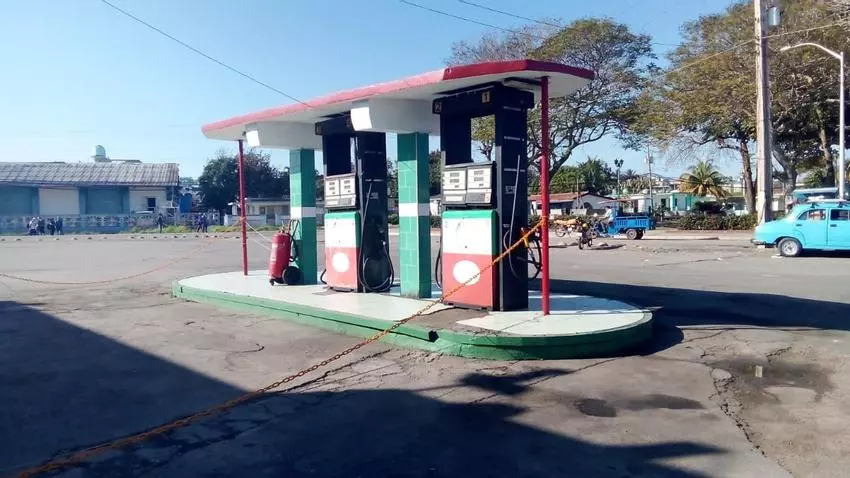
The privileged location of this Cupet explains why its decline is so visible. Located between the Central Highway and the Vía Blanca, for decades it was a strategic stop for those entering or leaving the city of Matanzas.
In the 1950s, older residents say, the place operated day and night. “My father used to tell me it had fuel 365 days a year, 24 hours a day,” recalls Felipe, a 61-year-old driver who has pulled his Chevrolet over to the side of the station.
Felipe looks at the inactive pumps with a frustrated expression.
“Now it’s completely bankrupt,” he regrets. For the driver, the decline of the place is not only a consequence of the energy crisis hitting the country but also of years of poor management.
The most recent episode happened just a few days ago. “When I tried to enter the service station, an employee stopped me saying they were closed,” he recounts. Up to that point, nothing surprising in these times of shortage.
But what happened afterward left him outraged. “I asked if they knew when fuel would arrive, and he told me he could let me know… if I gave him 2,000 pesos for the favor.” Felipe shakes his head while recalling the scene. “I’m too old for them to make money off me in such a dirty way.”
Now, the cars passing along the Central Highway no longer stop at the Peñas Altas gas station. They simply drive past, as if the place had ceased to exist.
Translated by Regina Anavy
______________________
COLLABORATE WITH OUR WORK: The 14ymedio team is committed to practicing serious journalism that reflects Cuba’s reality in all its depth. Thank you for joining us on this long journey. We invite you to continue supporting us by becoming a member of 14ymedio now. Together we can continue transforming journalism in Cuba.