The collapse of intercity transport forces many to sleep outdoors in Matanzas

 14ymedio, Pablo Padilla Cruz, Matanzas, February 21, 2026 — El Jabao, as he’s known at the market, is a food vendor who travels to Matanzas from a rural area in Limonar, about 28 kilometers from the city. He leaves at dawn hoping to sell enough to cover basic expenses and the return fare. But his routine depends on calculations that almost never add up.
“If I sell well, I go back the same day. But sometimes the bus fare costs more than 400 or 500 pesos, and I can’t afford it. A year ago, I thought private vending machines for 200 pesos were expensive; imagine now,” he tells 14ymedio. “So I have to stay. There isn’t always nighttime transportation, and if there is, the price goes up even more. Sleeping on the street isn’t safe, but I can’t just throw away my merchandise either.”
In present-day Cuba, marked by chronic fuel shortages, the collapse of transportation, and precarious employment, the province of Matanzas has become a mirror of the tensions experienced by those who arrive from rural areas in search of income to survive, but do not always find a way to return to their homes or to have a safe roof over their heads for the night.
The provincial capital attracts men and women daily from nearby towns and villages who come to sell agricultural products, do informal work, or collect raw materials. However, the deterioration of intercity transportation and the rising cost of fares have complicated their daily return, turning a day of “making ends meet” into a night spent outdoors.

For those who live from hand to mouth, the margin is minimal. A bad run of sales can mean not only financial losses, but also spending the night away from home in difficult and dangerous conditions . The vendor himself admits that he goes out prepared for that scenario.
“I already bring a sheet to cover myself if I have to sleep on the street. And on cold days I have to stop selling, because if a cold front catches me outside it could kill me,” he explains.
Another visible facet of this reality is that of the raw material collectors. Faced with a lack of formal employment, many people—including internal migrants—travel the city searching for recyclable materials, which they then sell to state-run recycling centers.
Kike, originally from Sancti Spíritus, has been surviving like this in Matanzas for years. He lives on the streets with his dogs and spends his days collecting cans and bottles. His story paints an increasingly competitive picture.
“I walk miles every day. Sometimes what I collect isn’t even enough to eat properly. And more and more of us are searching through the same containers, because many neighbors are now going to the garbage dumps to look for cardboard and wood for fuel,” he says. “They’ve become the places where you see the most people on each block; there are even those who eat directly from the garbage.”

According to official rates published by the Raw Materials Recovery Company in different territories of the country, the purchase prices to the public remain at low levels compared to inflation and the effort required to gather the materials.
Aluminum (cans) sells for between 70 and 100 pesos per kilogram; copper can exceed 400 or 500 pesos, depending on the type and quality. Plastic bottles (PET) are around 20 or 30 pesos per kilogram; cardboard and paper are bought for between 10 and 20 pesos, while glass generally goes for less than five pesos per kilogram.
Although these figures vary by province and availability, the reality is that gathering a kilogram of some materials involves long hours of searching, sorting, and transporting. For those living on the streets, like Kike, that difference determines whether they can feed themselves—and their animals—or whether they must rely on charity.
The problem isn’t limited to income. For many people with little resources arriving from rural areas, securing temporary shelter is another challenge. Private rental homes are unaffordable: a room can cost several thousand pesos per night, beyond the reach of those who barely earn a minimum wage.
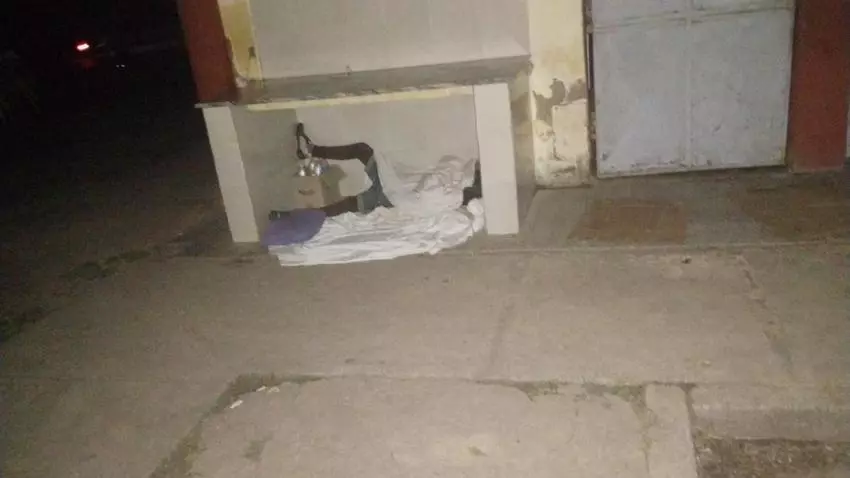
Some turn to distant friends or relatives; others improvise shelters in public spaces. The lack of accessible shelters or temporary housing solutions exacerbates the vulnerability of this transient group that enters and leaves the city depending on the season and available opportunities.
Social workers consulted in Matanzas acknowledge that the constant influx of people from the interior is due both to the lack of stable employment in rural areas and to the relative appeal of the provincial capital for “getting things done” during the day. However, they also admit that the city lacks the capacity to absorb this pressure.
The situation reveals an increasingly fragile balance between the countryside, which doesn’t offer enough jobs, and the city, which also fails to guarantee stability. Those who sell food depend on irregular and expensive transport; those who collect raw materials compete for scraps whose can value barely cover their basic needs.
Among sacks, bags of cassava, and bags of crushed cans, survival has ceased to be a metaphor: it is a concrete task that begins before dawn and, too often, ends in any doorway waiting for the coming of the next day.
______________________
COLLABORATE WITH OUR WORK: The 14ymedio team is committed to practicing serious journalism that reflects Cuba’s reality in all its depth. Thank you for joining us on this long journey. We invite you to continue supporting us by becoming a member of 14ymedio now. Together we can continue transforming journalism in Cuba.