Without proper clothing to go outside and with freezing houses, Cubans are having a very hard time, especially those with joint problems from chikungunya.
 14ymedio, Olea Gallardo, Havana, February 3, 2026 — If it doesn’t rain iguanas in Cuba , as it does in Florida, making the old winter saying a reality, it is because there aren’t that many, because the cold these days is similar to that of the U.S. peninsula and reaching historic lows. This Tuesday, specifically, the lowest temperature ever recorded on the island was 0° Celsius (32° F), according to data from the Institute of Meteorology (Insmet). It occurred in Indio Hatuey, Matanzas, at seven in the morning.
As many as 32 weather stations reported temperatures of 10°C or lower, according to the report issued by the state agency at 10:00 a.m., which noted that the early morning was “very cold throughout the country and even noticeably cold in inland areas.” The thermometer registered an all-time record low temperature in Aguada de Pasajeros (Cienfuegos), at 3°C, and equaled the February record in the city of Pinar del Río, at 6.9°C.
The report indicates that it had never been so cold in February in several places, such as 6º in the city of Sancti Spíritus, 7.3º in Veguitas (Granma), 7.4º in Florida (Camagüey) or 8º in Palenque de Yateras (Guantánamo).
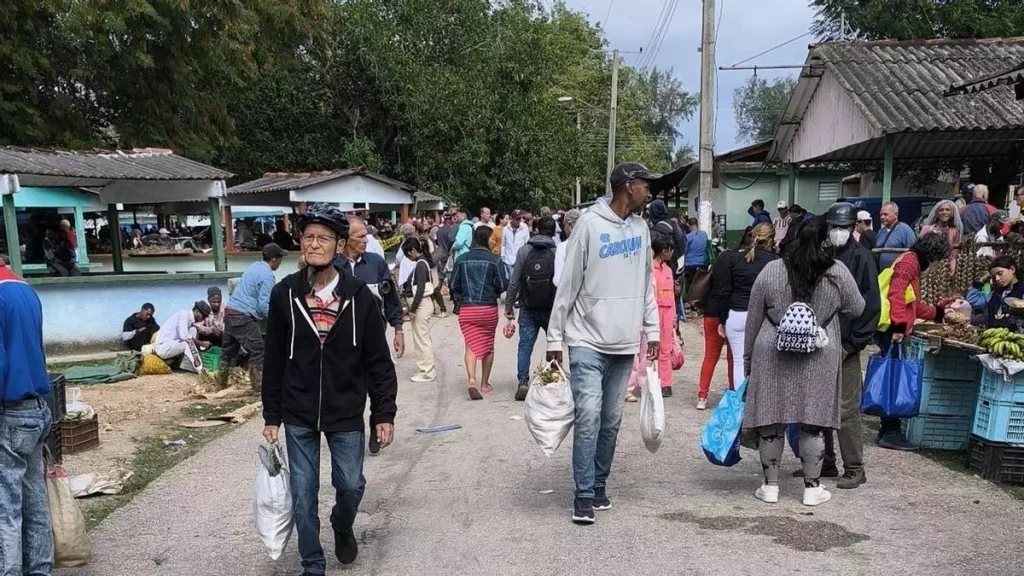
Over the past two days, hardly anyone has ventured out on the streets across the entire island, and those who do are participating in a unique “poor man’s carnival,” dressed in whatever clothing they can find to ward off the cold. Ignoring custom and the usual color combinations, their attire ranges from European football team sweaters to American university coats, French berets, and Russian hats with earflaps.
“It’s not the monkey whistling [esta chiflando el mono*], it’s the orangutan,” says a Havana resident with a touch of irony, having left his house in search of milk and chocolate to at least “warm himself up.” The chocolate, he says, “flew off the shelves at the small businesses,” despite being incredibly expensive: “more than a thousand pesos for a small package.” Powdered milk is no less than 2,000 CUP per kilogram. “People are scrambling to find something, but there are people who don’t even have enough to make soup or broth.”
From Holguín, a young man who works as a private driver with his electric tricycle says that yesterday he was only able to pick up one passenger. “The air cuts you, it feels like a knife, my eyes burn, my nose itches, I have runny noses, my hands go stiff,” he explains. During his commute, he saw doors and windows closed like never before in Cuba, where the weather usually keeps residents out in the street. “Last week, everyone was cooking with firewood outside, and now it’s like nobody’s home.”
“Even the animals are trembling,” says Sandy from Holguín, who has her six dogs wearing “little sweaters” and yet they still hide under the blankets.
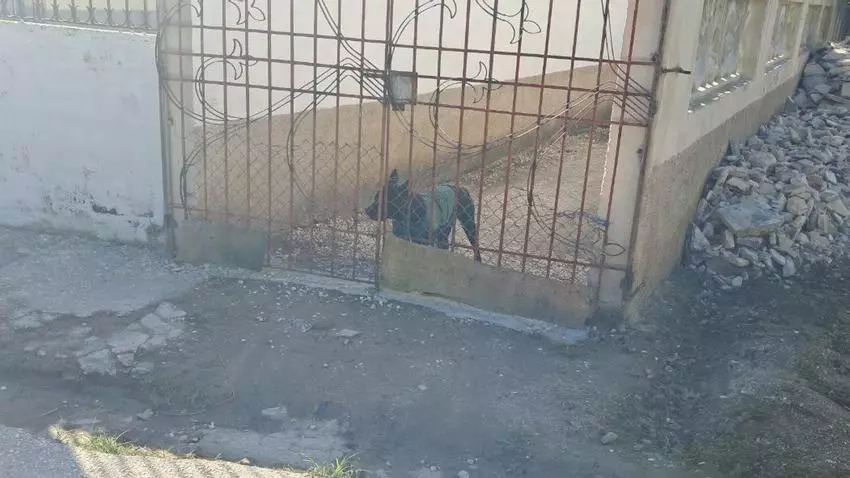
“Even the animals are trembling,” says Sandy, from Holguín, who has her six dogs wearing sweaters, and yet they still hide under the blankets. “I feel sorry for the stray dogs. I even made a little bed for one of them, the one I usually feed, out of old rags, because he seemed so weak. We also hear the kittens crying.”
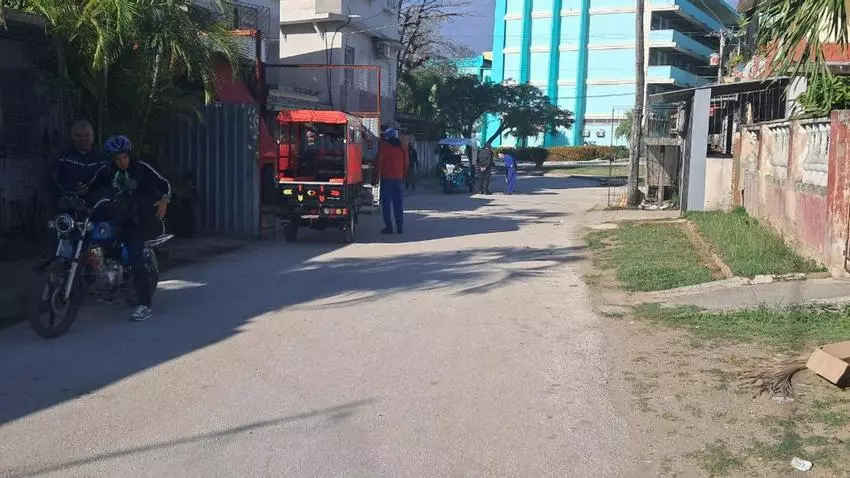
In Sancti Spíritus, the situation is very similar. “Around five in the afternoon, everyone is gone from the streets, holed up in their homes,” says Ernesto, who asserts that the worst part is the wind, which “is really hitting hard” and makes you feel a cold “that chills you to the bone.” At 40 years old, and having never lived anywhere else, he doesn’t remember ever having felt anything like this before.
The houses, built for a year-round tropical climate and designed for airflow to keep them cool, are like iceboxes these days. “The cold is coming in from everywhere, a horrible cold that you can’t escape,” Ernesto laments.
Having suffered from chikungunya a few months ago, Ernesto finds the pain intensifying with the current temperatures the worst part. A strong man in his prime, he reflects: “Older people, so vulnerable, living alone, with no one to offer them any help, must be going through hell, because they don’t have adequate shelter, proper clothing for this cold, or even enough food.”
Thousands of Cubans have been left with lasting effects from the arbovirus, especially joint problems, and these days they are suffering even more, if that were possible. “I’m locked in my room, covered with every rag I can find, in a lot of pain,” confesses María, a retiree from Luyanó (Havana), who also recently contracted the disease. This Tuesday, she refused to buy medicine from a street vendor who passed through the neighborhood. “I didn’t even want to ask the prices, because I know I can’t afford them.” And she sighs: “Everything we have to live through in Cuba is a disaster.”
To make matters worse, the energy crisis is adding to the problems. Without electricity for most of the day, the cold showers that Cubans are normally forced to take are unbearable, so many haven’t had one for days. “The little oil and coal that can be found is reserved for cooking,” explains Luis, another Havana resident, who has also seen his muscle pain worsen as a result of the arbovirus. “The pain and the cold keep me from sleeping.”
*The monkey whistling [esta chiflando el mono] – An expression meaning it’s very cold
____________
COLLABORATE WITH OUR WORK: The 14ymedio team is committed to practicing serious journalism that reflects Cuba’s reality in all its depth. Thank you for joining us on this long journey. We invite you to continue supporting us by becoming a member of 14ymedio now. Together we can continue transforming journalism in Cuba.