In 2024 a general decline was recorded in almost all of the country’s cultural indicators: in production, creativity, active spaces and audience attendance.
 14ymedio, Yunior García Aguilera, Madrid, 18 July 2025 – A nation’s culture is not measured in kilowatts, but when the lights go out in its theatres, its libraries and its cinemas, the resulting darkness has no need of metaphors. And even if artistic quality doesn’t figure in any quantifiable economic indicators of state, the coldness of the numbers is enough to illustrate a map of the disaster. Cuba’s 2024 Statistical Yearbook offers a cold but revealing picture of the structural deterioration that the nation’s cultural ecosystem is suffering.
The diagnosis is severe. Data from the National Office of Statistics and Information (Onei) shows a general fall in almost all cultural indicators: production, creativity, active spaces and audience attendance. But among all the headlines, the one concerned with books destroys any triumphalist speeches given by Alpidio Alonso – head of Culture – who comes precisely from the book sector himself. Whilst in 2023 six million book copies were printed in Cuba, in 2024 the figure fell dramatically to 1,355,500. It isn’t just down to a shortage of paper, but a shortage of political will, and priorities.
Cinema, for its part, confirms the sombre tone. In 2024 there were 6,647 fewer screenings than in the previous year, and 15 cinemas completely disappeared from the map. Production contracted in size too: there were fewer shorts produced and the overall total of animation films was reduced.
According to the Onei itself, not one feature film was actually completed – a statement contradicted however by the actual facts themselves
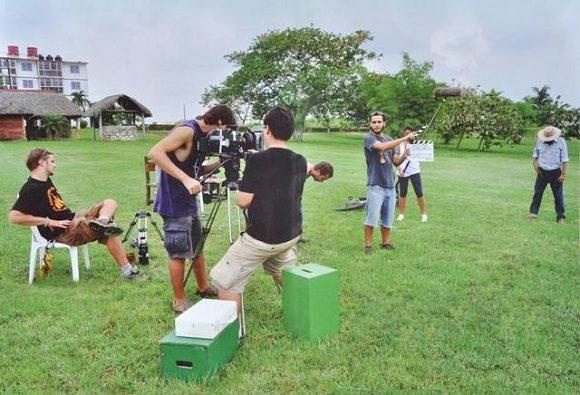
According to the Onei itself, not one feature film was actually completed – a statement contradicted however by the actual facts themselves: at least two films were recognised by critics as being the best films of the year: ’An Evening With the Rolling Stones’, by Patricia Ramos; and ’Maisinicú, Half a Century Later’, by Mitshell Lobaina. Both productions, completed in 2024 under the hallmark of the Cuban Institute for Art and Cinema (Icaic), were simply ignored in the official figures, which – it’s worth adding – are compiled using data from the Ministry of Culture.
The lack of insight goes even further when you look at independent filmmaking. Invisible for the Art & Cinema Institute, the National Office of Statistics, the state-run media and all the state-run cinemas of the country, this sector develops audiences beyond the usual margins – at international festivals or on digital platforms. Two titles particularly stand out in this area: the documentary ’Cronicles of the Absurd’, by Miguel Coyula, and the fiction debut of director Marcos Díaz Sosa, ’Natural Phenomena’. Two works which demonstrated that, even if they didn’t cross the thresholds of the national cinemas, art itself needs no permission to exist.
And theatre, traditional object of suspicion and censorship by the cultural police, has also given ground. Although the number of venues increased marginally, from 85 to 87, more general figures invite pessimism. 48 actual theatre companies were lost, along with 440 professionally-active performers (reducing from 2,103 to 1,663). The country registered a deficit of 1,205 performances, and 195,700 fewer theatre attendances than in the previous year. Neither the heroic efforts of theatre creators nor the enthusiasm of loyal theatre audiences have been able to reverse the decline.
Music is suffering a parallel fate. Some 334 bands disappeared and there were 1,691 fewer working musicians than there were in 2023. The number of live concerts, clubs and related cultural activities decreased from 90,033 to 62,162 – an equivalent loss of more than 6 million concert attendances. The silence is not only falling upon theatres but also on parks, cultural centres and community spaces.
Music is suffering a parallel fate. 334 bands disappeared and there were 1,691 fewer working musicians than there were in 2023
This newspaper has monitored complaints from musicians across a number of provinces, many of whom are victims of prolonged outstanding payments from state entities such as Artex. Some artistes have gone for months without pay, whilst the company boasts about an optimistic balance sheet. The paradox is revealing: company income is growing but cultural activity is decreasing. They are saving on culture, as though culture were something dispensable. Even worse, the company (state-run, ’socialist’, so they say) gets richer, whilst its artistes are exploited and go unpaid.
Geographical inequalities are also notorious. Holguín survives with just one theatre. Las Tunas is seeing its network of cinemas and libraries diminish. In Mayabeque some libraries are barely managing to cling onto existence. Ciego de Ávila turns out to be the province with fewest museums, and Sancti Spíritus has only hung on to two art galleries. Beyond the larger urban centres, culture has been reduced to mere wreckage and nostalgia.
So 2024 was more than just a poor year for culture, it was a year of cultural famine and darkness. Not for a lack of cultural creatives, nor through any public apathy, but because of a worn out model that administers culture as though it were just another office of state. What the National Statistics Office can’t measure – nor dares even to name – is the spiritual price of this shutdown. And as they’re so keen to quote José Martí so often, they ought also to remember this one: “The mother of decency, the lifeblood of liberty, the conservation of the Republic and the solution to all its ills is, above all else, the propagation of culture”.
Translated by Ricardo Recluso
____________
COLLABORATE WITH OUR WORK: The 14ymedio team is committed to practicing serious journalism that reflects Cuba’s reality in all its depth. Thank you for joining us on this long journey. We invite you to continue supporting us by becoming a member of 14ymedio now. Together we can continue transforming journalism in Cuba.