Cuba Archive Broadcasts Video Testimonials of Relatives of Victims of Extrajudicial Executions

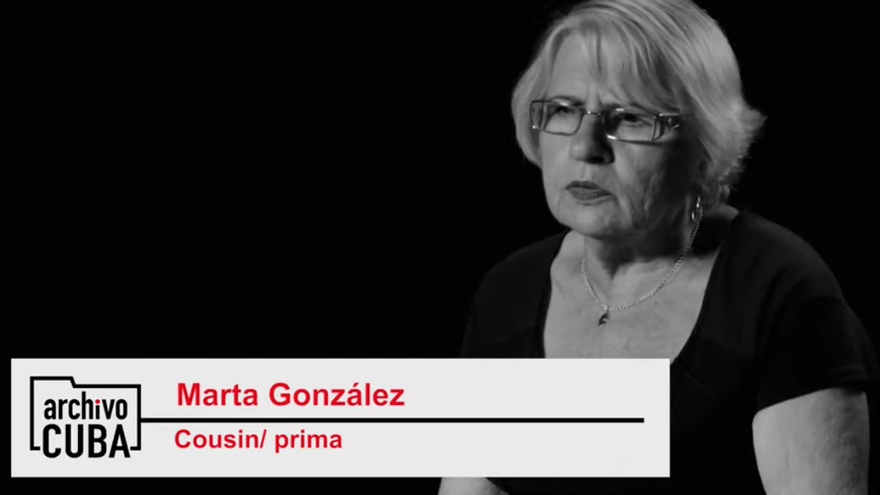
Gerardo Fundora, Marta González’s cousin, was shot in October 1960 at Limonar’s shooting range, Las Villas. (Captura)

14ymedio bigger

14ymedio, Havana, 2 November 2020 — Moíses was 24 in 1961 and a leader of the Matanza resistance when, one night, after the tip-off by someone he trusted, hooded government agents went to pick him up at his house and executed him alongside three comrades, Bernardo and Orlando Barrabí and Orlando Rodriguez. All four were shot in the cemetery of Agramonte and buried in a mass grave.

Stories like this try to put faces to a large list of victims of the two Cuban dictatorships of the twentieth century, that of Batista from 1952 onward, and that of Castro. Archivo Cuba / Cuba Archive works on the testimonies of the stolen lives of at least 11,303 missing Cubans, in an ongoing database. The organization wants to go beyond the numbers, and asks relatives or witnesses of those killed o narrate their personal trauma.

“These are people, real human beings, whose lives have been stolen prematurely by political violence, directly or indirectly. These unjust and often brutal losses have impacted many more people: family, friends, neighbors, colleagues, etc., and have had a broad impact on the nation,” the organization says. continue reading

This is also the case of Gerardo Fundora, shot in October 1960 at the firing range in Limonar, Las Villas. Marta González, his cousin, recalls the story of this 32-year-old trade unionist, a member of the resistance against Batista who opposed the Castro brothers and formed a group of rebels in Palenque, Matanzas. After being captured with some members of his group and tortured, he was executed without trial after being accused of shooting at a girl. Before shooting him, he was exhibited in the city as an “example” of what could happen to any opponent.

According to data from Cuba Archive, 3,045 people were shot by the Castro regime, in a list that is still being updated.

The project incorporates many other murders, such as that of political prisoner Ernesto Díaz Madruga in 1964, recounted by the former political prisoner Armando Valladares. The event happened in the prison of Isla de Los Pinos in an attack by the guards with bayonets. Another victim was José Gabriel Ramón Castillo, whose death at 61 his sister Lucy Ramón recalls.

His death was caused by hepatitus contracted in a Cuban prison in 2018, a date so recent that it recalls why it is still necessary to bring back to the memory of the nation the lives that intolerance has claimed.

Translated by: Hombre de Paz
____________

COLLABORATE WITH OUR WORK: The 14ymedio team is committed to practicing serious journalism that reflects Cuba’s reality in all its depth. Thank you for joining us on this long journey. We invite you to continue supporting us by becoming a member of 14ymedio now. Together we can continue transforming journalism in Cuba.

In Cuba, If You Trade a Bottle of Shampoo for a Packet of Coffee, You Go to Jail

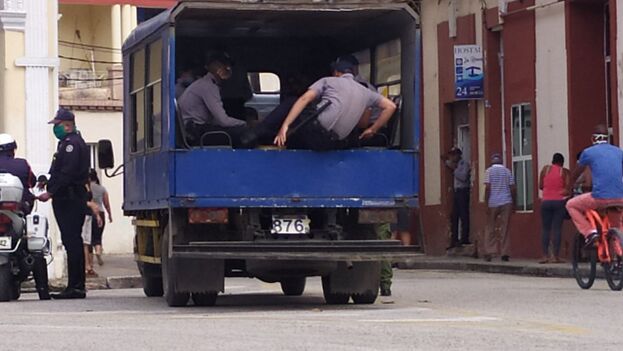
Police operation against ’resellers’ in Sancti Spíritus. (14ymedio)

14ymedio bigger14ymedio, Mercedes García, Sancti Spíritus, 6 November 2020 — “I will trade a bottle of shampoo for a packet of coffee,” Mileidy Martínez, a resident of the city of Sancti Spíritus, wrote on her Facebook account. Three hours later, the police searched her house and took her into custody, according to a report to this newspaper from her family, who wereoutraged by the excessive official response.

“They arrived, even checked her mobile phone and seized it,” a relative of Martínez tells 14ymedio. “Although they didn’t find anything else in the house, because it was really just one bottle of shampoo that she had, which she had been saving for a while and decided to trade it for coffee, and they took it anyway.”

In the same neighborhood, a baker was arrested during a police search after posting, also on a Facebook group, a photo of a case of beer he had for sale. “It seemed suspicious to them that he had a Hyundai car, but that is not prohibited and his family abroad helped him to buy it,” says a neighbor. continue reading

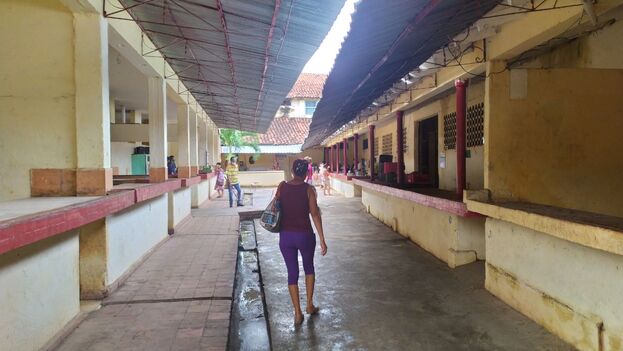
This occurs in a province that until a few months ago was considered one of the most economically dynamic on the Island because it has several of the most visited tourist centers, including the city of Trinidad. Without travelers and with a good part of the entrepreneurs lacking customers, they have taken to bartering, which the authorities call the black market, but it is vital so that the people of Sancti Spíritus can put food on the table.

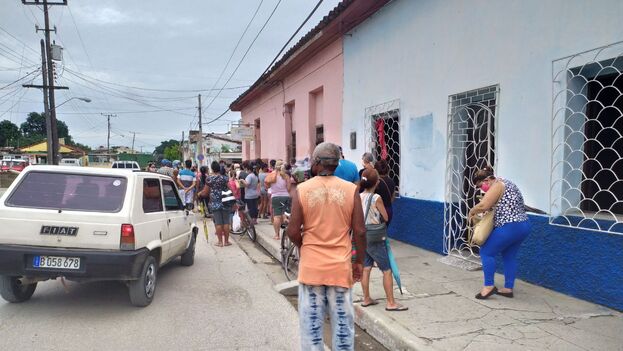
But the police repression against those who engage in these small commercial exchanges has put the city on edge, a city that has also been trapped for weeks between the coronavirus outbreaks and limitations on mobility and purchases in state stores. To the monitoring of lines and markets is now being added to the scrutiny of social networks and instant messaging groups in search of For Sale announcements.

“They are imposing fines and taking people to jail for nonsense,” says a resident of Sancti Spíritus’s Colón neighborhood.” Here they hauled in a neighbor who was selling the rice that she had bought at the bodega [the ration store] and it was her own quota, she had not stolen it from anyone or diverted it from any state warehouse but they took her away and she is still in detention,” he adds.

Line in Sancti Spíritus to buy food. (14ymedio)

“In the 90s, when I was young, Operation Flowerpot was launched and I remember that many people who had some financial solvency were taken to prison,” explains Wilfredo, self-employed, who until recently ran a thriving food business selling pizzas. But his business is closed now due to the pandemic. “At that time, if they pointed you out as a ‘flowerpot’ (rich), they would take everything from you.”

“I remember that in my neighborhood several residents were detained and people made the joke that the police were going to take away anyone who had more than two cans of condensed milk because that was already being a ‘flowerpot’,” he recalls. “Now that joke has become reality, because the other day I saw how an old man was taken prisoner for selling the tube of toothpaste that they give him on the ration book.”

With other names and other intensities, the raids against “hoarders” and the “new rich” have never stopped over the last two decades. The Government has promoted several raids after hurricanes, and after the damage left by the tornado that hit Havana in January 2019, along with the moments of greatest economic tension such as the so-called “temporary situation” announced more than a year ago.

Targets of these operations have been citizens who have what the authorities consider an excessive amount of construction materials, those who keep large volumes of food in their homes, but also those who frequently vacation in hotels or have bought a modern car with cash. These police actions have also encouraged people to protect themselves through deception.

In several of the city’s Committees for the Defense of the Revolution (CDRs), the authorities have warned their most active members that they have to help detect those who “are profiting from the needs of the people,” an exhortation that has also fueled witch hunts and personal revenge, as reported to this newspaper by several residents.

“In this block the president of the CDR pointed to a poor man who all he did was sit in the doorway and sell some of the avocados from the bush he has in the yard of his house,” comments Carmelo Gómez, a retired resident in the vicinity of Serafín Sánchez central park. “After hours of interrogation, they fined the poor old man 2,000 pesos, and his monthly pension is less than 300 pesos.”

State agricultural markets in Sancti Spíritus look almost empty. (14ymedio)

Others rely on prudence, such as a 26-year-old who participates in several purchase-and-sale threads on WhatsApp with the pseudonym Pillo Manigüero. They know that it is necessary to be careful in these times of murmurs and denunciations, but they don’t stop “resolving* and looking for whatever it takes.” Between several friends they have created a decalogue of ‘rules’ to protect themselves from the police. “Never publish with your real name, not even on your personal Facebook account,” reads the first recommendation.

“To sell the merchandise, stay in a public place, with several entrances and exits. Arrive before the agreed time and check the site well for ‘toads’. Whoever catches you, deny everything and erase your WhatsApp history every day so they can’t prove anything against you.” The list of instructions goes on, as if the merchandise is something more dangerous than ketchup, coffee, or soaps.

*Translator’s note: The verb ‘to resolve’ is universal in Cuba to describe any situation where one does what is necessary to ‘resolve’ the nearly insurmountable problems of just getting by.

___________________

COLLABORATE WITH OUR WORK: The 14ymedio team is committed to practicing serious journalism that reflects Cuba’s reality in all its depth. Thank you for joining us on this long journey. We invite you to continue supporting us by becoming a member of 14ymedio now. Together we can continue transforming journalism in Cuba.
Guantanamo Electric Company Trains ‘Fraud Hunters’

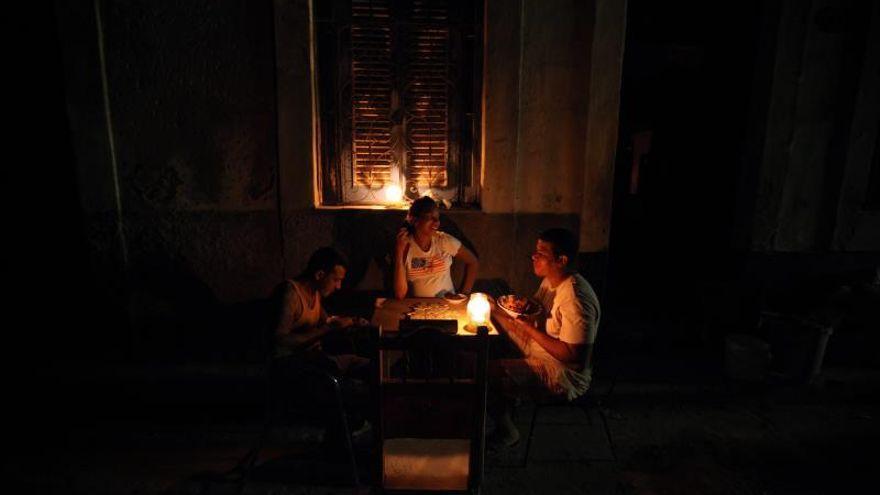
Since Cuban President Miguel Díaz-Canel announced the arrival of an energy crisis in September 2019, which he described as “temporary,” the authorities’ calls to save energy have not stopped month after month. (EFE / Alejandro Ernesto / Archive)

14ymedio bigger14ymedio, Havana, 4 November 2020 — Concern for the electricity sector is growing among the authorities, who are not willing to let a kilowatt escape without payment. A week after learning about the serious crisis in the Electric Company’s accounts in several provinces, Jorge Estrada, chief of commercial inspectors in Guantánamo, told the local newspaper Venceremos that 22 “fraud hunters” are being trained in the province.

The young people began their training for the inspection task in September and will finish in December, ready to strengthen the system of control over power usage. Trainees must have passed the twelfth grade and have knowledge of the sector. The course contents range from business mathematics to legislation, through measurements, and reading and knowledge of meter-counting equipment.

Velázquez explained that the effort will aim to detect fraud in the state and residential sectors based on the accumulated experience of known violations of regulations. In addition, he detailed that the course emphasizes the “conduct of the inspector in the event of the appearance of fraud, because in addition to following a well-defined protocol that includes notification, creation of a file, the calculation of the charges owed by the home and retroactive energy use… the inspector must be ethical and act fairly. “ continue reading

In the last year, the account balances of the state electricity company have deteriorated. The arrival of the pandemic forced the closure of the offices where the majority of Cubans pay their bills and the authorities granted a grace period during which people could choose to satisfy the amounts to be paid in order not to accumulate debts or postpone the payment until the office re-opened.

This mechanism has been a problem for the company, which two weeks ago reported that in Santiago de Cuba non-payments totaled 6.9 million pesos for the residential sector and 0.5 million in the state sector, so it proceeded to cut electricity to 8,800 homes.

In Havana, where the offices went through two closure periods, one in the spring and one in September due to the reemergence of the virus, the situation is even worse. Leisy Hernández González, commercial director, said that the company barely collects 52% of what is owed, which “affects its financial status, on which the continuity of its operations and the payment of workers depend.”

In addition, the company had to pay its debts to the Central Bank of Cuba to maintain supply to the defaulters, and develop a payment schedule for all those affected by the last closure. Although payments can be made more flexible, she stressed that the company is not going to stop charging for something so precious in Cuba.

Since Cuban President Miguel Díaz-Canel announced the arrival of an energy crisis in September 2019, which he described as “temporary,” the authorities’ calls to save energy have not paused, month after month. In most provinces, consumption forecasts have been constantly exceeded in a context in which this is unsustainable, since oil from Cuba’s Venezuelan ally is increasingly arriving drop by drop, despite the help from Iran to supply the Island from Caracas. .

In April, energy consumption increased with the call to stay at home to contain the Covid-19 contagion, leading to a 10% rise in national energy use, despite the paralysis at that time of large consumers, such as hotels and non-essential businesses. The authorities did not hesitate to ask the population to hold back, telling people the waste is their fault.

In August, after another deviation from the forecasts, by just 1.1%, Deputy Prime Minister Ramiro Valdés Menéndez even asked the municipal energy councils to identify the high consumers in residences and state services.

The Electricity Union had warned in July, through the State newspaper Granma, that it was preparing to apply sanctions in Havana for fraud in consumption according to article 325 of the Penal Code, which establishes prison sentences from three months to one year, and/or payment of 100 to 300 ‘shares’*.

In 2019 the company imposed 17,000 fines for the loss of 2.1 megawatts. In Havana last year 2,752 fines were imposed due to electricity fraud involving over 6.46 gigawatts.

In Cuba, there are frequent cases of manipulation of the meter to evade the total payment of the electricity bill and also the so-called “clotheslines” — makeshift wiring that transfer the electricity from a line to homes or private businesses with high consumers. In illegal housing settlements, theft of supplies to light up makeshift homes is also common.

*Translator’s note: Cuban penal codes set fines as a number of “shares” with the value of a single share defined in the code. In this way, all fines can be changed simultaneously by revising the definition of the value of one “share.”

____________

COLLABORATE WITH OUR WORK: The 14ymedio team is committed to practicing serious journalism that reflects Cuba’s reality in all its depth. Thank you for joining us on this long journey. We invite you to continue supporting us by becoming a member of 14ymedio now. Together we can continue transforming journalism in Cuba.
Cuban Priests Are Tired of ‘Two Types of Dictatorships: The Ecclesiastical and the Governmental’

Father Fernando Heria, priest of Ermita de La Caridad, in Miami. (Facebook)

14ymedio bigger14ymedio, Olea Gallardo, Havana, 5 November 2020 — Fernando Heria, a priest of the Ermita de La Caridad, in Miami, spread a message on his social networks in which he expressed his solidarity with Father Alberto Reyes, parish priest of the church of San Jerónimo, in Esmeralda, Camagüey. On November 1 Father Reyes published  a text on his Facebook wall in which he lamented the fear and oppression suffered by Cubans, in addition to criticizing the silence of the ecclesiastical curia.

“I share the cries of hunger and thirst for justice that a brother priest, Camagüey’s Father Alberto Reyes, has bravely shouted on behalf of all the children of the country, from the throats of our patriots: Mariana Grajales, José Martí, Carlos Manuel de Cespedes, Máximo Gómez, Antonio Maceo and many other brothers and sisters, a firm cry for the freedom and dignity of los hermanos,” says Heria in his posting made public on Monday.

“For years in each ad limina visit [the visit that bishops must make from time to time to Rome] with the Pope, they always ask: why are there so many Cuban priests who leave their homeland and go to serve in the diaspora?” continues the Father. “To which the Cuban bishops have always responded unfairly: because of the attraction of money. Enough of so many farces!” continue reading

Heria explains that if the priests stay in the diaspora, they do so because “they are tired of living under two types of dictatorships: the ecclesiastical and the governmental,” and he thanks Father Alberto Reyes “for making clear what this priest (me) has been telling the Cuban bishops, that it is their fallacy, regarding you, the priests, with the odor of sheep, who are the only hope of a noble people who wait, wait and wait for their freedom and respect for their dignity of being.”

The letter ends with an appeal to the 17 Cuban bishops, both ordinary and emeritus, to shout “enough is enough” and ask that they “set our noble Cuban people free for the love of God and the country.”

In his publication last Sunday, Father Alberto Reyes lamented suffering “the silence of my bishops.”

“It is not true that the Church has not spoken, it is not true, because all of us are the Church, and many lay people, priests, religious, even a bishop speaking personally, we have said what we think and we continue to say it,” the priest continued. And he clearly stated, “This country needs a change, it needs a transition, it needs to live and stop dragging its existence, and at this moment, in my opinion, only the Catholic Church is in a position to lead a dialogue and propose a transition.”

For this reason, Reyes concluded, “the people look to the bishops, and expect a clear position in favor of justice, freedom, in short, the Gospel.”

Reyes is one of the three Cuban priests who in recent weeks has been very critical of the social and political situation on the island. The first was Jorge Luis Pérez Soto, parish priest of San Francisco de Paula, in the municipality of Diez de Octubre, in Havana, who at the end of October said in a homily that “the Catholic cannot be apolitical, that is a lying word that only speaks of cowardice.”

“When a ruler is not willing to resign, is not willing to get out of the way for the common good, for the good of his people, for the good of his society, that Caesar is a tyrant,” Pérez said at a Sunday mass.

A few days later, Father Laureano Hernández Sasso lamented the deafness of the Cuban leaders. “Why do we have to beg? Why does President Miguel Díaz-Canel talk and talk and never say anything? Or do we have to tell our president that we cannot continue like this?” the priest wrote in his Facebook account.

In the past, several statements signed by the Cuban bishops have raised hives in the ruling party. One of the best known was the pastoral letter “El amor todo lo espera” (Love waits for all), signed by the Cuban Conference of Catholic Bishops in September 1993, during one of the hardest years of the economic crisis after the fall of the socialist bloc of Eastern Europe.

“The fight for justice is not a fight against which one can remain neutral, because this would be tantamount to putting oneself in favor of injustice,” the bishops said in that letter that was directly criticized by official spokesmen, including the journalist Lázaro Barrero, who called it a “telenovela title.”

Two decades later, the bishops published another pastoral letter entitled “La esperanza no defrauda” (Hope does not disappoint), which was read in all the churches of the country and which made a profound assessment of the Cuba of that time: “A new generation of Cubans, born in recent decades, has its own interpretation of our reality, with its own aspirations and interests, different from those of their predecessors. This generation lives with the firm desire that not only the present is better than the past, but that the future is better than the present,” they wrote.

The various declarations of priests inside and outside the Island are taking place a few days before the biannual celebration of the Conference of Catholic Bishops of Cuba. Many parishioners and members of the Church hope that a pronouncement on the acute crisis the country is experiencing will emerge from this meeting.

____________

COLLABORATE WITH OUR WORK: The 14ymedio team is committed to practicing serious journalism that reflects Cuba’s reality in all its depth. Thank you for joining us on this long journey. We invite you to continue supporting us by becoming a member of 14ymedio now. Together we can continue transforming journalism in Cuba.
Fable about “Military Interference” and Realities Around Remittances

A man tries to withdraw money this Thursday at an ATM on the outskirts of a Metropolitan Bank in Havana. (14ymedio)

14ymedio bigger14ymedio, Miriam Celaya, Havana, 2 November 2020 — In recent days an opinion column was published in this medium about an alleged interference by the Cuban military in the US elections, which will be held this Tuesday.

Judging by the statements of its author, Emilio Morales, a Cuban-American economist and director of the Miami-based Havana Consulting Group, it is a plot orchestrated by Cuban intelligence through social networks, with the complicity of the international press “with the clear objective of interfering in the next elections on November 3rd”.  In this way, he assures, “the Cuban government joins the group of enemy countries that have tried to interfere in the US presidential elections, such as Iran, Russia and China.”

As basis for the conspiracy, Morales points out the statement published on the Facebook page of the Fincimex company in response to the sanctions of the US State Department, especially President Donald Trump’s recent provision prohibiting US financial companies from transacting remittances with those companies of the business structure of the armed forces that appear on the State Department’s restricted list, which – in fact – directly affects the leader of remittance transfers: the Western Union company. continue reading

Morales points out the statement published on the Facebook page of the Fincimex company as the basis of the conspiracy, in response to the US State Department sanctions.

The Cuban communiqué declares that remittances “will be totally interrupted”, which up to now is wishful thinking, while at the same time it places responsibility on the US government for the interruption of the remittance service between the two countries. Nothing that has not been said for decades ad nauseum, but that now, according to the Cuban-American economist, endangers Donald Trump’s eventual re-election.

It would be extensive and possibly unproductive to get into a debate about the real capacity of the Cuban dictatorship to influence the election results of its northern neighbor beyond its wishes or intentions to do so, although it is appropriate to point out how contradictory it is to equate the scope of the cybernetic adventures of the clumsy pro-Castro networks with the real influence that two global political powers such as Russia or China can exert.

Equally questionable is the widely held assumption that the Castro dictatorship has an interest in being part of the pro-Biden campaign, as if Cuba’s survival or recovery depended on the success of this candidate, or as if the Democrat could control the miracle of saving the Castro regime from the final crisis of the socialist experiment.

Obviously, anything goes when it comes to Miami politicking, because in the electoral circus it is not necessary to have arguments or reasons. Stirring emotions is sufficient to achieve schizophrenia. Thus, paradoxically, Morales commits the same sin that he accuses the innocent Castro regime of, using the sensitive issue of remittances to lobby for Donald Trump, his favorite candidate.

Now, although it is fair to admit that the pro-Trump measures to suffocate the Castro regime have an undeniable devastating effect on the leadership of power, mired in the greatest economic crisis and lack of liquidity of its existence, the truth is that Cuba’s ruin was already fait accompli, after six decades of managerial incompetence and failed experiments in a tightly centralized and inefficient economy. And that failure is so profound that it will not be reversed regardless of the success of either candidate.

Morales commits the same sin he accuses the not-so-innocent Castro regime of, by using the sensitive issue of remittances to lobby in favor of his favorite candidate: Donald Trump

At the same time, it should also be acknowledged that none of these measures has favored Cubans, rather the opposite. The principle that “what’s bad for my enemy is good for me” is far from being fulfilled for ordinary Cubans on any shore, who are mere hostages of the political tensions and rampages between the two governments.

However, although Morales focuses his attention on the imaginary powers of the Cuban dictatorship to place an important disruption in the results of the elections of November 3rd, I personally consider another edge of his article much more relevant, since it is directly related to Cubans’ interests: the assumption that there is some alternative way to send remittances to Cuba, eliminating the mediation of “the military.”

In an interview with Univisión last October, Emilio Morales himself stated that if Cuba used other ways to process remittances, such as the Metropolitan Bank, the Credit and Commerce Bank (Bandec), the Popular Savings Bank or even the Cuban Postal Service, these could continue. In his opinion, it is about the existence of service providers in Cuba, other than Fincimex, and it does not belong to the Ministry of the Armed Forces or the Ministry of the Interior.

This brings to the fore an error of principle common to all the defenders of this new Trump punishment aimed at taking the military business community out of the game, which is to say, the Castro power: they forget that in a totalitarian regime, such as the Cuban one, the separation of powers or financial entities independent of the Government do not exist.

This means that all the “alternatives” mentioned by Morales and many other remote analysts are equally innocuous, because they are the property of the regime. And the fact is that the Castro financial system is carefully designed so that the dollars that enter any Cuban bank or institution inevitably end up in the hands of the dictatorship.

An additional independent circumstance is that Cubans residing in Cuba may get their family remittances through any other agency – the latter quite possibly tentacles of the Castro regime abroad, as other shell companies have been, including some inside the US territory- in the end, once the money is in Cuba it will be spent at the markets and other establishments of the state commercial monopoly, among them the chains that also belong to the Cimex military company. In other words, the same process is repeated: all money roads lead to the Castro coffers.

The same process is repeated: all money roads lead to the Castro coffers

Nor do I agree with Morales when he considers that “the cause and effect relationship generated by the inevitable family separation that the process of emigrating from the country entails, affecting thousands of Cuban families today, is the fundamental basis that the induced dependence on these shipments which thousands of Cubans still living in Cuba have today”.

In reality, without denying the effect of remittances in this regard, the induced dependence of Cubans long precedes the start of the remittances, and is based on the elimination of private property and of all large and small businesses at the beginning of the so-called “Revolution”, on the demonization of wealth, on extreme nationalization, on the persecution of those who prosper by their own effort, on the parameterization of poverty, considered a virtue, and in the promotion of a social parasitism, very alien to Cuban culture and idiosyncrasy, among many other absurdities, typical of the imposed economic model.

To say that economic and political freedoms, both endorsed as inseparable rights, is the only way to dignify the life of Cubans on the island based on their work and income is obvious. We already knew that. However, enhancing the entrepreneurial character in Cuba does not go through the decisions made by the current US president or the tug of war in relations between the Palacio de la Revolución and The White House. The last 60 years of failed policies on both sides have shown this.

In any case, magnifying the interest of the US administrations in solving the Cuban crisis is not only naïve and tends to underestimate the capacity of the natives of this island, but it also keeps in foreign soil a matter that (also) belongs to Cubans by right. All interference is open to criticism, be it those of the Castro regime of those of foreign governments towards Cuba.

Ironically, there is nothing that looks more like a Castro regime enthusiast than a Trump fanatic.

Of course, there will never be a lack of illuminati who will, though from a distance, tell those who continue to live in Cuba through thick and thin which president of their host country is better to free us from the dictatorship, or what we must do. The latter, at least, we already know. What neither side has figured out is how to do it, that is why the regime has always ended up winning the game and politicians on both sides have ended up mocking us, whether we like it or not.

Without a doubt, distance and elapsed time since a person emigrates results in misplaced references, reality of the original country to be distorted, and sometimes a certain sense of intellectual and moral superiority in relation with those “who stayed behind” to be forged. These are other fissures among Cubans that are never mentioned and that can’t be attributed to the Castro regime directly.

Perhaps that sense of knowledge acquired upon emigrating is what inspires Emilio Morales to imagine interference by the military arm of the Castro power cupula in the elections of its most tenacious enemy, and to conclude: “that desperate movement clearly shows that when Trump tweets, the dictatorship shakes”.

Translated by Norma Whiting

____________

COLLABORATE WITH OUR WORK: The 14ymedio team is committed to practicing serious journalism that reflects Cuba’s reality in all its depth. Thank you for joining us on this long journey. We invite you to continue supporting us by becoming a member of 14ymedio now. Together we can continue transforming journalism in Cuba.
In Cuba Inflation is Oval and Comes in an Egg Carton

This carton of eggs cost 175 Cuban pesos in Havana, this Wednesday. (14ymedio)

14ymedio bigger14ymedio, Havana, 4 November 2020 — After looking for eggs for two weeks, Leonel has no choice but to accept the law of the street and pay more than five pesos for each one.

“I just bought a carton of 30 eggs for 175 pesos, each one is more than 5.80 [Cuban pesos, roughly 25¢ USD]. If it is not a record, it is a good average,” says Leonel, a resident of Espada and San Lázaro, in Centro Havana “Of course it was on the black market, and the State does not sell unrationed eggs anywhere, at least I have not seen them,” he said.

“People are crazy looking for food, in the stores there are tremendous crowds, many people on the street looking, but there’s nothing, less than nothing. Those who sell on Telegram and WhatsApp are all paranoid because they do not want to be on the news,” added the young man.

In Santiago de Cuba, a city many found cheaper to live in than the capital, prices have been skyrocketing for some time and there is no limit. continue reading

“You could find a carton of eggs in the middle of a pandemic for 100 pesos, but right now there aren’t any. Not even in the stores that only take MLC (freely convertible currency), because yesterday I went out to see what I could find to cook and there was only cheese and mortadella, very expensive, and nothing else,” a resident of the Veguita de Galo neighborhood told 14ymedio.

“A few days ago I gave 8 CUC [Cuban convertible pesos*] for a carton and I was happy to find them even at that price. The eggs are gone, you only see them once a month and that’s only because you get them on the rationbook. After that you can’t find them anywhere at any price,” explained the woman from Santiago.

The price is the highest in two decades, according to this newspaper. From the beginning of this century, a carton of eggs did not exceed 120 CUP, or 4 pesos each, a basic indicator of the galloping inflation that is being experienced on the island. “I paid 150 Cuban pesos (CUP) for 30 eggs in 1997 and now the nightmare repeats itself and is worse,” says a 68-year-old man from Havana.

But the egg carton radiates many realities. Candy vendors, confectioners, pastry chefs, those who offer empanadas in their restaurants and those who prepare products for birthday parties or weddings depend on the product. A rise in its price causes unpredictable consequences.

“Cake with meringue frosting, croquettes and cold salad for 20 people,” reads an ad on a popular classifieds site. “Now it is 150 CUC*, we have had to raise the price because eggs are more expensive,” the seller says when she gets a call asking the price. “Buy now, even if the birthday is next week because this is going to keep going up,” she tries to persuade customers.

Last month, Marino Murillo Jorge, head of Cuba’s Commission for the Implementation of the Guidelines, announced on the Roundtable TV program what was ahead with the “realignment” and the unification of the currency. “What is going to happen in Cuba is that some prices will remain as they are, others will rise, and I think we can’t forget that incomes will also go up.”

For the moment, the official has only been correct with his forecasts regarding prices.

“I don’t know where we are going to end up with the prices. A pound of tomatoes is 35 pesos, one of pepper the same price and a string of onions is 12 CUCs. And they have not raised wages yet!” laments the resident. of the Cast Veguita de Galo.

*Translator’s note: Until recently a Cuban convertible peso (CUC) was worth roughly one US dollar, but with the pending retirement of the CUC, relative values are changing daily. The government wage in Cuba is roughly the equivalent of $40 USD a month.

____________

COLLABORATE WITH OUR WORK: The 14ymedio team is committed to practicing serious journalism that reflects Cuba’s reality in all its depth. Thank you for joining us on this long journey. We invite you to continue supporting us by becoming a member of 14ymedio now. Together we can continue transforming journalism in Cuba.
Even the Birthplaces of the “Revolutionary Heroes” Collapse in Cuba

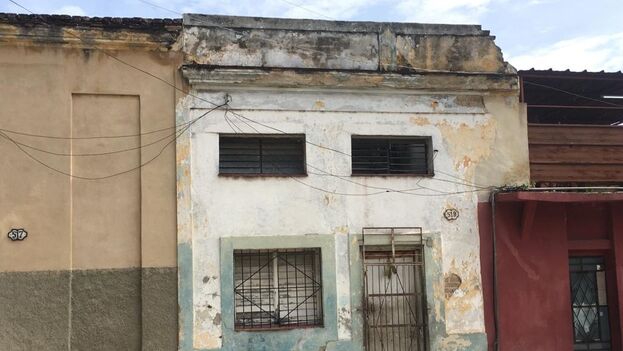
The day after the collapse, officials from the Diez de Octubre Municipal Housing Directorate inspected the area and ruled that the property is uninhabitable. (14ymedio)

14ymedio bigger14ymedio, Serafín Martínez, Havana, 3 November 2020 — Not even the birthplaces of the “revolutionary heroes” are spared the disaster in Cuba. On Calle Delicias 519, in the Havana municipality of Diez de Octubre, the family now living in the home where Commander Juan Almeida Bosque (1927-2009) was born was left homeless when the roof collapsed.

The partial collapse occurred on the afternoon of Sunday, October 25, without any casualties, but the residents’ belongings were destroyed. Yadira Melencio Álvarez, 35, lived in the building, along with her three minor children.

The four are now living in a Housing office waiting for a solution. “Yadira is going through really tough time, because she can’t cook, or wash, or anything,” a relative told this newspaper. continue reading

The day after the collapse, officials from the Diez de Octubre Municipal Housing Directorate inspected the area and ruled that the property is uninhabitable and is in imminent danger of structural collapse. They told Melencio to go to their offices on Patrocinio Street at the corner of Goss, in the La Víbora neighborhood, where they would direct her to a provisional shelter, but the situation remains unresolved.

“She is holding out there until she sees what solution they offer her. Whether they assign her materials and a subsidy to repair the house, or if the Government gives her another home and keeps hers to make into a Juan Almeida museum. The latter would be the best solution and for this, and the decision would take into account that, just two blocks away, is the birthplace of Commander Camilo Cienfuegos,” says the same source.

“Yadira is not a member of Juan Almeida’s family, she has nothing to do with him. We know that it is his birthplace because many years ago the commander came with his bodyguard and some filmmakers who filmed the house. He himself said so,” adds the woman.

Lázara, a resident of the area who, at 77, is one of the oldest in the area, confirmed the story to 14ymedio. “When he visited the house at Delicias 519, Almeida took many photos there. It was very simple and he talked a lot with the neighbors. He did not remember any of them but insisted that he lived there,” she recalls.

While at the Diez de Octubre Municipal Housing Directorate, Yadira Melencio refused to make statements to the independent press. Nor did the area’s officials want to answer 14ymedio‘s questions about what seems to be a common pattern in the procedures for the relocation of victims, who are forced to stay in offices due to the lack of shelters or places to move to in other communities.

As of December 2018 there was a housing deficit of almost a million residential properties in Cuba. That was the last time the official press published figures on this problem and it has only increased. Experts consider that this data is already overtaken by a reality that continues to deteriorate day after day.

____________

COLLABORATE WITH OUR WORK: The 14ymedio team is committed to practicing serious journalism that reflects Cuba’s reality in all its depth. Thank you for joining us on this long journey. We invite you to continue supporting us by becoming a member of 14ymedio now. Together we can continue transforming journalism in Cuba.
Raul Castro Reappears after Reports of Illness Are Leaked / Juan Juan Almeida

Our apologies, the video is not subtitled.

Note: This post is from October 2020, since which time Raul Castro has ‘reappeared’ more than once.

Juan Juan Almeida, 9 October 2020 — In recent episodes of this program I showed a transcript of a recorded conversation I had with a source who informed me that on Tuesday, September 23, 2020, the Interior Ministry informed the Politburo that weekly Tuesday meetings would be suspended (indefinitely) due to the health of the Leader.

The source also said that Politburo members, all of whom were present, were not allowed to say anything about it and that henceforth their conversations would be monitored by the armed forces.

But yesterday, October 7, on the eve of the commemoration of the death of Ché Guevara, Raúl Castro appeared on camera and many now want to eat me alive.

Some say I am a liar.

Some more conservative observers say I am naive.

Those who are more conspiratorial say my sources are from the Cuban intelligence services and gave me misinformation to trip me up.

Others focus on subtle clues in images from General Castro’s appearance.

He certainly appeared to be much younger, and so energetic that one wonders if he had been soaking in a tub of Red Bull.

The Onion of Mistrust

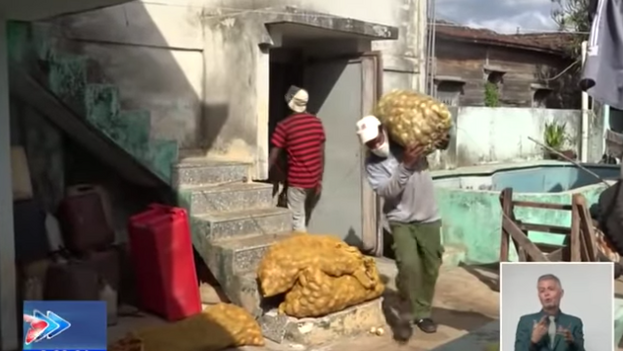
The relentless persecution unleashed by the state to enforce the insane rules imposed on peasants is only successful on television. (Screen capture)

14ymedio bigger14ymedio, Reinaldo Escobar, Havana, 31 October 2020 – When my neighbor Manolo assured me that the absence of onions in the market was the consequence of the confiscation against a private onion warehouse in the Mayabeque province at the beginning of July of this year, it brought to mind a book I read when I was 18, Logical Errors.

In the text, published in 1964 by Political Editing under the authorship of the Soviet academic A.I. Uemov, there is a concept that has stayed with me until today: “The link that the person establishes between thoughts may or may not correspond to the real relationship that exists between them.”

Indeed, it is difficult to relate with any degree of logic that the thousands of tons of the confiscated vegetable (valued at 47 million pesos) still have an impact on the lack of this appreciated ingredient making Cubans cry today, when they realize it’s nowhere to be found in their kitchens. continue reading

However, there is a real relationship between the act of confiscation and food waste. The 30 people behind bars subjected to police investigation is what is causing repercussions here because it is not a mathematical link but something that living beings of almost all species have learned through experience.

This old lesson teaches us that the feeling of trust takes time to settle into a sense of security, but distrust sets off alarms that immediately activate defense mechanisms against danger.

The trust we develop towards a person, a commercial brand or a government, is built over the years, but mistrust arises, like a warning flash, and it surges because we have been surprised by a suspicious gesture in one who had seemed a friend; or because of a slight change in flavor in the product that we had liked since we were children; or the breach of the promises with which politicians come to power.

Onion farmers must first ensure that their seedbeds are protected; a couple of weeks later, the seedlings need to be transplanted to furrows, but first the land has to be properly cleared, watered and care taken that the crop won’t be affected by weeds. Finally, the harvest will come. All of this has to be done standing up in full sun and not sitting in an air-conditioned office.

It seems obvious that to commit to planting onions you have to be convinced that the work you do will be rewarded with an adequate financial remuneration, in addition to a deserved social recognition. If product marketing involves restrictive rules that limit profits, it only remains to try to skip the rules or plant something else. When the rules, in addition to being absurd, include disproportionate punishment, the project will be abandoned.

The relentless persecution unleashed by the Cuban State to strictly enforce insane rules imposed on farmers is only successful on television programs, where the seized merchandise is shown, and in courtrooms, where sentences are handed down, but the distrust generated in producers leaves a sequel that translates into my neighbor Manolo’s apparent lack of logic. Yes, our food cannot be well flavored because of the police operation in Mayabeque.

The worst thing is that once trust is lost, the time it will take to regain it is incalculable. We will have to continue crying over the onions.

Translated by Norma Whiting

____________

COLLABORATE WITH OUR WORK: The 14ymedio team is committed to practicing serious journalism that reflects Cuba’s reality in all its depth. Thank you for joining us on this long journey. We invite you to continue supporting us by becoming a member of 14ymedio now. Together we can continue transforming journalism in Cuba.

The Two Pandemics

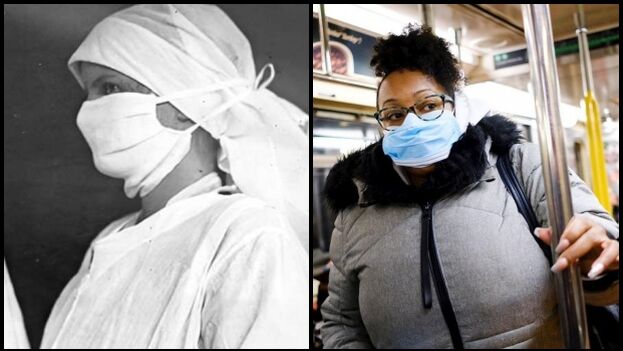
In 2020, a century after the previous pandemic, history repeats itself, says Carlos A. Montaner. (Collage)

14ymedio bigger14ymedio, Carlos Alberto Montaner, 1 November 2020 — The Economist claims that Donald Trump will lose the November 3 election. They have even dedicated an editorial to explain why voters should favor Joe Biden. In my opinion, The Economist is the most prestigious popular news outlet in the world and reflects what the polls say. The great British liberal magazine, founded in 1843, is willing to bet its prestige supporting that statement. (Liberal, in the European sense of the term, that is, conservative on fiscal matters plus free markets –that’s why Marx and Lenin detested it– but very open on social issues, that’s why the conservatives rejected it).

At the beginning of April, the situation was different. From that moment, things began to go wrong for Trump. It wasn’t his nasty bragging. Nor was it his behavior as a bully, as a merciless thug against the physical limitations of his political adversaries, whether it was John McCain or Serge Kovaleski, an NYT journalist Trump made fun at by imitating his spastic movements in public. It was not, in short, his character which would have influenced his hypothetical defeat. The essential thing was the virus, Covid-19, and the havoc it caused in American society. No one can handle that. In democracies the social tendency is to make whoever is in power pay for the mistakes.

In 1918, perhaps in Kansas, the pandemic of the virus called by the aseptic and unsexy name of H1N1 began. Theoretically, it traveled from Europe with the first American soldiers returning after contributing to victory in World War I. In total, 675,000 infected by the virus died in the US and about 50 million in the whole world. As the 1920 census only counted 106 million people, barely a third of the 330 million that now populate the United States, we must think that the mortality of this influenza, wrongly named “Spanish,” was infinitely higher than that of the current coronavirus. continue reading

It was probably similar, although medical care today is better and there are antibiotics to treat bacterial infections that often arise after the attack of viruses. In any case, the conflicts were the same–there were people who refused to put on the face mask or to keep the so-called “social distancing.” Since the Middle Ages, it has been known that these two weapons, plus well-ventilated places, and body hygiene, were almost the only way to defend against epidemics.

When Trump predicts that one day the virus will magically disappear, he is not making it up, but observing what happened in 1920. After 15 terrible months, the H1N1 virus, helped by a fiery summer, vanished with relative ease, but back then aviation was in its infancy. Today it will not disappear until a high percentage of the population is vaccinated and antiviral cocktails are available and at affordable prices, as is the case with AIDS drugs.

I suspect that the H1N1 and Covid-19 political consequences will be very similar. In 1920 there were general elections in the United States. Although the country arrived late to the conflict, it left some 117,000 corpses in Europe (about a fifth of those taken by the pandemic). President Woodrow Wilson had to face the ruin brought by the pandemic and an insubordinate society that didn’t believe in the Head of State’s sagacity. Wilson had promised them that he would not allow himself to be dragged into the war by the bellicose Europeans and, in the end, attacks on the US merchant marine by German submarines, plus the well-known “Zimmermann telegram,” made him enter the war.

Wilson’s role as a winner in World War I was useless to him. The US Congress did not approve his famous “14 points,” nor was the country able to participate in the League of Nations. American society, perhaps fatigued by the pandemic and tired of the Democratic Party, elected Warren Harding, a Republican journalist from Ohio, as president. Harding took over a country that was near-bankrupt, but it soon recovered and gave way to the “roaring twenties.”

On that occasion, the Republicans had the greatest victory in history against the Democrats; they won the 1920 election by a margin of 26 points. Harding died of a heart attack in 1923, still in the presidency, leaving his Vice President and successor Calvin Coolidge at the helm. In 1928, the also Republican Herbert Hoover, an engineer, won the presidential election. Hoover was an excellent civil servant who was surprised by the “crash” of the Stock Market in 1929. In 1932, Franklin D. Roosevelt defeated him, and the cycle of the Democrats began.

In 2020, a century after the previous pandemic, history repeats itself, but the other way around–the virus annihilates Donald Trump and the Republicans. There is some poetic justice in that defeat.

____________

COLLABORATE WITH OUR WORK: The 14ymedio team is committed to practicing serious journalism that reflects Cuba’s reality in all its depth. Thank you for joining us on this long journey. We invite you to continue supporting us by becoming a member of 14ymedio now. Together we can continue transforming journalism in Cuba.
Within Days of the Start of the New School Year, Cuba’s Parents and Teachers Differ in Their Concerns

Classes resumed on September 1st in all provinces except Havana. (14ymedio)

14ymedio bigger14ymedio, Luz Escobar, Havana, 29 October 2020 — How many students will be allowed per classroom? Will all classes be indoors? Will there be a regular supply of water in the bathrooms? Parents’ questions grow a few days before the start of the school year in Havana. There are also many doubts from teachers, who try to resume instruction, interrupted last April by the pandemic.

In recent days, and in order to organize the return to the classrooms next Monday, November 2nd, teachers and directors have called special meetings to report on the measures that will govern going back to classes. The classrooms that have been deserted for months were filled this week with anxious and demanding parents, who expressed their concern about the sanitary conditions of the premises.

This Wednesday, in the municipality of Plaza de la Revolución, several schools convened a meeting with families. The main objective was for parents to know the new regulations and to become aware of how the evaluation plan will be carried out. Although these meetings do not normally manage to get everyone to attend, this time, few were absent. continue reading

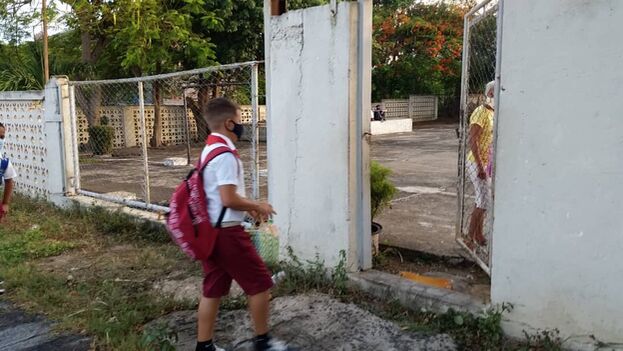
“The new measures ‘guide’ parents not to enter schools and children to not even peek through the gate, so everyone has to bring their snacks from home”

If eight months ago parent-teacher appointments were characterized by  the teachers asking the parents for cleaning supplies for the classroom, raising money to buy fans or selecting a delegate to represent families, now it is different. The fear of Covid-19 contamination rules the pace of the meetings.

At the José Luis Arruñada school, the seventh and sixth grade classrooms were full, everyone wanted to know how the center was preparing to receive the students. The teachers insisted the water supply would be guaranteed for the children to wash their hands, a promise that failed to convince the parents, who are aware of the hydraulic problems that affect the property.

For decades, one of the most repeated complaints in Cuban schools — along with the poor quality of the lunches or the low level of teachers — has been related to the problems of health infrastructure, along with the lack of personnel or cleaning supplies. This last task, as a rule, is assumed and financed by the parents themselves.

“I’m going to bring soap, so don’t worry about that,” said the sixth-grade teacher when questioned by those summoned. “I will be here very early. The new measures ‘guide’ parents not to enter schools and children to not even peek through the gate, so everyone has to bring their snacks from home,” she said.

Parents’ greatest concern was about classroom hygiene and how teachers were going to guarantee the necessary distancing to avoid contamination. “I am responsible for everything that happens within the school. There will always be a teacher to accompany the student in each bathroom, turn on the water at the sinks and make sure that distances are maintained,” she explained.

Teachers will be overloaded with matters of classroom hygiene, and it’s already generating doubts in the sector. “They told us that it is our responsibility, but I am also at risk. I cannot solve what has been a problem for years in just a month,” a second-grade teacher, who is evaluating whether or not to continue teaching, commented to this newspaper “because now we will even have to play the role of doctors.”

“No child who has respiratory symptoms, fever or discomfort, will be allowed to attend school”

The early detection of children with respiratory symptoms, supervision of students’ hand-washing several times a day, controls to maintain social distancing and the responsibility of concentrating in the coming months on the material that should have been taught before the summer are some of the new responsibilities that burden teachers.

One of the teachers in charge of the sixth grade said at the meeting, “No child can come to school with respiratory symptoms, fever or malaise. In the case of allergic or asthmatic children having a crisis they will have to go through their family doctor to be examined and return with a note signed by the doctor.” She also recalled that wearing masks is mandatory and specified that each child must bring three masks to guarantee changing it at least after a snack and lunch.

Clear regulations have not been announced about the number of students that will be allowed per classroom, a weak point in education in Cuba, where the exodus of teachers to other, better paid sectors has forced class overcrowding in recent years. Nor has the use of television broadcasts to support teaching been announced, nor the systematic cancellation of periods in subjects such as English, computers and physical education.

Skepticism that some area schools should be closed, due to a possible re-outbreak, also hovered over the meetings this week, in a country where several provinces that began the de-escalation had to return to strict quarantines and the cancellation of teaching work. The field that opens as of next Monday is an unknown one for everyone.

In the meetings at the Arruñada school and in the face of fears unleashed by the coronavirus, few parents directed their concerns towards academic issues, and nor did the teachers explain how they are going to make up for all these months without education and the delay that this means in the lesson plan. Teaching seems to have taken a back seat, replaced by ensuring the health of students.

Clear regulations have not been announced about the number of students that will be allowed per classroom, a weak point in education in Cuba, where the exodus of teachers to other better paid sectors has forced class overcrowding in recent years 

Thus, the school director tried to calm the anguish, and in a smaller previous meeting with all the parents she assured: “Don’t worry, we have fixed the sinks in all the bathrooms and whenever a child wishes to wash his hands, he will be given permission to do so.” Some attendees wanted to verify this statement, but it was impossible because all the bathrooms were locked.

According to the authorities, it has been planned for this course to end on December 7th, at which time the new 2020-2021 school year will begin. In addition, details have been given about the calendar for revaluation exams in the case of junior high school students who have failed some subjects or want to improve their grades.

“At the moment, the initial grades are the only ones wearing uniforms. The school guidelines we have pertain to the rest of the students, and consist in the distribution of bonuses in December for such a time when the new school year starts, when everyone will already have their new uniforms,” explained the eighth-grade teacher. She also specified that in the case of students whose uniforms no longer fit, they will have the option to wear blue pants and a white pullover.

After each meeting it is inevitable that parents congregate outside the schools to share their impressions and doubts. A few meters from the entrance to Arruñada, at a former nationalized religious school currently under state administration, the faces this Wednesday afternoon showed more concern than relief.

One of the mothers was wondering how to make up for lost school time. She said she was convinced that when the new course begins, they will rush through all the content. “Just in case, I already got a private tutor for math, because I know that now they will want to blast from beginning to end and there is a lot of content,” she said.

“My son really wants to start,” said another. “He has a lot of energy and can’t wait to see his friends, so let’s see how distancing is going to be respected.” “Look at us, we are adults and here we are, not even keeping a meter and a half,” replied a father. “Going back to school is not a good idea, not yet,” another one was heard saying, seconds before the group dispersed.

In a few days they will be back in front of the schools with their children hand in hand and a bunch of questions still unanswered.

Translated by Norma Whiting

____________

COLLABORATE WITH OUR WORK: The 14ymedio team is committed to practicing serious journalism that reflects Cuba’s reality in all its depth. Thank you for joining us on this long journey. We invite you to continue supporting us by becoming a member of 14ymedio now. Together we can continue transforming journalism in Cuba.