The “Damn Circumstance” of Plastic Everywhere

As long as there is no awareness of the effects of plastic, the region will not be able to make progress on this issue. (14ymedio)

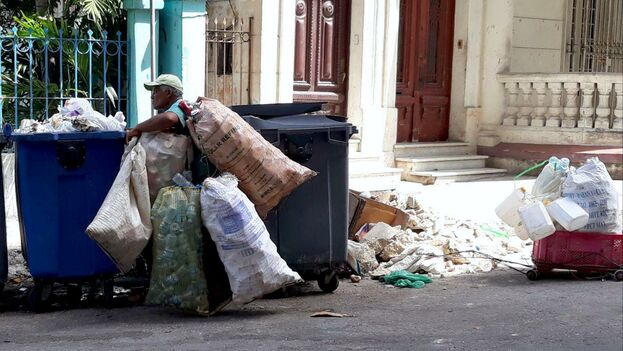
14ymedio bigger14ymedio, Yoani Sanchez, Generation Y, 28 June 2019 – A tourist finishes their meal in front of the sea and the wind carries off the disposable plate that a second earlier was on the table. A few yards away a local family enjoys a soft drink from a polyethylene terephthalate (PET) bottle that, shortly, will end up in the waters of the Caribbean. All of Latin America has one of its toughest environmental battles ahead, the one we must fight against the residue of single-use plastics that end up in nature, but there are nations where the first skirmish has hardly been engaged.

In Cuba, plastic bags in the markets have been an inseparable part of life for more than two decades. Considered almost a status symbol in the 90s when they began to be handed out with the opening of the first stores selling in hard currency, they are currently used for a wide variety of daily tasks: from repairing a broken pipe to head coverings on rainy days. You can see them floating in Havana Bay next to the bottles and beer cans in the dark waters that smell like hydrocarbons.

What happens on the island is part of the drama that is experienced throughout the continent. According to a United Nations report, one third of all waste generated in Latin American cities ends up in open dumps or in nature. Every day, some 145,000 tons of waste are disposed of incorrectly and only 10% is reused thanks to recycling or the use of various recovery techniques. Some countries, such as Chile, Peru and Costa Rica, have faced this situation with legal actions, while others, such as Jamaica and Panama, are beginning to draw up regional alliances to avoid greater evils. continue reading

But the problem has deep roots in education, environmental training and even into civil society’s autonomy or power to make itself heard. As long as millions of citizens in this part of the world continue to believe that pollution is something far away that occurs only in a distant garbage dump, or in remote oceans, and that they are safe inside their homes, little can be achieved. Nor can much be achieved if we persist in the mentality that places consumerism and the exhibition of material goods above the protection of the planet. If we continue to associate single-use containers with comfort, modernity or purchasing power… we will end up drowning – literally – in plastic.

In Cuba, with all markets under state management, with state control of all television channels on the island, and with a well-oiled state propaganda mechanism, the authorities could have declared a battle against PET bottles and disposable bags, popularly known as jabitas.

To date, however, the government’s attention to the serious problems of the waste that fills our seas and our countryside has been minimal. At this point, the importance of a civil society that promotes these campaigns is clear, as is the need for citizens to have an active voice when talking about the environment.

____________________________

This text was originally published in the Deutsche Welle for Latin America.

The 14ymedio team is committed to serious journalism that reflects the reality of deep Cuba. Thank you for joining us on this long road. We invite you to continue supporting us, but this time by becoming a member of 14ymedio. Together we can continue to transform journalism in Cuba.

Cuban Government Announces Salary Increase for More than 1.4 Million State Workers

Adjustments will also be announced in order to “avoid the inflationary effect of the measure”. (DC)

14ymedio bigger14ymedio, 27 June 2019 — Cuban president Miguel Díaz-Canel announced, on Thursday, a salary increase for workers in the state sector. A statement read on Television News detailed that the minimum wage on the island is set at 400 CUP per month, about 16 dollars, while the average salary reaches 1,067 CUP (roughly $42.70 US), an increase of 290 pesos compared to the previous year.

“This is not the final salary increase we are planning, but it is quite significant for the conditions we are in,” said Díaz-Canel, according to the official newspaper Granma. The direct beneficiaries of the increase in the minimum wage will be more than 1.4 million state workers and the measure will cost the State 7.5 billion pesos per year.

The sectors that will be favored are those related to the Central State Administration, the local organs of the People’s Power, and State organizations and associations, the statement clarifies. continue reading

For retirees, the minimum pension is maintained at 242 CUP (roughly $9.70 US), while the beneficiaries of social assistance will maintain their minimum pensions at 217 CUP per month (roughly $8.70 US).

The Minister of Finance and Prices, Meisi Bolaños Weiss, said state workers will pay taxes of 2.5% for those who earn monthly income up to 500 CUP and 5% for those who receive salaries above 500 CUP.

With the aim of “avoiding the inflationary effect of the measure,” the head of the branch explained that his ministry “will provide the necessary mechanisms throughout the economy to mitigate possible price increases.”

Díaz-Canel indicated that the ministries involved have to establish observation mechanisms to track prices and consumption; “This gives us time to rectify any element and prevent inflation.”

For his part, the Minister of Economy and Planning, Alejandro Gil Fernandez, announced several measures aimed at “a greater responsiveness to the needs of the population and the economy” to confront the US embargo.

Among the measures cited by Granma are the decentralization of pay for performance systems, eliminating administrative restrictions, as well as giving more power to the directors of state companies to approve worker payment systems. The head of the economy also called to prioritize piece rate payment and to tie salary increases to profits.

The president called to stimulate the sales of food, construction materials, tourist packages and the services of the Telecommunications Company of Cuba, Etecsa. Etecsa has been the target of intense demands by its customers to lower its prices. This coming Saturday there will be protests for fourth consecutive week under the hashtag #BajenLosPreciosDeInternet (Lower Internet Prices).

One of the principal popular complaints is the high cost of living. According to the economist Carmelo Mesa-Lago, Cubans’ purchasing power is only 60% of what it was in 1989, before the collapse of the Soviet Union, which supported the island with large subsidies.

The situation is even worse for those who receive pensions, because their real income has fallen by half compared to what they had before that crisis. According to a recent study by another Cuban expert, Pavel Vidal, the size of the Cuban economy has decreased compared to other countries in Latin America and the Caribbean.

Among the most significant wage increases in recent times was the one that benefited Public Health workers in 2014. At that time, increases of up to 178% were implemented that allowed certain medical professionals to earn a basic monthly salary of up to 1,600 CUP, equivalent to 64 dollars.

In 2016, the Ministry of Education decreed a selective salary increase between 200 and 250 CUP for those teachers whose classrooms had more students than the norm in primary education.

Last October, Ulises Guilarte de Nacimiento, general secretary of Cuba’s only legal union, the Central de Trabajadores de Cuba (CTC, or Cuban Workers Center), announced that the authorities were working on a general salary reform. “This issue is being addressed with the highest priority by the country’s management,” he said at the time.

In April of this year, during the sessions of the CTC Congress, salaries was one of the most addressed issues. With 4,482,700 workers working in the state sector at the end of 2018, the low economic income is a frequent reason for the exodus of professionals to self-employment.

______________________


The 14ymedio team is committed to serious journalism that reflects the reality of deep Cuba. Thank you for joining us on this long road. We invite you to continue supporting us, but this time by becoming a member of 14ymedio. Together we can continue to transform journalism in Cuba.

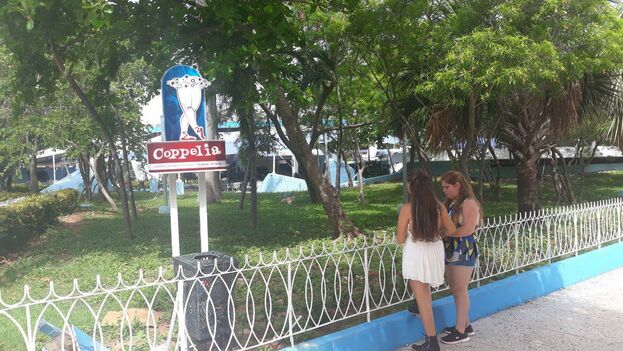
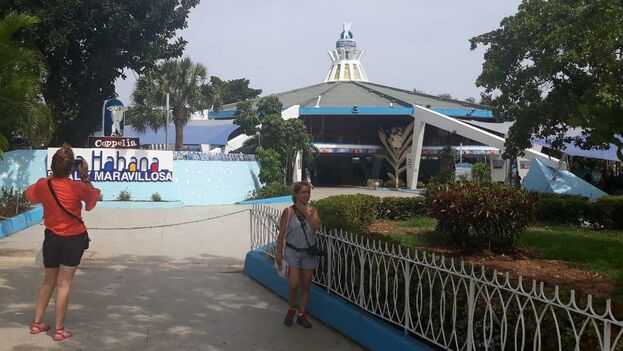
Coppelia is Ready to Open, All That’s Missing is the Ice Cream

Today the central location is painted and has new furniture, respecting the traditional seating of the past. (14ymedio)

14ymedio bigger14ymedio, Luz Escobar, 24 June 2019 — Many Havanans had planned to get some relief from the intense heat of this first weekend of summer by buying a tasty ice cream in the renovated Coppelia ice cream parlor, whose public reopening was scheduled for Sunday after an official opening the evening before, but it never happened because the ice cream did not arrive on time.

“I do not know exactly when we will open, they have already extended the date three times, but what I can tell you is that here, right now, everything is ready, we just need  the ice cream, but the factory is still having problems,” a security employee explained on Saturday in the forecourt of the premises, located at the corner of 23rd and L Streets in Havana.

“Yesterday a guard here told me that this Saturday would be the official opening and that tomorrow, Sunday, it would be open to the public. That’s why I came here today, because I wanted to bring my children tomorrow, but I don’t feel like making the trip with the children for nothing,” a woman told the Coppelia guards. continue reading

According to official figures, Coppelia is visited every day, on average, by some 8,000 people. (14ymedio)

At the weekend, the downtown site looks like it had been painted and there is new furniture, the style of which respects the traditional chairs. In addition, awnings have been placed in the open areas, known as “courts,” which were previously mostly exposed to sun and rain.

On the side of the ice cream parlor, where the parking lot is, two booths have been built for the sale of ice cream cones. One of the employees who, this Saturday, was cleaning up the remains of paint explained to this newspaper that there will be two options offered for sale, one in convertible pesos and one in national currency.

Last April, both the Coppelia factory and the ice cream parlor closed their services. At that time it was said that the objective was “to make technological improvements, to perfect the production processes, and to create the conditions for the definitive and stable production of Coppelia ice cream.”

At the end of last month the general director of the Dairy Complex of Havana, Chelenin Darias Jorge, said that for the reopening a list of 20 flavors will be produced in the industry, guaranteeing no fewer than 10 for Coppelia.

National television informed its viewers that the authorities were in the process of restoring the premises, but without fixing an exact date for its reopening. At the meeting, Miguel Diaz-Canel called for the ice cream parlor to maintain a “good service” beyond the first days.

The new Coppelia has renovated furniture, but traditional chairs. (14ymedio)

The first date announced for the inauguration was June 4, Coppelia’s 53rd anniversary. Later it was announced for June 14 and, finally, for Saturday the 22nd, but none of these dates have been met.

According to official figures, Coppelia is visited every day, on average, by some 8,000 people, although during school holidays it can reach 12,000 visitors in a single day.

This Sunday, the security employee again explained that the factory hurried to try to open this Tuesday and the evening news closed with images of the emblematic ice cream shop and the commitment of an opening this week. Maybe, in this case, the fourth date will be the one.

__________________

The 14ymedio team is committed to serious journalism that reflects the reality of deep Cuba. Thank you for joining us on this long road. We invite you to continue supporting us, but this time by becoming a member of 14ymedio. Together we can continue to transform journalism in Cuba.

Passengers, Victims of the War between the Government and Taxi Drivers

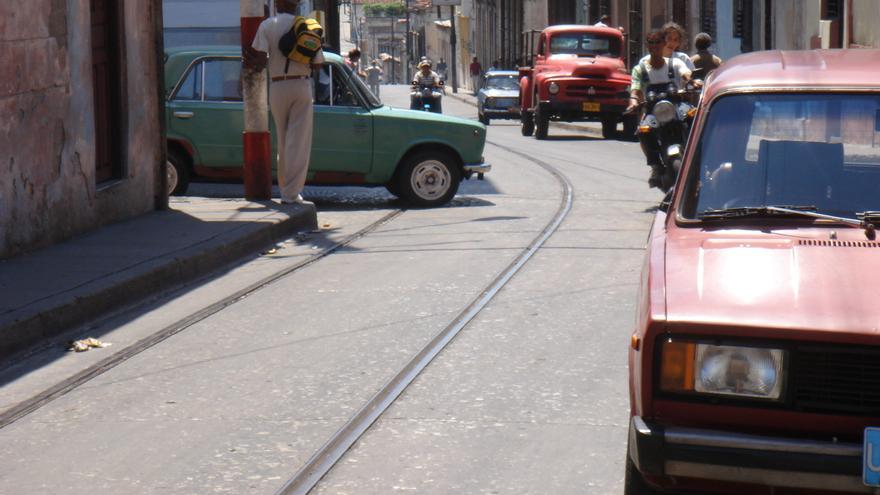
For decades transportation has been a big problem in Santiago de Cuba, where passengers depend primarily on delivery trucks and motorcycles to get around. (A. Masegi)

14ymedio bigger14ymedio, Marcelo Hernandez, Havana, 25 June 2019 — In small cafe, located only a few yards from the Monaco Cinema and one of Havana’s most prominent private taxi stands, an employee and the cafe’s the meager clientele confirm what everyone already knows. The cab fares in the vintage 1950s cars known locally as almendrones have risen so much that customers must now choose between a pizza or a shared-taxi.

Last October the Provincial Administrative Council began an experiment that involved new rules along with economic and fiscal incentives for self-employed workers in the transportation sector. In December a package of measures took effect which regulated where they could drive, the sale of gasoline and the locations where they could pick up passengers.

Unhappy with regulations they considered to be overly restrictive, taxi drivers went on strike. For almost a week, the familiar 1950s vehicles, which have long been a mainstay of Havana’s urban landscape, were barely visible on the streets. Many drivers later returned to work but under guidelines that were not strictly legal. continue reading

A ride that used to cost 20 pesos was now being divided into two, three and even four segments. Customers were now paying 10 pesos per segment. In the best case scenario, the fare was double what a customer had been paying for the entire ride. This trick allowed driver to evade controls by fare inspectors. If a customer filed a complaint, the driver could claim he had never charged the passenger more than 20 pesos a ride.

“I work in Old Havana and live in Lisa,” says Monica Puerto, an employee at a privately owned cafe in the city’s historic center. “I’m now paying 40 pesos, twice what I used to pay. But that’s not the main problem because, in the end, I can adapt and pay for it out of my tips. What’s worse is that I cannot find a taxi that will take me all the way.”

“To get to work last Friday, I had to take three different taxis. When I add it all up, I am spending more time and more money,” says Puerto. In response, officials are increasing the number of public transport vehicles, adding twelve-seat microbuses to several routes. Demand is so high at peak hours, however, that bus stops are packed.

“It is virtually impossible to catch one in the middle of a route because people who have to travel long distances know that, if you don’t get on at the starting point, you won’t be able to get on later,” explains a nurse who takes the bus between Central Havana and Playa several times a week. “With my salary, I had a hard time paying for private taxis before but now it is impossible.”

Half hidden under the shadow of a tree on Carlos III Street, an inspector in a blue vest waits for the traffic light to turn green to pull over and inspect an almendron on this route. He stops one with three passengers and asks to see the driver’s papers. While checking to see if everything is in order, he takes the opportunity to ask the passengers how much they are being charged. The customers close ranks with the driver and state the official price.

“The problem we have is that the people themselves are complicit in their own robberies,” explains the inspector to a couple of curious onlookers. “If passengers filed a complaint when they are forced to pay twice the official rate, things would be different.” The same scenario is repeated in the next two inspections.

“Trying to create order has created chaos,” complains a mother carrying her daughter a few yards away. “The problem is not the prices the almendrones are charging. The problem is our salaries.” The woman, a housewife whose husband is a doctor on a medical mission in Africa, believes the battle between the self-employed workers and the government is hurting customers.

In Santiago de Cuba, the same is happening. On Monday, price controls began taking effect on private transport workers, mainly drivers of motorcyles and private delivery trucks with seats added to them.

Mayra Perez Gonzalez, vice-president of the provincial administrative council, has argued that the new fares are the result of work by a “multi-disciplinary commission” that seeks a “balance between the service [drivers] provide and the purchasing power of our people.”

To keep drivers of private vehicles from charging the old fares, police officials have posted uniformed officers at stops to make sure the five-peso fare limit on private trucks is being observed. “The stops are packed and there is no way to get from one point to another,” complains a Cuban Patriotic Union activist in a Youtube video.

“We already knew that this was coming because, as soon as these rules were took effect in Havana, everyone became irritated. But we thought that maybe the government had changed its mind and wouldn’t impose these prices here,” says Elsa Rojas, a resident of Palmarito del Cauto, which, she claims, “is now essentially incommunicado because of these measures.”

Rojas noted that, on Monday, she was not able to travel to the provincial capital because “there’s no transportation, not public, not private… A truck stopped at a spot far from the usual pick-up point but a fist fight broke out over who was going to get into it and the driver warned them that he was not going to make the whole trip. This is complicating everyone’s family life and we are the ones who have to pick up the pieces.”

_____________________________

The 14ymedio team is committed to serious journalism that reflects the reality of deep Cuba. Thank you for joining us on this long road. We invite you to continue supporting us, but this time by becoming a member of 14ymedio. Together we can continue to transform journalism in Cuba.

Two Lives Drowned in the Rio Grande

The lifeless bodies of Óscar Alberto Martínez Ramírez and his one-year-old daughter, Valeria, on the banks of the Rio Grande in Matamoros, on Mexico’s border with the United States. (EFE / Abraham Pineda-Jácome)

14ymedio bigger14ymedio, Yoani Sanchez, Havana, 26 June 2019 – “I have a brother in Houston,” “I can’t find work,” “There’s a lot of violence here,” were some of the reasons to emigrate that three young people with sparkling eyes told me, haltingly. I was with them in a remote village in El Salvador – barely a month ago – and I asked them the question that has obsessed me for decades. Why do people emigrate? The same question asked of Cubans in the Darien jungle, of Africans in shelters in a Panama, and Hondurans traveling on the roof of La Bestia – the Beast – in Mexico.

This week, the bodies of a Salvadoran and his daughter were fond floating in the Rio Grande, after trying to cross the southern border of the United States. My first reaction was to look for his face, to see if it was one of those young people I’d talked with just four weeks ago in a remote part of that Central American country. But in the image being circulated both victims are drowned and face down on the bank. They float together in a final embrace that makes the scene even more dramatic.

Why do people migrate? I asked again after looking at the photo, and I myself answered: for causes as varied as those told me by those young people in the community of Santa Marta. They are escaping poverty, the lack of opportunities, and the gangs that are a cancer that crosses that small country, also known as el Lilliput del Pacífico. They flee from despair and many also are trying to complete the route that was previously followed by a cousin, a brother, the father himself. continue reading

It’s the cycle of flight. A path in which they risk looting, rape, modern slavery, deportation and death, but still undertake with a dose of illusion similar to that which motivated the first humans to explore new territories. But we are no longer in those times of discovering places or seeking the best hunting grounds, but rather in the era of displacements motivated by war, the deterioration of natural resources, poverty, the lack of job opportunities and the absence of rights. It is not the exodus of expansion but of flight.

I have traveled all over Latin America in search of the answer to my question and after that journey I can only say that the responsibility for this immigration drain is shared. Each of us has some guilt. To direct the accusing finger only at one piece of the picture is to ignore the multiplicity of strands – where non-conformity and desire mix; pain and dreams – strands that end up woven into any decision or willingness to emigrate.

They leave, not only because of the attraction of richer and safer countries such as the United States, where many of these migrants already have relatives waiting for them. No, not everything is reduced to the siren songs of a more prosperous life.

Reducing the game to a search for comfort, the impulse to access streets that are better paved, markets that are more varied, better functioning public transport or a more generous salary is to ignore the complexity of the human soul. It would reduce people to a stomach, or a hand that plays with the remote control of a state-of-the-art electronic device.

This constant flight that marks the lives of thousands of human beings in our continent falls fundamentally on the shoulders of the governments and institutions of nations that have not managed to offer their citizens a decent life. Countries where politics has often been used more as a battlefield between partisan or ideological forces than as a platform of beneficial public services with initiatives and programs for the population.

People leave, especially, from the places where corruption, populism and, in many cases, clientelism fueled by the money of international programs, have been entrenched. To make matters worse, in much of Latin America executives make decisions that are driven for the convenience of a  small group, rather than the benefit of the people. Instead of nourishing hope, they encourage confrontation and distrust.

They also escape from the lack of freedoms. Being free is not only being able to take to the streets in a demonstration to make demands, to vote in elections or to decide which political force you want to support. The bars may be shaped by the inability to influence the course of national events, by the fear of punishment if criticism is expressed, by the intolerance of certain groups and the fear of taking risks in the exercise of citizenship.

The stampede is also caused by those civil society groups that prefer to shape themselves according to a foreign agenda, conceived and designed in some European office, rather than go out into the streets and listen to the problems of the common people and develop programs that allow them to love their surroundings, develop plans in their own country, and join together to confront problems and even to defend themselves.

The two inert bodies, found this week, symbolize the despair of all those who have left their lands: Hondurans, Cubans, Haitians or Salvadorans. Father and daughter floating in the waters of our own collective failure.

_________________________

The 14ymedio team is committed to serious journalism that reflects the reality of deep Cuba. Thank you for joining us on this long road. We invite you to continue supporting us, but this time by becoming a member of 14ymedio. Together we can continue to transform journalism in Cuba.

"Importing is Cheaper Than Producing," Laments Cuba’s Minister of Economy and Planning

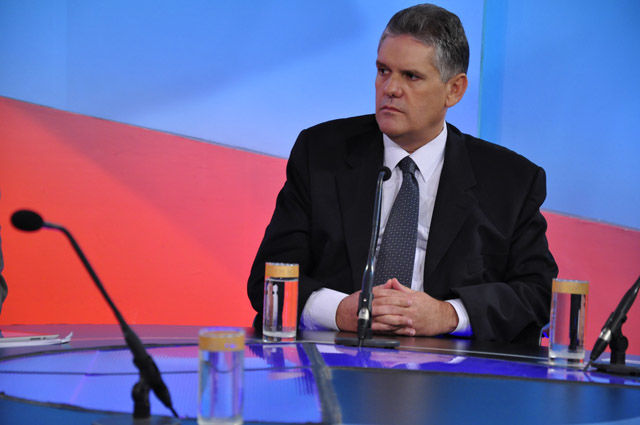
The Minister of Economy and Planning, Alejandro Gil Fernández, appeared on national television on Monday to dispel doubts about the Cuban economy. (Round Table / Archive)

14ymedio bigger14ymedio, Zunilda Mata, Havana, 25 June 2019 — Popular concerns about the worsening economic situation in the country have led the Minister of Economy and Planning, Alejandro Gil Fernandez, to appear on national television on Monday to dispel doubts. “We are not going to have a second Special Period,” said the official, who lamented that “today importing is cheaper than producing in the country.” 

For more than a decade, since Raúl Castro assumed the presidency of the country in February 2008, one of the slogans most repeated by the Cuban government has been the need to “replace imports.” But the calls to reduce purchases abroad have been met with the monetary reality of the country, divided for a quarter of a century between the dual currency system comprising the Cuban peso (CUP) and the convertible peso (CUC).

Along with the two currencies, different exchange rates work for different sectors of the economy. A dollar can be equivalent to 1 CUP or 24 CUP, depending on whether it is a state or private entity. These distortions contribute to discouraging local production and “as long as this monetary environment persists, we have to find a way to directly finance the national industry,” the minister said. continue reading

“Today the country spends more than one billion dollars on the importation of food and not everything can be produced in Cuba, but a part of it could,” he said. “Today more than 900,000 tons of corn are purchased abroad for animal feed; this year the country is expected to produce more than 130,000 tons.” The greatest expenditures are for food and fuel.

Using great car, to avoid the phrases that generate alarm, and replacing “crisis” or “recession” with concepts such as “complex conjuncture” or “economic tension,” the head of the economy blamed the application of Title III of the United States’ Helms-Burton Act, in addition to the recent ban on cruise ship travel, for the difficulties in achieving the goals set.

In May, the Administration of Donald Trump approved the enforcement of this part of a law that punishes those who profit from properties that belonged to US citizens that were confiscated after the coming to power of Fidel Castro in January 1959. The first lawsuits have already been presented in US courts and are considered by specialists as a “bucket of cold water” for potential investors on the island.

Gil Fernandez also blamed the US embargo for the current situation, although he admitted that there are “internal shortcomings: productivity problems, deficits in the investment process, breaches of export revenues, lack of incentives to export more, diversion of resources (a euphemism for ’theft’), indiscipline, obstacles and bureaucracies.”

The minister alluded to the words of the President Miguel Díaz-Canel, who recently, during the Congress of the National Association of Economists and Accountants of Cuba (ANEC), recognized the existence of an “internal blockade,” a concept that until then was only voiced by opponents of the government and by the most critical voices within the island’s academics.

“Today we have a more diversified economy,” insisted the official, to mark the differences with the crisis known as the ’Special Period in Times of Peace’ into which Cuba fell after the fall of the socialist camp and the abrupt elimination of the Soviet subsidies to the island’s economy in the 90s. In contrast to those years, Gil Fernandez says, this time “we are not going to have an abrupt drop in GDP, in fact we are proposing that the economy should maintain its growth trend this year.”

At the end of 2018, the authorities announced that the Island had a discreet growth of 1.2% of GDP that year and that an additional 1.5% was expected for 2019. In a study published in January of last year, the Inter-American Bank of Development (IDB) indicated that Cuba have not 35%, as had previously been reported, but a “little more than 50%” of its Gross Domestic Product in the 90s and that crisis still weighs on the economy.

____________________

The 14ymedio team is committed to serious journalism that reflects the reality of deep Cuba. Thank you for joining us on this long road. We invite you to continue supporting us, but this time by becoming a member of 14ymedio. Together we can continue to transform journalism in Cuba.

Are Changes to Central Planning Enough to Fix the Cuban Economy?

A Cuban farmer makes extra money turning the invasive marabou weed into charcoal for export. (14ymedio)

14ymedio biggerElías Amor Bravo, economist, June 18, 2019 — Central planning is the basic tool used by the Castro regime to control the Cuban economy. More specifically, it replaces the market as a tool for allocating resources while at the same time taking private initiative out of the economic decision-making process.

Since the establishment of the Central Planning Board (aka JUCEPLAN) in the 1960s, Cuban economic planning, based on the Stalinist model, has never been able to reach its targets. The sad memories of Che’s failed “industrial plans” and the unsuccessful push to harvest 10 million tons of sugar in 1970 stand as historic paradigms of the inconsistencies and inadequacies of communist central planning.

Now it seems Cuba’s new economics minister, Alejandro Gill, has come up with a new twist. In 2020, he says, “the plan will be based with a new concept: It will be developed without specific directives or limits.” He explains that this is because “it will be predicated the active participation of the workers in each company.” continue reading

But don’t get too excited. As long as central planning rather than the marketplace remains the tool used to allocate financial resources, the economy will still have all the same problems as before. Getting rid of the plan is a necessary condition for opening avenues to economic freedom but not enough to overcome the inertia and inadequacies that characterize the Cuban economy. The central plan is the cause, though not the only one, of the Castro-led disaster.

There is no point in making central planning the responsibility of businesses and workers without allowing them to make other decisions as well. I acknowledge it is a step in the right direction but it is not enough. But at this point, what’s the use in kidding ourselves? Taking economic planning out of the hands of communist bureaucrats — people who see themselves as better than the rest of us mortals at making decisions about what to consume, produce, import and export, and invest in — is not a bad idea. But I have the sense that at the end of the day, Mr. Minister, turning the central plan into some sort of — to use your words — “collective construction” intended to “identify potential opportunities in the nation’s businesses” amounts to more of the same.

In making this decision, the minister acknowledges something important. Basically, formulating a plan based on a global economic model from which the sector-specific directives would later be issued, requests for goods and services would be made, and the level of imports and exports would be predetermined make little sense.

The economy is much more than an isolated exercise in bureaucratic calculus. If you want to set up supply chains, you have to get rid of the so-called straitjacket and introduce objective, realistic and conscious decision-making methods. When it comes to doing this, nothing beats the market. A new mindset is clearly what is needed. Things have not been done this way in Cuba for sixty years but at some point you have discard what you cannot use and get to work.

The minister should know that, before embarking on this process, it is not enough to create a bottom-up plan. As long as certain structural reforms are not carried out, the results achieved from switching from a top-down to bottom-up approach will be negligible. Nor will they provide the efficiency necessary for a functioning economy.

I dare say that, without first carrying out the necessary structural reforms, this change could end up producing results even worse than those we have now. And it could generate numerous organizational problems for the economy. Given the very dramatic conditions in the country at the moment — among them, economic and legal restrictions and the impact of recent measures adopted by the United States — such a change would certainly not be advisable.

Before happily committing to any new bottom-to-top plans, to which President Diaz-Canel seems to have given his blessing, important decisions have to be made to guarantee a successful outcome. Among them are legal decisions involving property rights. I believe sixty years is more than enough time to conclude that the communist state’s monopoly ownership of the means of production has been one of the most negative factors impacting Cuba’s progress and economic prosperity.

It is the factor that most impedes improvements in overall quality of life and societal well-being. Given current conditions, there is no justification for all productive assets to be controlled by the state, or for the private sector to be limited to marginal activities such as small-scale self-employment and the long-term land leases.

The Cuban economy needs structural reforms and so the priority should be on restoring property rights and returning ownership of the nation’s capital and means of production to Cubans themselves. Privatizing the nation’s businesses and productive assets is necessary if the economy is to operate effectively again. There is no point in having bottom-up plans if those on the bottom lack the incentives, motivation and buy-in on the project for which they are working. Otherwise, they know they will never be able to take advantage of the fruits of their labor, or see the earnings from their work rise over time, or freely commit themselves to goals that have meaning for them, because they do not have ownership. It’s that simple.

Why work, why exert themselves, why dedicate time and effort to something that will not benefit them? We have to remove the Castros’ straightjacket and reorient productive capital and business towards the private sector, establishing a stable and respectable legal framework which would allow them to exercise their rights. This can be done quickly, as quickly or faster than the so-called revolutionary law-decrees that nationalized businesses after 1959. A couple of laws should be enough. Just transfer property rights to their owners and stop pretending once and for all that people’s assets should be controlled by the state and all the other communist nonsense.

The solution to the Cuban economy’s problems does not lie in government plans but rather, I strongly believe, in their elimination, or at least in a change to the planning process that will effectively tackle a chaotic technical situation in no one knows what to do. The solution lies in the field of property rights, in the idea that there must be private-sector economic players with decision-making power. They must be autonomous, independent of the state, people who can generate wealth for the benefit for their stakeholders. Modern and efficient individuals dedicated to a single principle: to provide the best possible service to their clients. This step is essential to correcting the badly damaged Castro economy. Without this step, there is nothing that can be done. The Chinese and Vietnamese did it and look at the results. Why not Cuba?

___________________________

The 14ymedio team is committed to serious journalism that reflects the reality of deep Cuba. Thank you for joining us on this long road. We invite you to continue supporting us, but this time by becoming a member of 14ymedio. Together we can continue to transform journalism in Cuba.

Cuban Football Team Captain "Deserts" From the Gold Cup

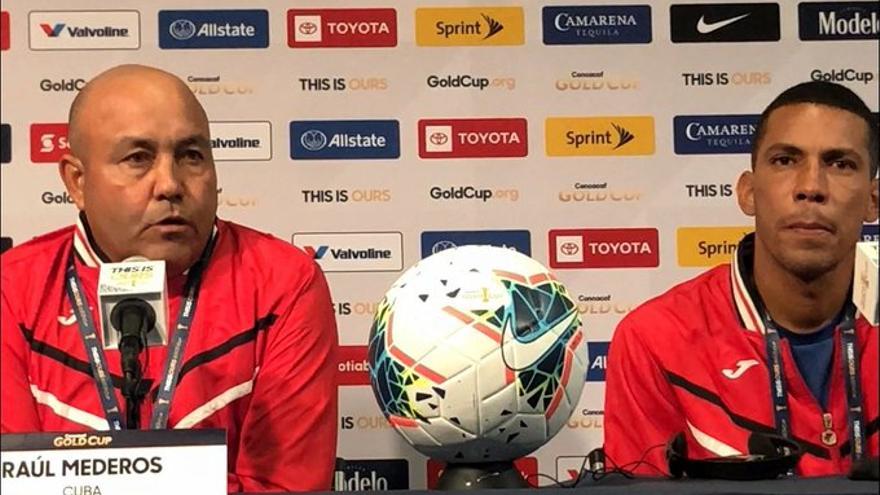
Raúl Mederos, coach of the Cuban soccer team, at the press conference after the game with Martinique. (El Universal)

14ymedio bigger14ymedio, Ernesto Santana, Havana, June 21, 2019 — The news spread quickly through the international press. The captain of the Cuban soccer team, Yasmani López, had abandoned the team at the Gold Cup of the Confederation of North America, Central America, and the Caribbean (CONCACAF) in the United States. One media outlet called him “the first of the Cuban players to flee” at this event, as if others could follow him.

Like so many other times, the team leadership delayed in making statements, waiting for instructions from Havana, which in turn was waiting to measure the repercussions of the event. Finally, the manager of the team, Raúl Mederos, recognized the act, which happened after the first match against Mexico.

“The team, as everyone knows, did not arrive at the Gold Cup with the full delegation,” said Mederos, “and indeed the number four defender abandoned the team on Saturday night. It’s his decision. None of his colleagues, there are 30 of us, have anything to do with that,” he specified at a press conference before the second game, against Martinique. continue reading

The curious declaration reveals the fear that in Havana they will try to look for supposed accomplices of the “deserter” and, additionally, reveals that a third of the group was made up of “non-athletes,” something customary in these delegations, which come to international matches well-escorted to prevent “escapes.”

The “number four defender” that Mederos alluded to is the 31-year-old captain and defender who had debuted with the national team in the Gold Cup of 2013 and since then had become an important part of the squad. “We only come to the pitch to give what we have, giving our hearts,” were his last words before leaving the team.

The high-profile repercussions and the sleepless nights of the team’s management are logical. By now it’s traditional that in CONCACAF competitions our players take the opportunity to request asylum in the US, like 12 members of the under-20 team did last November in Florida.

In the last six editions of the Gold Cup alone 11 athletes have abandoned the team, not to mention other soccer competitions in other places. Some continue playing the sport and have had success. Others not. But nothing indicates that this bloodletting will stop.

This 15th Gold Cup is being held (at the same time as the other main tournament on the continent, the America Cup) from June 15 to July 7, and 16 teams are participating. Cuba participated five times previously, beginning in 1998 and, for the last time, in 2007, but only in 2003 did it advance to the second round. Now they were competing in Group A with Mexico, Canada, and Martinique.

The Island had already lost the previous captain, the midfielder Yordan Santa Cruz, 25, who was denied a visa for unconfirmed reasons; according to some it was because of a disturbance of public order in Jamaica in 2015. According to others, it was for an unproven accusation of rape in the United States. Santa Cruz is contracted with the Jarabacoa FC de Dominicana and made the goal that got Cuba to this tournament.

When the Cup began, Mederos’s boys seemed the tournament’s weakest team. Their debut on Saturday the 15th against Mexico, which massacred them 7-0, amply confirmed all fears, aside from which it is certain that the Cubans have had problems with arriving on time and even with their uniforms.

On Wednesday the 19th, having already lost the second captain, Cuba fell again in the second game, 3-0, against Martinique, which had been thrashed 4-0 by Canada. Thus, without having scored a single goal, the Cubans were already eliminated in the group phase, fulfilling the majority of the predictions.

If some believe that this could be an insurmountable blow for the new generation of players who cannot see the sun, others believe that this disaster could sound the alarms and call attention to a discipline that is very marginalized despite the enormous and growing popularity of soccer in our country.

The criticisms of this performance, one of the worst in the last 20 years, begins with the poor selection of players starting with the recent National Championship and with the bad management of the lineup, but above all with the dreadful work of the Soccer Federation, which keeps the playing fields in lamentable conditions and refuses to consider including athletes who are on their own in foreign leagues.

In the end, the blame always ends up pointing toward that dark zone from which the instructions come down for the sports authorities, that, ultimately, it doesn’t matter whether or not they have intentions of carrying out the essential reforms to save the sport, because they don’t determine anything.

 Translated by: Sheilagh Herrera

____________________

The 14ymedio team is committed to serious journalism that reflects the reality of deep Cuba. Thank you for joining us on this long road. We invite you to continue supporting us, but this time by becoming a member of 14ymedio. Together we can continue to transform journalism in Cuba.

The Ideas of Freedom: The Debate Continues

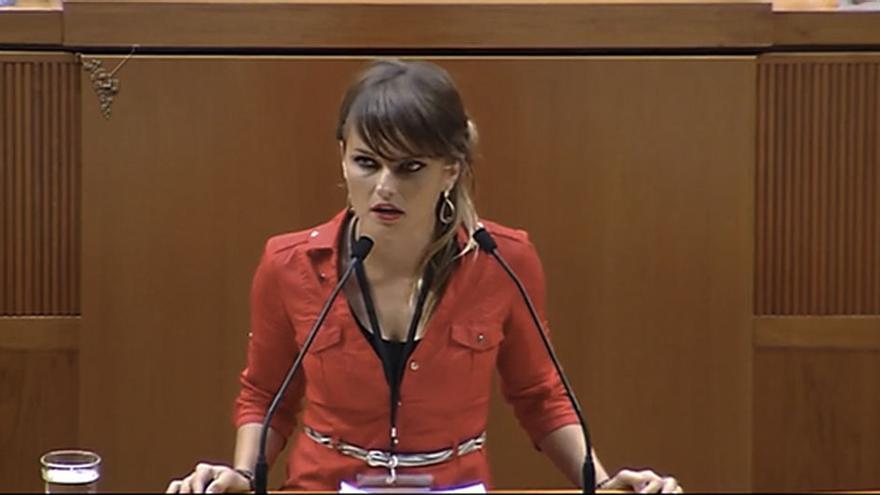
The Guatemalan Gloria Alvarez during a speech about populism that went viral on networks. (Screenshot)

14ymedio bigger14ymedio, Carlos Alberto Montaner, 23 June 2019 — Gloria Álvarez has returned to the charge. She has written How to Talk to a Conservative. This volume is the logical derivation of another very successful and very controversial text of hers: How to Talk to a Progressive. Her new work carries two claims in its subtitles: Why instead of encouraging it conservatism obstructs freedom in our societies  and Why liberalism is much more effective than conservatism to annihilate cultural Marxism. Obviously, Gloria gives the word liberalism the meaning that it is given in Europe and Latin America. In the United States, “liberalism” is something akin to social democracy, at least as far as public spending is concerned.

Meanwhile, the progressives, the socialists and (especially) the communists, felt justly alluded to and berated Gloria: “Is it only the left that makes mistakes?”

Gloria responded intelligently, “How is it possible to come from a nation like Guatemala, with 65% of the people living in poverty, and preach the virtues of the market and minimum government?” continue reading

But, on the other side, the conservative right also attacked her. Gloria is militantly atheist and believers are often intolerant of those who do not worship “the true god,” which is, of course, theirs. Gloria is feminist in the liberal way, that is, without disguises of false morality. She is an ecologist, to the extreme of launching an organization dedicated to reforestation in her country in 2012.

Gloria is, above all, a free spirit. She believes in the decriminalization of prostitution and drug use. People can do with their bodies what they want, because that is the most urgent terrain of freedom. They even have the right to make mistakes like smoking marijuana, snorting cocaine up their nose, injecting heroin or rubbing substances on their genitals that increase sexual pleasure. It is not up to the whole of society, and much less to the State, to dictate people’s behavior in bed. What two adults, or more, what they do in the privacy of a bedroom is their business alone.

Gloria attended a gay pride party Gloria with a T-shirt with a “heterosexual” legend to support the protesters. You do not have to be gay to feel solidarity with the cause of gays.

Gloria does not propose them, much less recommend them, but she knows that freedom includes varied behaviors and attitudes. Freedom even includes the right to die with dignity. As a Spanish suicide wrote: “To live is a right, not a duty.”

As well-known commentators say, Gloria’s ideas often provoke two contradictory attitudes. The bad is that all this usually opposes the most conservative conservatism. The good is that liberalism has been gradually defeating the ideologies that have opposed it since it was born in the atmosphere of the Enlightenment in the seventeenth and eighteenth centuries. The conservatives, the Marxists, the collectivists of all stripes, even the believers, although they do not recognize it, have had to incorporate liberal ideas and beliefs before undeniable rational evidence.

Why, then, resistance to the ideas of freedom? In my opinion, because these ideas arise from the particular psychological nature of certain people. Gloria is a free spirit because she has confidence in herself. Her ideology arises from her psychological structure and not vice versa. Gloria is not afraid of life.

However, there are countless people who are filled with panic and prefer to feel protected by a higher entity. These are the people devoted to strong governments, single parties, or the caudillos. That is why the liberals, the libertarians, the anarcho-capitalists are a minority. A formidable minority that has impregnated the rest of the ideological structures, but it is still the behavior of the entrepreneurs and the free spirits and those without fear.

This makes me think that it is very likely that How to Talk to a Conservative will successful in penetration and sales, as was How to Talk to a Conservative. This volume is the logical derivation of another very successful and very controversial text of hers: How to Talk to a Progressive, but it will hardly convince those who support a conservative view of human beings.

It is possible for people’s ideas to change, as shown by a thousand valid examples ranging from Octavio Paz to Mario Vargas Llosa, but it is much more difficult to renounce one’s psychological structure and self-perception.

In any case, the debate continues and it is very positive that Gloria Álvarez is the standard-bearer of the virtues of the ideas of freedom. It is excellent.

__________________________

The 14ymedio team is committed to serious journalism that reflects the reality of deep Cuba. Thank you for joining us on this long road. We invite you to continue supporting us, but this time by becoming a member of 14ymedio. Together we can continue to transform journalism in Cuba.

SNET Administrators and Users Use Twitter to Demand Change in Cuban Law

To enter SNet a person needs to know someone within the system who connects the potential user with an administrator who issues a name and a password. (David Himbert)

14ymedio bigger14ymedio, Havana, 24 June 2019 — SNet administrators and users are participating in a Twitter protest this Sunday to demand that Cuba’s Ministry of Communications (Micom) make changes in the new resolution that allows the network’s operation to continue. The organizers have asked that messages be sent with the hashtag #YoSoySNet (I Am SNet) this Sunday, 23 June, between 12 noon and midnight.

SNet, is an independent wireless network of more than 40,000 members that focuses on the exchange of offline content, video games and instant messaging.

“The time has come to fight for our space, the one in which so much effort has been invested. We have played, shared, enjoyed, several people have even ended up living together and forming families after getting to know each other in this Matrix,” they say in their call to action.

In a parallel effort, the group’s administrators continue to collect signatures throughout the country, also targeted to a solution that allows SNet to continue operating. This coming 29 July, the resolutions by which Cuba’s Ministry of Communications regulates private networks will go into force, preventing the power of the equipment from exceeding 100 milliwatts, which would result in the closure of SNet. continue reading

The followers of SNet are reluctant to accept the idea that Resolutions 98 and 99, approved by the Micom, will go into effect on the 29th with the current language.

Ernesto Nunez, one of the promoters of the Twitter protest, is aware that this initiative will not have an impact as significant as he would like but he trusts that, together, the actions will work.

“The Ministry can not ignore the avalanche of mentions on Twitter from Cuba from the last Twitter protest, the one on Saturday for #bajenlospreciosdeinternet (Lower the Prices of the Internet), and the one for SNet on Sunday, all addressed to them,” he said.

As of nine in the morning on Sunday some thirty users of the social network Twitter had begun to post messages with the hashtag #YoSoySNet, most of them also including references to the official Twitter account of the Ministry of Communications.

For an Internet user who posts under the nickname of Lumita, the official decision to implement these regulations shows that:

“No one understands the impact that #Snet has on our lives… if you have not experienced it is impossible to explain… seriously study, investigate, inform yourself… they are taking away years, dreams, money, education, time… so many people asking for this, and they say nothing?” ..@MINCOMCuba #YoSoySnet

— Lumitaa (@Lumita82) June 23, 2019

Several computer experts consulted by 14ymedio believe the limited milliwattage allowed in the new regulations taking effect on 29 July to be very harmful. It will affect the “low latency” of the links, necessary to be able to efficiently play video games or stream videos. In order to maintain a satisfactory connection between several points, the community would have to invest in the purchase of a large amount of equipment to allow a connection among several blocks of a locality.

SNet basically works with Ubiquiti brand wireless antennas — popularly known as NanoStation and also Mikrotik — most of which have an operating power from six and to 10 times the limits imposed by the upcoming legislation.

The administrators of SNet have proposed to the authorities the creation of “a special license” so that the network, as it exists today, can connect to the Etecsa’s web browsing services and continue to benefit its users.

Williams Fibla, responding to insults that have been launched by several official spokespeople against the clients of state telecommunications monopoly Etecsa in recent weeks to lower rates and improve web browsing services, insisted that those who are making this demand of Micom are not “mercenaries,” as the official spokespeople are claiming.

But even within the community of users and administrators of SNet, not all voices agree on the best methods to demand a change in the legislation.

The idea of the protest has generated criticism in one of the pages of the SNet Facebook community, some of whose administrators warn that they do not recognize any demands that are not generated by they themselves.

From the Twitter account @snet_cuba, which defends the protest, an inclusive message was sent to their colleagues:

“We will continue to fight for them too, because we understand that it is not just a pseudonym. #SNET Street Network that means the network in every corner of the country has the name it has, and we all have the same interests.”

Another administrator, who did not want to reveal his name, supports the Twitter protest. “This is how a project as good as SNET in all of Cuba is presented at the international level” and he believes that the project can become “recognized by the Cuban State. Everything is a matter of will and support on their part. That’s why we want to shout loud #YoSoySNet, so that we are heard and given a legal place in society.”

__________________________________

The 14ymedio team is committed to serious journalism that reflects the reality of deep Cuba. Thank you for joining us on this long road. We invite you to continue supporting us, but this time by becoming a member of 14ymedio. Together we can continue to transform journalism in Cuba.

Cuban Customers Demand, For the Second Time, that Etecsa Lower Internet Prices

One of the many calls that circulated in networks asking for rebates to the state telecommunications monopoly. (Twitter)

14ymedio bigger14ymedio, Havana, 16 June 2018 — The Telecommunications Company of Cuba (Etecsa) is going through difficult times on the island. In just 15 days, the state monopoly has been confronted by its customers twice on social networks with the hashtag #BajenLosPreciosDeInternet, demanding a reduction in prices and improvements in services.

The second day of protests took place this Saturday, just two weeks after June 1st when the #BajenLosPreciosDeInternet hashtag rose to number one on the Island, even above other traditional hashtags from the government. Unlike on the first launch of the Twitter protest, on June 15th Etecsa officials prepared to counter the online protest.

In 24 hours the hashtag #BajenLosPreciosDeInternet became a Trending Topic in Cuba, with messages published by a wide variety of users of the popular social network. Students, computer engineers, clients of the domestic service known as Nauta Hogar, independent journalists and activists were some of those who denounced Etecsa’s high prices. continue reading

In return, the state monopoly and several official spokespersons spread messages with labels such as #CubaInformatiza (Cuba computerized) and #CubaMasInternetvsBlock (Cuba More Internet vs. the Blockade [i.e. US Embargo]). The official accounts of Etecsa also published infographics and figures on the evolution of mobile telephone services, internet connectivity from homes and wifi zones, together with data regarding web browsing from mobile phones.

Inventario (Inventory), a statistical analysis project, counted the participation in the protest, identifying a total 1,061 unique users, 7,412 tweets in which the hashtag #BajenLosPreciosDeInternet was used, of which 2,256 were original tweets and 5,156 retweets. At the end of the day, the most used hashtags turned out to be #bajenlospreciosdeinternet with 2,675; #cuba with 322; #tarifaplananautahogar [rate plan for home internet service] with 56; #etecsa with 47; #aldeatwitter [twitter village] with 47; #bastaya (enough already) with 30; #cubainformatiza (computerized Cuba) with 24;  #abajotodoslosbloqueos (down with all blockades) with 24; #abajoelbloqueo (down with the blockade) with 19; and 18 for #cubanos plus 16 for #somoscuba (we are Cuba), according to the same source.

The hashtags generated a heated controversy on the networks. On one side were the customers who demanded a decrease in the prices of services, especially data packages to connect to the internet from mobile phones, as well as an improvement in the operations of the Nauta Hogar domestic connection and the rates of the navigation from the wifi areas, currently 1 CUC per hour (roughly equivalent to $1 US, or nearly a day’s pay in Cuba).

Dariel de la Rosa Pérez, who hashtagged Cuban president Miguel Díaz-Canel in his tweet, posted:

“We want to be connected, it is a basic right in this century. We can’t have a country where its rulers say the country is ’of the humble, with the humble and for the humble’ if they have services with prices that only the rich can afford. #BajenLosPreciosDeInternet @DiazCanelB

— Dariel De la Rosa Pérez (@darielrp) June 15, 2019

The data packages to surf the Internet from the mobile phones sold by Etecsa the range from 7 CUC for 600 megabytes to 30 CUC for 4 gigabytes, the latter the equivalent of the entire monthly salary of a professional.

Users such as one posting under the name Chawi alluded on Twitter to the subsidizing of cellphone balances for employees of Etecsa and other officials who were very active in the social network with official hashtags. “Etecsa seems to have recharged its workers’ accounts so that #BajenLosPreciosDeInternet does not trend. That is a sign that there is concern, we are doing well!! We will continue until we are heard,” he wrote.

Internet user Abel Cartaya, meanwhile, questioned why those who demand a reduction in the Internet rate are branded as “traitors” and added that following this logic, those who demand “direct or multi-party elections will have to ask for diplomatic immunity.” — Abel Cartaya (@AbelCartaya) June 15, 2019

The journalist and director of the independent media Barrio Journalism, Elaine Díaz, also joked about the unusual frequency of publication on Saturday from several official accounts. “I propose that all citizen Twitter protests occur on weekends. We pay the high Internet prices and they have to work Saturday and Sunday,” she wrote.

On the other side of the controversy were the Twitter accounts that promoted the official hashtags and accused the protestors of responding to a conspiracy launched from the United States and of supporting the Helms-Burton Act.

Cuba’s Minister of Communications, warned that the current Constitution “defends the democratization of cyberspace [and] condemns its use (…) for purposes contrary to the above, including the subversion and destabilization of sovereign nations.” pic.twitter.com/emF8XUydWQ — Jorge Luis Perdomo (@JorgeLuisPerd20) 15 de junio de 2019

Several customers responded to the minister questioning the real willingness of the authorities to extend the use of the internet within Cuba. The authorities have prioritized what they call the “social use” of the network in universities, work centers and wifi zones, but every day there are more voices demanding to be able to connect from homes and with more favorable prices.

Internet browsing from cellphones began on December 6 on the island and in its almost six months of implementation complaints from users have accumulated, due to high rates, constant crashes and poor coverage in several areas of the country.

In the virtual protest on Saturday, netizens also complained about the bandwidth congestion at various times of the day and the poor customer service that responds — most of the time — with evasive answers. However, it was the prices that dominated the discussion along with the need to depend on family members abroad to top-up the accounts of their relatives in Cuba, due to the low salaries paid on the Island.

Numerous Cubans from the diaspora joined the Twitter protest on the grounds that they are financing the connectivity of their families on the island through top-ups for cellphones and web browsing. A presence that the official spokesmen indicated as proof that the protest had been “fabricated from the outside.”

Several of the users who participated in the protest announced that they will maintain the use of the hashtag and that they plan new tweets of this type for the coming weeks.

__________________

The 14ymedio team is committed to serious journalism that reflects the reality of deep Cuba. Thank you for joining us on this long road. We invite you to continue supporting us, but this time by becoming a member of 14ymedio. Together we can continue to transform journalism in Cuba.

Cuban Human Rights Group Adds President of Etecsa to List of ’Violent Repressors’

Mayra Arevich Marín, director of the telecommunications monopoly, Etecsa.

14ymedio bigger14ymedio, Havana, 22 June 2019 — On Friday, The Foundation for Human Rights in Cuba (FHRC) added Mayra Arevich, executive president of the state telecommunications monopoly Etecsa, to its database of violent repressors, according to a statement released by the organization.

The FHRC, based in Miami, has also added Ernesto Gómez Novoa, second chief of the General Customs of the Republic of Cuba, blogger Iroel Sánchez and director of the CubaSí site, Manuel H. Lagarde to the list.

Averich has been classified as a violent repressor by the Foundation “for publicly inciting hatred” against the journalist and director of 14ymedio , Yoani Sánchez. In its statement, the FHRC warns that these attacks may open the possibility of acts of violence” against and they are happening “at a time when the government is intensifying its war propaganda against citizens.”

On Twitter, Sánchez said she would hold Averich responsible, “for any damage” suffered by her or her family from the dissemination of a “message of hate and misogyny” that the official spread in her account of that social network. continue reading

“A violent repressor is not only the person who strikes a peaceful opponent, but also the one who incites, foments and encourages the exercise of violence, as established by international norms,” explains the FHRC. “It is important that government officials and the Party know that their actions have inescapable individual responsibilities that do not diminish over time.”

“Among the participants of this recent orgy of insults are the pens of two collaborators of the State Security: Iroel Sánchez and Manuel H. Lagarde,” the text points out.

“Both had been included in our permanent database of Cuban white-collar repressors for months, but from now on they have reached the category of violent repressors,” he adds.

The NGO, based in Miami, noted that this is not the first campaign to against the journalist meant to kill her reputation. It also called attention to the “ferocity” deployed against her and the “uncharacteristic incitement” to violence.

Juan Antonio Blanco, director of the FHRC, said that people who feed hate “should take note that they assume legal responsibility before international courts.”

“This is now the case if Yoani Sánchez is the victim of physical aggression by fanatics, or by police agents disguised as an ’enraged people’, for the simple fact of her request for a reduction in the abusive prices of that state monopoly,” he said.

During this month there have been several digital protests through the social network Twitter with the hashtag #BajenLosPreciosDeInternet (LowerThePricesOfInternet). The first day of the demands occurred on June 1, the second on the 15th and a third is scheduled for this Saturday the 22nd.

Unlike the first occasion, on Saturday, Etecsa officials prepared to counter the online protest and verbally attacked the participants with accusations of being financed from the United States.

In less than 24 hours, the hashtag #BajenLosPreciosDeInternet became Trending Topic in Cuba, with messages published by a great variety of users of the social network. Students, computer engineers, clients of the domestic service known as Nauta Hogar, independent journalists and activists were some of those who denounced the high rates charged by Etecsa.

In return, the state monopoly and several official spokespersons spread messages with labels such as #CubaInformatiza and #CubaMasInternetvsBlock. The official accounts of Etecsa also published infographics and figures on the evolution of mobile telephone services, internet connectivity from homes and Wi-Fi zones, together with data from web browsing from mobiles.

The data packages to surf the Internet from mobile phones sold by Etecsa range from 7 CUC for 600 megabytes to 30 CUC for 4 gigabytes, the latter the equivalent of a professional’s entire monthly salary.

____________________

The 14ymedio team is committed to serious journalism that reflects the reality of deep Cuba. Thank you for joining us on this long road. We invite you to continue supporting us, but this time by becoming a member of 14ymedio. Together we can continue to transform journalism in Cuba.

Coach of the Cuban Football Delegation Confirms Defection of Yasmani Lopez

Yasmani López deserted after the game with Mexico on Monday according to Miami press. The federation remains silent.

14ymedio bigger14ymedio, EFE, Havana, June 19, 2019 — “The team, as everyone knows, did not arrive at the Gold Cup with the full delegation and indeed the Number Four defender (Yasmani López) abandoned the team on Saturday night. He is the only player that is now no longer with us,” confirmed Raúl Mederos, coach of the Cuban football team.

The coach explained in a press conference before the Cuban team’s match against Martinique that the decision of the midfielder and captain of the team was an isolated incident. “Regarding Yasmani’s case, it’s his decision. None of his colleagues, there are 30 of us, have anything to do with that. It’s his decision, he made it and he carried it out,” pointed out the manager in statements gathered by AFP.

El Nuevo Herald wrote this Monday that López, 31, who last Saturday played with Cuba against Mexico in the second game on the opening day of the Concacaf tournament in Group A and which his team lost by 7-0, disappeared afterwards from the Caribbean team.

With the loss of López, Cuba loses one of the most important players on the team.

It was also learned that for the game against Mexico, the Island’s team received its uniforms only a few hours before the match, which was played at the Rose Bowl in Pasadena (California).

López, a native of the town of Morón in Ciego de Ávila province, debuted with the Cuban team precisely in the Gold Cup in 2013 in a match against Belize and ever since has been a fixture on the national football team.

López’s defection keeps the tradition of turning Concacaf tournaments in which Cuba participates into the best system the island’s players have to escape and remain in American territory, where they immediately request political asylum.

Translated by: Sheilagh Herrera

___________________

The 14ymedio team is committed to serious journalism that reflects the reality of deep Cuba. Thank you for joining us on this long road. We invite you to continue supporting us, but this time by becoming a member of 14ymedio. Together we can continue to transform journalism in Cuba.

Economic Minister Gil on Accommodating Cuba’s Import Mentality

14ymedio biggerElías Amor Bravo, Economist, June 13, 2019 — It seems the Castro regime has appointed an economics minister, Alejandro Gil Fernandez, who is actually funny. I don’t know if it was done with good intentions or in an effort to further confuse the situation, but during during a conference at the Eighth Congress of the National Association of Economists and Accountants of Cuba he said that “the import mentality accommodates and restrains initiative and creativity.”

Well, turn out the lights and let’s go! And if you are the last person to leave, make sure you close the door.

Is Mr. Gil really in a position to assume the responsibilities of his new position if he thinks this way? I have serious doubts. Let me explain why. continue reading

The regime’s obsession for what it calls “putting resources into production and taking them out of imports” represents an autocratic approach to the economy more typical of the mid-20th century than an era of globalization and internationalization.

Even in the old days, countries that imported equipment, technology and business know-how used these resources to overcome their economic backwardness, eventually becoming advanced nations. Some European countries such as Spain, as well as the Asian tigers decades later, benefited from this development model in which imports were essential to getting ahead.

The question is: How do you finance these imports when you are poor — very poor — and do not have the resources to do it? Carefully. Cuba has never done this. Before 1959, pre-financing the sugar harvest and signing trade agreements with the United States provided the country with adequate resources to finance its imports.

In this regard Cuba was at the international forefront and its economy was solvent. Under the guidance of the Central Bank of Cuba the peso and the US dollar were at parity. Cuban gold reserves were held in safekeeping by the Federal Reserve Bank in Washington. It now seems unbelievable that Cuba could been in such a position but that is in fact the reality.

The poverty preventing Minister Gill from importing equipment, raw materials, and foreign technology is the direct result of the communist model itself, which is based on a centrally planned economy and the absence of property rights.

For the past sixty years the communist regime has been unable to develop industries and activities capable of producing the goods and technologies the country needs to progress economically. The only solution is a complete change of direction. Neither quick fixes to the economic structure, or to its supply chains, nor efforts on the part of workers — no matter how much my colleagues on the island might promote them — will resolve the backwardness and inability of the Cuban economy to finance what it needs from abroad to move forward.

I do not understand why the Castro regime has adopted such an autocratic, Stalinistic approach to managing an economy that is unable to feed its people. This doctrine — more appropriate for pre-WWII fascist and communist regimes — holds to the belief that many goods can be produced domestically, thus avoiding an eventual “accommodation” of imports, or something like that, at least as it is explained in the Communist Party newspaper Granma.

Minister Gil is wrong in his assessment on the role of imports in an economy such as Cuba’s. First, he is wrong to claim that “imports prevent industry from developing.”

Just the opposite. Industry needs support from oversees to modernize its equipment and to be more competitive. It needs to bring in the latest technologies, or least technologies that are becoming somewhat obsolete in the most advanced countries. Industries need intermediate goods, such as raw material and fuel, and capital equipment from abroad. Without importing these things, industry falls behind, deteriorates and ultimately disappears.

The minister is also mistaken when he says that “the debt burden is greater than the economy can support”. The origins of Cuba’s foreign debt are many. The minister knows this. For example, there is one type of debt that has its origin in the superfluous expenditures squandered each fiscal year to sustain unprofitable state-owned companies that must be sudsidized to remain in operation. There are also the outlays for the “basket of goods,” subsidized consumer essentials which are distributed to the public little by little. This type of indebtedness is a heavy burden that grows and grows uncontrollably to the point of exhaustion.

In essence, since this type of debt does not generate wealth, it does not add value to the gross domestic product. However, if foreign debt is used to modernize a country’s business technology, communications, water supplies and electricity, then there will always be financing available. The problem is that the Castro regime long ago lost its credibility as a borrower and no lenders want to see their money being misspent. This is something you should consider, Mr. Gil.

You know the solution. The economy is broken and doors have to be opened so that private business initiatives come in and take control of various sectors of the economy. It is pointless to talk over and over about “quality supply chains” because economic development and modernization in the 21st century is global and international, and cannot be conceived in local and territorial terms, much less in autocratic terms. That is all part of the past.

And one more bit of advice: the economy is not a “battlefield” and does not require some “frontline” or soldiers taking up arms. You have to forget all that. An economy is the art of efficiently committing resources, which are sometimes scarce, to achieve a wide ranging set of goals. And to achieve this objective and promote economic prosperity and sustainability, the only thing you really need is the desire to do things right and not recklessly obsess over a script that no one is following anywhere else in the world.

You only have to look at what is happening in China or Vietnam. They have managed their debt really well and the results speak for themselves. Even when Vietnam was a net importer, the population frequently suffered from famine. Since adopting its policy of Doi Moi,* not only is rice no longer an issue, but Vietnam now exports it to other Asian countries. You know what the solution for Cuba is: Doi Moi and private ownership of land.

Mr. Gil should be made aware that that economics teaches us that a country does not have to produce everything it needs, only things in which it specializes and which are cost competitive internationally. Specialization creates the income needed to buy what you need from the global marketplace, and makes structural transformation and economic development possible.

Cuba once followed that model, which was a real success prior to 1959. I do not know if it will come back but something must be done. And the longer it takes, Mr. Minister, the worse it will be.

*Translator’s note: a set of reforms adopted in 1986 by the communist government to create a market-oriented socialist economy.

______________________

The 14ymedio team is committed to serious journalism that reflects the reality of deep Cuba. Thank you for joining us on this long road. We invite you to continue supporting us, but this time by becoming a member of 14ymedio. Together we can continue to transform journalism in Cuba.

Trivago Sued for "Trafficking" in Confiscated Properties in Cuba

A lawsuit has been filed against Trivago, a German transnational specializing in accommodation search services. (Trivago Business Blog)

14ymedio bigger

14ymedio, Havana, 19 June 2019 —  This Tuesday, the law firm Rivero Mestre LLP, based in Coral Gables, Miami, filed a lawsuit against Trivago, a German transnational specializing in hotel and lodging search services, for “trafficking” with properties confiscated by Fidel Castro’s regime at the beginning of the 1960s.

The lawsuit, under the provisions of Title III of the Helms-Burton Act, gave notice of the interests of the law firm’s clients to companies that include Expedia Inc., Booking Holdings, Inc. and their respective subsidiaries and affiliates threatened litigation if those companies “do not cease trafficking and compensate the plaintiffs within thirty days of the notification.” Expedia Inc. and Booking Holdings, Inc. have their legal headquarters in the United States.

On May 2 of this year, the Administration of President Donald Trump decided to end the suspension of the application of Title III of the Helms-Burton Act, in retaliation for the alleged interference of the Cuban government in Venezuela. continue reading

Under this law, naturalized Cubans in the United States and Cuban-Americans can sue companies who engage in business using properties that were confiscated by the Castro Revolution.

Trivago, based in Dusseldorf, Germany, reported an approximate profit of 1.2 billion dollars last year and the Expedia group, based in Washington, earned some 11.2 billion, according to John S. Kavulich, president of the United States-Cuba Economic and Trade Council, based in New York.

Since the activation of Title III, several lawsuits have been filed against entities of the Cuban State that exploit the confiscated properties in association with foreign companies. The first was presented by the heirs of the previous owners of the ports of Santiago de Cuba and Havana against the US Carnival Cruise Company.

Exxon Mobile sued the Cuban corporation Cimex and the Cuba Petroleum Union, while the Cuban-American Mata family sued the Gran Caribe Hotel Group, the Cubanacán SA International Trade and Tourism Corporation, the Gaviota SA Tourism Group, and the Cimex SA Corporation, among others.

Although Meliá, the foreign company that manages the largest number of hotels in Cuba, was not originally included in the lawsuit, it was notified that according to the law, should it not pay compensation or within 30 days end its operations that involve “trafficking with stolen goods,” it will be sued for up to three times the current value of the property.

Cuba does not recognize the legal standing of the Helms-Burton Act and guaranteed investors the full support of the State, although it is not clear how they can defend the companies before the courts of the United States. The European Union, for its part, has promised the government of the island — where it is the main foreign investor — that it will stop the sanctions issued by US courts against companies from the old continent.

____________________________________

The 14ymedio team is committed to serious journalism that reflects the reality of deep Cuba. Thank you for joining us on this long road. We invite you to continue supporting us, but this time by becoming a member of 14ymedio. Together we can continue to transform journalism in Cuba.