Authorities will push back the start of school and work by 30 minutes between November 1, 2026 and March 14, 2027
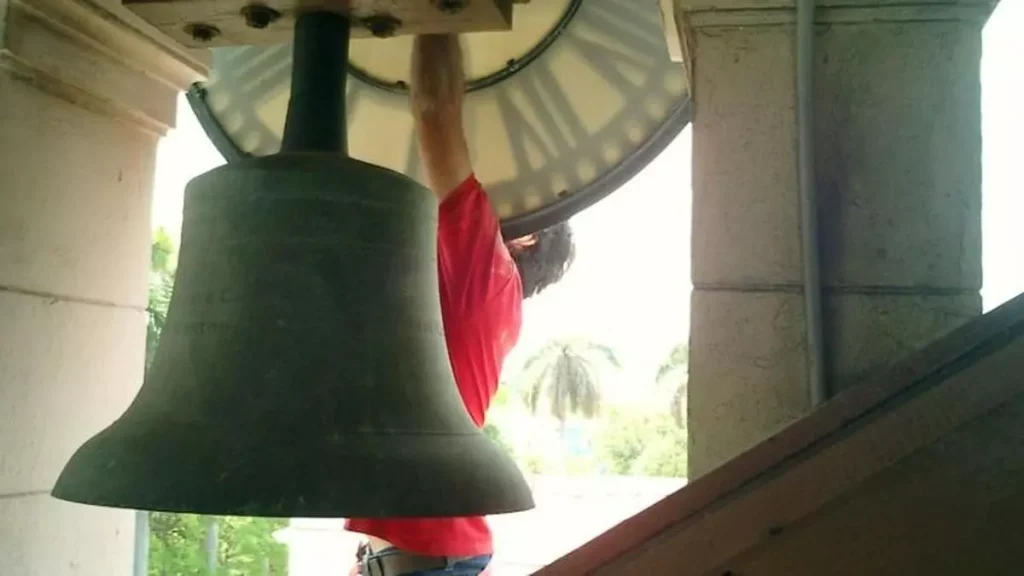
 14ymedio, Havana, October 25, 2026 / Cubans will not have to set their clocks back an hour on November 1. The Government announced this Saturday that it will keep daylight saving time until November 7, 2027, with the aim of reducing electricity consumption during peak demand hours and easing the prolonged blackouts the country is suffering. The decision will also mean pushing back the start of school and work by half an hour over the coming months.
The measure was announced jointly by the Ministry of Energy and Mines and the Ministry of Labor and Social Security, which estimate that keeping clocks forward will avoid a 126-megawatt (MW) increase in power outages during the evening hours, when one of the consumption peaks occurs.
According to the authorities, 76 MW correspond to the savings from making longer use of natural light, without the need to resort to artificial lighting, while the other 50 MW are attributed to the solar photovoltaic generation available at that time of day.
The statement, however, does not explain how those calculations were made or how much electricity consumption could rise during the early morning hours, when artificial lighting will have to be used for longer.
To offset the difficulties this change will cause at the start of the day, the authorities have ordered the start of school and work to be pushed back by 30 minutes
With the decision, Cuba will remain on UTC−4 throughout the winter, instead of returning to UTC−5, as usually happens when daylight saving time ends. This means that sunrise and sunset will occur an hour later by the clock, although the actual length of the day will remain exactly the same.
To offset the difficulties this change will cause at the start of the day, the authorities have ordered the start of school and work to be pushed back by 30 minutes between November 1, 2026 and March 14, 2027, the period during which standard winter time would normally have been in effect.
The adjustment will not, however, prevent many students and workers from having to set out before sunrise. In Havana, for example, during the weeks around the December solstice, sunrise will come shortly after eight in the morning under the current time, which will force many families to carry out much of their morning routine still in the dark.
The ministries specified that the heads of workplaces must agree on the new schedules with the trade union organizations, in accordance with article 223.2 of Law 189, the Labor Code, of July 30, 2026. The change, they stated, may not result in any reduction in employees’ wages.
To justify the decision, the Government once again blamed Washington for the energy crisis. According to the official note, the tightening of the US embargo and what it calls an “energy siege” have caused a shortage of the fuel needed for electricity generation.
The Antonio Guiteras thermoelectric plant, the country’s largest generating unit, dropped off the SEN again this Saturday at 8:11 p.m., due to vibrations in the turbine
The fuel shortage, however, comes on top of the deterioration of the thermoelectric plants, the frequent breakdowns and the insufficient generating capacity that have plagued the national electricity system (SEN) for years. The Antonio Guiteras thermoelectric plant, the country’s largest generating unit, dropped off the SEN again this Saturday at 8:11 p.m., due to vibrations in the turbine. The Matanzas plant had been running for barely three days, having come back online on Wednesday after several breakdowns and failed synchronization attempts.
Nor has the addition of solar photovoltaic parks managed to eliminate the large deficits recorded every day, especially when solar radiation drops.
Keeping daylight saving time is intended to make better use of the overlap between natural light, photovoltaic output and peak consumption hours. However, moving the clocks forward does not in itself increase the amount of electricity generated by solar panels, whose output depends on the radiation they receive.
Nor have the authorities specified what proportion of the electricity deficit projected for the coming months the announced 126 MW represents, or whether they have calculated the effect of shifting part of the consumption to the mornings.
The decision comes in the midst of an electricity crisis that keeps numerous towns on the island subjected to daily blackouts of more than 20 hours, while the Government looks for ways to reduce demand without having sufficient generating capacity.
Translated by GH.
______________________
COLLABORATE WITH OUR WORK: The 14ymedio team is committed to practicing serious journalism that reflects Cuba’s reality in all its depth. Thank you for joining us on this long journey. We invite you to continue supporting us by becoming a member of 14ymedio now. Together we can continue transforming journalism in Cuba.