
Epitaph for a Party / 14ymedio, Miriam Celaya

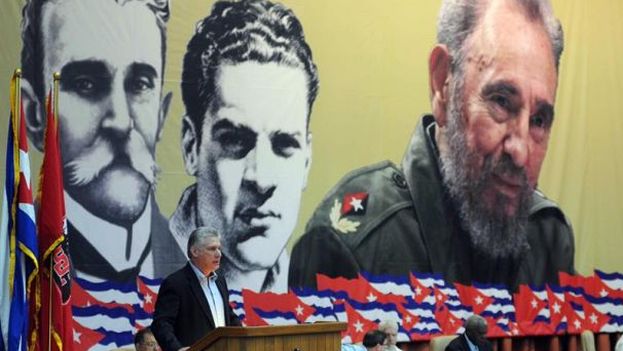
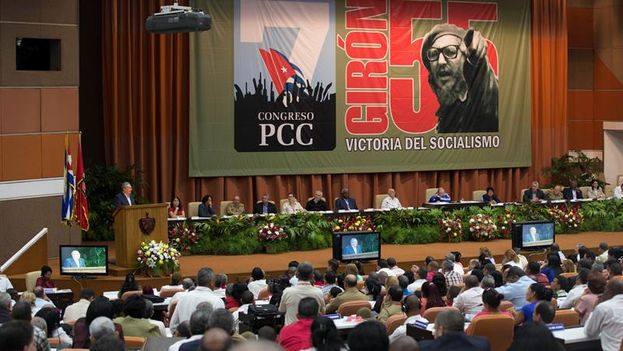
Cuban president Raúl Castro speaking last Tuesday at the 7th Congress of the Cuban Communist Party (EFE)

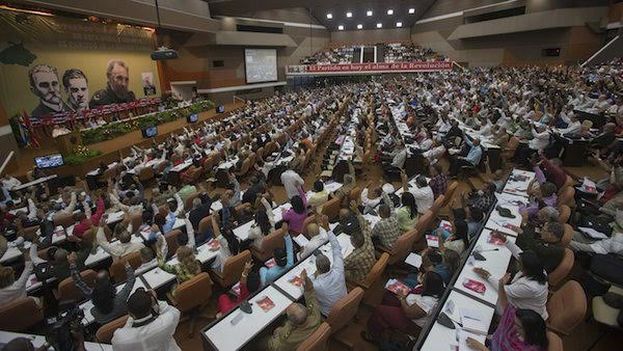
14ymedio bigger14ymedio, Miriam Celaya, Miami, 20 April 2016 – I ask for a minute’s standing ovation, gentlemen: the Communist Party of Cuba has died. The internment, which will be known to future generations of Cubans as the 7th Congress of the PCC, held its memorial service Tuesday, 19 April 2016, exactly 55 years after the dazzling “first great defeat of Yankee imperialism in America.”

Due to those whimsical paradoxes of history, the “Socialist Revolution,” proclaimed in those days of pure popular enthusiasm, has finally succumbed, but not by any action of the imperialist enemy warrior, but by the arrogance of its own makers. continue reading

The death of the PCC, after a long and painful illness, was authenticated with the election of the “new” Central Committee, headed – but for unavoidable exceptions – by the same crested brains of the revolutionary gerontocracy, irresponsibly clinging to power counter to the country’s deterioration. The octogenarian party has not had the capability to renew itself to make way for a new generation of leaders trained to meet the challenges of these times.

Nevertheless, there were earlier signs of the inevitability of this death. In the last five years, the Cuban “political vanguard” allowed itself the luxury of wasting one more opportunity to reverse the state of national calamity , and elected instead the path to stagnation, if not retrogression. Cognition of its own frailty and the fear of losing control over society paralyzed the once powerful PCC, which ended up losing its last shreds of credibility among Cubans.

In the last five years, the Cuban “political vanguard” allowed itself the luxury of wasting one more opportunity to reverse the state of national calamity, and elected instead the path to stagnation, if not regression

Some of these signs of weakness and decay are the lack of programs of reform that would allow for the beginning of a process of changes and overcoming the persistent poverty; the disconnect between the ruling elite and the social base; the inability to move beyond the experimental phase of the few and insufficient economic openings; the improvisation of insufficient and ineffective measures designed to alleviate the consequences of the crisis rather than eliminate its causes; and the constant and growing exodus that further impoverishes the nation. The capital of popular faith which rallied briefly at the beginning of the transfer of power from F. Castro to his brother (the “pragmatic reformist” Raúl) has died.

Over a year after being announced with much fanfare, and after a process of secret meetings where only a select group of anointed ones “discussed” the documents to be analyzed in its sessions, the conclave that supposedly would trace the fate of 11 million souls not only ignored the national drift, it squandered the additional time in an attempt to counteract the harmful effect that, according to the leaders of the geriatric caste, the imperialist enemy has injected into the soul of the nation.

Behold the political power that has consecrated Cuba’s destiny according to a new turning point.

In short, there will not be a Cuba before and after the 7th Congress of the PCC, but before and after the restoration of relations with the US, specifically, after the visit of the American president, Barack Obama, to the Cuban capital. This is the implicit recognition of the failure of the Castro-communist project.

In short, there will not be a Cuba before and after the 7th Congress of the PCC, but before and after the restoration of relations with the US

Thus, the issues that would occupy de jure the discussions, namely, the conceptualization of this absurd unreality called “the Cuban socioeconomic and political model,” the problem of the dual currency, feeding of the population, constitutional reform, the highly vaunted foreign investment program and an endless list of other emergencies related to ordinary Cubans, are left hanging. The PCC has no answers to social demands.

Instead, the leaders have opted for entrenchment, and, as if current generations of Cubans believed in symbols of the past, the leadership decided to play as trump a devalued card: it dusted off and preened as much as possible the former President, former First Secretary of the Central Committee of the PCC and former Undisputed Commander in Chief, and placed him before the monastic convent’s plenary session – after also cloistering the doors to the tabernacle, safe from the inquiring inquisitorial foreign press – in an attempt to legitimize his new ideological war against the Empire.

With all certainty, a war with not enough followers, unless the new Cuban soldiers could be called that: the migrants who are invading the enemy by land, sea and air in robust legions to defeat the enemy by occupying his territory, triumphantly and permanently. Memories of the old ex-warrior’s battle and moral victories, whether real or imagined, have been left way behind in our national recollections.

Now it becomes clear that the PCC has died. The so-called 7th Congress was not that at all, but a swan song. Just the sad spectacle of a group of recalcitrant elders addicted to power and their cohort busybodies (buquenques, in good Cuban). If there is any honest communist left in Cuba – if in the imaginary case such ever existed – he must be plunged into the deepest mourning. Had our half a century of history been different, the late Party might deserve a minute of silence. But we don’t need to be hypocrites, at any rate; we Cubans have been silent for way too long.

Translated by Norma Whiting
Cuba Reduces Food Prices: Comments From the Cash Register / 14ymedio, Luzbely Escobar

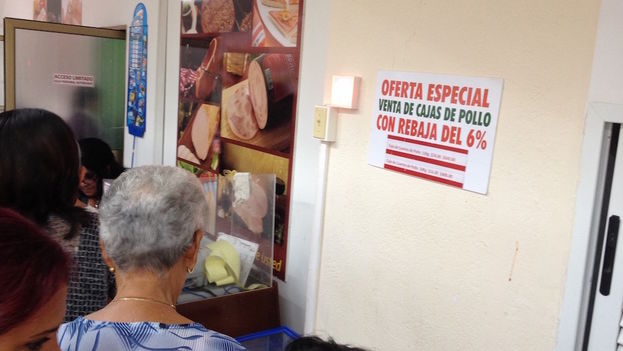
Many people consider the drop in prices insufficient when compared to their wages. (14ymedio)

14ymedio bigger14ymedio, Luzbely Escobar, Havana, 22 April 2016 — The Carlos III shopping center in Havana Center opened its doors this morning before an expectant public looking for the price reductions on some products that was announced on Primetime News last night at eight. On leaving the market, many customers expressed dissatisfaction with a measure they consider “insufficient.”

Outside the shopping complex, a parking attendant in his 50’s commented on those who crowded around waiting for the opening. “They are doing this to try to shut people up, people are very discontented.” A young pedicab driver added, “I see it more as tremendous chutzpah, the prices they’ve marked are the same as they were when these stores opened and it was an abuse then.” continue reading

A few minutes after the market opened, most of the customers went directly to the food departments, which is where the new prices are most visible. There, looking over what was in the freezer, a gentleman who said he was a maintenance worker at a polyclinic in Central Havana explained, “Marking everything down is good, but for me it is still going to be hard to feed my family as God commands.” A gentleman responded, “I’m self-employed, but it seems insufficient to me (…), I’m going to lose a few pounds but still it’s not enough.”

With an empty bag and a scowl, a retired seventy-something named Lazarus responded to a lady who was talking loudly about “the new measures.” “What measures, madam? So I can lose 40 pounds? All this is a joke and a lie. I get 270 Cuban pesos [about $11] a month for my retirement, I worked forty-some years. How can I live? Thanks to family I have abroad, if I didn’t I would die of hunger.”

The lady, who didn’t want to discuss it, murmured, “Well, any reduction is noticeable, especially on chicken and picadillo [ground ‘meat’, often largely or entirely soy], it’s better than it was, clearly.”

As usual in these circumstances, people are reluctant to speak up to someone who presents themselves as a journalist, but there are always exceptions. “The wages today are not what they need to be for many workers, and almost no one lives on their monthly wages. If we count what people ‘divert’ and ‘steal’ [from their workplaces] and what they ‘invent,’ then they can come to this store once a month and spend 20 or 30 CUCs, but this is what an engineer earns as a monthly salary,” explained a young man at the exit of the market, comparing the average Cuban salary with the price reductions.

Reinaldo, owner of a cafe in Old Havana, also dared to comment. “The truth is I do not see much of note in these price reductions. For me who buys in bulk, at best I would get some business, but for someone who buys one kilogram, they’re going to save enough to buy the kids a few suckers,” he said.

A couple of hours after opening, the Carlos III market, the only work of the Revolution which bears the name of a king of Spain, had returned to normal. A few curious people looking on from the sidewalk asked those coming out of the store if it was true about the lower prices. A gentleman with a sense of humor responded this way: “Did you bring a truck to carry your purchases?”

NOTE: The average monthly salary in Cuba, according to data from last December’s session of the National Assembly, is 640 Cuban pesos, the equivalent of about 26 dollars US. 1 CUC = 1 US dollar.

‘The Window’ Opens In Cuba / 14ymedio, Eliecer Avila

14ymedio, Eliecer Avila, 22 April 2016 – A new TV program, La Ventana (The Window), debuted in Cuba on Thursday, the work of the young artist Ignacio Gonzalez, director of the project En Caliente Prensa Libre (Free Press in the Heat of the Moment).

The program highlights the professionalism of the set as well as the technical team. In a small and modest space they managed to create the conditions for the production of news, analysis programs and interviews. With value added by editing and set design, they are ready to compete not only with national programs but also with those produced outside the country. continue reading

The inaugural program revolved around the pronouncements made at the 7th Congress of the Communist Party, especially with regards to economics. Interviews include both man-on-the-street and invited guests.

Gonzalez stands out in recent times for his high quality reporting and his dedication and consistency in his work. His work during the floods in Havana, camera in hand swimming with the residents of places where the national press and the foreign press accredited in Cuba never go, was striking.

On his Youtube channel there is a wide range of products that attest to the commitment and seriousness of his work, as a result of which most of the videos are picked up by various international broadcasters.

An entrepreneur without limits and a dynamic person who enjoys his work and lives for it, today Ignacio is looking to make the leap to establish himself in the Cuban market as a leader in alternative television production. He brings a great deal of experience and contacts, as well as a large viewer base.

Ignacio dreams of founding a “respected” television channel in the future. La Ventana is only the first pebble of this dream, which, for the good of Cuba, we hope he is able to realize.

Havana Yields To Pressure and Allows Cuban Passengers On Cruise Ships / 14ymedio

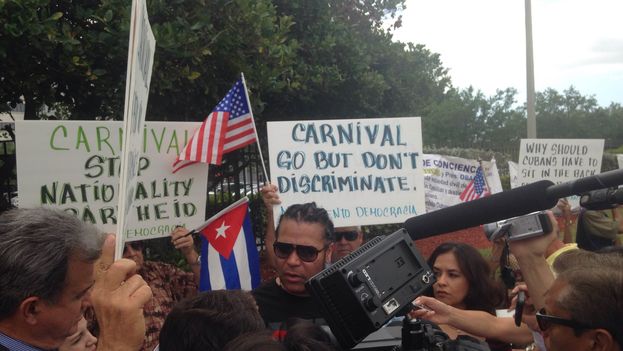
Demonstration at the headquarters of Carnival Cruise Lines in Miami.
Demonstration at the headquarters of Carnival Cruise Lines.

14ymedio bigger14ymedio, 22 April 2016 – The Cuban government changed its immigration policy with regards to maritime travel. The scandal provoked by the refusal of Carnival cruise lines to sell tickets on its cruises to the island to citizens of Cuban origin – a policy subsequently rectified by the cruise line – has forced Havana to authorize the entry and departure of Cuban citizens “regardless of their immigration status” both as passengers or crew members on merchant and cruise ships. Similarly, the same measure will be gradually implemented with regards to pleasure yachts.

The Government issued a news release early Friday that details the new provisions and reminds crew members wishing to enter Cuba by sea that they have to apply for the permits “through the established employment institutions.” continue reading

The note also points out that “Cuban citizens residing in the country will have to have a visa for the country or countries they will visit.”

The Government said that the measure that would have prevented travel between Cuba and the United States by sea was intended to avoid and prevent “terrorist actions” that “Cuba has been the victim of numerous times since the triumph of the Revolution in 1959.” For the same reason, changing immigration policy will be accompanied by an exchange with the US authorities aimed at establishing bilateral measures to ensure national security of both countries.

Carnival signed contracts with Cuban companies last March for the start of cruise operations cruise Cuba and the United States and announced that the first of its cruises would take place on 1 May. However, controversy erupted when the company’s decision not to sell tickets to Cuban passengers came to like, excusing itself by noting that Cuban law did not allow entry by sea to Cubans.

The protests of exiles in Miami, which have reached the courts, led US Secretary of State John Kerry to speak out against the decision of the shipping company, to ensure that it would not discriminate against Cubans. Carnival announced earlier this week that it would allow Cubans to make reservations and that it would try to get the Cuban authorities to modify the contested legislation. The chain of events has finally forced the Cuban government to make a decision that it will allow the signed contract to go forward.

Cuban Economist Omar Everleny Perez Fired For Maintaining Contacts With US / 14ymedio

Economist Omar Everleny Perez. (Palabra Nueva)

14ymedio bigger14ymedio, Havana, 21 April 2016 — Economist Omar Everleny Perez was expelled from the Center for Studies of the Cuban Economy at the University of Havana, accused of maintaining contacts with representatives of the United States and passing on information about the work of the Center without authorization. An academic and a consultant on the reforms promoted by President Raul Castro, Everleny Perez had been critical of some government measures.

According to a senior academic source, the rector of the University of Havana is responsible for the firing, being the “one who pulls the strings behind the curtain.” continue reading

The news of the expulsion began circulating last weekend, although it occurred a few days after US President, Barack Obama’s visit to the island in late March.

In December 2014, after the announcement of the reestablishment of relations between Cuba and the United States, the expert was excited about the repercussions it would have on the island. “I think the change will be much faster than we think, because the possibilities are endless because it will unlock one of the main problems of Cuba, which is the inflow of foreign exchange,” he said.

Obama’s recent trip to Cuba raised a wave of criticism from the authorities that reflect the concerns of some sectors of the regime to the new situation created by the resumption of diplomatic relations with Washington. The first to speak out, at the end of March, was former president Fidel Castro, who reproached the US president for his “syrupy” words.

On Monday, Cuban Foreign Minister Bruno Rodriguez told the Seventh Congress of the Communist Party Obama’s trip was “a visit in which there was an all out attack on our conception, our history, our culture and our symbols.” The voice of the number two man at the Cuban embassy in Madrid, Miguel Moré Santana was added in a video that recently spread through the social networks, where he called the coverage of Obama’s visit by the Spanish media “a display of cultural, psychological and media war without parallel.”

Everleny Perez, 56, has been viewed for years as an example of what can be done from within the system. His criticisms have been directed on many occasions to the excesses of centralism and he has ensured that Cuban state companies “have many ties to the non-state sector, which has advanced much more.” He has also been a champion of cooperatives, especially in the non-agricultural sector.

In an extensive interview with the magazine Palabra Nueva last February, he called on the government not to establish price controls on agricultural products, and the government decided to do at the beginning of this year, “because we already tried that in the long run the results are not what was hoped for.”

The resolution of dismissal from the Center for Studies of the Cuban Economy, signed on 8 April, speaks of the “permanent separation” of Everleny Perez after more than three decades of collaboration with the university.

Specializing in development economics, Perez met on numerous occasions with foreign scholars, especially Americans, as part of his work at the Center for Studies of the Cuban Economy.

In 2013, he was removed from the management of the institution for defending employees who wanted to publish in unofficial media and he also withdrew his membership in the Communist Party.

This reckoning, rather than an individual matter, is seen as a warning to those excited about an eventual deepening of reforms, similar to what happened when many were enthusiastic about Soviet perestroika in the late nineties.

Government Announces Reduction In Basic Good Prices as of Friday / 14ymedio

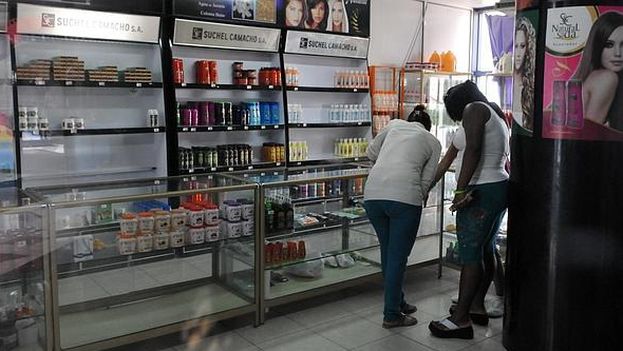
A shop with goods for sale in convertible peso (hard currency), Havana. (EFE)

14ymedio bigger14ymedio, Havana, 21 April 2016 — The Cuban government has announced a reduction in prices of food and other basic products sold in stores in Cuba convertible pesos (CUC) and Cuban pesos (CUP). The measure, which comes at a time of growing popular discontent over the rising cost of living and shortages, takes effect Friday in the state retail sales network.

A note read on Cuban TV primetime news on Thursday, announced that sales of products such as toilet paper, milk, soap, peas, toothpaste, chicken, corned beef, cookies, instant soft drinks and seasonings, will range from 20 centavos to 2 Cuban convertible pesos. continue reading

The move comes a few days after the conclusion of the 7th Congress of the Communist Party and seek to gradually increase the purchasing power of the Cuban peso in the short term, said the official note.

The text clarifies that the price cuts respond to the Central Report of the party conclave where Raul Castro reiterated that “wages and pensions are still insufficient to meet the basic needs of the Cuban family.”

The regulations provide for a decrease of 6% in the retail price of chicken sold in boxes using a single price in the so-called Hard Currency Collection Stores (TRD) managed by the Ministry of Domestic Trade (MINCIN). The product will experience a drop from 7 to 5 CUC per kilogram.

The so-called “cold light” fluorescent lightbulbs, will also benefit from a 40% discount, dropping from 1.00 CUC to 0.60 CUC while the popular floor mops for household cleaning, will cost 20 cents less.

Among the products most in demand that will have a new price is cooking oil, which will drop from 2.40 CUC a liter to 1.95 CUC.

Among the main complaints of the Cuban population are the high prices that do not correspond to salaries. As reported in the last session of the National Assembly, which met last December, the average monthly wage in the country was 640 pesos, the equivalent of $26 (US) or 26 CUC.

The digital site CiberCuba published the list of prices that will be effective this Friday which appears under the logo of the Ministry of Finance and Prices, although the official announcement said that the list will only see the light this Friday.

The announcement includes the price controls that have been implemented at a growing number of agricultural markets since the beginning of the year. A measure that has not managed to reduce popular discontent.

From the early hours of Thursday afternoon the rumor had spread through Havana’s neighborhoods and customers delayed their purchases to benefit from cheaper food which comes into effect tomorrow.

However, the “definitive” solution to the “complex reality” of prices will only be achieved with “increased productivity and efficiency” in the national economy, explains the official note.

The Leaders Feel “Threatened” After Obama’s Visit / 14ymedio

Eduardo Cardet, national coordinator of the Christian Liberation Movement. (Flickr)

14ymedio, 21 April 2106 — The national coordinator of the Christian Liberation Movement (MCL), Eduardo Cardet, argues that the communist leaders of Cuba felt “very threatened” by the recent visit of US President Barack Obama. “They fear losing power,” he said told the Catholic news agency Aciprensa on Wednesday.

“This entrenchment (of the senior leaders) in that old position demonstrates the fragility they feel, the fear in the face of the change that our people are expecting. The people of Cuba have changed, there is a diversity that is manifesting itself and there is an exhaustion with this official discourse and there is no longer any identification with the message that they want to impose on the people,” he asserts. continue reading

For Cardet, the recently concluded Seventh Congress of the Cuban Communist Party has been “more of the same” and has failed to meet the expectations of the people. However, the coordinator of the MCL admitted that no significant change was not expected at that meeting.

The opposition stressed that even “moderate Communist members” are “extremely disappointed” because they had “the hope that there would be a certain renewal within the core of the party to bring a fresh air, fresh ideas and they have seen that that opportunity has vanished and that nothing really positive has happened.”

Cardet considered the harsh criticism from Foreign Minister Bruno Rodriguez directed on Monday at the United States president as a proof of the fear of the party leaders of losing power. “Because of this they are returning to these hardline positions,” returning to the rhetoric of confrontation and “pointing to the United States as the empire that is supposedly destroying the Cuban nation and all these fallacies that do nothing to support reconciliation or the normalization of relations,” he said.

The leader of the movement founded by Oswaldo Paya stressed that the continued repression towards the opposition “shows that the Government has no intention of changing with regards to political tolerance” and he invited Cubans to “be united and work hard” to achieve a transition to a state of law.

Foreign Minister’s Criticism Of Obama’s Cuba Visit Betrays Nervousness / 14ymedio


14ymedio bigger14ymedio, Havana, 19 April 2016 — Cuban Foreign Minister Bruno Rodriguez harshly criticized Barack Obama’s trip to Havana this Monday. It was “a visit in which there was an all out attack on our conception, our history, our culture and our symbols,” the minister told the 7th Congress of the Cuban Communist Party.

The Foreign Minister’s comments had the tone of a reflection on the concerns of some sectors of the regime before the new situation created by the resumption of diplomatic relations with Washington. First, it was Fidel Castro with his “Reflection” column at the end of March that reproached the United States president for his “syrupy” words. Later, a video was posted in which the number two man at Cuba’s embassy in Madrid, Miguel Moré Santana, expressed himself with great crudity before the Spanish committees of solidarity with the Cuban Revolution. continue reading

In that video, circulating on the social networks, the diplomat describes the coverage of Obama’s visit in Spanish media as “a display of cultural, psychological and media war without parallel.” In addition, he criticizes that “mercenaries in service to the United States” are used as the only sources of opinion, which he considers “a lack of respect for Cuba.”

The deputy ambassador says, for example, that the Spanish public television channel collected the impressions of Cubans on the arrival of President Obama only through the words of the regime opponent Guillermo Fariñas.

Moré Santana lashes out against the image other foreign media gave of the presence of Obama in the island. “It would seem it was a successful visit,” excoriates the diplomat, but calls the guest a “wolf in sheep’s clothing,” and declares that now the Cuban government has to be “more measured” in its “discourse” because it already has diplomatic relations with the United States.

Moré Santana denounces “the constant slanders and campaigns of media contamination” against Cuba, starting with the idea of the embargo “that no longer exists or is on the path to extinction” or assertions that it is not the cause of the country’s economic problems. For the diplomat it is a battle “of the lion against the chained monkey,” because in his opinion the major media are able to influence and manipulate public opinion and also exercise control over social networks.

The diplomat argues that “the Cuban Revolution is experiencing the most difficult moment in its history,” because the mechanisms of destabilization used by the White House are now more subtle and are trying to “corrode” the process from the inside. He criticizes the flexibility measures implemented by the US administration, to ensure that “telecommunications is the number one target” in a new strategy “against Cuba.” They “come and tell us that they will facilitate – a kindness – free access for young Cubans to the Twitter network,” he adds.

Among Obama’s strategies criticized by Moré Santana is having contacted Panfilo “one day before arriving in Cuba… the most famous comedian” on the island. Through this telephone call, he says, Obama “opens the door, the easiest one of all, and that is of empathy,” and with this he “spread… the criticisms and thinking and many Cuban intellectuals who were in public debates” and “all that was effectively smothered.”

According to the diplomat, this policy is part of a plan of the “imperial powers” to “end the Bolivarian Revolution of Venezuela and create a domino effect that sweeps aside all the progressive and integration processes on the continent.”

Spain Will Disembark in Cuba in May / 14ymedio

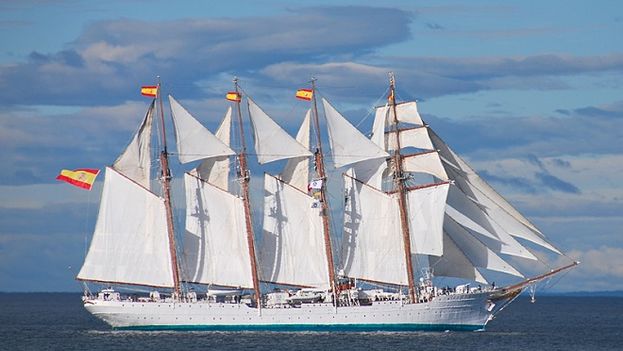
The training ship Juan Sebastian Elcano is the best known barquentine of the Spanish Armada. (M. Exteriores)

14ymedio bigger14ymedio, Madrid, 21 April 2016 – The Spanish Navy training ship Juan Sebastian Elcano will dock in Havana on 11 May, arriving from Puerto Rico, according to Spain’s El Pais newspaper. It is not the first time the iconic Spanish ship has arrived on the island. On ten previous occasions the barquentine visited Havana.

However, according to journalist Miguel Gonzales, an expert in diplomacy, the arrival of the ship will in all likelihood coincide with the visit of the acting Foreign Minister, Jose Manual Garcia-Margallo, along with a business delegation, almost a metaphor for Spain’s landing on the island. continue reading

The Juan Sebastian Elcano, which visited Cuba for the first time in 1029, will continue its journey on the 16th, heading for Miami, which makes the visit exceptional. “Most veterans do not remember the last time a warship, even it if is a masted schooner, covered the 200 miles that separate Havana from the capital of the Cuban exile in the United States,” the paper reported.

The Spanish daily claims that Spain does not want to lose time and is seeking to strengthen its position in Cuba, hence the economic, diplomatic and symbolic deployment, which will be crowned with the imminent signing of the pact to 375 million dollars in Cuba, notwithstanding the existing 2.5 billion debt owed by Cuba to Spain.

However, this landing will not include a visit from a senior official, due to the political paralysis in Spain since last December’s elections. Uncertainty prevents the prime minister (as of now Maraino Rajoy, in an acting position) from visiting Cuba, nor will King Felipe VI come, as his visit would have to be supervised by a government that, to date, there is no sign of forming.

Between 19 and 20 May the chambers of commerce of the two countries will meet in Havana. Secretary of State for Trade, Jaime García-Legaz, will make his fourth trip to the island in the last year with a group of entrepreneurs who are looking to explore business opportunities in Cuba.

Their Congress / 14ymedio, Luis Tornés Aguililla

The discussions in committees of the Seventh Congress of the Communist Party are guided by members of the Politburo. (MINREX)

14ymedio bigger14ymedio Luis Tornés Aguililla, San Sebastien, 20 April 2016 – As the priests of old used to say: Ite, missa est, that is: Go out there and tell them what I said, this mess is over now.

They closed the circle, this Communist Party Congress in Cuba that was, as always, a conclave of The Family, ending with its slogans, with its disciplined creeping things who applaud while verifying out of the corners of their eyes whether the compañero sitting next to them dared to not applaud.

It was a formality, a sort of cloister where they proclaimed the dogmatic incantations of a whole life which they themselves don’t believe in, because in Cuba as elsewhere, reality flees from artifice. Those assembled (rolling their eyes at the passion) know very well, as does Raul Castro: that’s it. continue reading

The opening speech of the sub-boss showed a real lack of respect for the Cuban people, especially when the general-president justified the existence of a single party in the political spectrum of the island; he said it with a cruel sarcasm, with that irony old men have when they know they are facing the abyss. It was a mocking self-assurance that we Cubans must not forget because it allows us to measure the enormous ideological fragility in which the regime finds itself.

We know perfectly well that if, at his age, the administrator for the Elder Idiot is amused by such antics, it is simply because the new status quo with the United States permits it. Right now, Castroism is a political circumstance under American control, a control arising from the financial accords with the Paris Club, the exchanges of every kind with the enemy, as if Havana is well worth all the senile tantrums and all the appearances of other times.

It is true that no one wants a civil conflict in Cuba, which would amount to (we have to admit it) three times the horror of the war in Syria given the grisly string of hatred and rancor accumulated since 1959. In that eventuality, the United States “apparatus” would prefer a million times and freedom-killing management of the current stiffs on tenterhooks.

The only viable option for Cuba to not cease to exist as a national entity appears to be the heroic struggle of the opposition on the island, a peaceful struggle whose vector is convincing the people that life is possible without repression, without political exiles, with decent wages and without fear. In the end, Cubans will win the battle, but the road to freedom is long.

Communist Militancy Expresses Its Disenchantment On The Web / 14ymedio

14ymedio bigger14ymedio, Havana, 19 April 2016 — The 7th Congress of the Communist Party of Cuba has confirmed the suspicions of the opposition. Despite the changes in the socio-political context of the island, the Party is not open to the possibility a multi-party political system, nor will there be new “forms of privatization” or “shock therapies” for the economy, as announced by President Raul Castro. But the disappointment transcends the ranks of the opposition and comes from their own membership. Some militants have opened friendly fire against the Party leadership and used their space on the web to express their opposition to the stagnation of the elites. continue reading

“The documents that will be put to the consideration and approval of the VII Congress of the Communist Party of Cuba (…) will not be discussed with the membership at the grassroots,” reflected Francisco Rodriguez Cruz, known as “Paquito el de Cuba” and author of the blog of the same name. Rodriguez Cruz published an article before the Party Congress titled, “1,000 People Decide the Fate of the Nation?” “As a communist militant I think that is not enough,” he wrote.

Paquito el de Cuba considers appropriate mechanisms such as regional meetings with leaders of various sectors of society, evaluation assemblies and municipal elections, but considers them insufficient.

“Undoubtedly, these are valid ways. But pale (…) now that these decisions are already signed. I repeat in public, I believe I have the right (…) The changes underway and to come for Cuban society need much more discussion,” he claimed.

Yohan Gonzalez, from the official blog “From My Island,” begins a post titled “The Militant Who Wanted To Be,” by explaining how it was his dream as a young person to belong to the PCC. “I believe that only through membership could I be a good revolutionary and good Cuban,” he recalls. Gonzalez, who confesses he is a socialist and not a communist, returned his membership card to the Union of Young Communists (UJC) and abandoned his aspiration, because he says he would have liked to be a half-militant – “a person committed but realistic, disciplined but critical” – like Paquito el de Cuba, to whom he refers directly.

“The Congress (…) opens having failed to push the popular debate of its documents. I’m sure there are half-militants among the delegates, helpful people, with a capacity to represent. But the future of the country can not be in the hands of a few,” he says.

González regrets the lack of transparency and that Cubans can not access the documents the delegates have, that they don’t address social issues such as emigration, LGBTI rights or racism, and that there are no younger people among the Party elite. “I did not convert myself into this militant, but I have no regrets. Today I am more revolutionary than I wanted to be and more Cuban. I am an equal of that half-militant who will go along with everything that passes in the Congress but in the end will still have the sensation they he could have done much more,” he concludes.

“The time when the fate of Cuba it could be decided by a handful of men is over.” Thus begins the text entitled “The National Plan” by Harold Cardenas Lema, blogger on La Joven Cuba (Young Cuba).

The author gives a good overview of the collective intelligence of the Cuban people, who he considers the best educated in the region, to reproach the not taking into account of this human capital.

“Our country has a thousand and one problems to resolve, some products of the blockade and others very much our own,” he says, before offering a review of the reasons why the citizenry has given “a blank check to the country’s leadership.” Cardenas shows that the bad governments prior to 1959 and the popularity of the Revolution led to a faith in the leadership of the PCC that has no foundation.

“It happens that this consensus was formed more than half a century ago, with a generation that knew capitalism, who experienced the Agrarian Reform Law, the Literacy Campaign. My generation knows only the Special Period, the vicissitudes and the breakdown of values. Can the same consensus work with us? I think not,” he says.

Nevertheless, the blogger proposes an exercise of understanding with the elites with those who think they have a plan. However, his belief that politicians live in a bubble that separates them from reality leads him to doubt the current capacity of the Party to solve Cubans’ problems.

“By now we should have learned to be inclusive and not exclusive when the time comes for collective construction. (…) This nation can temporarily engage in politics with the people or against the people, but permanently without the people is not possible,” he says.

News From the Invisible 7th Communist Party Congress / 14ymedio, Reinaldo Escobar

The first vice president of Cuba, Miguel Diaz-Canel, during the reading of the central report of the Seventh Congress of the PCC in Havana. (EFE)

14ymedio bigger14ymedio, Reinaldo Escobar, Havana, 20 April 2016 — The most notable departures from the Central Committee of the Party elected at the Seventh Congress are: Rolando Alfonso Borges, who until now headed the ideological department dedicated to controlling the media; Yolanda Ferrer Gómez, who served as head of the International Relations Committee of the National Assembly of People’s Power and who spent long years as a second to Vilma Espin, Raul Castro’s late wife, in the Federation of Cuban Women (FMC); Agustin Lage Davila, brother of ousted Carlos Lage — former vice president of the Council of State and member of the Politburo– and director of an important scientific center; Abel Prieto Jimenez, cultural affairs advisor to the president; and Harry Villegas Tamayo, survivor of Ernesto Guevara’s guerrilla actions in Bolivia.

To those who stepped down is added more than a hundred who died, destitute and retired, who were on the list of the 142 members of the Central Committee elected at the 5th Congress, which was the last time before the just completed conclave that elections were held, as in the 6th Congress they were not. From that list from 1996 there are now only 33 remaining. continue reading

From those who were handpicked over the last 19 years, 32 have keep their positions. It is noteworthy that Joaquín Bernal, the current Minister of Culture who is often presented as a member of the select group, has been left off the list, along with others unknown whom no one would miss. If the math does not fail us, we can assume that there are 77 new entrants, representing more than 50% of the total membership.

The perception of paralysis resulting from a reading of the documents adopted at the event contrasts with this remarkable injection of fresh blood, but it is reinforced by the fact that most of the members of the Politburo have remained in their positions, and especially by the presence of Raul Castro and Jose Ramon Machado Ventura, who have given the impression of being the only ones who know what can be changed in the so-called process of perfecting the system.

If something positive happened at the Palace of Conventions in recent days it is that the prediction that there would be a nepotistic trend, raising some of the heirs to the name of Castro to the highest Party structures, was not fulfilled. Everyone knows how the list of candidates that is “analyzed and discussed” by the delegates is drawn up. It has not transpired that anyone has objected to a name or questioned any absence from the list. So it is designed, and so it was approved by unanimous vote.

If they follow the new requirements established related to age, in the 8th Congress it could be that very few of the current members of the Central Committee will be reelected. But 2021 is too far away to make predictions, and in this game not everything is decided because the dominoes are shuffled face down.

Raul Castro Re-Elected First Secretary Of The Communist Party Of Cuba / 14ymedio

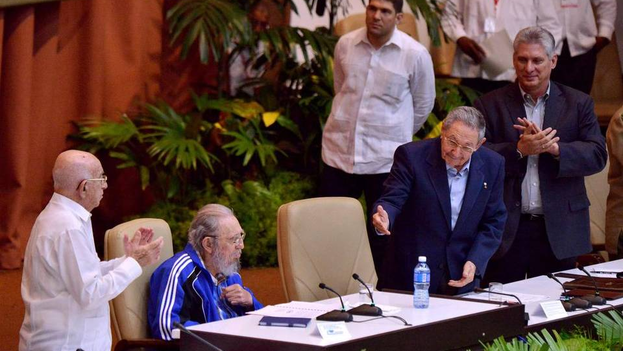
Cuban President Raul Castro and former president Fidel Castro, on Tuesday at the VII Congress of the CCP. (EFE)

14ymedio biggerEFE (14ymedio), Havana, 19 April 2016 – The Communist Party of Cuba (PCC) Tuesday re-elected the country’s president, Raul Castro, as first secretary of the organization, a position he has occupied since 2011, when he replaced his brother Fidel Castro.

The newly elected PCC Central Committee also ratified Jose Ramon Machado Ventura as deputy party secretary, a position he also held since the previous Congress of the organization, held five years ago. continue reading

After three days of meetings, the Seventh Party Congress is closing today, a day when the new composition of the bodies of the party and the Central Committee, the Political Bureau and the Secretariat was announced.

The Politburo now consists of 17 members, with five new members including the sevretary general of the official union, the Cuba Workers Center (CTC), Ulises Guilarte; Health Minister Roberto Morales; and the general secretary of the Federation of Cuban Women (FMC), Teresa Amarelle.

Completing the list are two women from academia, the rector of the University of Information Sciences (UCI), Miriam Nicado; and the directive of the Center for Genetic Engineering and Biotechnology in Cuba (CIGB), Marta Ayala.

In the new composition of the Politburo, no longer members are General of the Armed Forces Abelardo Colome Ibarra, who resigned as Minister of the Interior last October for health reasons; and Adel Yzquierdo, Minister of Transport since September.

Remaining in the Politburo are the first and second secretaries of the PCC, Raul Castro and Machado Ventura;  first Deputy Prime Minister, Miguel Diaz-Canel; Economy Minister Marino Murillo; Foreign Minister Bruno Rodriguez; Vice President of the Councils of State and Ministers, Ramiro Valdes; and deputy chairman of the State Council, Salvador Valdes Mesa.

Also continuing as members are the President of the National Assembly, Esteban Lazo; Minister of the Armed Forces (FAR), Leopoldo Cintra Frias; the first deputy minister of the FAR, Alvaro Lopez Miera; the deputy minister of the FAR, Ramon Espinosa; and the first secretary of the PCC in Havana, Mercedes Lopez.

The new Central Committee, the highest governing body of the Party between congresses, is composed of 142 members, with an average age of 54, lower than the average age of the previous committee elected in 2011, which was made up of 116 members.

In the new committee the representation of women reached 44%, higher than previously, and the percentage of blacks and mixed-race also increased, now accounting for 36%.

The Secretariat of the PCC remains almost unchanged ind its composition and consists of, in addition to Raul Castro and Machado Ventura, Abelardo Alvarez, Jose Ramon Balaguer, Olga Lidia Tapia, Jorge Cuevas and Omar Ruiz. The only novelty is the departure of Victor Gaute, chief of the civilian mission of collaboration in Venezuela.

Civic Engagement of Peruvians / 14ymedio, Manuel Cuesta Morua

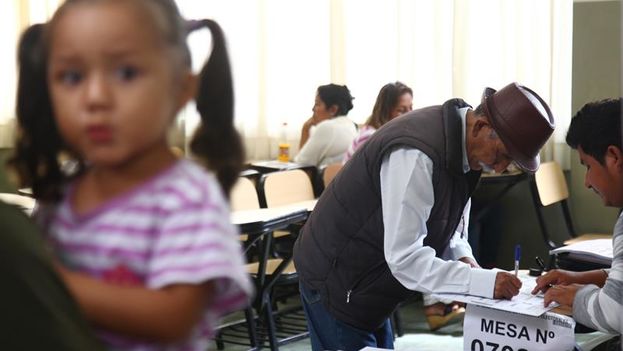
An elderly man signs in at the polling station to exercise his right to vote in a school district of La Perla, Callao. (EFE / Eduardo Cavero)

14ymedio bigger14ymedio, Manuel Cuesta Morua, Havana, 19 April 2016 — In many ways, the elections in Peru reflect in some way the process of democratic maturation in the Americas. I participated in the elections of 2016 as an international observer in response to a shared invitation from Peru’s Political Institute for Freedom (IPL) and the Center for Assistance for Electoral Processes (CAPEL), based in Costa Rica. This was my third experience, after Argentina and Spain, whose electoral processes I also observed.

It was the first time that two representatives of Cuba’s public platform #Otro18 (Another 2018) managed to be present in elections as international observers. This has allowed us to look at the polls from a new angle to gauge the strength of the electoral system as a whole. continue reading

Electoral Integrity is, roughly, a concept that allows us to analyze elections from a conception that goes beyond the day of the vote. We observe the conditions of electoral competition, the degree of independence of the agencies involved in the process, the level of independence and freedom of citizens to elect and to be elected, the role of the press, respect for human rights, the balance of participation among candidates and, of course, the process itself starting from the call for elections through counting the votes and releasing the results, as well as all the logistical conditions.

Electoral Integrity goes to the quality of the process. It precedes the elections, follows them, and follows up post-election, looking at how citizens perceive the process itself. This concept holds that electoral systems are perfectible. A system is not a permanent given, rather every system has to evolve, readjust to technological conditions, and – this is fundamental – respond to changes in context. The main thing is the quality of representation and the clarity of the elections.

The idea is dying, therefore, that good elections are reduced to participation, calm, competition and transparency on the day of the vote.

Based on this concept, I was able to observe that the elections in Peru began long before they were called, at the end of 2015.

I was in Trujillo, the most important center of La Libertad region, in the north of Peru. In the National Organization of Electoral Processes (ONPE) I observed closely the well-oiled electoral architecture for the elections convened this April. I talked to the judges of the National Elections Board (JNE) and with the Organization of Electoral Processes, responsible for overseeing voting and ensuring the necessary logistics.

Voting is compulsory, with corresponding fines for those who do not turn out, but I noticed more civic engagement than fear of harm to one’s purchasing power. Fines respond, in any case, to social classes: 29 soles (the official currency) for the poorest, 90 for the middle classes, and 193 for economically privileged sectors. Probably 29 soles could be very important for the 20% in the lowest band of Peruvian society; however, 80% of the more than 23 million Peruvians who took to the polls could easily pay a fine, for them symbolic, to punish the system.

From here I drew a first conclusion: democracy is a civic virtue in Peru, despite the remnants of political violence. We attended a crowded rally at the end of the Pedro Pablo Kuczynski campaign. The participation of thousands of his followers was a sign that democratic conviction is probably more important than the political and communications capacity, and perhaps the vision, of their leaders.

I noticed that the leadership of the parties responds to the leadership and civic engagement of Peruvians, a fact that solidifies the soil of democracy in that country, although one should not lose the perspective of the importance and value of political leadership in democracy. My doubt arose from whether the presidential candidates shared the stature of their citizens.

A second condition of Electoral Integrity is thus satisfied: the political space for the civic expression of citizens. This is a substantial element to strengthen the relationship between civil society, the citizenry and political parties: electoral transparency.

The behavior of the press is the third essential element for Electoral Integrity. El Comercio, La Republica and Peru 21 , despite their clear backing for one candidate or another, covered the development of the day with good objectivity. The same happened with television. There was a balance in the treatment of candidates and plurality in editorial treatments, with arguments for all ideological tastes.

Peru voted. And, as the daily La Republica headlined on its front page on Monday the 11th, the voters turned to the right. Adding the votes obtained by Keiko Fujimori (40%), Pedro Pablo Kuczynski (22%) and Alan Garcia (6%), shows that more than 67% of Peruvians voted for continuity while Veronika Mendoza , the candidate of the Frente Amplio (the Left) received only 18% of the votes.

The runoff between Fujimori and Kuczynski, on 5 June, will define the course of Peru for the next five years.

Cuba, A Broken Toy / 14ymedio, Reinaldo Escobar

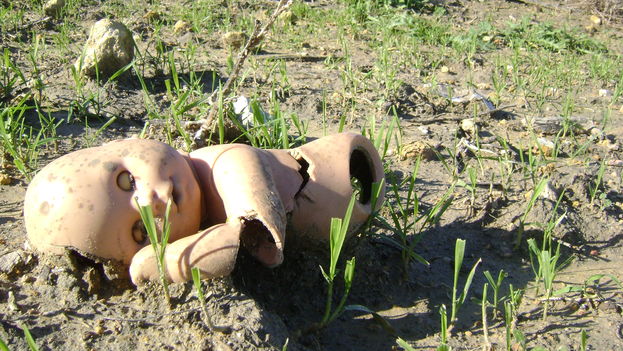
Like the spoiled child who wants his turn with a toy to last forever, Raul Castro intends to remain in office until 19 April 2021. (CC)

14ymedio bigger14ymedio, Reinaldo Escobar, 17 April 2016 — Among the many expectations raised by the Seventh Congress of the Cuban Communist Party (PCC) was the possibility that the expected generational change would be announced there. The prospect that young cadres would introduce bold changes and accelerate the timid reforms initiated with the departure of Fidel Castro from power, fed by the expectations among Cubanologists of different viewpoints.

Perhaps that is why, when the general-president proposed that the maximum age for joining the PCC Central Committee would be 60 and to hold senior posts one would have to be under 70, many had the momentary impression that the rule would begin to be applied at this Party Congress. Only a more sedate reading, stripped of all irrational optimism, was able to untangle the ambiguity of his words. continue reading

Raul Castro, First Secretary of the PCC, acknowledged that “the next five years, for obvious reasons, will be decisive.” Hence, the need “to introduce additional limits on the higher organs of the Party.” However, he declared that this would be a “process of transition that should be undertaken and concluded with the celebration the next Congress. Leaving for the future, “a five year transition so as not to rush things.” A phrase that reinforces Castro’s oft repeated premise of acting “without haste but without pause.”

The “additional limits” on age to be appointed to “the higher organs” had already been introduced, although not disclosed, at the first PCC Conference in January of 2012, when the concept of age was added to those to be taken into consideration at the time of filling leadership positions.

To Raul Castro it seems that having delayed four years and four months in defining the numbers that would mark the age limits would have been “not rushing things.” Although it is probable that his real concern has been that the Central Committee elected at the current 7th Congress would naturally dispense with the so-called “historic generation of the Revolution.”

The only obvious reason for not passing the baton in this Congress is reduced to an unhealthy addiction to power, especially to its obscene attributes of privileges and powers.

Like the spoiled child who wants his turn with a toy to last forever, the first secretary intends to remain in office until 19 April 2021, when he’ll be just 45 days short of officially becoming a nonagenarian.

By that time, should he survive, what would be left of the instrument of his amusement could be an useless wreck, and we’re not talking about the Party but about the country: a toy broken beyond fixing through the attempts to make it work capriciously. The blame for its destruction will then fall on those who inherit it.