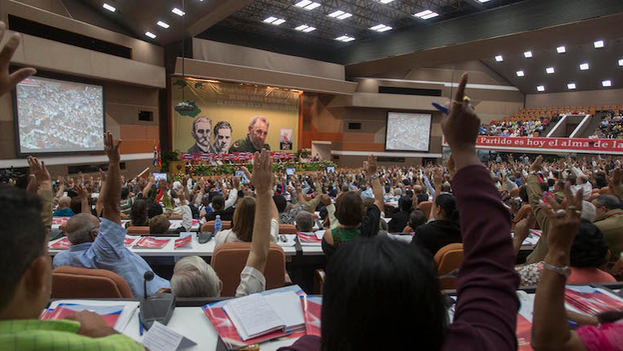
Cuba Will Lose One Million People In Next Decade / 14ymedio, Abel Fernandez, Mario Penton

Cuba will continue to have the oldest population in Latin America. (14ymedio / Luz Escobar)

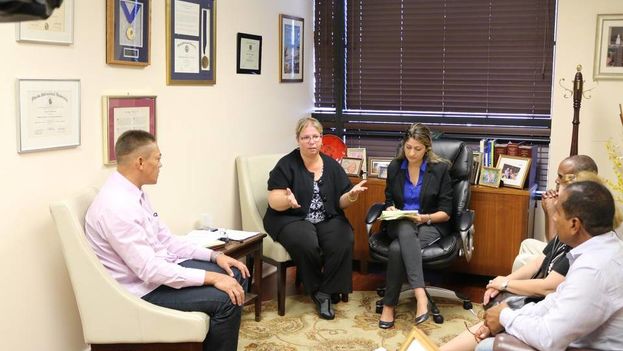
14ymedio bigger14ymedio, Abel Fernandez and Mario Penton, Miami, 29 April 2016 — By 2025, the Cuban population will be reduced to 10 million. The dramatic demographic change on the island—from 11 million to 10 million inhabitants—is propelled by the low rates of fertility and birth, and an elevated emigration, a group of experts recently explained at Florida International University.

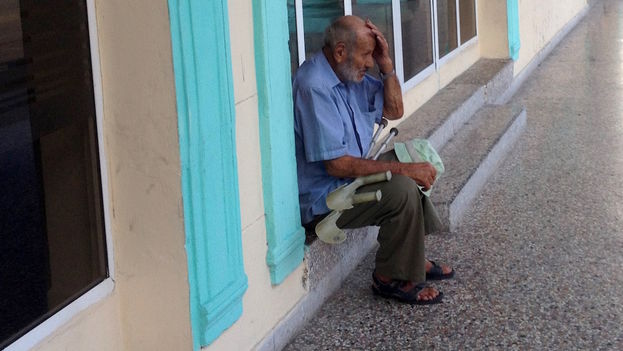
In addition, Cuba will continue to have the oldest population in Latin America. Currently, 19% of its inhabitants are over 60, and forecasts indicated that this figure will reach 30% in less than a decade. continue reading

“Life expectancy is not the same as aging,” said Dr. Antonio Aja Diaz from the Center for Demographic Studies at the University of Havana. In Cuba, life expectancy is high and infant mortality is low. But birth and fertility are also low. These demographic characteristics, Aja said, “are processes that occur in highly developed countries.”

“In developed countries, mortality, birth and fertility are low, but they do not lose population because they receive immigration,” said Aja. “But that is not the case for Cuba.”

Until the late 1930s, the island was receiving immigrants. Since that decade, emigration has been sustained, with large fluctuations during mass exoduses of the past century—the Mariel Boatlift in the 1980s, the Rafter Crisis of the 1990s—and most recently, the exodus through South America that still continues.

According to Aja, “Cuba could not even compete from the point of view of in-migration with the Dominican Republic,” with regards to attracting migrants. One of the main problems of the island is that people who migrate are generally younger and in the fullest years of their productive and reproductive capacity.

According to Dr. Sergio Diaz Brioquets, another panelist, emigration from Cuba is a phenomenon that will continue. “The Cuban government has for decades promoted emigration of the political opposition,” he said.

As for fertility, between 2010 and 2015 Cuba had an average of 1.63 children per woman, the lowest fertility rate in Latin America and the Caribbean.

The early years of the republic were years of high fertility and population growth, a trend that continued until 1930. Then began a process of decline until the years 1959-1960. In 1978, Cuba fell below replacement level, which is usually established as an average of 2.1 children per woman. On the island, the downward trend has continued to the present.

According to experts, the composition of the 10 million Cubans who will remain on the island in 2015 will bring a number of challenges, among them ethical values and interpersonal relationship. With regards to the family, and in particular Cuban women, they will face a series of responsibilities that will worsen with the aging population. “In Cuba, the job of caring for the elderly falls mainly on the woman,” explained Aja.

On the other hand, wages in the island have decreased to 73% of their real value, said Dr. Carmela Mesa Lago, a renowned expert on the Cuban economy. In addition, self-employed workers, a growing sector of the economy, are at risk of not accumulating pensions and not receiving social assistance.

Panama Prepares The Final Transfer Of Cubans To Mexico / 14ymedio, Mario Penton

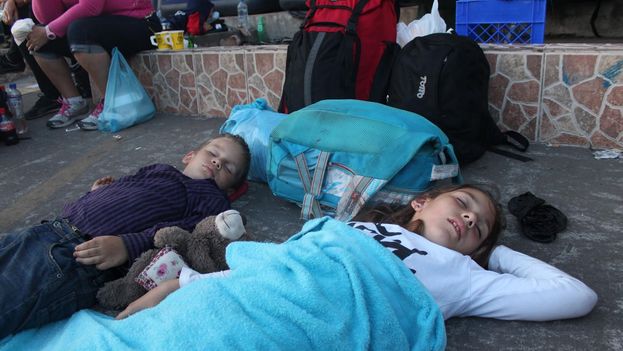
Cuban children remain with their parents in Panama to wait to continue the route to the US. (Silvio Enrique Campos, a Cuban immigrant in Panama)

14ymedio bigger14ymedio, Mario Penton, Miami, 29 April 2016 — The Panamanian Foreign Ministry has begun to take a census of more than 670 Cuban migrants in the hostel of Los Planes in the province of Chiriqui, in anticipation of their transfer to Mexico in the coming days. Another three thousand Cubans, most stranded on the border with Costa Rica, will also benefit from this operation, the last of its type, according to the Panamanian president, Juan Carlos Varela on Thursday.

“Starting from the completion of transfer operation of the Cubans counted in the census, those who enter later will have to make a decision about what country they want to return to; we can’t become a permanent logistical support for the trafficking of migrants,” warned the Panamanian president. continue reading

According to the regional director of migration, commissioner Alfredo Cordoba, the transfer of more than 200 migrants in various shelters to the Los Planes encampment began yesterday afternoon. “This mainly involved pregnant women and families with children, who need to be brought to a place with the attentions they deserve,” he said.

The official told this newspaper that the purpose of this measure is to “concentrate all the migrants in one area where their basic needs can be met, taking into account their rights as people.”

Cordoba said that right now there are 3,704 Cuban migrants in the Republic of Panama, who should be gradually transferred to Gualaca, where a joint task force–which includes the National Civil Protection System (SINAPROC), the Panama National Migration Service, the State Border Service (SENAFRONT), and the National Police–have mobilized to address the humanitarian crisis.

“I believe we are in the final stretch, at least they are already making photocopies of our passports, and that’s something,” said Angel Chale, one of the stranded who came through Ecuador. Chale decided to abandon the old Bond warehouse, in San Isidro, a mile from the Costa Rican frontier, where she shared the floor with 400 other Cubans in the most precarious conditions.

Both Angel and Leslie Jesus Barrera have spent a week at the Los Planes shelter. “This place where we are now is pretty fun. Usually we play baseball, dominoes or we dance,” says Barrera. “We help when they ask us to collaborate with some chore and for the rest, it’s like camping.” He added that he is very grateful for the treatment he has received from the Panama government, which right now includes free medical care.

The godmother of Cubans

Angela Buendia is the director of community organizing for SINAPROC, but migrants have dubbed her “the godmother.” As she herself says, “They call me that because I identify with their needs and all the pain they have gone through.”

Buendia says she learned to deal with migrants from the island in the last crisis and since then sympathizes with the plight of “these thousands of people who have to leave their land and often go through very intense trauma.” She stresses that, even after spending weeks in Panama, many still live in fear.

According to her, the migratory flow does not seem to stop, although official statistics indicate a decline. “Every day we receive between 20 and 60 Cuban migrants in Chiriqui. This is why we decided to prepare this camp.”

Buendia explained that Los Planes was originally built to shelter Swiss workers who worked on a local dam. “It’s a ten acre site with a fresh landscape and all amenities,” she added. She also stressed that “the only prohibition is not to leave at night, and this is for their own security.” She said they will have free WiFi, but right now they can use data connections on a local network.

“The biggest problem I’ve had with the Cuban people is that when they come here, having come from a place without freedom, they feel completely free and clear, sometimes confusing liberty with license,” she said.

Not everyone wants to be in the shelter

But not everyone wants to go to the shelter in Los Planes. “The problem that I see to this place is that it is very far away. From the Milennium one can at least work ‘under the table’ and earn a few bucks,” said Dariel, who prefers to omit his last name for fear of discovery. His work as a carpenter, a trade he learned in Cuba, allows him to cover his expenses and at the same time, he confesses, save something “for the end of the journey.”

“Here there were even Cubans who were whoring and charge less than the Panamanians. Those were the smart ones, because in the end, they managed to get together the money and now they’re in the [United States],” says the migrant.

In overcrowded rooms, hallways, or simply in tents put up at dusk in the doorways of neighboring houses, hundreds of Cubans have preferred to stay near the Costa Rican border.

“It’s a problem that affects communities that often find themselves overwhelmed by the number of migrants arriving,” says Commissioner Cordoba.

Many of the local inhabitants, from Puerto Obaldia to Paso Canoas, have seen a business opportunity in the Cubans. With the flow of migrants, businesses have flourished from hostels to simple restaurants where the prices are usually double for inhabitants of the island.

“I don’t want to go to the Gualaca shelter because it’s very far away, I prefer to stay here because I’m in a village and at least I can fend for myself,” says Yanieris, a 35-year-old Cuban woman who arrived in Panama from Guyana. “It’s hard, sure, but if I want to go with a coyote tomorrow, there will be no one to stop me.”

The coyotes prowl…

Juan Ramon is one of those Cubans stranded in Panama who decided not to wait any longer to reach the United States. After collecting $1,400 from family and friends in Miami, he left one night sneaking across the Costa Rican border, along with six other companions under the guidance of a coyote. “In each country a coyote handed us off to another, and we have gone all the way: through the jungles, rivers, lakes… it is very hard,” he said.

The worst thing for the young man was the moment they ran into a military checkpoint in Nicaragua, where “a thug assaulted us, sent by the same guide, who robbed us of everything we had. He even took our cellphone. It was a terrible experience because it could have cost our lives and nobody would have known about it,” he told this newspaper.

After more than 12 days on the road, Juan Ramon found himself at the border crossing station of El Paso, Texas, hoping they would process his documents to enter the United States under the “parole” program.

To try to circumvent the army and police control on the borders of Costa Rica and Nicaragua the migrants use unique measures such as hiding themselves in a water pipe or hiding in a boat to pass through the dangerous coastal regions of the Pacific Ocean.

In November of last year, Daniel Ortega’s Sandinista government closed the borders of his country to Cuban migrants using Central America as a path to the United States.

The measure worked like a plug, leaving 8,000 people stranded in Costa Rica, which in turn also closed its border transferring the problem to Panama. Following an agreement with Mexico, both countries managed to build a humanitarian bridge that allowed the orderly exit of a great part of the migrants.

The coyotes, or human traffickers, have turned the migration to the north into a huge business that generates millions of dollars. From October of 2014, almost 132,000 Central Americans and around 75,000 Cubans reached the southern border of the United States.

The Cuban government has reiterated that all the migrants have left Cuba legally and so can return to the country.

Central Bank Denies Rumor About Devaluation Of Cuban Convertible Peso / 14ymedio

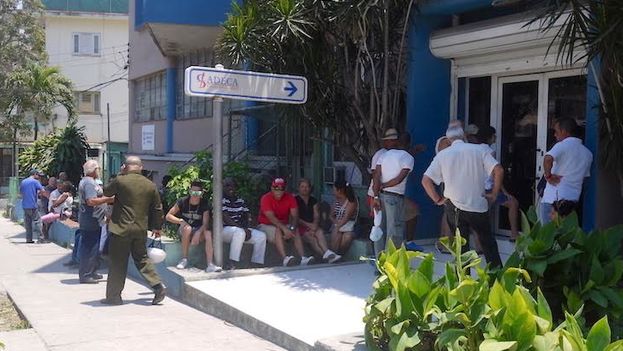
A line outside a currency exchange (Cadeca) Friday, amid rumors of a reduction in the value of Cuban convertible pesos CUC. (14ymedio)

14ymedio bigger14ymedio, 29 April 2016 — The Central Bank of Cuba on Friday denied a possible reduction in the value of the Cuban convertible pesos. State financial institution reported that “the exchange rate remains at 24 Cuban pesos per one Cuban convertible peso for sales of CUC by the population at banks and Cadeca (currency exchanges).”

For several days the lines in front of currency exchanges had been lengthening due to the growing rumors of a fall in the value of the CUC. However, the Central Bank says the rumor as “false information about the reduction in the exchange rage that is currently applied.”

The explanatory note published in the official press notes that “the report to the 7th Congress of the Cuban Communist Party confirmed, once more, the decision to guarantee bank deposits in foreign currency, Cuban convertible pesos (CUC) and Cuban pesos (CUP, as well as cash held by the population.”

Why Is the Official Press Crying Over the Fall in Oil Prices? / 14ymedio, Eliecer Avila

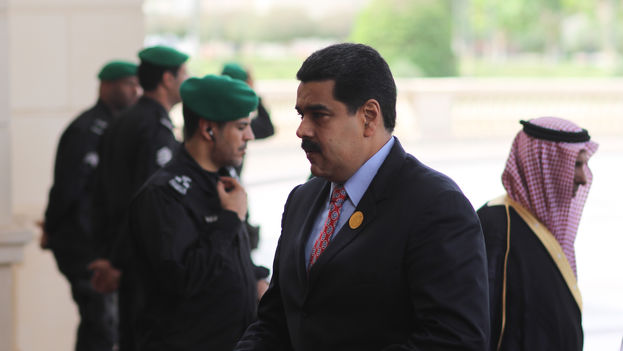
Nicolas Maduro enters the SAAC (South America and Arab countries) Summit on Wednesday in Riyadh. (Presidential press)

14ymedio bigger14ymedio, Eliecer Avila, Havana, 26 April 2016 — All of my life I’ve heard from mouth of the main leaders of the country that the high prices for many of the products sold in Cuba are caused, among other variables, by the “high cost of fuel on the world market.” This, according to them, raises the price of production processes inside and outside the country, creating an upward spiral that affects the price of goods and services.

“What small and underdeveloped economy can grow with prices of 126 dollars barrel of oil? Only rich countries can pay that, those who want the world to continue to be the same so that the South can’t develop. The imperialists are like this, they want to dominate the world according to their own desires.” Phrases like these were heard everyday on TV programs like The Roundtable.

Today, oil prices have fallen by nearly 75 percent, and the newspaper Granma acknowledges that this affected the recently announced “price adjustments” of certain products the government sells in Cuban convertible pesos (CUC).

Then, I wonder: What are Oliver Zamora Oria and all official Cuban journalists who speak on the subject doing accusing U.S. and Saudi Arabia of “not cooperating” with the intention of some OPEC members to increase prices ? Isn’t Cuba, a net importer of fuels, greatly benefited, like most of the planet, by the current prices?

In my opinion, we should be jumping for joy, because I assume that if we can afford cheaper crude oil, then the agricultural sectors , transport, energy, industry etc. will be stimulated… What is the point of the strange anger of the Cuban Government press about the failure of the last meeting held in Doha, Qatar?

Many can be the interests that move the editorial decisions of the media monopoly in Cuba. But, definitely, the general interests of the nation and a greater benefit for the public are not part of them.

Translated by Alberto

‘The World and my Cuba in El Diario’ by Uva de Aragon / 14ymedio, Jose Gabriel Barrenechea

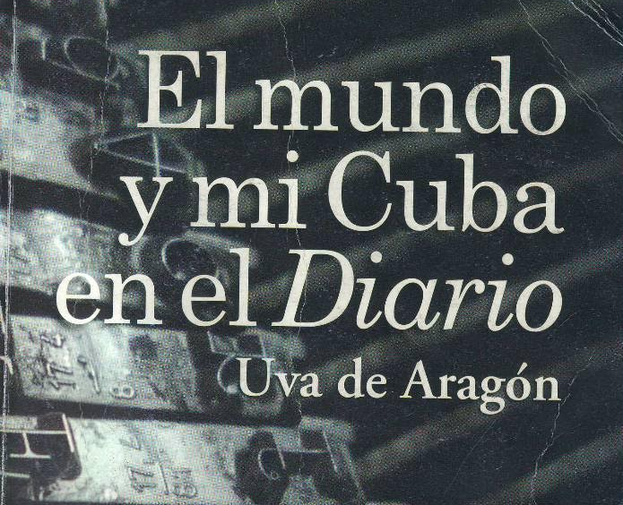
Cover of "The World and My Cuba in 'El Diario' " by Uva de Aragon
Cover of “The World and My Cuba in ‘El Diario’ ” by Uva de Aragon

14ymedio bigger14ymedio, José Gabriel Barrenechea Jose, Santa Clara, Cuba, 28 April 2016 – The World and My Cuba in ‘El Diario’ is a very difficult book to read, not for its style, which could not be more direct and comprehensive, but for the heavy emotional weight concentrated in each of its brief articles. The reader can do nothing more than take long breaks after reading them, in hopes that at some point this fiber that resonates through us finally stops, so that we can finally assimilate the sledgehammer of feelings and ideas with which the author has confronted us. I confess, for example, that after reading My Father and the Moon and My Mother and the Candy I had to put down the book I had just started reading for another day. continue reading

In choosing this small selection of the author’s columns in Diario de las Américas, Vitalina Acuna, its compiler, has managed to give Cubans on the island an introductory view of Uva de Aragon’s life, work, and dreams. The book is structured into nine chapters, combining Family Stories, reviews, or small essays investigating the lives and circumstances of people such as Max Aub, Gregorio Maranon, Charles Dickens and Mark Chagall, memories of the Mariel boatlift, far from complacent views on the political life of the United States, heartfelt defenses of personalities from the world of culture—like that dedicated to Domingo del Monte—travel and a very great deal about Cuba…

So much that, on writing about Gerald Ford and his political sacrifice to restore confidence in democracy in the United States, we clearly see the well-known Cuban inability to value the kinds of acts she talks about. Not forgetting the man she calls her “second father,” Carlos Marquez Sterling, who carried out a similar sacrifice when, at the end of 1958, he tried to remove the Batista dictatorship by running against him at the polls.

With regards to the physical separation that has failed to break the spiritual unity of the Cuban nation, the reception of this book on the island is a good example. The book is now in a print run of 2,000 copies from Holguin Publishing. In fact, one of the reasons that it took me almost a month to finish it is that, before I could start the book I had to wait for all the women in my family, and even my super leftist Old Man to read it before me.

Former Political Prisoners Say US Failed on Promise To Bring Their Families From Cuba / 14ymedio, Abel Fernandez, Mario Penton

Former Cuban political prisoners Niorvis Rivera (left) Aracelio Riviaux and Jorge Ramirez (right) speak with staff for Congresswoman Ileana Ros-Lehtinen. (Courtesy)

14ymedio bigger14ymedio, Abel Fernandez and Mario Penton, Miami, 28 April 2016 – Former Cuban political prisoners Niorvis Rivera, Aracelio Riviaux and Jorge Ramirezmet Thursday in Miami with staff for Representative Ileana Ros-Lehtinen for help in bringing their relatives from Cuba.

The three were part of the group of 53 dissidents released as part of negotiations between Cuba and the United States that allowed the return to the island of the Cuban spies still in American prisons. But shortly after their release, the opposition members had been returned to prison. continue reading

Days before US president Barack Obama’s visit to Cuba on 20 March, they were released and taken to US territory in less than 72 hours, which some interpret as a goodwill gesture by Raul Castro’s government, and others as an attempt to hide the presence of political prisoners in Cuban jails.

According to the dissidents, US officials who mediated their release promised them that their families would also leave for the United States in less than a week. But to date, they remain in Cuba.

The opponents are threatening to return to the island “on a raft” if the process of reunification is not accelerated.

“We feel betrayed,” said Jorge Ramirez, an independent labor unionist from Villa Clara who claimed that the American embassy in Havana, the Catholic Church and the Cuban government had all gone back on their word.

“The American staff told us that our families would be here in a week,” commented Riviaux, a member of the Patriotic Union of Cuba (UNPACU), who spent nine years in prison charged with the crimes of assault, contempt and dangerousness.

“It’s been a month since our relatives went to Havana, and this is good. If we do not see any progress, we will be the next rafters, but heading in the direction of Cuba,” he said.

For Jorge Ramirez it’s “a trick” which they played on them to get them to leave the island. According to him, “possibly it involved officials of the American government and even the Vatican.”

According to Ramirez, the main problem is that while the Cuban government is putting obstacles in the way of the families leaving Cuba, they have no way to help them economically.

“Some exile groups have helped us modestly, but this support doesn’t reach our families. We have no official documents that allows us to send money to Cuba. We don’t have permission to work,” he commented.

Ramirez’s wife, Nelida Lima Conde, is also a human rights activist in Cuba, and was self-employed when the release came through. As she told this newspaper, officials at the US embassy promised that she would be with her husband in a week, so she quit her job and took her children out of school.

According to the activist, fifteen days after her husband left for the United Stated she was notified that she should ask the Cuban immigration authorities for her passport, but because she was under sanction by the courts, they didn’t give her one. After the annulment of the sentence, the next obstacle was that her husband had to send permission for the children to leave the island. The document has to be stamped by the Cuban consulate to allow the minors to emigrate.

According to Ramirez, the government is putting these obstacles in their way “in revenge.”

Yudislady Travieso, the wife of Rivera, confirmed that she is in the same situation and that she feels “deceived.”

“What they really wanted was to get them to leave Cuba. They never said anything to us about the permits they’re asking for now,” she added.

Travieso and her four daughters, who live in Guantanamo, spent almost a month in Havana, where they have no family, while making arrangements for the trip, but did not resolve anything.

“They are going from home to home,” Rivera said, adding that the situation is very difficult for his family, who are “humble people.”

Two Russian Deputies Propose Reestablishing Signal Intercept Station in Cuba / 14ymedio

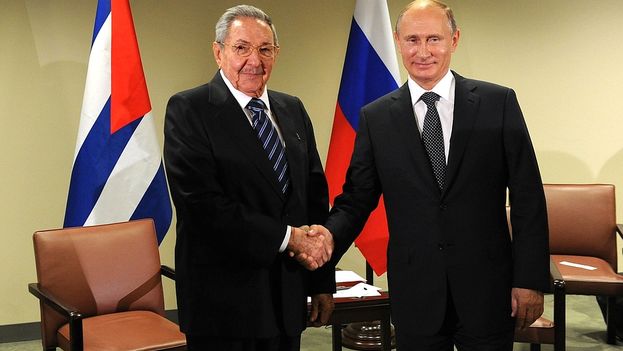
Raul Castro and Vladimir Putin in the Kremlin

14ymedio biggerTwo Russian Deputies put forward a proposal to President Vladimir Putin to study the reestablishment of the Lourdes signals interception center in Cuba, as well as the deployment of Russian missile launchers on the island “to protect the interests of Moscow and its allies,” as local media reported this Wednesday.

The initiative comes as a response to the agreement between the United States and Turkey which will allow the deployment in May of high mobility tactical missiles (Himars) in the Southeast part of the Ottoman country, near the border with Syria, to deal with attacks by the jihadist group the Islamic State. continue reading

“We believe it is possible to use the Soviet experience to contain the current expansionist intentions of United States,” said Valery Rashkin and Sergei Obukhov, members of the Communist Party, in explaining the request.

The center for signals interception, located near Havana, was shut down in 2002. However, the director of the Department of Latin America in the Russian Ministry of Foreign Affairs said in an interview last February that Moscow had no intention of opening military bases on the island.

Translated by Alberto

“The opposition has not matured,” Laments Martha Beatriz Roque / 14ymedio, Lilianne Ruiz

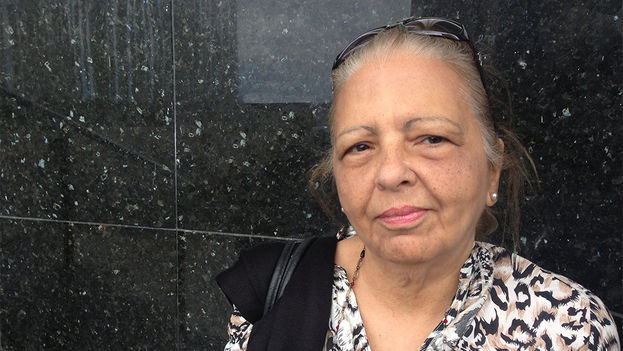
Martha Beatriz Roque. (14ymedio)

14ymedio, Lilianne Ruiz, Havana, 28 April 2016 —  Martha Beatriz Roque has returned from Miami after receiving a permit from the Cuban government in late February, which authorized her to leave the country one time. The activist was one of the seven former prisoners of the Black Spring of 2003 who benefited from this permit. She returns with a certain pessimism and a critical impression of the state of the Cuban opposition.

Lilianne Ruiz. You returned from abroad after permission from the Cuban government, which allowed you to make only one trip. What impressions did you bring back from your stay outside the country?

Martha Beatriz Roque. I come back with a tremendous pain in my heart about what I have seen there. In Miami there is the historic exile, who love their country, their fatherland, who talk about democracy, who think about Cuba constantly and who have a great nostalgia for the island, but this historic exile, unfortunately, is getting old and some of its members have died. continue reading

However, many people who are coming to Miami through different countries, including now through Costa Rica, Ecuador and Panama, are turning their backs on Cuba, they even want to forget that they are Cubans. These are people who are a part of a social fabric here that is broken, who have no ethics, no formal education and they are contaminating Miami.

LR. What do you think has been the outcome of Barack Obama’s visit to Cuba?

MBR. Obama has his agenda and within it is defending the interests of American citizens, as is natural, because that is his country. He has made it clear that the problems of Cuba have to be solved by Cubans and that is important. The people had a great lesson with Obama’s visit: for the people it has meant hope, which the Communist Party Congress subsequently tried to annihilate.

LR. And the opposition?

MBR. In Cuba there are opponents, but an opposition, as such, does not exist. An opposition exists in Venezuela, because it has been capable of uniting despite its disagreements. We are not capable of something like that yet. Here the unity lasts seconds.

LR. Did the 7th Congress of the Communist Party frustrate you, or were you were expecting something like what happened?

MBR. The Party Congress was going to be postponed to another date but it was held to try to counter what Obama said to the Cuban people, and because of this they didn’t have any finished [guiding] document. Some said, after the Congress was over, “We were right, Obama has achieved nothing.” Others say that the Congress was a way of demonstrating the failure of what Obama is doing, but I would not say that. Much less do I think it is a failure, because there are things that have been accelerated with Obama’s visit.

LR. Like what?

MBR. In the specific case of the eleven members of us from the [Black Spring] group of 75 who remain in Cuba, we were not allowed to leave the country and, at least in this moment, they allowed us one trip abroad. There have been solutions to some problems that you couldn’t say are changes, without the reestablishment of rights. This has to be seen as something satisfactory, not as something negative. In the not so distant future other solutions will have to come, because the economic, social and political situation of the country is unbearable.

LR. Will it be the self-employed who change Cuba?

MBR. The Cuban regime will not allow any self-employed to export, because that, they will say, is reserved for the businesses of the Ministry of Foreign Trade. The United States government is trying to have direct relationships with the self-employed, but that is not going to be allowed. Right now, when some self-employed turn their faces just slightly to the north, they’re going to cut off those businesses they’re going to stop everything.

LR. Can access to the internet help make the changes occur?

MBR. The regime does not allow it because they know that the internet is a source of knowledge, of the transmission of news and possibilities.

LR. What is the Cuban opposition lacking to be able to call forth the people?

MBR. First of all, it lacks leadership. Unfortunately, here everyone wants to be a leader, no one wants to be in the line, everyone wants to be at the head of it. It also lacks the exile,, which is capable of manufacturing a leader and putting forward a project with resources, but this does not solve anything.

LR. Do you see any chance for the opposition to influence the constitutional referendum announced by the government?

MBR. The opposition has not matured, it is still the same, generating documents, projecting itself abroad, meeting abroad, telling people what they have to do. But if the opposition doesn’t take advantage of this moment to work jointly with the people, it’s simple, nothing is going to happen. If they don’t work with the people, if they don’t raise awareness among the people, what does it matter that they go to meet the Pope in Rome, it’s all the same, it is simply not going to solve anything.

Carriers, Tanks And Trucks, The Ways To Get Water / 14ymedio, Luz Escobar

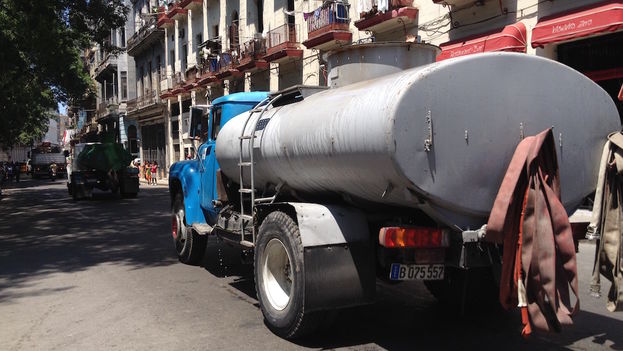
A tanker truck delivers water in the streets of Havana. (14ymedio)

14ymedio bigger14ymedio, Luz Escobar, Havana, 27 April 2016 – Under the hot sun, while passersby seek shade under the balconies, one hears the sound of truck on Jovellar Street in Havana. It goes along loaded with tanks full of water, and as it passes the residents look out their windows and run inside their houses looking for a bucket to fill. The commotion in the neighborhood is reminiscent of holidays, but there is no music, no fun, just a water carrier selling his coveted merchandise door-to-door.

Idalmis, a young mother who lives on the route taken by El Primo, yells from the balcony that she wants to fill her tank. She asks him not to leave, that other neighbors need to store water in jars, pots and even a fish tank. It’s been months since the tanks in their homes have had a drop of water to dampen everything. continue reading

El Primo is a modern water supplier. He doesn’t carry buckets up the stairs. In his truck he has a little motor and some hoses that reach out to his customers and can fill any receptacle in a trice. Connected to an extension cord that someone loans him, the purr of the pump can be felt. He has the panache of a distant descendant of Francisco de Albear y Lara (a Cuban engineer from the 1800s responsible for Havana’s water supply), but his name will never appear on a monument in the Cuban capital.

El Primo’s method, despite its sophistication, has its limitations. His hoses can’t reach above the second floor, but, he says, “the buildings in Central Havana aren’t that high.”

While filling a blue tank, which once held vegetable shortening and now contains the water for a family of four, the waterseller explains that since he settled in the city, coming from the east of the island, this has been his work. “The police have confiscated by motor several times, but the neighbors appreciate me so much that they themselves have come and gotten me out of jail,” he says.

In less than five minutes, a line has already formed in front of the truck. Antonia, a retired woman who lives alone on the first floor, tells about the time that a policeman prohibited the water-seller from filling his tanks at the water cistern near the Pioneer Cinema. “The whole block mobilized and we got him released from the station the same day,” recalls.

Problems with water supply in Havana. (14ymedio)

The supply cycles of the Havana Water Company have gotten longer in most of the capital’s districts. Areas like Old Havana are supplied almost entirely by tanker trucks (rather than piped water), but in the poorest neighborhoods, where there isn’t the money to buy it on a more frequent schedule, the trucks only show up “every seven days.” They prioritize “the schools, daycares, and the polyclinics,” the driver of one of these vehicles told 14ymedio on Monday, while supplying a building on Teniente Rey Street.

Abel Salas, first vice president of the National Institute of Hydraulic Resources (INRH), explained that about 70,000 people in Santiago de Cuba get water by way of tanker cars, while in the capital the figure is around 60,000. The deterioration of the water system aggravates the situation. According to data provided by the official press, “companies registered in the capital waste in one month almost 830,000 cubic meters” of water. The latest reports published on the subject indicate that 45% of the water pumped in the country is lost in breaks and leaks.

The contents of one tank can cost between 10 and 15 CUC, which is usually paid for by collecting money among all neighbors. The owners of B&Bs and private restaurants have the luxury of buying it for their businesses, but for most residents in Havana the price is too high.

On the outskirts of the capital, in areas such as Mantilla and Arroyo Naranjo, water comes through the pipes every other day but “with very little force” residents complain. There are also abundant water carriers like El Primo, and when their trucks show up in a street everyone crowds around to fill any receptacle they can.

For these water carriers there will be a lot of work in the coming months. Although the Climate Center at the Meteorology Institute predicted a rainy season with “normal precipitation” also warned that “the accumulated volumes will not solve existing deficits.” The cry of “water” will continue to ring in Havana neighborhoods.

The Cuban Spice Route / 14ymedio, Lilianne Ruiz

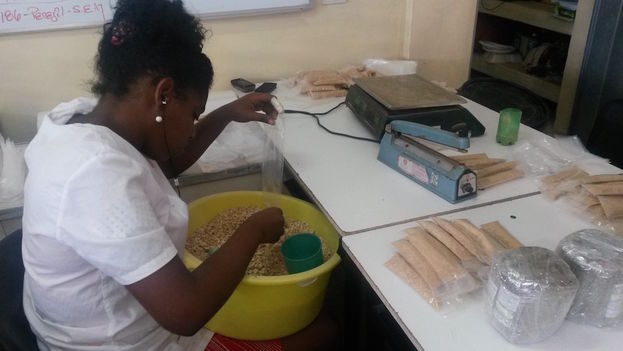
An employee selects and packages spices at Purita Industries. (14ymedio)

14ymedio, Lilianne Ruiz, San Miguel del Padron, 24 April 2016 — The spice route of Purita Industries begins with the pruning camp a short distance from the production workshop. It continues in the room where the machine is, a heated dehydrator designed by a mechanical engineer that processes 200 pounds of plants in 24 hours.

Located in San Miguel del Padron, to reach Purita’s farm you have to cross the Güines highway and continue down Dolores Street “until you can sense the odor of the seasonings,” as a nearby neighbor directs.

The aroma of the spices hits your nose before you enter the little factory. They produce basil, celery, rosemary, chives, tarragon and garlic, all “one hundred percent natural,” according to the producers. They also produce dried peppers, peanuts and shredded coconut. continue reading

Purita Industries is made up of a group of 11 professionals associated in the form on a non-agricultural cooperative founded two years ago, with a license to produce spices, condiments and dried fruits. “We are a small group of people who, with great effort, are trying to produce a highest quality product,” says the computer engineer Liuder Raspall, who became president of the entity.

The technology they work with is almost handmade. The dehydrator is designed by a mechanical engineer but constructed “together” by the workers, says Alfredo Gonzalez, farmer and partner. The equipment is made from galvanized metal and steel with nickel, with thermal insulation. Although currently it works off liquid glass and electricity, it was designed to also work with biogas and solar panels.

Certified by the National National Institute of Hygiene and Epidemiology, Purita products retain up to 60% of their organoleptic properties, that is those those that stimulate the senses to identify foods. A sample of them is taken to the laboratories of the institute to be periodically evaluated.

“The key to getting a product that, after being dehydrated, continues to have the aroma, the taste and the color is to maintain a temperature between 60 and 70 degrees and a continuous flow of air in one direction,” Raspall explains as he shows a package of light green chives, and describes that “the air supplied in a mandatory sense passes over the plants, removes moisture and does not return to touch them, because they would be rehydrated.”

At least ten fresh plants are required to get 2.2 pounds of dehydrated. Maintaining a stable volume of production is a challenge for Gonzalez, who has convinced farmers like himself in the surrounding area to plant herbs for culinary use. “We are starting to create direct partnerships with farmers who want to grow healthily, to operate the field in a certain way,” he says.

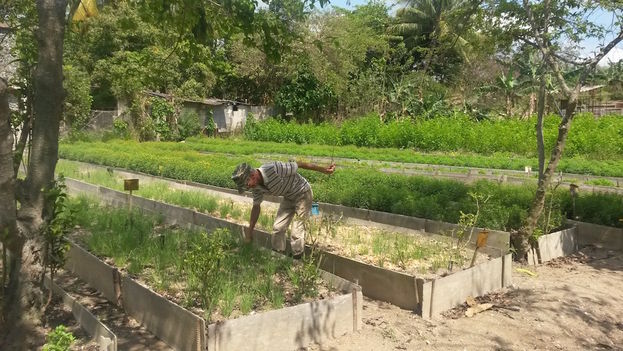
Farmers who have engaged in this new experience have discovered how profitable is to cultivate these herbs, because some, such as tarragon, thrive so easily that they hardly need watering if there are normal rains. “Science is pruning the branches in the right place,” Gonzalez said, pointing to a level in the basil. Plants are pruned every 21 days and some can last up to 10 years. Another incentive to plant is that the rational use of fields means that the crops never spoil.

The garden with herbs being grown for Purita Industries. (14ymedio)

The route of the spices, seasonings and nuts Purita ends in the stalls, which until very recently were only allowed in agricultural fairs held sporadically. Coming soon will also be a few sales points in the Ideal markets in the capital, a network of state stores that sells in Cuban pesos. A disadvantage in those places is that the lack the design of the space and striking publicity graphics to attract clients; for now people only look there for the cheapest deals.

“One of the things that we have in a difficult financial state is to make the price affordable to consumers,” says Raspall, who along with the rest of the associates is expecting to gain sales volumes. The Purita products sell for 15 Cuban pesos (about 60¢ US) for 20 grams. In this way they compete with El Portro, a state company that sells imported spices that cost up to 2.80 CUC (about $2.80 US) for 20 grams.

El Portro seasonings have not been available to suit all budgets, so the challenge for Purita is to show its existing customers their quality and the begin to promote their spices to the rest of the population, used to using cheaper artificial seasonings, along with garlic, onion and chili, which shouldn’t be missing in the ailing Cuban cuisine.

Purita products are also sold on several digital pages that let people buy them pre-paid from abroad for delivery to friends or family in Cuba.

In the workshop, very close to the current dehydrator, which has a 100 pound capacity and works two shifts a day, new opportunities are already being conceived. The same formula will be improved in some detail and, above all, the equipment is much larger and can produce a ton of seasonings daily.

The technology could help strengthen the spice industry, for example by introducing freeze-drying techniques. However, importing equipment is difficult. “This cost us very little money compared to a Rational that would cost about $75,000 (US), and the big difference would be that that one would have temperature sensors and automatic regulators,” he concludes.

A ‘Bishop Of The People’ For A Cuba In Transition / 14ymedio, Mario Penton

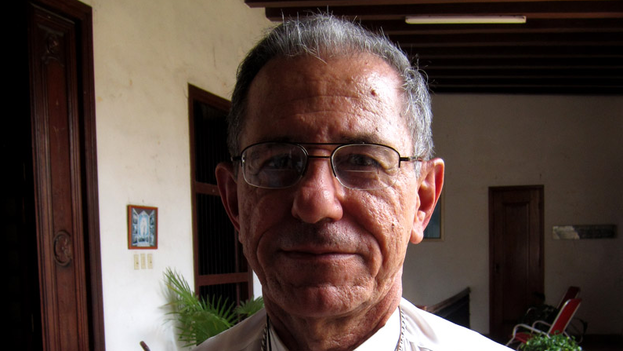
Juan de la Caridad García, the new archbishop of San Cristobal de Havana.

14ymedio bigger14ymedio, Mario Penton, Miami, 26 April 2016 — After nearly 35 years as head of the Archdiocese of Havana, Jaime Ortega y Alamino, the only Cuban cardinal and a crucial figure in the thaw with the United States, has been replaced. Pope Francis decided to accept his resignation, presented since 2011, and appoint in his place Juan de la Caridad Garcia Rodriguez, Archbishop of Camagüey, a man who is considered a “bishop of the people” and who is connected to the world of missions.

In an interview by telephone from Camagüey, a few hours after his appointment was confirmed, Garcia said he hopes his episcopate will serve to increase the dialogue with the Cuban government, so that “the Church can be present in spaces that belong to it, such as education, the media and prison ministry.” continue reading

He also said that his ministerial service will be based on the final document of the Cuban National Ecclesial Meeting of 1986 in which the Catholic Church said it wanted to be “praying, missionary and embodied” in the reality of its own people.

Ordained as a priest in 1972 and consecrated a bishop in 1997, Juan Garcia belongs to a new generation of bishops who act as bridge with regards to the infighting among the ecclesial institution itself, especially on issues related to its relationship with the government.

“With his discretion and centrism, he is the person less engaged in the intestinal struggles of the Cuban Church,” said Lenier González, deputy director of the civic project Cuba Possible, who considers that with this appointment “the historical cycle of old Cuban episcopate is closed.”

A Surprise

The news was greeted with surprise within the Cuban Catholic Church. The Vatican is very private with the selection process. Consultations with the clergy and the faithful and decisions about whether or not the candidate is accepted take place in the deepest secrecy.

The international press had referred to the possibility that Emilio Aranguren or Dionisio García, the bishops of Holguin and Santiago de Cuba respectively, would succeed Ortega. Also contemplated as a possible candidate was Juan de Dios Hernández, a Jesuit like the Pope and one of the auxiliary bishops of the Archdiocese.

Dagoberto Valdes, a Catholic layman who runs the magazine Convivencia in Pinar del Río believes that “the Pope has appointed a pastoral and missionary archbishop, which is what the Church needs at this time, especially the Havana Church.”

“The missionary work of Monsignor Juan has marked the Church in Camagüey. I am sure that this identity will be very well received in Havana,” said Valdes, who also considers this appointment as “a gift from the Pope to the people of Cuba.” According to him, Juan Garcia is a bishop who “truly smells of the flock,” as the Pope wants.

For Arturo Gonzalez, Bishop of the Diocese of Santa Clara in central Cuba, Juan Garcia is a man of the people, close to the faithful. “He is a very good man, he is a man of much prayer. He is a man of few words, but very clear,” said the prelate.

The Archbishop of Miami, Thomas Wenski, agreed and also described him as “a man of few words.” He adds that it is “very good news for the people of the Cuban capital.”

Wenski, who recently returned from a pastoral visit to the island, said Garcia is a bishop who “has worked very hard for his diocese and is also very close to his clergy.”

The new archbishop of Havana, Juan de la Caridad Garcia Rodriguez, with Cuban President Raul Castro at the inauguration of the new headquarters of the San Carlos and San Ambrosio seminary in Havana.(Gaspar el Lugareño)

Raul Castro loses an ally

Cardinal Jaime Ortega has been a key figure in the thaw that led to the restoration of diplomatic relations between Havana and Washington. It was he who, in 2011, negotiated the release and subsequent departure of most of the prisoners of the Black Spring and it was he who was responsible for hosting three papal visits in Havana, which helped to strengthen an image of greater openness towards the outside.

Cardinal Ortega presided over the Conference of Catholic Bishops of Cuba during three successive periods and was one of the main architects of the pastoral letter “Love Hopes All Things” of 1994, which harshly criticized Fidel Castro’s government in the middle of the so-called Special Period.

In recent months, Ortega was criticized by sectors of the opposition, especially after he made statements to the Spanish radio station Cadena Ser in which he denied the existence of political prisoners in Cuba.

The Archdiocese of Havana announced through an official note signed by Juan de Dios Hernández, that the cardinal will have his retirement residence in the Padre Felix Varela Cultural Center, a building that formerly housed the San Carlos and San Ambrosio Seminary.

A Cuban priest who asked not to be identified said that the departure of Monsignor Ortega allows the placement of a figure that does not fear the Cuban government, “because he owes nothing to them.”

He recalled that when Monsignor Garcia was appointed Bishop of Camagüey, “They had to go look for him in Cespedes because he went there on a mission. He is a bishop of the people.” And he said that by naming him a door has been opened for a whole generation of priests who were his compañeros in the seminary to acquire greater prominence within the Church, although they had not been able to do it until now because of the presence of the almost octogenarian cardinal.

The Challenges for the New Archbishop

Leinier Gonzalez believes that the new archbishop has before him dissimilar challenges. Among his main challenges is “reconstructing the pastoral work of the Havana Church” which, according to this analyst, is in profound crisis. Another important aspect will be the massive exodus of young priests and laypeople to foreign countries. In several parts of the world, and particularly in Miami, there is a large community of Cuban priests who were ordained on the island and who, for different reasons, ended up emigrating.

Another obstacle the new archbishop could face is the fact of always having worked in ecclesiastical areas outside of the capital, he said. Camagüey is an extensive archdiocese, but it is predominantly rural, while Havana is mostly urban.

Taking over the leadership of a territory where the national government is located, as well as the nunciature and the different political actors and embassies, the archbishop should also be more exposed to national politics. All this along with the proximity of the former archbishop, living just a few blocks away, and the figure of the president of the Cuban Bishops Conference, which for now rests with Dionisio García.

After the replacement of the cardinal, several questions arise about who will be the visible head who will carry forward the dialogues and negotiations with the government.

Some analysts compare the appointment of the new archbishop with the election of Francis in Rome, whom many see as a pope of transition.

The Collapse / 14ymedio, Yoani Sanchez

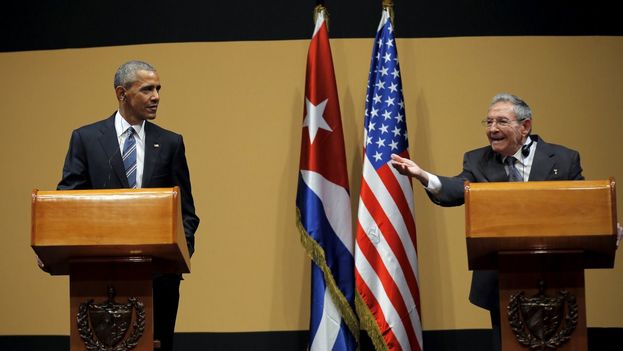
Raul Castro, in the presence of Barack Obama, chides a journalist who asks about political prisoners on the island. (EFE)

14ymedio bigger14ymedio, Generation Y, Yoani Sanchez, 26 April 2016 – In films there are final epics. Systems whose final moments pass between the sound of the hammers tearing down a wall and the roar of thousands of people in a plaza. The Castro regime, however, is going through its death throes without glorious images or collective heroics. Its mediocre denouement has become clearer in recent months, in the signs of collapse that can no longer be hidden behind the trappings of the official discourse.

The epilogue of this process, once called Revolution, is strewn with ridiculous and banal events, but they are, indeed, clear symptoms of the end. Like a bad movie with a hurried script and the worst actors, the scenes illustrating the terminal state of this twentieth century fossil seem worthy of a tragicomedy: continue reading

  • Raul Castro erupts in fury at a press conference when asked about the existence of political prisoners in Cuba, he gets entangled in his earphones and comes out with some rigmarole a few feet from Barack Obama, who looks like the owner and master of the situation.
  • After the visit of the United States president, the government media releases all their rage at him, while Barack Obama’s speech in the Great Theater of Havana is number one on the list of audiovisual materials most requested in the Weekly Packet.
  • Two Cuban police officers arrive in uniform on the beaches of Florida, after having navigated in a makeshift raft with other illegal migrants who helped them escape from Cuba.
  • A group of Little Pioneers, dressed in their school uniforms and neckerchiefs, contort in sexually explicit movements to the rhythm of reggaeton at an elementary school. They are filmed by an adult and the video is uploaded to the social networks by a proud father who thinks his son is a dance genius.
  • Cuban Foreign Minister Bruno Rodriguez accuses Obama of having perpetrated an attack on “our conception, our history, our culture and our symbols” a few days after receiving him at the airport and without having fearlessly said any of these criticisms to his face.
  • An obscure official at the Cuban embassy in Spain says in a chat with “friends of the Revolution” that this is “the most difficult moment and its history,” and calls the coverage of Obama’s visit in the foreign media as a “display of an unparalleled cultural, psychological and media war.”
  • Raul Castro is unanimously reelected as first secretary of the Communist Party for the next five years and choses stagnation. Thus, he loses the last chance to pass into the history books for a gesture of generosity to the nation, as late as it might be, instead of for his personal egoism.
  • Fidel Castro appears at the Congress’s closing ceremony, sheathed in an Adidas jacket, and insists that “we not continue, as in the times of Adam and Eve, eating forbidden apples.”
  • A few days after the end of the Party Congress, the government announces a laughable reduction in prices to try to raise fallen spirits. Now, an engineer no longer has to work two-and-a-half days to buy one quart of cooking oil, he only has to work two days.
  • Thousands of Cubans throng the border between Panama and Costa Rica trying to continue their journey to the United States, without the government of the island investing a single penny to help them have a roof over their heads, a little food and medical care.
  • An economist who explained to the world the benefits of Raul Castro’s reforms and their progress, is expelled from the University of Havana for maintaining contacts with representatives from the United States and passing on information about the procedures of the academic center.
  • Two young people make love in the middle of the San Rafael Boulevard in plain view of dozens of onlookers who film the scene and shout obscene incitements, but the police never arrive. The basic clay of the Revolution escapes in the individual and collective libido.

The credits start to run and in the room where this lousy film is being shown only a few viewers remain. Some grew tired and left, others slept through the long wait, a few monitor the aisles and demand loud applause from the still occupied seats. An old man is trying to feed a new, interminable, filmstrip through the projector… but there is nothing left. Everything is over. All that’s left is for the words “The End” to appear on the screen.

To End Censorship / 14ymedio, Reinaldo Escobar

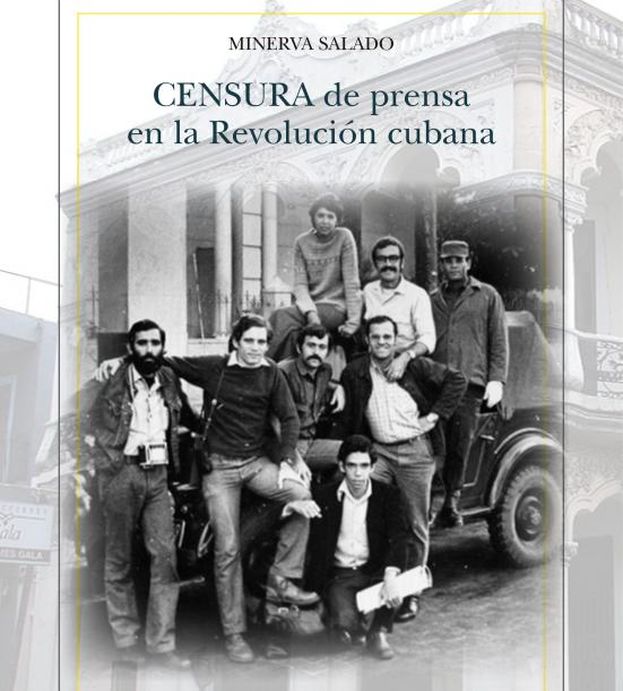
The cover of “Censorship of the Press in the Cuban Revolution,” by Minerva Salado (Verbum Publishing)

14ymedio bigger14ymedio, Reinaldo Escobar, Havana, If the mid-seventies I had thought to tell Minerva Salado, then my chief editor at Cuba International magazine, that in some forty years she would write a book titled “Censorship of the Press in the Cuban Revolution,” I would have caused enormous problems for myself, only surpassed by that if I had predicted to her my current status as an “unofficial” journalist.

Unveiling the framework of obscenities and subtleties that was woven into the early years of the process called the Cuban Revolution in order to implement strict censorship on the media is a very complex task; what scholars would call “a multidisciplinary task.” Minerva knows this, as a writer, journalist and poet, so in the introduction she warns that her efforts “will have to address the documentary research, personal experience and memory of several generations of journalists and media.” continue reading

The theme of this testimonial essay is the magazine Cuba International, a medium that was designed to export a saccharine image of the country, similar to other publications produced by all the members of the so-called socialist camp.

To put makeup on the reality a team was formed where the reporters wanted to be writers and the photographers artists, and it was precisely in this situation that the contradiction arose between the militancy that was intended and the quality demanded.

It will be very easy to rebut what is stated in this book, both from the trenches of those who will call it a betrayal, probably paid for by the empire, as well as by those who, from the opposite extreme, will read it as a justification of the censorship imposed on the Cuban press. But those who are looking for good arguments, irrefutable data and convincing explanations will be grateful for its publication under the imprint of Verbum Publishing in Madrid.

The book needed after this one is the one where someone tries to demonstrate that in this last half century there has been no censorship of the Cuban media, or where they at least try to justify it as a necessary “loving gag.” I already know that it will not be Minerva Salado who will write that one.

New Prices, Political Will And Productivity / 14ymedio, Reinaldo Escobar

Customers at the Carlos III shopping center in Central Havana this morning waiting expectantly for the reduction in prices on some products announced the night before.

14ymedio bigger14ymedio, Reinaldo Escobar, 22 April 2016 – As the journalist Regina Coyula warned, in order to understand what the press in Cuba is saying you have to know “Granmática” (the language of the newspaper Granma) and, even though the note on the first page of the official organ of the Communist Party appears signed by the Minister of Finance and Prices, one has to have read a lot of official editorials, listened to enough speeches by Señor Machado Ventura and dedicated several days to studying what they say on the Roundtable TV program, to assimilate a single paragraph of a dissertation on the economy in its purest form.

The note says, “The final solution to this complex reality will be achieved with increased productivity and efficiency in the national economy,” but a few lines affirm that it has been “the political will of the Leadership of the Party and the Government (…) as well as the reduction in food prices in the world market” that have led to the adoption of “a set of measures aimed at gradually increasing the purchasing power of the Cuban peso in the short term.” continue reading

Every economic measure that has been taken from political will, be it to raise or lower wages, raise or lower prices, will be unsustainable if there is no increase in productivity. On the other hand, any increase in the purchasing power of the Cuban peso, subject to the fickleness of prices in the world market, will inevitably be impermanent unless we can count on an efficient economy.

So the official note is clear while confusing. Clear because it warns that there shouldn’t be many illusions that these price decreases will be lasting, because they are dependent on the capricious world market; confusing because it doesn’t explain the lack of political will to make the national economy truly efficient and productive.

Every time that there is a proposal from the heights of power to control prices, or when it is affirmed that there will never be shock therapies, or that no one will be abandoned, or that the accumulation of property and wealth will not be allowed, what is really being proclaimed is the populist and voluntarist posture that aims to put political decisions ahead of economic emergencies.

Now, the good and paternalistic State just realized that the wages aren’t enough to live on, something they apparently ignored all the times they mercilessly sent prices through the roof and perverted the concept of the “acquisitive power of the population” through dark and twisted paths of corruption, the diversion of resources and the absolute lack of belonging that workers have in relation to their workplaces.

Those who criticize the price reduction measure as insufficient will be labeled as ungrateful; those who suggest that it would have been better to raise wages will be considered irresponsible. Any proposal to remove the straitjacket from private entrepreneurs could be considered as a frontal attack on the socialist model of production, the state enterprise and certainly the Nation.

Clothes Do Not Make the Man / 14ymedio, Pedro Campos

Voting unanimously at the Seventh Congress of the Communist Party of Cuba.

14ymedio bigger14ymedio, Pedro Campos, Havana, 23 April 2016 — Army General Raul Castro, newly re-elected first secretary of the Cuban Communist Party (PCC), in his closing speech at the Party’s 7th Congress spoke of moving forward with our democratic, prosperous and sustainable socialism. It turns out that the adjective democratic has just been added to the socialism officially promoted in Cuba.

The leadership of the first Communist Party was allowed to take the name, later used to turn the country into a disaster, even recognizing one day that “no one knew how to build socialism.” The leadership of the PCC has the right to name the society they are proposing whatever they want. But those of us who have been defending a democratic socialism in Cuba also have the right to make it clear that this name has nothing to do with the socialism as practiced by the PCC. continue reading

Everything done from the leadership of the PCC is solely intended to strengthen the state monopoly capitalism with ingredients of paternalistic populism that has always characterized what has been intended in Cuba since 1959.

In his speech, the general was precise: one party, the Communist, based on Marxist-Leninist ideology, which, in any case, is based on democratic centralism (promoted by Lenin to crush the growing dissent within the Bolshevik Party) and not on democracy.

He also argued that Article 5 of the Constitution regarding the leading role of the Communist Party in society will remain, and that there will be a continuation of the centralization of decisions and state ownership as the linchpin of the economy. Only wells are built from above: everything from the top down.

The election of the first and second secretaries of the Politburo was not performed by the full Congress nor directly by the Party membership, but by the members of the Central Committee. The age limit for new members of the Central Committee is established as 60. By the stroke of a pen the possibility is eliminated that the generation that fought at the Bay of Pigs, that ran the literacy campaign, and that carried the hardest tasks of the Revolution on their shoulders, will serve on the Central Committee. And the limit applies arbitrarily to new members, but not to those who are now in their 70s and 80s and who have been in the PCC leadership ranks for more than five decades.

Self-managed cooperatives and self-employment are still regarded contemptuously as secondary “non-state” forms of work, while appropriate ways of self-management for workers in state enterprises is not even mentioned.

How can there be democratic socialism when the means of production are controlled by the bureaucracy and the wage labor that typifies the form of capitalist exploitation is maintained, without democratization of politics and without socialization of the economy?

If the Communist Party decided to honor the democratic qualifier for its socialism, it should assume the minimum standards of democratic socialism: democratization of politics, socialization of property and ownership in the economy, and allowing free expression and political activism of our groups and all democrats.

But we are not exclusive nor sectarian. Hopefully Raul Castro and his Party will act consistent with this new adjective and not as occurs with the term socialism, which they converted into an undesirable word for many.

If the Communist Party is open to the interests of the entire Cuban nation, it will promote a true popular, broad, horizontal participation, without restrictions in discussions of the documents 7th Congress and of a new democratic constitution, in town meetings, without pre-conditions.

If, as a part of that process it assumes the overall defense of all human rights of all Cubans; if it prevents repression against peaceful opponents and those who think differently and releases all prisoners of conscience; if it endorses freedom of expression, association and election; if it accepts the free development of various forms of production and property; if it grants ownership, management and profits to workers in state enterprises; if it accepts that Cubans living abroad can visit their country with passports from other countries and that those who want to can invest in it; it would not be democratic socialists who turn their backs on them.

If they take steps in that direction, I am sure they will have the support of many Cuban democratic socialists and democrats.