
Warning to the Repressors: “We Are Watching You”

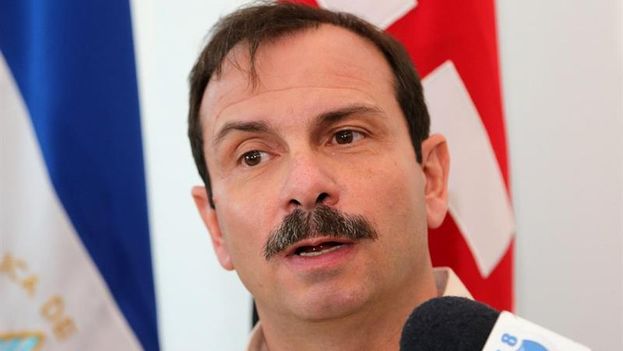
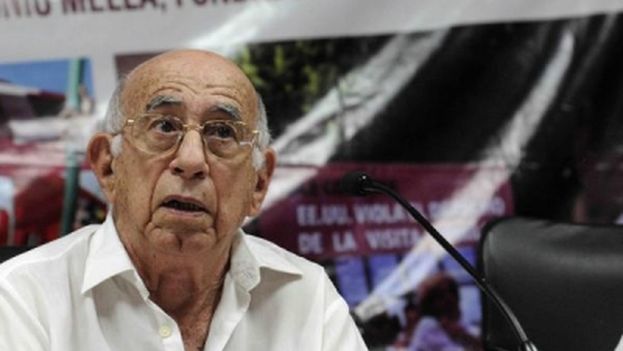
Juan Antonio Blanco, director of the Foundation for Human Rights in Cuba sent a strong message to the repressors: “We are watching you.” (14ymedio)

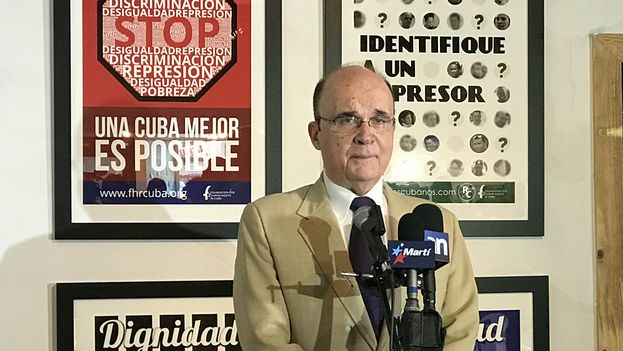
14ymedio bigger14ymedio, Mario Penton, Miami, 31 March 2017 — The Foundation for Human Rights in Cuba (FDHC) launched its new program Artists For Rights in Miami on Friday and sent a strong message to the Cuban government’s “repressors”: You are being watched and your actions will not go unnoticed.

The artistic project seeks to sensitize artists and the Cuban people in general about the difficult situation of human rights in the island. More than 30 artists have contributed to the project’s first activity, among them artists who are in Cuba, in exile and in other countries such as Venezuela, Costa Rica and Puerto Rico.

“In the gallery there will be pictures of all kinds, not necessarily political. What we consider to be political is the artist’s decision to contribute his art to the promotion of human rights in Cuba,” said Juan Antonio Blanco, president of the Foundation. continue reading

The first action of this new project is an exhibition of fine art open to the public at Calle 8 in Miami, the hub of the Cuban diaspora in the city.

Among the artists who will exhibit their works at the Cuban Art Club Gallery are Ramón Unzueta, Danilo Maldonado known as El Sexto, Claudia Di Paolo, Rolando Paciel, Yovani Bauta, Roxana Brizuela and Ramon Willians. The exhibition will be open from April 1st to 15th, and admission will be free

Blanco also talked about the Foundation’s project to identify and document the repressors that the Cuban government uses to muzzle the opposition.

“We have numerous documented cases of repressors, with photos and archives proving their participation in activities against civil society and human rights activists on the island,” he said.
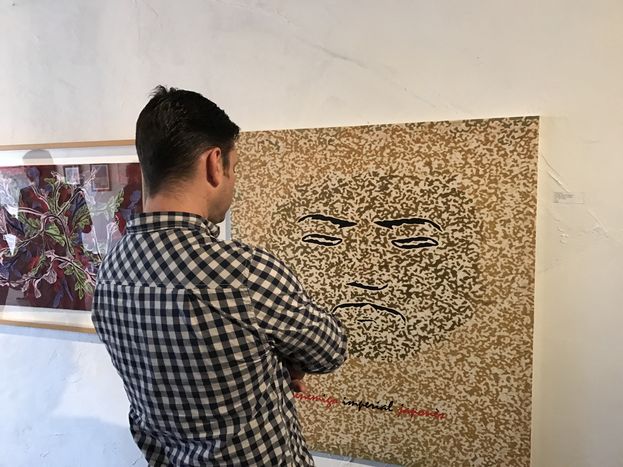
The work of Cuban artists is on display in Miami

“Publicity isn’t important to us, rather we want to have a psychological impact on military and paramilitary repressors. We want our message to reach those who carry out the acts of repudiation in exchange for a sandwich or for a T-shirt, so that they think about it three times,” he added.

According to the FDHC, in Cuba there are more than 70,000 prisoners, which is why it ranks as the sixth country in the world in prisoners per capita.

“There are thousands of prisoners who are in prison under the charge of ‘dangerousness’ [without having committed a crime] so they do not have to call them political prisoners,” he added.

According to Blanco, the Foundation is undertaking “quiet diplomacy” to ensure that these people who have been identified as repressors are not able to obtain visas for the United States or European countries.

The detailing of the record or repressors has not been without conflict.

“In Miami we have received denunciations against repressors, but we always ask the denouncer to sign a notarized affidavit that the repressor is accused of having carried out that work in Cuba,” he explained.

According to Blanco, his organization has had to face maneuvers by the Cuban government to delegitimize the work they are doing, by ‘leaking’ the names of people who are not repressors.

“The Havana regime wants to keep it quiet, it is not a priority, but that is precisely what we do not want. We seek to focus on violations of human rights in Cuba and we want Cuba to be a priority,” he insisted.
It’s Never Too Late If The Movie Is Good

Authorities decided not to screen the film after its director, Jonathan Jakubowicz, suggested withdrawing it from the festival as a protest. (14ymedio)

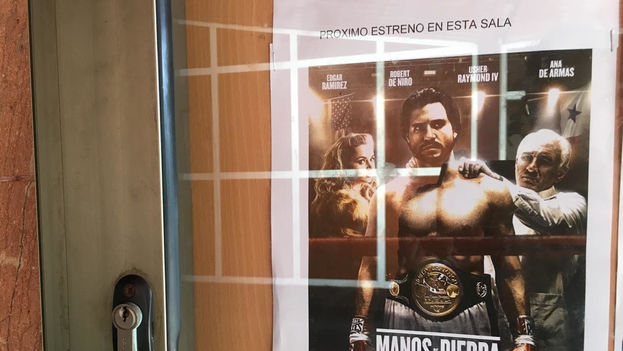
14ymedio bigger14ymedio, Marcelo Hernandez, Havana, 30 March 2017 – After more than three months of being excluded from the Havana Film Festival, the movie Hands of Stone will be shown at La Rampa cinema in the Cuban capital. The film, based on the life of the Panamanian boxer Roberto Durán, was not shown at the festival as a punishment because its director, Jonathan Jakubowicz, expressed his solidarity with Cuban director Carlos Lechuga, whose movie Santa y Andrés was censored on the island.

For several weeks the story of the Panamanian boxer has begun to circulate widely through the popular “Weekly Packet” in a high definition copy dubbed in Spanish. Now it comes to the big screen, although its release has been accompanied by very little coverage in the official press. continue reading

Last November Jakubowicz spoke on the phone with Lechuga to share the idea of ​​removing his film from the festival’s playlist. After that call, the organizers of the event stopped responding to messages from the Venezuelan director to organize the arrival of a copy of the tape to the Island.

The discreet official projection of ‘Hands of Stone’ is a small victory for its director and for the national filmgoers

“Like the day after the death of Fidel Castro was announced, I thought that was it, so I didn’t write any more. I guess preferred to avoid the uncomfortable situation of me being in Havana, at a time of so much tension,” the director explained to 14ymedio. The organizers of the film festival said that the director “never sent the exhibition copy.”

“I felt that going to the Festival to show my film would be a hypocrisy, like when I saw international filmmakers [in Venezuela] photographing with Chavez while I was being persecuted,” he said in an interview with 14ymedio. “I was afraid to become that evil figure of the artist who supports the repressor.”

The discreet official projection of Hands of Stone is a small victory for its director and for the national filmgoers that have been waiting months to see it in the big screen. Jakubowicz predicted that “Cubans will feel the history of Durán as their own.”

Sagua La Grande, The Village Where A Glass Of Water Is A Miracle

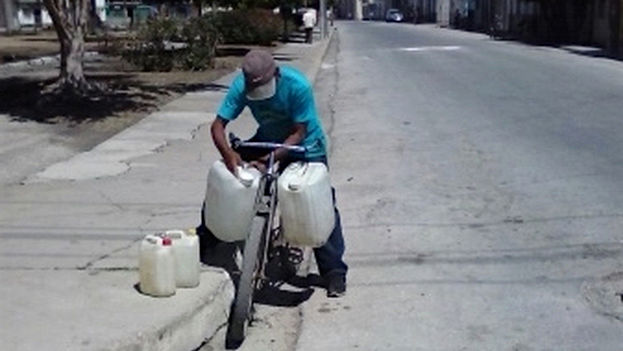
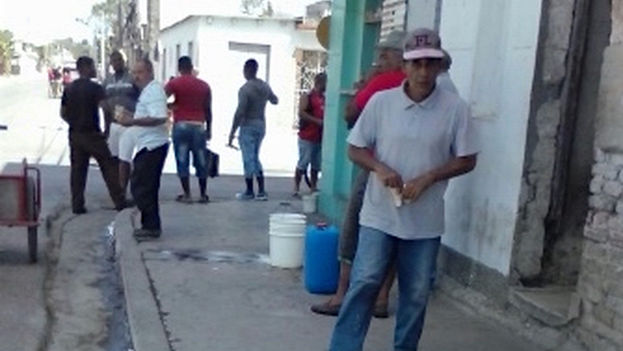
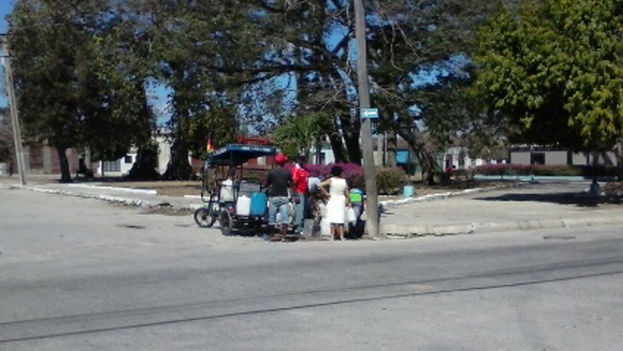
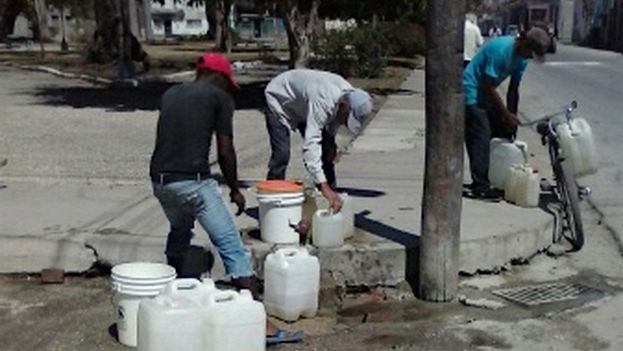
Residents in Sagua la Grande filling containers with water.

14ymedio bigger14ymedio, Luz Escobar, Havana, 30 March 2017 — Through the streets of Sagua la Grande, in the province of Villa Clara, people walk around with bottles, buckets and every kind of receptacle. This month’s break in the turbine that supplies the city’s water has forced its inhabitants to carry water from different towns.

“It’s been more than a week without water,” Jaime Guillermo Castillo, a resident, told 14ymedio. “We fill the buckets at some public taps very far from the center, everyone goes to the closest one however they can. We go in horse-drawn carts, on bicycles, or whatever appears.” continue reading

The municipality is supplied by a public aqueduct system that has three basic sources: Caguaguas about 7 miles away, Chincilla about 6 miles, and Viana, nearly 10 miles. But with the acute drought affecting the whole country, the first of these sources has had to come up with most of the supply.

Transporting water by bike. (14ymedio)

The breaking of the Caguaguas turbine aggravated the situation. The equipment was taken to Santa Clara for repairs but the residents complain about the lack of information and the excessive delay. The problem has reached the point that several residents have called the local People’s Power delegate to resolve the problem as soon as possible or to make a public protest.

“First they said it was only for a couple of days, but we have been dealing with this for more than a week and the situation is getting worse,” laments farmer Jorge Pablo, who fears “big crop losses” because it’s been at least eight days without being able to put “a single drop of water in the furrows.”

According to the Population and Housing Census of 2012, the municipality Sagua la Grande has about 52,334 inhabitants, 90% in urban areas. Problems with water supply have been frequent in recent years due to poor infrastructure.

Several areas of the city have also had problems with water pressure for decades, mainly in the San Juan neighborhood, the southern part of Victoria Center and Loma Bonita. Water is almost entirely unavailable in the latter. A situation that has forced many villagers to drill wells for their homes, which has brought a deterioration of the water table.

Through the streets of Sagua la Grande, in the Province of Villa Clara, people wander about, loaded down with jars, buckets and all kinds of containers (14ymedio)

A study a decade ago calculated that water losses in the city were estimated at 30% and were mainly caused by leaks and uncontrolled consumption. Of the total water that is pumped from the sources of supply, about 410 liters per second, only about 290 reach the city.

Instead of improving, the situation has continued to worsen in the last ten years and the people’s council areas with the greatest difficulties are Coco Solo and Centro Victoria.

The driver from Caguaguas has also suffered the problems of maintenance and conservation, as well as the shortage of equipment and qualified personnel to maintain a stable service, according to local press reports.

Authorities attribute part of these problems to “unscrupulous citizens” who drill holes in the water distribution pipes to illicitly irrigate small orchards. The presence in the area of ​​numerous producers of meat with clandestine farms has contributed to the increase of the phenomenon.

A study a decade ago estimated that water losses in the city were estimated at 30% and were mainly caused by leaks and uncontrolled consumption. (14ymedio)

However, the residents point out that the promised investments have not been made to avoid the continuous breaks. “Nobody cares about this town,” laments Herminia, was was born there and who is now trying to sell her four-room property with an immense patio.

The Villaclareña puts her hopes on the sale of her house to leave what she considers has become “a place with no future.” She feels that Sagua la Grande has undergone a process of deterioration and “the frequent breakingof the turbine is another step in this fall.” Not even the 2011 declaration making the historic city center as a National Monument managed to stop the process.

“A town without water is a ghost town,” says Herminia. “Parents do not want to send children to school in dirty uniforms and older people are the ones who are worse off because they cannot carry water from afar.” She paid a water-bearer about 50 Cuban pesos (about $2 US), a quarter of her pension, to fill a tank that she only uses for cooking: “A bath is a luxury that I can not give myself,” she says resignedly.

Plaza Carlos III Shopping Center Reopens

The official media gave no explanation for the sudden closure of the mall. (14ymedio)

14ymedio bigger14ymedio, Havana, 29 March 2017 — This Tuesday, the Carlos III Plaza Shopping Center, closed since last Friday, reopened its doors to the public.

From the early hours dozens of people waited outside the mall with the hope that, after being closed four days, the shelves would be better stocked.

The only difference from other days was that the employees had a more polite attitude than usual and the singular fact that there were bags at all the cash registers in the market, and also the coins needed to make change, which isn’t always the case. continue reading

“They even said ‘thank you’ after we made purchases,” commented a gentleman who said he had come from Puentes Grandes in search of a box of chicken.

In the children’s play area, the kids rode their horses and carts while the parents ate pizza or drank beers.

Not a single word was said about the reasons for the closure of the market, either in the written press or in the television news.

Outside the market there was not a single informal dealer in household appliances, furniture, or electrical equipment. Instead there were many police officers imposing fines for poor parking or simply keeping watch.

The Mysterious Closing of Plaza Carlos III Causes Distress

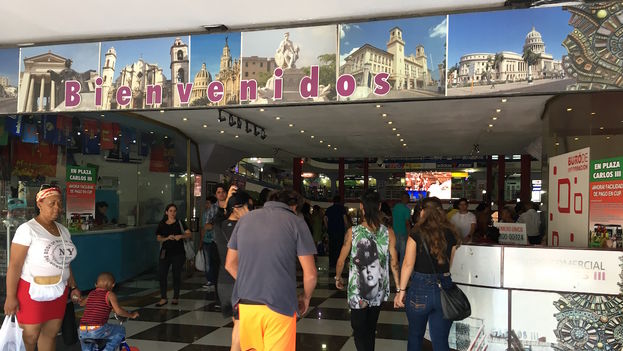
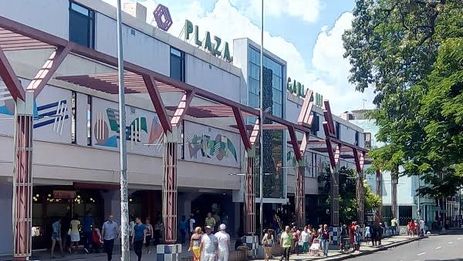
Plaza Carlos III Shopping Center, Havana

14ymedio bigger14ymedio, Miriam Celaya, Havana, 27 March 2017 – It is almost noon on Sunday and a young couple, with their two young children in their arms, stops, frustrated, in front of the closed gate of the Plaza Carlos III Shopping Center. For a moment they are confused, they consult their watches and immediately start asking questions of several people who arrived earlier and who, like them, have stopped in front of the gate. Some wait patiently outside from very early, “in case they open later”, but in vain.

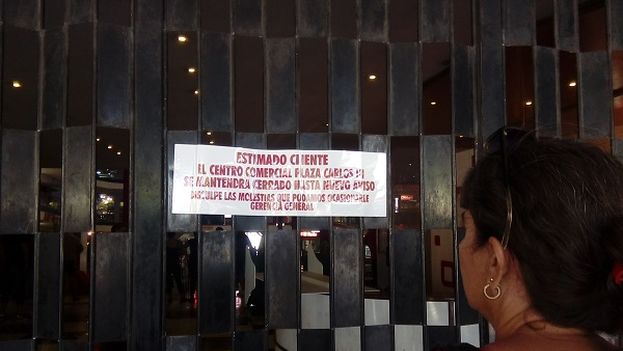
This scene has been repeated every day since Friday, March 24th, when the commercial center, the largest and most popular of its kind in Cuba, closed down. Dozens of regular customers from several of the provinces have traveled to the capital just to stumble across a small and laconic sign on the gate, warning about the obvious, but offering no useful additional information:

DEAR CUSTOMER
THE PLAZA CARLOS III SHOPPING CENTER
WILL BE CLOSED UNTIL FURTHER NOTICE
WE APOLOGIZE FOR THE INCONVENIENCE THIS MIGHT HAVE CAUSED.
GENERAL MANAGEMENT continue reading

Of course, without any official information, the surprise closing of Plaza Carlos III has raised a lot of speculation, especially in neighborhoods surrounding the area, in the heart of downtown Havana, for it is one of the pioneer shopping centers to deal in foreign currency transactions in Cuba, since the so-called decriminalization of the dollar took place, back in the 90’s. From the time it opened as a foreign exchange market, Carlos III has undergone several renovations in different stages, but never before have sales to the public been completely discontinued.

Would-be customers mill around outside the shopping center (14ymedio)

Rumors are circulating that connect this unusual closing with the recent fires that have taken place in other establishments that operate in foreign currency in the municipality

Rumors are circulating that relate this unusual closure to the recent fires that have occurred in other establishments that operate in foreign currency in the municipality. “The management denounced to the fire department headquarters the bad state of the fire-fighting media, because it does not want the same thing to happen to them [as in the last ones], so they are renovating the whole system,” say some residents of the neighborhood who, according to what they say, received that information from some of the shopping center’s employees and officials. There are those who say that “the firemen came and found that there were flaws in the fire protection system.”

These days, however, no metal or metal bars covering the two entrances of the Plaza have been seen to deploy personnel or vehicles specializing in fire-fighting technology, nor have any workers been seen to be reinstalling or maintaining the electrical networks or other similar tasks.

The most visible interior hassle has been the employees of the place, occupied in general cleaning of the floors and windows, who have been reluctant to give explanations to those who are not satisfied with the simple poster and inquire about the date of reopening. “Until further notice,” they repeat, as automatons, those who deign to respond.

Other neighbors speak of a “general audit” that “becomes very complicated” due to the large number of shopping mall departments and the size and complexity of their stores. This conjecture is reinforced, on the one hand, by the experience of decades of cyclical (and futile) raids against mismanagement, administrative corruption, misappropriation, embezzlement, smuggling, black marketing and all other illegalities to be found in a socioeconomic system characterized by growing demand, insufficient supply and the poor management of the state monopoly on the economy. The regularity of which does not escape any establishment where a high amount of state resources moves.

The only information that is offered to those who come to the shopping center entrances is a brief sign. (14ymedio)

On the other hand, the surprise and undisclosed closing -with all the losses it entails in a shopping center that bills thousands in both national currencies- is a sign of the intervention of the highest ranking government auditors to detect irregularities in situ, without giving transgressors time to hide traces of their misdeeds.

If the alleged audit is true, it would be a demonstration of the ineffectiveness of the National Revolutionary Police (PNR) and their failure to prevent unlawful activity in the neighborhood. For several months, the constant and strong police presence around the outer areas of the commercial center has looked like the appalling image of a besieged square, while the “inside” criminals, those who are part of the staff, lived by their own code.

For now, all indications are that it does not appear to have fallen into that sort of epidemic closing that has been coming down hard recently in the capital on several establishments that trade in foreign currency

Last Sunday several trucks continued unloading merchandise in the stores at Plaza Carlos III, which augurs that, on an imprecise but possibly brief date, the center will reopen to the public. For now, all indications are that it does not appear to have fallen into that sort of epidemic closing that has been coming down hard recently in the capital on several establishments that trade in foreign currency, such as the cases of heavyweight hardware departments on 5th and 42nd and at La Puntilla, in the municipality of Playa; The Yumurí and Sylvain, at Zanja and Belascoaín markets in Centro Habana; The TRD Panamericana at Ninth Street, in the Casino Deportivo development, Cerro municipality, and numerous sale kiosks dispersed through different points in the city, just to mention some cases.

While the waiting stretches out and the questions without answers accumulate, the more optimistic habaneros have begun to rub their hands to the intangible expectation that the next reopening of the popular Plaza Carlos III will arrive with renewed offerings, and that, at least in the first sales days, the usually depressed shelves and stands of the different departments will offer more quantity and more variety of products.

Hope is the last thing you lose.

Translated by Norma Whiting

*Site manager’s note: The previous “translation” of this post, which was a complete mess, was a mistake in transmission / my apologies to Miriam and Norma!

Cuban Phone Company Lowers Fees to Surf Government Controlled Internet Sites

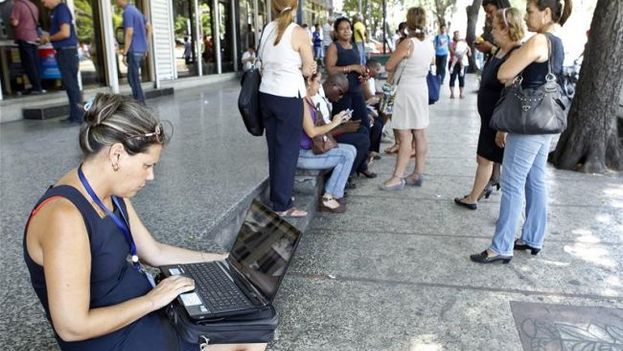
A woman connects to the internet in the Wi-Fi zone of La Rampa, in Havana. (Photo EFE)

14ymedio bigger14ymedio, Havana, 30 March 2017 – On Thursday the Telecommunications Company of Cuba (ETECSA) reduced its fees for internet access to Cuba-based sites from 0.25 to 0.10 CUC per hour (roughly 10 cents US). The price reduction, the second in less than four months, seeks to capture users to navigate in local sites with very little popularity.

The new fee has been implemented “in order to facilitate the search of websites of cultural, informative and investigative interest with national content,” according to an ETECSA statement. Along with the lowering the cost of national websurfing, the company has also lowered the minimum cost of a recharge to 0.10 CUC. continue reading

“Multiple websites and portals exist in our national network that will allow you to carry out school tasks and get to know the cultural billboards throughout the country,” the statement said.

The Government has a monopoly over the hosting of sites on national servers and all domains ending in .cu are under its control. However, surveys conducted among Cuban Internet users reflect their preferences for connecting to social networks such as Facebook or Twitter, as well as international news sites, services, chats and dating sites.

For customers who want to receive more information, ETECSA’s Business Information service is available by dialing 118.

Ladies in White Report the Repression They Suffer to Attorney General

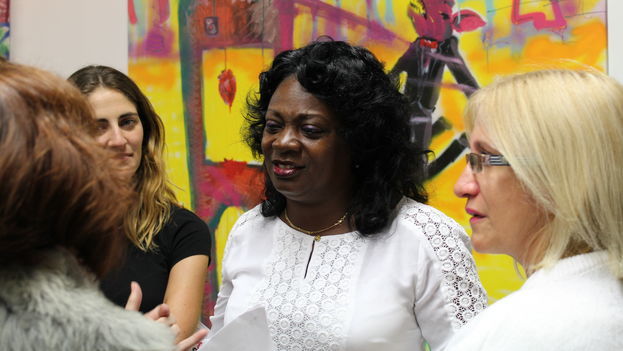
The leader of the movement, Berta Soler, denounced that activist Lismerys Quintana Ávila sent to prison on Monday in what she defines as “a rigged trial.” (14ymedio)

14ymedio bigger14ymedio, Havana, 2017 — The Ladies of White Yamile Garro Alfonso, Lázara Barbara Sendilla and Maria Cristina Labrada delivered on Monday, as representatives of the whole movement, a summary report to the Attorney General’s Office on the repression they have suffered over the last fifteen months.

The leader of the women’s group, Berta Soler, explained to 14ymedio that the report is the same as the one presented on 23 March by Leticia Ramos to the United Nations Special Rapporteur for Freedom of Expression, David Kayes, on “Arbitrary detention and harassment against the family of Ladies in White,” but that it had been “updated to yesterday.” continue reading

Soler detailed that the new version of the report explains how “the Cuban regime” threatens them “all the time” with fines to keep them from leaving the country and with imprisonment.

The leader of the movement denounced that activist Lismerys Quintana Ávila was sent to prison on Monday in what she defined as “a rigged trial.”

“They are really inventing some crimes to be able to fine us and to kill the Ladies in White,” explains Soler

“We delivered it to the Attorney General’s Office, the European Union Delegation, the mailbox of the Apostolic Nunciature and the Embassy of the United States,” said Soler. She also said that they will also “hand it over to the Archbishop of Havana.” According to the Lady in White, the movement wants the Catholic Church to understand what is happening to them.

“They are really inventing some crimes to be able to fine us and to kill the Ladies in White,” explains Soler, who considers the actions of the authorities arbitrary and also denounces “what they are doing to the families, to the children and spouses,” of the activists.

He added that they plan to deliver a copy of the text, about twelve pages, to the Military Prosecutor’s Office and the State Council, as well as to send it to the embassies of Spain and the Czech Republic by e-mail.

She also denounced that the Ladies in White headquarters in the Lawton neighborhood of Havana is surrounded by “an operation” that “has been around the clock since Thursday, March 23.”

Santiago de Cuba Hit Hard by Drought

Communities in central and eastern Cuba report losses from the drought. (EFE)

14ymedio bigger14ymedio, Zunilda Mata, 29 March 2017 — Cuba is experiencing one of the worst droughts of the last half century and its reservoirs are at 39% capacity, a situation that affects the water supply for people, industry and agriculture. Santiago de Cuba is going through the most serious situation, according to José Antonio Hernández, director of the Department of Rational Use of the Institute of Hydraulic Resources, who spoke Wednesday on state TV.

In that eastern province some 635,000 people are supplied with water on 17 and 20 day cycles. Meanwhile, more than 81% of the agricultural area of ​​the island is affected in some way by the lack of regular irrigation. The picture is aggravated by the annual loss of 3.4 billion cubic meters of water through leaks and breaks in the supply system. continue reading

Currently, the reservoirs in at least 11 provinces are below 50% of their normal levels and “in three they do not even reach 25%,” Hernández said. In the case of Ciego de Ávila stored water stored barely fills 15% of the reservoir capacity in the territory. The supply is currently governed by a rigorous schedule, prepared by the local Aqueduct and Sewerage Management.

Reservoirs in at least 11 provinces are below 50% of their normal levels and “in three they do not even reach 25%

The Zaza dam, with the country’s largest storage capacity, is also in a difficult position. Located in Sancti Spíritus province, the dam is filled to only 14% of its capacity, the equivalent of 146 million cubic meters. The neighboring Siguaney Dam has less than one million cubic meters of usable water.

This central province has seen 69 of its supply sources dry up, 16 of them totally. This situation affects 105,821 inhabitants in more than 40 communities and urban neighborhoods of the cities of Sancti Spíritus, Trinidad and Jatibonico, according to figures offered by the local press.

“Since the first signs of the drought in the country began in mid-2014, working groups have been set up to deal with this problem,” explains Hernández, whose mission is to monitor and assess the situation in each area from the municipalities.

At the end of last year the country’s reservoirs were 1.510 million cubic meters below the historical average, a situation that has been aggravated in the first quarter of 2017 and has forced the country to expand the practice of supplying water through tanker trucks – popularly known as pipas – that deliver water neighborhood by neighborhood and block by block, to residents who collect it in every available container.

Water problems have also affected internal migration. “The fact of being able to open the spigot and have water is a luxury I can’t give myself in Palmarito de Cauto,” Raydel Rojas, a man from Santiago who recently emigrated to the capital, tells 14ymedio.

Water problems also influence internal migration

“The problem in the province and in small towns is that it becomes more difficult to pay for the water truck,” says Rojas. “You have to live day by day buying water little by little.”

In the West, the situation is not without problems either. The authorities have looked at the private swimming pools, considering them wasteful in times of drought. The entrepreneurs who rent to tourists in the area of ​​Viñales have experienced the “anti-pool” offensive with special intensity.

At the beginning of last year the Council of the Municipal Administration decreed the closing of all the pools and canceled the licenses to rent to tourists for those who resisted obeying. Over the months the situation has worsened.

“Now they carefully supervise water consumption and call to account those who have a greater consumption,” complains an entrepreneur who rents two rooms in his home in this village that attracts a lot of tourists. The innkeeper, who chose to remain anonymous, said local inspectors “have their eye on the pumps if we increase the pressure of the showers because they say it costs too much.”

The Ascent Of The Spy

The Cuban former spy Fernando González Llort in a file image. (CC)

14ymedio bigger14ymedio, Marcelo Hernandez, Havana, 29 March 2017 — It was only a matter of time before the spy Fernando González Llort took over the presidency of the Cuban Institute of Friendship with the Peoples (ICAP). Since his return to Cuba after serving a 15-year prison sentence in the United States, many predicted his rise to that position.

In June 2014, González was appointed vice president of ICAP and on Tuesday it was announced that he was replacing Kenia Serrano Puig, who had served in the presidency of the institution for eight years. continue reading

The official note on the replacement was sparse in its goodbye to Serrano and did not include the usual formula of “she will take on other responsibilities”

The official note on the replacement was sparse in its goodbye to Serrano and did not include the usual formula of “she will take on other responsibilities.” The text didn’t even describe her “excellent performance at the head” of the institution. In the grammar of power, this reservation does not bode well for the woman.

Since their return to the island, all the members of the so-called Wasp Network have held positions in official bodies, mostly as vice-presidents. González Llort is the first to manage an organization.

In 1987, shortly after graduating with a Gold Diploma in International Political Relations, González Llort was part of a tank brigade in Angola. In the rest of his biography, he emphasizes his participation in the Wasp Network that concluded with his arrest and imprisonment in the United States.

For decades the Cuban Institute of Friendship with the Peoples (ICAP) has been a front for Cuban Intelligence

For decades, ICAP has been a front for Cuban Intelligence. Since their founding, institutions of this type have existed in the rest of the socialist countries. Instead of presenting themselves with the ideological tint of the Marxist court, they wrap themselves in the clothing of friendship between peoples.

The position of ICAP president can lead its occupant to higher spheres, as was the case of Sergio Corrieri, who was part of the Central Committee of the Party and was a member of the State Council. On the other hand, Kenia Serrano, who had previously been a member of the National Bureau of the Young Communists Union (UJC), was only able to ascend to a seat in Parliament.

“All You Can Catch in the Almendares River is a Good Infection”

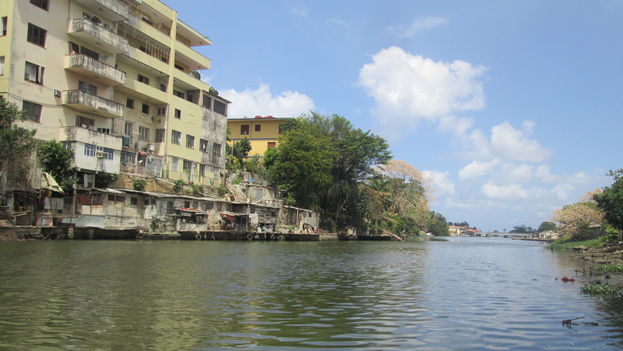
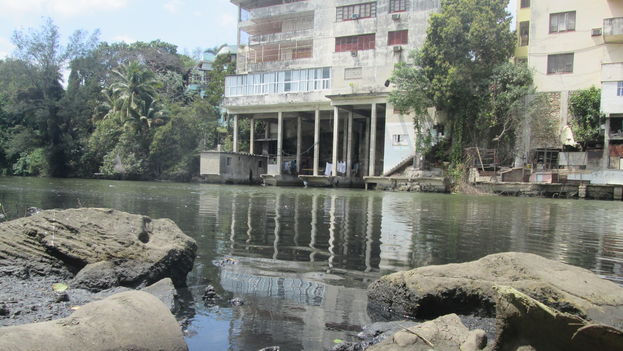
According to data from the Ministry of Science, Technology and Environment, domestic and industrial waste has seriously damaged the biodiversity of Almendares. (14ymedio)

14ymedio bigger14ymedio, Yosmany Mayeta Labrada, Havana, 28 March 2017 — The stench fills the air and permeates the clothes of El Fanguito residents near the Almendares River. Those who live there carry that stink everywhere, it gets into your nose and into your pores. The main river flowing through Havana barely shows any signs of recovery despite several environmental projects that are trying to rescue it from pollution and sluggishness.

Gonzalo once lived from fishing in the vicinity of this river, which the natives called Casiguaguas and which gave its current name to one of the country’s most famous baseball teams. The Almendares has been a part of the old man’s life from the time he gets up in the morning until he lies down at night. All his memories begin and end in its waters.

A resident of El Fanguito neighborhood for more than 70 years, Gonzalo recalls the crystalline channel that he knew as a child. In those waters he fished with his friends, dived in to escape the heat, looked for small treasures of stone or metal in its depths. But these are old stories and only exist in the memories of the oldest residents. continue reading

A study published in 2005 by the Ministry of Science, Technology and Environment (CITMA) warned that the main channel of the river was in a “critical hygienic and health situation.” The report drafted by specialists at the Higher Institutes of Technologies and Applied Sciences documented, at that time, 70 sources that dumped hazardous waste into its waters with “high levels of organic and inorganic contaminants, among them toxic substances such as heavy metals.”

The river bank has been systematically stripped from trees and in the last decades some 17 dams and reservoirs have been created in its tributaries

The river bank has been systematically stripped of trees and in the last decades some 17 dams and reservoirs have been created in its tributaries. Another CITMA study determined that 80% of the contamination came from organic domestic waste and that some 200 liters of sewage flows into the river every second.

“The only thing that can be fished here is a good infection,” Gonzalo mocks as he points to those still, dark waters that approach his modest home. On the shore floats a mass composed mostly of plastic bottles and bags, while the surface is lit up in many areas due to hydrocarbon spillage.

Domestic and industrial waste has seriously damaged the Almendares’s biodiversity, according to CITMA. Lorenzo Rodriguez Betancourt, a CITMA specialist, told the official press that the cleaning of the basin was “an immediate mission, but very complex at the same time, because it requires a major investment of capital and the creation of awareness in the residents living close to the area.”

Among the measures taken by the government is the closure of the two beer breweries, the Tropical and the Polar, which dumped part of their waste into the water, and also replacing the technology of the Mario Fortuny Gas plant and the Coppelia Ice Cream plant. Several nearby facilities that produced construction materials were dismantled.

Authorities point to urban settlements as one of the main sources of pollution, but residents of El Fanguito defend themselves. “This neighborhood does not have a sewer,” says Rosa, a retired teacher who settled in the area two decades ago. “We paid the bills for water and electricity but outside that we have been forgotten by everyone,” she says.

Authorities urge the elimination of sewage going into the river, but residents complain that there is no good sewer system. (14ymedio)

Every day, the woman takes care of her bodily needs in a can that she empties at night in a nearby mound. The place is full of debris and a truck rarely comes to pick it up. Legends abound about crocodiles and enormous catfish known as claria that swallow everything in their path. At night, families prefer to stay indoors and one of the first lessons they teach their children is “don’t swim in the river.”

Rosa was filled with hopes a decade ago when a project led by then Vice President Carlos Lage was heralded as the solution for the slum. The project included the construction of new houses, the asphalting of streets and even several playgrounds for children in the area. But the idea never moved past the planning stage and Lage was soon ousted.

Instead of improvements, the neighborhood has continued to grow, chaotic and impoverished. More than two hundred houses dot the banks of the river, cramped and flimsy. The police avoid going into the area and on rainy days everything takes on the color of mud.

Some initiatives focus momentary attention on the problem, such as the recently concluded Casiguaguas River Festival, which, under the motto “For Cleaner Water,” brought together various social actors and institutions interested in environmental action. But after the headlines in the press and the TV reports, the sewage took over once again.

For Armando Hernández López, representative of the National Sports and Recreation Institute (INDER), who gave a lecture at the second River Festival, many communities on the bank have “poor housing, overcrowding, precarious sanitation, low educational levels, school dropouts and alcoholism, where in spite of the talks carried out by different sectors, the sanitary and hygienic conditions become more acute.”

Clara María Kindelán, a specialist at the Provincial Center for Hygiene and Epidemiology, believes that the main actions should be taken in communities and work centers

Clara María Kindelán, a specialist at the Provincial Center for Hygiene and Epidemiology, believes that the main actions should be taken in communities and work centers. The state of the river does not yet allow “sanitation activities where participants have contact with water. Decontaminating the Almendares River will be our main challenge in the coming years,” she says.

A representative of CITMA in the capital said that the pollutants have been reduced, but that there are still more than 50. The official adds to the list sources of waste that have been closed, including “two paper mills and a rubber company.” Although the latter, she clarified, has begun to be readied to reopen, “by a political decision.”

For the president of the Committee for the Defense of the Revolution at 19th and Rio Streets in El Fanguito, the urgency is to move from words to deeds. “All they do is talk to us about eliminating the sewage that goes into to the river, but nobody is in charge of building or helping to build a good sewer.” The resident says that there have been “angry outbursts” in the community because the children “play around these waters.”

Meanwhile, the elderly Gonzalo no longer registers the stench that permeates his house and his skin. He looks at the river of his childhood as a convalescent relative that needs urgent therapy. He has lost the illusion of ever swimming in its waters again someday.

Health Of Three Siblings On Hunger Strike In Cuba Worsens

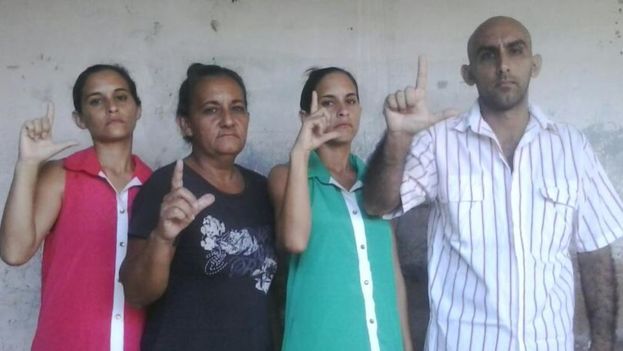
Forming the sign “L” for “Libertad” are siblings Adairis Miranda, Maidolis Leyva Portelles (the siblings’ mother), Anairis Miranda and Fidel Batista Leyva. (Courtesy)

14ymedio bigger14ymedio Havana, 27 March 2017 — The health of the siblings Fidel Batista Leyva, and Anairis and Adairis Miranda Leyva is worsening, as Monday marked their 21 days on a hunger strike, according to their mother, Maydolis Leyva Portelles, who spoke with 14ymedio.

Members of the Cuban Reflection Movement, the three siblings are experiencing “a serious deterioration” of their health. continue reading

In a telephone conversation, Leyva denounced the “cruel and inhuman” treatment she has received from the political police who will not allow her to see her twin daughters, one of them admitted to the Vladimir Ilich Lenin University General Hospital of Holguin and the other in Lucía Iñiguez Landín Clinical Surgical Hospital.

“All patients have the right to see their relatives at two in the afternoon but I have been told that until my daughters stop the strike I cannot see them,” says the mother. 

14ymedio contacted the Lenin Hospital by telephone and was able to confirm with the information desk that Anairis Miranda has been admitted to the intermediate therapy care room in bed 2. Medical sources report her condition as “serious.”

The nurse on duty in the intermediate therapy room explained that Adairis Miranda, sister of Anairis, “is not reported to be in as serious a condition,” but continues in “voluntary starvation.”

Leyva explains that her son is being held in the Cuba Sí Holguin Prison where as of Monday he has been a hunger strike for 21 days, with five days of that also on a thirst strike.

“Despite the prolonged strike they keep him in a punishment cell sleeping on the ground,” says his mother.

The three siblings were serving sentences of one year accused of the crimes of public disorder and of defamation of heroes and martyrs. The authorities accuse them of having “made a provocation” last November 27, during the days of national mourning over the death of former President Fidel Castro, an accusation that the three deny.

Later the activists were victims of an act of repudiation; their homes were raided, they were beaten and their personal property was stolen, concluding in the arrest of the three siblings

The Miranda Leyva twins were held in the Provincial Women’s Prison, while Batista Leyva was a prisoner at La Ladrillera Work Camp, from where he was transferred to Cuba Sí, a penitentiary with a more severe regime.

The strikers demand the “unconditional freedom for the 10 political prisoners of the Cuban Reflection Movement” and the “acquittal” of Dr. Eduardo Cardet of the Christian Liberation Movement.

The regime opponent Librado Linares who heads the Cuban Reflection Movement told14ymedio that the siblings are being held prisoner “unjustly.”

“Those responsible for their lives are placed at the highest level, from Raul Castro to the authorities of the Interior Ministry in the province, for having thrown them into this situation,” said Linares.

Young Cuban Women Skaterboarders Defy Gravity And Machismo


14ymedio bigger14ymedio, Zunilda Mata, Havna, 28 March 2017 — A pirouette and life is turned upside down. Another and the wheels crash against the pavement leaving a mark in their path.  Cuban women skaters defy gravity and machismo, two forces trying to make them fall. Their dreams are told in the documentary Sisters on Wheels by director Amberly Alene Ellis, currently in the United States.

The film looks at the phenomenon of skateboarders told from the experience of young Cuban women who practice a sport marked by prejudice. Not only must they deal with the animosity still provoked in some observers, but also with putting themselves in “a territory of men.” continue reading

The protagonists of Sisters on Wheels display the technical difficulties of practicing this discipline in Cuba, with few resources and places to skate for training. The young women talk about their struggle to have skateboarding recognized as a sport, far beyond an entertaining pastime.

The Amigo Skate project has helped alleviate the material hardships of some of these young women. The initiative asks, from its on-line site, for people to bring or send skateboarding equipment to the island, and facilitates events linked to the sport, in additional to concerts and the painting of murals.

A still from the film Sisters on Skates

Cuban-American René Lecour is part of the solidarity project and the director of Sisters on Wheels came to the reality of skateboarding through him. In a country where very few skateboards have been marketed and there are barely enough spare parts to fix a broken table, the practice becomes complicated. However, new technologies help, with videos and tutorials that teach spinning and other techniques.

Ellis, who traveled to the island initially to film material about women filmmakers, was attracted by the “innovation” she saw in these urban athletes and knew first hand about a similar phenomenon in her own country when “skateboarding pioneers, in the ‘80s, made their own boards with what they could find.”

“Without intending to, we moved from filmmaking to skating,” recalls the director, who believes skating becomes an act of protest for these young people in a nation where the government regulates every centimeter of reality, especially the sports scene.

The documentary, which began filming in 2015, uses skateboarding as a way to approach the national reality and in particular the changes that occurred after the thaw between the Governments of Cuba and the United States.

In the practice of skateboarding, the filmmaker sees a gesture of independence that “is seeking free expression”

Cuba Holds World Record For Visa Applications Rejected By The United States

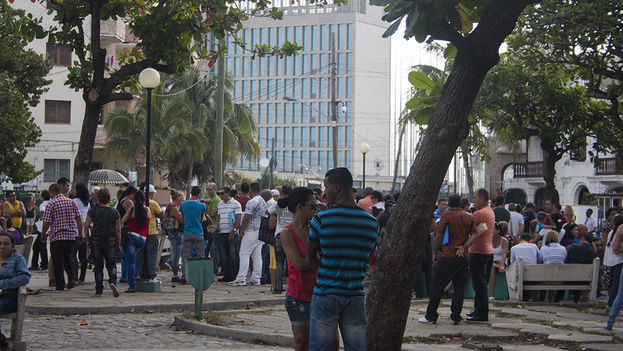
Hundreds of Cubans line up every day outside the US embassy in Havana. (14ymedio)

14ymedio bigger14ymedio, Luz Escobar/Mario Penton, Havana/Miami, 25 March 2017 – Maria, 59, has a daughter in Miami she hasn’t seen for six years. Her visa applications have been denied three times and she promised herself that she would never “step foot in” the US consulate in Havana again.

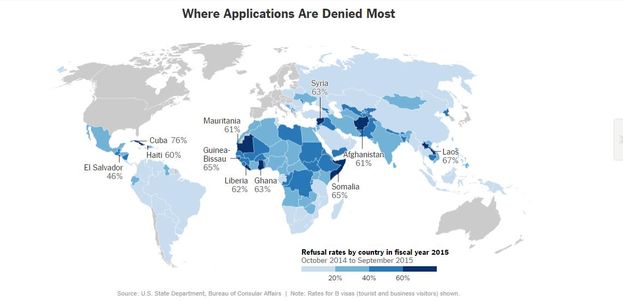
Cuba is the country with the most denials of those who aspired to travel to the United States in the last two years. In the midst of an abrupt drop in the granting of visas under Barack Obama’s administration, the Department of State rejected 76% of the travel requests made by Cuban citizens in fiscal 2015, according to figures released by the US press. continue reading

Cubans are followed on the US consulate most-rejected list by nationals of Laos (67%), Guinea-Bissau (65%) and Somalia (65%). In the Americas, the others most affected, although far behind Cubans, are Haitians (60%).

According to preliminary data released by the US State Department, the situation has worsened in fiscal year 2016, with Cuban visa applications rejected at a rate of 81.85%.

Each interview to request a visa cost Maria about 160 Cuban convertible pesos (CUC), with no chance of reimbursement, nor has she ever received any explanations about why her permission to travel was denied.

Places where US visa requests are most rejected (NYT)

On each occasion the woman dressed in her best clothes, added an expensive perfume that her daughter sent her, and practiced her possible answers in front of the mirror. “No, I will not work during my stay,” she repeated several times. “I want to see my granddaughter who is a little girl,” and “I can’t live anywhere but Cuba,” she loudly repeats as a refrain.

She took with her the title to her house in Central Havana, a copy of her bank statement and several photos with her husband in case they asked her to provide reasons why she would not remain “across the pond.”

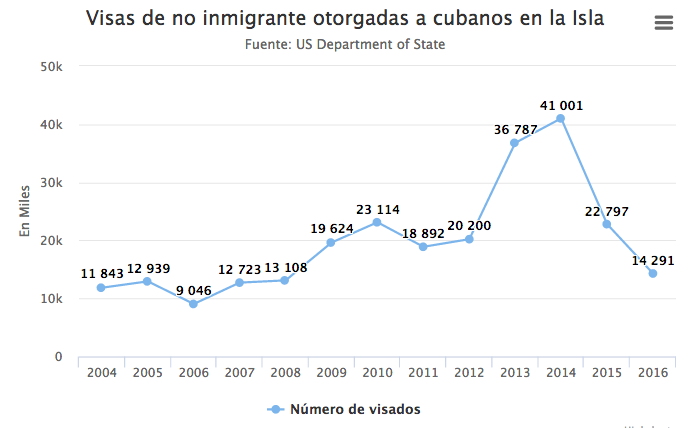
Last year 14,291 Cubans received visas for family visits, to participate in exchange programs, and for cultural, sports or business reasons, among other categories. The figure contrasts with the 22,797 visas granted in 2015 and, more strikingly, the 41,001 granted in 2014.

Non-immigrant visas issued to Cubans on the island

The State Department said that the reduction of visas granted in Havana is because of no specific reason, but that because the valid time period of the multi-entry visas was extended to five years in 2013, many islanders don’t need to return for new interviews to make multiple trips to the United States.

But Maria did not figure among the fortunate in any of her three attempts.

The last time she headed to the imposing building that houses that US consulate in the early morning hours, she prayed to the Virgin of Mercedes, made a cross with the sole of her shoe and put flowers before the portrait of her deceased mother.

She went to apply for a B2 Visa, the ones that allow multiple visits to the United States to visit relatives and for tourism. It seemed like the line lasted “an eternity” before they called her name, she said. Then came the iron-clad security to enter the building.

“The interview room had an intimidating coldness,” she recalls, and was long and rectangular. Applicants talked to immigration officials through shielded glass.

The woman’s feet trembled and the clerk on the other side of the glass gave her no time to explain much. He just made a mark on the form with each answer. A man was crying ata nearby window and an octogenarian lady sighed after hearing she was not approved.

More than two million Cubans reside in the United States, with an active participation in the economy and politics, primarily in South Florida

Maria knows that the United States and Cuba have signed an agreement for 20,000 Cubans to receive immigrant visas every year. In 1995, President Bill Clinton negotiated that agreement to end the Rafter Crisis, fueled by the economic recession that hit the island after the fall of the socialist camp.

In 2016, 9,131 Cubans obtained a visa to legally emigrate to the United States, many of them under the Cuban Parole Family Reunification Program, and others through the International Lottery of Diversity Visas or the Cuban Parole program, among others.

More than two million Cubans reside in the United States, with an active participation in the economy and politics, primarily in South Florida.

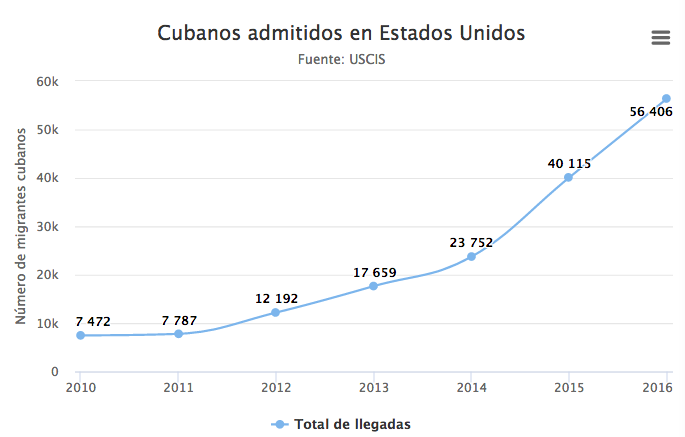
The Cuban Adjustment Act, approved in 1966, allows Cubans to obtain permanent residence (a green card) if, after entering legally, they spend one year in the United States. A special welcoming policy only for Cubans known as wet foot/dry foot was cancelled in January; this policy allowed any Cuban who stepped foot in the country, even without papers, to remain, while Cubans who were intercepted at sea were returned to the island. In the last five years 150,000 Cubans took advantage of this policy to settle in the United States.

Cubans admitted to the United States — Total Arrivals

However, Mary’s intention is not to emigrate. She does not want to live in a country that is not her country, although her relatives have told her that Miami “is full of Cubans” and that Hialeah is like Central Havana.

Despite her Afro-Cuban rites and trying to maintain a positive mental attitude, in her last interview she didn’t have any “luck” either.

She received a quick denial and was given no chance to display all the answers she had rehearsed. In her opinion, the fact of being under 65 plays against her. “They approve older people who cannot work illegally there,” the lady assumes.

For Eloisa, a retired science teacher, that is not the reason, rather it is “hostility toward Cubans” by the US Government.

“The Americans want to take over Cuba. It has always been their greatest desire and because they cannot do it, they punish us by separating us from our children,” the woman says by phone. She has been a member of the Cuban Communist Party for 25 years and has had two children living in Houston for just over six years.

Although she only tried once, last year, the refusal from the consulate made her not want to try again.

“My children work very hard and I wanted to give them the pleasure of going to spend a little time with them. But hey, it’s not to be, “ she says in a voice that is brittle and resigned.

Mary, however, does not tire. This year her daughter will gain American citizenship and the woman hopes that this new condition will facilitate a positive response to her next request. Although this new attempt will leave her a little older and with almost $500 less in her pocket, in a country where the average monthly salary does not exceed $28.

A Month Without Machado Ventura

A month after the public disappearance of Ramon Machado Ventura, no official media has offered an explanation for the absence of the second most powerful man on the Island.

14ymedio bigger14ymedio, Reinaldo Escobar, Havana, 27 March 2017 — Just a month ago his face disappeared from the Cuban government’s family photo. The last time he was seen, Vice President José Ramón Machado Ventura handed out orders in an extensive agricultural area of ​​Pinar del Río. Four weeks later, no official media has offered an explanation for the absence of the second most powerful man on the island.

Now 86, this man born in Villa Clara’s San Antonio de las Vueltas, has stood behind Raul Castro for more than five years, in his position as the second secretary of the Cuban Communist Party (PCC), which the Constitution of the Republic consecrates as the “the highest leading force of society and the State.” continue reading

The man who was never absent from our television screens and newspaper pages for more than 48 hours has failed to appear since 27 February. An absence that feeds rumors among a people accustomed to giving more importance to a lack of news than to the news itself. But above all, it is a disappearance that comes at a bad time for the Plaza of the Revolution.

It is less than a year before Raúl Castro leaves his office as president and every day the uncertainty of who will relieve him in his post increases. Machado Ventura’s departure from the game would force the hurried naming of a second secretary of the PCC and put a face to one of the most jealously guarded mysteries of recent years.

The next few weeks could be of momentous importance for clearing up this question

The next few weeks could be of momentous importance for clearing up this question. If the first vice-president, Miguel Díaz-Canel, assumes the second position in the Party it will prolong the tradition of concentrating in a single person the highest positions in the country. To choose among other names, such as Bruno Rodríguez, Lázaro Expósito or Salvador Valdés Mesa, could open a bicephalic route, unprecedented in communist regimes.

For decades, all power was concentrated in Fidel Castro, who placed his brother in the rearguard of his countless positions. In 2006, already with serious health problems, the Maximum Leader had to step away from public life and Raúl Castro inherited that conglomerate of faculties that placed him at the head of the Party and the State.

Nevertheless, during the Raul era “second positions” have bifurcated. The first vice-president is no longer the same person as the second secretary of the PPC, among other reasons so that no one person could completely replace the General-President. A measure of protection, but also an evidence of the lack of confidence of the historical generation in its relief team.

In this new structure, Machado Ventura remained second in the Party. Machadito, as his friends call him, has cultivated a public image as the ayatollah and custodian of ideological purity. An orthodoxy that in the Cuban case does not cling to the dogmas of Marxism-Leninism but to the voluntarist* doctrine of Fidelismo.

Machado Ventura earned his reputation for immobility through prohibitions and punishments

Analysts blame this iron-fisted goalkeeper’s presence at the top of the pyramid on Fidel Castro’s express wish, placing him behind his brother to prevent the latter from veering from the path. This is how a man who once qualified in medicine became, according to Soviet terminology in the times of perestroika, the “braking mechanism” on the reforms Raul Castro might have pushed.

Machado Ventura earned his reputation for immobility through prohibitions and punishments. He was in charge of leading the provincial assemblies prior to the last Communist Party Congresses, confabs where the principle agreements were hatched, the delegates chosen and where the key points of the Party Guidelines that today are the “sacred commandments” of Raulismo were committed to.

However, that role seems to have come to its end. The man who ordered the dismissal of high-level cadres and for decades banned Christmas trees in public establishments has left the scene. Missing with him are his harangues calling for efficiency and his visits to workplaces where he advocated greater discipline and sacrifice.

It remains possible that Machadito – the guardian of orthodoxy – will reappear at any moment like the phoenix, and leap between the furrows to explain to farmers how to plant sweet potatoes or arrive to instruct the engineers of some industry how to make better use of their resources. The followers of the hard line would receive that return with relief.

Translator’s note: Voluntarism is the view that revolutionaries can change society by means of will, irrespective of economic conditions. Source: David Priestland, Stalinism and the Politics of Mobilization. (Or, in another and quite a bit older formulation…)

“Adequate Social Behavior” Is The Requirement For A Sports Contract Abroad for a Cuban Athlete

“Social behavior” is key to a contract abroad. (Twitter)

14ymedio bigger14ymedio, Marcelo Hernandez, Havana, 18 March 2017 — To the voices that call for more autonomy for athletes, the Cuban government has just responded with a clear message. “To enter into a contract abroad, the athlete” must have “adequate social behavior,” according to Ramiro Domínguez, legal director of the National Institute of Sports, Physical Education and Recreation (INDER), speaking to the press

The official’s statement was accompanied by data about the number of athletes residing on the island who obtained a contract in other countries through the state entity. By the end of last year 61 agreements had been signed in different disciplines, and there are “between 200 and 300 athletes engaged temporarily in tournaments, training camps or leagues abroad,” he said. continue reading

Domínguez explained that to achieve one of these contracts the athlete must also have “good teaching and sports results, be of interest to his national federation and receive authorization from the country where he would perform.”

INDER evaluates “the athlete’s living conditions in the club” where he will play, “the right to represent Cuba when asked and his safety,” as well as a “second medical opinion in case of injury or discomfort.” The official commented that he is studying to implement a scheme for “economic compensation” that would go to the State for the training the athlete received in Cuba, and that “can be a fixed economic amount or the equivalent of 20% of the contract in question.”

He clarified that in the case of baseball, the money that the Federation collects in that way is not “to satisfy personal whims, but destined to solve problems of the sport itself.”

“One of our main goals is to prevent the athlete from being treated as merchandise,” and “every athlete hired leaves Cuba with a rigorous medical examination, anti-doping test and aware of their contractual and tax obligations, and in some cases accompanied by relatives,” Domínguez pointed out.

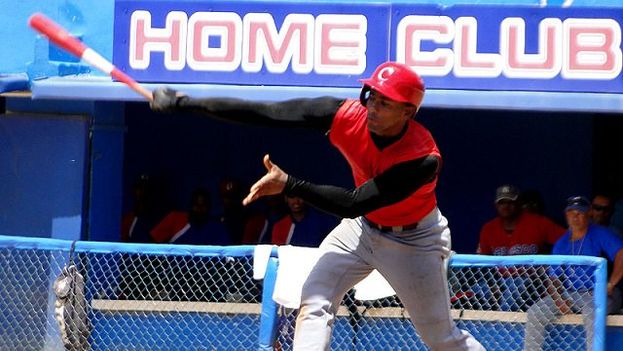
Alfredo Despaigne from Granma province is the emblematic example of an athlete hired by a foreign club. The player achieved a million dollar contract with the Japanese club Fukuoka Hawks of Softbank, and according to Domínguez does not have to pay the Cuban Federation of Baseball, nor INDER.

“Once he returns to the country, the athlete will comply with tax obligations, like all Cuban citizens who receive income abroad,” Domínguez had indicated in an earlier statement.