A break in the main water pipeline at the Manresa farm put eight pumping units out of service, affecting all the municipalities in the central part of the capital.
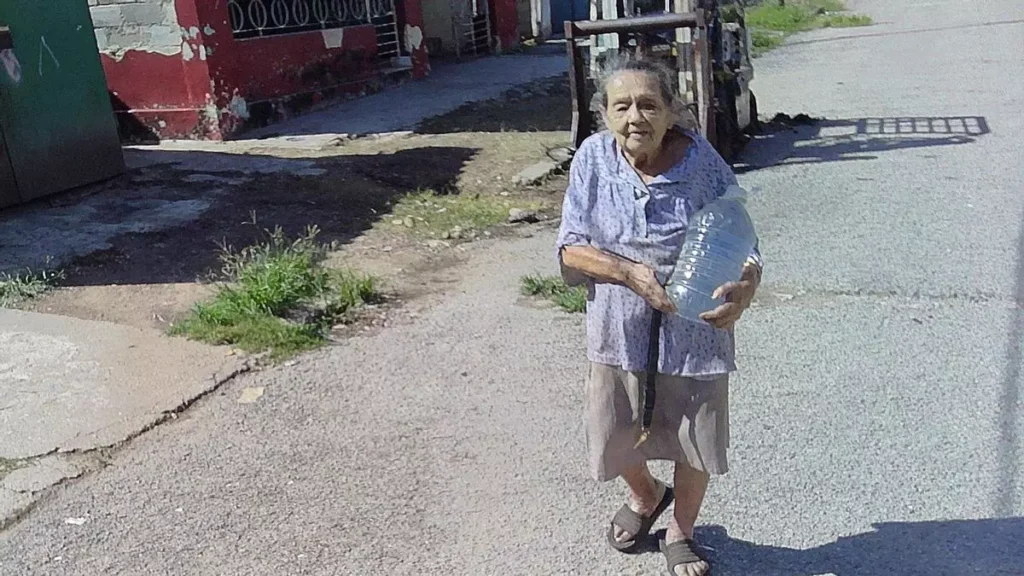
 14ymedio, Havana, November 27, 2026 – The water service that Marián thought had been restored to her apartment in Nuevo Vedado, Havana, on Friday morning was only the water remaining in the building’s cistern. She soon realized that no water was coming in from the street. Havana residents are already suffering the consequences of Wednesday’s serious breakdown at the Cuenca Sur water system.
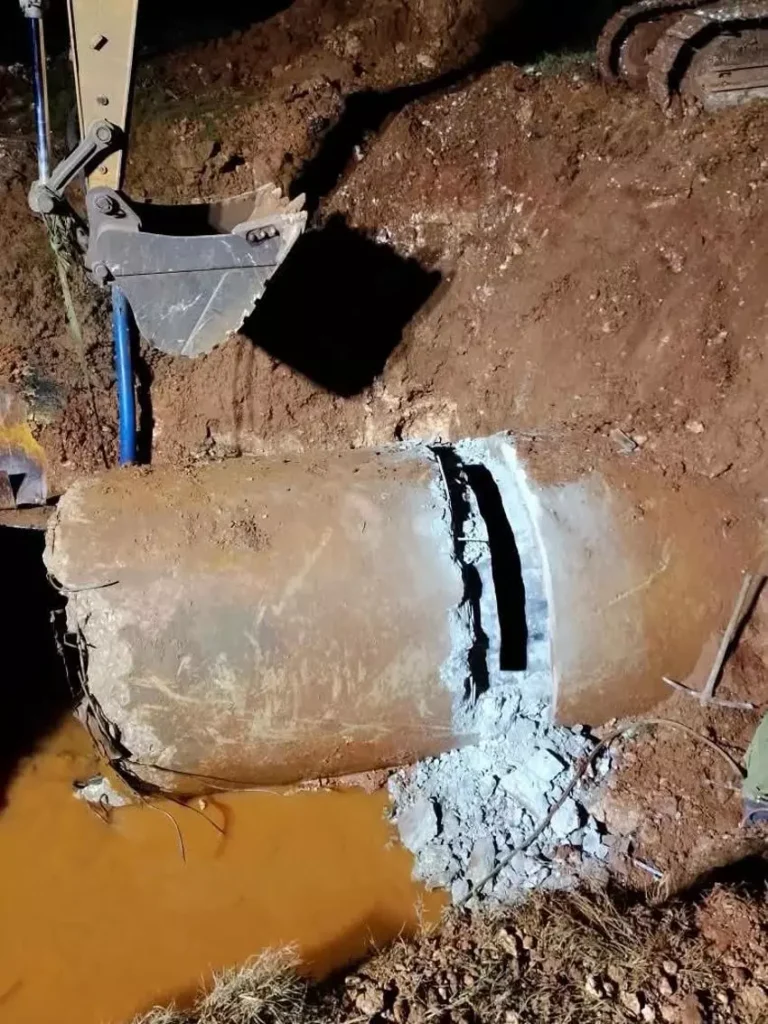
According to the state-owned company Aguas de La Habana itself, the “major breakdown” occurred during the late afternoon and evening of November 25. It involved a rupture in the 78-inch main pipeline at the Manresa farm, which put eight pumping units out of service and caused disruptions in all the municipalities in the central part of the capital, as well as several areas of Boyeros.
The breakdown forced authorities to modify the water distribution schedules, they said. In Plaza de la Revolución, where the entire municipality was affected, authorities announced that they would give priority to supplying hospitals and areas near Loma del Príncipe. In Cerro, as many as six neighborhoods were left without service.
In Luyanó, as one retired resident reported, they have “whatever came in on the last day, the day before yesterday, when they interrupted the pumping”
Other areas were also affected in the upper part of Luyanó. Here, as one retired resident reported, they have “whatever came in on the last day, the day before yesterday, when they interrupted the pumping.” The woman commented: “But we have a cistern; those who don’t are really screwed.”
Other affected areas include Santos Suárez, Diez de Octubre, Centro Habana, and Old Havana, particularly the Jesús María neighborhood and the area within the old city walls. In Boyeros, low water pressure affected Miraflores Nuevos, Ciudad de la Construcción, Altahabana, Capdevila, Embill, La Fortuna, Mazorra, and Río Cristal.
The state-owned company announced that it had begun preparations to transport the equipment and resources needed to repair the pipeline, although it made the start of the work conditional on weather conditions, following days of unstable weather and continuous rain in Havana.
This Friday, Aguas de La Habana released images of the repair work and assured the public that its technical teams were continuing to work to resolve the breakdown. The photos showed extensive damage to a pipe and a poorly equipped crew of workers with limited supplies attempting to repair it.
The restoration of service, the agency warned, would be gradual, with priority given to neighborhoods that were scheduled to receive water during the interruption. Meanwhile, it asked residents and economic institutions to adopt water-saving measures to reduce the impact of the “contingency.”
Meanwhile, the trench opened along the entire length of Boyeros Avenue for a hydraulic project that was primarily intended to supply water to the controversial Torre K, which houses a luxury Iberostar hotel that is now closed, remains open. Barely covered with dirt and stones and still unpaved, it divides the street like a useless scar. Electric tricycles, with their front wheels caught in the middle, can barely navigate it, although almendrones, the older American cars with wider bodies, manage to avoid the narrow trench, which is particularly visible between Calzada del Cerro and Carlos III.
Last week, the Government claimed that the nearly half a million people affected by the water shortage had been reduced by half, to 255,000. The crisis, however, has lasted for months and has forced Cubans to collect water from rain, rivers, leaks, and makeshift wells, in addition to having to purchase water in large containers and tanker trucks through informal channels or from private suppliers.
But supply problems are not limited to the capital. In Las Tunas, for example, an entire radio program was devoted to the issue on Wednesday, coinciding with the tenth anniversary of Fidel Castro’s death. One caller reported having gone more than three months without water, while another, from the Las 40 community, spoke of disruptions lasting as long as 14 years and questioned “why water reaches one block but not the next.” Officials participating in the program promised to “visit each case.”
The province’s main problem is that, although its reservoirs are at 61% of capacity, water cannot be distributed because of the energy crisis. Alexis Espinosa Fernández, general director of the Waterworks Company, stated during the radio program that the city of Las Tunas is supplied by three main systems, of which only Rincón has a “favorable situation, with 500 liters per second and an investment currently underway.”
The other two are Cayojo, “with serious problems affecting water quality,” and Piedra Hueca, “currently shut down because of equipment breakdowns.” Given this situation, the official explained, the “daily work” consists of “a technical analysis to determine which circuits can be activated and for how long, in an effort to be as equitable as possible, although it is not always possible to meet total demand.”
Other difficulties facing the province include the illegal manipulation of valves, the unauthorized sale of water using tanker trucks, and the theft of solar panels and equipment from more than 40 pumping systems. And there is more: a shortage of chlorine for water treatment.
In the event of a prolonged disruption in the supply of chemicals, the publication noted, “there is a national protocol that includes distributing sodium hypochlorite to the population so they can treat water in their homes, an alternative that requires a major public information campaign.”
Translated by Regina Anavy
______________________
COLLABORATE WITH OUR WORK: The 14ymedio team is committed to practicing serious journalism that reflects Cuba’s reality in all its depth. Thank you for joining us on this long journey. We invite you to continue supporting us by becoming a member of 14ymedio now. Together we can continue transforming journalism in Cuba.