However, so far this year, purchases of fuel, vehicles and equipment for the private sector rank first.
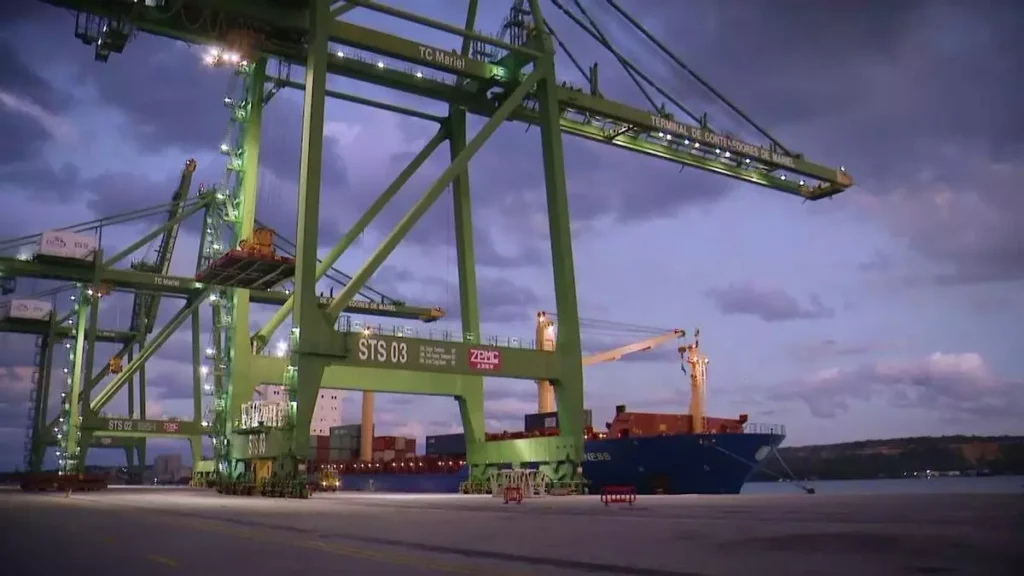
 14ymedio, Madrid, November 15, 2026 / US exports of food and agricultural products to Cuba reached $97.53 million in September, almost triple the $33.85 million recorded in the same month of 2015. This is the highest monthly figure in a series compiled by the US-Cuba Trade Council (US-Cuba Trade Council) since 2002, according to data published this Sunday.
The value exceeds that of August by 62% – 60.11 million, with the revisions made by US-Cuba Trade – and raises the accumulated total from January to September to 411.83 million, 14.5% more than in the same period of 2025. With this result, Cuba ranked 30th in September among the 221 markets that buy food and agricultural products from the United States, while in 2025 it ranked 52nd.
Frozen chicken continues to top the report’s list—leg quarters ($9.63 million), meat ($8.12 million), and legs ($5.05 million)—although its share of total exports has decreased. Other notable food exports include peanut oil ($7.9 million), sugar syrup ($4.17 million), beer ($4.12 million), vegetable fats and oils ($4.03 million), and fresh eggs ($3.57 million).
It is striking that cane and beet sugar (US$2.98 million in September) is among the top ten products sold to the island, something that did not occur in any of the previous years included in the report: so far in 2016, it totals US$8.85 million. Cuba, synonymous with the sugar harvest for more than two centuries, now faces a collapsed sugar industry and needs to buy the product from the US.
Cuba, synonymous with the sugar harvest for more than two centuries, now faces a collapsed sugar industry and needs to buy the product from the US.
Fuel, the major new addition this year to trade between the two countries, did decline in September: totaling $52.27 million – $50.59 million in gasoline and $1.68 million in propane – nearly 30% less than the record $74.8 million set in August. Even so, the figure surpasses that of any month in the first half of the year. From January to September, the cumulative total reached $284.4 million, compared to just $311,558 for the entire year of 2015.
As always, the report focuses on value, not volume. The Energy Information Administration’s (EIA) barrel data, which is delayed, already caused a scare in July: 3.2 million barrels were announced, but the actual figure was 182,932, due to the incorrect use of liters or gallons for quantities that should have been reported in barrels.
Vehicles and spare parts – new and used, electric and gasoline-powered, trucks and motorcycles – totaled 25.05 million, 64% more than the 15.28 million sold in August. With 131.78 million sold so far this year, they have already reached 88% of the total for 2025.
Also noteworthy is the sale of solar equipment: in September, panels totaled $10.78 million and lithium batteries, $1.97 million. To put this in perspective, according to Census data cited by Bloomberg, 6.3 million photovoltaic cells and modules were exported between January and July, compared to just 538,000 for all of 2025. For its part, China, which in 2025 sold the Island electrical equipment — mainly panels, batteries, and phones— has seen its total sales fall by 35.5% through September.
So far this year, non-agricultural sales – fuels, vehicles and equipment for the private sector – have surpassed food sales, at $483.16 million.
For the first time since the report began distinguishing between the two categories, so far this year non-agricultural sales – fuels, vehicles and equipment for the private sector – have surpassed food sales (411.83 million), with a total of 483.16 million, a figure that almost triples that of all of 2025 (173.95 million).
Donations, which are not counted as commercial exports, totaled $25.41 million in September and $201.51 million for the year, 37% higher than the total for 2025 ($147.03 million). The report does not specify the origin of the donations, but Washington announced a $100 million humanitarian aid package in May, $60 million of which is being channeled through the Catholic Church, with shipments beginning in July.
The total between January and September amounts to 1,096.5 million, the same amount that the Census Bureau attributes to US exports to the Island, 35% more than in all of 2025. Fuel alone represents more than a quarter of the total.
The data predates the new sanctions of November 5, with which the State Department designated eight entities, two people and five vessels linked to oil transport, Cuban state companies and Chinese military suppliers, while the US Treasury Department opened the door to punishing foreign companies that operate in the Cuban electronics, manufacturing, shipping and technology sectors.
______________________
COLLABORATE WITH OUR WORK: The 14ymedio team is committed to practicing serious journalism that reflects Cuba’s reality in all its depth. Thank you for joining us on this long journey. We invite you to continue supporting us by becoming a member of 14ymedio now. Together we can continue transforming journalism in Cuba.