The establishment, now managed by a micro, small, and medium-sized enterprise (mipyme), retains the shortages of the former state-run grocery store and limits electronic payments to five customers a day.

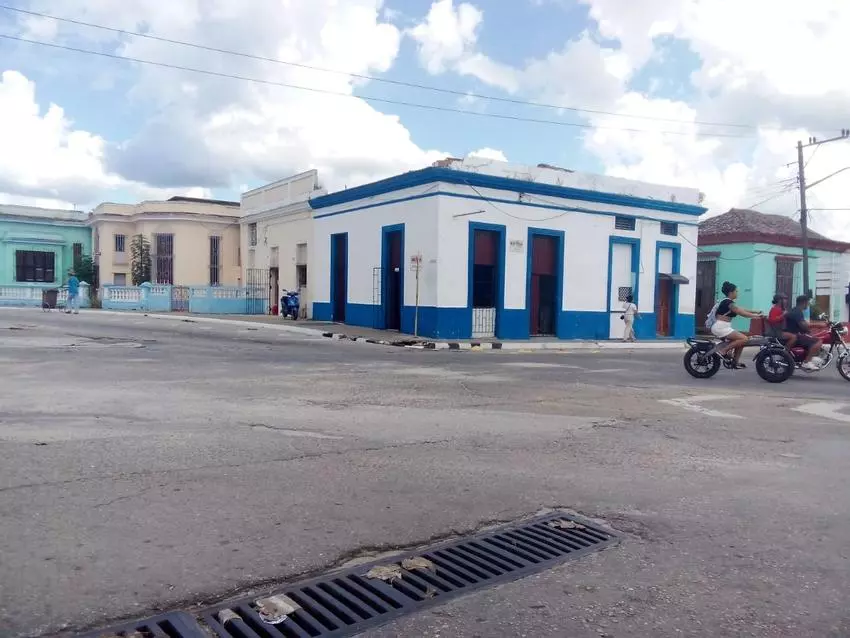
14ymedio, Julio César Contreras, Matanzas, October 10, 2026 — With a dark cloth shopping bag tucked under his arm and walking with difficulty, a man crosses at the Versalles traffic light toward the newly opened Neighborhood Market. There are no lines on the corner, no trucks unloading goods, and no crowds of neighbors gathered in front of the doors. A small sign on the façade, partially hidden by a traffic sign, serves as a reminder that the El Rincón grocery store, well known in Matanzas, once operated there. The building is now leased to a mipyme and is part of one of the Cuban government’s latest experiments aimed at trying to revive retail commerce.
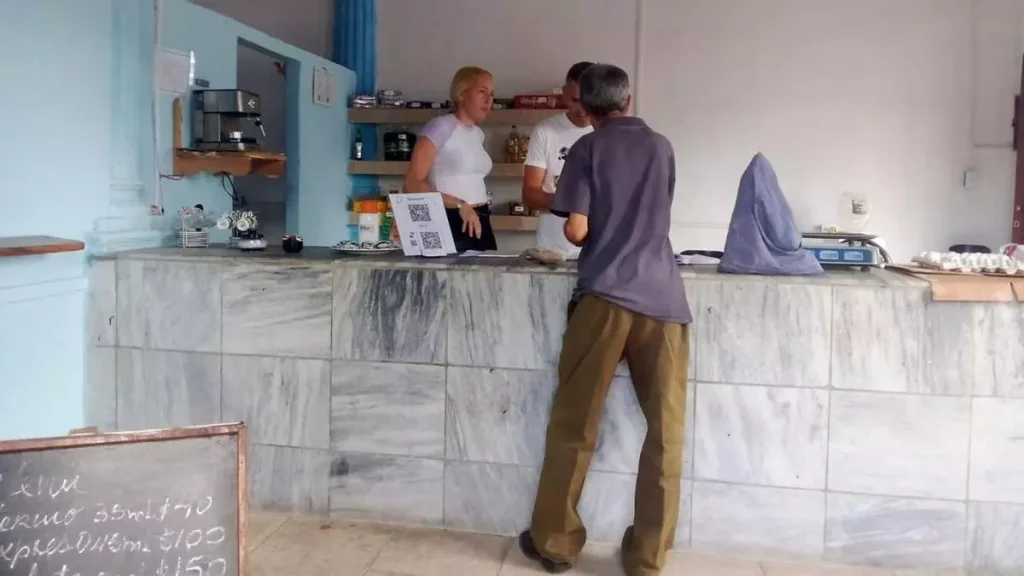
Several illuminated lamps catch the eye from the sidewalk. They operate thanks to a solar panel and stand in contrast to the blackout that has left much of 51st Street in darkness this Wednesday. However, even all that light cannot dispel the establishment’s dreary appearance. The sky-blue walls, columns painted a more intense shade, and long granite counter retain the atmosphere of a state-run grocery store where the scarce goods available through the ration book were distributed for decades.
Two electronic scales, immaculate and ready for use, sit on the counter. Behind them, shelves display products spaced far enough apart to make the emptiness all the more obvious. There are bottles of cooking oil, cans of beer, packages of cookies, toiletries, and a few canned goods. Nothing suggests the abundance promised for these new establishments.
“This place is just as empty as before,” the man with the shopping bag remarks to the clerk, who greets him with his arms crossed. Without wasting time examining the offerings written in chalk on a blackboard, he begins his questioning: Is there chicken in packages or by the pound? Mortadella? Cooking oil? Disposable razors? Each question is met with a shake of the head.
“I just can’t understand why they promise so many things if, when it comes down to it, the only thing that changes is the name of what they do,” he complains as he looks over the prices. A tube of Colgate toothpaste costs 500 pesos, honey costs 750, Mayabe beer costs 520, and toilet bleach costs 350. Filling a shopping bag requires several thousand pesos and a fair amount of imagination.
“Well, then get me an espresso, if the coffee machine works. How much does it cost?” he asks resignedly. The cup costs 40 pesos, but once again he has no luck: the coffee beans have run out, and they are not making any. The machine sits on a small shelf, for the moment as useless as the scales with no merchandise to weigh.
“The problem is that we’re just getting started. Tomorrow or the day after, we should receive cooking oil and some meat products. It’s a gradual process,” the employee explains. From the street, a motorcyclist interrupts the conversation to remind him to set aside a package of croquettes for him until later. At least someone seems to have found something to buy.
El Rincón was renovated in 2025 by the Municipal Directorate of Commerce. The state investment ended up refurbishing a premises now operated by the private sector under the Neighborhood Markets program. Among the advertised advantages is the option of paying by electronic transfer, although reality once again adds fine print to the promise.
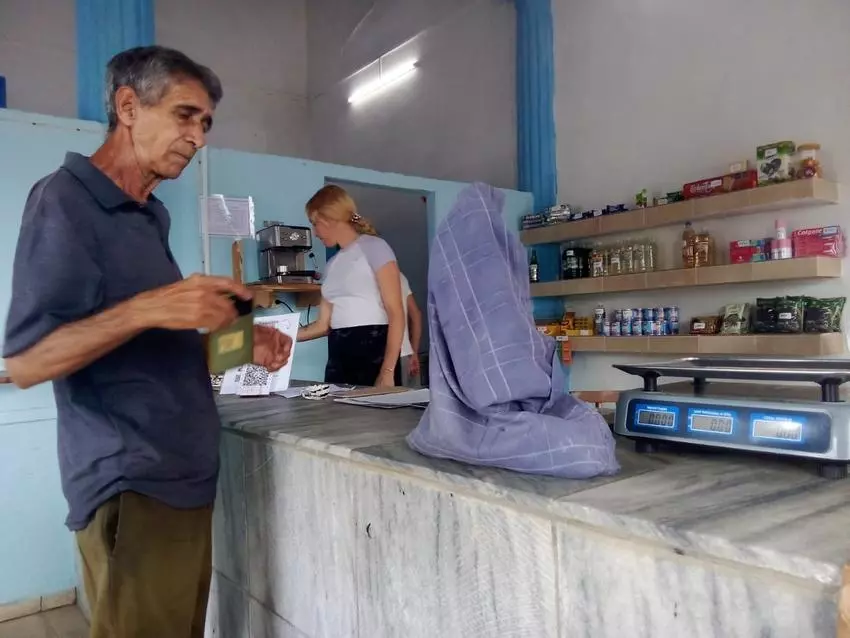
A sign displaying QR codes presides over the counter, but the clerk explains that, for now, they only accept payments through Transfermóvil from the first five customers each day. “We’re short of cash, but a solution will be found for everything,” he assures the customer.
Another shopper asks whether a carton of eggs still costs 3,800 pesos. The employee nods and clarifies that only one tray remains. “That’s practically my monthly salary,” comments the man with the shopping bag, who still has not found anything to take home for a meal.
Outside, Versalles continues its daily routine amid motorcycles, faded façades, and power outages. Inside, El Rincón has a new manager, scales, and QR codes, but it retains an old specialty of Cuban commerce: explaining why the item the customer needs is missing.
Translated by Regina Anavy
______________________
COLLABORATE WITH OUR WORK: The 14ymedio team is committed to practicing serious journalism that reflects Cuba’s reality in all its depth. Thank you for joining us on this long journey. We invite you to continue supporting us by becoming a member of 14ymedio now. Together we can continue transforming journalism in Cuba.