An investigation by the Miami Herald reveals how a spy for the Cuban regime infiltrated the Miami exile community.
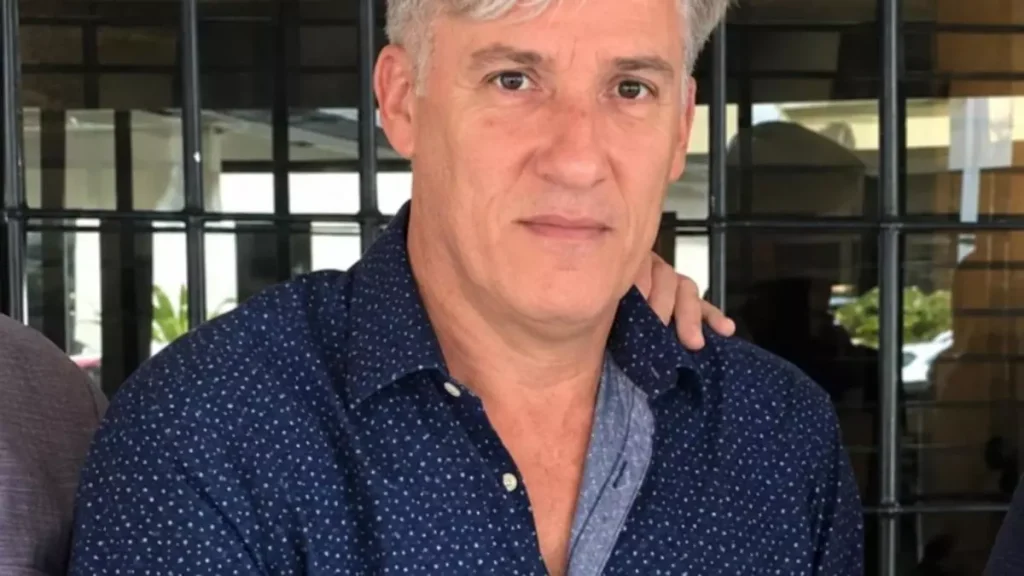
 14ymedio, Havana, September 7, 2026 / Fernando Armando Valdés Pérez, identified by US authorities as a Cuban intelligence agent and arrested last July, managed for years to infiltrate anti-Castro exile circles in Miami until becoming a person of maximum trust to Luis Posada Carriles, according to an investigation by The Miami Herald.
The investigation, titled Deception and Bloody Marys: How a Cuban spy in Miami became an anti-Castro militant and authored by journalist Nora Gámez Torres, reconstructs how Valdés maintained a close relationship with one of the most controversial figures in the Cuban exile community while, according to U.S. authorities, concealing his ties to Havana’s intelligence services.
According to the investigation, Valdés Pérez, 61, did not occupy a marginal place within those circles, but rather became a close person to Posada Carriles during his last years in Miami: he accompanied him to medical appointments, attended his activities, organized his celebrations, and was attentive to various everyday aspects of his life.
“Fernando was his representative, his support; he took him everywhere, like a nurse. He took care of his medications; he was a devoted son.”
Orlando González, director of Rescate Jurídico, a Hialeah-based organization dedicated to supporting Cuban political prisoners, and a close friend of Posada, recounted that “Fernando was his representative, his support; he took him everywhere, like a nurse. He took care of his medications; he was a devoted son.”
Valdés was arrested at Miami International Airport during a joint operation by U.S. Immigration and Customs Enforcement (ICE), Customs and Border Protection (CBP), and the FBI, and deported to Guatemala on August 7. According to authorities, he had concealed his ties to Cuban intelligence when applying for permanent residency in the United States.
The Miami Herald reports that ICE identified Valdés as an agent tasked with infiltrating Cuban exile organizations since at least the 1990s. It reconstructs that his connection with Posada Carriles began years before his time in Miami, when the anti-Castro activist was detained in Panama after being accused of conspiring to assassinate Fidel Castro during a summit held in that country in 2000.
The investigation details how Valdés managed to project an image of approachability and trustworthiness within Miami’s Cuban community. Santiago Álvarez, a Miami real estate developer and former benefactor of Posada, described him as having an exceptional ability to connect with people: “Fernando was bold, a charismatic guy, made to be liked by everyone; he was almost too perfect,” and noted that “he was friends with everyone; he fixed everything.”
Abreu recalled that Valdés “appeared suddenly, saying he wanted to help” and that he went to the prison “as if it were his own”
The Herald‘s investigation also documents that Valdés gained access to Miami’s Cuban-American political circles through campaign donations. According to Federal Election Commission records cited by the newspaper, he contributed $2,900 to Representative María Elvira Salazar’s reelection campaign in 2022 and $1,000 in 2024, the latter contribution made through the company Sr. Valdes Cigars. He also donated $1,000 to Representative Mario Díaz-Balart’s campaign in 2018 and $2,000 in 2024.
Valdés then began visiting Posada frequently in the Panamanian prison, something that caught the attention of Ernesto Abreu, a close associate of Luis Posada Carriles. He and others wondered why Valdés, with no apparent prior connection to Posada, was visiting him so often and how he could afford these visits. Abreu recalled that Valdés “appeared suddenly, saying he wanted to help” and that he went to the prison “as if it were his own.”
According to Abreu and González, as reported in the Miami Herald , Valdés once encouraged Posada to escape from prison, telling him he had cut through the perimeter fence and could provide him with a weapon. The offer was interpreted by some close associates as an unusual occurrence within a relationship whose true nature they were still unaware of.
After Posada’s release in 2004, Valdés remained connected to him during his time in Central America. According to the Miami Herald investigation , when Panamanian President Mireya Moscoso pardoned Posada and released him from prison in August of that year, Orlando González flew him to Honduras on a flight chartered by Santiago Álvarez. According to Álvarez, the group received information that the Cuban government had hired paramilitaries to assassinate Posada, which is why he had to leave Honduras.
Posada then spent more than a year in hiding in Guatemala, where he was taken in by Valdés. According to the report, he lived a mere 200 meters from the Cuban consulate in Guatemala City.
During that period, the relationship between the two grew even closer. Abreu told the Miami Herald that Valdés took care of Posada in daily details: “In Guatemala, he would prepare his breakfast; at 11 in the morning he would make him a Bloody Mary, and by 1 in the afternoon he would give him his Scotch whisky.”
Years later he summed up that experience like this: “Sleeping with the enemy, that’s what happened.”
Doubts about Valdés also marked Posada’s subsequent transfer to the United States. Santiago Álvarez asked Ernesto Abreu not to take Valdés from Guatemala to Mexico, where he planned to pick up Posada on his shrimp boat.
“I was preparing a boat—the Santrina —to bring him here [to Miami] because his life was in danger,” Álvarez said. However, according to his testimony reported by the Miami Herald, Posada refused to continue without him: “Luis flatly refused to let Fernando Valdés stay in Guatemala; he said that if Valdés didn’t come, he wouldn’t go either.”
During that trip, Abreu became convinced that Valdés could be an agent of Cuban State Security. Years later, he summarized that experience this way: “Sleeping with the enemy, that’s what happened.”
The case of Fernando Armando Valdés Pérez is reminiscent of other episodes of Cuban intelligence infiltration in the United States, although U.S. authorities have not linked him to those networks. The most well-known precedent is the so-called Red Avispa [Wasp Network], a network of Cuban agents infiltrated into exile organizations in South Florida, which was uncovered by the FBI in 1998.
Among the members of the network were Gerardo Hernández Nordelo, Antonio Guerrero Rodríguez, Ramón Labañino Salazar, Fernando González Llort and René González Sehwerert, described by the propaganda of the Cuban regime as “The Five” or “The Five Heroes” [commonly referred to in as English, ‘The Five Spies’].
These spies were prosecuted in the United States on charges that included espionage, conspiracy, and acting as unregistered agents of a foreign government.
Other subsequent cases demonstrated the extent of Cuban intelligence operations within the United States. Víctor Manuel Rocha, a former U.S. ambassador to Bolivia and former State Department official, was sentenced in 2024 to 15 years in prison after admitting that he acted for decades as a secret agent for the Cuban government.
Before Rocha, Ana Belén Montes, an analyst with the Defense Intelligence Agency (DIA), was sentenced in 2002 to 25 years in prison for conspiracy to commit espionage after passing classified information to Havana for years. Montes was released in January 2023 after serving more than two decades of her sentence.
______________________
COLLABORATE WITH OUR WORK: The 14ymedio team is committed to practicing serious journalism that reflects Cuba’s reality in all its depth. Thank you for joining us on this long journey. We invite you to continue supporting us by becoming a member of 14ymedio now. Together we can continue transforming journalism in Cuba.