Those who receive remittances are celebrating the rise, but prices have also increased significantly, and people on the street are noticing.
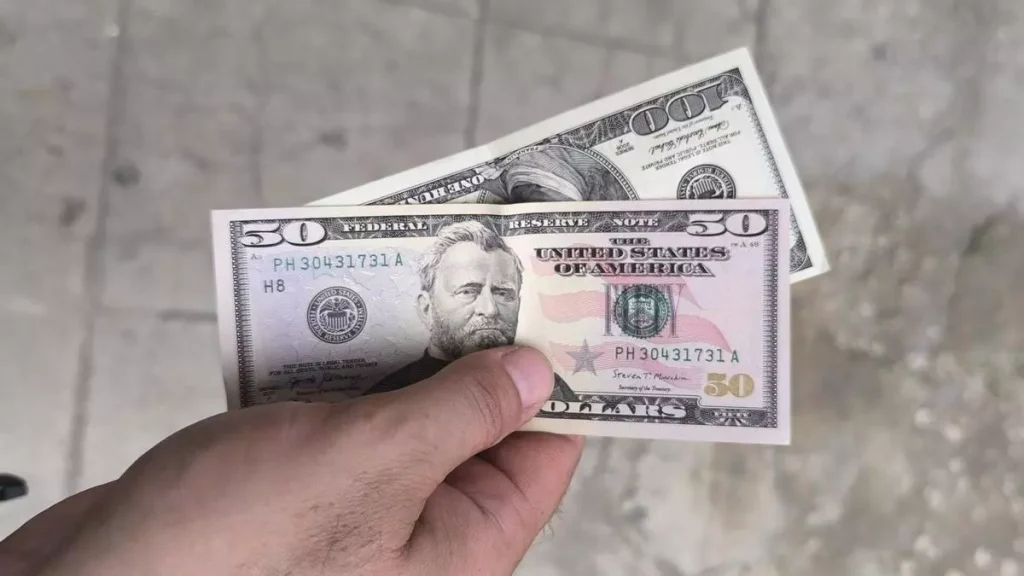
 14ymedio, Havana, June 3, 2026 — The day Laritza had been waiting for has arrived. For weeks, this retired Havana resident has been holding on to the 100 dollars she received from relatives abroad, waiting for the informal exchange rate to reach the magic number of 600 pesos per dollar. “Although they never give you the exact amount listed, the best will change at 5 or 10 pesos below,” she admits with satisfaction.
Exactly one month ago, the U.S. currency was trading at 535 CUP, but the acceleration has been surprising even for a currency that has spent years trapped in a spiral of devaluation. “The situation for the Cuban Government is worsening, and no understanding with the United States that could bring improvement is in sight. The main indicators of the Cuban economy continue in free fall, and their impact is reflected in the depreciation of the Cuban peso over the last five years,” stated the May bulletin of the Observatory of Currencies and Finance (OMFi), directed by Pavel Vidal.
That analysis was released in mid-May, when the dollar was trading at 540 pesos, according to El Toque’s informal exchange rate. On June 2, the currency jumped eight points and reached 600.
The more they earn, the more everything around them becomes more expensive. “And there are also the hard-currency stores, where shopping becomes more expensive too”
“For those of us who receive remittances, it benefits us in a certain way, although food, toiletries, and everything else go up in price. So in the end, it makes no difference,” says Roberto, a reseller in Havana who echoes not only the fears of the poorest Cubansbut also the concerns of people like himself who do business. The more they earn, the more everything around them becomes more expensive. “And there are also the hard-currency stores, where shopping becomes more expensive too,” he adds.
Prices have risen significantly, and people are noticing. “The imported garlic bulbs that I bought a few weeks ago for 50 pesos are now 150. Cristal beer already costs 400 pesos in the neighborhood’s private markets, and all imported products are going up,” María told this newspaper.
In December 2025, the Government launched a floating exchange rate in an attempt to compete with the informal market rate, which had become the real benchmark among the population. After years of open warfare with El Toque for publishing an exchange rate far higher than the State’s, the official buying and selling price was set at 410 pesos per dollar—in addition to the other existing rates of 24 for state enterprises, and 120 for entities capable of generating foreign currency. Besides being an attempt to recapture the lost foreign-exchange market, the regime was also trying to contain inflation, which continues to climb, although less dramatically than in 2023 and 2024, not because of economic improvement, but because of generalized poverty.
The official exchange rate stands this Wednesday at 524 pesos per dollar. “Nobody sells to the State,” Roberto insists. “It’s like stealing from yourself,” he says mischievously. María agrees. “The other day I overheard an argument about that between a neighbor and a cousin who had just arrived from Europe and made the mistake of exchanging a few hundred dollars at the Havana airport when he landed. ‘Boy, you don’t do that, you lost out every way possible,’ the one who lives here in our building told him,” she recalls. “Any vendor at the farmers’ market will give you more pesos for that amount of dollars. Here people will come looking for you, carry your bags, and even shine your shoes if it means you’ll sell them your dollars,” she adds.
Private business owners sometimes use that trick to justify only a tiny portion of all the dollars they handle
Although it is not always easy. “You have to go to several places looking for someone who will pay a better price. Some small and medium-sized businesses want to take them 30 or 40 pesos below the El Toque rate, so you go from one business to another until you find a better deal,” Roberto explains.
“There’s a self-employed businessman here who buys dollars and always posts ‘five pesos below El Toque‘, so it’s still above the State’s rate. Serious guy, money neatly bundled in groups of 1,000 pesos, and a trusted clientele. No lines, and you don’t even have to show your ID card. So who would go to the State with that other offer?” the reseller argues.
For Laritza, some people do, but they are the minority. “The naïve, the newly arrived, or people who need a record of the transaction. Private business owners sometimes use that trick to justify only a tiny portion of all the dollars they handle. That way they have a receipt to show inspectors to justify purchases of certain goods in dollar stores,” she says.
The retiree, who resells to a “mule” who brings merchandise from Panama, speaks about the mixed blessings of these increases in the value of foreign currency. “She’s always chasing us around asking whether we have a Cabezón (the 100-dollar bill with Benjamin Franklin’s face on it). She’s told us she has had to raise the prices of all the products in her little shop because, with the current dollar exchange rate, the merchandise she brings in has become more expensive. As an added advantage—and we don’t know how she does it—she always pays in cash and with large bills, but other informal currency traders are having a very hard time obtaining enough cash to give their customers,” she notes.
Translated by Regina Anavy
______________________
COLLABORATE WITH OUR WORK: The 14ymedio team is committed to practicing serious journalism that reflects Cuba’s reality in all its depth. Thank you for joining us on this long journey. We invite you to continue supporting us by becoming a member of 14ymedio now. Together we can continue transforming journalism in Cuba.