“If there are no jobs for Mexicans, there will be even fewer for deported Cubans.”
 14ymedio, Angel Salinas, Mexico City, May 26, 2026 / Geraldo Benítez, a Cuban, sells bottled water in Centenario Park, a spot in downtown Tapachula where hundreds of migrants without papers have been congregating for months. His story epitomizes the suffering of his compatriots expelled from the US and deposited in Mexico, a kind of planet Mars for them. “There’s no work here, but you can’t move around either. Things are tight at the Mexican Commission for Refugee Assistance (Comar),” months go by and “they don’t regularize your status.”
Benítez tells 14ymedio that the deportees end up “sleeping on the street or in shelters.” In the mornings they wander around, “looking for food, because if there’s no work for Mexicans, there’s even less for elderly deported Cubans.”
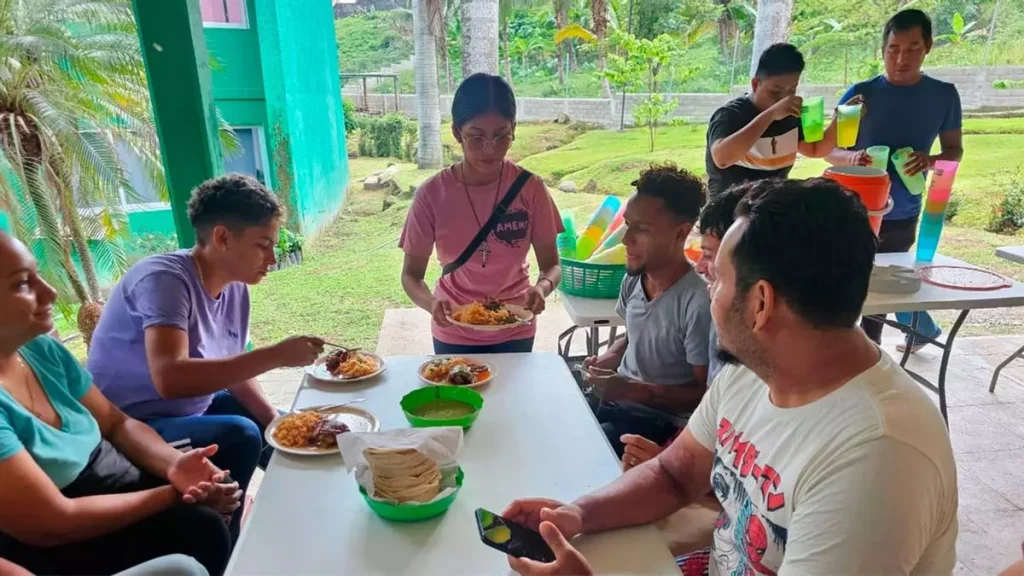
At the Jesús el Buen Pastor del Pobre y el Migrante shelter, support is provided to about 40 migrants, most of them from states mired in violence.“who have no one, people who want to cross back into the United States because their wives, their children, their lives are there,” says Olga, the shelter’s founder. “There are also four Cubans; one of them is an elderly man who was deported after 46 years in Cuba. He can barely speak. I know his family sends him aid.”
Olga maintains the shelter with the profits from her store. “I don’t give them much, but those who arrive are guaranteed a place to sleep and a simple meal: rice, beans, tortillas, and water are never lacking.” The flow of migrants has disminished, and with that, the border region is facing a crisis, she explains. “That’s normal, but we’re holding on.”
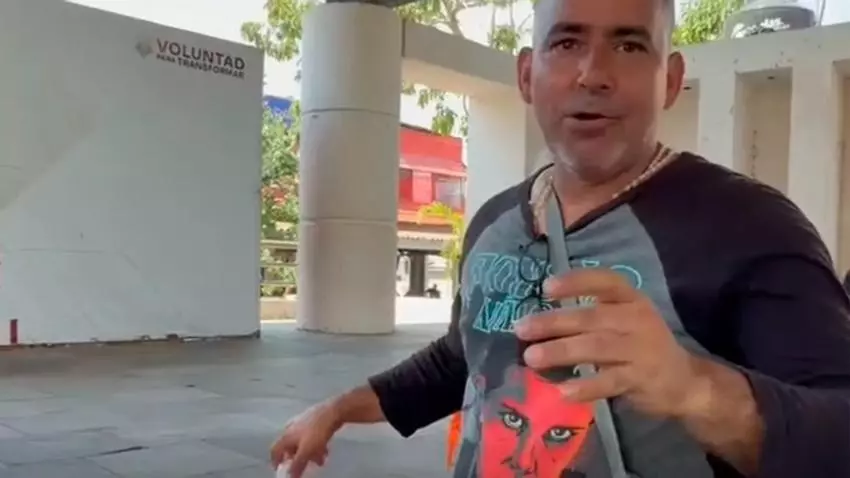
Lázaro is one of the Cubans who considered going to one of the shelters. In the mornings, he walks the streets with a thermos and a backpack, “offering Cuban coffee.” The man was deported by the US last February. “Without a deportation order,” he says, “they dumped me in Tapachula.” He recounts that he spent four years in a federal prison, although he doesn’t specify what crime he committed.
At the Siglo XXI immigration station, where he went to try to regularize his status, he says, “the agents treated us like dogs and gave us nothing.” The same thing happened at the COMAR (Mexican Commission for Refugee Assistance): “They don’t give you papers, they don’t give you anything.” The idea for the coffee came to him when he noticed that people liked the way it was made, and “for five pesos you get the Cuban flavor.” What he earns from selling it and what businesses give him for helping out “helps pay the rent and get by.”
Father César Augusto Cañaveral Pérez, of the Diocesan Belén shelter, tells this newspaper that he provides weekly support to 100 to 120 migrants. “Many of them are just passing through because they are determined to reach the United States.” Another group consists of deported Mexicans who, “after being left stranded, stay for a day or two before returning to their places of origin.”
Cañaveral Pérez laments the lack of support for “psychosocial containment,” in addition to other shortcomings. “Many Cubans seek legal support,” she laments, “but we don’t have enough lawyers or staff to handle everything involved in human mobility.”
The shelter manager asserts that the people need assistance from COMAR (Mexican Commission for Refugee Assistance) to “be able to find work” and insisted that “these people aren’t asking for handouts, they want an opportunity to settle down.” He emphasizes that among these people are “professionals” who end up working in “businesses, bars, and farms where they are exploited.”
______________________
COLLABORATE WITH OUR WORK: The 14ymedio team is committed to practicing serious journalism that reflects Cuba’s reality in all its depth. Thank you for joining us on this long journey. We invite you to continue supporting us by becoming a member of 14ymedio now. Together we can continue transforming journalism in Cuba.