- The multinational nickel company attributes this decision to the new US sanctions against the Havana regime.
- Cuban employees at the company’s facilities in Alberta province will have to return to the island.
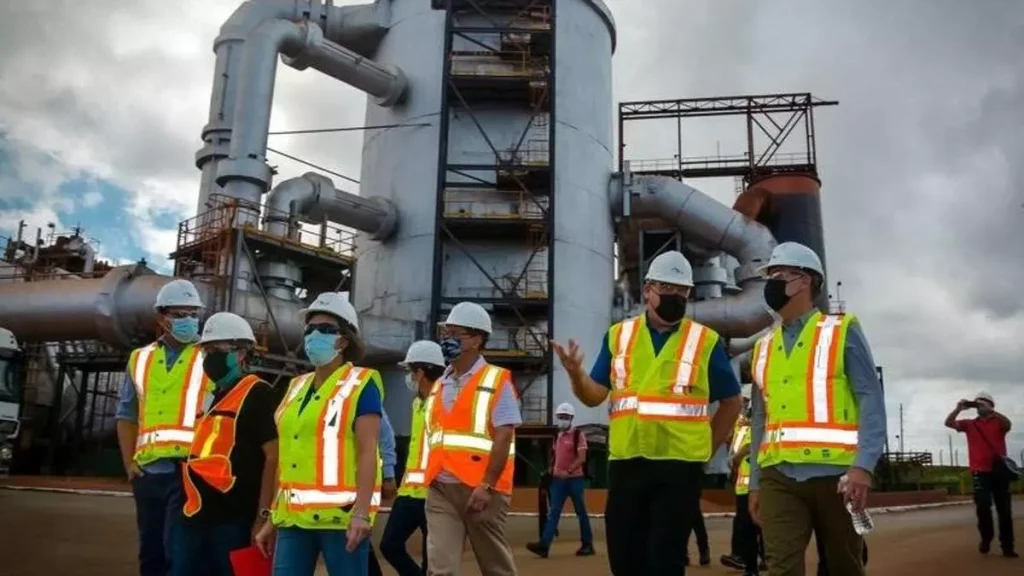
 14ymedio, Madrid May 7, 2026 / The Canadian company Sherritt International Corporation announced this Thursday the suspension of its joint venture activities in Cuba with immediate effect and will begin repatriating its employees on the island, and similarly Cubans in Canada. The Toronto-based mining company had been operating in Cuba since 1991, but sanctions imposed by US President Donald Trump have brought this venture to an end 35 years later.
In a statement issued by the Toronto-based company, Sherritt reports the decision made after a meeting with its advisors, which it had already announced on Monday, when it said it would evaluate the situation after learning of the executive order signed by Trump on May 4, which targets non-U.S. citizens and entities doing business on the island.
“Sherritt has not been formally designated under the executive order. However, such a designation could occur at any time. In any case, its mere issuance creates conditions that materially alter the Corporation’s ability to operate in the ordinary course of business, including activities related to the operations of the Cuban joint venture,” the statement explains.
The company announced that Brian Imrie, Richard Moat, and Brett Richards have resigned from the Corporation’s Board of Directors “effective immediately.”
In addition, the company announced that Brian Imrie, Richard Moat, and Brett Richards have resigned from the Corporation’s Board of Directors “effective immediately.” While no reasons have been specified, it is assumed that their departures are due to the possibility of individual disciplinary action.
In the statement, the company adds that the decision has been communicated to the Cuban side via letter. So far, there has been no reaction from Cuban authorities, although one is expected, given that this Thursday’s front page of the State newspaper Granma features an article titled “Sanctions, Threats… The History of a Genocidal Vocation,” dedicated to this issue, and this occurred before the Canadian company’s decision, which has generated substantial profits for the Cuban state coffers, was even known.
“Currently, there is no immediate impact on operations in Fort Saskatchewan, Alberta. The refinery continues to produce finished nickel and cobalt for sale. The feed inventory available for this production is expected to last until approximately mid-June,” the company statement added.
According to its explanation, the Trump administration’s executive order contained other potential problems, such as the possibility that suppliers of any kind—financial or material—could cease supporting their operations or other activities. It also indicated that its advisors would continue to evaluate the implications of the measure.
Sherritt’s relationship with Cuba began in the early 1990s, when the Canadian company started buying nickel concentrate from the island for its refinery in Alberta. This business eventually led to another: direct mining operations. Years later, it was the foreign company that had most diversified its activities in Cuba, becoming involved in sectors such as oil, gas, and energy, especially through its stake in Energas, where it holds a 33% share.
Although this issue is not addressed in the statement, it is understood that it is also leaving the joint venture.
Although this issue is not addressed in the statement, it is understood that it is also leaving the joint venture it shares with the state-owned companies Cuba Petróleo (Cupet) and Unión Eléctrica de Cuba. This company, which supplies approximately 10% of the energy to the national electricity grid, has three power plants in the north of the island, in Varadero, Boca de Jaruco, and Puerto Escondido.
In addition, the company owns mines in Moa (Holguín). In February of this year, Sherritt announced it was pausing mining operations and putting its processing plant on hold. The decision was made after receiving “notification that planned fuel deliveries to Moa will not be met and the timeframe for resuming deliveries is unknown,” the statement said.
The company has been a key asset for the Cuban state, which has used the lucrative revenues from nickel and cobalt to meet its international obligations, so the blow is evident. However, in the last month it was revealed that Chinese technology had arrived at the state-owned Comandante Ernesto Che Guevara plant. This could be a sign that China will fill the void left by the Canadian company.
______________________
COLLABORATE WITH OUR WORK: The 14ymedio team is committed to practicing serious journalism that reflects Cuba’s reality in all its depth. Thank you for joining us on this long journey. We invite you to continue supporting us by becoming a member of 14ymedio now. Together we can continue transforming journalism in Cuba.