Sol García Basulto and Mario Junquera are being questioned in Camagüey, and Taimir García Meriño and Ezequiel Morales Carmenate are being harassed in Las Tunas.
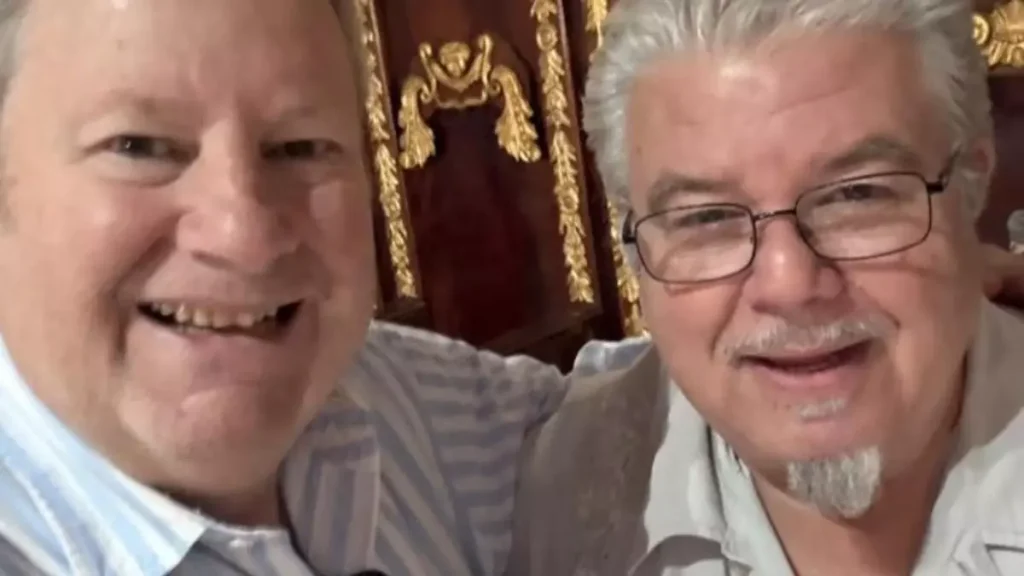
 14ymedio, Madrid, 2 February 2026 — Independent journalist Sol García Basulto and playwright Mario Junquera were detained this Sunday by State Security in Camagüey, following a visit to the city by the US mission chief in Cuba, Mike Hammer, who was himself subjected to a protest on Saturday. Several other activists reported harassment by the Political Police in various locations.
A former contributor to 14ymedio and current member of the La Hora de Cuba [Cuba’s Hour] newsroom, García Basulto explained on her social media that she was arrested while walking down the street around noon by a traffic officer who demanded her documents. He then called a patrol car, which took her to a police station. There, two plainclothes State Security agents, Alberto and Kevin, subjected her to a three-hour interrogation, filled with “questions, silences, warnings, and extreme cold.”
According to García Basulto, an instructor from the Ministry of the Interior finally gave the young woman a “warning notice,” the contents of which she says she doesn’t remember. The journalist goes on to explain that the instructor told her she “had violated a perimeter that was under guard”— at that moment she was leaving the home of Henry Constantín, director of La Hora de Cuba —and that she was making “counterrevolutionary posts on social media.”
“In these moments, the actors of the dictatorship are unpredictable and dangerous.”
In her post , García Basulto believes that “they are really nervous” and “they don’t know what they’re doing.” She continues, “They’ve demonstrated this with their actions against the diplomat in question.” This was the first arrest “in more than five years” that the journalist has suffered , and she concludes: “In these moments, the actors of the dictatorship are unpredictable and dangerous. But as I always say, we are not afraid of them.”
The Cuban newspaper La Hora de Cuba reported details of Mario Junquer’s arrest: it also occurred around noon yesterday, as he was leaving the home of the newspaper’s director, Henry Constantín. The playwright was detained for two hours, though he has not provided any further details. In a Facebook reel, he posted a picture of himself with the words: “I’m free now. Well, not quite free yet. I’m home. Thanks to everyone. History will swallow them up.”
Constantin’s home, the newspaper he directs reported, has been surrounded since early Friday morning by patrols and motorcyclists of the National Revolutionary Police and plainclothes agents of State Security, “apparently to prevent any encounter between the journalist and his friends from Cuban civil society, and the head of the United States diplomatic mission in Cuba, Mike Hammer.”
Other activists from Camagüey were also harassed, such as actress Iris Mariño, deputy director of La Hora de Cuba. The media outlet also reports the arrest of a young man, whose name it does not give, “who apparently argued with Yoel Santiesteban, a government official who participated in the two acts of repudiation against Mike Hammer in front of the Santa María Hotel.”
The act of repudiation suffered by the diplomat, right in front of the place where he was staying, came to light through a video posted on the Facebook profile of a government supporter who only publishes official acts and commemorations on his wall.
“These threats came quickly, and I have been under surveillance and besieged since early this morning.”
Those involved were men and women who shouted “down with the blockade,” “puppets of Donald Trump,” “murderer,” “genocidal” and “bootlickers,” identical slogans to those used by the Cuban propaganda apparatus in acts of repudiation against opponents and dissidents.
Hammer, for his part, reported the incident on the US Embassy’s social media accounts with a smile, as usual, explaining that he had “insults shouted at him,” but stating that they were people who “belong to a certain party” and who “do not represent the Cuban people.”
At the time of that recording, Hammer was in the city of Trinidad, Sancti Spíritus, which is also part of his tour of the island these days, to “meet more ordinary Cubans.” In the central city, he met with Father José Conrado Rodríguez Alegre, one of the critical voices against the regime within the Church.
From Las Tunas, former political prisoner Taimir García Meriño also reported on Sunday the harassment by the political police, who had previously threatened her with “serious problems” if she received a visit from Hammer. “These threats came quickly, and I have been under surveillance and besieged since early this morning,” the opposition member denounced .
Similarly, State Security interrogated former political prisoner Ezequiel Morales Carmenate for several minutes in the city of Puerto Padre, Las Tunas province. Morales Carmenate had extended an invitation to the head of the U.S. mission to his home. In a video posted on social media, the activist reiterated his “open door” to Hammer, announcing to the regime: “I welcome whomever I want into my home.”
The U.S. Bureau of Western Hemisphere Affairs warned yesterday in X that “the illegitimate Cuban regime must immediately cease its repressive acts of sending individuals to interfere with the diplomatic work of Chargé d’Affaires Hammer and the Embassy staff. Our diplomats will continue to meet with the Cuban people, despite the regime’s failed intimidation tactics.”
____________
COLLABORATE WITH OUR WORK: The 14ymedio team is committed to practicing serious journalism that reflects Cuba’s reality in all its depth. Thank you for joining us on this long journey. We invite you to continue supporting us by becoming a member of 14ymedio now. Together we can continue transforming journalism in Cuba.