His case exposed the human cost of repression and the regime’s inability to offer answers other than punishment and silence.
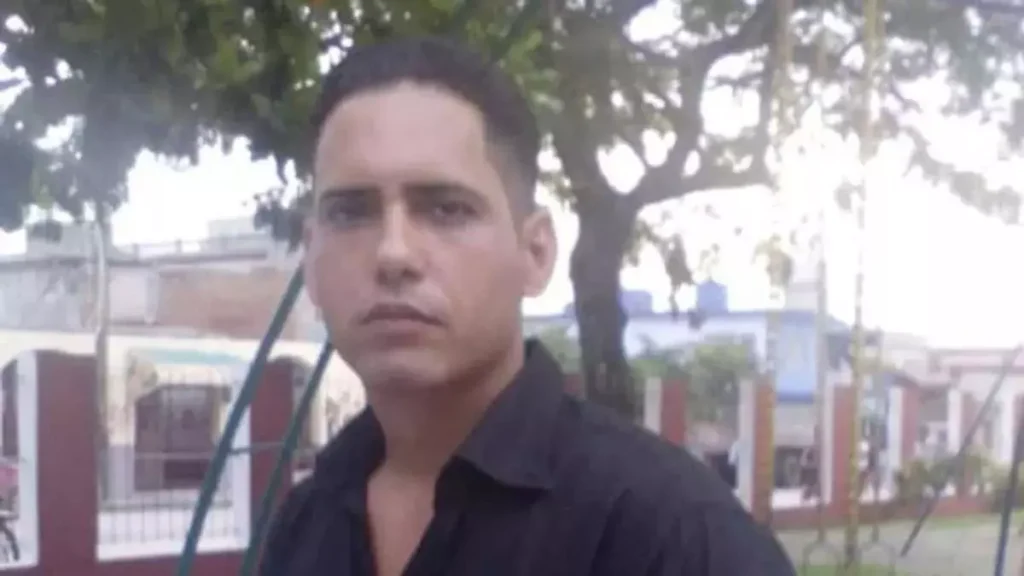
 14ymedio, 25 December 2025, Havana —Yosvany Rosell García Caso, one of the many names associated with the Island-wide protests of 11 July 2021, became one of the most visible faces of Cuban political prisoners in 2025. His prolonged hunger strike, the extreme deterioration of his health, and the opacity with which the authorities handled his case brought the situation of prisoners of conscience on the island back to the center of public debate. His body, pushed to its limits, exposed the human cost of repression and the regime’s inability to offer solutions other than punishment and silence.
García Caso, 37, was arrested in Holguín on July 15, 2021, just four days after participating in the demonstrations that shook almost the entire island. Like thousands of other protesters, his arrest lacked even the most basic due process guarantees. He was charged with “sedition,” a serious offense that resulted in a draconian 15-year prison sentence. These sentences have been denounced by family members, activists, and human rights organizations as part of the political criminalization of those who exercise their right to peaceful protest in Cuba. Until then, Yosvany Rosell was a young welder, a father of three, just one more among so many Cubans dissatisfied with the rapidly deteriorating conditions in their country.
The hunger strike marked a pivotal moment in his life and in the public conversation about political prisoners in Cuba.
During his years of imprisonment, García Caso endured prison conditions that his family and advocates describe as degrading: prolonged isolation, mistreatment, constant surveillance, medical neglect, and arbitrary restrictions on communication with the outside world. In November 2025, his situation reached a critical point when he began a 40-day hunger strike , demanding his freedom and that of other political prisoners, as well as improved prison conditions.
The hunger strike marked a pivotal moment in his life and in the public discourse surrounding political prisoners in Cuba. García Caso was admitted to the Lucía Íñiguez Landín Clinical Surgical Hospital with signs of multiple organ failure and rapid deterioration, according to independent reports. His condition became a stark reminder of the extreme price of protesting in a system that does not fully recognize basic rights for dissidents.
His wife, Mailín Rodríguez Sánchez, has been one of the most visible voices denouncing not only the activist’s physical condition, but also the lack of transparency with which the authorities have handled his case. The family has stated that they were even denied access to his medical records and the results of tests performed during his hospitalization, which constitutes a violation of his right to health and personal security.
In the midst of the health crisis, García Caso wrote letters from his cell and from the hospital denouncing prison conditions and expressing that his protest was also a response to the injustice of the prison system and the lack of institutional channels for addressing citizens’ demands. His mobilization was not an isolated act of desperation, but a conscious decision in an environment that, for many political prisoners, offers no other avenues for being heard.
The hunger strike ended when authorities agreed to one of his main demands: transfer to solitary confinement, a disciplinary area within the prison that the activist had requested as a form of protest against the “continued imprisonment of all political prisoners.” Paradoxically, the concession came amidst a serious physical decline that left him on the brink of death.
After his release from the hospital, García Caso was returned to the Cuba Sí prison in El Yayal (Holguín), without prior notice to his family.
After his release from the hospital, García Caso was returned to the Cuba Sí prison in El Yayal (Holguín) without prior notice to his family. According to various reports, he continues to face adverse conditions, including poor nutrition, unsafe drinking water, and strict surveillance, which have negatively impacted his overall health.
His case has also resonated far beyond the island. Organizations such as the Inter-American Commission on Human Rights, Amnesty International, and several diplomatic missions have expressed concern about his condition and the general situation of Cuban political prisoners, emphasizing the need to respect fundamental rights. In exile and among sectors of international civil society, his name has been the subject of awareness campaigns and calls for action.
See also: Cuban Faces 2025: The 14 Faces That Marked the Pulse of Cuba in 2025
____________
COLLABORATE WITH OUR WORK: The 14ymedio team is committed to practicing serious journalism that reflects Cuba’s reality in all its depth. Thank you for joining us on this long journey. We invite you to continue supporting us by becoming a member of 14ymedio now. Together we can continue transforming journalism in Cuba.