Cuba received 29,000 barrels per day (bpd) while China took 85% of the 900,000 bpd exported by PDVSA
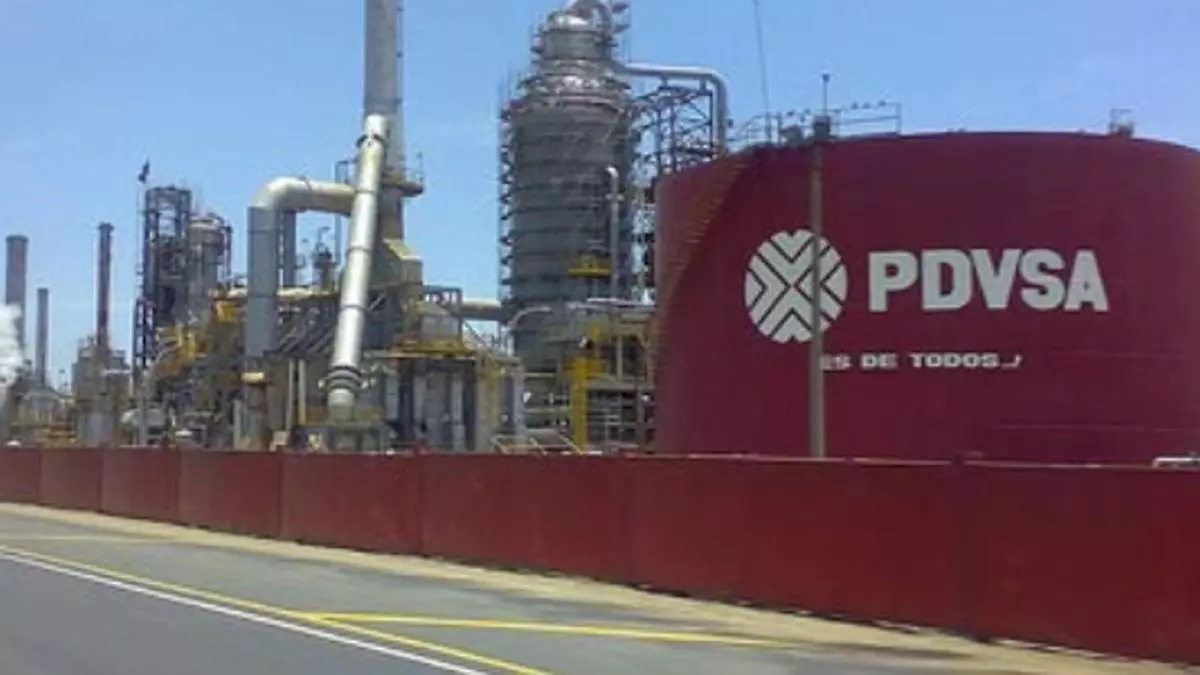
 14ymedio, Madrid, September 4, 2025 — In August, Cuba received an average of 29,000 barrels per day (bpd) of Venezuelan crude oil, a quantity slightly below what arrived the previous month (31,000 bpd), although still far from the agreements signed 25 years ago by Hugo Chávez and Fidel Castro. In addition, it is half of what the state-owned oil company PDVSA sent to the U.S. this month.
Washington gave a respite by issuing a partial license to Chevron to operate in Venezuela and export its oil, which has allowed PDVSA to exceed 900,000 barrels per day, the highest volume of the year. The White House announced in July the granting of this “restricted” authorization without giving details, although it is believed that one of the conditions for using it is that the money from the sale of oil cannot be transferred to the government of Nicolás Maduro, something very complex to guarantee. In total, 60,000 bpd from Venezuela arrived in the U.S.
In total, 60,000 bpd from Venezuela arrived in the U.S.
This, together with the increase in exports to China — which took 85% of the country’s crude outflows — has left record figures for PDVSA’s coffers. The quantities of oil and its derivatives also soared, as Venezuela exported about 275,000 metric tons, compared to the 227,000 tons shipped in July. On the other hand, the country had to increase imports of light oil and naphtha, which it needs to dilute its extra-heavy oil and produce exportable crude, from 58,000 bpd in July to 99,000 bpd.
According to Reuters, which provides these data on a monthly basis, “the stability of production and the absence of interruptions in the refining process and mixing plants of the Orinoco Belt” were other factors that increased inventories and exports.
The data come amid strong tensions between the U.S. and Venezuela, which rose to a new level on Tuesday with an alleged naval attack on a drug boat in Caribbean waters. Despite this, the oil business is still standing, and as Chevron CEO Mike Wirth had predicted, “a limited amount of oil” began to flow in August, with expectations of a positive economic impact for the company in the third quarter.
Venezuela exported about 275,000 metric tons, compared to the 227,000 tons shipped in July.
Although Cuba has not received the amounts provided for in the agreements with Caracas for months, Miguel Díaz-Canel himself commented that there was an undisclosed “formula” between the two governments -“so that they do not pursue it”- through which to continue cooperation. According to some analysts, one of the solutions could be triangular agreements with Mexico.
The country has exported large quantities of crude oil to Cuba in the past two years — an estimated $1 billion so far this year — through a subsidiary of state-owned Pemex, Gasolinas Bienestar S.A. de C.V., which claims that it is complying with the U.S. embargo laws on Cuba. So far it is not known whether this is a donation, sale, barter or if Venezuela pays something to Mexico to compensate for the lack of shipments from PDVSA to the island.
Despite the fact that oil continues to flow towards Cuba, the blackouts persist, and the electricity deficit seems to increase vertiginously, having now adapted to a daily loss much higher than 1,500 megawatts (MW), reaching more than 2,000 this summer, equivalent to more than 50% of domestic demand. “The considerable increase in demand due to high temperatures and the departure of generating units due to failures and fuel shortages are the determining factors for the fact that the generation deficit in the country is higher than planned,” the State newspaper Granma said on Wednesday in a report about the energy situation of the country.
Despite the fact that the oil does not stop flowing towards Cuba, the blackouts persist and the electricity deficit seems to increase vertiginously.
On Tuesday, Energas Jaruco and unit 5 of Antonio Maceo (Renté), Santiago de Cuba, where a worker previously suffered serious burns in an accident, returned to the national electrical system (SEN). However, three more units were damaged (3 and 6 of Renté and 2 of Felton), besides two others being in “prolonged maintenance” (2 of Santa Cruz del Norte and 4 of Carlos Manuel de Céspedes, in Cienfuegos). To make matters worse, the preparation prior to capital maintenance has begun for the largest thermoelectric plant in Cuba, the Antonio Guiteras, Matanzas, which is estimated to be completed at the end of the year.
However, Lázaro Guerra Hernández, director of Electricity at the Ministry of Energy and Mines, attributed most of the deficit to the lack of fuel and lubricants, so that 703 MW were not provided, a situation that is repeated day after day.
In the midst of this situation, work is progressing at the Matanzas Supertaker base thanks to China. This Monday it was announced that a group of experts from that country placed the dome on tank 49-1, which has a capacity of 50,000 cubic meters (13,208,603 US liquid gallons). The aluminum cover is 74 meters (243 feet) in diameter and weighs 68 tons.
The work should be completed in 2026, when the construction of this tank has been completed along with tanks 86, 87 and 88, which will add up to 200,000 cubic meters (52,834,411 US liquid gallons) lost in the fire of August 2022 that left 17 dead, many of them young people who were performing military service and were sent without experience to put out the fire.
Translated by Regina Anavy
____________
COLLABORATE WITH OUR WORK: The 14ymedio team is committed to practicing serious journalism that reflects Cuba’s reality in all its depth. Thank you for joining us on this long journey. We invite you to continue supporting us by becoming a member of 14ymedio now. Together we can continue transforming journalism in Cuba.