Onions And Caviar, Is It The Beginning Of The End? / 14ymedio, Luis Nieto

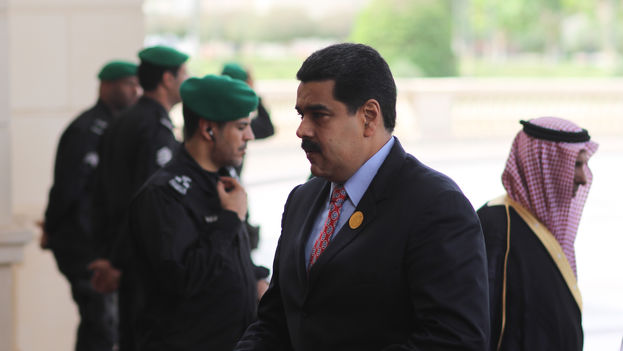
Lorena Freitez, Venezuela’s new Minister of Urban Agriculture

14ymedio bigger14ymedio, Luis Nieto, Montevideo, 3 March 2016 – On 21  January, the sociologist Lorena Freitez was appointed Minister of Urban Agriculture of Venezuela, replacing Emma Ortega, who had lasted only two weeks in office. The new minister launched an ambitious slogan: “Transforming consumer cities into productive cities.”

Freitez’s reasoning is that if 84 percent of the Venezuelan population lives in cities, and only 11 percent in the countryside, it seems obvious that cities, taking advantage of the productive space they have, can produce the food they need, without needing to rely on imports and the little produced by the 11 percent who live in the countryside. Her mission is to promote the “Productive Revolution” from the communes, according a Tweet from President Maduro’s at the time Emma Ortega was replaced by the young sociologist. continue reading

A daughter of sociologists, the young Chavista activist is known for her dedication to the creation of “collectives,” groups of militant “Bolivarians,” always ready to say yes to whatever comes their way. One of the collectives funded by the young sociologist, “Tiuna El Fuerte,” can be defined certainly not for its knowledge of agriculture, but for its commitment to the hard core of the Cuban and Venezuela military who support the Chavista regime. Fuerte Tiuna is headquartered at the Defense Ministry, which is also the principle enclave of the regime’s Armed Forces and it various Intelligence Agencies. Someone who organizes the so-called “colectivos”  — vigilante gangs — in a such a select environment, is without a doubt a totally committed Chavista.

There is no doubt that in any serious country a ministry under the name of “Urban Agriculture” has not prospered. It would not have been permitted by a parliament with common sense and independence, not would ordinary people have allowed it. What is driving Maduro now? Nothing less than using whatever piece of land is available to plant onions, potatoes and corn. It is a clear appeal to “every man for himself.”

In his ministerial appointment, formalized through Twitter, he argued that he and his wife Cilia raised 50 chickens at home, and that this is what any Venezuelan can do to easily overcome the food emergency. “The time has come to promote a new productive culture.” While the measures differ, this is the spirit of Mao’s Cultural Revolution, or the forcible transfer to the countryside imposed by Pol Pot in Cambodia, to name just two examples that cost millions of human lives.

Chavez had already insisted on taking advantage of the green spaces in Caracas to produce food for the population. In a corner of the Miraflores Palace, seat of the government, he managed to harvest corn, tomatoes and peppers. In addition, he worked on a project to fill Caracas with vertical chicken coops, to be used by a large number of apartment buildings.

With regards to government innovation, we have to remember when Maduro decreed the Ministry of Supreme Human Happiness. One assumes that the new Minister of Urban Agriculture will advance over the green spaces of the major cities to fulfill the goal for which the new Ministry was created.

The mission does not stop at agricultural production wherever there is land available in the city, but urges the breeding of fowl and hens on apartment balconies and terraces, along with pigs and goats in the more arid parts of the city. This, lamentably, is not a joke. Searching the internet and reading the official propaganda confirms the importance of these initiatives to the Chavista regime, which has devoted millions of bolivars to it.

Today, from Caracas, we are asking them to disclose the state of Public Health, where the deficit of medicines is affecting children with cancer as well as Alzheimer’s and Parkinson’s patients. There are no medicines, there is no food for the population, the popular vote left Chavismo without support from the Parliament, but the civil-military regime, as Chavismo likes to define itself, clings to the rickety raft of this tropical Titanic. Something the friends of Maduro, Cabello and the rest of the followers of the late Colonel Hugo Chavez should give some thought to.

Many are experts in surviving these unfortunate decisions of international solidarity, and when it is all over, and all that is left is the memory of the pain inflicted on the people of Venezuela, they will continue on in the name of the people. An abstract people, of course, using the political procedures manual to achieve power by democratic means, because on this, Chavismo wrote the book.

But not everything will be onions planted in pots and gardens. The opposition says that Chavismo has stolen from the public coffers an amount greater than Venezuela’s foreign debt. The National Assembly (a unicameral parliament), now in the hands of the opposition, has decided to launch an investigation into irregularities into the allocations to well-known names, such as José David Cabello, who holds the position of National Customs and Tax Superintendent and is the brother of Diosdado Cabello, former president of the National Assembly. Or the nephews of Maduro’s wife Cilia Flores, now prisoners in New York. Carlos Erik Malpica Flores, one of the nephews, was the nation’s treasurer, a function he alternated with cocaine smuggling.

General Rafael Oropeza and Colonel Felix Osorio, both former Ministers of Food, were responsible for containers of meat and poultry from Uruguay that were left to rot on the docks of the port of Maracaibo, because the business was not about food but about the hard currency that the Central Bank advanced, well above the official exchange rate, with which they later operated on the black market. The list is very long, and all those investigated have direct ties to Chavista power.

Parliamentary deputy Ismael García, who presented the initiative to form an investigative committee, argued that there is sufficient documentation to indicate that of the 230 million dollars allocated to carry goods and services to Venezuela, sixty percent ended up in shell companies, that overcharged and faked imports. The deputy said that according to documents in the hands of the National Assembly, the fraud reached 138 billion dollars over a decade. Money now needed to import medicines and food that should be being provided by the destroyed Venezuelan food industry. In 2014 alone, 400 million dollars in medicines was lost, never appearing in the stocks of the healthcare system. Meanwhile, Venezuela is the Latin American country with the greatest amount of money invested in armaments.

These ladies and gentlemen of the brokerages will not have to plant onions in car covers and whatever container can hold a little bit of earth, they are assured of caviar, the very best produced in Russia, one of the countries with which Venezuela maintains privileged trade relations.

Desperate for fresh hard currency, PDVSA, the Venezuelan state oil company, has just sold to the Russian Rosneft 500 million dollars in shares of the Venezuelan state company PetroMonagas, of the Orinoco Belt; the Russians now have 40 percent of the shares in a company that, like so many others, is little by little letting the heritage of PDVSA seep away.

* Editor ‘s note: This column of opinion has been previously published in the Uruguayan weekly Voces. It is reproduced with the permission of the author.


Cuba Confirms Second Zika Case In Nurse Returned From Venezuela / 14ymedio

Map predicting the risk of Zika transmission based on the destinations of travelers leaving Brazil. (The Lancet)

14ymedio bigger14ymedio, Havana, 3 March 2016 – A second case of Zika has been diagnosed in Cuba, according to a report on primetime television news. The patient is a licensed nurse, 52, who recently returned from Tachira, Venezuela, and who resides in the city of Manzanillo, in Granma province.

The official press stressed that this is the “second imported case of patient confirmed with the Zika virus” and that she arrived in the island on 23 February. That same day she presented “skin rash accompanied by itching, swelling and pain in the left hand,” the report said. continue reading

On 25 February the Cuban aid worker was admitted to the Celia Sanchez Hospital and a “sample taken to isolate the Zika virus” was sent to the Pedro Kouri Institute. At the same time, every “action of epidemiological and vector control established for these cases,” was taken.

This Wednesday the lab confirmed that the samples tested positive for the Zika virus. Currently the patient, whose name has not been revealed, is in good condition and symptom free.

Cuba’s Ministry of Public Health reported this week on the first case of the Zika virus detected on the island. It is a Venezuelan doctor, 28, who arrived on 21 February from the Venezuelan state of Aragua for a postgraduate course in gastroenterology.

In late February, Raul Castro announced a plan of action to deal with the Zika, dengue and chikungunya viruses, including the mobilization of 9,000 troops from the Armed Forces and 200 police to fight the Aedes aegypti mosquito that transmits these diseases.

Kerry Cancels Cuba Trip Over Disagreements On Human Rights / 14ymedio

 United States Secretary of State John Kerry. (EFE)
United States Secretary of State John Kerry. (EFE)

14ymedio bigger14ymedio, 3 March 2016 – United States Secretary of State John Kerry has cancelled his trip to Cuba just days before President Barack Obama’s visit to the island. The decision was made because of disagreements with the Cuban government on the issue of human rights, according to an article published Thursday by the Los Angeles Times.

Kerry’s refusal to travel to Cuba makes clear just how “thorny” is the path to the reestablishment of relations between the United States and Cuba, despite the announcements of economic relaxations and the trips taken in the last year, according to the US newspaper.

The news was confirmed to 14ymedio by a source close to the White House, which did not add any details about the reasons for the cancellation. continue reading

Kerry, who last August became the first Secretary of State to visit Cuba in 70 years, said last week that he would return to the island “in a week or two, to have a dialog on human rights.”

The Secretary of State thus assumed a leadership role in the dialog that so far had been led by one of his subordinates, Undersecretary of State Tom Malinowski.

According to reports from the Cuban Commission for Human Rights and National Reconciliation (CCDHRN), in January of this year at least 1,414 arrests for political reasons were reported.

Kerry appeared before four hearings of the US Congress, where several Republican lawmakers pressed him to cite progress on human rights in Cuba and denounced that the situation has worsened since the establishment of diplomatic relations.

“I would like to go to your optometrist, because the rose-colored glasses (through which you look at Cuba) are incredible,” Cuban-born Republican Congresswoman Ileana Ros-Lehtinen chided Kerry last Thursday, as she denounced the “mass arrests” on the island.

During this visit to the island Kerry would have held the first formal round of dialog on human rights, after a preliminary meeting in March 2015 in Washington, which was limited to defining the methodology and structure of the bilateral conversations on the subject.

Last week Kerry also lamented that Cuba had again arrested five of the 53 political prisoners released as part of the agreement with the United States.

The White House, for its part, celebrated that the government of Raul Castro granted permission to seven former Cuban political prisoners of the “Group of 75” from the 2003 Black Spring, to travel abroad “one time,” and called on the authorities of the island to extend the authorization to the four former prisoners who had not received it.

White House spokesman Peter Boogard said that right now that the United States is urging “the Government of Cuba to respect the rights of all citizens of Cuba.”

“We continue to have differences with Cuba in these matters, and our new policy towards Cuba allows us to directly raise our concerns with the Cuban government and better advocate for human rights,” Boogard said.

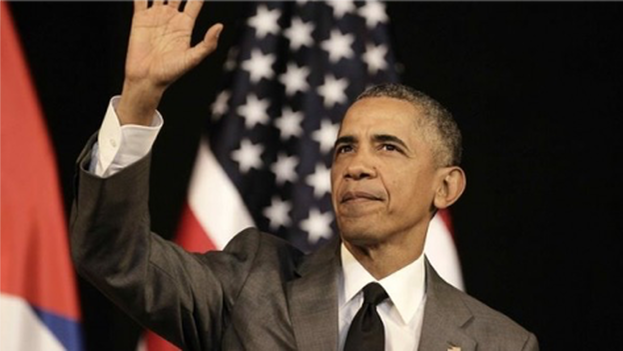
Obama will visit the island March 21-22 on the first trip to Cuba by a sitting US president in 88 years; among the objectives of his agenda is influencing an improvement in human rights.

Cuban Poet Rafael Alcides Denied US Visa As “Possible Emigrant” / 14ymedio

The poet Rafael Alcides. (Regina Coyula / lamalaletra.com)

14ymedio bigger14ymedio, Havana, 2 March 2016 — The US Embassy in Havana denied the poet Rafael Alcides a visa to travel to Miami, this morning, believing he might be intending to emigrate, as reported by his wife, the blogger Regina Coyula. Alcides had been invited by the Vista Foundation, which organized a tribute to him and to the writer Manual Diaz Martinez, living in Spain; both writers were awarded the Gaston Baquero National Independent Literature Prize this last December.

In a very brief interview, the embassy official who met with Alcides classified him as a possible emigrant because he has a son in the United States and, in consequence, denied the visa. continue reading

“Come back in a year,” the official said at the close of the meeting. The poet has declined to comment on his reaction to what occurred.

Now 82, Alcides was born in Bayamo in 1933 and began his literary career at Cyclone magazine, and is considered one of the greatest Cuban poets of the so-called “50’s Generation.” He has published poetry collections such as Mountain Hymn (1961); Gypsy (1962) and his well-known Wooden Leg (1967). In 1983 his poetry collection Thanked Like a Dog was released, but by that time the author already suffered from the institutional silence that had marked decades of his work, due to his openly critical positions with regards to the Cuban government.

In 1993, he withdrew from all editorial collaboration on the island and subsequently resigned from the National Union of Writers and Artists of Cuba (UNEAC) in an open letter. In 2011, he won the Café Breton & Bodegas Olarra of Spanish Prose Prize.

At a meeting of members of the Club of Independent Cuba Writers (CEIC), held in Havana in late January this year, the group’s coordinator, Victor Manuel Dominguez stressed that in “the official exclusion and manipulation of his work” it is recognized that “the censors, the ideological tattletales, and the political commissars who have tried to silence Rafael Alcides… have failed.”

Cuba Declares War On Costume Jewelry Vendors / 14ymedio, Pedro Campos

Police approach an illegal pushcart vendor. (14ymedio)

14ymedio bigger14ymedio, Pedro Campos, Havana, 2 March 2016 — State inspectors supported by groups of police launched an offensive against merolicos – hucksters – who, in different parts of Havana, sell a large array of widely used items missing in the military’s monopoly of hard currency stores formally known as “Hard Currency Collection Stores” (TRDs). The goods sold by the street vendors arrive from the Unites States via charter flights in the luggage of “mules.”

These are items such as pasta, toothpaste, batteries, skin creams, sunglasses, electric showers and spare parts, pens, wall-mounted TVs, nail clippers, eyebrow pencils, facial compacts, deodorant, plastic sandals, wallets, bottles, teapots and a thousand other articles.

A few days ago I was in one of the areas usually frequented by hucksters trying to find some batteries I needed for the TV remote and I asked a girl sitting on the sidewalk what had happened to the costume jewelry vendors who usually crowded around there. She replied laconically, “They declared war on us.” The terminology made me anxious. But what they did was the closest thing to war, according to what she told me; armed inspectors and police arrived and went after the merchandise and the merchants.

On the other hand, rumors are flying about the eventual limitations on luggage in Miami-Havana flights, because Terminal 2, the international terminal in the Cuban capital, is being crushed under the weight of dealing with the luggage that piles up and can’t be processed fast enough.

The state apparatus that manages the airport services responds to the same interests as those who control the military monopoly of the TRDs, and those who oppose the freeing of labor from wage exploitation, be it private or state. Their predominating philosophy is authoritarianism and repression.

Everyone remembers how two years ago the state shut down the sale of clothes and shoes coming from Ecuador, so it is not hard to believe that they intend to restrict the entry of these articles via Miami-Havana, given the expected increase in approved flights from regularly-scheduled airlines.

The state may be using as a pretext for repression, against this kind of informal outdoor work, that the sellers don’t have the proper license to sell these products, or that there are existing regulations against the private sale of manufactured products. But their solution is repression, not dialog. It is a wholesale fabrication of enemies at such a complicated time, when the solution could be very simple: give permission for this type of activity without a great deal of bureaucratic paperwork and change the rules that block such sales.

They are continuing the policies against the self-employed in direct contradiction of the philosophy expressed in the Guidelines of the Sixth Congress of the Communist Party of Cuba (PCC), and meanwhile the old mentality persists – in the interest of monopoly control of the market – that these vendors are enemies of the state. Thus, the bureaucracy pressures workers who want to free themselves from wage exploitation and sees them as obliged to work for the state.

Those actions against individual free labor have other consequences: these small merchants support their families with these activities. Many are young people who have not found work despite their schooling and the loss of those jobs could lead them to seek alternative ways to survive, or survive badly, turning to crime, alcohol, drugs or leaving the country at any cost, the principal cause of the aging of the population that threatens the presence of the human species in the archipelago.

Informal economic activity exists widely in the world, especially in less developed countries, and sometimes occupies up to 30% of the workforce. To place obstacles to or shut down these jobs contributes to an increase in crime and offenses.

But it seems that trying to get the Cuban bureaucracy to understand this is too much to ask.

Cuban Passport Among The Worst In Latin America / 14ymedio

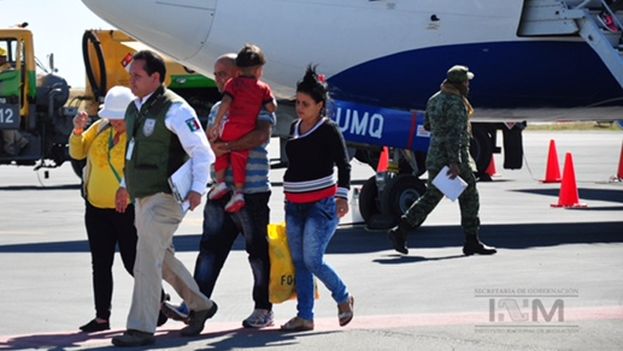
Cuban migrants fill out paperwork on their arrival in Mexico. (INM)

14ymedio bigger14ymedio, 2 March 2016 — Cubans, Haitians and Dominicans are those most affected in the region because of their nationality, as far as travel is concerned. The ranking prepared by the consulting firm Henley & Partners, in collaboration with the International Air Transport Association (IATA), places the three countries at the end of the line in Latin America on the 2015 index of Visa restrictions.

The Cuban passport has benefited in recent years from the inclusion of residents on the island, as of August 2013, among those eligible for a multiple-entry tourist visa for five years to travel to the United States. With this visa stamped on their passport, they can also visit, without applying for a separate visa, countries such as Mexico, Panama, Costa Rica and El Salvador. continue reading

However, it remains the dream of many Cubans to have a foreign passport, and the more than 119,662 Spaniards living in the country, most of them nationalized through Spain’s so-called Law of Grandchildren, prefer to present their EU passport to the immigration officials in the countries to which they travel.

Among the new limitations suffered by the national passport is the requirement of a visa for Cuban citizens to enter Ecuador that went into effect on December 1st of last year, as a result of the migration crisis in Central America, where thousands of Cubans are stranded on their way to the United States.

Countries with better international situations and better relations with other countries benefit in the granting of visas. “The main criteria for issuing visas are security considerations, along with regulatory and economic considerations,” a consultant from Henley & Partners told the BBC.

The best placed country in Latin America right now is Chile, in position number 19 worldwide, as 155 countries do not require a visa from its citizens. Behind Chile are Brazil (21) and Argentina (22). In 2015 Colombia reached an agreement with the European Union allowing its nationals to enter the 26 EU countries without a visa, and so jumped notably higher on the rating.

In the international context, the classification is led by Germany, whose citizens can travel with little paperwork to 177 countries (the maximum number is 218). In last place is Afghanistan (25), preceded by Iraq (30), Pakistan (29) and Somalia (31).

The trend so far is a lowering in the percentage of people who need an entry visa to visit other countries. According to the Tourist Visa Openness Report prepared for the United Nations World Tourism Organization (UNWTO), the figure dropped from 77% in 2008 to 64% in 2013. Despite these data, the refugee crisis in Europe threatens this propensity for liberalization. Some countries of the European Union are calling for it to leave the Schengen Area, which affects the mobility of more than 400 million Europeans, with repercussions that could affect the rest of the countries that have agreements with the EU to not require visas.

Taino Duho / 14ymedio, Reinaldo Escobar

Taino ritual seat known as a "duho". Source: Britishmuseum.org
Taino ritual seat known as a “duho”. Source: Britishmuseum.org

14ymedio, Reinaldo Escobar, Havana, 24 February 2016 — A magnificent book, The History of the World in 100 Objects, published by the British Museum and BBC Radio, includes an article dedicated to the tuho, the Taino ritual seat. It appears in Part XIII under the caption Status Symbols. The Taino were the pre-Columbian indigenous people of Cuba and other Caribbean islands.

The text makes particular reference to an object originating in the Dominican Republic carved from a single piece of dark wood, extremely polished and shiny, representing a supernatural being, half human, continue reading

half animal. It has four legs and functionally is a small chair. The card describes it this way:

“In the front there is a carved creature with a grimace on his face and bulging eyes that seem almost human, with a enormous mouth, big ears and two feet planted on the ground which in turn are the front legs of the chair. From there a wide piece of wood curves up and back, similar in form to that of a wide beavertail, supported from behind on another two legs. This creature is unlike anything that exists on Earth, but one thing is for sure, it is a male, as under this strange hybrid being between its hind legs appear carved male genitals.”

Anthropologists discuss whether there was a belief that these objects were possessed by a certain spirit that had to be rendered respect and admiration. But it is widely documented that cemis, spiritual guides of the aboriginal peoples of the Caribbean, used a duho to perform the cohoba ritual. With the help of inhaled dust and great powers of concentration, they entered the world of communication with the gods. Some scholars have interpreted the duho as, rather than a chair, a horse for travel to other dimensions.

Another important function of these “low benches,” as Don Bartolome de las Casas calls them in his chronicles of the New World, was as a seat for living leaders who were meditating. Every important visitor was accommodated on one of these chairs, an honor that, it hasbeen said, was enjoyed by Christopher Columbus himself.

In the Montane Musueum Collection at the University of Havana there is a duho carved in guayacan wood which was found in the peat on the banks of the Santa Ana River in the town of Santa Fe, west of the capital. This example, which it is prohibited to photograph, has no genitals.

As the Tainos were preliterate, there is no written testimony that tells us whether any cemis mounted on this or another duho foreshadowed the future of the island after the arrival of the European conquerors.

Perhaps now is a good time for someone with the necessary inspiration to sit in or take a ride on this museum piece.

The Guidelines: Prolonging the Scam / 14ymedio, Miriam Celaya

President Raul Castro at the inauguration of the Sixth Congress of the Communist Party of Cuba.

14ymedio, Miriam Celaya, Havana, 1 March 2016 — A few weeks before the much heralded 7th Congress of the Communist Party of Cuba (PCC), and half a decade since the Guidelines for the Economic and Social Policy of the Party and the Revolution were adopted on 18 April 2011, only 21 % of the 313 Guidelines have been “implemented,” while 77% “are in the process” of implementation.

These figures were announced during the 13th Plenum of the Central Committee of the PCC (Granma, 15 January 2016, front page), within the framework of the “assessment of the documents to be discussed” at the Seventh Congress, and the information does not specify which Guidelines are now in effect, nor in which sphere of the country’s life one can see the results, nor which are “in process,” nor how much time it will take for the complete consummation of this theoretical-spiritual guide destined “to guarantee the continuity and irreversibility of Socialism, continue reading

the economic development of the country and the living standards of the population, combined with the necessary formation of the ethical and political values of our citizens,” quoting verbatim from the text of the Resolution approved by the 6th Party Congress.

Five years later the economic development of this country continues to remain an unattainable aspiration, people’s standard of living is declining every day, and the only thing that is irreversible is the poverty and loss of values in society. Few Cubans have any idea of the content of the Guidelines and virtually no one is interested in them.

While those 313 points were, in their time, the closest thing to a government program, ordinary Cubans have their own individual agendas, and barely two specific guidelines – not necessarily mutually exclusive – have been complied with, without the need of any guidance from the PCC and or the need to contain them in the official text: survive and migrate.

However, despite the tedium provoked by the comically hackneyed syntax of the official document, it is critical to read and analyze it if you want to follow with some degree of approximation the erratic voyage of this shipwrecked vessel, still nicknamed the Cuban Revolution.

In fact, the Guidelines, which the general-president presented at the time as the recipe for success of the much vaunted updating of the model, are currently the written acknowledgement of the irreversibility of the crisis of Castro-style socialism.

It is sufficient to review subheadings I and II relating to the domestic economy – Model Economic Management (Guidelines 1 to 37), and Macroeconomic Policies (Guidelines 38-71), respectively – to confirm the inability to achieve progress based on the renewal of the obsolete “model” and the now dead-in-the-water principle of centralized state planning, that turns its back on the natural mechanisms of the market.

Meanwhile, following a logical principal, one might assume that the Guidelines had been structured following a priority order, taking into account first the issues most urgently in need of solutions to begin to overcome the current problems of the Cuban reality. That is, it would be rational to assume that the first Guidelines to be stated should also be the first to be implemented.

But in practice, this is not the case. Strictly speaking, it should be noted that other problems of the utmost urgency have not been solved, and appear to be enunciated at the bottom of the list. For example, transport policy is formulated in sub-heading 10 (Guidelines 269-286), while the 11th and penultimate subheading contains the thorny and critical issue of housing (Guidelines 292 to 299).

We could talk until the end of time about the 313 Guidelines and their demonstrated ineffectiveness, although no Cuban with a minimum of common sense placed the slightest hope in that bulging declaration of government intentions. Nor could the general-president have been so naïve as to believe in his own scam.

In reality, the Guidelines have never ceased to be the script of a government pantomime to entertain public opinion and gain time. What’s more, one can anticipate with zero margin of error that, given their irrelevance, the upcoming 7th Congress of the Cuban Communist Party will not be given a detailed report or a balance sheet regarding the completion of that insignificant (and doubtful) 21% of the Guidelines applied to date.

Today, when the cost of living continues its unstoppable ascent, making the differences between Cubans’ purchasing power and the price of food and basic necessities irreconcilable, and while government pandering intensifies as it sells to the highest foreign bidder – provided they pay in cold hard cash – that beautiful but poor prostitute that is Cuba, one must ask the general-president when he will implement at least Guideline 55, the one that will finally unify into a single currency the two false ones that divide Cubans into two well-defined groups: those who have and can, and those who don’t. A distortion whose only present purpose is to mask the colossal inflation that exists on the island for which there is no solution proposed in any of the 313 Guidelines.

The Hijacking Of An Identity / 14ymedio, Reinaldo Escobar

The Palace of Conventions during the Sixth Congress of the Communist Party of Cuba. (EFE)

14ymedio bigger14ymedio, Reinaldo Escobar, Havana, 29 February 2016 — To make us believe that the thousand delegates to the Seventh Congress of the Communist Party of Cuba represent the places they come from, the newspaper Granma published today a kind of editorial, under the title “The face of a country in the Party Congress.”

With statistical data on the age and sex of those chosen, the high number of university graduates, the diversity of occupations and the proportion in which all regions of the country are represented, the report originating in the Department of Organization and Policy of the Cadres of the Party Central Committee, aims to convince readers that these 1,000 are something like a biopsy of 11 million. continue reading

From what country, then, are the more than 10,000 who in recent months have invaded Central America to find their way to the United States? What is the nationality of the more than one and a half million voters who chose to abstain or annul their ballots in the last elections for the People’s Power Municipal Assemblies? What is the appropriate adjective for those on this island who are criminals, committing social “indisciplines,” “diverting resources” (i.e. stealing from their workplaces), receiving merchandise of doubtful provenance? Are those millions who have settled in exile not Cubans? Are the thousands who are active in dozens of opposition organizations not Cubans? Are the hundreds who go out into the streets to protest and are harassed, beaten or arrested not Cubans?

The face of this country does not seem to resemble in the least the profile that is encompassed in the dilemmas and confusions that today afflict the authentic Communist militancy, nor the mask of unwavering intransigence with which they want to cover up the deep frustration and opportunism of those who applaud from commitment.

That the Communists are invited to participate in a national debate is a reasonable and fair proposal, but to pretend that decisions that affect the entire nation for the next five years are taken in a conclave where only they participate, is little more than an aberration.

The face of Cuba is more plural than the Party faithful.

Oswaldo Payá Remembered On The Anniversary Of His Birth / 14ymedio

Rosa María Payá in the parish El Salvador del Mundo in the Havana neighborhood of Cerro. (Twitter)
Rosa María Payá in the parish El Salvador del Mundo in the Havana neighborhood of Cerro. The photos are of Harold Cepero and Rosa María’s father Oswaldo Payá. (Twitter)

14ymedio bigger14ymedio, Havana, 29 February 2016 – A Mass in memory of the 64th anniversary of Oswaldo Payá’s birth was held Monday afternoon in the parish of El Salvador del Mundo in the Havana neighborhood of Cerro. Celebrating the Mass was the Auxiliary Bishop of Havana, Monsignor Alfredo Petit Vergel.

The ceremony was attended by the daughter of the deceased opponent of the Castro regime, Rosa María Payá, who is now the president of the Latin American Network of Youth for Democracy and who traveled to the island for the occasion. She was accompanied by numerous friends and activists from Cuba’s independent civil society, and the Mexican Congresswoman Cecilia Romero. continue reading

Rosa María Payá told 14ymedio that her presence on the island is also intended to promote the initiative of the citizen platform, Cuba Decides, demanding a plebiscite so that “Cuban citizens will have the opportunity to choose their leaders, through free and multi-party elections.”

This is the second trip that Rosa María Payá has made to Cuba after settling in Miami with her family in 2013.

After the liturgy Rosa María Payá addressed the attendees and read a text of Oswaldo Payá’s where he said, “God puts you in a place and at a time with a neighbor who is around you. Who is my neighbor? It is not an abstract being: my neighbor is the Cuba of today, here and now.”

Oswaldo Payá, founding leader of the Christian Liberation Movement died on 22 July 2012, along with the young activist Harold Cepero, on the road leading to the city of Bayamo. The incident has been described by the family as a deliberate crime organized by the political police, but the authorities have refused to review the case and maintain the version of it having been a car accident.


Congresswoman Ileana Ros-Lehtinen’s Questions to John Kerry / 14ymedio, Pedro Campos

The Cuban-American Congresswoman Ileana Ros-Lehtinen during a hearing. (CC)

14ymedio bigger14ymedio, Pedro Campos, Havana, 29 February 2016 – The Miami press reports that Cuban-born US Congresswoman Ileana Ros-Lehtinen asked Secretary of State John Kerry, during a Congressional hearing, what progress the Cuban government has made, given the many concessions made by the United States, and how does he justify the mass exodus of Cubans that has increased some 80%. At the same time, she requested the extradition of those responsible for the downing of the Brothers to the Rescue planes, and reminded him that since the announcement of rapprochement, there have been more than 8,000 arrests on the island.

If it were simply a political confrontation between Republicans and Democrats about some aspect of American foreign policy that had no implications for world peace, I would refrain from commenting, but the debate significantly affects the interests of the Cuban people, who Congresswoman Ros-Lehtinen has always prided herself on representing. continue reading

Her questions to the Secretary of State are evidence of what everyone knows: she does not share the essence, the basis of the new policy of the Obama administration and, to try to discredit it, presents its measures as “concessions” to the Cuban government that has not done nothing to deserve them.

This is the great original error on which she bases her questions, because the new policy is not conceived as a give and take, but rather as a way to eliminate in the medium and long term the barriers that prevent the Cuban people from exercising their sovereignty for themselves, without foreign interference.

I have always believed that the policy of blockades and pressure against the Cuban government by Unites States affected the Cuban people first and not their rulers, and managed to put the ruling bureaucracy in the role of victims; in short, it has been used to try to justify disastrous economic, repressive and undemocratic policies and, ultimately, has affected the needs of the people themselves, because the bureaucracy has never lacked for anything.

Some defend this mess saying that once the Cuban people begin to starve they will rise up against the government. There is nothing more to say about that.

I am among those who are happy with the change of US policy toward Cuba, since its implementation will make it clear that the rulers have been the perpetrators who have sacrificed the Cuban people for their state-centric policies – supposedly socialist – and it will do away with all these justifications; there will be no way to continue imposing the current control over the economy, politics, the press, culture, education, public health, or of preventing the Cuban people from taking into their own hands the sovereignty that is theirs by right.

There is no defense of the socialism-that-never-was, primarily responsible for the current national disaster, without recognizing that the policy of the embargo-blockade has been its fundamental source of international support. Remove this girder and watch it collapse. But it seems that the Cuban-born congresswoman, in her attempts to discredit Obama the Democrat, does not adequately evaluate his policy toward Cuba.

This shift is intended to take effect in the medium and long term, passing from acceptance of the current Cuban government and having as its principal basis something that those who imposed and maintained the blockade-embargo never intended: it is we Cubans ourselves who have to fix this mess and not the policies of some foreign power. Interference only serves to encourage the Cuban people’s uniting behind the most vulgar nationalism/anti-imperialism.

The congresswoman’s questions are based on false premises. If the idea is to question the policy, go to the bases of it and not to some supposed effects that no one is proposing over the short term.

Perhaps she herself and the Cuban-American caucus in the United States Congress, which has opposed President Obama’s call to end the blockade-embargo, could provide some of the answers to these questions. Meanwhile, the blockade-embargo continues to be an indirect support to economic and political centralization. It prevents the empowerment of Cubans and stimulates mass exodus and arrests, while proposals to end the Cuban Adjustment Act support and encourage internal groups who are for confrontation and not for dialog.

Republicans have every right to try to defeat the Democrats, but they do not have the right to do so at the expense of the Cuban people.

A ‘Che’ for Foreigners / 14ymedio

A tourist in Havana wearing a shirt with the face of Che Guevara, while a Cuban exhibits another with Adidas logo. (14ymedio)

14ymedio bigger14ymedio, Havana, 29 February 2016 — “If you see someone with a Che T-shirt that person is a foreigner; but if they are wearing a United States flag, you can be sure it is a Cuban,” quipped an illegal tourist guide, while showing his customers the numerous trinkets with the Argentine guerrilla’s face as one more commodity. For less than 20 convertible pesos, a tourist can get the black beret and some other souvenir with the blue bars and white star to complete his “revolutionary costume.”

However, young people in Cuba seem interested in following other fashions, far from the ideological kitsch. The brand names of the capitalist world are here to stay and it doesn’t matter if the clothes are original or poor quality copies, the priority for many is the size of the logo that attests to their manufacture outside the national borders.

It is not difficult to find images like the one above, where you can see a foreigner sporting a T-shirt with the famous Korda photo and a short distance away, a young Cuban sporting one with the Adidas logo. The symbols of foreign industry will win the battle of popularity over those with patriotic and political symbolism. The latter is now pure merchandise to sell to tourists in products that cater to other than consumer appetites.

Four Cuban Exiles Accused of Terrorism in 2014 Are Sentenced for “Rebellion” / 14ymedio

Raibel Pacheco, one of the four convicted. (Courtesy of his family)

14ymedio bigger14ymedio, 29 February 2016 — José Ortega Amador, Obdulio Rodríguez González, Raibel Pacheco Santos and Félix Monzón Álvarez, accused of the crime of rebellion, were sentenced Wednesday to prison terms of between 10 and 15 years. Arrested in May 2014, the four men who were living in Miami before arriving on the island, were tried by a court in Havana, as reported to this newspaper by family members of the accused.

The case has been the subject of a great deal of talk during the 22 months between the arrest and trial of the four men. At the time, the Miami community and a large part of the Cuban people received the official information with skepticism and the news item quickly disappeared from the national media. continue reading

On 14 May 2014, the official newspaper Granma announced that the four citizens of Cuban origin “were arrested while planning to undertake terrorists actions in the national territory,” and were accused of “fomenting rebellion and attacking military units.” Those implicated had traveled to the island from “mid 2013” to “study and plan their execution,” according to the article.

However, it was only this week that the four men were brought to court. Although initially the Cuban authorities had suggested that they would be prosecuted for terrorism, the prosecution finally focused on an act of rebellion and “crimes against the internal security of the state.”

At the hearing, Pacheco acknowledged that he had come to the island to “stir up the people against the tyranny,” according to witnesses at the scene, but also said that he lacked the resources to do so. During the trial no evidence was presented of the possession of weapons, maps, or military sketches. Nor was there any talk of contacts with organizations of the internal opposition.

The defense lawyers brandished the concept of “impossible crime,” contained in Chapter 5 of the Cuban Penal Code in which it is established that if “the offense clearly could not have been committed, the court may freely mitigate punishment” and even exempt the accused “in a case of apparent absence of dangerousness.”

Pacheco Santos was sentenced to 15 years imprisonment, while the others involved were sentenced to 10 years in prison. A family source said “this is a ploy to trade them in negotiations with the United States before Obama comes.”

Granma, the official organ of the Communist Party explained that during their interrogation the accused had declared themselves to be “under the direction of the terrorists Santiago Álvarez Fernández Magriñá, Osvaldo Mitat and Manuel Alzugaray, who live in Miami and have close ties to the terrorist Luis Posada Carriles.”

In 2009, Pacheco, 33, registered a company in Florida under the name of Cuban Liberation Force Inc., and opened a digital page where the only content was a text that said the entity had created a “request for members of the Armed Forces to gather within Cuba,” and that their reason for being was “freedom and the overthrow of the regime to restore a system of rights.”

In Miami, Pacheco worked in a carpentry shop during the day and took economics classes at night at Florida International University, according to his family. His wife, Adriana Torres, a nurse and also a Cuban resident in Florida, has been able to visit him in prison and is currently three months pregnant.

The father of the accused, Segundo Manuel Pacheco Toledo, was rector of the University of Holguin for 11 years and a deputy in the National Assembly of People’s Power. Pacheco Toledano worked at the Embassy of Cuba in Mexico, from there he fled and crossed the US border in 2012. The family considers the sentence against his son to be government retaliation for the escape of the former official.

After the flight of his father, Pacheco stopped traveling to Cuba regularly. Before his arrest, he had flown to the island on 22 April 2009 and initially stated that the reason was to visit his paternal grandfather who was to undergo surgery. His mother, Nieves Santos Falcón, a prominent biologist who works at the School of Medicine at the University of Miami, has maintained the innocence of her son over the years.

In May 2014, and already in the midst of secret negotiations that would give rise to the restoration of relations between Cuba and the United States, delegations from both countries held a meeting on the arrest of the four men. “The Cubans provided some information about the allegations that we are now reviewing,” the State Department in a statement.

The closeness between the trial held this week and upcoming visit of United States President Barack Obama to Cuba nurtures the hope of the defendants and their families. “This is to fill the backpack of requests to US Secretary of State John Kerry,” suggested one those attending the trial. “I hope that he can see the birth of his child and return to his life in Miami,” added this relative of Pacheco, for whom “this has been a nightmare and someday the details will be known.”

“I do not want to keep doing away with little animals” / 14ymedio, Yosmany Mayeta Labrada

Sterilization campaign. (14ymedio)

14ymedio bigger14ymedio, Yosmany Mayeta Labrada, 25 February 2016 – “The latest puppies I drowned in a bucket at birth,” said the owner of a female dog about to be operated on this Wednesday as a part of the sterilization campaign in Old Havana. Similar stories were heard in the line, long but well-organized, of those waiting to get an appointment for the free surgeries.

As of last Monday, many of those interested gathered at the site accompanied by their pets, that ranged from pure-bred animals to mutts without pedigree. “I don’t want to keep doing away with the little animals,” said another lady who lives very near to the makeshift clinic on Oficio Street; her dog had had three litters.

There are thousands of abandoned dogs and cats in the country, and no programs to protect or adopt pets. In an attempt to alleviate this situation, there are periodic initiatives sponsored by the Office of the City Historian and a Canadian group, the Spanky Project. continue reading

María Gloria Vidal, president of the Society for Animal Welfare, lamented a few months ago in the official press that the Cuban population “suffers from certain culture and level of responsibility on the keeping of animals,” so when economic hardships affect a family “the solution is to get rid of them. Most of the time are thrown into the street.”

Since the late eighties, several groups have tried to promote Animal Welfare and Protection Act, without success. In 2000 a meeting of on the control of the dog population sponsored by the World Association of Animal Protection was held, but so far neither the Institute of Hygiene and Epidemiology, nor the Ministry of Public Health have implemented the agreements reached at the event.

“Here is is difficult to find food for people, imagine also keeping an animal,” says Flora, a retired teacher who took her dachshund to get the surgery because she fears “having to share” her limited resources “with more animals.” Flora says she has never abandoned a pet, “I would die before I’d through an innocent into the street.”

Appointments for the sterilization operations ran out early in the last three days. Susana Hurlich, a Canadian leading the project, explained that the plan is to take care of 40 dogs and 40 cats every day until 26 February, and they have also registered some groups of animals picked up in hopes of adoption.

Hulrich explained that “given the demand for the campaign, we are now starting a new list” and they have taken steps to prepare “a space in Quinta de los Molinos” although there is still no date for its opening.

Initiatives like this should be “repeated more often” said Damian, a young man waiting his turn with a male Boxer. “We need to teach children from an early age to love animals, in order to avoid what we are seeing with abuse and abandonment,” he added.

Yanelis Nunez, a resident in the 10 de Octubre municipality, looks at the sterilization campaign with relief. “I have two cats and one has given birth several times. I think it’s time to tie it off,” she said. Nunez said that for these animals the situation for abused and abandoned animals “is worse,” because “there is much less sensitivity to it than with dogs.”

An investigation by Aniplant revealed that in Cuba about 1,500 convertible pesos a year is spent on sterilization for every 5,000 dogs, while the slaughter of these animals caught in the street uses more than 10,000 liters of gasoline a year, just to transport them. They are taken to places where overcrowding and the cruelty of the practice of euthanasia horrifies pet lovers.

The Spanky Project proposal has emerged to improve this situation. The association is led by the Canadian Terry Shewchuck, who was vacationing in Cuba several years ago and found himself alarmed as the absence of a system to care for animals. For over a decade, his group has provided clinical care and sterilization services to thousands of pets.

This coming Saturday the campaign will offer vaccinations and deworming in the Laika clinic, also in Old Havana. A moment that will again draw to the scene dozens of people who share a common feeling: a love for animals.

*The ambulatory clinic with instruments donated by the Canadian side has been opened in Casa Calderson on Oficio Street, between Santa Clara and Sol, Old Havana. Due to its limited capacity it invites interested pet owners to book an appointment by calling +53 78609463.

“I’m Afraid That Ecuador Will Deport Me To Cuba” / 14ymedio, Mario Penton

Sigfredo Ochoa values the freedom he has found in Ecuador but feels rejected in the Andean country. (Courtesy of the interviewee)

14ymedio bigger14ymedio, Mario Penton, Miami, 26 February 2016 — Sigfredo Ochoa is 40 years old. Six months ago he was one more “Palestinian” in Havana, a Cuban from Holguin living “illegally” in the capital of his own country, according to the authorities – a status that earned him that strange moniker among native Havanans. He worked as an investigator, regulator and auditor in the Provincial Trade Company, a state entity that, among other things, manages the dwindling quotas distributed through the ration book.

“The idea of coming to Ecuador arose mainly because of the state of siege I experienced because of my homosexuality. At work it was impossible not to be discriminated against, and on top of that there is the economic situation we Cubans experience. My salary wasn’t enough to live on; if I ate I couldn’t clothe myself, if I clothed myself I couldn’t eat; a question as existential as Shakespeare’s ‘to be or not to be,’ but in a tropical version. continue reading

Ochoa noted that it wasn’t easy to get the money to leave the island. His parents had to sell the old family house and buy a small apartment in order to cover the cost of the trip. The passport cost him five months salary, and adding the cost of the ticket and the first months’ living expenses, it wiped out the few dollars he had.

“My mother has Alzheimer’s disease and has already been operated on for colon cancer. My father is a retired old man. Together their pensions don’t total 30 CUC a month (under $30), tell me, who can live in Cuba on that money? I had no option, I had to sacrifice myself for them… and for me.”

Sigfredo’s expectation was, like many Cubans who set off for Ecuador, that he would be able to enter the labor market in the Andean country, where the minimum salary is 366 dollars a month, more than ten times that in Cuba, although the cost of living is higher in Ecuador.

“I thought getting a job would let me survive and be able to help my parents, but everything here has wiped me out. These people do not want to give us work and they don’t want us in their country. We go out looking for work and they simply tell us they don’t want Cubans. In a month we have no money left to pay the rent and we have to sleep in the street. I don’t know what I’m going to do,” he laments.

On entering Ecuador with a tourist visa, Cubans have 90 days to try to legalize their status in the country. For several years that have done it through a professional visa, which in the interest of the nation’s human resources, allows professionals from the island to qualify for the title previously legalized by the Cuban Foreign Ministry and certified at the Ecuadorian embassy in Havana, and so to stay in Ecuador and subsequently find work in areas such as healthcare and education.

Cuban doctors and professionals took advantage of the opportunity to come en masse, which forced the Cuban government to come to an agreement with Ecuador to suspend this right to university graduates coming from the island. Over time, other alternatives to legalization were also closed, such as the temporary visa, valid for six months, know as the 12-IX and the commercial visa.

“The only option now to legalize myself is to marry an Ecuadorian and have children. It’s the only possibility left to us Cubans. Ecuadorians are asking between 3,000 and 4,000 dollars for a marriage of convenience that enables us the privileges of a spouse,” says Sigfredo.

Sigfredo is grateful to Ecuador as the country where he discovered freedom. “What struck me most when I get here is that you can speak out and say what you really believe without anyone controlling it.” However, just the fact of being Cuba, and in addition being undocumented, has led to a lot of discrimination.

“One of the many times I’ve sought work a restaurant they wouldn’t even let me speak. ‘There is no work for Cubans here. You and dogs are the same thing,’ they said. They kicked me out with these words, ‘Get out of here, you people come to this country to steal our jobs.’ That hurt me so much because I didn’t want to take anyone’s job, I simply had the idea of helping my family and getting out of the nightmare that is life in Cuba,” he lamented.

Employers in Ecuador often take advantage of these undocumented migrants as cheap or slave labor. “Once I worked in a bar for a week. I did the cleaning and served as a barman for 20 dollars a day. I never say a single cent. When I asked for my pay the owner said he would call the police. We are completely defenseless.”

Many Cubans are living in the center of Quito. “There are many who are undocumented,” comments Ochoa. “Recently there was a raid and they took several. I live with fear, I try to go out only after sunset or very early in the morning, in the hours when the police usually aren’t in the streets because I’m afraid they will deport me to Cuba.”

For Sigfredo, in Ecuador, as in Cuba, there is nothing to hope for. He does not believe he can obtain residency and, even though he has tried to join other groups departing for the United States, the extremely high cost – around 6,000 dollars – and the dangers of the jungle have stopped him. Now he sees a hope.

A group of Cubans who share his fate have decided to give a voice to those migrants who are surviving in the streets of Quito. He was one of those who went to the demonstration at English Park. “It is the only hope we have left, if they don’t want us here, at least we can go where we can grow as people and work honorably. That’s all we are asking for.”