Tania Bruguera Commits To Civic Education Of Cubans / 14ymedio, Mario Penton

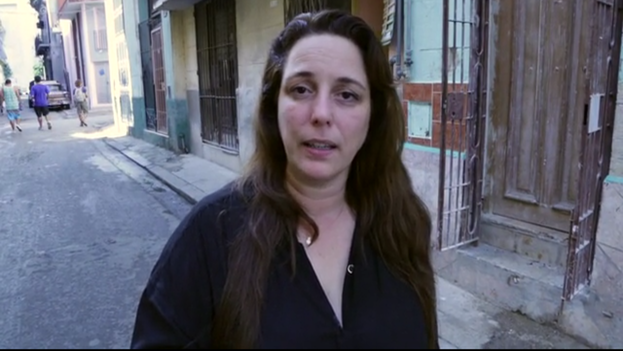
Tania Bruguera in the fundraising video for the Hanna Arendt International Institute of Artivism

Kickstarter campaign will fund “civic and artistic alternative to the emphasis in Cuba on money as the unique salvation to the problems of the country”

14ymedio bigger14ymedio, Mario Penton, Miami, 1 April 2016 — When in late 2014 the Cuban artist Tania Bruguera attempted to stage her performance of Tatlin’s Whisper in the Plaza of the Revolution, she felt firsthand the repression and censorship to which all voices who dissent from the government’s cultural guidelines are subjected.

Bruguera, who defines herself as an artivist, has created the Hannah Arendt International Institute of Artivism (INSTAR), with a site in Havana that, in the words of its founder, “will be a civic and artistic alternative to the emphasis in Cuba right now on economic projects, and with money as the unique salvation to the problems of the country.”

[Click here to play video]

The objective of the new campaign is the civic literacy of the citizenry. This is a project that seeks “to work with Cubans, from housewives and professionals to activists and students, so that they can participate in or initiate change in their own communities.” Her inspiration has been the thinking of the German philosopher Hannah Arendt, author of the classic The Origins of Totalitarianism. continue reading

“We are at a moment when the Cuban government is not concerned about preserving the ethic principles and social justice that we seek to defend because there is no national project,” commented the artivist to 14ymedio.

In her opinion, the Cuban government is currently engaged in consolidating their personal economic power, with which they will also guarantee their permanence in political power. Cuba is caught between a civic and an ideological crisis because there is no long-term strategic vision for the country.

According to Bruguera her motivations for creating this campaign are based on the observation of Cuban reality. “We are accepting as normal corruption on the part of institutions and the citizenry. There is a calculated government effort to ensure that citizens do not feel empowered, because they are afraid,” she says.

The institute seeks to place Cuba’s future in the hands of Cubans, affirming that asking for their rights cannot wait until everything is decided and irreversible. “The time to intervene in Cuba’s future is now.”

The use of crowdfunding as a financing mechanism is an important element of the campaign with regards to money, which “is a very sensitive topic for Cuban projects.” This method, according to Bruguera, is democratic, because it forces the project to serve the citizenry and is a real commitment if one truly desires change. In addition, the artist added, INSTAR will be transparent with its accounting, showing where its financing comes from and where it goes, something it is hoped will spread to other civil society groups and to the government “as a part of their own working strategies.”

With seven days to go in the campaign, it has already exceeded its goal of $100,000 from almost 700 donations. The money will be used to purchase the equipment needed to carry out the project in Cuba, as well as to pay artists and fund the necessary logistics.

The citizen education workshops will be developed based on the demands of the participants, who the organization hopes will come from the entire political, social and cultural spectrum of the nation, under “the principles of transparency, respect and equality that govern INSTAR.”

The artivist summarizes the strategy of the institute in three actions: “Longing, Thinking and Acting. We want to convert ideas into civic action.” The desires and complaints of the participants will lead to the discussion of existing alternatives, presented by national and foreign guests, and the most realistic way of implementing them. Finally they will be put into action, “mobilizing and visualizing them with the creativity of the activists and artivists.”

Cuban State Security has begun pressuring those linked to the project. The permits to finished preparing the site that will house the institute took eight months to acquire, and the project manager charged with completing the construction asked them not to call him any more because State Security had “been to see” him. “We know we will be under a great deal of pressure because this project signifies a peaceful solution and achieving a civic education,” comments Bruguera.

Despite government barriers, Bruguera isn’t considering wavering in her intent. “Art committed to social activism is the path we have chosen for INSTAR as a relevant institution in the conquest of Cubans’ civil rights and for its direct impact on everyday life,” she concludes.
The Hero / 14ymedio, Jose Gabriel Barrenechea

14ymedio, José Gabriel Barrenechea, Santa Clara, 31 March 2016 — On March 26, in my village of Encrucijada, Rafael Rodriguez Gonzalez died, Rafelito as all of us whom he honored with his friendship used to call him. He followed his wife, Caridad, who died at the end of last year, and to whom he was married for more than 60 years. They survived in their old age thanks to the help of their children and a small business selling sweet treats and candy, the profits of which paid for their only nonagenarian luxury, coffee.

Very few men dare to stand up to that terrifying beast, the masses, when it rears up in fear in response to the black arts of the hallucinators and rogues. Rafaelito was one of those who did. One of those anonymous heroes who, at times, disenchantment makes us believe only exist in fiction, but there they are, at our side, behind the door, around the corner or with us on the bus, and to be aware of them we only need to not let our senses atrophy. continue reading

It happened in April or May of 1980. The teacher Delfa, in love, decided to leave the country to follow her husband, trying to escape the usual pogrom. Those were days of infamy, when the power of hatred fed the base instincts of their followers, or those who simply craved some entertainment. A group of lunatics was running up and down the block after the woman who had taught them their ABCs. On the corner Lieutenant Talavera and Corporal Habichuela laughed about it and protected them.

All doors were closed before the passing of the woman and the horde. Until suddenly, unusually agile at nearly 60, Rafaelito appeared in the middle of the public torture session, grabbed the woman’s arm and pulled her into the house. Surprised at the response, the horde stoned the house and tried to force the door. On the corner, Talavera continued to spit invective at the “piece of shit worm,” and if he didn’t knock down the door it was because of strict orders he’d been given not to intervene in any way, unless the Revolutionaries were attacked.

Worse was yet to come for Rafaelito. After that, he and his family were social outcasts. By direct guidance from the First Secretary of the Communist Party in the city, according to what the secretary himself told me many years later, the Committee for the Defense of the Revolution (CDR) in plenary sessions focused on repeating nearly detail by detail the harassment experienced by the Batiste family in the novel La Barraca by Vicente Blasco Ibanez.

It got to such lows as forcing the wife of the eldest son to either divorce her husband or resign from the Young Communist League. She chose, something not so easy to do then, to leave such an unworthy organization. Her husband, a teacher, lost his job and most of the ‘80s passed before he got another. As for Rafaelito, pushing 60, he retired almost immediately with a miserable pension.

Rafaelito and Caridad could have left, but they never did. They both loved the land where they had been born too much and they remained happy even in the midst of hatred, poverty and cowardice. “It wasn’t me who had to go,” he told me from time to time.

I remember Rafelito and Caridad, now almost deaf, sitting in their living room while they sent some greeting to my parents and some other errand, “tell Joseito (or Zoilita) to send us a little coffee.” Monuments to human greatness, for whom the weight of the years never managed to erase the marble or bronze of their skin and the shine in their eyes. Heroes should not remain anonymous, and now that they have gone together, if they are in some other place, it is where good people go.

Hopefully someday we can go there to greet them.

The Offended Swede / 14ymedio Reinaldo Escobar

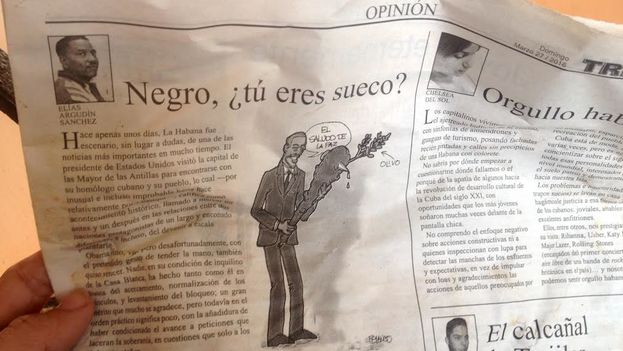
Page of the Havana Tribune with the article ‘Negro, are you Swedish?' (14ymedio)
Page of the Havana Tribune with the article ‘Negro, are you Swedish?’ (14ymedio)

14ymedio bigger14ymedio, Reinaldo Escobar, 31 March 2016 — The poet and literary critic Victor Fowler Calzada published in Sandra Abd’Allah-Alvarez Ramírez’s blog, “I had be to a Black Cuban Woman,” a protest and at the same time a call to solidarity in response to the publication of an opinion column titled, “Negro, are you Swedish,” that criticizes President Obama’s behavior during his visit to Cuba.

The article in question appeared in the printed version on Monday and was inaccessible in the online edition until this Wednesday, when the author himself published an apology. Victor Fowler’s indignation was justified not only because his ID card has the capital letter “N” to denote the color of his skin, but also because even if he were blond with blue eyes he would feel indignant at what he clearly classifies as a racist attack. continue reading

But if columnist Elias Argudín of the Havana weekly (who shares with Fowler the letter N on his ID) was just trying to make a bad joke when he said “There is no doubt, Obama overdid it. I can not help but ask – in the style of Virulo, a Cuban comedian and singer/songwriter – “But Negro, are you Swedish?”

Immediately following he does something which in my judgment is much worse, when he says, very seriously, “We were very courteous, including allowing [Obama] to speak alone (and at his ease) with the enemies in his own house,” a reference to Obama’s meeting with members of Cuba’s independent civil society at the US Embassy.

Anyone who does not like the adjective “black” to identify an African-American should also feel the stigma of “enemy” to refer to those who think differently from those who govern us, and not because among the thirteen Cubans who met with the US president there were three dignified representatives of dark-skinned people, but because, to paraphrase an argument from Fowler himself, we would have to say that along with racial differences, we should not let the some political offense go by without confronting it.

Victor Fowler can count on the solidarity of those thirteen Cubans, including those who are white or mixed-race, because the issue of racial discrimination is present in all the agendas of independent civil society. It seems much more serious that discrimination on political grounds enjoys public acceptance in our society and is a source of pride for those who disguise their ideological intolerance as revolutionary intransigence.

Jumping on the Google Bandwagon in Cuba / 14ymedio, Luz Escobar

Google’s Organic Romerillo Museum in Havana (Luz Escobar/14ymedio)

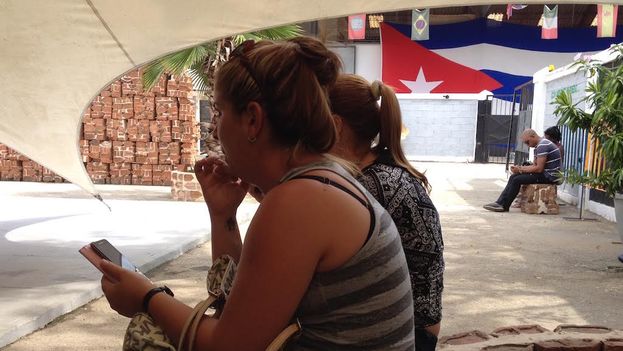
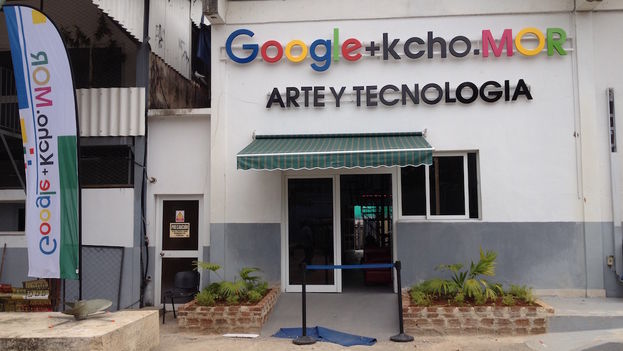
14ymedio bigger14ymedio, Luz Escobar, Havana, 31 March 2016 – “Is Google working yet?” the young man asked on Tuesday at the Organic Romerillo Museum (MOR). Outside the cultural center managed by the artist Alexis Leyva, known as Kcho, dozens of people gathered, excited about the launch of web browsing room, However, the place hasn’t opened its doors to the public and the employees respond evasively about the opening date.

The project, under the name of Google+Kcho.Mor, was announced during the US president’s visit to the island, and has been the subject of several TV reports and articles in the official press. Its services will join a free wireless network through which the artist shares the connection he contracts with the state Telecommunications Company (ETECSA). continue reading

MOR is abuzz these days with people coming and going. Some are workers who are putting the final touches on the “technology center,” which the first internaut has not yet been able to access. Closed and surrounded by mystery, the browsing room is the center of rumors and speculation.

“When it’s working there will be priority for students who come through their schools,” explained a worker in response to the insistent questions of several frustrated users. Among them were two teenagers who had crossed the city from Cojimar for “some free internet hours.”

The new location has been described by the press as a site with public computers and a connection speed 70 times faster than that offered in the WiFi zones provided by the state monopoly ETECSA. A luxury in a nation where the broadband penetration rate does not exceed 1%.

With the collaboration of the US software giant Google, Kcho is becoming the first Cuban to reach an agreement of this kind and the only non-state internet provider, which he has achieved because of his ideological fidelity to the government and his strong ties to the authorities.

Users attempting to connect to the ‘Kcho’ shared WiFi network. (Luz Escobar/14ymedio)

Evelio, a regular user of the Kcho WiFi zone, complained Tuesday that the new service is still not working. “They already had the opening with great fanfare,” and “even the TV reporters came here that day but as far as I know the only ones allowed in so far are the already scheduled delegations,” he says with annoyance.

The young man, who lives near the studio, explains that he comes “at five in the morning to be able to download movies and videos,” because of the congestion on the network that develops as the day goes on and there is a high influx of users. “At that hour, it works like a cannon,” he says, showing on his phone the titles of movies such as Game of Thrones and House of Cards, that he downloaded the previous morning.

Evelio also lends a hand to those who want to open an email account or look at the US Embassy web page to check on the status of a visa. “If someone wants to give me something for a little help, I accept it,” he lets drop, smiling.

The young man doesn’t have many illusions about the new premises which, according to the official media, will have the appearance of an internet café with 20 Chromebook laptops that work off direct connections to the cloud. A new navigation experience for most Cubans, accustomed to slow connections and using the Windows operating system.

“There is so much need for the internet that this can’t cope,” says Evelio, a few yards from the newly painted ship where Cubans expect that Google’s new Havana heart will soon be beating.

Lussón Ousted from Cuban Council of Ministers / 14ymedio, EFE

14ymedio biggerEFE/14ymedio, 31 March 2016 — General of the Armed Forces of Cuba (FAR) Antonio Enrique Lussón, 86, has been dismissed as a vice president of the Council of Ministers, according to a note published in the Official Gazette on Thursday.

The note, dated February 23, indicates that the Council of State of Cuba, the highest authority of the executive, agreed to “release” Lussón from the position he had held since 2010, and “that he will that will be assigned other duties.”

Born in 1930, Lussón is a founding member of the Communist Party of Cuba, a member of the Central Committee of the Party and holds the honorary title of Hero of the Republic of Cuba; besides being a major general of the FAR.

He was a member of the 26th of July Movement and a fighter in the Rebel Army, and since the Revolution of 1959 he has held several official positions.

Cuba’s State Monopoly on Hiring Slows Spanish Investment / 14ymedio

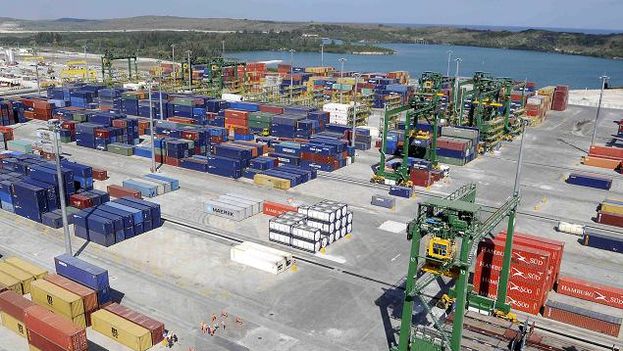
The Spanish Government has not hesitated to put its full diplomacy at the service of its businesspeople, to prevent those from other latitudes overtaking them in a country where they have worked for decades. (Photo: Mariel Special Development Zone - ZEDM)
The Spanish Government has not hesitated to put its full diplomacy at the service of its businesspeople, to prevent those from other latitudes overtaking them in a country where they have worked for decades. (Photo: Mariel Special Development Zone – ZEDM)

14ymedio bigger14ymedio, Madrid, 30 March 2016 – The expectations that the upcoming Communist Party Congress will put forward a reform in the Foreign Investment Law that permits greater guarantees is growing among Spanish businesspeople. 14ymedio has confirmed this with Spanish diplomatic sources, who say that the central demand is an elimination of the State monopoly over employees – currently foreign companies in Cuba must contract for their employees through the State – a limitation that hampers the ability of investors to choose their own qualified personnel directly.

Spain is one of the countries in a better position to invest in Cuba, being the island’s third largest trading partner with more than 200 companies operating on the island, and trade totalling around one billion euros annually. Although Spain’s Commerce Department specified in its 2015 report that the data are always approximate, because Cuba does not detail the names of its investors “to protect them from actions against them on the part of the United States,” the agency estimates that 50% of the foreign projects continue reading

in Cuba come from the European Union, with Madrid leading in sectors such as tourism, financial services, water supply systems and cement, among others.

The Spanish Government has not hesitated to put its full diplomacy at the service of its businesspeople, to prevent those from other latitudes overtaking them in a country where they have worked for decades. The recent round began in April 2015, with a visit to Cuba by Spain’s Secretary of State for Trade, Jaime García-Legaz, along with representatives of 45 Spanish companies, leaders of the Chamber of Commerce and the employers’ Spanish Confederation of Business Organizations (CEOE).

That meeting promoted future financial support to increase hotel capacity, a priority given the onslaught of tourism raging on the island, as well as the Spanish interest in the renewable energies market, in which that European country is leader and where Cuba has great potential in both wind and photovoltaic.

The arrival of Roca, a Spanish company specializing in bathrooms and toilets, already marked that trip which, however, was only a prelude to another more important one, the visit on 7 July of the Spanish Minister of Industry, Energy and Tourism, Jose Manuel Soria, accompanied on that occasion by 75 companies who held several meetings and information sessions with Cuban businesses.

Later, on during the International Fair of Havana (FIHAV 2015), in which Spain was the country with the highest representation (160 companies), the Minister of Economy and Competitiveness, Luis de Guindos, also arrived on the island to give Spanish businesses a boost, the highlight of which was the announcement of a debt refinancing for Cuba, including forgiveness of the interest already in default as well as a part of the principal. At the beginning of February, Spain announced an additional debt forgiveness, to finance projects on the island. The amount of this second round last December — added to the 1.88 billion dollars of forgiveness — was not disclosed.

The acting Spanish Minister of Foreign Affairs and Cooperation, José Manuel García-Margallo, revealed this March that Spain plans to cancel Cuba’s debt “in the near-term,” after the signing of the political dialogue and cooperation agreement between Brussels and Havana.

But things are moving slowly so far and little progress has been made in relation to the Spanish investment. Salvador Marín, president of the Spanish Company for Development Financing (COFIDES), said that Cuba is “a country that offers many business opportunities for Spanish companies for many reasons” and cites common cultural ties and business traditions among these reasons. In addition, the Spanish authorities value the Foreign Investment Law, although they consider that it should be improved.

“COFIDES has put in place the ‘Cuba Line’ (with an initial endowment of 40 million euros) with which it can finance Spanish companies wishing to undertake an investment project in the Caribbean country, whether commercial or production plants,” says Marin. The agency thus ensures support for both small- and medium-size companies as well as large companies and explains that there are two parts to this product: the General-Cuba Line and the Mariel Special Development Zone-Cuba Line.

COFIDES says that there are currently “around a dozen projects in various stages of study to finance investments in Cuba” but offers no details on any of them, merely clarifying that agri-food sectors, tourism, capital goods, construction materials, consumer goods, chemicals and pharmaceuticals are all highlights.

The same lack of specificity occurs among the few companies that agree to discuss this issue. Iberia is one of them, possibly because its commitment in Cuba already has visible results after the restoration of direct flights from Madrid to Havana which will begin to operate daily “starting on 2 June.”

However, the airline denies that the increase in flights is because of changes that have occurred in Cuba and says it is for internal reasons. “If Iberia has returned to Havana, it is mainly due to the transformation process in our own company, which has enabled us to reduce costs, improve product and service and therefore revenue,” they say.

The Globalia group is also strengthening its presence on the island, with the opening of a new air route and a hotel. The service, operated by Air Europa, will connect Madrid-Varadero from July 14 until Sept. 15 with two weekly flights, as announced by the company on Tuesday.

SEAT, the Spanish subsidiary of Volkswagen, has been present on the island and the Spanish press reported an alleged request from the Cuban Government to Madrid for the company to install a plant in the Mariel Special Development Zone (ZEDM), in order to facilitate the renewal of the battered fleet of cars on the island, but the company remains cautious.

“SEAT took part, along with other companies, in the business delegation that visited Cuba in the framework of an official visit organized by the Spanish Government. On this visit, SEAT knew the situation in the country and the different proposals. Beyond this, we will not comment about future plans,” said Ezequiel Aviles, head of corporate communications for the car company. The company has had a representative on the island since 2007, through which vehicles are sold in public tenders/fleet bids made by the Cuban government through the Ministry of Transport. However, Aviles gave no details on the number of vehicles sold.

Of thirty Spanish companies contacted, only the two mentioned provided brief information to 14ymedio, beyond the usual expansions of the hotel business that Melia has maintained for years, and little is known.

The Urbas Financing Group also announced that it will participate in the development of a major tourism and real estate luxury project in Cienfuegos, although so far there is nothing concrete.

An Encounter with Barack Obama / 14ymedio, Miriam Celaya

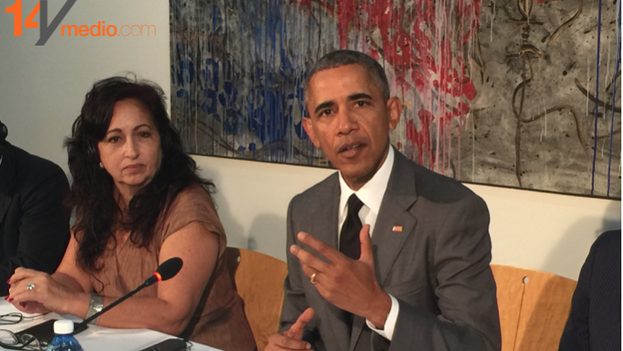
Miriam Celaya seated next to President Obama during his meeting in Havana with representatives from independent civil society.

14ymedio bigger14ymedio, Miriam Celaya, Havana, 23 March 2016 — This past Tuesday, March 22, 2016 was, without doubt, a memorable day for us, the 13 representatives of a portion of the independent civil society who had the opportunity to meet with President Barack Obama at the US embassy in Havana.

During the previous days, we had been invited to participate at a “high level” meeting in the framework of the US President’s visit to Cuba, and on our arrival at the embassy, what we all had expected was confirmed: Obama would meet with us behind closed doors, away from journalists’ cameras and microphones.  The media was only present for a photo-session, moments before the start of the off-the-record exchange between the American president and the Cuban invitees. continue reading

Also present were other senior US officials, who were not involved in the dialogue between Obama and Cuban activists and independent journalists.

At the meeting, which lasted over an hour and 40 minutes, all guests had the opportunity to express different views on issues related to the new policy of dialogue and rapprochement between the US government and Cuba, and to advocate how some activists think this new relationship could benefit progress in the empowerment of the Cuban people and the consolidation of the civil society more efficiently.

Despite the different positions and projects represented, the great majority of Cubans at the meeting expressed openly their support for the policy of rapprochement and dialogue initiated by President Obama

Despite the different positions and projects represented, the great majority of Cubans at the meeting expressed openly their support for the policy of rapprochement and dialogue initiated by President Obama on December 17, 2014. However – and contrary to what the government discourse is spreading in its smear campaigns against the internal dissidence – none of the activists asked for any funding or material support for their projects.

Obama, meanwhile, made a show of good humor, intelligence, sensitivity and a skill in listening to everyone, though some activists went over the time allotted for their presentations, which limited further exchange with the US president, as many of us had hoped for. However, his frank interventions and the use of his usual direct language, devoid of unnecessary grandstanding, constituted a lesson in politics that left no doubt about his assertion that he is on the correct path.

This meeting demonstrates the willingness of the US government to maintain open communication channels with all participants of Cuban society, regardless of political beliefs, ideologies, dogmas and programs

Obviously, there is always much left to discuss at such encounters, but at any rate, this meeting demonstrates the willingness of the US government to maintain – as has been its tradition and political practice to date – open communication channels with all participants of Cuban society, regardless of political beliefs, ideologies, dogmas and programs. This position does not refute the importance of continuing the current dialogue with Cuban officials and should be emulated by governments and representatives of all democratic societies in the world, which are always eager to ignore the dissident sectors and to deny their corresponding role in the process of change that has begun to be carried out in Cuba.

Obama honored the activists of the independent civil society in devoting a generous portion of his time during his brief visit, and he showed absolute respect for Cubans, for our sovereignty and for the pro-democracy projects. His idea summarizes the essence of his policy: the future of Cuba and the construction of a democratic society are the sole responsibility of Cubans on the Island and in the diaspora.

Personally, this meeting with Obama left me with the impression of what an unaffected person he is, of his extraordinary intellect, his knowledge about Cuban history and the relationship between our two countries. A great man, whose name will ultimately be linked to the Cuban process of transition, just as he will be known by future generations of the offspring of this Island.

Translated by Norma Whiting

Easter in Cuba: Death and Resurrection of the Individual / 14ymedio, Mario Penton

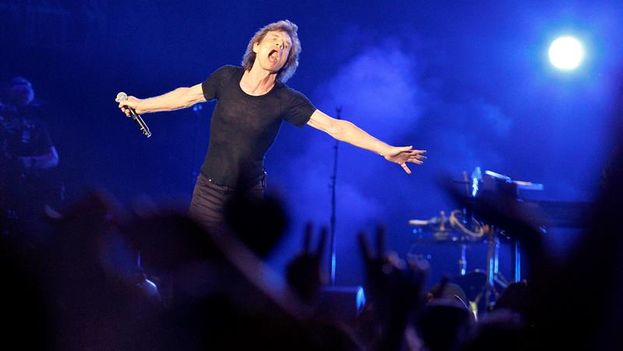
Mick Jagger in concert in Havana on March 25. (EFE/Ernesto Mastrascusa)

14ymedio bigger14ymedio, Miami, 28 March 2016 – This Sunday of the Resurrection hundreds of individuals attended Mass who, the previous Friday, had sung along with their Satanic Majesties in Havana’s Sports City. From Jesus to the Rolling Stones, Cubans want to breathe beyond the narrow limits of the political system and they do it through music, faith, technology or emigration.

Easter Sunday, the last feast of Holy Week, was the time for Christians on the island to remember the passion, death and resurrection of Jesus Christ. Many came to the temples full of hope after a week charged with symbolism like none other they had ever remembered throughout their lives. continue reading

Jusr seven days ago, while Christians celebrated the triumphal entry of Jesus into Jerusalem, US President Barack Obama landed in Havana. For two days he would shock the population with simple gestures and a discourse that invited them to look toward the future and to do so with hope.

On Good Friday Mick Jagger was the star, displaying his “elvis-presley attitudes*” and, with a megaconcert in the Cuban capital, burying the tiny remnants of the “New Man” still within Cubans.

It is impossible not to read “the signs of the times” that have been experienced in the last seven days. Easter has a strong liberating content. The Jews, for example, commemorate it as the end of their servitude in Egypt and their constitution as a people. For Christians, on the other hand, it represents the defeat of death in the messianic resurrection. It always continues a current message: the only way to live is to bury the archaic, be it in the Red Sea or in a tomb that represents the structure of sin that tramples the innocent.

Ironically, both the “satanic” and the Christians suffered the same fate when they tried to skew the plurality of the nation in service to an ideology. The infamous Military Units in Aid of Production (UMAP) made brothers of the priest, the dissident, the rocker and the homosexual.

In 2012, Cuba had its first Good Friday holiday since 1959. This required the visit and intercession of Pope Benedict XVI. Although there is still a long way to go to achieve true religious freedom, the persecutions and Pioneer assemblies where Christians are humiliated solely for professing a religion are in the past.

In 2016, to the dismay of those who tried to make the nation uniform, the prototype of the Anti-New-Man, with his tight pants and his big ribald mouth held the biggest concert in the history of Cuba and called to mind the moments when listening to his music was dangerous. The changes have begun, we can see that there is no going back, despite the reluctance of the forces that are trying to perpetuate the past.

Cuba experienced a peculiar Easter, a time of steps, sometimes uncertain and ajiaco-style, but certainly full of hope, and ultimately, as always, life will end up triumphing.

*Translator’s note: In a 1963 speech, Fidel Castro attacked “elvispresley” attitudes.

The Difference Between A Democrat And An Autocrat / 14ymedio, Raul Fernandez Rivero

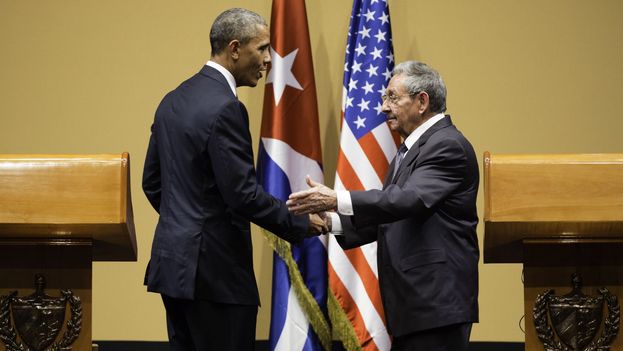
The US president, Barack Obama, and his Cuban counterpart, Raul Castro, in a joint press conference in Havana. (White House)

14ymedio bigger14ymedio, Raul Fernandez Rivero, Caracas, 28 March 2016 — I’m a little confused. Many analysts, commentators and journalists claimed that Barack Obama would visit Fidel Castro. That did not seem logical. And it did not happen. Others said he would not speak with dissidents. Even some opponents said they would not go if they were invited. He spoke with a few well-known dissidents, and those who were not going to go went.

The first thing that happened on the United States president’s trip to Cuba was that many people said Raul Castro had snubbed him by not going to meet him at the airport. But they do not know that diplomacy has unchanging protocols, which are reciprocal. continue reading

And that diplomatic norm (with the exception of the visit of Pope Francis) is reciprocated by the nations visited. Or does anyone think that Argentina’s President Macri treated Obama badly by not receiving him at the airport in Buenos Aires?

The prophets of disaster argued that the United States president would legitimize the Castros by meeting with them, and that confuses me, because it means that Richard Nixon legitimized none other than Mao Zedong, the greatest murderer of the 20th Century, when he shook hands with him in 1972 and, incidentally, removed Taiwan from the United Nations.

In addition, in July 1995, the United States legitimized nothing less than Vietnam, the nation that defeated it in a war and that also tortured and killed American soldiers. The legitimization of a government is not done by a particular country, it is done by a set of nations, history, international organizations or acceptance in the United Nations.

Neither China, nor Vietnam, nor Cuba were legitimized by the United States, it only “normalizes” relations with them. “Normalize” is a euphemism. Having or not having relations with Washington does not legitimize or delegitimize a country.

In the press conference after the chat between the two leaders, the 4-star general – and many others seeing stars – was wrong several times in his speech. He was nervous and jittery. In contrast, the US president spoke flawlessly. Then came the disaster, the ridicule. The international journalists were allowed to ask each president only two questions. And the fear began. Would Raul Castro be prepared? Had his advisors, helpers, assistants, the grandson – who sticks his nose in where he doesn’t belong – and the rest of the sycophants of the state apparatus prepared El Jefe for the occasion? Had they rehearsed with him the possible questions expected from the journalists?

In Cuba no one dares to ask a question that is not on the program, but those who were there were not submissives and were not inclined to be obedient puppies before El Jefe. Everything suggests, however, that no one prepared him or that Raul is dumber than I remember. His headphones fell off, his hands trembled, he couldn’t remember how many cursed human rights there are, if there are 25 or 61; he looked at the clock and couldn’t make out the time but said, “It’s late and we have to finish!”

Faced with a gentleman president of the United States, calm and smiling, clear in his statements and answers, we saw the raw Cuban reality: the president of Cuba is a helpless and miserable autocrat, who was standing there because he is the first secretary of the Cuban Communist Party, an inherited family position, and not because the people chose him. He holds this position in a party that has 700,000 members, less than 10% of the population, making Raul Castro president of Cuba. And this they call democratic socialism and Revolution.

A day later the US president gave several speeches. With entrepreneurs he spoke about the needs of today’s world and of making a leap forward because we are in the era of knowledge and technology; he told them how important their contribution and inventiveness was for their country, about opening doors, about helping them to access the internet, communication, information, he encouraged them and valued their efforts. And he was very clear in saying, “If something hasn’t worked for 50 years, we have to change it. This applies to what the United States is doing, but also to Cuba.”

In other words, he does what the Cuban president has never done: listen to people, give them answers and encourage them. This is not done on the island. For this there are slogans, propaganda on TV and enormous billboards on the street. If you have doubts, you respond: “Fatherland or Death. We shall triumph!” although you feel defeated by the Party machinery that is suffocating you, that encircles you, that keeps you from growing. That is the difference between a democrat and an autocrat.

Cubans are still shaken by the visit, but I hope that when they start to review what happened – not the flags, nor “The Beast” nor Air Force One – those who think back over the events, will compare and begin to see that they have some rights that don’t appear in Cuban books.

In the Gran Teatro, the regime had deployed an immense army of functionaries facing the guest orator, who developed his ideas with a great mastery. A firm voice, measured gestures, well dressed, without flailing arms or apocalyptic shouting. That is, the exact opposite of Fidel.

“The future of Cuba must be in the hands of the Cuban people,” he said in Spanish. The lapidary phrase. It does not depend on the United States, nor on international communism. Obama told Cubans that the future was theirs, that they are going to build it with their material and human resources, with their courage, their work, their dignity, their hearts, their hands. Young people must assume their enormous responsibility in this enterprise because they are an essential part of the strength of a society.

The Cuban people have the inescapable right to choose their destiny over a party, starting from their own decisions. Obama summed it up this way: “I believe voters should be able to choose their governments in free and democratic elections.”

There were the two different systems, face to face. A democracy, which is the result of the independence of the British colonies in North America, beginning with a declaration of rights that crossed the seas and set off the French Revolution, but that in the United States was refined over the years, always marching forward, opening paths into their interior and proposing their actions abroad.

On the other side, a family and hereditary autocracy, uncompromising, intransigent, static and repressive to the point that, while the president of the United States was visiting the island, the official thugs demonstrated how much the execrable system was willing to allow. But this repression has injured not only those who received the blows, but also those who delivered them.

It doesn’t matter what US president spoke to the Cuban people. It is the nation in the voice of its current president, who cannot be reelected more than one time, nor inherit his mandate, which defends pluralism and which has given itself the luxury of primaries, where this year two sons of Cubans, one woman, and one black man have competed. He spoke democracy, and he spoke hard.

Vargas Llosa: “Cuba will become a capitalist dictatorship and then a democracy” / 14ymedio, Yoani Sanchez

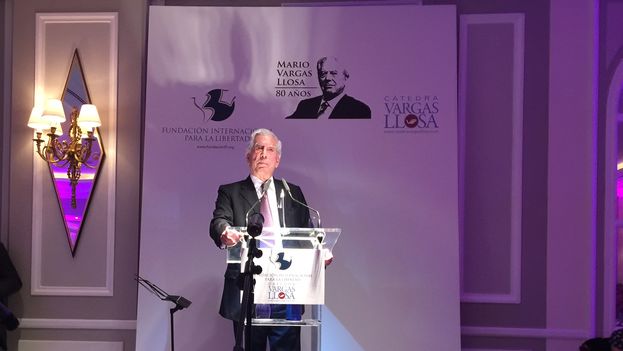
Mario Vargas Llosa's speech celebrating his 80th birthday. (14ymedio)
Mario Vargas Llosa’s speech celebrating his 80th birthday. (14ymedio)

14ymedio bigger14ymedio, Yoani Sanchez, Madrid, 29 March 2016 — Literature, politics and love were the three main protagonists on Monday evening for the 80th birthday of Mario Vargas Llosa. The winner of the Nobel Prize for Literature attended a dinner in his honor with politicians, journalists, presidents and activists, in a central Madrid hotel. Before 400 guests, the Peruvian writer championed words and the art of storytelling as a way to improve reality and participate in national life.

“Turning 80 has no merit,” said the author of The War of the End of the World before an audience with another Literature Nobelist, the Turk Orhan Pamuk, as well as a large group of Cuban and Venezuelan activists. Seated at a forty tables, named after the prolific storyteller’s books or stories, the guests experienced the night as a gigantic party among friends. continue reading

Several dissidents and independent journalists traveled from Cuba for the occasion, including Dagoberto Valdes, Manuel Cuesta Morua, Reinaldo Escobar, Rolando Ferrer, Roberto de Jesús Guerra, Yusmila Reyna and Boris Gonzalez. Vargas Llosa dedicated a special part of his speech to the Cuban activists when he said “I can’t tell you how moved I am that you are here and that you have come.”

With a very critical position towards the political system on the island, which has earned editorial censorship in his books, the award-winning novelist said, “Anachronistic communism has two representatives today, Cuba and North Korea.” However, he expressed some hope because although Cuba “will immediately become a capitalist dictatorship, hopefully very soon afterwards, and finally after 57 years, it will become a democracy.”

Just outside the hotel a throng of journalists gathered to capture the broad parade of personalities from the world of culture and politics that were among the guests. Arriving for the party were former presidents from Columbia Andres Pastrana and Alvaro Uribe, Chile’s Sebastian Pinera, Uruguay’s Luis Alberto Lacalle and Spain’s Felipe González and José María Aznar. Also in attendance were the leader of Spain’s Citizens party, Albert Rivera and the parents of Venezuelan political prisoner Leopoldo Lopez.

Vargas Llosa delivered a precise speech and said that after eight decades of life “it is an opportune time to make a stop along the way and look back.” In his case, he said that life has been “a long and unbroken chain of stories” and emphasized his appreciation for having always had at hand literature, through which he has experienced a wide variety of the lives of others.

His eldest son, Alvaro Vargas Llosa, author and journalist, delivered ​​an emotional speech in which he said his father was like a “Rolling Stone of literature” because of the energy the writer maintains despite his age, only comparable with electric projection of Mick Jagger on stage. Blowing out the two candles symbolizing his 80 years and offering a declaration of love to his partner, Isabel Preysler, the honoree ended the evening.

A seminar, “Vargas Llosa: Culture, Ideas and Freedom,” will begin on Tuesday in Madrid, presided over by the writer and organized by the International Foundation for Freedom along with the chair that bears his name. Thinkers and writers will address topics such as populism, the challenges facing Ibero-America and the state of democracy in Latin America.

Cuban Communist Party Guidelines Will Not Be Changed, Only Updated / 14ymedio, Reinaldo Escobar

Closure of the Sixth Congress of the Communist Party of Cuba. (Youtube)

14ymedio bigger14ymedio, Reinaldo Escobar, Havana, 28 March 2016 – Just 18 days before the start of the 7th Congress of the Cuban Communist Party (PCC), the Party’s newspaper Granma tries to explain in an editorial dated this Monday the reasons why it is not envisioned, on this occasion, that there will be “a process of popular discussion similar to that undertaken five years ago on the Guidelines for the Economic and Social Policy of the Party and the Revolution.”

The editorial in the official organ of the PCC says that questioning the absence of a debate, “is in no way not open to criticism… much less so when it comes from people genuinely concerned about the work of the Party and the destiny of the country.” Then it immediately emphasizes that over the last six decades almost all “the big decisions have invariably been taken in consultation with the people.” continue reading

The note coincides with the publication of an open letter to Raul Castro written by the official journalist Francisco Rodriguez Cruz, in which he communicates his concern and dissatisfaction with “the lack of discussion” of the central documents of party meeting. The Party militant says he has raised these questions on several occasions without having received “any direct or convincing answer.”

Rodriquez Cruz proposes postponing the event for “just three months” to “dedicate the months of April and May to discussing the central documents of the Congress with the entire Party membership, and also with the rest of the Cuban population.” This reporter for the weekly magazine Workers apologizes if the missive published is “mistaken in method” and could be considered “an unforgivable lack of discipline.”

However, the party authorities brandish, as their principal argument for not having opened a public discussion on the agenda of the conclave, the fact that the work of the Congress, this time, is to “finish what was begun, to continue the implementation of the popular will expressed five years ago, and to continue the direction charted by the 6th Congress.”

Near the end of the editorial the titles of six documents are revealed that will be considered in the most important Party event. The first three are the assessment of the performance of the economy in the 2011-2015 five-year period, the fulfillment of the Guidelines and the updating of them for the 2016-2021 period.

The remaining three documents that Granma believes do not have to be discussed with the population are the long awaited conceptualization of the Cuban economic and social model of Socialist development, the economic and social development program to 2030, and the evaluation of the completion of the work objectives approved at the First National Conference of the Party in January of 2012.

The 7th Congress is unequivocally presented as a continuation of what the Communists agreed on five years ago, with the declared purpose of “constructing a prosperous and sustainable socialism,” as least as indicated in the article published this Monday under the title “Less Than a Month From the Party Congress.”

Nothing is said about having to renew the Central Committee (chosen in the 5th Congress almost 19 years ago), nor is there reference to the consequences of reestablishing relations with the United States, nor is there any forecast related to the eventual repeal of the embargo.

There is no mention of the Party’s position on such important issues as the announced new Electoral Law, or the need to introduce changes in the Constitution of the Republic. As a warning, it has been made known from the pages of Granma that the Guidelines will not be changed, only updated, and outside of them nothing else is worth being discussed.

Fidel Castro to Obama: “We do not need the empire to give us any gifts” / 14ymedio

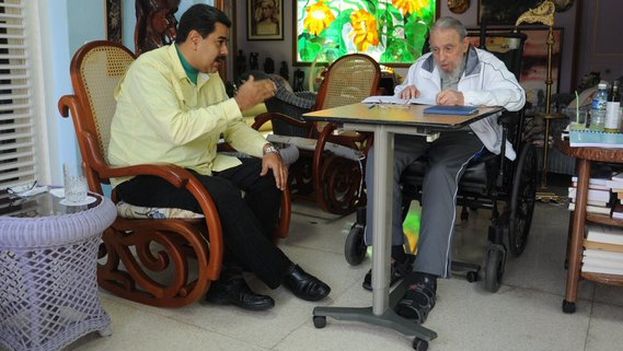
The most recent picture of Fidel Castro distributed by Nicolas Maduro, who met with him on 19 March. (@ Nicolás Maduro / Twitter)

14ymedio bigger14ymedio, Havana, 28 March 2016 – A week after Barack Obama’s arrival in Cuba, the official press has published a “Reflection” by former Cuban president Fidel Castro, titled “Brother Obama,” but which contains strong criticisms of the US president. The text, often disjointed and scattered, is intended as a response to Obama’s speech in the Gran Teatro de la Habana, and in particular to his declaration that he wanted to leave behind, “the last vestiges of the Cold War in the Americas.”

After an extensive introduction where Castro touches on topics such as the Spanish conquest of the island, the finding of gold, and tourist exploitation of natural landscapes, the Cuban leader lashes out against Obama’s words when he said that “Cuba, like the United States, was built in part by slaves brought here from Africa.  Like the United States, the Cuban people can trace their heritage to both slaves and slave-owners.” continue reading

Castro claims that “the native populations [of Cuba] don’t exist at all in Obama’s mind,” and declares that “racial discrimination was swept away by the Revolution.” He also addresses the issue of Cuban participation in the war in Angola and holds against him what he calls “the support racist South Africa received from Reagan and Israel” and questions if Obama knows “about this history,” although “it is very doubtful that he knows absolutely nothing.”

“I wouldn’t even talk about this, unless I had the elemental duty to respond to Obama’s speech,” continues Castro, who describes the words of the United States president as “syrupy” when he suggested forgetting the past in these terms: “It is time, now, for us to leave the past behind.  It is time for us to look forward to the future together — un futuro de esperanza [a future of hope].”

“I assume that each of us ran the risk of a heart attack,” sneers Castro, and reminds the occupant of the White House that “the merciless blockade has already lasted almost 60 years.” The allusions to the past that run throughout the Reflection, signed at “10:25 pm,” this Sunday, are summarized in the questions, “And what about those who have died in mercenary attacks on Cuban ships and ports, an airplane full of passengers blown up in mid-air, mercenary invasions, multiple acts of violence and of force?”

Obama’s historical speech, which was not published in full in the printed Cuban press, has generated sympathies among the population of the island. Minutes after Obama finished speaking, national television broadcast a stream of opinions opposing the words of the foreign president, from representatives of “civil society” even more official than that which listened in the Gran Teatro.

Fidel Castro’s article joins a string of articles in the official press that has sharply criticized Obama’s call to look to the future to advance relations between the two countries. As a counterpart, the former Cuban president suggests that he “reflect and not try, now, to elaborate theories about Cuban politics.” He confesses, however, that he “wished Obama’s conduct had been correct,” suggesting in this way that he was disappointed with the words of the island’s visitor.

In recent days, Obama’s speech has circulated extensively on alternative distribution networks, especially via e-mail and the well-known “weekly packet,” where a high resolution video of the speech is being distributed.

In his conclusion, Castro warns that “no one should make an allusion to the people of this noble and selfless country renouncing its glory and its rights, the spiritual richness it has gained with the development of education, science and culture.” And he ends with this affirmation that Cubans will appreciate: “We are capable of producing the food and material wealth that we need.”

It is worth remembering that, according to official figures, Cuba imports more than 80% of the food destined for the population’s “basic basket,” at a value of more than two billion dollars a year.

Public Reaction Against Arbitrary Arrest in Cuba Goes Viral / 14ymedio


14ymedio bigger14ymedio, Havana, 27 March 2016 – The arrest of a Cuban woman who demanded respect for human rights has gone viral on social networks. Allegedly filmed in the Cerro district of Havana, the video, just over a minute long, shows the moment when the woman is led to a patrol car and the reaction of the neighbors when the police try to silence her demands; she also shouts for “respect for the Ladies in White” and the end of “the Castros’ dictatorship.”

Three uniformed officers from the People’s Revolutionary Police (PNR) and a woman in a suit from the Ministry of the Interior, lead the detainee to the police car. At that moment she shouts “Down with the dictatorship of the Castros!” The two officers try to force her into the car, a practice that has become frequent in repressive actions. continue reading

At that moment we can see how popular anger explodes and several neighbors come to the defense of the woman. With cries of “abusers,” and “no beatings” and “not this,” the citizenry reacts against police violence and causes confusion among the officers, who remained exposed to the cries of the people as they are filmed by various electronic devices.

The increase in cameras and cell phones has allowed such documentation, circulating clandestinely across the country and shared on the social networks that collect evidence of the arbitrary arrests against activists and defenders of human rights in Cuba. The video shown here has already been viewed more than 230,000* times in just few hours.

According to the latest report of the Cuban Commission for Human Rights and National Reconciliation (CCDHRN), the only organization that keeps a record of arrests and other acts of repression on the island, in the first two months of the current year there were at least 2,555 arrests for political reasons.

Translator’s note: The posting of the video on Facebook, as of this morning, has more than 600,000 views. UPDATE: 30 March – The video now has 1.1 million views.

Fidel Castro, Rock Star / 14ymedio, Nestor Diaz De Villegas

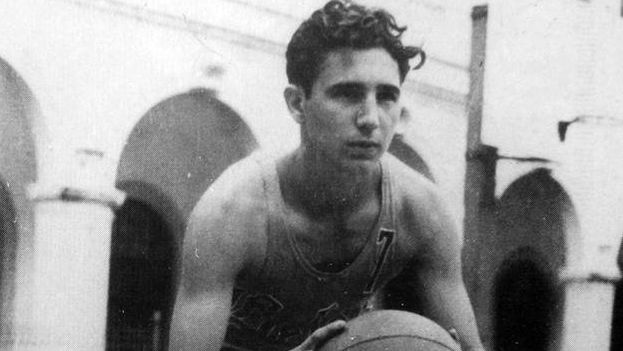
Fidel Castro in his teens.

14ymedio bigger14ymedio, Nestor Diaz De Villegas, Los Angeles, 27 March 2016 — Crouched down in the last row of a sweet potato farm deep in the Cuban countryside, a student of first year of high school listened to the Dóbliu (WQAM, 560 AM). It was the end of 1973 and the foreign radio station was broadcasting the Hit Parade. It was the velvet voice of Casey Kasem in the potato field. It was the School in the Countryside in the Cuba of Their Satanic Majesties, the Castro Brothers.

The boy fiddled with the antenna wire. Stations as far away as Barquisimeto, Fort Lauderdale and Little Rock (Beaker Street, KAAY, Underground Rock) came out of the old portable radio. What he had captured was “The Lives of Others” and the student was a spy. If he was caught listening to what came from the other side of the wall, he would be expelled from high school. continue reading

There is no sledgehammer that will ever tear down the wall separating Cuba from the rest of the world. It is the Wailing Wall and the Berlin Wall all rolled into one, but without stones, reinforcing rods or cement. The ocean is a sea of tears and a natural barrier: the “cursed circumstance,” whose circumference is everywhere and whose center, blah blah blah… We will have to invent a water music, an lachrymose Mass, and a Paulina’s Bidet that commemorates and curses this metaphysical isolation. A task for the hydraulic engineers of the next century.

Out there, beyond the yams, something big seemed to be going on. The Soviet receptor collected coded messages and the young spy could only decipher a few phrases: There’s a new sensation / A fabulous creation / A danceable solution / A teenage revolution…

The Beatles had been left behind, they belonged to the older cousins. His was psychedelic rock. His idols were Robert Plant and Jimmy Page, Led Zeppelin, and Brian Ferry and Brian Eno of Roxy Music: Tired of the tango / Fed Up With fandango!

He went mad for Led Zeppelin when, four years earlier, Leandro Soto took him to his house in Punta Gorda to listen clandestinely to a 45 his brother, the merchant marine, had brought home: A Whole Lotta Love on side A; and the punchy Communication Breakdown on side B.

The “Revolution” was, for him, only 33 “revolutions per minute,” and the one from ‘59 remained in remote antiquity.

Once, a Jamaican diplomat gave him a pack of Dunhills with two cigarettes left, and a recent copy of the magazine Circus, where he collided for the first time with Bowie. A student from Amsterdam, passing through Havana, let him choose between Eric Clapton’s Goodbye Cream, and the first Pink Floyd record he heard in his life, Ummagumma, a music that upset him and that he didn’t understand.

He kept the Cream. He danced to The Sunshine of Your Love with a skinny mulata woman in the room of an apartment on Aguacate street, designed for a family of five, where forty dancers were crammed.

He lived as a hippie in the room of Eliades y Colchón, on Lamparilla Street. He went out hustling in the docks and came home with the Rolling Stones’ Exile on Main Street under his arm. He learned to speak broken Portuguese with Cypriot sailors. His coreligionists were initiated into the mysteries of rock: Beningno, Digna’s son, Pedro el Fabuloso, Alejandro el Pelú, Tony el Alemán, Silverio, Cocacola and el Foca.

One night in the darkness of La Zorra and Cuervo he saw The Plastic Flowers. They kicked him out of an apartment where some unknown girl was celebrating her quinceañera for having sneaked in. Inside Los Kents were playing.

In Manuel Antonio Ureña’s living room he listened to the last album by King Crimson – smuggled by Manuel Antonio’s aunt in a diplomatic pouch – drank black tea and asked permission to use the bathroom. That day they had cut the water off and he was kicked out of this party, too, and they humiliated him laughing at him from the balcony, while he slouched down B Street.

At the end of the year party, in the home of Raul Chaveco on the Prado – that house that in 1971 was more important for Cuban culture than Lezamas’s on Trocadero Street – he was able to see Las Almas Vertiginosas live.

At the corner of San Lazaro and Genios he discussed endlessly with Julito Buendia, bassist of Nueva Generación, about the relative importance of Slade. In the wee hours of a morning, accompanied by Pedrito Campos and Carlos el Gago, he was assaulted by a delinquint who sought to grab his portable cassette player, while listening for the thousandth time the long version of Iron Butterfly’s Inna-Gadda-Da-Vida.

And yet, Fidel Castro was, even then, the real rock star. His satanic scenario was the ruins of Cuba, a Havana converted into Dresden that served as background to his one-man Apocalypse. The culture that created the music we listened to on a remote Villa Clara sweet potato farm originated in Cuba, like the idea of the revolutionary that underlay the iconoclastic impetus of rock’n’roll.

Today we know that the beards and the long manes of the rebels gave rise to the hipsters. But, our hero in Flogar* camouflage and Dorticos* glasses ended up gobbling up his own epigones! Like the chameleon David Bowie, Fidel Castro changed, mutated, shed the extraterrestrial fatigues he had worn coming down from the mountains and assumed the heavy metal disguise of the Great Dictator.

Bowie has said that Hitler was the first rick star. In successive transmutations, Fidel Castro would become Prosecutor, Torturer, Poet, Father of History and World Doctor. He would then become Believer, Despot, Sportsman and Convalescent Judas. He still exists, through the mediation of his doubles: his inverted star hovers in the false transvestitism of Mariela*, in the brutalism of Raulín, in the radioactive beard of his firstborn.

We can divine them also in Armando Roblán* and in Armando Pérez Roura*, in the black flags of ISIS, in The Clash’s album Sandinista!, in Woody Allen’sBananas, in the havoc of the penultimate Michael Jackson, and even in the caprices of “The Most Interesting Man in the World.” (“His beard is registered on his organ donation card.”)

And perhaps we should admit, finally, that we enjoyed rock’n’roll in the ideal conditions of terror and persecution in which this revolutionary music should be listened to. Perhaps only we, among all the rockers of the world, really understood it. The Rolling Stones song that discovers Satans in every moment of horror in universal history is a secret ode to Fidel Castro. If we understand it like that, who knows if at some point we will come to feel sympathy for the Devil.

__________

Editor ‘s note: This text was originally published on the blog of Néstor Díaz de Villegas and has been reproduced here with the permission of the author.

A President Has Come to Havana Carrying… / 14ymedio, Carlos Alberto Montaner

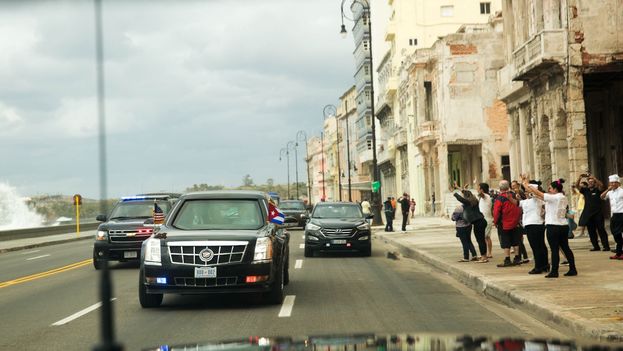
The caravan of United States President Barack Obama, this Monday in Havana (White House)

14ymedio bigger14ymedio, Carlos Alberto Montaner, Miami, 26 March 2016 – Spanish children used to play a game of imagination, listing the things carried in ships from the colonies: “A ship has come from Havana carrying: pineapples, lace, sugar,” whatever. It was a playful exercise in which fantasy and vocabulary mixed as a teaching tool.

Barack Obama, without knowing it, revived the game. For the United States President his trip had four declared objectives: unilaterally bury the Cold War in the Caribbean; officially eliminate the diplomatic strategy of containment or isolation and replace it with one of engagement or rapprochement; reinforce ties with Cuban civil society, especially with the emerging private business sector; and strengthen the democratic opposition that seeks a peaceful evolution of the regime towards pluralism. continue reading

For the Cuban regime the visit was another step to ending the old trade embargo, and achieving the coming of American tourists and investments; the promise of soft credits when the law permits it; and the possibility of alleviating the difficult economic situation that Cuba is facing with the end of the subsidies from Venezuela, which the economist Mesa Lago has, in the past, estimated to total thirteen billion dollars a year.

Raul Castro had not the least intention of modifying his communist dictatorship. At the end of the day, as Fidel Castro himself has reiterated a hundred times, the regime established itself based on ideological convictions and not as a response to US hostility. The sequence was the inverse.

Nor is it in his plans to bury “anti-Yankeeism,” one of the central elements of 21st Century Socialism. For him, for Nicolas Maduro, for Evo Morales, even for Rafael Correa and Daniel Ortega, the Cold War is not over, as is evident in their good relations with Iran, North Korea and Syria.

For United States exporters and investors Obama’s approach was fairly tempting. Money, as we know, is cautious. They accompanied him with more curiosity than real interest. As long as the embargo law continues, any exports to Cuba must be paid for in advance, a measure healthy up to now, because the island has a bad reputation as a payer. Throughout the 57 years this government has lasted, almost every business or country that has extended it credit has been defrauded.

The only businesses that are profitable in Cuban are those engaged in tourism, because they are paid ahead of time and in dollars. Everyone also knows that it is very dangerous to do business where there are no independent courts. In Cuba, as in all totalitarian governments, the judges are an appendage of the central power.

The democrats of the internal opposition have been the main beneficiaries. There were thirteen people from diverse groups, as befits any people aspiring to respect for differences of opinion. Obama met with them for almost two hours, listened to them, supported them, and then devoted the main part of his speech to demanding that Raul Castro respect human rights and the need for plurality required by a society affected for so many years by the sclerosis of a single way of thinking. The moment when he turned to the general and told him, “do not fear the voices of Cubans who want to express themselves freely,” is and will be for a long time a landmark in the struggle against the dictatorship.

Will the strategy of engagement work? Obama himself is skeptical, and rightly so: the Cuban dictatorship is not going to change. It is proudly communist and the Constitution awards the Party exclusive leadership of society. For the dominant elite, human rights – specifically the freedom of expression and association to which Obama referred – are subterfuges of the hated bourgeoisie to extend its social control, and those who demand these rights are criminals.

In this case, is there a sense of a change in tactics? It is difficult to know at this point. For now, the dissidents are encouraged. They believe that Obama’s trip is a turning point. We wait, with fingers crossed. It is part of the game.