Ice Cream and Kilobytes

The inauguration of a Wi-Fi zone for internet access seeks to revitalize the Coppelia ice cream parlor. (14ymedio)

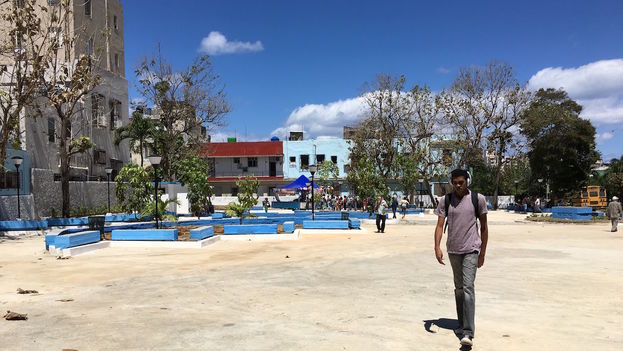
14ymedio bigger14ymedio, Marcelo Hernandez, Havana, 10 April 2017 – The large and little-used park around the Coppelia ice cream parlor has a new function as of a few days ago. The inauguration of a wifi zone for internet access is looking to revitalize the ice cream stand, as iconic as it is fallen into disgrace. Now, in the absence of those mythical 26 flavors, the customers will have a serving of kilobytes on side, courtesy of the Cuban Telecommunications Company (ETECSA). continue reading

Under the inclement sun, some curious came this week came in search of a few hours of “free” navigation as had been mentioned in various official media. The state monopoly only allowed access to the web at no cost during the opening day, and then an hour of navigation again cost the same as in the rest of these wireless parks: 1.50 CUC an hour (about $1.50 US, the equivalent of nearly two days pay at the average wage).

The state monopoly only allowed access to the web at no cost during the opening day and then an hour of navigation cost again 1.50 CUC

During two busy months, a brigade of construction workers installed benches, planters, lights and three reflectors for the security of the netizens. This last is one of the conditions most demanded in other areas where ETECSA offers its Nauta wifi service, where users report frequent thefts of telephones, tablets and computers, mainly at night.

Little by little word has spread and the place is beginning to fill with faces that stare closely at a screen, people who speak animatedly by videoconference and access resellers who, through the application Connectify, offer a plunge into the great world-wide web for half the state price.

It is hoped that soon, among Havanans, the word “Coppelia” will become synonymous with social networks and digital sites, instead of the mythical ice cream parlor that it once was.

“The Politician Of The Week,” A Citizens’ Initiative

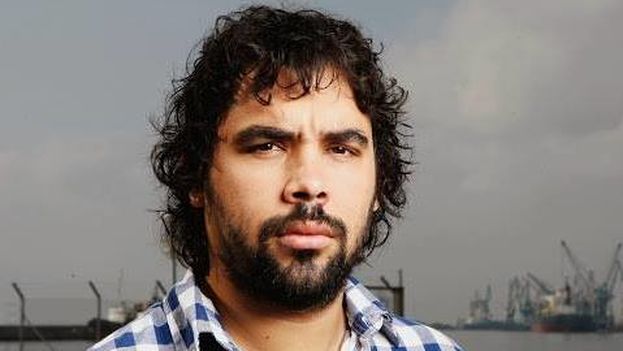
The initiative involves people as different as the filmmaker Carlos Lechuga (above) or Cuba’s Minister of the Interior. (Facebook)

14ymedio bigger14ymedio, Reinaldo Escobar, Havana, 10 April 2017 — Facing the times that we live in can be an unpleasant task. And doing it without discrimination based on ideological viewpoints and with immediacy, takes visions of daring. This is the challenge that the Center for the Application of Political Marketing and Political assumes with the election of the “politician of the week,” an initiative that approaches the Cuban reality from its protagonists. continue reading

The profiles developed by the independent entity are made in collaboration with the site Primavera digital (Digital Spring), the historian Dimas Castellanos and the journalist José Antonio Fornaris, among others. They are distributed through e-mail and several web pages. Their intention is to summarize, with the fewest adjectives, the biography and significant details of those who mark the events of the Island. Those faces that embody the moments most sublime and most ridiculous of the day-to-day.

The “politician of the week” does not evaluate the person, but rather the events in which he or she has taken part and the decisions for which they are responsible. The brief sheet that accompanies their name doesn’t judge, but it does describe. In a country where most of the time the public debate centers on “killing the messenger” instead of understanding the message, this moderate exercise carried out by the Center takes on hints of the historic.

So far this year, the names included in the classification have ranged from officials in the highest ranks of power to opponents condemned for their activism. This wide range of points of view can only be recognized from an independent perspective, given that the official media only gives space to names linked to the government.

Its catalog of personalities is the closest thing to a democratic exercise, in which there is no discrimination or tendency to stigmatize positions

Thus, this civic initiative has described both Jennifer Bello Martínez, president of the Federation of University Students, and Dr. Eduardo Cardet Concepción, a person Amnesty International has declared a political prisoner of conscience. In its entries it has shed light on the life of the new interior minister, Rear Admiral Julio Cesar Gandarilla Bermejo, as well as Carlos Lechuga, director of the censored film Santa and Andrés.

Nor have they missed, in their accounts, figures such as Vice President Jose Ramon Machado Ventura, a hard-liner known for his partisan orthodoxy, or Havana’s private taxi drivers who demonstrated their dissatisfaction after the imposition of price caps on their service.

The Center, led by the analyst Julio Aleaga, has given space to Tyrians and Trojans. Its catalog of personalities is the closest thing to a democratic exercise in which there is no discrimination or stigmatizing positions, a posture that in today’s times of polarization, does not stop giving some people hives or provoking indignation.

There are those who are upset to not have been included yet, while others cry out to have their names erased from the list. To the extent that it is list of the protagonists of a reality, the “politician of the week” approaches those who are part of events, but the evaluation of their performance will depend on the opinions of each individual reader.

Ten Years, A Blog

Yoani Sánchez received the Ortega y Gasset award for her work on ‘Generation Y’ in 2008, although she was not allowed to leave the country to receive it until five years later. (El Pais)

14ymedio bigger14ymedio, Generation Y, Yoani Sanchez, 10 April 2017 — Dawn, the sound of the keyboard marks the beginning of the day. I start a blog that will make me experience the most gratifying and terrible moments of my existence. I go out with the USB stick around my neck, climb the steps of the Havana Capitol and mumble a few phrases to get myself into the place with internet access exclusively for foreigners. It is the 9th of April 2007 and I publish the first text of Generation Y… My life has just taken a turn.

A decade has passed since that scene. A time during which I laid bare, post by post, the events that mark the reality of my country and of my own existence. I have filled the pages of this personal diary and left a testimony of the eventful and intense years I have lived. A digital logbook that could well serve as an impressionist portrait of Cuba at the beginning of this millennium. continue reading

There has been a lot of water under the bridge since then. I discovered the immense scope of the written word, the amplifying character of technology, and an authoritarian power’s lack of ethical limits. I owned responsibility for every published phrase and not a few times paid the consequences not for what I said, but for what others believed I said.

I discovered the immense scope of the written word, the amplifying character of technology, and an authoritarian power’s lack of ethical limits

I earned a scolding from a severe leader accustomed to hearing only his own voice, I spent more than one night in a jail cell, and I learned to speak in code to evade the microphones placed in my house. I got used to seeing my face in the official media surrounded by the worst adjectives and lost more than one friend. However, the gratifying moments have far surpassed all the punishments this opinion space has brought me.

I watched innumerable voices be born and gain strength, voices that made the Cuban blogosphere a more plural and inclusive space. I met many, like myself, who in their respective countries grabbed ahold of the new digital tools to try to better their societies. I received the support of my family and discovered the profession that I exercise today: journalism.

Each text that has come out in Generation Y shows that personal path, marked by obstacles and gratifications. If I could go back in time I would only amend the moment when I decided to open this blog. I don’t forgive myself for having waited so long to express myself.

Reflections* From a Glass House

Reinaldo Escobar, 18 June 2008 (Reposted 10 April 2017) — The former president Fidel Castro has just published a foreword to the book Fidel, Bolivia and Something More in which he discredits the internet blog, Generation Y, written by my wife, the blogger Yoani Sanchez.  From the first day, she has put her full name (which he omits) and her photo on the web, visible to readers, to sign the articles which she writes with the sole purpose – as she has said several times – of “throwing up” all that is nauseating about our reality.

The ex-president disapproves of the fact that Yoani accepted this year’s Ortega y Gasset Prize for Digital Journalism, arguing that the prize is something that imperialism favors to blow its own horn. I recognize the right of this gentleman to make this comment, but I allow myself to observe that the responsibility implied in receiving a prize is never comparable to that of bestowing one, and Yoani, at least, has never awarded a medal to a corrupt person, a traitor, a dictator or a murderer. continue reading

I clarify this because I remember perfectly that the author of these reproaches was the one who placed (or commanded to be placed) the “Order of José Martí” on the lapels of the most terrible and undeserving men possible: Leonid llyich Brezhnev, Nicolae Ceausescu, Todor Zhivkov, Gustav Husak, Janos Kadar, Mengistu Haile Mariam, Robert Mugabe, Heng Samrin, Erich Honecker and others that I have forgotten. I would like to read, in light of these times, a “Reflection” that justifies the award of these inadmissible honors – to blow the horns of others – that so tarnished the name of the man we call our Apostle, José Martí.

It is true that the philosopher Ortega y Gasset can be connected to elitist and perhaps reactionary ideas, but at least, unlike those decorated by the prologue writer, he never launched tanks against his nonconforming neighbors, nor built palaces, nor imprisoned those whose opinions differed from his own, nor left his followers in the lurch, nor amassed fortunes from the misery of his people, nor built extermination camps, nor gave orders to shoot those who, to escape, jumped the fence from his own backyard.

*Translator’s note: Fidel Castro’s column in the daily newspaper Granma, is titled “Reflections of Fidel

Site manager’s note: Translating Cuba has chosen to reprint this article, from the early in the second year of Yoani’s blog, in connection with Generation Y’s tenth anniversary.

Men’s Matters

Generation Y, Yoani Sanchez, 18 June 2008 (Reposted 10 April 2017) — In this Central Havana of guapos* – tough guys – and brawls where I was born, I learned there are certain lines a woman should never cross.  I have spent my life breaking the laughable rules of machismo, but today – and only today – I am going to take refuge in one of them, one of the ones I dislike the most.  It warns, “A woman needs a man to represent her and to go to bat for her when another man insults or slanders her.”

Feeling attacked by someone with a power infinitely superior to mine, more than twice my age, and in addition – as the neighbors of my childhood would have said – someone who is “macho-male-masculine,” I have decided it will be my husband, the journalist Reinaldo Escobar, who will respond. continue reading

I refer to the damaging remarks that Fidel Castro made about me in the prologue of the book, Fidel, Bolivia and Something More.  Not even such a “great” attack convinces me to abandon the premise of refusing to engage in a cycle of rejoinder and self defense.  I am sorry to say I remain focused on the theme called “Cuba.”

Let’s leave it up to Reinaldo and Fidel to do the fighting.  I will continue in my “womanly” labor of weaving together, despite the chatter, the frayed tapestry of our civil society.
The guapos from my neighborhood will know that I learned “something” from them!

* Please do not confuse a Cuban guapo with a handsome man or suitor. That might work in another Latin American country, but here in Cuba the word carries a different connotation, which someone might explain to you  with a slap, or perhaps a stabbing.

Translator’s note: The first sentence is hard to translate because there is a double meaning.  Guapo/guapa is both an adjective and a noun and in common use it means handsome/gorgeous.  In Cuban slang “guapo” also means a tough guy, someone who likes to fight.  It can be used as an insult or to dare someone, that is as the aggressive form of “Hey, man…”  The original footnote explains this meaning for non-Cuban Spanish readers who may not be familiar with it.

———-

Site manager’s note: Translating Cuba has chosen to reprint this article, from the early in the second year of Yoani’s blog, in connection with Generation Y’s tenth anniversary.

Young Cuban Filmmakers Challenge Official History

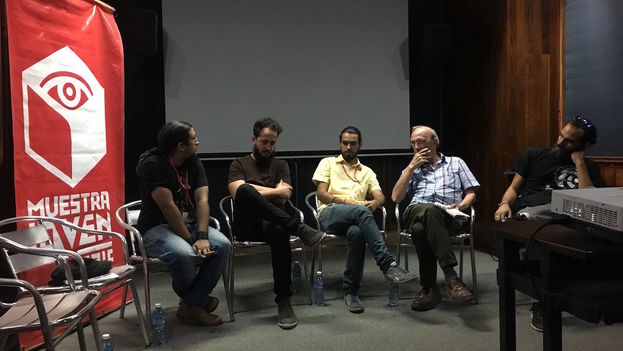
Young directors present their work in the “Moving Ideas” section at the 16th Young Filmmakers Show of the Cuban Institute of Cinematographic Art and Industry (ICAIC), in Havana. (14ymedio)

14ymedio bigger14ymedio, Luz Escobar, 8 April 2017 – Were the events like the books tell us? Is the official story a report of what really happened? The attempt to answer these questions inspires the documentary and two fictional shorts that were presented Wednesday in the ‘Moving Ideas’ section of the 16th edition of the Young Filmmakers Exhibition of the Cuban Institute of Cinematographic Art and Industry (ICAIC) in Havana.

Under the motto “Forgetting does not exist,” the filmmakers approached collective and family memory to show a point of view often ignored by the epic of Revolutionary discourse. The works probe those memories for what Cubans treasure about moments in national life, beyond the gilded frame that the institutional version attaches to them.

Economic disasters, a war on a distant continent and the drama of family separation after exile, were some of the issues addressed by this new generation of film directors, who show a special interest in looking back. Children of indoctrination and official silence seem willing to shed light on the darker areas of what has happened in the last half century. continue reading

Director Pedro Luis Rodríguez offers the short Personal Report set on the eve of the Revolutionary Offensive of 1968 — when all remaining private businesses in the country were confiscated, down to the last shoeshine boy. It was a watershed moment in the economic life of the nation that brought profound effects on commerce, supply and even the mentality of those born after that massive closure of private businesses.

Were the facts as they are told in the books? Is the official story a report of what really happened?

In less than half an hour, Rodríguez shows the conflicts experienced by Ricardo, an analyst on the Planning Board, who is preparing to present a report to his boss on the consequences of the measure that is about to be taken. The protagonist defends his right to participate in the decisions that are made in the country or at least to be heard, but everything is in vain.

Personal Report presents that look from below on a historical event where the decision was taken “on high.” An offensive about which the government has never offered a public self-criticism, although a quarter of a century later the private sector was again authorized to operate. Today, more than half a million workers are struggling to support themselves despite strong legal limits on their activities and economic hardships.

Screen shot from ‘The Son of the Dream.’ (CC)

In the discussions with the audience after the screening in the Chaplin room, Rodriguez acknowledged that his film is “a wink” at the current phenomenon of self-employment. His desire is that the work serves to “reflect on this present” and to meditate “on participation and the need to be heard and to be consistent with oneself.”

The flood of memories and questioning continued with the fictional short Taxi, directed by Luis Orlando Torres. Taxi addresses another of the many themes barely touched on by the fiery speeches from those in power: Cuba’s involvement in the war in Angola and its aftermath in society; the plot centers on the physical and mental wounds left by that conflict outside the island’s borders.

‘Personal Report’ presents that look from below on a historical event where the decision was taken “on high.”

Torres focuses on the effects on families and establishes a parallel with the internationalist medical missions that now send Cuban healthcare workers around the world, and their consequences here at home. The film develops a suspense story that begins when a taxi driver picks up a passenger in a seemingly casual way. A brief conversation will suffice to call into question moral aspects of a war, one which the Government has always defended as an act of solidarity.

Meanwhile, The Son of the Dream, directed by Alejandro Alonso and filmed in 16 millimeter with a Bolex camera, relives through family letters and postcards the filmmaker’s memories of an uncle whom he was unable to know due to the separation caused by the Mariel Boatlift. The material is the result of a workshop given at the International Film School of San Antonio de los Baños by Canadian director Philip Hoffman.

Beyond the aesthetic and artistic values ​​of each of the projects presented in ‘Moving Ideas’, it is clear that much of the young cinema that is being produced on the Island is not trying to please institutions or accept pre-established truths. It is an uncomfortable, irreverent, questioning and willing movement to belie an epic story that has been shaped more with silences than with truths.

Eliécer Ávila, The ‘New Man’ Who Became An Opponent

Eliecer Ávila, leader of the Somos+ (We Are More) Movement (CC).

14ymedio bigger14ymedio, Yoani Sanchez, Havana, 8 April 2017 – Walking along the streets with Eliécer Ávila can be a complicated task. His face is well known thanks to a viral video broadcast almost a decade ago. However, before fame came into his life, this young man born in Las Tunas was a model “New Man”: the most finished product of ideological indoctrination.

Like all Cuban children, Avila shouted slogans during his school’s morning assembly, participated in countless repudiation activities “against imperialism” and dreamed of resembling Ernesto ‘Che’ Guevara. But while, in school, they taught him the social achievements that the Revolutionary process brought to the population, at home reality was stubborn and showed itself to be something quite different. continue reading

The residents of Yarey de Vázquez are poor, the kind of poverty that grabs you by the throat

The residents of Yarey de Vázquez – the Puerto Padre municipality of Puerto Padre where the leader of the Somos+ (We Are More) Movement was born – are poor, the kind of poverty that grabs you by the throat. A place lost in nothingness, where many families still use latrines for their bodily needs, and live in houses with roofs made of palm fronds.

Surrounded by pigs, chickens and tedium, Avila realized that his life did not resemble the official version he was being taught. Born in 1985, in the middle of that “golden decade” when the Soviet Union was propping up the island, he was barely walking a year later when Fidel Castro ordered the closing of the free farmers markets in the midst of the “Process of Rectification of Errors and Negative Tendencies.”

Eliécer Avila reached puberty during what was called the Special Period. With the voracity that still characterizes him, he faced many days of his adolescence with his plate half full, or almost empty. He hand stitched the shoes he wore to school, invented all kinds of “outfits” from his grandfather’s old shirts, and turned off the light when it was time to strip down to his underwear, so no one could see the holes.

Surrounded by pigs, chickens and tedium, Avila realized that his life did not resemble the official version he was taught. He was born in 1985, in the middle of that “golden decade” when the Soviet Union was propping up the Island

With a natural leadership quality, in which a certain humor mixes with an undeniable histrionic capacity to narrate anecdotes, the young man made his way through those years without climbing aboard a raft to escape the country or ending up in jail. Those who knew him predicted a future in politics, because of those “fine lips” that helped him in student meetings and in romantic conquests.

A little bit later, luck smiled on him. He was able to enroll in the University of Computer Sciences (UCI), founded in 2002 in the middle of the Battle of Ideas. UCI was located on the site that had once been the Center for Exploration and Radioelectronics Listening, known as the Lourdes SIGNIT Station, where until 2001 Russia – and the Soviet Union before it – had had its largest spy station outside its borders. UCI was a school for trusted young people to become computer soldiers for a Revolution that fears the Internet.

While a student at UCI, Avila led Operation Truth. His task was to monitor digital sites and blogs critical of the Government. In those spaces, the young revolutionary sharpened his arsenal of tools for political struggle that included everything from hacking to the execution of the reputation of anyone who opposed the Plaza of the Revolution.

Little by little, like acid that filters through the cracks, those anti-government arguments he read on the web began to sink into his mind and mingle with his own disagreements. Restless, in 2008 he took his turn at the microphone during a visit to UCI of Ricardo Alarcón, then president of the National Assembly. The minutes of that public appearance that followed marked the rest of his life.

The video of the collision between Ávila and Alarcón jumped to first place in the hit parade on the clandestine networks that distributed audiovisuals. No one wanted to miss it, especially the moment when the leader of Parliament justified the travel restrictions imposed on Cubans by saying how congested the skies might be, if everyone were allowed to board an airplane.

Avila led Operation Truth while studying computer science; his task was to monitor digital sites and blogs critical of the Government

Now, nine years later, the young activist prefers not to be called “Eliécer, the one who debated with Alarcon,” but for the rest of his life it will be his most important letter of introduction to millions of Cubans. His challenge of power, with simple questions and a firm voice, has been one of the most accurate and best documented gestures of rebellion in almost six decades of Castroism.

After that, he received his punishment. After graduating, the authorities sent him to a remote Youth Computer Club to purge his audacity. It was the decisive moment in which he decided to cross the red line towards independence. He left the state sector, founded the Somos+ Movement and relocated to Havana. One audacious act after another.

The attacks rained down from all sides. State Security raised the level of pressure on his environment, traditional opposition leaders threw darts at the upstart, and there was no shortage of those who claimed that he was only a mole for the political police disguised as a dissident.

Since then, Ávila has tried to give shape to a civic discourse that uses new technologies and a less politicized language, closer to the concerns of ordinary people. But, like every dissident, he is caught in the grip of charges of illegal action, subjected to constant vigilance and assigned the halo of demonization imposed on anyone who does not applaud power.

Nothing is more disturbing to a system that has played with social alchemy than the fact of a creature from its own ideological laboratory turning against it

The numerous trips abroad that he has made since the Travel and Immigration Reforms of 2013 have allowed him to know the world, only to discover that the most exciting and indecipherable of the territories that await him is located in the future Cuba. That country so many have dreamed of and that is taking so long to arrive.

Recently he went a step further and announced that he was prepared to represent the electors of his constituency as a delegate. A somewhat remote possibility, given the oiled mechanisms of control over the People’s Assemblies maintained by the ruling party where, by show of hands, the attendees must nominate the potential candidates.

This week, the guajiro of Yarey de Vázquez has crossed another line. A public protest at José Martí International Airport has resulted in his house being searched, and him being arrested and charged with “illicit economic activity.” The trigger was the seizure of his laptop at Customs when he returned from Colombia.

Now, it is expected that the siege around the young leader and his Somos+ Movement will continue to close. Nothing is more disturbing to a system that has played with social alchemy than a creature from its own ideological laboratory turning against it. Eliécer Ávila will be doubly punished because power acts with more fury against its own, when it rebels.

More articles in English by and about Eliécer Ávila can be read here.
Police Arrest Activist Eliécer Ávila and Raid His Home


The video shows Eliecer Avila and other human rights activists at the Jose Marti International Airport in Havana, protesting the confiscation of Avila’s laptop when he returned to the country from abroad.

14ymedio bigger14ymedio, Havana, 8 April 2017 – Some fifty uniformed members of the National Revolutionary Police and the Ministry of the Interior raided the home of the activist Eliécer Ávila, leader of the Somos+ (We Are More) Movement this Saturday morning. The police seized documents and home appliances, in addition to arresting the opponent, according to detailed information from his wife, Rachell Vázquez, speaking to 14ymedio.

The police search began at six in the morning and lasted about four hours during which the troops did not allow access to the property located in the neighborhood of El Canal, in the Havana’s Cerro municipality. “We were going to eat something when they knocked on the door,” says Vázquez.

During the search, the police were accompanied by two witnesses of the Committee for the Defense of the Revolution (CDR). “All they left us was the TV,” adds the wife. “Right now Eliécer is missing, because no one knows where they took him,” he says. continue reading

Hours earlier, the couple was at Terminal 3 of José Martí International Airport, where Avila staged a protest to demand the return of several of his belongings retained by the General Customs of the Republic. Last Thursday, when the activist returned from a trip to Colombia, his personal laptop was confiscated.

After being arrested this Saturday Ávila made a phone call to his wife to inform her that he is being held at the Police Station of Aguilera and Lugareño

The opponent remained at the airport for more than 36 hours and insisted to security agents that he would not leave the place until they returned the computer. Other members of his organization joined in the protest.

After being arrested this Saturday Ávila made a phone call to his wife to inform her that he is being held at the Police Station of Aguilera and Lugareño in La Viñora. “He asked me to bring the deed of the house and 1,000 CUP,” says Vázquez, but “the police took the money in the drawers.”

In a video posted on the Somos+ website, Avila is seen in an airport lounge with two activists carrying posters with the phrase “No More Robbery.” The opponent denounced in front of the camera that the authorities “gave no explanations” and have not told him the reason for confiscating his computer.

Police searches and raids on dissidents’ homes have become common in the last year. In its report for March, the Cuban Commission on Human Rights and National Reconciliation (CCDHRN) denounced this procedure.

During that month “there were innumerable cases of dissidents deprived of their computers, cell phones and other means of work as well as cash,” the report adds. These actions are aimed “to prevent the work of peaceful opponents and to make them increasingly poor,” said the independent entity.

Cuban Photographer Wins Two Major Prizes for Photo of Air Force One Landing in Cuba

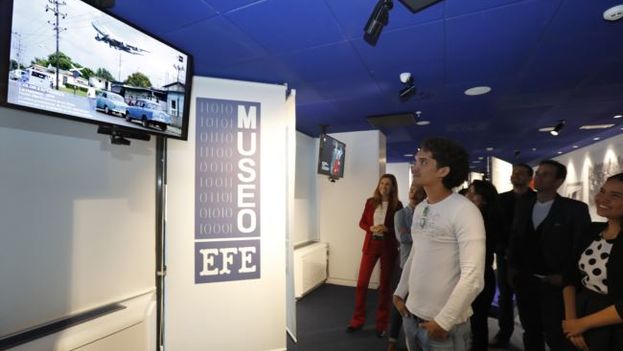
Cuban photographer Yander Zamora observes his snapshot ‘Arrival of Air Force One’ during a visit to the headquarters of the EFE press agency. (EFE)

14ymedio bigger14ymedio, Madrid, 6 April 2017 — Cuban photographer Yander Alberto Zamora de los Reyes was awarded the Ortega y Gasset Prize for Graphic Journalism this Thursday, just fifteen days after receiving the King of Spain Journalism Prize from EFE Agency for his photograph of Air Force One flying over homes in Cuba in 2016.

The snapshot, published by Reuters, is titled “Arrival of Air Force One” and captures the historic landing of Barack Obama’s presidential plane in Havana on 20 March 2016, on the first visit of a US president to the island In 88 years.

The jury of the 34th edition of the King of Spain Awards unanimously recognized that the photograph reflects “a historic moment in relations between the US and Cuba, after the serious divergences maintained for more than half a century.”

For its part, the jury for the Ortega and Gasset prize, which is awarded by the newspaper El País, described the image of “pure photojournalism, capable of capturing the moment.”

Several Opposition Leaders Detained On Their Return To Cuba

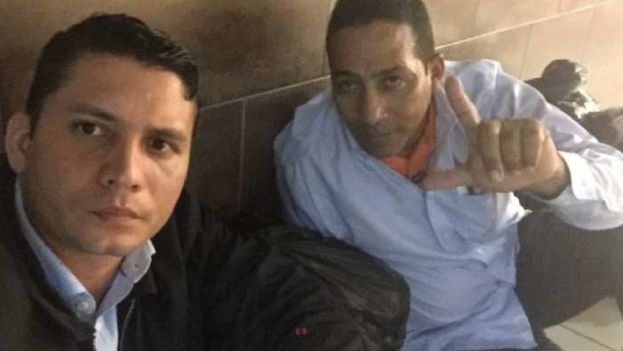
Eliecer Avila detained at the airport on his return to Cuba (Somos+)

14ymedio bigger14ymedio, Havana, 6 April 2017 — Cuban opposition leaders were detained at Havana’s international airport on Thursday, when they arrived from Colombia, according to sources in the political movement Somos+ (We Are More) speaking with 14ymedio.

Eliécer Ávila, president of that movement remains “in open protest” at the capital’s airport after the authorities’ attempt to confiscate his electronic devices. continue reading

“Immigration has not allowed us to pass, it seems there are signs on the computers that say: interested in confrontation,” Avila explained in a message addressed to his movement. Later they were allowed to enter the national territory but in the face of the attempt to confiscate their belongings, the opponents rebelled.

Carlos Oliva, a member of the Patriotic Union of Cuba (UNPACU), is being held at the police station in Santiago de las Vegas. Eliecer Avila has said that he refuses to leave the airport without his laptop. The opponent has been there for more than seven hours.

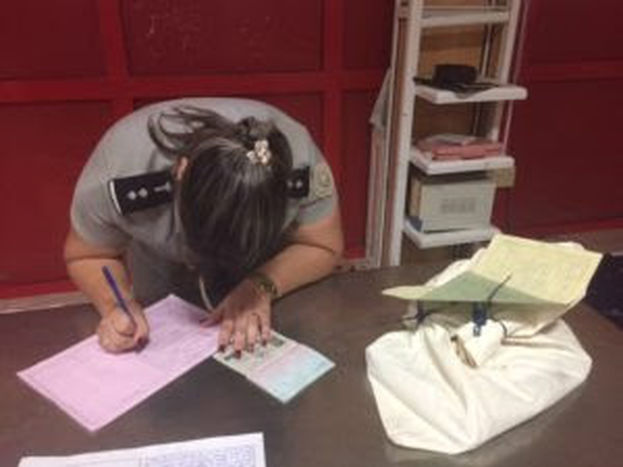
Customs Officer in the process of confiscating the belongings of Eliecer Avila. (Somos+)

The order to seize his computer was issued by Carlos Pons, Chief of Confrontation at the airport.

In the case of Marthadela Tamayo and Zuleidy Pérez, they were subjected to a “rigorous search” and their personal computers siezed.

Cuban Hosts Complain About Airbnb’s Payment System

By the end of 2016, at least 34,000 self-employed people were engaged in renting homes to serve the growing numbers of tourists. (Airbnb)

14ymedio bigger14ymedio, Luz Escobar, Havana, 6 April 2017 — Airbnb hosts in Cuba, who were so enthusiastic at the beginning, have been complaining recently about the delays in receiving the payments made by the tourists who have stayed in their homes. The discontent is clear from the complaints published on the platform of the American company and the interviews conducted by 14ymedio.

On the Airbnb site a couple claims to have experienced repeated delays in payments. “Between January and part of February 2016 we had a serious delay in receiving the payments through the agency VaCuba,” complained Ileana and Rolando, who have had problems again in early 2017. “We are already behind in the dates scheduled by Airbnb; we haven’t received the payments and right now we’re waiting on three more payments,” they explain. continue reading

The Miami-based courier company VaCuba, with headquarters in Miami, is in charge of bringing the payments to the hosts who rent out their homes, rooms and spaces through Airbnb. In any other country, these payments are made in the ordinary way through internet transfers, but the banking system in Cuba has hired this agency to send the cash to get the money to the Airbnb hosts.

The growth of Airbnb in Cuba during the last year has been remarkable, making it the country where the platform has grown the most thanks to the extension of licenses of that allows Cuban hosts to attract clients from all over the world, not only from the United States, like at the beginning.

Jorge Ignacio, an economics student who rents out a house in the town of Soroa, in Artemisa, told 14ymedio that in February of this year, “there’s nothing from Airbnb.” Now he says he’s “looking for alternatives” to collect for the stays of his guests because VaCuba, the only money distribution mechanism offered by Airbnb has collapsed, “because there are so many customers” and it can’t continue “counting the ‘kilos’,” he comments. “I get the full amount of the payment but always with a big delay,” said Jorge Ignacio, explaining that it’s not an isolated case “because the whole world is in the same situation.”

Rebeca Monzó, a Cuban artisan and blogger who has a room to rent in Nuevo Vedado, has a different complaint but adds to the discomfort generated in recent months. “The payment delay is almost a month, I never receive the full amount, they bring me 19 CUC when they actually owe me 500.” Monzó says that a messenger from VaCuba explained that “the Cuban bank is behind with the transfers” and that “it cannot get the full amount at once” and that is why they prefer to “make partial payments.”

“I wrote an email to Airbnb to comment on the delay of the payments and not only did they not answer me but they returned the message”

As a retiree, Monzó says the situation is not easy because she doesn’t see the result of her efforts and she only receives a fraction of what she spends on daily supplies that allow her to “maintain a functioning business.” The payments are not the only thing she needs to stay afloat. Monzó does her best to earn the good comments that clients place on her profile. Each morning she prepares the breakfast for her clients with great care and when they arrive at her house, she receives them with a welcome card she makes herself.

“I wrote an email to Airbnb to comment on the delay of the payments and not only did they not answer me but they returned the message. I have also asked other hosts who have been in this for a longer time and they have told me that it is not possible to receive the money by any means other than VaCuba.”

She says that Airbnb always makes the payment “in less than two days” and that the company notifies her by email. Monzó confesses that she does not want to leave the platform because “it is very safe” and sends “the type of clients that you ask for.”

“I refuse to take in the tourists just off the street because I do not want to take risks, I want it to always be through a company that guarantees me the seriousness of the customer,” says Monzó.

Other users of the platform say they have found a solution to the problem by using AIS cards to send and receive transfers, which can be found in any branch of the state-owned company Financiera Cimex.

“You can ask VaCuba to start sending the money to the AIS card,” explains an Airbnb host.

By the end of 2016, at least 34,000 self-employed people were engaged in renting homes to serve a growing number of tourists (4 million last year). To do so legally, they have to get a license and pay taxes, which are levied even when their rooms are not rented.

Connectify Will Be Free in Cuba to Share Internet Access

The app converts an internet-connected computer into a virtual repeater and is widely used on the island to share web access from the wifi zones. (Connectify)

14ymedio bigger14ymedio, Havana, 6 April 2017 – The managers of the Connectify application have announced additional benefits for Cuban users who will now be able to access the tool’s premium features free of charge. The app converts a computer connected to the internet into a virtual repeater and is widely used on the island to share access to the web from wifi zones.

A statement on the company’s official website says that it will continue “to fully support Cuban citizens with free Connectify Hotspot MAX 2017 licenses.” The statement also announced the release of a Spanish version of its program. continue reading

Along with the features available in the free version, such as creating a Wi-Fi hotspot, using the ad blocker and customizing the hotspot name, residents of the island will also have access to the premium functions of Connectify Hotspot, among them the repeater mode.

Connectify for PC has gained users in Cuba in recent years in the country with the opening of wifi zones and is used by many to share the bandwidth of their connection

Connectify for PC has gained users in Cuba in recent years with the opening of public wifi zones and is used by many to share the bandwidth of their connection. It has also generated a lucrative business of reselling access to the web at a price below the 1.50 CUC for each hour charged by the Telecommunications Company of Cuba (ETECSA).

This is not the first time that the company offers an advantage to Cuban clients. In the middle of 2015 the company launched a special promotion for the island that allowed the free download of the professional version of the software for three months. Until now, most of the versions that were used were hacked copies.

Invasive Marabou Weed Arrives at the Plaza of the Revolution

Marabou in the Plaza of the Revolution. (14ymedio)

14ymedio bigger14ymedio, Yoani Sanchez, NYC, 6 April 2017 — Resistant and thorny, the invasive marabou weed has inundated Cuban fields and threatened to displace the national shield’s royal palm. The shrub has become a plague spreading across the country, covering previously arable land, and worming its way into a topic for the speeches of senior officials. But the tenacious invader is not exclusive to rural areas and has also reached that symbol of power that is the Plaza of the Revolution in Havana.

On one side of the José Martí National Library, among the ruins of a building that would have been used to house patients for Operation Miracle – an eye care program – but that was never finished, grows a spontaneous garden with tiny yellow flowers and powerful pods loaded with seeds. The marabou raises its defiant branches there as if it were pointing to the huge tower popularly called “La Raspadura” – The Scratch. continue reading

Without adequate machinery or chemical defoliants to help stop the plague, across the island many country dwellers use old machetes and makeshift axes to cut the trunks. However, on both sides of the highways and in any vacant lot, the marabou continues to display its excellent health.

In 2007, during his speech on the anniversary of the attack on the Moncada Barracks, Raúl Castro joked about the panorama he had found on his trip to the city of Camagüey: “What was most beautiful, what stood out to my eyes, was how lovely the marabou was along the whole road.”

Now, the implacable enemy is approaching the presidential office in the Palace of the Revolution. Stealthy and steady, the marabou has won the battle.

‘Albertico’, Projectionist for ‘Strawberry And Chocolate’

Screenshot from the Cuban film ‘Strawberry and Chocolate’. (CC)

14ymedio bigger14ymedio, Luz Escobar, Havana, 2 April 2017 — Not even the most unconditional followers of Tomás Gutiérrez Alea, known as ‘Titón’, have seen the movie Strawberry and Chocolate as many times as Alberto Maceo. This Cuban with the mischievous smile worked as a projectionist at Havana’s Acapulco cinema when the film was on the marquee for a year. The movie left in indelible mark on his memory, which he still hasn’t been able, nor does he want to, get out of his mind.

From Germany, where he currently lives, Maceo, ‘Albertico’ to his friends, learned last week that the only Cuban film that managed to sneak into the Oscar competition is going to be restored. The Cuban Institute of Cinematographic Art and Industry (ICAIC) announced that it was a “very complex process,” despite the fact that the film is less than a quarter of a century old. continue reading

The news of the restoration unleashed a wave of nostalgia in the émigré. In 1993, when the story of Diego and David was released, Albertico was a teenager who no longer fit in his high school desk. Not only had he reached a physical height that made him stand out above his clasmates, but his restlessness pushed him into the theater. He played his first role in Pinocchio, while the movies allowed him to make a living.

It started as a lucky break to work as a projectionist in a difficult time when Cuban film production had plummeted and the projection rooms smelled of mold and sweat. In the midst of the Special Period, the young man began in a profession about which he recalls, “if you learn it well and focus on the details” you become aware that “what you have in your hands is a work of art.”

But enthusiasm wasn’t enough. Those were hard times, times when hunger and lack of sleep were not good allies in the projection booth. Albertico developed tricks so as not to fall asleep, from listening to music to reading a book, but few of them worked. He discovered that just talking with the other projectionists helped him manage to keep his eyes open while on the screen Titon’s movie played for the umpteenth time.

Alberto Maceo, Albertico to his friends, worked as a projectionist for the Acapulco film Strawberry and Chocolate was playing for a year. (Facebook)

There were no lack of failures. One day when he was alone, sleep overcame him, and despite the cries of “done!” and “cut!” he only woke up when scrolling in front of the viewers’ eyes were “all those letters and numbers and marks at the end of the roll” that no one is ever supposed to see “in a good projection.”

“The only thing that really made our lives happy was the Film Festival every December,” he says now. It meant an oasis in the monotony of repetitive programming. “The bad thing was when the festival ended and the program was once again Strawberry and Chocolate ” he quips.

He came to know the film so well that a student asked him for a transcript of all the speeches of the characters and Albertico just needed to take a little breath to start repeating them one by one.

One day the young projectionist was transferred to the Riviera cinema, on 23rd street. He thought in this way he might save himself from watching the same movie every day, but his happiness was short lived. The National Film Distributor decided to schedule Strawberry and Chocolate at his new workplace as well. Albertico again had Titón’s famous work in his hands “like that brick Diego doesn’t know what to do with,” he jokes.

Among his most persistent memories is the music composed by José María Vitier for the film, although he remembers it in a rather peculiar way. “The material was pecked and scratched” so there were some notes of the credits that were missing. He got used to listening to it like that. Now, when he hears it in perfect quality his mind “always omits those notes.”

In those interminable replays trapped in an endless loop, from which he could not escape, he analyzed the movements of the actors, learned to know when they blinked, each one of their breaths and their pauses.” “Every frame” was recorded in his head.

In the projection booth. (Noboot)

Albertico began to detect those details which nobody noticed. “What does that actor do, out of focus there in the background? What happens to the strawberry in Diego’s spoon in the first scene in Coppelia?” He also began to notice those “microphones or cables that are accidentally seen in some scenes.”

“They are details that no one sees because Strawberry and Chocolate is a work of art that takes you along the paths of the forest,” he reflects.

“The funny thing is that in a year of screening, the film never failed to have an audience,” he recalls. “Those who had nothing else to do, who hadn’t seen it before, who came to smoke a joint, or the couple who would sit in the last row of the theater to eat each other alive,” and also those who “with Marilyn Solaya naked or a few seconds of sex on the screen, came to masturbate.”

He also recalls how the filmstrip fell apart in his hands because the material was in “very bad shape” and the projectionist comments that “in some cases you could see the gaps on the screen.”

Some time ago, Albertico bought a copy of Strawberry and Chocolate on DVD in a German market. Whenever he watches it on his TV he imagines the sounds of the roll in the projector. Although on the screen of his television the scenes shine, his eyes are enchanted to see the scars of that picture he had in his hands so many times.

Nuevo Laredo Mayor to Regularize the Situation of Cubans Stranded in the City

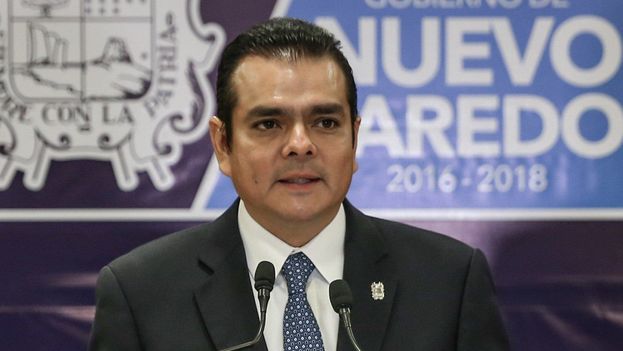
According to the mayor of Nuevo Laredo, Enrique Rivas, Cubans will be able to request political asylum to regularize their situation. (@Gob_NuevoLaredo)

14ymedio bigger14ymedio, Havana, 4 April 2017 — Cubans living in the Mexican city of Nuevo Laredo, who were stranded after the United States ended the Wet foot/Dry Foot policy that allowed Cubans who set foot on US soil to stay, may now apply for political asylum to regularize their situation in the country, according to the city’s mayor, Enrique Rivas Cueller, who spoke on Nuevo Laredo TV.

“We had a meeting where we had people from immigration, people from the state … all the actors from the federal government, to be able to give them a procedure. They are going to submit a request for political asylum and achieve their legal stay in the country,” explained Rivas Cuellar. continue reading

The municipal authorities estimate that there are currently between 500 and 1,000 Cuban migrants who could not continue their trip to the United States after the end of the previous US immigration policy.

The long stay in Nuevo Laredo to which migrants have been subjected has been a natural step for their integration into the city.

The municipal government will conduct a census of the Cubans in the city and, according to declarations of Rivas Cuellar in the newspaper Milenio, “many of them are participating in the economic activity, some have already developed some commerce,” which is why regulation is necessary.

“Even if they want to go to another city in the country where they intend to work or live, it will support them,” said the mayor, who said that many Cubans “are already regularizing themselves.”

The measure that the authorities of Nuevo Laredo intend to carry out is unprecedented in Mexican migration policy, as of 12 January of this year when they stopped issuing transit permits for Cuban migrants to transit through the country for 20 days as a legal way to reach the United States.

In its place, the Mexican Government has since passed the Immigration Law and, as of 18 February, 680 Cuban migrants found to be in different parts of Cuba illegally were repatriated to Cuba.