
The Private Sector Accounts For 18% Of The Cuban Economy Despite The Obstacles

The Havana Consulting Group highlights the importance of Cuban exiles in the development of the private sector on the island through their financial support. (14ymedio)

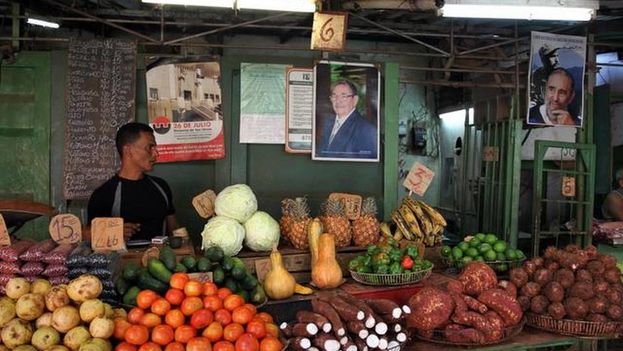
14ymedio bigger14ymedio, Miami, 1 August 2017 – The work performed by the self-employed in the island already generates 17.8% of the gross income of the Cuban economy despite difficulties such as high taxes and shortages of raw materials, according to the latest report from The Havana Consulting Group (THCG), which considers this sector as “a necessary and essential force in the development of the country.”

The study by THCG contrasts with the measure announced Tuesday by the government, which, according to a note in the Communist Party newspaper Granma, intends to suspend the granting of several forms of self-employment licenses with the aim of curbing “illegality and disorder.”

The analysis published by the independent consulting firm based in Florida, states that the 535,000 people who work legally in the private sector (plus another 500,000 who do so illegally) on average receive, as a minimum, income ten times higher than what is received in the state sector. continue reading

“This change that is taking shape in Cuban society is irrefutable proof that, if the government were to decide to make a real economic opening and release the country’s productive forces, with a reform like Viet Nam’s or China’s, in two to three years Cuba could take out millions of Cubans out of poverty. In a short time it would be another country,” says THCG.

“This significant difference in earnings has led to the creation of new market segments with different levels of purchasing power, which have consumption patterns different from the rest of the population,” explains the author of the article, Emilio Morales.

Nevertheless, THCG argues that, despite the boom in private activities, “This significant difference in wages has given rise to the creation of new market segments with different levels of purchasing power, who have patterns of consumption different from the rest of the population.”

The report was drafted ahead of the authorities’ decision to limit licensing, affecting nearly thirty occupations such as home rentals and paladares (private restaurants) and cafés. The decrease in the issuance of these licenses may result in still greater increase of the state sector in the economy of the island.

“In the period 2010-2016 there has been a boom in the Cuban private sector. Entrepreneurs have developed very successful and profitable business models,” the study says.

According to THCG, the state agency GAESA, which belongs to the Armed Forces, controls strategic sectors such as 85% of the retail market, 40% of the hotel sector within the Cuban tourist industry, and 27% of the Telecommunications Company of Cuba, among others. However, the independent consultant’s analysis points out that “its business structure only represents 21% of the gross income of the Cuban economy, not 60%, as the media and news agencies have pointed out in recent weeks.”

The report also stresses the importance of Cuban exiles in the development of the private sector on the island through their financial support, “which has managed to create a market of goods and services that is estimated at between 2.5 and 3.8 billion dollars.”

“The fact that Cuban entrepreneurs already control 18% of the gross income of the economy with all the limitations they have is a good sign that the mutation has begun to take shape,” THCG said.
The Betrayal Of The Minstrel

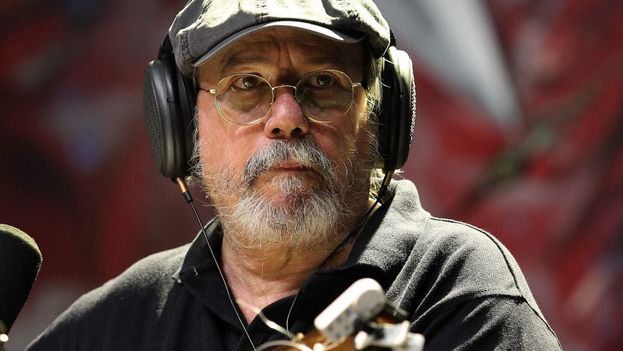
Silvio Rodríguez lost the ‘blue unicorn’ of his creativity many years ago. (EFE)

14ymedio bigger14ymedio, Yoani Sanchez, Havana, 30 July 2017 — Songwriters are often confused with prophets or leaders. The output of numerous troubadours has ended up molding consciences, erecting political slogans and becoming unquestionable mantras. Every social movement needs its musical soundtrack and in Latin America these loners of the guitar have sonorously accompanied more than one.

Chroniclers equipped with melodies most commonly take these songs literally, confusing the characters of their stanzas with the flesh and blood being who ascends the stage. Under the lights, in the intimate atmosphere of a theater, they intone those phrases that are later later subverted for thousands of spectators into slogans and postures. continue reading

After the hard years in which a ballad could cost them their lives or prison, Latin American troubadours who shaped the protest songs now exist in a stage of permissive tranquility. The fiercest battle is waged against reggaeton, not against censorship. Their greatest fear lies not in swelling the blacklists, but in the audience moving the dial to look for some other, “more moving,” music.

They are no longer the focus of the reviews and the critics, and find themselves in the boring corner of the consecrated who no longer fill stadiums nor provoke sighs. They live on past glories and rarely does one of their songs make it to the top of the lists, although on TV they are still presented as “unsurpassable” or “indisputable.”

Among these shaggy ones of the easy verse, the most roguish have ceded their guitar to some power they criticized years ago, to vegetate in the shadow of festivals, tributes and interviews. The few darts they still throw in their lyrics mix the most recurring commonplaces of progressive discourse, while their clothing maintains every trace of a disguise of calculated sloppiness.

The best-known names of a few decades ago, today they caress the discs with which they assembled crowds and made their consciences throb. In the absence of those emotions, they are now engaged – without score and with weakened voice – in their professorships of how to behave civically or how to incite a rebellion that they themselves dismissed as unprofitable.

Some of those musical themes they composed, when they breathed the air of making love not war, have been hijacked by militants and extremists who sing them – neck veins bursting – in front of their political opponents. From libertarian musical expressions they became the gags to silence differences, mere hymns of blind battle.

The times of rhyming and believing each verse have given way to cynicism. Many of the minstrels who put rhymes to nonconformity moved away from the public scene; others parked their uncomfortable songs in search of greater income, while the majority, having lost the muse, have become defenders of whatever cause can hide their creative drought.

Nostalgic for a time when crowds gathered, more than one has chosen to sing to the powerful and dedicate his refrains to certain unpresentable populists. They compose to order, exalting in their refrains faded revolutions transmuted in dictatorships, and so they earn a space on the official platforms where the promises abound and the sincerity is lacking.

These are not the times when Victor Jara took his art to the ultimate consequences. “I do not sing for singing / nor for having a good voice, / I sing because the guitar / has meaning and reason,” said the Chilean who died at the age of 40 with dozens of bullets embedded in his body. Now there are plenty of artists who take care with every word to avoid moving beyond the scheme of the politically correct. Composers of polished rhymes and well-combed hair who walk through government palaces and whose honoris causa is welcomed.

They are a part of that plethora of intellectuals and artists who appear in the family photo, pointing out anyone who confronts them as the cause of all problems. Bitter anti-imperialists, false ecologists and distrustful of wealth – as long as that phobia does not affect their own pockets – they star in cantatas against distant powers and governments under which they do not live.

About four years ago, the Spanish singer-songwriter Luis Eduardo Aute said that he identified with President Rafael Correa’s Citizen Revolution. The statement was made at a time when the Ecuadorian ruler was engaged in a tough fight against the media in his country and put strict limits on freedom of the press. The irreverent poses always involve a lot of myopia, of not seeing beyond the fabricated irreverence. Under the influence of his own refrains, Aute believed in the character of his songs and that: “They say that everything is tied / And well tied to the markets,” when in reality he forgot that other powers also like to control every detail, especially words.

In Cuba lives an extreme case. Silvio Rodríguez lost the ‘blue unicorn’ of his creativity many years ago. As his subjects were filled with visible seams and boredom, his public outlook became closer to the official discourse. He stopped writing unforgettable songs to engage in diatribes against “the enemies of the Revolution.”

Recently, the singer added his signature to the manifesto Let the Catalans Vote, asking the Spanish Government to allow a referendum on independence in Catalonia. Rodríguez’s name is accompanied by other figures such as artist Yoko Ono, African-American philosopher Angela Davis and Nobel laureate Rigoberta Menchú.

Rodriguez, author of Ojalá, initialed the statement that “a large majority of Catalans have repeatedly expressed in various ways the desire to exercise the democratic right to vote on their political future.” He considers that “preventing the Catalans from voting” contradicts democratic principles, precisely those that Cubans have been unable to enjoy for decades in their own land.

There is nothing left in this Rodriguez of the rebellion that characterized his first tunes. In 2003, he signed the Message From Havana To Friends Who Are Far Away, in which a group of intellectuals offered justifications for the imprisonment of 75 dissidents on the island. The document also supported the decision of Fidel Castro’s government to shoot three men who hijacked a passenger ship to try to escape to the United States.

With a comfortable life, a recording studio authorized by the Government and with a full table, the minstrel went astray in bows and silences. His music, which once accompanied the disobedience of so many citizens in this part of the world, is now a part of the official lyrics, of the symphony of power.

_____________________________

Editorial Note: This text has been previously published by the Spanish newspaper  El País  in its edition of Sunday 30 of July.

Machado Ventura Denies Cuba’s Mediation In The Venezuelan Conflict

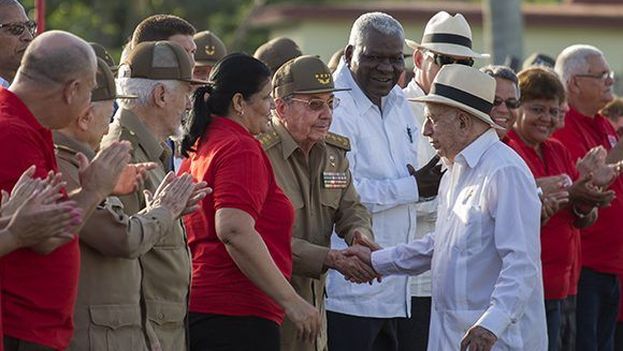
Machado Ventura and Raul Castro greet each other in Cuba on the 26th of July Celebration. (EFE)

14ymedio bigger14ymedio, Marcelo Hernandez, Havana, 26 July 2017 – There were few surprise in Jose Ramon Machado Ventura’s speech this Wednesday during the ceremony for National Rebellion day in Pinar del Rio. The Cuban Communist Party number two reiterated that “the direction of the Revolution is laid out,” and denied that Cuba was participating in the solution to the Venezuelan conflict, as suggested by the British newspaper the Financial Times.

The national celebration of the 64th anniversary of the assault on the Moncada Barracks in Santiago de Cuba and the Carlos Manuel de Céspedes Barracks in Bayamo, was the last that Raúl Castro would attend in his capacity as president of the country before his retirement on 24 February of next year, and also the first after the death of Fidel Castro in November. continue reading

The ceremony took place in “a provisional place of the Revolution,” according to local media, in the absence of a permanent space for official ceremonies. Controls on the roads have increased since the weekend and during the day of the event vehicles were not allowed to circulate near the ceremony site.

Machado Ventura, as the main speaker of the event, called for respect for Venezuela’s autonomy and attacked Luis Almagro, secretary general of the Organization of American States (OAS), whose performance he described as “disgusting” and “at the service of imperialism.”

The Cuban vice president strongly criticized Almagro’s appearance before the subcommittee for Latin America of the United States Senate last week, when the OAS Secretary General denounced the “collapse of democracy” in Venezuela.

“In recent weeks, the interventionist and destabilizing actions against the Bolivarian and Chavez government led by constitutional president Nicolás Maduro Moros have increased,” Machado Ventura said Wednesday. He criticized the recent threat of sanctions on Venezuela announced by Donald Trump’s administration.

“A few days ago an influential American (sic) newspaper was discussing the alleged involvement of our country in an eventual international mediation related to the situation in Venezuela,” he said. “Cuba flatly rejects such insinuations and claims absolute respect for [Venezuela’s] sovereignty and self-determination,” he added.

Last week the British newspaper said that Colombian President Juan Manuel Santos had traveled to Cuba to convince Havana to mediate in the “growing” Venezuelan crisis, which left more than 90 dead after three months of protests.

Those who attempt, from the outside, to give lessons in democracy and human rights while encouraging the violence of coups and terrorism must take their hands off that nation

“Those who attempt, from the outside, to give lessons in democracy and human rights while encouraging the violence of coups and terrorism must take their hands off that nation,” Machado Ventura said pointedly to the island’s senior government officials, local officials and a small number of foreign guests.

The rest of the speech was devoted to the historical review of the revolutionary process and to comparing the current situation of Pinar del Rio with that of January 1959. “We have programmatic documents that set the direction and scope of the changes that we will continue to make with the aim of achieving a prosperous and sustainable socialism,” he explained about the future of the country.

The speech shunned the national reality, ignoring issues such as self-employment or cooperatives that have generated concern among citizens after Raul Castro, speaking to the National Assembly of People’s Power, warned of deviations and irregularities detected in the non-state sector.

Maduro Takes Venezuela One Step Closer To ‘Cubanization’

President Maduro learned from the Cuban regime that he can justify the lack of freedoms with supposed external threats. (EFE / Cubadebate)

14ymedio bigger14ymedio, Havana, 31 July 2017 –This Sunday Nicolás Maduro buried what was left of Venezuelan democracy. He did so in spite of international criticism, national protests that for more than a hundred days have demonstrated disapproval of the Constituent Assembly, and the difficult economic situation that the country is going through. The new organ of power that is born of this vote copies the Cuban model and closes off any peaceful path to a change in the system.

Havana rushed on Monday to announce the official victory in Venezuela. The headlines appearing in the newspaper Granma, an organ of the Communist Party of Cuba, have all the traces of news previously dictated by a Plaza of the Revolution that has neatly packaged Sunday’s election. Not even the reality of poor turnout and the rejection of several Latin American governments has managed to reverse that script. continue reading

Venezuela has begun to walk a path with no turning back. It awaits the dismantling of the few independent structures that could confront the craving for control from Miraflores Palace. From now on, the battle against all vestiges of citizenship will be protected in a supposed entity of “popular power” tailored to the interests of the United Socialist Party of Venezuela (PSUV) and a pitiful copy of the Cuban National Assembly.

In his first statements after the vote, Maduro has already signaled what is coming and made threats against Parliament, the Prosecutor’s Office, opposition leaders and the press. This diatribe will intensify in the coming days and, as the president warned, could end up leading those most critical of these events to “a prison cell, under the command of necessary justice.”

As Fidel Castro once disarmed Cuban civil society, pushed thousands of people into exile and imprisoned or shot his antagonists, chavismo is now preparing to ruin Venezuela for political diversity and civic participation. In order to achieve this, Maduro turns to the carrot and the stick, just as it has been done for almost six decades in this Island.

An army of public workers forced to do what the ruling party dictates, thousands of families dependent on subsidized food products, and a rhetoric of hate to frighten his detractors are some of the weapons that Maduro uses to control a Venezuela assaulted by crisis and political absurdity.

Ranged against the totalitarian longings of Hugo Chavez’s heir is a part of the population that tries to recover in the streets what has been taken away in the institutions, but it can not sustain the battle for long against the military and trained police forces. There is also the international community, accustomed to expressing itself in memorandums and declarations with little practical effect.

Maduro knows that time and diplomacy can appease international agencies and foreign governments. He has learned to lobby the United Nations and to buy the blessing of influential figures who bray for the respect of Venezuelan sovereignty. He understands that a dictatorship can be enthroned and can justify a lack of freedoms with supposed external threats, as he has been taught by the Cuban regime.

This Sunday’s fraud barely leaves two possible paths: the capitulation of civil society and the consummation of totalitarianism or the terrible path of social conflict. Whatever happens, the country will be faced, for decades, with the ghost awakened by this Constituent Assembly.

A Professor Sees Similarities Between How Cuba and Spain Choose Their President

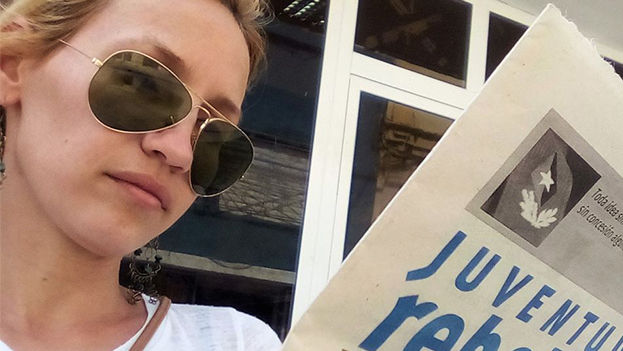
José Luis Toledo Santander, former University of Havana Professor and Chairman of the Parliamentary Committee on Constitutional and Legal Matters. (Roberto Suárez / Juventud Rebelde)

14ymedio bigger14ymedio, Havana, 25 July 2017 — The former Dean of the Faculty of Law of the University of Havana and current chair of the National Assembly’s Committee on Constitutional and Legal Affairs, Jose Luis Toledo Santander, is clear: there are similarities between the Cuban and Spanish electoral systems, although the island is free of those campaigns with “people covered with stickers, photos and the offensive battles that arise in other countries.”

“We are not sui generis. How does Spain elect the head of government? The parliament elects him, the president of the Spanish government is not elected by popular vote,” argues the deputy on being asked about the reason Cubans do not elect their leader. The official doesn’t mention in his comparison that the Spanish electoral system is a multi-party one.

The official argues that the deputies of Cuba’s National Assembly receive the sovereign power on behalf of their voters for the decision making, and one decision is the election of the president of the Councils of State and of Ministers. “In addition, our system is not a presidential system, it is a semi-parliamentary system. Our president does not have the power to make decisions alone.” continue reading

“Our system is not a presidential system, it is a semi-parliamentary system. Our president does not have the authority to make decisions alone”

Toledo, who has granted an interview on the electoral system published in three installments on the official website Razones para Cuba, notes that the president of Cuba goes through five phases until he takes office. “First he has to be nominated and approved by the votes of a full social or mass organization. Second, he has to be approved by a vote in a Municipal Assembly. Third, he has to be elected by direct and secret vote of the voters of an electoral district; if he does not get elected there he can not be a deputy. Fourth, his candidacy has to be approved by the National Assembly. And fifth, he has to be approved in a direct and secret vote by the deputies.” The professor does not explain, however, why only two people – both of the same family – have held the position in the last 40 years.

Toledo also refers to the particularity of the upcoming general elections of 2018 due to the absence of Raúl Castro, although he considers that the “wisdom” of the Revolution and the General have prepared the ground for the process to occur naturally. “It will not be a traumatic moment because we are all ready, there is an ideological political conditioning of the revolutionary force for a historic moment that this country is going to experience, and we are ready for change,” he says.

In the interview, Toledo again talks about the drafting of a future electoral law. The new law was planned for this term, but Castro’s promise has not been met. However, the official warned that changes in the composition of the elections and the presence of a permanent, professional body, dedicated to directing the electoral processes against the eventual one that now exists, will be studied.

The professor defends the scarce information available to Cubans when it comes to electing their representatives and denounces the electoral campaigns that exist in multi-party systems. “You can not confuse electoral propaganda with an election campaign. As part of the propaganda, there are tours organized by the Electoral Commission for the different territories and the candidates talk to the people, that’s one thing. A campaign is something else altogether where people cover themselves with stickers, photos, and there are the offensive battles that are provoked in other countries.”

The deputy considers that there is equal opportunities for all Cuban citizens when it comes to running, although he does not explain the difficulty of candidates emerging from outside the Communist Party 

In addition, the deputy believes that there are equal opportunities for all Cuban citizens when it comes to running, although he does not explain the difficulty of candidates emerging from outside the Communist Party. “Every citizen has the right to elect and to be elected,” he said. Of course, within the limitations of the single party, which “expresses the democratic unity of the Cuban people,” according to a tweet from the Cuban Foreign Ministry which Toledo quoted on December 10, 2013, World Human Rights Day.

As for territorial representation, Toledo rejects that the deputies are tied to their region. “The deputy is a national representative, and the National Assembly discusses and approves the great problems of general interest of the nation, not territorial problems (…) which are channeled and resolved at the level of the municipality and province. What we do have to work on is that there need to be more links and exchanges between deputies and voters in the precinct, district and municipality. Today we have a program for that that has been approved by the Party leadership, which is called Perfecting the Organs of People’s Power.”

Missing Words

A group of high school students share audiovisual content through a cell phone. (14ymedio)

14ymedio bigger14ymedio, Yoani Sanchez, Havana, 28 July 2017 — The man forms a trumpet with his hands in front of his mouth to warn of the presence of an informant. It is a transcendental gesture warning not to blab in a daily life were people constantly appeal to body language, obscene words and metaphors. Failing to do so leads to jokes, scares those selling things under the table, and generates mistrust among friends.

The official media is expressing concern about the deterioration in Cubans’ oral expression. Several television spots in recent weeks have tackled the shouts and rude terms that fill talk on the street. Journalists attribute this poverty of vocabulary to the family and insist that the epidemic of vulgarities that plagues the country is incubated at home.

Another culprit pointed to is reggaeton. The songs loaded with lust and machismo cultivate an expression filled with denigrating concepts and sexual allusions, say the specialists who speak on these TV programs. According to the opinions of these sociologists and psychologists – linguist are seldom invited – listening to acts such as El Palo Divino makes teens utter more insults per minute. continue reading

So far, each one of the analyses aired has failed to point to any institutional responsibility for verbal degradation. They ignore that for decades everyone who has spoken “nicely” and has dared to pronounce all the letters in every word has been labeled “unpopular,” “arrogant” or “lacking in humility.”

Foul language is a distinctive feature of the revolutionary language that has been imposed in Cuba since January 1959. Since then, expressing oneself with the rudeness of a stevedore has become one of the many strategies that opportunists assume to disguise themselves as proletarians. Offending others has also been fashionable in this political uproar established in the country more than half a century ago.

Now, the authorities are shocked because young people insert a bad word in every sentence they utter. They blush for the constant allusions to sexual organs in conversation, a real trifle compared to the using the derogatory gusano, worm, against a political opponent, as was coined and promoted by the government.

After accusing those concerned about the correct use of language of being bourgeois, now they are afraid of this vulgar generation that was born of so many verbal castrations. After pursuing the free and frank word, today from government institutions, they complain of the incoherent monosyllables that so often arise when these children of censorship are asked about politics, human rights or the leaders of the country.

Many years ago, here, talking stopped being a way to communicate and instead become the fastest way to relax. Not only does expressing an opinion cause problems, but the style in which it is expressed can also be a source of conflict. Understanding the danger of articulate language has been one of the most successful survival mechanisms developed by Cubans in the times we have been living in.

Not recognizing the implication of the political system in this linguistic deterioration is another way of doing damage to the vocabulary… by not calling things by their names.

The Dark Side of Voter Registration in Cuba

Voter lists that are posted in public places include the name of each voter, their last names, date of birth and personal address. (EFE)

14ymedio bigger14ymedio, Reinaldo Escobar, Havana, 27 July 2017 — The starting point for the Cuban electoral process is undoubtedly the disclosure of the voter register, the list of all those who have the right to mark a ballot at the polls. The preparation, public character and possible omissions of these lists decisively influence the course of the whole process.

The electoral commissions of each constituency creates this listing starting from something with a vague legal character known as the “Book of Registered Addresses.” A document that, as a general rule, is managed by the person in each precinct in charge of the Committee for the Defense of the Revolution (CDR) Vigilance Front.

The book has multiple functions, from serving as the basic voter list, to functioning as a control mechanism to prevent people who don’t have that address on their identity cards from living in a particular building. For years, the register from each CDR has been used as evidence to fine, evict and deport to another province, residents alleged to be illegal. continue reading

From this collection of names to what are clearly police matters, a process that should have a merely civic focus is entertwined.

One of the least known features of the island’s electoral system is precisely this lack of a permanent and independent entity that is responsible for registering voters and that deals with all the formal aspects of an electoral roll. Instead of that, it remains in the hands of a notoriously political organization like the CDRs.

In the announcements made by the official press on the elections, this detail, of transcendence importance, is ignored. The fact that, at the base of the People’s Power one can trace the signs of ideological control over this governing body, is not something that the media controlled by the Communist Party want to shine a light on.

Every time elections are called, the commissions that bring them to fruition begin to form, and after fulfilling their functions they dissolve. This process is a substitution for the National Electoral Councils with elected members that exist in other countries, and that answer to the voters and possible observers.

The 1992 Electoral Law gives the Council of State the responsibility to designate the National Electoral Commission, which, in turn, appoints members in the provinces. These make up the municipal commissions that select the members at the district and precinct level. They are the ones who choose the members of the Electoral College for each precinct.

As in a sequence of Chinese boxes of which no trace will be left, each of these commissions is dissolved as soon as the voting is over. They will only be constituted again, presumably with other members, when the Council of State calls for new elections.

In each municipality, the Registry of Voters is prepared with those who have the legal capacity to exercise the right to vote. The Law is ambiguous when it expresses that the citizen is registered, without specifying whether they do it of their own volition or if, without being consulted, they are included in the list.

A few days before the polls are opened, the printed voters lists are posted in public places. Next to the name of each voter, one can read their date of birth and personal address. In all the years that this method has been in use, few have commented on the violation of privacy represented by the disclosure of these private data.

The information is displayed for at least 30 days to provide an opportunity to correct errors or request the exclusion or inclusion of a person. A demand that can be made by the interested party, their representative, or an immediate family member.

There are very few cases of citizens who request to be excluded by on the basis of some kind of political disagreement. In fact, those who have some inclination to opposition are often erased from the lists because they did not vote in the previous elections. To demand the right to be registered is the only way that abstention is recorded in case of not voting in the elections.

Beginning on September 21, while residents of a neighborhood line up to buy bread or the latest products arriving in the ration market, the will see these election registers. Few of those who look for their names on these lists will

Instead of questioning the creation of the lists, the majority of voters will take advantage of them to discover that Roberto’s second dame is Filomeno, or that the single lady on the fifth floor just turned 50. They will find out that Yolandita was registered at birth under the name Ricardo, and that Teresa’s husband is not registered at his wife’s address. And so political control will have connected its first link.


A Group Of People With Disabilities Organizes Outside The Cuban State

Architectural barriers are a constant in the life of the Cubans that makes life impossible for many people with physical disabilities. (14ymedio)

14ymedio bigger14ymedio, Reinaldo Escobar, Havana, 24 July 2017 — In a crowded bus, two women discuss who is entitled to the disabled seat. While one carries a cane, the other shows an ID card from the Cuban Association of Limited Physical Engines (Aclifim), an official entity with more than 74,000 associates that sets ideological requirements (i.e. fidelity to the government) to maintain membership.

Aclifim, along with the National Association of the Blind (Anci) and the Cuban National Association of the Deaf (Ansoc) call themselves Non-Governmental Organizations. However, complaints about their political bias led a group of activists to create a support group for people with disabilities without any conditions.

The Cuban Inclusive Culture Network, created last year, faces a difficult challenge in a country where much remains to be done for the social integration of people with disabilities. Added to this is the lack of legal recognition that allows its members to work under legal protection. continue reading

Juan Goberna, one of its founders, woke up one morning and was not even aware that it was daylight. After several operations that failed to restore his sight, he decided to start using a cane. In those early days in the dark he approached Anci hoping to take a Braille course and receive a computer program that read texts aloud.

Accompanied by his wife, Goberna arrived at the NGO’s office in the municipality of Central Havana with his identity card in his pocket, five pesos in stamps and a certificate that declared him “legally blind.” “What revolutionary organizations do you belong to?” asked the clerk filling out his form.

The activist still shows indignation when he remembers the scene. “I told her I did not belong to any and from there everything changed,” he explains to 14ymedio. The official informed him that his case had to be referred to the Ministry of Justice to verify if he belonged to any “human rights” group.

Two weeks later they told him that he could not be a member of Anci because the statutes do not allow the disaffected in its ranks. After several attempts and appeals to different entities claiming his right to membership, Goberna has only had silence for answer.

Last year luck smiled on him. During a trip to Peru, organized by the Institute for Political Freedom (IPL), the idea arose, along with other activists, to create an independent entity to “visualize the difficulties faced by people with disabilities and promote a change of thinking towards them.” The organization does not discriminate against anyone because of “their physical, sensorial, intellectual, cultural or ideological characteristics.”

Today, the network has 15 active members and has managed to have representation in several provinces. In September of last year, some of these pioneers attended the VIII International Congress of Persons with Disabilities, held in Medellín, to learn about the work developed in different countries of the region.

The Network collects testimonies from people who are in a precarious situation and are victims of institutional or family neglect and has also identified at least six cases of violation of the right to join Anci, Aclifim or Ansoc for ideological reasons.

Last Saturday, during their last meeting, the members of the independent group proposed to disseminate the Convention on the Rights of Persons with Disabilities, to which Cuba is a signatory and whose content is scarcely known on the island. In addition, they want to disseminate updated concepts about disability, accessibility and inclusive culture, among others.

For Susana Más, an independent journalist and member of the Network, “it is unacceptable that people working in the media, intellectuals and artists who are supposed to be up to date in the use of language, work outside these concepts.” The reporter opts for a “sensitization campaign” around the term “person with disability, instead of disabled.”

Relative to the NGOs set up by the government, The Inclusive Culture Network does not consider itself an opposition organization or an enemy entity. “What we would most like to do is to cooperate with these entities, not in the spirit of disqualification or competition, but as something complementary,” insists Goberna.

For the moment, the Network is dedicated to highlighting attitudes and denouncing the existence of architectural barriers, so that those with a disability are not seen as sick, and for those around them to shed their discriminatory prejudices, indifference or pity.

The biggest difficulty they have encountered so far is the negative attitude of the institutions they go to in search of information or to file complaints: the first thing they are always asked is whether they are authorized or if they belong to an official entity.

Doctors With No Right To Laptops

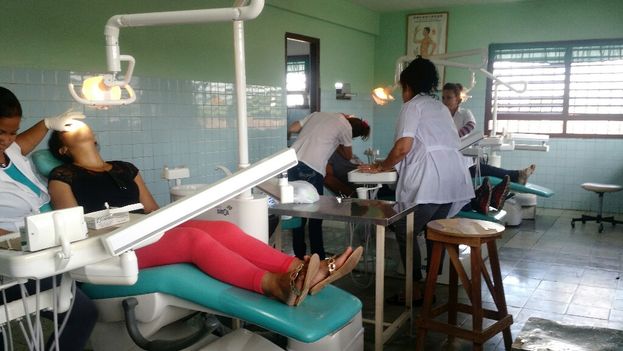
Dental clinic in Candelaria, province of Artemisa. (14ymedio)

14ymedio bigger14ymedio, Bertha Guillen, Candelaria (Artemisa province), 23 July 2017 — “Where is my laptop?” a dentist at the Candelaria polyclinic in Artemisa province asked Friday while attending a patient. The sale of laptops to doctors – at subsidized prices – does not include graduates in dentistry, by a decision of the Ministry of Public Health that is being strongly questioned.

As of the end of last year they have began to sell the laptops for 668 Cuban pesos (CUP), around 25 dollars, for doctors who obtained a diploma before the end of 2015. The list of beneficiaries includes those who have completed a medical mission abroad and requires that they pay the full amount all at once, not in installments.

The public health system employs a total of 262,764 workers in the island, of which 87,982 work as doctors, according to data from the Statistical Yearbook of 2015. The doctors receive the highest wages in the country, a total of between the equivalent of $50 to $70 US per month. continue reading

However, the sector is seriously affected by the desertions of professionals during their missions abroad and the exodus towards other better-paid economic spheres such as self-employment or tourism, of doctors who remain on the island. In addition, physicians must deal with long work hours, material deficiencies and the dissatisfactions of patients.

Since the beginning of this year the doctors have been able to buy laptops in the store for public health workers in the provincial capital. The offer has brought long lines outside the premises and complaints about the capabilities of the equipment.

Since the beginning of these sales, an indeterminate number of laptops has ended up in the informal market, where they are sold for a price ranging between 200 and 300 CUC, between eight and 12 times the original cost.

Recently the official newspaper Granma revealed that each year Cuba collects more than 8.2 billion CUC (roughly the same in dollars) for “the export of health services.”

This month, several meetings in the province of Artemisa notified staff working in polyclinics, hospitals and other health centers that only doctors are entitled to acquire these computers. X-ray technicians, lab workers, and even dental graduates “are not included in this offering,” ministerial authorities said.

The information has generated a barrage of criticism and discontent among dentists and other professionals in the sector. None of them, except graduates in medical sciences, will have access to the merchandise sold in stores authorized for public health personnel. Among these products are also the white coats that are currently distributed on a staggered schedule in Artemisa province.

“This has gone beyond a lack of respect,” said the dentist from Candelaria. “Now it turns out that we are not the same as doctors, but when it comes time to participate in acts of repudiation against the words of Donald Trump, we are.”

Raiza Machín, a dentist from the province, does not speak half-heartedly. “I feel offended, even the self-employed who work in coffee shops wear white coats, how is it possible that as a public health worker we cannot buy them in a store dedicated to us?” asks the professional.

According to the head of the Public Health Workers Union in Candelaria, the information came from the Ministry itself and applies to the whole country. In response to the workers’ discontent, the union representative demanded a meeting with “the highest authority” but has not yet received a response. “For the moment we are not doctors and therefore we can not use the same facilities as they can,” says Machin sarcastically.

“At first they told us that they had to wait until they finished distributing the laptops among the doctors in the hospitals, then it would be the clinics’ turn, and then finally our turn,” says Araceli, a dentist with several years of experience.

“They have strung us along and now that say that we are not doctors, that’s why we don’t get the computers,” complains the dentist. The refusal to allow dentists to buy them became known shortly after the official media assured that the dentists were “guaranteed” laptops.

“Since our title says ‘Doctor of Dentistry’ I have to consider that I am one,” Machín stresses.

By Show of Hands

A man exercises his right to vote in the elections to the Popular Power in Havana. (EFE)

14ymedio bigger14ymedio, Reinaldo Escobar, Havana, 21 July 2017 — In recent weeks, the official media have spared no space to explain the details of the Cuban electoral system, which they call “the most democratic in the world.” However, the infographics, data and explanations published so far neglect details that “firmly maintain” the mechanisms to avoid surprises.

Between September 4th and 30th the candidates for delegates of the People’s Power will be nominated. The process will occur in the different areas which together make up the 12,515 districts distributed across the 168 municipalities of the country. On this occasion, it is the first step in Raúl Castro’s departure from power in February 2018. continue reading

The call for citizens to participate in these assemblies is traditionally issued by the Committees for the Defense of the Revolution (CDR) Organization, with a clear political origin and a strong ideological affiliation. From wall signs, personal reminders, to written citations, all are a part of the strategies to call people to vote.

In the days leading up to the meetings, the Communist Party of Cuba (PCC) militants who live in each zone meet to agree on the positions depending on the directions that come from the higher levels. In these meetings they are warned how they should act in case any disaffection toward the Revolution is proposed, and which candidate enjoys the PCC’s sympathy.

Only voters of the district have the right to propose and be proposed in the assemblies of each area. In order to do so they have to ask for the floor, speak in the order granted to them and briefly explain the reason for their proposal. The nominee must show his agreement with being proposed and only then will he or she be put to a vote.

All voters may express their opinion for or against the candidate and the vote is made directly and publicly, in the same order in which each candidate was proposed. Each attendee has the right to vote for only one nominee and in the event of a tie a new nomination is initiated.

When the Electoral Law in its article 83 remarks that the vote is “public,” it minimizes one of the most important keys of the electoral system of the Island and that make it more controllable by the powers that be. At that initial stage of nomination, voters must express their preference by show of hands, that is with their faces uncovered. In a country full of masks and fears, few dare to show their neighbors a preference for a critical citizen.

When in one of these assemblies an elector proposes a candidate with a reputation of being politically uncomfortable, he knows that, immediately, the militants of the neighborhood will request the floor to discredit the nominee. The mechanism of “cauterization” of any nomination that does not conform to the tastes of the ruling party will be activated immediately.

In the midst of the meeting, a member of the PCC will warn in a loud voice, “this man is in the pay of the empire,” and someone else will speak up to express his doubts because someone “who feels himself to be Cuban votes in favor of this mercenary…” The performance seldom has to be carried out, because the instinct for self-preservation dissuades the majority of voters from suggesting a dissident for delegate.

They find it so difficult to encounter someone who, from dissenting positions, aspires to be a delegate, or to find another who dares to propose one to the assembly. How many will raise their hands in favor of a dissident after the militants make it clear they do not like the nomination? Almost nobody. This simple trick will have ensured the first and most important purge of the electoral system.

To ensure the minimum secrecy required by the vote, it would be enough to distribute a simple piece of paper among each of the participants so they could write the order of their candidate preferences. But that would add the privacy that the ruling party wants to avoid at all costs.

This variant would have the added value of eliminating the chance that someone, in the midst of counting the raised hands, violates – consciously or otherwise – the provision that allows each person to vote for only one candidate. In short, it would smooth out the process and make it more democratic and effective.

Not for nothing, was the elimination of voting on the nomination of candidates by a show of hands one of the proposals most repeated by those who believe that the current electoral process would be governed by new legislation as promised by Raul Castro in February 2015.

Changing what looks like a detail of slight importance, a methodological pedantry, would open a space for the plurality of citizen participation; it would allow us to express ourselves without fear on a critical topic: the presence of different thinking among the base.

Keeping the first piece of the Cuban electoral framework as it is now is only a way of perpetuating the fear that harms the civic action of a good part of the population. It is precisely the suppliers of this fear who prefer to leave things as they are.

Police Impose “House Arrest” On Journalist Sol García Basulto

Independent journalist Sol García Basulto. (Facebook)

14ymedio bigger14ymedio, Havana, 24 June 2017 — Independent journalist Sol García Basulto is under new restrictions of movement after police imposed a “precautionary measure of house arrest” during an interrogation held Monday in the city of Camagüey.

The 14ymedio correspondent responded to a police summons at ten o’clock in the morning. First lieutenant Yusniel Pérez Torres, from the criminal investigation and operations unit, issued an detention order effective during the time of the interview, which lasted a little over an hour.

The officer informed her that the investigative phase of her case had been concluded and a file had been opened for the alleged crime of “usurpation of legal capacity,” (that is, practicing a profession for which a person is not licensed). Going forward, the reporter can hire an attorney to represent her in the process. continue reading

The officer also warned Garcia about her job of interviewing and collecting information on the public right-of-way. In particular, he spoke of an article on “the subject district delegates to the People’s Power,” and article that the reporter denies having written.

Since last March, García and independent journalist Henry Constantín Ferreiro have been harassed for being part of the editorial team of La Hora de Cuba magazine and collaborating with other digital media.

Constantín is the regional vice president of the Inter American Press Association (IAPA) in Cuba and is not authorized to travel abroad to attend regional body meetings.

The crime of “usurpation of legal capacity” can be penalized with a sentence of between three months and one year of deprivation of liberty. The IAPA believes that these allegations are contrary to international provisions and supports the right of both reporters to “seek, receive, disseminate information and express opinions.”

At the end of Monday’s detention, the officer drafted an act of release and “a precautionary measure consisting of house arrest” against Garcia.

The first lieutenant informed her that she cannot leave the province and nor “have a social life.”

The journalist demanded a copy of the documents but the official assured her that he had no obligation to give her anything in writing. Henry Constantin “will be notified shortly,” according to the police.

On the accusation of usurpation of the legal capacity to exercise journalism García Basulto concluded that she has only exercised her “freedom of expression of speech and of the press recorded in the Constitution of the Republic and in the Universal Declaration of Human Rights.”

They Lost their Homes and Freedom Because of ‘Maria’

The life of Yuris Gabir Garrote Rodríguez was turned upside down when he was sentenced to ten years in prison in 2015 for carrying a cigarette with 0.38 grams of marijuana. (14ymedio)

14ymedio bigger14ymedio, Luz Escobar, Havana, 22 July 2017 — The future could only bring good things. His son grew up and his passion for photography allowed him to rub shoulders with numerous artists. But the life of Yuris Gabri Garrote Rodriguez was turned upside down in 2015 when he was sentenced to ten years in prison for carrying a cigarette with 0.38 grams of marijuana. The strict Cuban legal system destroyed all his projects.

The incessant controls and an inflexible penal code make the island one of the places in the world where drug possession and trafficking are judged with greatest severity. Cuba also ranks sixth in terms of number of prisoners per inhabitant, with an estimated 60,000 people living behind bars in the country. continue reading

Garrote was very unlucky, say friends and family. He had already had problems several years earlier when police found in his house two issues of the magazine Cannabis, a Spanish publication dedicated to the culture of cannabis. They also confiscated a poster with the drawing of a leaf of the plant that adorned his bedroom with its defiant silhouette.

Not a single gram of weed was found during the search, but he was tried because he was “acquiring enough culture about marijuana to successfully engage in” a business, according to court records. His detention occurred in the middle of the so-called Operation Coraza, a turn of the screw against “illegalities” that allowed the courts to apply exemplary sentences.

In Cuba the law tends to be as flexible as circumstances and power require. The independent lawyer Amado Calixto Gammalame, member of the Legal Association of Cuba, recognizes this. “The judicial treatment given to each person can be a bit capricious.”

For decades, the fight against marijuana has also been an ideological issue and official propaganda described republican Cuba as a place where vices such as prostitution, gambling and drug addiction proliferated. Maria, as many on the Island call cannabis, was a symbol of capitalist decadence.

This battle with political visions has remained to this day, despite the fact that other Latin American countries, such as Ecuador and Paraguay, have decriminalized its use in public spaces for personal consumption, although without fully liberalizing it.

If Cuba is the extreme of intransigence on the continent, on the other end is Uruguay which, after the definitive legalization of marijuana sales and production in December 2013, this month began to market small envelopes of 40 grams in more than a dozen pharmacies.

This decision has not done the government of the island any favors. Recently the authorities affirmed that the liberalization of cannabis in some countries of the region is nourishing the drug traffic.

The secretary of the National Drug Commission of Cuba, Antonio Israel Ibarra, said that so far this year they have seized three times the drug that was confiscated in the same period of 2016. For those who expected a relaxation, the official delivered a strong phrase: “We have not legalized it (marijuana), nor will we legalize it.”

This statement is in line with comments by Raúl Castro at the Summit of the Community of Latin American and Caribbean States (CELAC) held in Chile in 2013, when he remarked that on the island the drug would be fought “with blood and fire.”

Tourist guides warn that the island “is not a good place to smoke a joint” and murderers and rapists live in prison alongside inmates convicted of carrying a few grams of cannabis in their pockets. The “stain” of this criminal record on the history of anyone is a serious stigma when it comes to seeking employment.

Despite the severe punishments and controls, the consumption of the herb has not been eradicated. Marijuana has become common in the festivals of artists, successful entrepreneurs and the ruling class itself. But few of them dare to cry out in public for its decriminalization, for fear of being considered criminals.

A good part of the weed arrives aboard ships that land in the coasts. Its cultivation is also a juicy business for those who dare to plant the elongated herb, especially in the eastern part of the island.

In September of 2013 the young musician Roberto Carcassés improvised controversial verses in the middle of an official act: “I want to free the Five Heroes, and free Maria. Free access to information, to have my own opinion,” he sang in an unforgettable chorus whose reference to marijuana was clear.

Two years after that rhyme, the penal code remained just as tight and Yuris Gabir Garrote Rodríguez returned to jail.

For Iraiz Piña Gutiérrez, a 64-year-old from Holguin, the punishment was not just to be incarcerated for six years. The court also ordered the seizure of her home, a penalty that applies to anyone who “produces, traffics, purchases, stores or consumes” illicit drugs.

In a search in her house the police found ten chocolates “stuffed with marijuana,” says the former prisoner.

Aged and with only the clothes she wore, Piña left the prison after serving her sentence but still seeks justice for a case she considers “fabricated” against her. She has traveled to countless state agencies to get them to give her back her house and her “reputation,” but few want to hear or help a “marihuanera”, she tells 14ymedio.

For Lorenzo, a resident of Timba who prefers to change his name to tell his story, the feeling of helplessness will not let him sleep. He lost the house he inherited from his father because his brother kept several pots of marijuana in a room that was under the same roof that had, for years, a separate entrance.

“We did not get along and split the apartment so that everyone had their share,” he explains. Lorenzo had a thriving cafe but it all ended when a police raid found his brother’s little plants. After submitting several complaints, he has been told that the confiscation of the property is an “unappealable” decision because “that’s how it is with marijuana, there is no middle ground,” ​​a lawyer said.

Dozens of Opponents Attend Mass in Honor of Oswaldo Paya in Havana


Our apologies for not having subtitles for this video.

14ymedio, Havana, 21 July 2017 — At least 40 activists attended a mass in tribute to opponents Oswaldo Payá and Harold Cepero on the fifth anniversary of their deaths, on Thursday evening. The ceremony took place in the church of Los Quemados in Marianao, Havana, and passed without incident.

The daughter of the leader of the Christian Liberation Movement (MCL), Rosa María Payá, traveled from the city of Miami, where she lives, to participate in the memorial. About 60 people attended the mass, among whom were family, friends and opponents of the Castro government.

Among the activists who participated were former Black Spring prisoner Félix Navarro, the dissident Manuel Cuesta Morúa and the leader of the Ladies in White, Berta Soler.

Speaking to 14ymedio Rosa María Payá said she found “the whole of civil society represented” to honor the memory and legacy of his father. “[All opponents] agree fundamentally: this system does not work and we have to change it.”

Berta Soler said that “the Cuban regime thought that killing Oswaldo Payá was going to do away with him” but that was not the case because “he lives among us.”

Oswaldo Payá founded the MCL in 1988 and died on 22 July 2012 with Harold Cepero, after the vehicle in which they were traveling, driven by the young Spanish politician Ángel Carromero was driving, went off the road and hit a tree.

Payá’s daughter is carrying out an intense international campaign to demand an independent investigation of the case and maintains that the death of her father was a murder orchestrated by the authorities of Havana, and that the car was purposefully run off the road.

A report by the international Human Rights Foundation (HRF) points to “solid indications” that the car in which Payá and his companions were traveling was hit by another vehicle before the crash.

Virginia Dandan, The Expert Who Asks No Questions

The UN Rapporteur on Human Rights and International Solidarity, Virginia Dandan, with the president of the Cuban Institute of Friendship with the Peoples (ICAP), Fernando González. (EFE / Joaquín Hernández)

14ymedio bigger14ymedio, Eliecer Avila, Havana, 15 July 2017 — The visit to Cuba by United Nations expert on Human Rights, Virginia Dandan, ended this Friday. The press conference she offered before leaving fueled expectations, after spending several days in an intense program of meetings and activities “on the ground.”

In her statements, however, the official from the Philippines made no mention of the human rights situation on the island, but merely praised its system of international cooperation. In passing, she regretted the country’s limitations in accessing new technology, due to the US embargo.

Her analytical myopia revived the criticism of many towards international agencies linked, or not, to the United Nations. An international “bureaucracy” that no longer responds to its original meaning and has become a lever of influence for some governments to manipulate its mechanisms and officials. continue reading

This practice came to a head when representatives from North Korea, Venezuela and Cuba joined the Permanent Council on Human Rights in Geneva. That these confessed violators occupy such responsibilities is not the most worrisome, rather it is that the rest of the world accepts it without pressing for their immediate dismissal.

In her statements, the Philippine official made no mention of the situation of human rights on the island, but merely praised its system of international cooperation

After that, there is little room for astonishment, but Mrs. Dandan has succeeded in sparking outrage against the agency she represents. Despite being an expert, she allowed herself to speak from disinformation about a government that does not hide from – and even prides itself on – violating the fundamental rights of its citizens.

It would have been enough for the expert to search in the social networks to find evidence of the situation Cubans live in. She would have seen the videos with the mobs gathered by the government shouting “down the human rights” and images of police searches where copies of the Universal Declaration of Human Rights are taken as “proof” of the crime of subversive activity.

If, before arriving in Cuba, Dandan did not have time to check the internet, just looking out the window of the vehicle that brought her from the airport to the city she would have noticed the cult of personality that crushes, bores and frightens. The numerous billboards and posters that along the way impose the image of the two brothers who have ruled the country for almost 60 years are a distinctive detail of a totalitarianism, and should not have gone unnoticed by her keen eye.

On the other hand, Mrs. Dandan specializes in the area of ​​education but did not go out into the streets of Havana to ask a child about the teaching of human rights in his or her school, or, more precisely, the rights of the child. Instead, she preferred meetings in the comfortable halls of the Cuban Institute of Friendship with Peoples or in the Ministry of Foreign Affairs.

Undoubtedly, the Government of Raúl Castro estimated the usefulness of the expert’s visit and scheduled it to take place a few days after seeing the new Bilateral Agreement with the European Union

The expert could have inquired of any passer-by whether they belonged to one party or another, or who their favorite candidate is for the upcoming election, to receive the disturbing answer that there is only one party and the president is not directly elected. But was Virginia Dandan willing to listen to that part of reality?

Undoubtedly, the Government of Raúl Castro estimated the usefulness of the expert’s visit and scheduled it to take place a few days after seeing the new Bilateral Agreement with the European Union and its clause regarding respect for human rights that have so greatly bothered officialdom.

This situation coincided with the change of rhetoric of the United States and the new policy of Donald Trump towards the Island. “A good moment,” the Place of the Revolution surely must have thought, to pull out a letter and generate some positive headlines about human rights.

However, the opinion of the chosen expert has been so precarious and biased to make the diagnosis that she didn’t even manage to amortize the investment made by the Government to cover her days spent on the island.

In the case of Cuba, Dandan lost the opportunity to put her ear closer to parents, elders, young people, entrepreneurs trying to carry out an independent project and activists who report frequent human rights violations. She preferred to listen to the victimizers instead of the victims.

Ethical Defense Of Migration

Migrants cross the Guatemalan border with Mexico. (EFE)

14ymedio bigger14ymedio, Jose Azel, Miami, 18 July 2017 — In an earlier article I argued that migration is an individual right; an expression of the desire for freedom to improve one’s quality of life. At that time, I wanted to emphasize the libertarian defense of open immigration, taking care to clarify that open immigration is not the equivalent of uncontrolled immigration. It does not imply guaranteeing the right to eligibility for citizenship, social benefits or other governmental services.

I defined open immigration only as the right of people to freedom of movement to enter a country by places established for inspection, where specific reviews are made to protect the nation from diseases, enemies, and crimes. People have the right to cross a border seeking freedom and happiness. But borders mean something. continue reading

People have the right to cross a border seeking freedom and happiness. But borders mean something.

Here I want to focus on the ethical aspect of open immigration based on the book by Michael Huemer Intuition Ethics. Let’s start with an experiment of reflection. Imagine that Juan, hungry and poor, goes to the local market to buy food with the little money he has. There, the salesman is happy to do business that allows Juan to meet his needs.

You, knowing Juan’s intentions, forcibly interrupt his movement, to prevent him from reaching the market. Unable to reach it, Juan remains hungry.

Your conduct is morally wrong because now you are responsible for Juan’s hunger. This reflection provides an analogy to the government’s restriction of immigration. Note that potential immigrants would like to travel to a country where there are entrepreneurs eager to hire them for mutual benefit. And governments use armed border guards to prevent by force those people from entering the country to work. But note also that your treatment of Juan would not be morally permissible even if some of the following conditions were present:

  1. If you want to prevent people who are already in the market having to compete with Juan for the products of food stores.
  2. If you are concerned that Juan influences the culture of the market in ways you disapprove.
  3. If you were concerned that, given your program to help the poor, you would have to give Juan free food by taking it away from others who are in your program.

These considerations are analogous to: (1) Immigrants taking jobs from low-skilled native workers. (2) Immigrants changing the local culture. (3) Immigrants using government services. These considerations do not justify their actions to prevent Juan from reaching the market. Their actions are immoral from the point of view of moral realism. However, there are other moral focuses.

Moral realism holds that some values ​​are objectively true. That is, the truth of those values ​​does not depend on one’s attitudes. But not everyone accepts moral realism. Relativists, for example, consider that what is right or wrong must be determined by what society approves or disapproves. For a relativist, the truth depends on the culture of each person. Others, like the subjectivists, consider that what is good, bad, right or wrong, depends on people’s attitudes.

Libertarians, always distrustful of authority, defend open immigration with the premise that governments must adopt the same ethical standards as people

Libertarians, always distrustful of authority, defend open immigration with the premise that governments must adopt the same ethical standards as people. In contrast, based on some variant of the “social contract” theory, non-libertarians believe that governments are exempt from the moral restraints that apply to people. Under the theory of the social contract we all have implicitly agreed to grant the government the right to the monopoly use of force in exchange for protection. We have accepted, in an implicit contract, that the Government acts immorally.

But social contract theory does not provide a satisfactory explanation for why the government should be exempt from the moral rules that apply to the rest of us. These rules imply a commitment to the moral equality of individuals, a supreme respect for individual dignity and rights, and reluctance to use force or coercion. In other words, these libertarian values ​​demand that Juan be allowed to come to the market without hindrance.

_______________________________

José Azel is Senior Researcher at the Institute of Cuban and Cuban-American Studies at the University of Miami, and author of the book Mañana in Cuba.