Outrage and Confusion Over Silvio Rodriguez’s Statements / 14ymedio

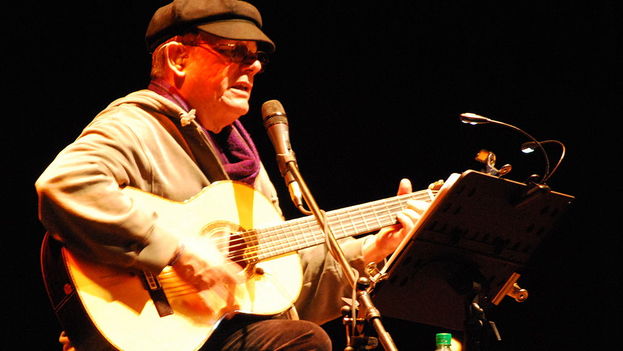
Silvio Rodriguez in concert in 2011

The unusual statements of the singer-songwriter Silvio Rodriguez on the official website Cubadebate have provoked a stir on the web, where the habitual defender of the regime is the object of severe criticism. The person who was the greatest exponent of the Cuban Nueva Trova gave an extensive interview to Cubadebate in which he claimed that during his travels around the neighborhoods of the Island he learned that people in Cuba are “fucked, really fucked, much more fucked than I thought.” And he admitted to having “a much more comfortable life than the vast majority of Cubans.”

A 14ymedio reader commented that, “From his permanent residence in El Vedado [in Havana] and his vacation mansion on Jibacoa beach in Santa Cruz del Norte where he has a view of the sea from a high mountain, it’s clear that he can’t make out the hardships of the people.” This opinion coincided with the those of many who accuse the singer of cynicism and wonder how it is possible that he hasn’t realized that “more than fifty years have passed and the Government is still the same people.” continue reading

Another group of readers point to the possibility that Silvio Rodriguez wants to distance himself from the regime, “now that he knows the end of the dictatorship is imminent, there will be a settling of accounts and he’s trying to clean [up his act].” One of the comments posted on 14ymedio suggests that he maintains his “position as a communist,” because “the chameleons (…) no one respects them, neither one side or the other.”

Anger with Rodriguez is apparent even among the public on the official website, which published their statements. “The worst of all is that those who have lived and do live in that glass bubble without ever rubbing shoulders with those below, are those who run everything, control everything, and make the most important decisions in the names of the those below without consulting anyone and without the ability to see the reality…” laments a Cubadebate reader.

The statements of Silvio Rodriguez, who was a deputy of the National Assembly of People’s Power of Cuba for 15 years and who contributed with his music and his international fame as a singer for the Revolution, has been one of the most read pieces of news on 14ymedio in the first month of its life, and has nearly 4,000 hits on Facebook, one of the highest of the page.

2011, That Year So Remote / Yoani Sánchez

Yoani Sanchez

In October Laura Pollan left us, in a dark hospital on a drizzly day, in a year, 2011, that had been born already battered. In the early months, the final prisoners of the Black Spring had been released and national and international headlines gave most of the credit to the Catholic Church and Spain’s Foreign Minister, downplaying the struggle of the Ladies in White, the pressure exerted from the street, Guillermo Fariñas’ hunger strike, and the wake of outrage left by the death of Orlando Zapata Tamayo. April, the cruelest month, brought us the Communist Party Congress focused only on economic issues, preferring the word “adjustments” to “reforms,” and consolidating the power of a blood heir to the Cuban throne.

August, with its dog days and its scarcities, wasn’t very different. “Where are the changes?” many asked themselves. It wasn’t until October that they began to trickle out. We could buy a used car, but not freely associate ourselves with a party nor express ourselves without punishment. Then came the most daring of Raul’s measures: it was possible to buy or sell a home, although the most modest of them necessitated the total wages of 45 years’ work. Something was moving in a society mummified for decades, but so slowly we despaired. In mid-December we learned that more than 66,000 Cubans had obtained the nationality of their grandparents, emigrants from the Asturias, the Canary Islands, Galicia… people kept escaping. The despair is not perceived in the streets as much as in the long lines at the consulates.

The area of land allowed to be given to farmers in usufruct grew, but the price of food grew almost as much. The press spoke of advances, but the reality showed stagnation. Private restaurants invaded every neighborhood with their menus of spicy dishes and their anxiety about whether they would be left to survive a while longer. The mute choir of the National Assembly confirmed that for 2012 the country would need much more money to import the foods that could well be produced on our own soil. And the expected travel reform was kept from us again, for the umpteenth time.

On Saint Sylvester night few homes displayed parties or music, at least in Havana. But I felt relief that the year was ending. Of 2011, with its advances overstated by propaganda and its setbacks silenced, once was enough.

4 January 2012