Madrid maintains a “permanent dialogue” with Spanish companies in Cuba to “help and support them at this time”

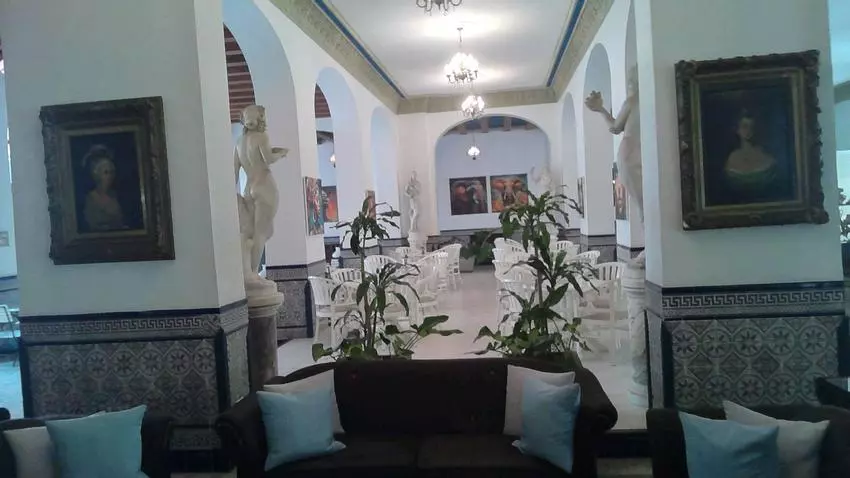
 14ymedio, Madrid, June 4, 2026 / There were quite a few people in the cafeteria and lobby of the Meliá Cohiba hotel, located a few meters from Havana’s Malecón in El Vedado, this Thursday. On an island that has grown accustomed to the absence of tourists, it was unusual to see a good number of people sitting drinking coffee or chatting in the armchairs at the entrance of the luxurious establishment.
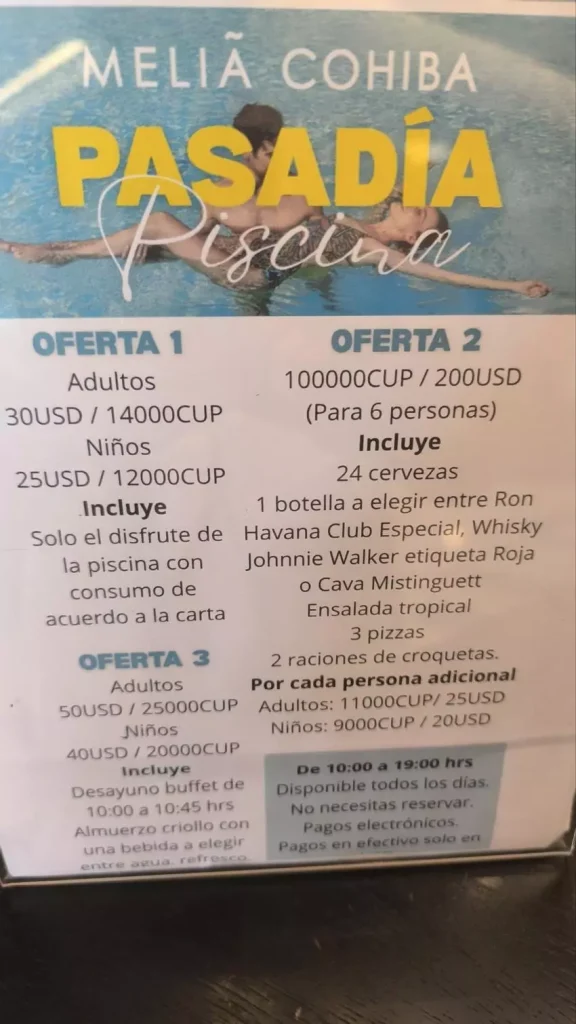
“The pool gets pretty crowded on weekends,” a worker remarks. The prices are outrageous for the average Cuban: from $30 just to use the pool, to $200 for a six-person pass with drinks and food. In Cuban pesos, that’s 14,000 or 100,000, with an odd exchange rate of 480 CUP, quite different from the official rate of 527 per dollar.
The illusion is fleeting. The Hotel Sevilla, located in another prime downtown area of the capital, just steps from the Capitol Building, is completely empty. “Not a single foreigner: not in the lobby, not in the cafeteria, nowhere,” says a waiter. The crisis is even wiping out one of the hotels that in December still boasted of having almost everything. Here, a day at the pool is still affordable, at 8,000 pesos per person, which is why you can see—through the fence—a few Cubans hanging out. The cappuccino, at 450 pesos, is also cheaper than at the Cohiba, and you pay in cash, because there’s no Wi-Fi.
The two hotels, which represented stark contrasts on Wednesday when Cuba announced its partial withdrawal from the company managing them, will remain. For now. Spanish hotel chains have sought a middle ground in the face of US sanctions. The US Treasury Department will be able to impose fines starting tomorrow on foreign companies with ties to the military conglomerate Gaesa. The two largest players, the Balearic Islands-based Meliá and Iberostar, have withdrawn from the properties where they had contracts with Gaviota, Gaesa’s hotel division—15 in the former case and six in the latter—and remain in the rest, owned by Cubanacán or Gran Caribe. This leaves Meliá with 19 hotels and Iberostar with six.
The Spanish Economy Minister, Carlos Cuerpo, was in the Caribbean on Wednesday for an official visit focused on strengthening business relations with Mexico. There, he addressed the issue hours after the Balearic government—of a different political persuasion—expressed a similar sentiment, and on Thursday the Council of Mallorca (the island’s governing body, controlled by the PP and Vox parties) did the same. Its Tourism Minister requested assistance from the central government. “In moments of uncertainty, it is important that companies know they have the support of the institutions, defending that they can carry out their activities with legal certainty, stability, and the maximum guarantees for their investments,” said Guillem Ginard.
Minister Cuerpo addressed the issue during an appearance in Mexico City: “We are closely monitoring the decisions of the US Administration regarding Cuba to minimize their impact on Spanish companies,” he said.
Cuerpo affirmed that the Spanish Government maintains a “permanent dialogue” with its companies to “help and support them at this time” and added that this backing is provided through the Economic and Commercial Office of Spain and the State Secretariat for Trade, which acts “as a bridge” including with the US authorities.
Spanish investments in Cuba are important, but it has fallen considerably in recent years. This June, the report from the cited Economic and Commercial Office in Havana recorded 70 investment transactions originating from Spain, in addition to 70 hotel management contracts. In total, since 1993, Spanish companies have invested €465 million in Cuba.
However, from 2018 to 2025, the drop is enormous. In these eight years, only 3.4 million euros were invested (0.7% of the total), the immense majority of which — 3 million euros — was invested in 2020, with a mere 442,230 euros in 2024 and only 9,990 euros in 2023. Furthermore, in five years of that period not a single euro was invested.
Of the total, the largest share corresponds to hotel services, at 34%, followed by tobacco, at 29%. Altadis, the Spanish tobacco company that merged with a French firm and is now part of the British group Imperial Tobacco, is the largest single investor, since it acquired 50% of Habanos SA in 2000 for $439 million. According to information published this Thursday in the newspaper El País, revenues for 2024 alone—$827 million—are double that investment.
With regards to Spanish exports to the island, they reached $870 million in 2024, although the data—from the latest published report—is quite outdated, especially considering the dramatic decline in recent months. For Spain, the island is not a major customer (ranking 51st globally and eighth in Latin America). “The exporting companies are mostly SMEs [Small and Medium size businesses]. More than 280 have a presence in the country through branches and more than 60 through investment projects,” the document states.
Added to this are the debts and non-payments, both with the State, and with hundreds of companies, who have even founded the Platform of Those Affected by the Non-Payments of the Cuban Government, whose amount they place at about 320 million euros.
Spanish hotel chains remain strongly linked to the regime through contracts with Cubanacán and Gran Caribe, and while there is speculation about whether there will be even more sanctions affecting these interests, analyses are multiplying that indicate the US is seeking a piece of the Cuban tourism pie.
Much further afield, from Jakarta, Indonesian hotel chain Archipelago International announced on Thursday its departure from Cuba, where it operated under the Aston chain.
The group’s communications director, Sari Purbaningrum, told the EFE news agency that “the global situation is uncertain for now” and his company is waiting “to see what happens” before deciding on a possible return to the island.
This Thursday, the main travel platforms no longer allowed booking rooms in any of the six hotels that the company operated on the Island, including Grand Aston Cayo Las Brujas, Aston Panorama Hotel or Aston Costa Verde Beach Resort.
______________________
COLLABORATE WITH OUR WORK: The 14ymedio team is committed to practicing serious journalism that reflects Cuba’s reality in all its depth. Thank you for joining us on this long journey. We invite you to continue supporting us by becoming a member of 14ymedio now. Together we can continue transforming journalism in Cuba.