Cubalex warns that her physical and psychological integrity remains at risk despite the end of the protest
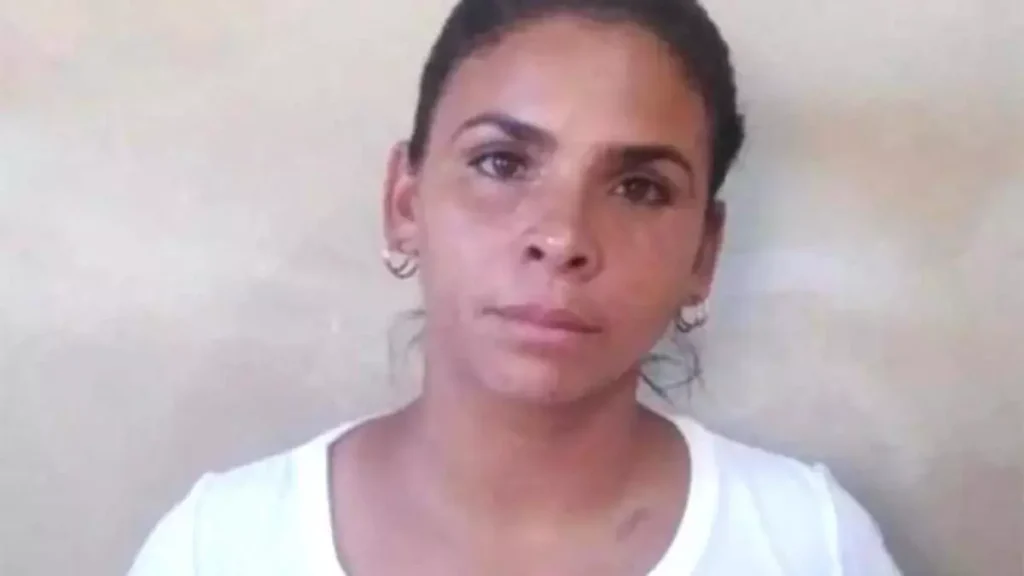
 14ymedio, Havanam 24 Aril 2026 — Political prisoner Lizandra Góngora Espinosa, arrested for the Island-wide protests of 11 July 2021 [’11J’], ended her hunger and thirst strike on Friday. She had begun the strike on April 22nd at Los Colonos prison on the Isle of Youth, according to the Cuban legal organization Cubalex. The protest, which lasted 48 hours, was a response to the prison conditions, the lack of medical attention, and the prolonged isolation from her family.
Góngora, sentenced to 14 years in prison for her participation in the 11 July 2021 protests in Güira de Melena, resorted to this extreme measure after nearly five years of repression since her imprisonment. The hunger strike also constituted a direct response to statements by Cuban leader Miguel Díaz-Canel, who has denied the existence of political prisoners in the country.
The inmate herself announced the start of the protest to her family via a phone call from prison. Her decision generated immediate concern among human rights organizations due to the condition of her health. Góngora suffers from sickle cell anemia, a genetic disease that requires rigorous medical monitoring. Furthermore, during her incarceration, she has been diagnosed with a uterine fibroid that causes inflammation, intense pain, and bleeding.
The distance, coupled with the economic crisis and transportation limitations in Cuba, means that her family can barely visit her.
Prison authorities have systematically denied her a gynecological evaluation and the surgery she urgently needs. The lack of adequate facilities and medical staff has been the recurring argument used to justify the absence of treatment. Given this situation, her husband must use the few visits he is allowed to bring her basic painkillers to help her manage the pain. “Her physical and psychological well-being remains at risk,” the organization warned.
One of the main reasons for the complaint is her transfer in 2023 to Los Colonos prison, located on the Isle of Youth, far from her family in Artemisa. This measure has been punitive and has exacerbated her vulnerability. The distance, combined with the economic crisis and transportation limitations in Cuba, means that her family can only visit her every three or four months.
As a result, Góngora has not seen her children for more than four months, a situation that has severely damaged the family bond. The organization emphasizes that this type of separation contradicts international standards such as the Nelson Mandela Rules and the Bangkok Rules, which establish the need to place prisoners in facilities close to their homes, especially in the case of women with children.
The organization also warned about the risks faced by those who adopt these types of measures within the Cuban prison system.
The activist was sanctioned for the crimes of sabotage, public disorder, and sedition, charges that, according to Cubalex, do not correspond to her actions during the demonstrations and are intended to punish her for exercising her rights. Since her imprisonment, the organization has denounced a systematic violation of her fundamental rights, including harassment, reprisals, and precarious living conditions within the prison system.
The organization also warned about the risk faced by those who adopt this type of measure in the Cuban prison system, where strikes are often considered “indiscipline” and can lead to additional sanctions, including isolation.
Cubalex insisted that the Cuban state must guarantee adequate medical care, allow regular contact with her family, and cease all forms of reprisal. “Although she has ended her hunger strike, the underlying causes remain,” the organization reiterated.
______________________
COLLABORATE WITH OUR WORK: The 14ymedio team is committed to practicing serious journalism that reflects Cuba’s reality in all its depth. Thank you for joining us on this long journey. We invite you to continue supporting us by becoming a member of 14ymedio now. Together we can continue transforming journalism in Cuba.