Photographs taken by a doctor show the filth and the deplorable state of the surgical unit.

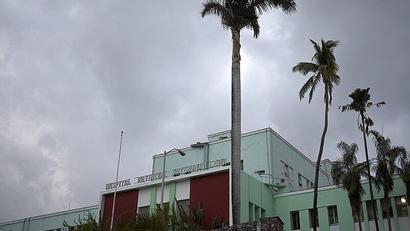
 14ymedio, Santiago de Cuba, 13 December 2024 — The Saturnino Lora Provincial Hospital, located on the central Avenida Libertadores, is the most important hospital in Santiago de Cuba. As such, it has the most specialists, the most patients, and is the preferred center for the most serious cases. Its surgical unit, in particular, is of utmost importance. For example, it cares for those injured in traffic accidents or patients who need difficult operations.
With these credentials, and according to the common reference to the Island as a medical power, anyone would imagine it, if not modern – it was “refounded” 65 years ago, as a continuation of the general hospital created, in another location, in the 19th century – then well-maintained. Or at least, like any self-respecting health centre, clean, with basic hygiene measures. Nothing could be further from the truth.
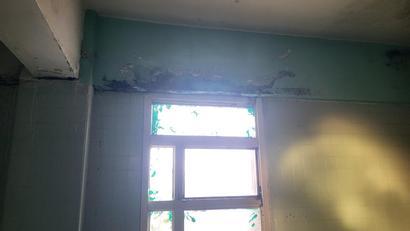
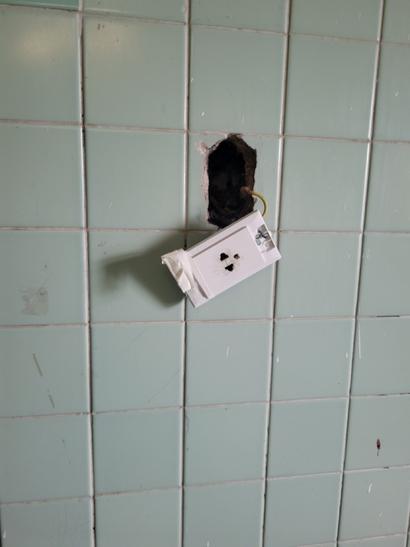
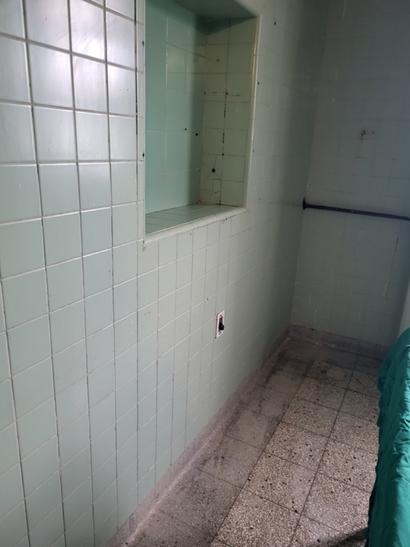
Drips collected in precarious recycled plastic or metal containers, sheets used to dry the water that falls to the floor, rusty oxygen cylinders, plugs without outlets, switches pulled out of the frame, with the cables hanging, as if violently torn off, broken light fixtures, without their white neon tubes, aged air conditioning units, which sound like the engine of an old car, half-broken windows, with traces of green paint, peeling walls, cracked tiles, humidity so severe that it accumulates on the ceilings, black on black. The panorama, offered by some photographs that have reached this newspaper from the surgical unit alone, is chilling.
The granite tiled floor barely hides the dirt in the hospital section that should be spotless, due to the risk of infections patients are exposed to during surgery. The authorities, however, say nothing of this when reporting on the “major repairs” that the Saturnino Lora has been undergoing “for several months.”
In a note published last November, Sierra Maestra speaks extensively of the “constructive work” being carried out at the center. Among these, the “separation of emergency and urgency,” which although they are synonyms in Spanish, is explained in this way by the director of the hospital, Ana Lubín García: “Now the color code can be followed: red is the patient whose life is in imminent danger, yellow is the patient who has suffered an injury, but whose life is not in danger, but who must be treated urgently, and green is that patient who can arrive under their own power and whose life is not in danger.”
The doctor does not mention the surgical unit at any point, but she does mention “the pharmacy, the blood bank, the sterilization area, electromedicine and the medical room located on the second floor,” where the works “are progressing, despite the lack of some expensive and imported materials.”
Patients are well aware of the dire situation at Saturnino Lora, and few are silent about their criticism, especially on social media. In 2020, during the Covid-19 pandemic, when, like the rest of the centers on the island, it was overwhelmed, it was one of the hospitals that received the most complaints. In addition to the lack of medicines, the precarious hygienic conditions – including the lack of water in the bathrooms – and the stench, in recent years the people of Santiago have added complaints about mistreatment by the staff.
In the face of this, however, overwhelmed healthcare workers are reacting. One doctor from the hospital, who spoke to this newspaper on condition of anonymity, said: “Patients, in moments of extreme adversity, cry out: medical negligence! and demand that doctors be guillotined or burned at the stake. But I ask you to ask yourself: in what conditions do our doctors work? Do they feel safe working? Can they give it their all for their patients?”
With grueling shifts and a salary that barely covers daily expenses, without the necessary supplies to be able to care for the sick, the doctor feels as desperate as the population: “Years of study, dedication and sacrifice are thrown away when, thanks to neglect, mistreatment and threats, many abandon their careers. Few know about it and those who do prefer to remain silent.” And he begs: “The next time you see a doctor or nurse, do not judge them. They do not build hospitals, nor make medicines. They give their hearts and a lot of love, even putting their own lives at risk.”
What is happening at Saturnino Lora, in any case, is similar to what is happening in other hospitals in the country. Just a year ago, six doctors from the Carlos Manuel de Céspedes Hospital in Bayamo, Granma, were convicted of medical negligence after the death of a patient. One of them, Ristian Solano, who received the most severe sentence, three years of house arrest, publicly defended himself, explaining that the death was inevitable, and declaring himself “disappointed” by the lack of support from the Ministry of Health, to which he and his colleagues had filed numerous complaints about the lack of resources.
The case unleashed a wave of solidarity among colleagues in the profession and activists on and off the island. For example, Cuban doctors living abroad Alexander Jesús Figueredo Izaguirre, Arnoldo de la Cruz Bañoble, Sergio Barbolla Verdecia and Jorge David Yaugel signed a harsh letter addressed to Minister José Ángel Portal Miranda, in which they described the punishment of the Bayamo health workers as a “national shame.”
“The accusers should – do they know this? – point out those truly responsible for this death. These doctors are also victims of the conflict between their professional commitment and the impossibility of succeeding in the conditions in which they are forced to operate on their patients,” the doctors wrote in their statement.
For them, “those responsible for diverting the resources provided by the medical brigades” [sent to work in other countries which pay the Cuban government for their services] should have been brought to court. They pointed out that “the regime has received billions of dollars in the last decade,” money that “has not been invested in the Cuban health system as was argued at the time to justify the arbitrary deduction of 70% to 90% of the salaries of the brigade members over all these years.” With this, they asserted, “there would have been more than enough to maintain the health system in optimal conditions and pay decent salaries to the professionals in the sector.”
____________
COLLABORATE WITH OUR WORK: The 14ymedio team is committed to practicing serious journalism that reflects Cuba’s reality in all its depth. Thank you for joining us on this long journey. We invite you to continue supporting us by becoming a member of 14ymedio now. Together we can continue transforming journalism in Cuba.