The increase in cases is overwhelming the response capacity amid shortages and official underreporting
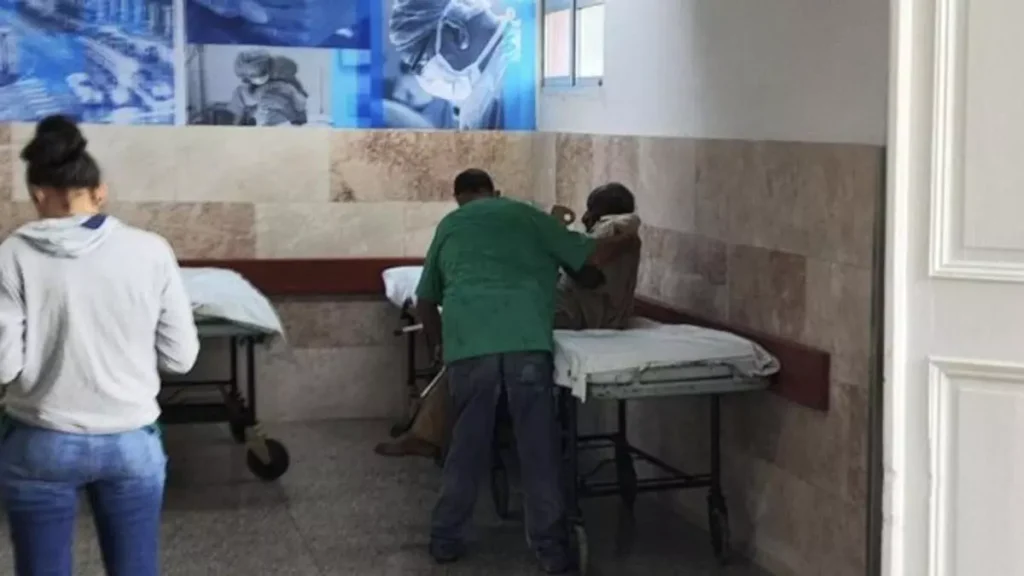
 14ymedio, Havana, December 10, 2025 — This Wednesday, Cuba’s Ministry of Public Health warned that cases of dengue and chikungunya on the island have increased by more than 71% in just seven days. Deputy Minister of Public Health Carilda Peña García reported on state television that the incidence rate rose from 3.81 to 6.52 per 100,000 inhabitants compared to the same day last week.
With a population of 9.7 million, this represents an estimated jump from 369 to 632 daily infections in just one week. The Pan American Health Organization reported a cumulative total of 25,995 cases in the country as of the end of November.
Although the deputy minister indicated that some indicators show stability compared to the previous day, professionals in the sector point out that this apparent improvement does not necessarily correspond to a real reduction in infections. The insufficient number of diagnostic tests, the shortage of PCR reagents, and the limited hospital capacity all directly influence the number of cases detected and reported.
This apparent improvement does not necessarily correspond to a real reduction in infections.
So far, authorities have confirmed 44 deaths associated with dengue and chikungunya. However, the lack of complete information and the underreporting of cases prevent an objective picture of the situation. This lack of clarity continues to generate public concern at a time when hospitals and funeral homes are operating under unsustainable pressure.
The epidemic is spreading in a context exacerbated by the economic crisis, which limits mass fumigation, diagnostic confirmation, and clinical care. Shortages of insecticides, fuel, medications, and specialized personnel have facilitated the spread of these arboviruses, with a particular impact on children and pregnant women, who depend on an increasingly overburdened healthcare system. The deputy minister acknowledged that the majority of patients currently in critical condition are under 18 years of age.
In some cases, there are even reports of children being infected during gestation, as is the case of Maylom Martínez Abreu, a baby who contracted chikungunya in his mother’s womb and who, after spending 46 days intubated at the Jose Ramón López Tabrane Gynecological-Obstetrical Hospital, was finally discharged on December 9.
Another case, reported to 14ymedio, which raises questions about whether the regime is hiding or concealing data, involves Cubans living abroad who recently visited the island and tested positive for West Nile virus, a highly dangerous arbovirus due to its high mortality rate. Although on November 20, Francisco Durán, director of the National Institute of Epidemiology at the Ministry of Health, denied that the virus was circulating in Cuba, data published by the Pedro Kouri Institute of Tropical Medicine has confirmed that there is scientific evidence to determine the possible presence of the virus on the island, as is the case in other Caribbean regions.
____________
COLLABORATE WITH OUR WORK: The 14ymedio team is committed to practicing serious journalism that reflects Cuba’s reality in all its depth. Thank you for joining us on this long journey. We invite you to continue supporting us by becoming a member of 14ymedio now. Together we can continue transforming journalism in Cuba.
