
‘Four Years Have Passed and the Cuban Government Still Hasn’t Paid Us for the Hogs it Bought’

With the promise of benefits and good sale prices, officials had attracted local producers. The situation, in practice, is very different. (14ymedio)

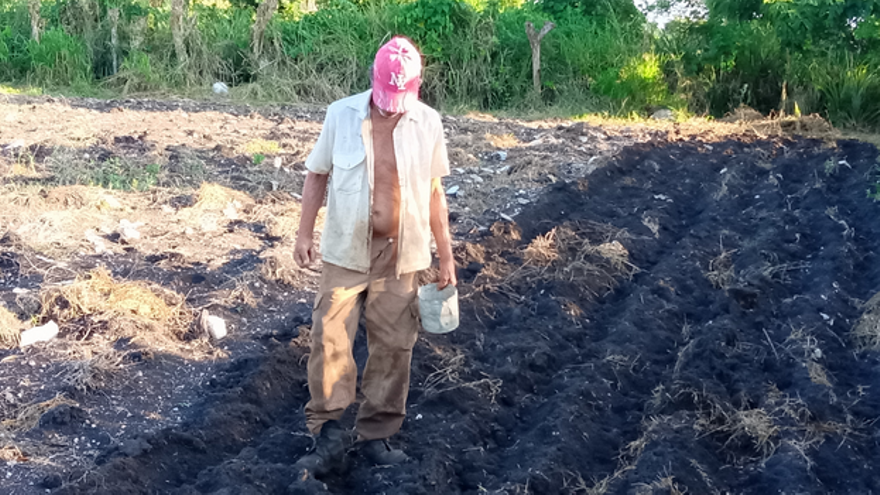
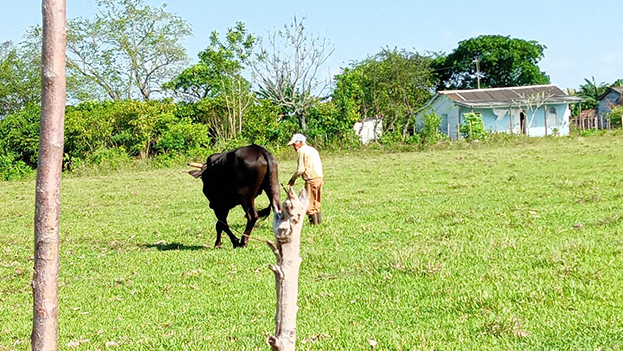
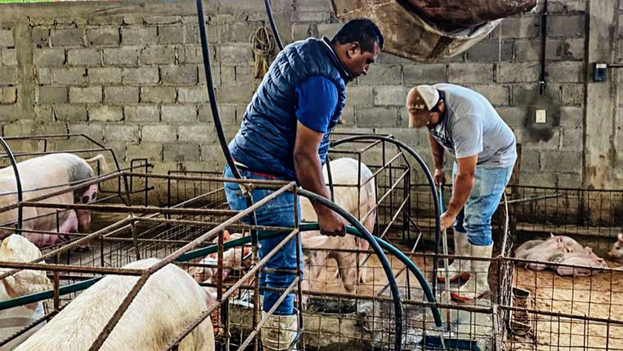
14ymedio bigger14ymedio, Yankiel Gutiérrez Faife, Camajuaní, 28 October 2022 — The cart towed by an old Soviet tractor left the rural area of Camajuaní in Villa Clara province headed to Remedios. It was loaded with seven pigs whose owners, five farmers who rented the transportation, had made the decision to sell to the state.

With the promise of benefits and good sale prices, the officials had attracted local producers who hoped to stock up on better, well-fed cattle and were able to make the sacrifice. The situation, in practice, was very different.

The agreement consisted of paying half the value of the hogs in cash and the other half in animal feed: maize, fodder and soy. The deal made sense to the producers, as they could use the money and at the same time, were guaranteed food for the other pigs they kept on their farms.

The tractor unloaded the hogs in Remedios and after a long line, the officials weighed and appraised them. They were good animals, well raised, and fattened and they received half of the agreed-upon price in cash. “We don’t have the rest yet, but soon you’ll receive a call to come pick up the feed,” they said.

“It’s been four years,” bemoaned Juan Domingo, “and to this day no one has contacted us.” Along with Ivis, Janiel, Daniel and Elier, he awaits payment for the 28,000 peso debt — in feed for the hogs — that the government continues to delay.

The man stated that since then, they’ve been through the pandemic, the Ordering Task* and different social and financial collapses on the Island. “We’ve insisted, of course, to know why the delay, but they don’t have a response.” continue reading
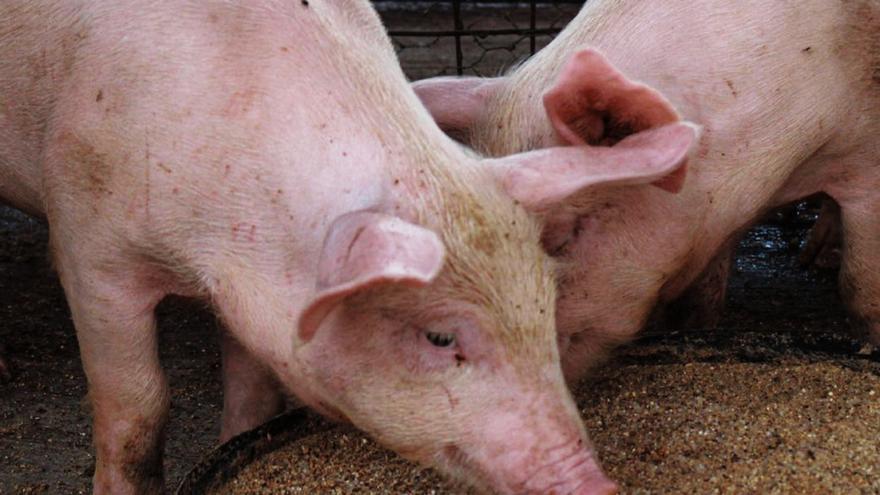
They’ve attempted to fill the gap in soy and maize imports with cassava and the palm nuts, historically used to fatten hogs. (14ymedio)

“I lost hope for recuperating that feed,” Ivis told 14ymedio. “They behave as if the hogs never existed, they speak to us with a secrecy when we ask for explanations,” said the woman who agrees with Juan Domingo that the selling hogs is not viable in Cuba.

Raising hogs requires resources and a lot of effort. In the yards of Cuban homes, there was always a bucket where each day, food scraps were deposited. That mix of leftovers was called sancocho, just like the local dish. However, the shortages and the food crisis means that, at the end of the week, there is very little to throw into the bucket.

The price for the “formal” feed for the animals is more absurd by the day. “The cassava, maize and soy are nowhere to be found,” complains Ivis. “A sack of soy could cost 5,500 pesos. The crop residues can be used to feed hogs, but they do not fatten them like the industrial fodder.” All this, says the farm woman, limits the weight of the animals and draws out the fattening process, indispensable for the slaughtering and consumption.

They’ve attempted to fill the gap in soy and maize imports with cassava and the palm nuts, historically used to fatten hogs.

The crisis, however, has resulted in a chain of failures: without imported feed, the government’s debts to producers have grown; neglecting the breeders compromised pig breeding at the provincial level and at one point, the effects were felt throughout the country. “We producers did not have a choice but to cancel our agreements with the state,” stated Juan Domingo. The feed shortages led most pork producers to abandon their work.

In another municipality of Villa Clara, Zulueta, farmer José Luis bites the bullet to keep his 23 hogs fed. “I had 40 hectares of land planted before the crisis,” he stated alluding to the pandemic and the collapse of the Island’s energy sector. “This food is exclusively for the animals and I’ve been preparing it for years.”

Meanwhile, the price of meat has reached abusive levels in any type of market, be it the informal market or the state-owned butcher. “350 pesos per pound is excessive,” calculates José Luis who bemoaned being unable to fatten his hogs enough for them to reach an acceptable weight by the time they are slaughtered.

“The current crisis didn’t begin with the coronavirus,” said the farmer, “but rather two or three years prior, when the Ministry of Agriculture began to promote the ’substitution’ of imported feed.” There was no such change, rather, the feed no longer entered the country, even though it was impossible to cover the gap with national production.

“The agreements with Porcino (the state-owned company that processes and distributes meat) establishes the amount of feed that must be obtained through our own means. They offer no more than 60% or 70% of the feed needed for the animals and it never arrives on time,” he said.
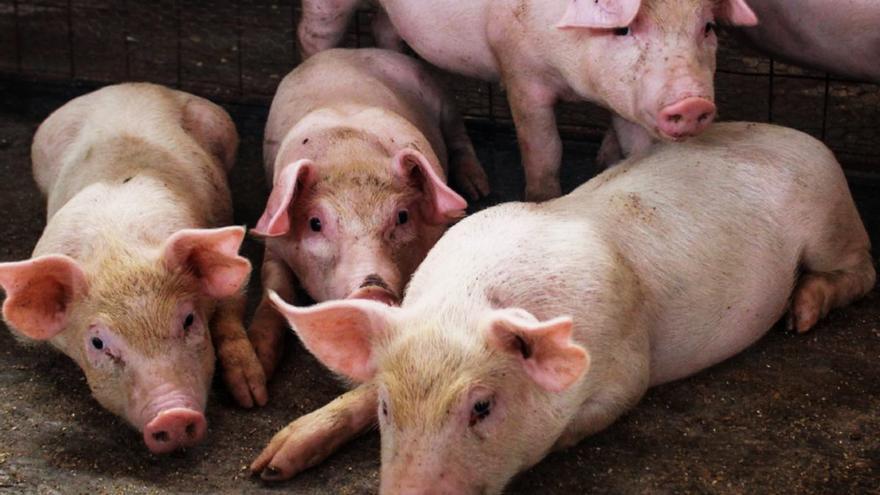
The feed shortages led most pork producers to abandon their work. (14ymedio)

The government’s debt to farm cooperatives mirrors, at a local level, its financial behavior at the international level–delays, extended payment periods or requests for debt forgiveness.

Despite all this, the official press continues to present the government as a “sponsor” of the self-employed that benefits certain lucky farmers. Several weeks ago Granma praised Yusdany Rojas, owner of a farm in Camajuaní, who maintains an unfathomable 800 hogs. And aspires to own 4,000 in a few months, if the bureaucrats give him “more land” and the bank provides enough credit.

Rojas received an official visit by Miguel Díaz-Canel and other officials in his private “slaughterhouse.” He owns, moreover, a tobacco field, sugar cane and other crops and a meat processing plant. The photographs of the successful farm were circulated on all official media.

The reality told by the state press does not mention the real difficulties faced by producers, the shortages and lack of resources faced by farmers. And as of now, neither do they dedicate space to explain when and how the Cuban government plans to honor its word and pay its debts.

*Translator’s Note: Tarea ordenamiento = the [so-called] ‘Ordering Task’ is a collection of measures that include eliminating the Cuban Convertible Peso (CUC), thus leaving the Cuban peso as the only national currency, raising prices, raising salaries (but not as much as prices), opening stores that take payment only in hard currency which must be in the form of specially issued pre-paid debit cards, and a broad range of other measures targeted to different elements of the Cuban economy.

Translated by: Silvia Suárez

____________

COLLABORATE WITH OUR WORKThe 14ymedio team is committed to practicing serious journalism that reflects Cuba’s reality in all its depth. Thank you for joining us on this long journey. We invite you to continue supporting us by becoming a member of 14ymedio now. Together we can continue transforming journalism in Cuba.

Hallelujah! Cuban Pharmacies Suddenly Stocked with Medicines about to Expire

Medications that are about to expire have been made available for sale by the government. (14ymedio)

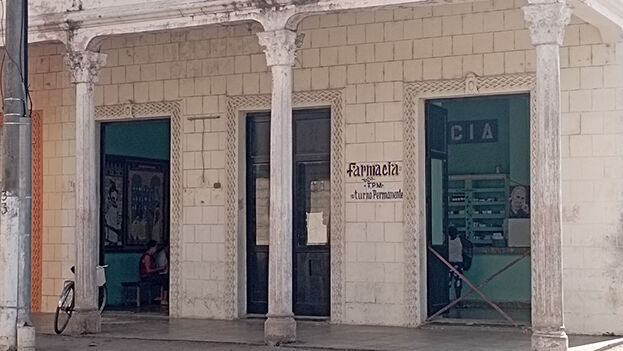
14ymedio bigger14ymedio, Yankiel Gutierrez Faife, Camajuani, 16 October 2022 — On Friday a crowd of locals gathered in front of an old mansion that now serves as a pharmacy. As if by magic, the store shelves were filled with medicines that have not been seen for months. The sudden abundance generated suspicion. Where did all these drugs come from?

An employee provided a simple answer: “They’re about to expire.” The scene was repeated in nearby towns such as Taguayabon as well as municipalities such as Remedio and Santa Clara. The outrage of those waiting in line quickly grew.

Why did public health officials wait so long to provide these drugs? What warehouse were they being stored in and why are they about to expire. Frantic over having to process and sell the medications, pharmacies in the province are trying to make them available to customers as quickly as they can.

Outside the pharmacies, people openly express their frustrations. “Bad management, like everything else,” says Ramon, one of the residents, “I don’t understand why there was nothing before and now it’s here in record time. It’s because they had it in storage.” continue reading

Miguel, another customer, suspects the drugs came from the National State Reserve Warehouse, where the government stockpiles medications to deal with critical shortages. “I asked the employees and even they don’t know where they came from,” he says. “All that matters to them is that they sell them before they expire.”

“They should lower the price,” argues another customer, who observes that Cubans will consume any medication, even if it is out-of-date, as long as it does not “look funny,” is not off-color and is not visibly disintegrating.

“Yesterday, my sister-in-law told me that medicines would be available,” says Yudit. “So today I got up early to see if I could get paracetamol, loratadine, diazepam and chlordiazepoxide. But it was no use. I was only able to get some paracetamol tablets, for 3.40 pesos, and loratadine, which cost me 8.60.”

Unsurprisingly, the situation is not unique to Villa Clara. As soon as word got out, lines also formed in front of the pharmacies in Sancti Spiritus and Havana.

“It’s not that they’ve expired; it’s that they’re about to expire,” explains Juan, an allergy sufferer from Sancti Spiritus “But a lot of drugs are still not available. I still can’t buy ketotifen, montelukast or any other antihistamine.”

Maria Eugenia’s hands are sweaty and her eyes dart from side to side. For months the 65-year-old Havana resident has been unable to get the medications a doctor prescribed for her persistent anxiety, from which she has suffered since her husband died several years ago and her son emigrated, leaving her alone on the island.

“I can’t go without chlordiazepoxide,” she says. “At the pharmacy where I am supposed to get it, several of us are in the same situation. Our nerves are shot and we can’t get the medication we need.”

Recently, Maria Eugenia waited in line from midnight till the pharmacy in Central Havana, where she has to buy the medication she urgently needs, opened the next morning. “They said they had to set aside some of the nerve pills for people who have a heart disease. But it was a lie.”

By dawn, she says, “It looked like a line of crazies because you could clearly see the huge anxiety on all our faces. But when the pharmacy opened, the employees told us they had not received any of our medications.

Frustrated and desperate, Maria Eugenia turned to the black market, where she paid 350 pesos for twenty chlordiazepoxide tablets. “They were made in Cuba so they must have been stolen from some store or pharmacy,” she speculates. She noted that the expiration date on the bottle was October 2022.

“I am going to go ahead and take them because I don’t have any other option,” she says. I don’t have the luxury of waiting to find some other tablets that aren’t about to expire and I cannot get by without this medication. I go out every day knowing I have a few pills in my bag. Just knowing that calms my anxiety.

Many Cubans cope by anticipating these situations: “You have to pester the doctor and ask for your prescriptions every month. You never know when the medicines are going to arrive and you have to be prepared.”
____________

COLLABORATE WITH OUR WORKThe 14ymedio team is committed to practicing serious journalism that reflects Cuba’s reality in all its depth. Thank you for joining us on this long journey. We invite you to continue supporting us by becoming a member of 14ymedio now. Together we can continue transforming journalism in Cuba.

In Camajuani, the Cuban State Leaves the Majority of Farmers in Poverty

Despite the poverty and the impossibility of making profits in dollars, the Government continues to sell agricultural inputs in foreign currency. (14ymedio)

14ymedio bigger14ymedio, Yankiel Gutiérrez Faife, Camajuaní (Cuba), 24 September 2022 — Like most Cuban farmers, Ernesto gets up before dawn and has coffee. Half of his house is made of boards; the other is covered with fiber cement. He isn’t poor, but the money he earns has to be reinvested in crops.

His land, located on the outskirts of Camajuaní, Villa Clara, used to be fertile and welcoming. But it has been dry for years and doesn’t produce unless it’s fertilized with expensive fertilizers, sprayed with insecticides and weeded. “When you can’t get these resources,” the farmer tells 14ymedio, “the harvest is lost.”

Ernesto wants to grow 15 bean plants. Between the payment of the workers, the plow and the liquids, he has to spend 25,000 pesos on planting. A small fortune that took him three months to gather, in addition to getting used to remote management through Revolico, the buying and selling website where he got six liters of the herbicide glyphosate, for 1,675 pesos each.

The driver of the tractor that had planned to drag the plow charged him 6,000 pesos, plus fuel money, another 2,200. “All I have been able to achieve has been with my money, without credits or loans,” says Ernesto. “And I haven’t even been able to start planting with that.”

“What’s lucky is that I sell almost everything from what I produce,” he concludes, “and I also have something left for my house. If not, I have nothing.” continue reading

Rarely does the State pay attention to them when they complain to farm agencies, and the resources never arrive on time when bought. (14ymedio)

A few kilometers from Camajuaní, on a farm in the town of La Sabana, Armando grows mangoes and guavas that he then sells to Acopio. This State company distributes them to the Los Atrevidos canning factory, in Remedios. “The people of Acopio seemed serious,” he says, “until one day they really let me down.”

Armando planned to send six boxes of ripe mango, and they kept waiting for him all weekend. Under the heat of August, some mangoes began to rot. “I couldn’t wait any longer,” says the guajiro, who had to sell the lot to a merchant from Camajuaní, who quickly dispatched it.

“When I called Acopio to complain, they shamelessly explained to me that without fuel for the trucks they couldn’t buy the mango,” he says. “With that level of instability, how can you trust the State to do business?”

Miguel also lives and works in Camajuaní but, unlike Ernesto and Miguel, his resources are very scarce to keep his crops in good condition. Lately he doesn’t even sell what he harvests, but dedicates it to the consumption of his own family.

Old and with ailments, Miguel depends on his squalid checkbook. “It  doesn’t give me enough for insecticides,” he laments. He has tried to thrive with other alternatives: earthworm hummus, animal feces and a mixture made with tobacco wedges and rotten vegetables, “but even so the pests don’t give up.”

An attempt is made to eliminate pests with earthworm humus, animal feces and a mixture made with tobacco and rotten vegetables, but they don’t even give up. (14ymedio)

Bordering on extreme poverty, Miguel’s house doesn’t even have a bathroom, just a toilet of boards in the courtyard. Despite the poverty and the impossibility of making profits in dollars, the Government continues to sell agricultural inputs in foreign currency. Most farmers don’t have or don’t know how to apply for a freely convertible currency account. These are very new processes, modes of payment to which they aren’t accustomed and a suffocating bureaucracy that turns marketing into a nightmare.

Some of them, the wealthiest, have been able to hire laborers and equipment. Others follow the tradition of facing the countryside alone, from sunrise to sunset, and resign themselves to austerity and the departure of the children, who rarely remain in rural villages.

Ernesto, Armando and Miguel are not affiliated with any cooperative. Rarely does the State pay attention to them when they complain to farm agencies, and the resources never arrive on time. “What there is goes to State producers,” they’re told.

Díaz-Canel has a special affection for Camajuaní, and it’s not enough for him to pave the way for the well-shod mafia, omnipotent in the territory; now he also supports his “chosen” farmers. (14ymedio)

It’s not strange that these three men, accustomed to difficulties and bureaucracy, have been perplexed by a recent headline in the the Communist Party newspaper Granma, which spoke of another Camajuaní producer: “If Yusdany can, why can’t others?” said the paper, citing none other than Miguel Díaz-Canel.

The plump president, on an official visit to the town of Villa Clara, had gone to the brand-new private “slaughterhouse” of Yusdany Rojas, a 31-year-old farmer. Rojas feeds the huge amount of 800 pigs on his farm, while he sows tobacco to sell to those who remove the veins of the leaves. In addition, he grows cane and other crops on its land and has space for a “small” sausage factory.

Díaz-Canel is portrayed with the young Yusdany, fascinated by the growth of the pigs and the “self-management” of the farm, where problems don’t take their toll. “He needs land,” says Granma, so that the local bureaucracy feels pressured in the face of the dilemma: the five pieces he owns are no longer enough.

“We were used to the State giving us everything for a long time as if we were pigeons,” he says, and his words almost sound ironic, “but now they have freed our wings and what we have to do is learn to fly.”

Yusdany sells his products to tourism and State-owned companies. The bank is lavish when it comes to granting loans, and the pigs are in good health. “Very soon I will have 3,800 pigs,” Rojas promises, and no one doubts it.

Almost 4,000 pigs, 86 employees, 5 pieces of land that will soon multiply and the personal blessing of Díaz-Canel. The president has a special affection for Camajuaní, and it’s not enough for him to pave the way for the well-shod mafia, omnipotent in the territory. Now he also guarantees that “chosen” farmers, such as Rojas, will prosper and entertain them in the official media.

Ernesto, Armando and Miguel ask themselves the same question, which becomes a complaint: If Yusdany can do it, why can’t we?

Translated by Regina Anavy

____________

COLLABORATE WITH OUR WORKThe 14ymedio team is committed to practicing serious journalism that reflects Cuba’s reality in all its depth. Thank you for joining us on this long journey. We invite you to continue supporting us by becoming a member of 14ymedio now. Together we can continue transforming journalism in Cuba.

Sugar Cane Workers are Barely Surviving in Camajuani, Cuba

The La Julia cooperative, which must now assume all the local production for the harvest in Villa Clara, is also in full decline. (14ymedio)

14ymedio bigger14ymedio, Yankiel Gutiérrez Faife, Camajuaní (Villa Clara), 10 September 2022 — The inhabitants of the Camajuaní valley, in the province of Villa Clara, have known better times for the intensive cultivation of sugar cane. Today, many of the characteristic towers of the sugar mills that gave prosperity to the settlements of Carmita, Fe, Rosalía, La Julia and Vega Alta are in ruins.

A few continue to barely produce, and the workers don’t receive their salaries for months. This is the case of Rosalía’s macheteros, the cane cutters, who saw their cooperative close fifteen years ago. There, enough cane was cleaned and cut to fill a dozen wagons, and it was then transported for processing to the Fe sugar mill, officially renamed in 1960 as the José María Pérez Sugar Agroindustrial Complex.

Now, in Rosalía, the ruins of the old collection center are piled up, and the government has ripped out the railway line. The locals have been taking everything, from fiber cement tiles to metal beams. There were only the walls left, but the neighbors also chopped up the concrete blocks to take them  away.

The sugar plantations of La Julia, which must now assume all the local production for the harvest, are also in full decline. The cows and horses of the farmers continually enter their fields to feed.

The damage further delays the poor cultivation of the cooperative, which, of the 20 tons that it cut before 2018, will only be able to contribute five this year. continue reading

About 320 people work in the La Julia cooperative. Mechanical engineers receive a salary of 5,000 pesos; technicians earn a little less; and workers, who must use their machetes in the heat under deplorable conditions, earn only 2,500 pesos a month, equivalent to about twenty dollars at the official exchange rate.

“The Fe mill buys the cane from us at 700 pesos a ton, but the cooperative must maintain its autonomy,” José Luis, a worker at La Julia who prefers to use a fictitious name, tells 14ymedio. “That means that our salary depends on the income we can get.”

They are rarely paid on time. The sugar cane bureaucracy is indebted to the max to the Central Bank of Cuba, and that delay is directly reflected in the payment of workers.

Margarita, a worker who is transported by cart every day, from Taguayabón to La Julia, explains to this newspaper how the counterpoint of credits and debts works. “The industry has been a disaster for years,” she says.

The credit offered by the bank, she explains, “has an expiration date,” so that, if it’s not paid back on time, there’s no way to pay the macheteros. The possibility of offering land to the workers is being analyzed, but these individuals will face the same problems as the cooperative: shortage of fuel, lack of supplies, machetes, gloves, clothes, shoes, water backpacks.

“If there’s no pay for the workers there, there will be much less for the individual,” she adds.

It’s a vicious circle, José Luis clarifies. The mill also has debts, “which three million pesos must go to,” he calculates, “and without a detailed report of what is going to be done, the bank won’t provide the necessary credit to start the operation.”

Ruined by bureaucracy and malfunctions, no one could imagine today that the Island’s sugar industry was once the first in the world. (File, Archive)

Each step hinders the next, and the most affected is always the humble worker, who has no other remuneration. “On more than one occasion they stopped paying me,” laments Eliecer, a machetero from  La Julia. “They told us that there was no money that month, but the truth is that it happens all the time. That’s why many have asked for leave, but life is very hard and we’re all stuck with whatever we get,” he says.

“Not to mention that workers waste a lot of time trying to get to the cooperative,” adds José Luis. When there’s no fuel to bring them from home, the work day is lost, or the worker himself has to figure out how to get there.

“Last week only 160 liters of fuel were available for transporting the workers,” he says. When they were used up, we had to wait and declare the work as “interrupted.” Nor is there enough fuel for the tractors, the plows or the cultivators. Insecticides and fertilizers are in the same situation.

The man admits that “when things are under private administration, people respect it.” However, “when it’s from the state, no one cares.” That explains why the local farmers bring their animals, day or night, to eat the cane. “Fines have been imposed on them,” he says, “but it’s no use at all. It doesn’t stop anyone.”

In addition to the precariousness with which the macheteros of La Julia live, there are several rumors, which are passed on by word of mouth in the workers’ settlements. Although no one has confirmed it yet, the farmers believe that the mills will no longer produce sugar for export, and will be able to provide barely a portion of the sugar needed for the island.

They believe that, instead, the government intends to sell the molasses to China, at a very high price. In that country, they say, they will use it to manufacture alcoholic beverages and purgative honey, which has a medicinal use, in addition to using it as fertilizer and feed for livestock.

Ruined by bureaucracy and malfunctions, no one could imagine today that the Island’s sugar industry was once the first in the world. This year, the government has reduced the number of mills that grind sugar during the harvest to 23. Small but “efficient,” as Miguel Díaz-Canel described it, this season’s production will not reach even half a million tons of sugar.

Translated by Regina Anavy

____________

COLLABORATE WITH OUR WORKThe 14ymedio team is committed to practicing serious journalism that reflects Cuba’s reality in all its depth. Thank you for joining us on this long journey. We invite you to continue supporting us by becoming a member of 14ymedio now. Together we can continue transforming journalism in Cuba.

No Blackouts in Taguayabon, Cuba

Taguayabón and Rosalía seem to be among those “untouchable” points on the map of Cuban blackouts.

14ymedio bigger14ymedio, Yankiel Gutiérrez Faife, Taguayabón (Villa Clara), 23 August 2022 — A blackout in the city is not the same as one in a rural area. When the power goes out in an urban center, even in smaller towns, the buzz of voices begins to break the silence, the heat gets people to talk, scream, bring their furniture onto the porch, and it is possible to smoke and listen to a portable radio.

In contrast, in a settlement, on the side of the road, or by an old sugar mill, blackouts are all-consuming and inhospitable. It’s the ideal opportunity for local thieves, nocturnal marauders, and bandits who always know the area’s uneven geography very well.

Amid the energy crisis some places in Cuba are apparently spared the outages scheduled by Unión Eléctrica. The settlements of Taguayabón and Rosalía, between Camajuaní and Remedios in Villa Clara, seem to be among those “untouchable” points on the map of Cuban blackouts.

The residents, accustomed to an Island where nothing is logical, know that at any moment they will lose the “privilege” of electricity. Suddenly, they explain the miracle alleging that both settlements are close to an area the government considers essential to the functioning of the province, however precarious.

In an “exceptional” stroke of circuit luck, both settlements are near General Docente 26 de Diciembre Hospital, at the entrance to Remedio, and the meat packing plant known as Osvaldo continue reading

Herrera in the people’s council of Vega de Palma on the route to Vueltas.

The bus always takes the same route as the meat: as soon as it passes Camajuaní it takes the bumpy road to Vueltas. (14ymedio)

The population of each of these areas is small, and thus they do not use excessive amounts of electricity; Taguayabón has 3,308 residents, Rosalía 235 and Vega de Palma 238. Vueltas, Camajuaní, and Remedios, which have tens of thousands of residents, can’t be spared the blackouts.

“We are well,” a resident of Taguayabón told 14ymedio, “but that does not mean we don’t know anything about the blackouts and the protests in other areas. In Camajuaní and Remedios they shut the power off six or twelve hours in a row, but those towns around here haven’t had a blackout in a month. Some joke that this is the new Marianao [a desirable neighborhood in Havana] and they want to move here.”

One ride on the hellish “Slaughterhouse bus,” which takes workers from Salamina near Santa Clara to Vueltas, is enough to make you understand the importance of the meat packing plant in Vega de Palma. The rickety vehicle, loaded with university students, sleep-deprived travelers, and employees of Cárnicos Villa Clara, runs slowly down the road to Camajuaní and takes a detour toward Salamina.

That slaughterhouse, along with two others — Lorenzo González in Sagua and Chichi Padrón in Santa Clara — is responsible for providing the raw materials to the Vega de Palma packing plant. The bus follows the same route as the meat: as soon as it passes Camajuaní it takes the bumpy road to Vueltas, passing el Entronque, another poor settlement.

The Osvaldo Herrera packing plant is run by the Ministry of Food Industry. It employs 250 workers and produces croquettes, canned goods, and sausages, including the unpleasant Cuban version of mortadella, the consumption of which is rationed by the government. Some of the products, those of higher quality, are sent to hotels in the nearby area of Cayería Norte. Another, non-negligible percentage of the sausage “tubes” ends up on the informal market or available through online food stores, which require prepayment in dollars from abroad.

The products at Vega de Palma also require flour from Cienfuegos, and soy from Santiago de Cuba necessary to make mincemeat, another gastronomic headache for Cubans, while other companies provide nylon, cardboard, and preservatives to package the products.

In Vega de Palma there are two sausage-making machines, one meat grinder and one for boneless meat, five steamers with a capacity of 1,500 kilograms, fans, showers for cleaning the meat, and cold storage.

Yolanda, an employee at the packing plant, tells 14ymedio that for a long time her company has not had a backup generator for emergencies. “It depends entirely on the national electric system,” she states, “and although no one confirms that is the reason we don’t have blackouts, we know. Everything would spoil!”

“Some joke saying this is the new Marianao and that they want to move here.” (14ymedio)

If a blackout would break the cycle, the hotels wouldn’t have sausage, the butchers would not receive the monthly mortadella ration and the government would add another crisis to its long list of unresolved problems.

Nonetheless, not even uninterrupted power guarantees the packing plant’s function. Ernesto, another one of the employees, states that the company does not work every day.

“Sometimes the work is interrupted because there is no gas for the trucks that bring the meat from Salamina. Other times, what is missing is the raw material. We run out of wheat flour and it is impossible to make croquetas. Then we have to make mincemeat or mortadella, while we have the pork or chicken,” he concluded.

The other “guardian angel” against blackouts for these rural settlements is the hospital in Remedios. With 480 workers, of which 67 are doctors and 138 nurses, patients in serious condition are sent here from nearby municipalities including Camajuaní, which only has one polyclinic serving outpatients.

In the old yet very effective hospital, there are pediatric, obstetric, gynecology, anesthesiology, general surgery, intensive care, clinical laboratories, and other wards. A prolonged power outage would be fatal during surgery or for patients on life support.

Of course, neither the colossal packing plant nor the hospital in Remedios provides long-term guarantees. The residents suppose the government has weighed its options: it maintains the power supply because it would be more expensive to fuel generators for both centers.

No one holds out too much hope that the situation will remain as is, of course. If small towns in the Villa Clara countryside have not been affected much by blackouts, it is precisely because they are small. The Cuban government and its energy bureaucracy know where to shut off power and for how long. It is the reason for popular discontent, less controllable as time goes on, and its direct consequence — the nighttime protest.

Translated by: Silvia Suárez

____________

COLLABORATE WITH OUR WORKThe 14ymedio team is committed to practicing serious journalism that reflects Cuba’s reality in all its depth. Thank you for joining us on this long journey. We invite you to continue supporting us by becoming a member of 14ymedio now. Together we can continue transforming journalism in Cuba.

The Odyssey of Buying a Ticket to Get from One Province to Another

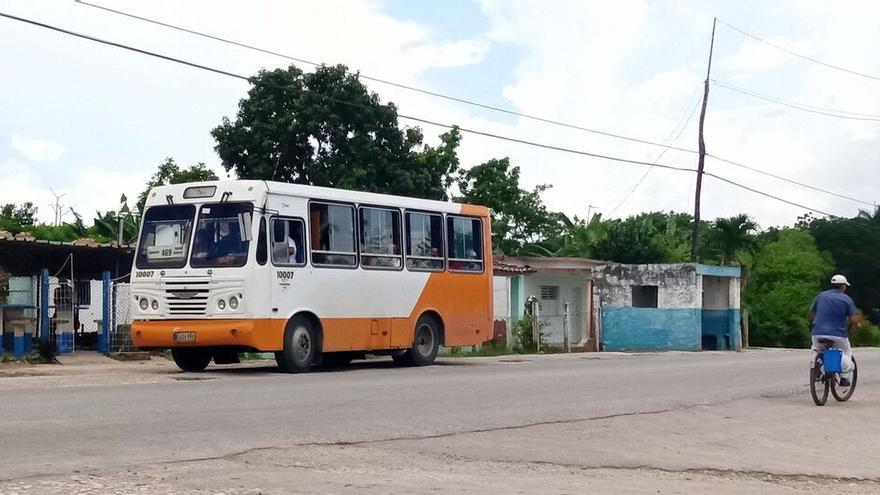
The Taguayabón bus stop, near Camajuaní, Villa Clara. (14ymedio)

14ymedio bigger14ymedio, Yankiel Gutierrez Faife, Camajuaní, 2 July 2022 — I live in Taguayabón, near Camajuaní, in Villa Clara province. For months I have been waiting for July to come so I can spend a few days with my mother in Havana, visit relatives and see the city.

I was up by 8:30 Monday morning. Having waited a month for tickets to finally go on sale, I logged onto the the Viajando travel app. It seems a lot of people had the same idea because no sooner had I accessed the site than the connectivity problems and system failures began.

I selected my tickets and was ready to pay but the app could not connect me to Transfermovil, its payment platform. “This operation could not be completed due to a connection problem with the server. Please try again later,” read the message on the screen.

I tried multiple times to complete the process in the allotted ten-minute window but all attempts failed. Each session eventually timed out and I had to start over. For an hour and a half I kept repeating the process, without success, so it occurred to me to just go in person to the agency’s offices in Santa Clara instead.

The offices are eighteen kilometers away and, with the dreadful public transport situation, this meant waiting one to three hours for a Transmetro bus, a truck or a Giron bus. If you manage to get any of them, the price is 20 pesos to the Arnaldo Milian Castro hospital, where you then have to pay 30 to 50 pesos for a horse-drawn carriage to take you to the bus terminal. continue reading

Frustrated by the time I had wasted and not thrilled with the alternative, I thought about contacting my friend David, who lives in Santa Clara, and asking if he could do me a favor and buy me a ticket. I did and he agreed.

David hopped on his electric scooter and headed for the ticket office located in the Inter-Province Bus Terminal. By the time he arrived, there were already twenty-three people waiting in line. Several of them had experienced the same problem that I had. They were unable to buy their tickets and were extremely frustrated

Some complained about app errors, others about the small number of available seats. Currently, there are only two buses a day from Santa Clara to Havana — one at 1:00 PM and the other at 11:50 PM — which are not enough to meet demand. After internal borders were reopened and inter-provincial travel resumed, officials claimed they would add more buses to the route. However, the fuel shortage has made it impossible for them to keep their promise.

After waiting almost an hour in the hot sun, my friend was finally able to buy two tickets for July 26, at 80 pesos apiece. Minutes later, all the tickets had sold out and many people had to leave without having achieved their objective.

____________

COLLABORATE WITH OUR WORK: The 14ymedio team is committed to practicing serious journalism that reflects Cuba’s reality in all its depth. Thank you for joining us on this long journey. We invite you to continue supporting us by becoming a member of 14ymedio now. Together we can continue transforming journalism in Cuba.
Rosalia, a Forgotten Hamlet in the Center of Cuba

One of the homes in the forgotten Rosalía hamlet, in Camajuaní. (Yankiel Gutierrez Faife)

14ymedio bigger14ymedio, Yankiel Gutiérrez Faife, Camajuaní (Villa Clara), 19 March 2022 — Rosalía is a rural area in Camajuaní, poor and in decline, like so many small towns in Cuba. This place, full of history, was prosperous thanks to the sugar industry, but today is almost abandoned by its population, despite its good land and cool climate.

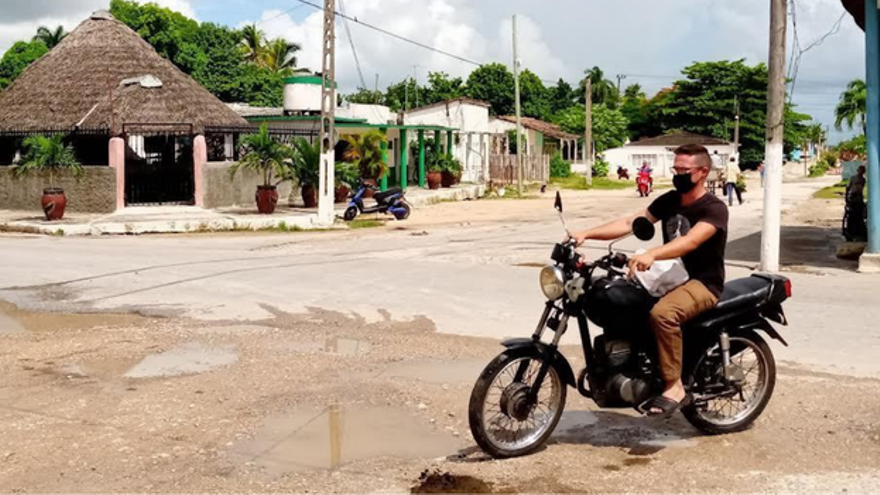
In its best times, the place in the province of Villa Clara had a center for the collection of its production and a railway, with its switch, which today is just ruins; there was an infirmary for small aid, which disappeared and even the primary school has been threatened with disappearance. The place is so small that it only has one road with the occasional bog, which makes it difficult for its citizens to circulate.

Transportation is by family carts and bicycles, but not everyone has one. Years ago there was a public bus with several daily frequencies, but over time it decreased and it only came “when it could.” After the pandemic, it was eliminated and has left residents without any means of transportation.

Every morning some children, young people and adults are seen at the door of the bodega, next to the embankment, hoping that someone driving by will kindly do them the favor of taking them to Taguayabón, the neighboring town, where their schools are and where there is the highway that connects Camajuaní and Remedios. continue reading

Elisa is one of those few young women with a bicycle and every day, at 5:00 am, she pedals the four kilometers to reach the highway, where she will board a transport to get to her work as a seamstress.

Like her, there are other women who work in the outskirts and take their children to school by bicycle.

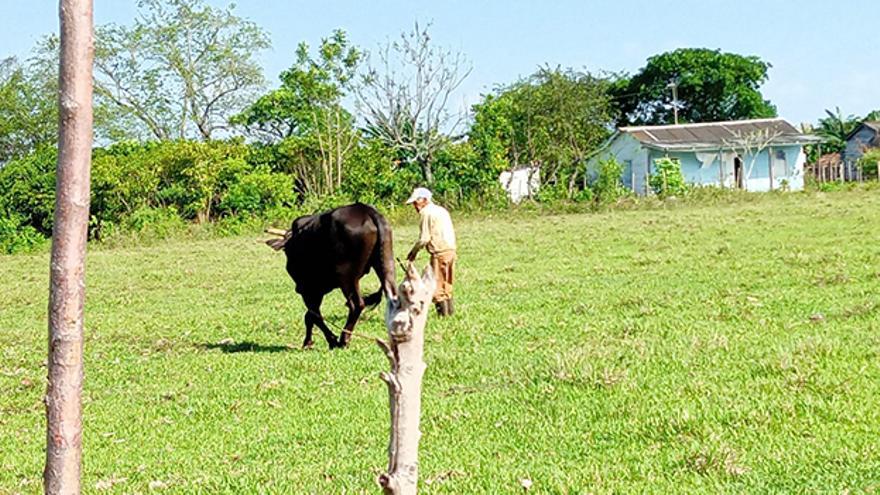
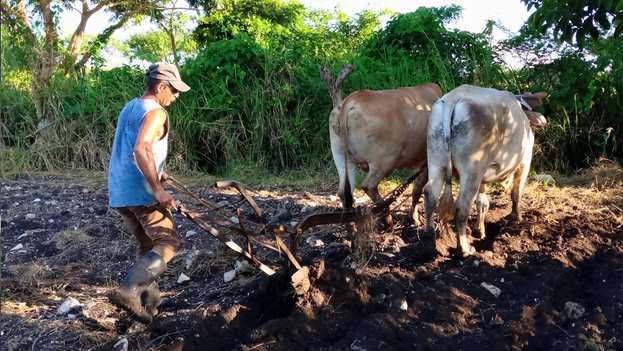
Those who decide to stay in Rosalía continue to farm and keep their cattle. (Yankiel Gutierrez Faife)

The oblivion in which Rosalía has been left makes many of its inhabitants think of migrating, even four kilometers away, to Taguayabón, where life becomes easier.

Others, despite the shortcomings, are committed to continuing to keep their farms full of crops, cattle, horses, birds or beehives. This is the case of Lele, as his neighbors affectionately call him, a man who has been a beekeeper for 10 years and, between September and November, loads his oxcart with the tools to collect honey.

Lele delivers his product to the State, which will export it to the European market and Rosalía’s honey will end up being sold in a German market at a price that the beekeeper cannot even imagine and of which he receives a minimal part.

Juan, another resident of Rosalía, survives thanks to the small farm inherited from his grandparents and his crops of cassava, peanuts and, sometimes, beans, which help him feed his family and face the widespread shortages on the Island.

In the countryside, products such as oil, which reaches 600 or even 700 pesos when it is found, are even more scarce than in the cities.

Despite all the difficulties, Lele, Elisa and Juan have made the decision to continue with their lives in Rosalía and have resisted the temptation to move to Taguayabón, as many of their neighbors have done in search of services that no longer exist in their little hamlet.

____________

COLLABORATE WITH OUR WORK: The 14ymedio team is committed to practicing serious journalism that reflects Cuba’s reality in all its depth. Thank you for joining us on this long journey. We invite you to continue supporting us by becoming a member of 14ymedio now. Together we can continue transforming journalism in Cuba.